Albanian History: What to See and Decide on Your Trip
Albanian history from the Illyrians and Romans through Ottoman rule to independence in 1912, mapped to the towns and sites you can still visit today.
On this page
Albanian history runs from Illyrian tribes recorded by Greek writers in the fourth century BCE, through Roman, Byzantine and Ottoman rule, to independence in 1912 and a communist state that lasted until 1991. This guide keeps the timeline short and pins each period to a place you can still visit, so the walls of Berat, the bazaar streets of Krujë or the concrete of the bunkers stop being scenery and start reading as dates.
Where Albanian history starts: Illyrian tribes and the first written record
The Illyrians were a collection of tribes living across northern and central Albania who shared a culture and a language, and the first written description of them comes from a Greek text of around 350 BCE. In the south they lived alongside the Bryges and, further down, Greek tribes known as the Chaonians, which is why coastal sites and inland hill sites tell different halves of the story.
Before any of that, human presence in the region is documented from the Middle and Upper Palaeolithic, with finds in southern Albania and on Mount Dajti above Tirana. Neolithic sites across the country carry the story forward, so the archaeology you meet in Albanian museums starts long before the named kings.
The earliest document referring to the Albanian language appears in Ragusa, modern Dubrovnik, in 1285, where a witness was recorded as unable to testify except in Albanian. It is a reminder that the language's written trail begins centuries after the tribes who spoke its ancestor.
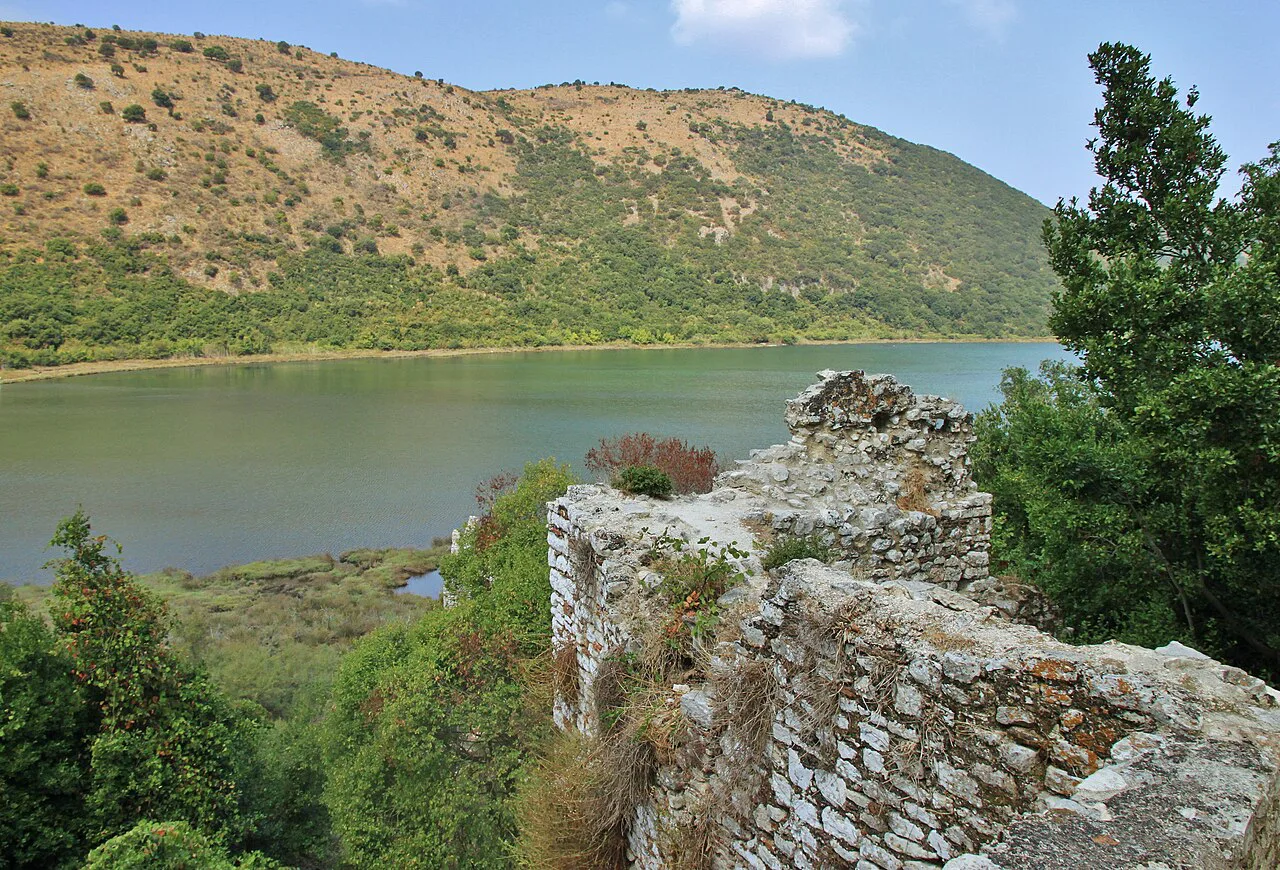
Illyrian kings and the Roman conquest of Illyricum
Bardylis united several Illyrian tribes in the fourth century BCE and took on the kingdom of Macedon, though he was eventually defeated by Macedon; his tribal union was later broken up and defeated by Alexander the Great around 335 BCE during the reign of King Cleitus. Around 230 BCE the Ardiaei grew powerful under King Agron, whose campaigns expanded Illyrian control along the coast, and his wife Queen Teuta continued the expansion after his death in 231 BCE.
Why did Albanians convert to Islam? Over the sixteenth and seventeenth centuries a majority of Albanians gradually converted, driven by tax incentives, social advancement and legal pressures under Ottoman rule, while Catholic and Orthodox minorities persisted. That is why Albania's religious map today includes all three communities.
Where are Albanian people originally from? The Albanians are generally traced to Illyrian and Thracian tribes who settled the region in ancient times, and the Illyrians are the tribes named in the earliest Greek written descriptions of the area. The Albanian language's first documented mention comes from Ragusa in 1285.
Was Albania part of Yugoslavia? Albania was not part of Yugoslavia; it declared independence from the Ottoman Empire in 1912 and was recognised as an independent principality at the Conference of London in 1913. Its twentieth-century path ran through a monarchy, the Second World War and then a communist state until 1991.
Roman campaigns against Teuta opened the Illyrian Wars, which ran for about sixty years and ended in 168 BCE with the defeat of King Gentius, the last Illyrian King. The territory then became part of the Roman province of Illyricum, and Roman cities such as Scodra, today's Shkodër, shaped the urban map that later towns were built over.
For a visitor, this is the layer to look for in museum cases and in the foundations beneath later walls: Illyrian grave goods, coins and fortification lines that predate everything Ottoman or communist above them. If you are tracing the later Roman town of Dyrrachium in detail, the Durrës history material follows that thread down to the modern city.
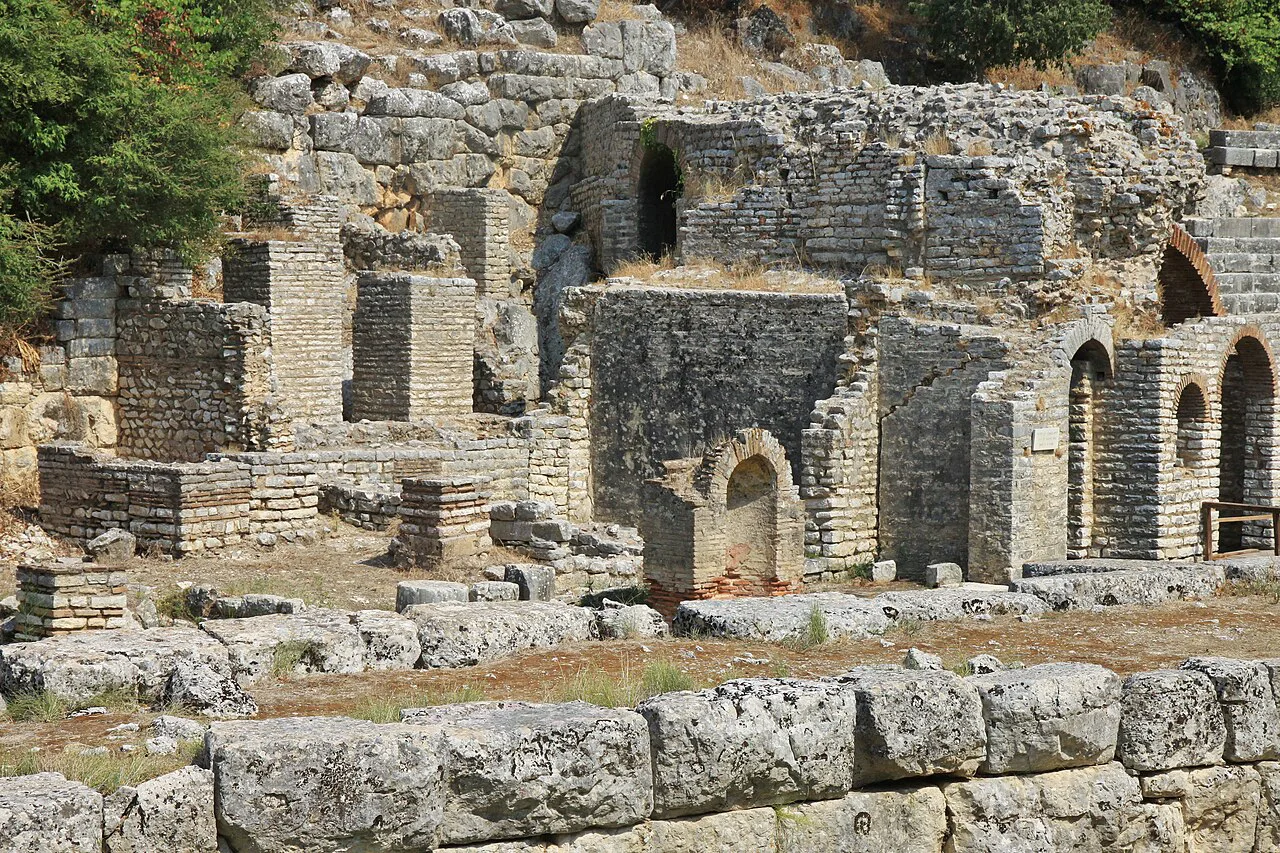
Greeks on the coast: Apollonia, Epidamnos and Buthrotum
Greek city-states planted colonies along the Illyrian coast from around 690 BCE, and three of them anchor Albanian sightseeing today: Apollonia near Vlorë, Epidamnos at Durrës and Buthrotum at Butrint. Buthrotum, now the archaeological park at Butrint, is a UNESCO World Heritage Site, with its theatre and Christian basilica the most prominent remains.
At Apollonia the visible remains are Roman rather than Greek in date, which is exactly the point: the Greek colony became a Roman city and the ruins you walk through belong to the later phase. Allow time at both sites to read the labels, because the Greek-to-Roman sequence is the lesson.
This is also where Byzantine church building enters the story, since Christianity spread through these coastal cities well before the medieval period. If church architecture is your focus, the guide to churches in Albania picks up the thread at the basilicas and later foundations.
Byzantium, the 1054 schism and the north–south religious split
After the Roman Empire divided, Albania sat within the Byzantine sphere, and the religious geography split along a line that still shows in the country today. When the Great Schism of 1054 separated Rome and Constantinople, southern Albania kept its ties to Constantinople and Orthodoxy, while the north reverted to Roman Catholicism, marking the first fragmentation of the country along religious lines.
That division explains why a traveller moving from Shkodër south to Gjirokastër passes from Catholic churches into Orthodox ones, and why some towns hold both within a few streets of each other. Read the buildings with that line in mind and the map stops looking arbitrary.
Byzantine church building left masonry and painting traditions that later Ottoman construction sat alongside rather than replaced, which is why a single Albanian town can show a Byzantine church, a mosque and an Ottoman house within one skyline. The churches guide sets out those building types in more detail.
Skanderbeg, the League of Lezhë and the sieges of Krujë
Gjergj Kastrioti Skanderbeg, raised as an Ottoman hostage and converted to Islam, defected during the Battle of Niš in November 1443, raised his banner at Krujë and renounced Islam to lead resistance against Ottoman expansion. In March 1444 Albanian princes gathered at Lezhë under his leadership to form the League of Lezhë, a military alliance that many historians treat as the first unified Albanian state. The town where that alliance was sworn is covered in Lezhë: How to Visit, What to See and How Long It Needs.
The first siege of Krujë ran from May to November 1450, when Sultan Murad II's army surrounded the fortress and Skanderbeg's defenders held out until the Ottomans withdrew, making his name across Christian Europe. Skanderbeg died of malaria at Lezhë in January 1468, and organised resistance collapsed within a decade.
Krujë is the place to see this period: the fortress, the museum named for Skanderbeg and the bazaar street below are usually visited as one circuit on a day trip from Tirana. Treat the castle as the historical core and the bazaar as the commercial layer added later. For the practical side, our Kruje guide covers the castle, the bazaar and how long to allow.
How Ottoman rule reshaped Albanian towns: bazaars, mosques and conversions
Ottoman forces took Shkodër, Venice's stronghold and the last major fortress resisting them in Albanian lands, in April 1479, which brought nearly all of present-day Albania under Ottoman rule for more than four centuries. From around 1550, over the sixteenth and seventeenth centuries, most Albanians gradually converted to Islam, driven by tax incentives, social advancement and legal pressures, while Catholic and Orthodox minorities persisted.
The urban signature of those centuries is the bazaar quarter, the mosque and the walled neighbourhood, and you can still walk the pattern in Krujë's bazaar street, Berat's Mangalem quarter and Gjirokastër's steep cobbled lanes. Ottoman houses with their upper storeys projecting over the street belong to this period too, and the Albanian architecture guide explains how to date them by their layout.
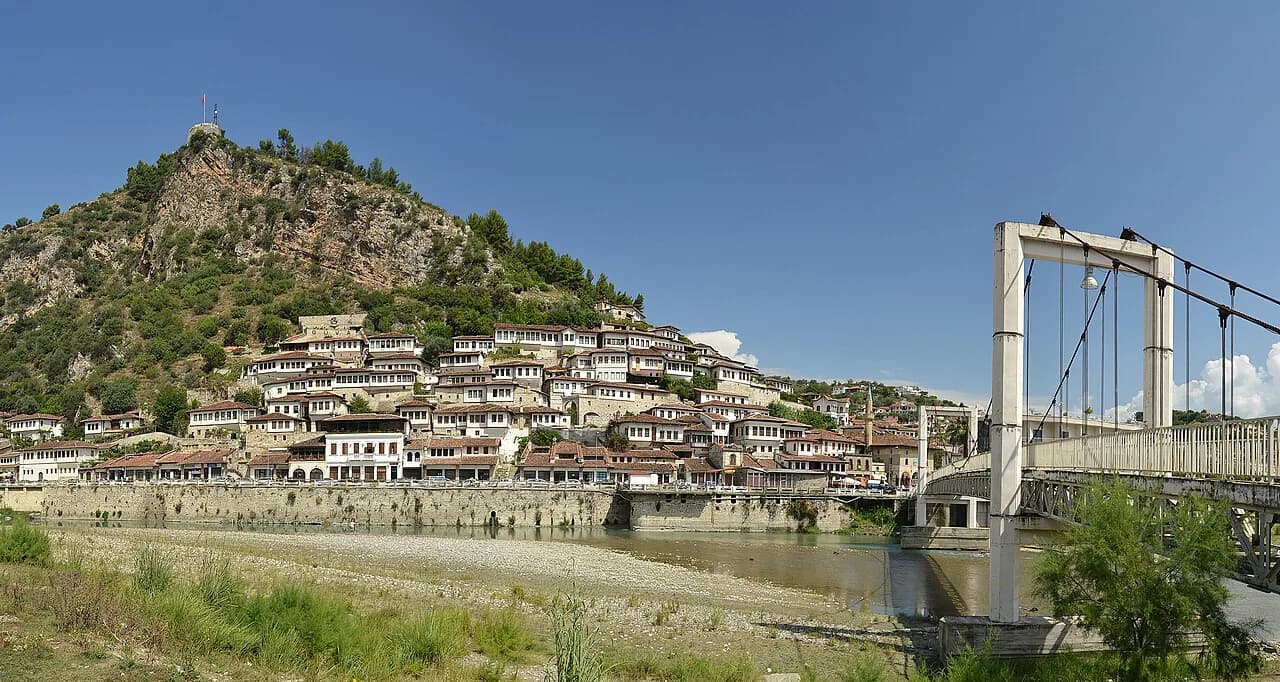
Berat rewards slower reading than most towns because the layers stack visibly: the castle above, the Christian quarter below it, and the Muslim quarter across the Osum River. For the town's own chronology, the Berat history page follows the sequence from fortress to Ottoman city.
Customs that travellers still notice, from hospitality codes to the Kanun of Lekë Dukagjini, belong to this long stretch of rural and mountain life as much as to any single century. The Albanian traditions material covers those practices without turning them into folklore.
Semi-autonomous pashaliks and the Bushati family of Shkodra
As Ottoman central authority weakened in the eighteenth century, regional Albanian dynasties such as the Bushati family of Shkodra and Ali Pasha of Janina built semi-independent pashaliks ruling large territories until Istanbul suppressed them. From around 1760 these power bases behaved as near-autonomous states, which is why northern towns like Shkodër carry a heavier monumental footprint than their size suggests.
In Shkodër this is the layer to look for around the old commercial streets of the centre and in the fortifications on the hill above. It is also the period that makes sense of the town's role as a regional capital before the twentieth century, which the Shkodër history guide traces in detail.
The League of Prizren and the national awakening
In June 1878 Albanian leaders formed the League of Prizren in response to the Treaty of San Stefano and the Congress of Berlin, which threatened to divide Albanian-inhabited lands among neighbouring states, and the league became a catalyst for national awakening. Thirty years later, intellectuals meeting at Manastir, today Bitola, agreed a standardised Latin-based alphabet for Albanian across November 1908, replacing competing scripts and enabling unified education and publishing.
For visitors, the awakening shows up in museums, memorials and street names rather than in grand buildings, so it is easy to miss if you only chase castles and old towns. Read the labels in town museums for this period and the politics behind independence become legible.
Independence at Vlorë in 1912 and the London settlement of 1913
Delegates gathered at Vlorë in November 1912 and proclaimed Albania independent amid the First Balkan War, with Ismail Qemali raising the national flag and ending nearly five centuries of Ottoman rule. In July 1913 the six Great Powers recognised Albania as an independent principality at the Conference of London but stripped it of roughly half the territories Albanian nationalists had claimed, leaving large Albanian populations outside the new state.
Vlorë's waterfront and independence monuments commemorate the 1912 declaration, and the date remains the country's national day. The Albanian traditions guide explains how Independence and Flag Day is observed, which helps if your trip coincides with the crowds.
King Zog, the monarchy and the Second World War
After the First World War, Ahmed Zogu became prime minister and consolidated power, and Albania was later proclaimed a kingdom under King Zog I during the interwar monarchy. That royal chapter ended with the Second World War and the country's occupation.
Interwar Albania is the hardest period to see on the ground because so little of it survives as a visitor attraction, and much of what does is civic architecture in Tirana and Durrës. Look for the 1920s and 1930s facades in central Tirana rather than expecting a dedicated museum.
Enver Hoxha and the communist decades to 1991
Albania became a strict communist state under Enver Hoxha after the Second World War, and the regime lasted until 1991, followed by a transition to democracy and eventual integration into NATO and the EU accession process.
The most visible legacy is the pillbox: thousands of concrete bunkers dot fields, hillsides and coastlines, and they are the quickest way to date the landscape you are driving through. Bunkers in Albania explains the types and where you will encounter them.
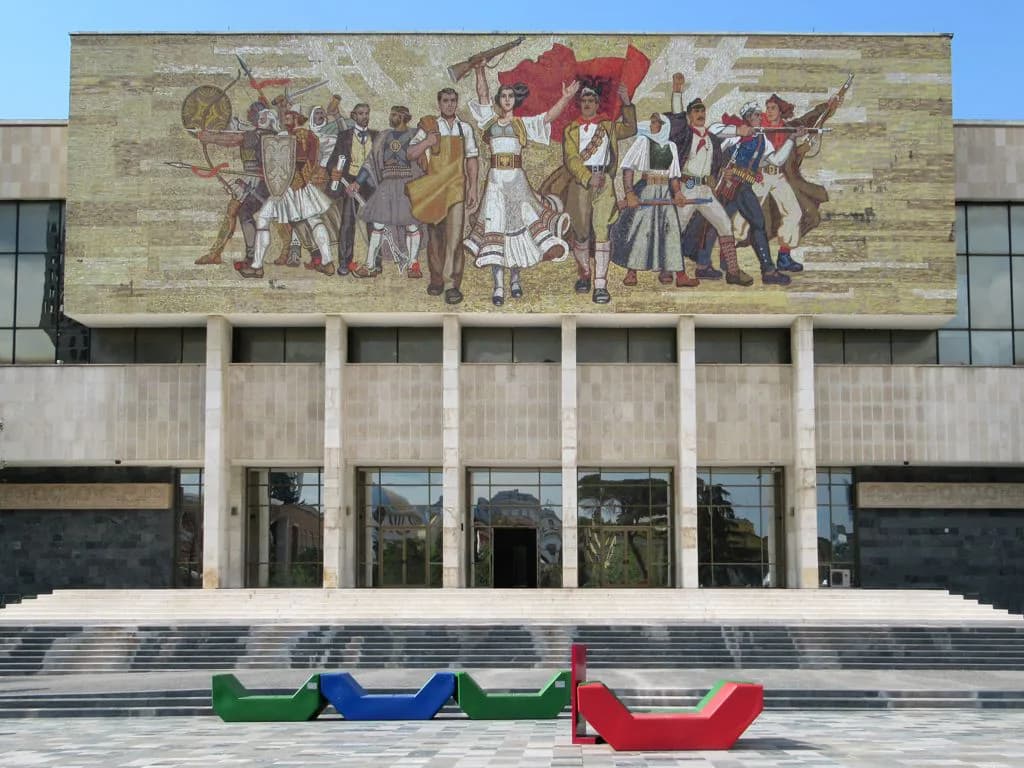
Tirana's museums and former regime sites cover the period directly, and they are best approached as historical documents rather than spectacle. The Communist Albania guide sets out what each site represents and how to read it factually.
Reading a town's buildings in the right order: what to notice in Berat, Gjirokastër, Shkodër and Krujë
In Berat, start at the castle, then descend through the Christian quarter to the Osum River and cross to the Muslim quarter, and you have walked the Byzantine-to-Ottoman sequence in an afternoon. In Gjirokastër the same layering appears vertically, with the fortress above and steep cobbled lanes of stone houses below, so good shoes matter more than a plan.
In Shkodër, look for the Ottoman commercial streets of the pashalik era and then the twentieth-century civic buildings around them; in Krujë, the Skanderbeg fortress and bazaar give you the medieval and Ottoman layers side by side. Add the communist-era concrete where you find it and you have the full sequence a single Albanian town can hold.
One rule of thumb for the whole country: identify the century of the walls before you judge the town, because the same street can carry a Byzantine foundation, an Ottoman upper storey and a socialist-era block. That habit makes Albanian town walking far more rewarding than ticking off viewpoints.
Which period should you follow first?
If you have one trip, follow the Ottoman centuries first, because bazaars, mosques and old towns are the most legible layer for a visitor and they appear in almost every town on the itinerary. Add Krujë for Skanderbeg and Butrint or Apollonia for the Greek and Roman phase, then let the communist-era bunkers and museums fill in the twentieth century.
Keep dates loose in your planning rather than fixed to a schedule: site opening hours, entry charges and tour departures change with the season, and the official Albanian tourism and museum sources publish the current details closer to your dates.
Explore more Albania guides
Frequently Asked Questions
Why did Albanians convert to Islam?
Over the sixteenth and seventeenth centuries a majority of Albanians gradually converted, driven by tax incentives, social advancement and legal pressures under Ottoman rule, while Catholic and Orthodox minorities persisted. That is why Albania's religious map today includes all three communities.
Where are Albanian people originally from?
The Albanians are generally traced to Illyrian and Thracian tribes who settled the region in ancient times, and the Illyrians are the tribes named in the earliest Greek written descriptions of the area. The Albanian language's first documented mention comes from Ragusa in 1285.
Was Albania part of Yugoslavia?
Albania was not part of Yugoslavia; it declared independence from the Ottoman Empire in 1912 and was recognised as an independent principality at the Conference of London in 1913. Its twentieth-century path ran through a monarchy, the Second World War and then a communist state until 1991.
What can I still see from the Illyrian and Roman periods?
Butrint, near Sarandë, holds the remains of Buthrotum with its theatre and basilica, while Apollonia near Vlorë shows its Roman phase above the Greek colony. Museum collections in Tirana and Durrës carry the Illyrian material, including coins and grave goods.
Sources
Notes for your Albania trip
Optional updates to our Albania town guides.
You might also like
Continue reading
More guides you'll find useful