Durrës History: A Short Timeline Tied to Places You Can See
Durrës history in short: Greek Dyrrachos, Roman Dyrrachium, Byzantine walls, Venetian towers and Ottoman mosques, each tied to a site you can still visit.
On this page
Durrës history runs from a Greek foundation in 627 BC through Roman, Byzantine, Venetian and Ottoman rule to a modern port city, and most of those layers sit within a short walk of each other. This guide ties each era to a named site rather than telling the story in the abstract, so you know what you are looking at when you reach the amphitheatre, the walls or the Fatih Mosque.
The city has carried several names, and the coins, inscriptions and museum labels you meet on a visit use more than one of them. Read the timeline in order and the walk at the end pulls the pieces into a single route.
What Durrës was called: Dyrrachos, Dyrrachium, Durazzo and Durrës
The Greeks knew the city as Dyrrachos and the Romans as Dyrrachium; Italian speakers long called it Durazzo, and the modern Albanian form is Durrës. The foundation is dated to 627 BC, when Corinthians and settlers from Corcyra arrived, which makes the city's story one of the longest in the Adriatic.
When you read a label or a plaque in the centre, the name on it usually tells you which period is being described, so the vocabulary is worth knowing before you start walking. The Greek period is also where the city's founding deity enters the record, with Poseidon treated as the city's father in Greek tradition.
The Greek and Roman city: the amphitheatre and the Via Egnatia terminus
Dyrrachium mattered to Rome as the western end of the Via Egnatia, the road that ran east across the Balkans, and it served as the capital of the province of Nova Epirus. That road role explains why a city on this coast acquired the public buildings and defences you still see.
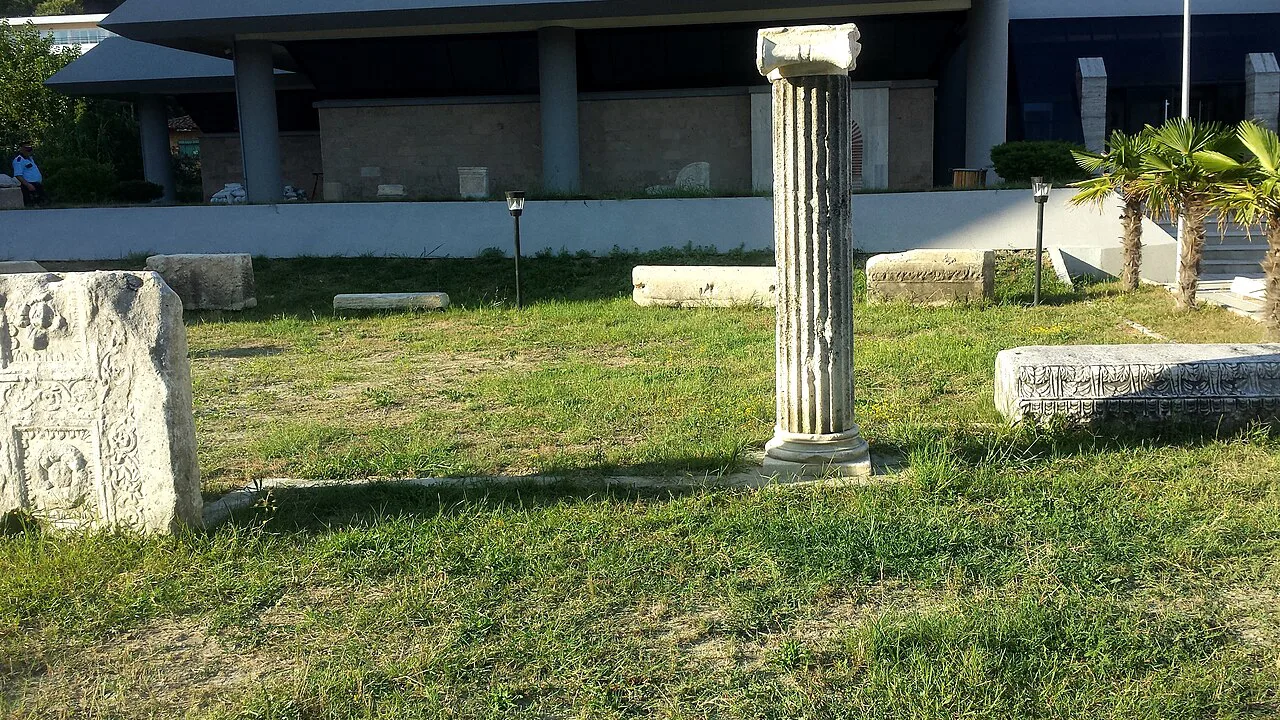
The Roman layer to prioritise is the amphitheatre, built in the 2nd century AD and used for gladiator games and public events. Early Christian mosaics survive within the ruins, so the structure carries more than one phase of use in a single visit.
What survives from Roman Durrës
The amphitheatre measures 132.4 metres by 113.2 metres by 20 metres and held 20,000 people, dimensions that are hard to judge until you are standing at the rim of the arena. Houses were later built into part of the arena, which is why the monument reads as a sunken ruin among streets rather than a free-standing shell.
Despite its size, the structure was only rediscovered in the 1960s, and it deteriorated after the first excavation until the University of Parma stepped in to conserve it in 2004. In 2013 it was shortlisted by the heritage organisation Europa Nostra among Europe's endangered cultural sites, which is the context for the careful, partly shored-up appearance you see now.
The Byzantine fortress: Anastasius I's walls, Justinian's rebuild and the citadel
The Byzantine emperor Anastasius I was a native of Dyrrachium, and he gave the city a triple wall and citadel; Justinian I later rebuilt the fortifications. Sections of the city walls still stand, so the Byzantine chapter is something you can trace on foot rather than only read about.
Earthquakes in 341 and 522 and an Ostrogothic sack in the 480s preceded that rebuilding programme, which explains how often the defences were remade. In the 9th century the fortress was in Byzantine hands and a theme of Dyrrachion was established, with the city functioning as a stronghold more than a trading centre.
Venice occupied Durazzo from 1392 until it fell to the Ottomans in 1501, and the Venetians used the port to export salt, wood and hides. Read the defences with that sequence in mind: what looks like one wall is a palimpsest of Byzantine work and later repair.
The Venetian period: the Venetian Tower and the medieval defences
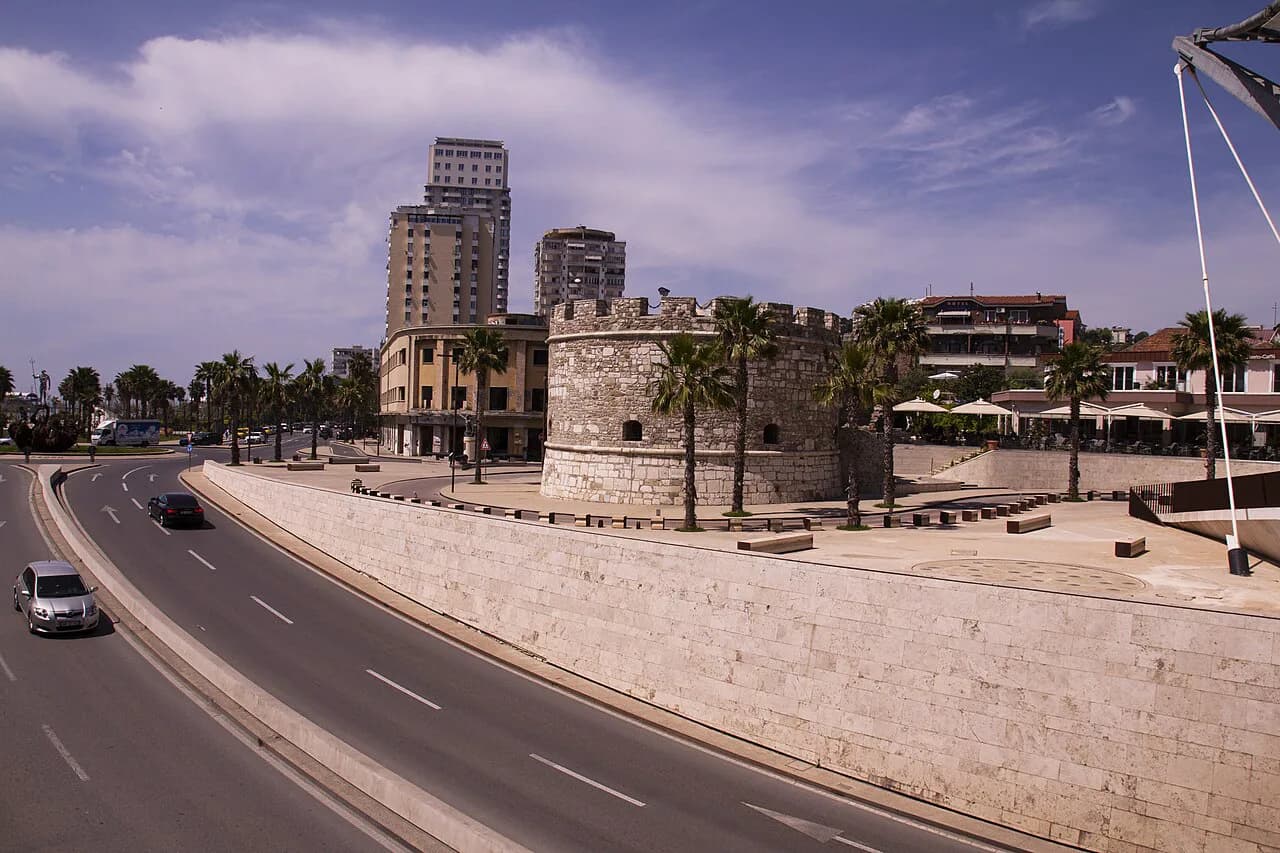
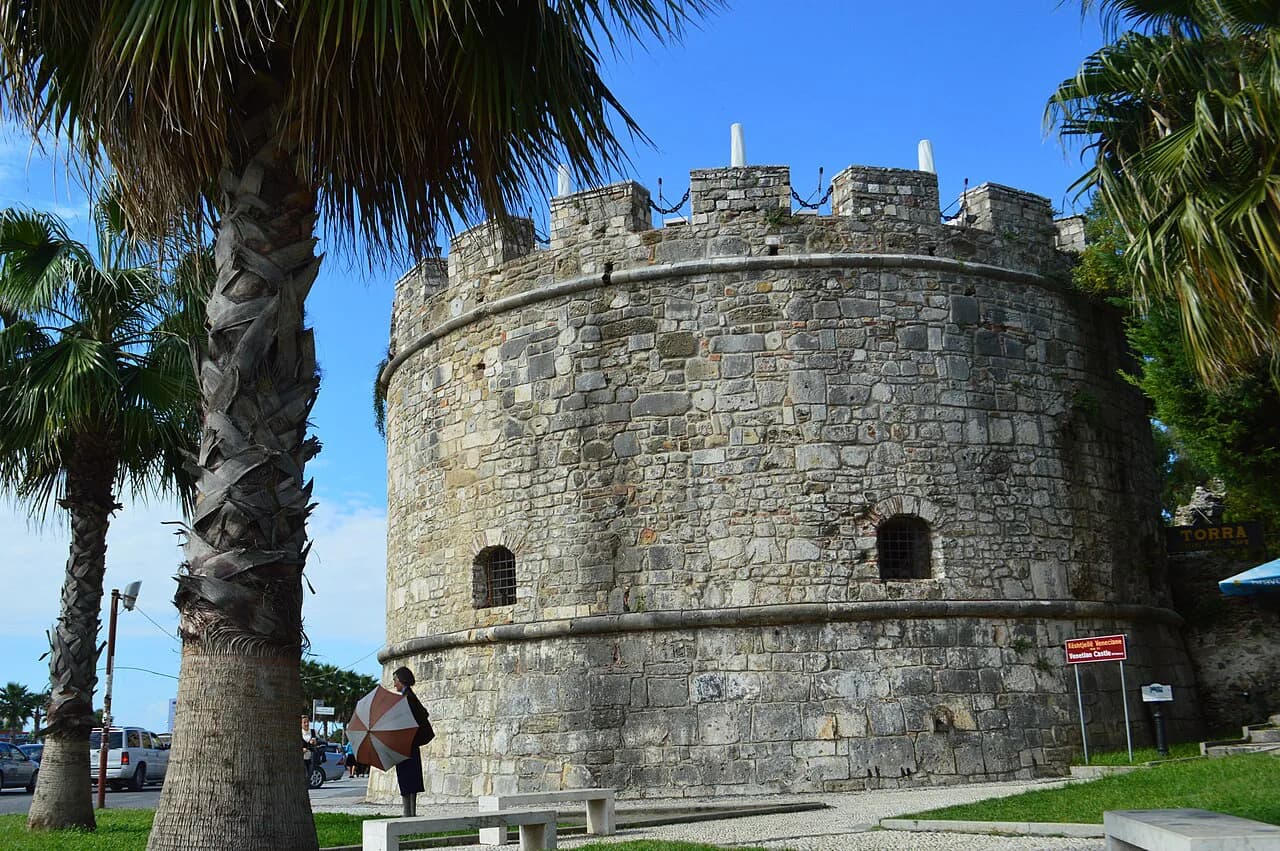
The Venetian Tower is one of several guard towers added when the Republic of Venice reinforced the city's defences, and it is the handiest single structure for understanding the medieval military layer. Visit it alongside the surviving stretches of wall and the picture of a fortified port becomes concrete.
The Normans also attacked the city repeatedly, with Robert Guiscard taking it in 1081, Bohemund besieging it in 1107–08 and William II of Sicily pillaging it in 1185. Those dates explain why the fortifications were continuously rebuilt rather than finished once.
For the practical layout of these walls, towers and gates, work through the old town on foot before adding the amphitheatre and the mosque. The Durrës Old Town guide sets out the quarters and the sequence that keeps backtracking to a minimum.
Ottoman Durrës: the Fatih Mosque and the city's quieter centuries
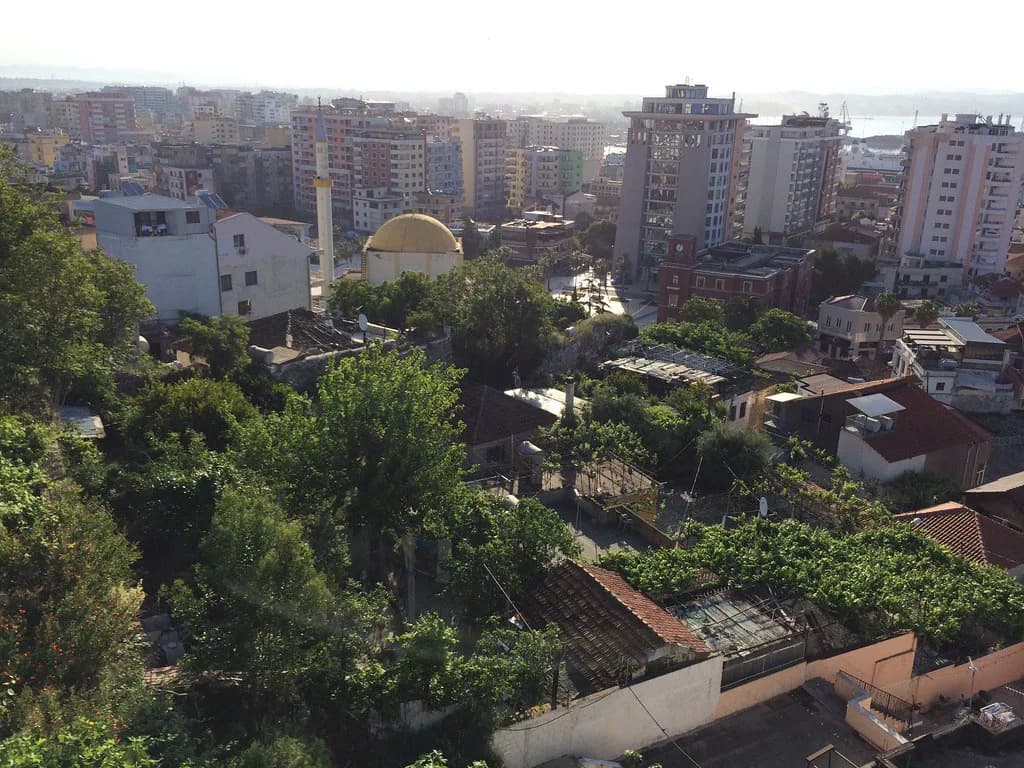
The Fatih Mosque was built in 1502, shortly after the Ottoman conquest, and it is the clearest surviving marker of that era in the centre. Durrës was among the last Albanian towns to fall to the Ottomans, so the building date sits close to the change of rule.
Under Ottoman rule the city's importance waned: the harbour was neglected, vegetation grew over the Byzantine ruins and the town fell into disrepair. That decline is part of why so much ancient fabric survived in fragmentary form rather than being quarried away.
King Zog's Royal Villa and the inter-war port boom
The Royal Villa, better known as Zog's Villa, was King Zog's summer residence during Albania's brief monarchy and sits on a hill behind the city with sea views on three sides. It was built in the shape of an eagle, the national symbol, which is easiest to see from the air or from a distance.
After losing its brief status as capital, Durrës drew Italian investment in the inter-war period and developed into a major seaport with an economic boom. That investment is the origin of the port city you see today, with the cranes visible from the old town.
Communist-era Durrës: the port and the monument to the unknown soldier
Durrës remained the country's main port through the communist era, which left its own markers on the seafront, including the dramatic monument to an unknown soldier. The Port of Durrës, at the northern end of the Bay of Durrës, is the biggest seaport in Albania and still defines the city's northern edge.
The end of communism brought upheaval here: in August 1991 alone more than 20,000 people left for Italy from Durrës on hijacked ships, and in 1997 Italian peacekeepers were deployed after the collapse of Pyramid schemes. Those events explain the museum's own recent history as much as the ancient collections do.
Durrës today: the repaved centre, the promenade and the archaeological museum
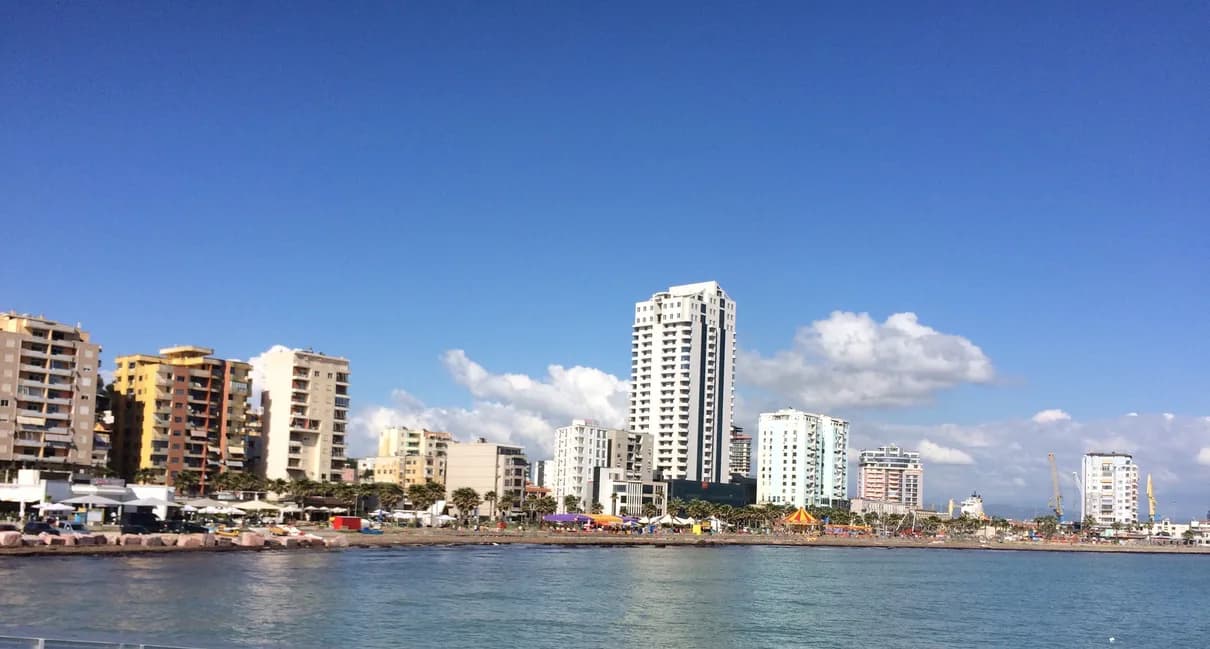
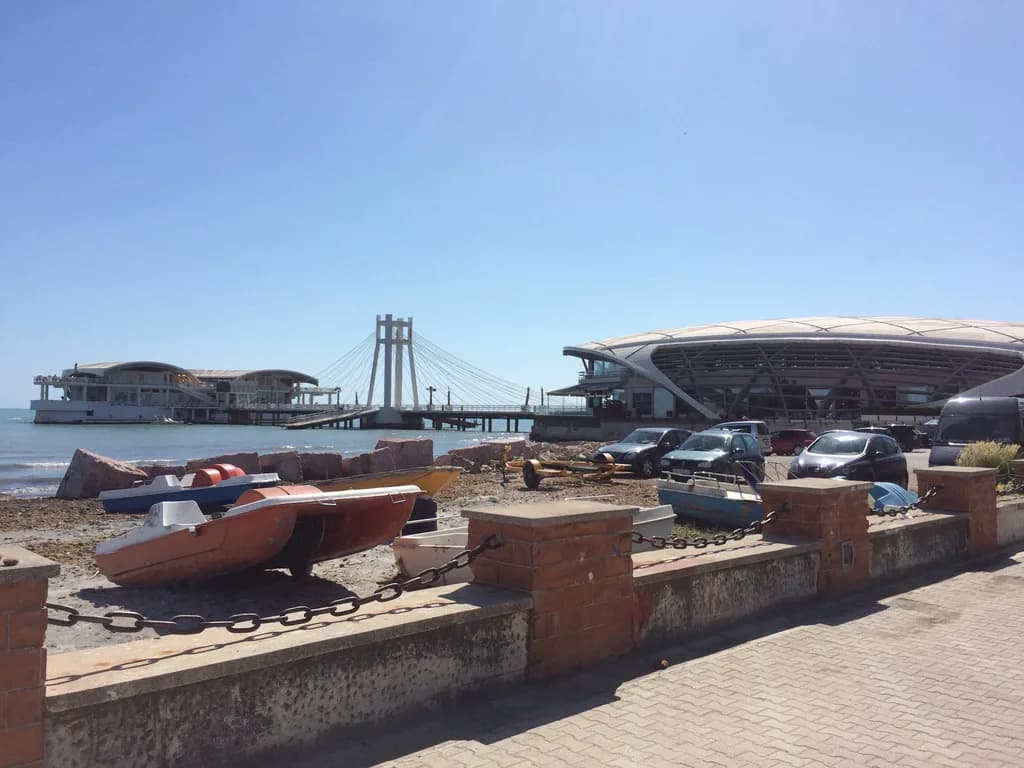
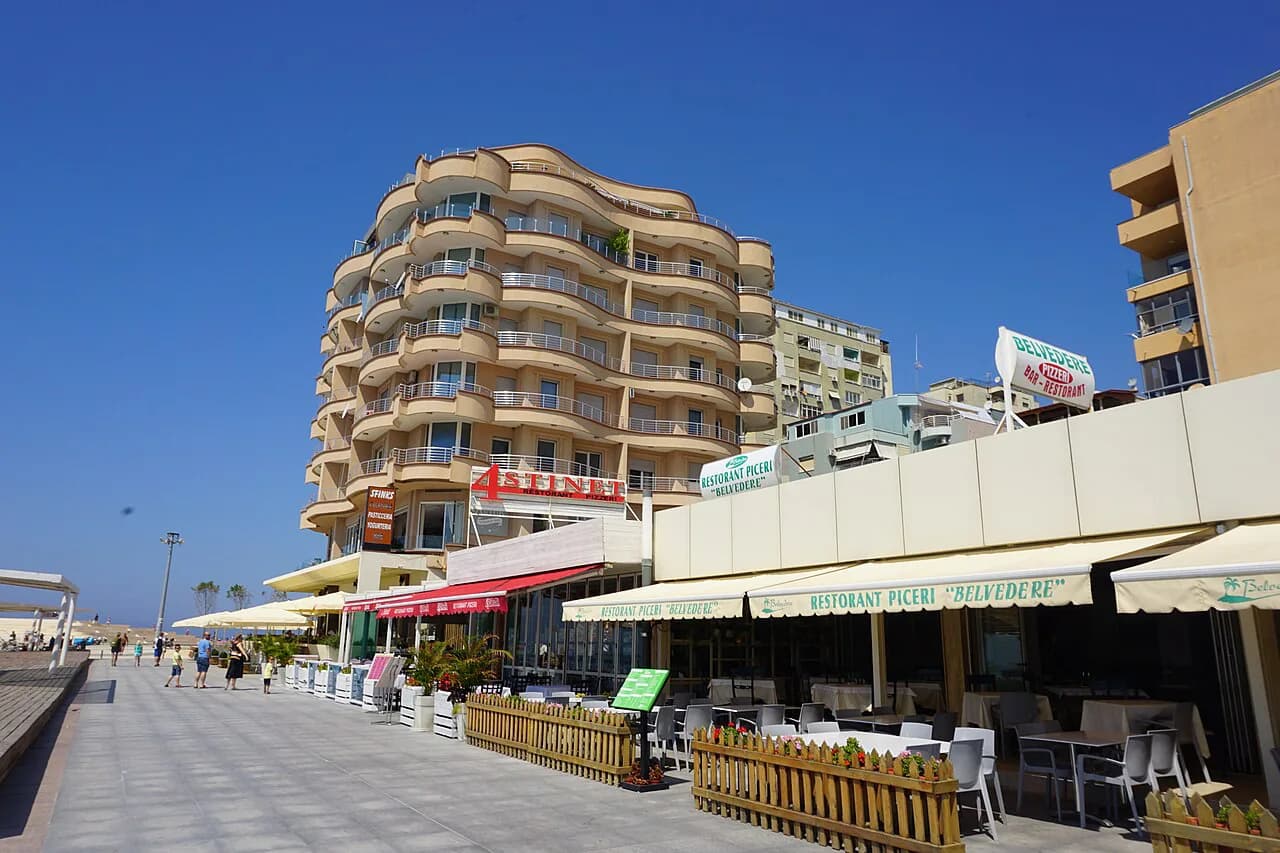
The city centre has been cleaned and repaved, and a broad car-free promenade runs along the seafront, lined on the landward side with cafés, restaurants and shops. That tidy, walkable centre is what a visitor sees first today, whatever period of the city's long history they have come for.
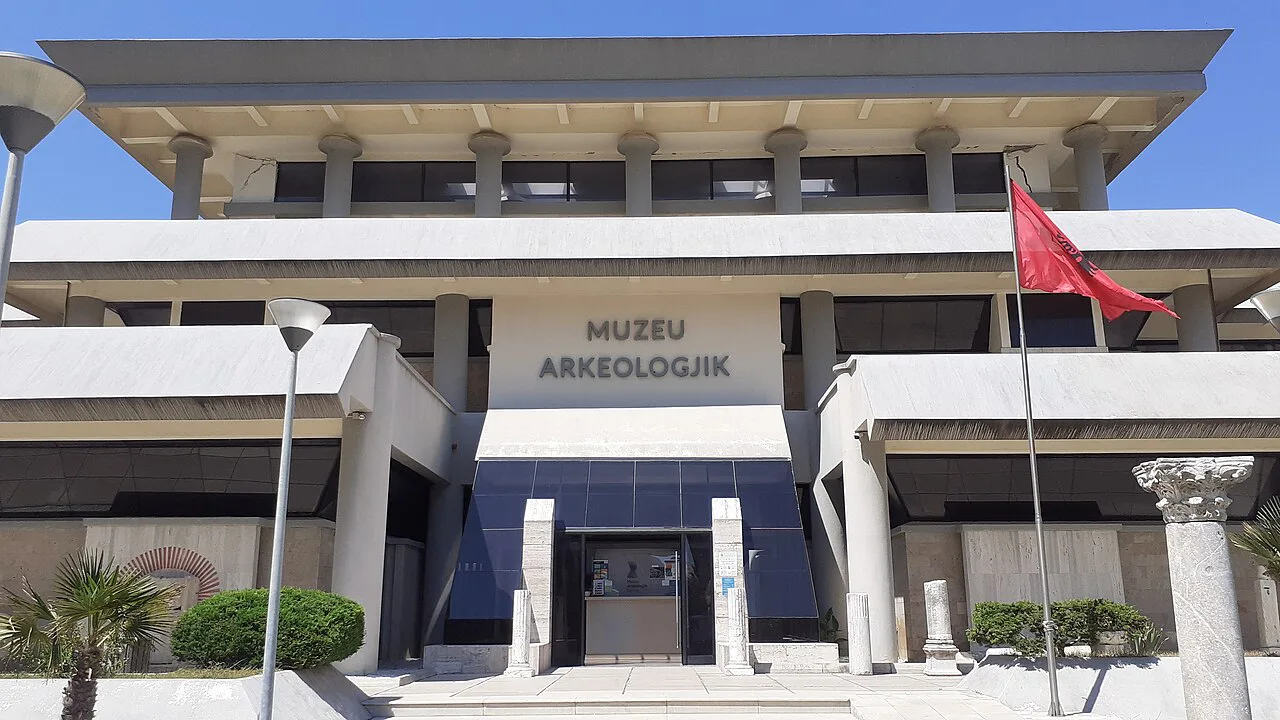
The Archaeological Museum holds thousands of artefacts from the Greek and Roman eras, including more than 3,200 from the nearby site of Dyrrhachium, and it reopened in 2015 after reconstruction following the looting of 1997. It is the one stop that stitches the objects back to the ruins.
Check current opening hours and ticket prices with the museum before you build a day around it, since these change seasonally. The Museums in Durrës guide covers what else is worth adding to the same half-day.
Where to see each layer in a short walk around the centre
Start at the amphitheatre and the Archaeological Museum for the Greek and Roman layers, then follow the surviving walls and the Venetian Tower for the Byzantine and Venetian work. The Fatih Mosque adds the Ottoman period, and the seafront brings you to the communist-era monument and the modern promenade.
The Durrës Castle page explains what to look for in the fortifications themselves, including how Byzantine and later work sit side by side. Pair it with a Durrës Walking Tour route if you want the stops in a fixed order rather than improvising.
If you are choosing between the sites on a short stay, the wider set of Durrës Attractions: 6 Visitor Guides puts the amphitheatre, the museum and the defences in context. The old town is compact enough that the whole sequence fits into a single unhurried day.
Which layer to see first
Begin with the amphitheatre and the Archaeological Museum, because together they give you the Roman city and the objects that explain it before you look at the walls. Then walk the Byzantine and Venetian defences and finish at the Fatih Mosque and the promenade, so the story runs in chronological order.
Two practical notes: the amphitheatre is partly below street level and uneven underfoot, and the ruins are spread across the modern centre rather than gathered on one site. Wear shoes that cope with that, and confirm museum hours directly before setting out.
Frequently Asked Questions
How old is Durrës?
The city's foundation is dated to 627 BC, when Corinthians and settlers from Corcyra arrived on this coast. That makes the archaeological layers you see in the centre span well over two thousand years, from Greek and Roman work to Ottoman and modern building.
Why is Durrës called Durrës?
The modern Albanian name descends from the city's older forms: Dyrrachos in Greek, Dyrrachium in Roman usage and Durazzo in Italian. Plaques and museum labels in the centre still use several of these, so the changing name is a quick way to date what you are reading.
Who built the walls of Durrës?
The Byzantine emperor Anastasius I, a native of the city, provided a triple wall and citadel, and Justinian I later rebuilt the fortifications. Venice reinforced the defences from 1392 until the Ottoman conquest in 1501 and added guard towers, of which the Venetian Tower survives.
Sources
Notes for your Albania trip
Optional updates to our Albania town guides.
You might also like
Continue reading
More guides you'll find useful