Museums in Durrës: What to See and Which Suits You
Durrës's museums cover Roman finds, Albania's archaeology and a small house museum devoted to actor Aleksandër Moisiu. Here is what each one holds.
On this page
Durrës is known for two museums: the Archaeological Museum on Rruga Taulantia, which covers the city's prehistoric to Roman finds, and the Ethnographic Museum, housed in the Aleksandër Moisiu house and sometimes called Muzeu Aleksandër Moisiu. The Archaeological Museum is the one to plan around, because its Roman sculpture and funerary material need a proper hour; the ethnographic museum is a small two-floor house museum you can add on the same walk through the old town. This guide sets out what each holds, where it sits, and how to fit both around the amphitheatre and the Venetian Tower.
What museums is Durrës known for?
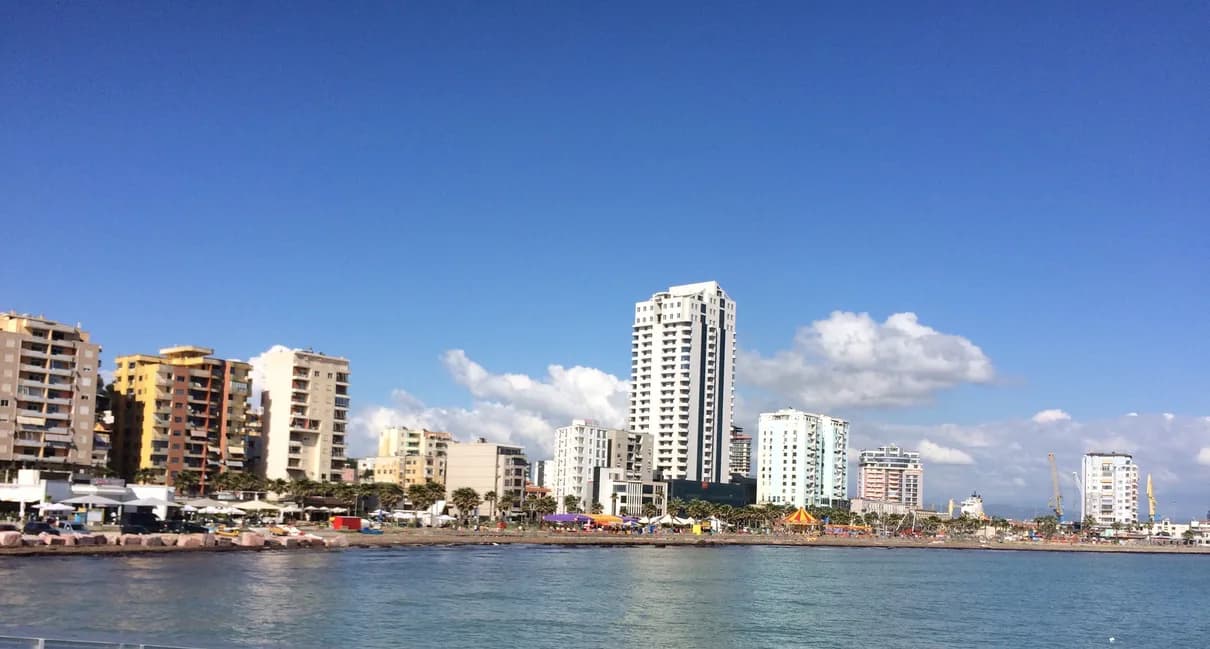
The pair that matters for a city visit are the Archaeological Museum and the Ethnographic Museum. They sit in the older northern part of Durrës, the area on the far side of the harbour from the newer seafront strip, where most of the historic sights cluster within a short walk of Sheshi Liria. That layout makes a museum morning easy to arrange: you can move between the archaeological collection, the ethnographic house and the remains of the old town on foot rather than by car.
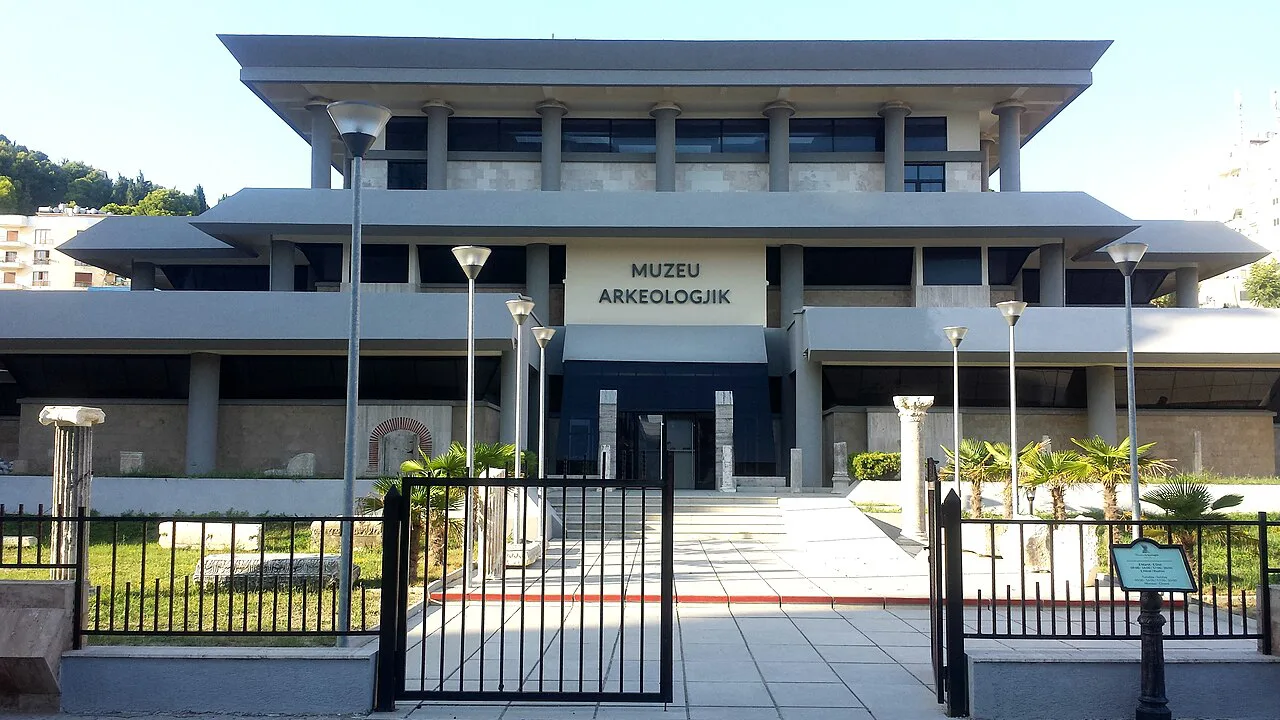
The Archaeological Museum of Durrës: what is inside
The collection runs from prehistoric material through the classical, Hellenistic and Roman periods, so it works as a chronological introduction to the city before you walk its streets. The museum reopened to the public on 20 March 2015 after four years closed, and the reopening was announced by Prime Minister Edi Rama; the announcement describes more than 3,200 artefacts and an extended museum narrative. Budget at least an hour for the indoor rooms; anyone who reads labels closely will want longer.
Treat it as the substantial museum of the city rather than a single-room display: it is the first stop if you have time for only one collection, and the one to come back to for a second look once you know the amphitheatre and the older streets. For the rest of the historic core, the old town guide sets out the squares and streets around Sheshi Liria and the harbour.
Highlights to look for: sarcophagi, funerary stelae and the Venus busts
Look out for stone sarcophagi and Roman funerary stelae, the carved slabs that once marked burials outside the city walls. The collection also holds a significant number of miniature busts of the goddess Venus, which point to Durrës's role as a centre of her worship in antiquity. These are the pieces to seek out if you are short of time and want the objects that tie the museum to the visible Roman remains outside.
The outdoor garden and porticoes with marble statues
The visit does not end at the door: an outdoor area lets you walk through gardens and porticoes where large marble statues are kept. That makes the museum a two-part stop, indoor cases first and then the open-air courtyard, and it is worth checking the weather before you go, since the sculpture is the part you see on your feet. Allow extra time in the garden rather than treating it as an exit route.
Archaeological Museum opening hours and the ticket
The museum is open Tuesday to Sunday from 9am to 4pm, with an entrance fee of 300 lek, according to the city guide that lists it. Plan a weekday visit if you can, because the Monday closure removes the start of a short city break, and check the official channels before travelling for seasonal changes to those hours or the ticket price. The same guide is useful for sketching the rest of a Durrës circuit.
Where the Archaeological Museum is: Rruga Taulantia
You will find the museum on Rruga Taulantia, the street that runs parallel to the new waterfront, so it slots neatly into a walk between the seafront and the old town. Coming from the harbour, head for the Taulantia side rather than the beach strip. Once you leave, the old town gateways and the castle remains are a short walk inland.
The Ethnographic Museum (Muzeu Aleksandër Moisiu): what the two floors hold
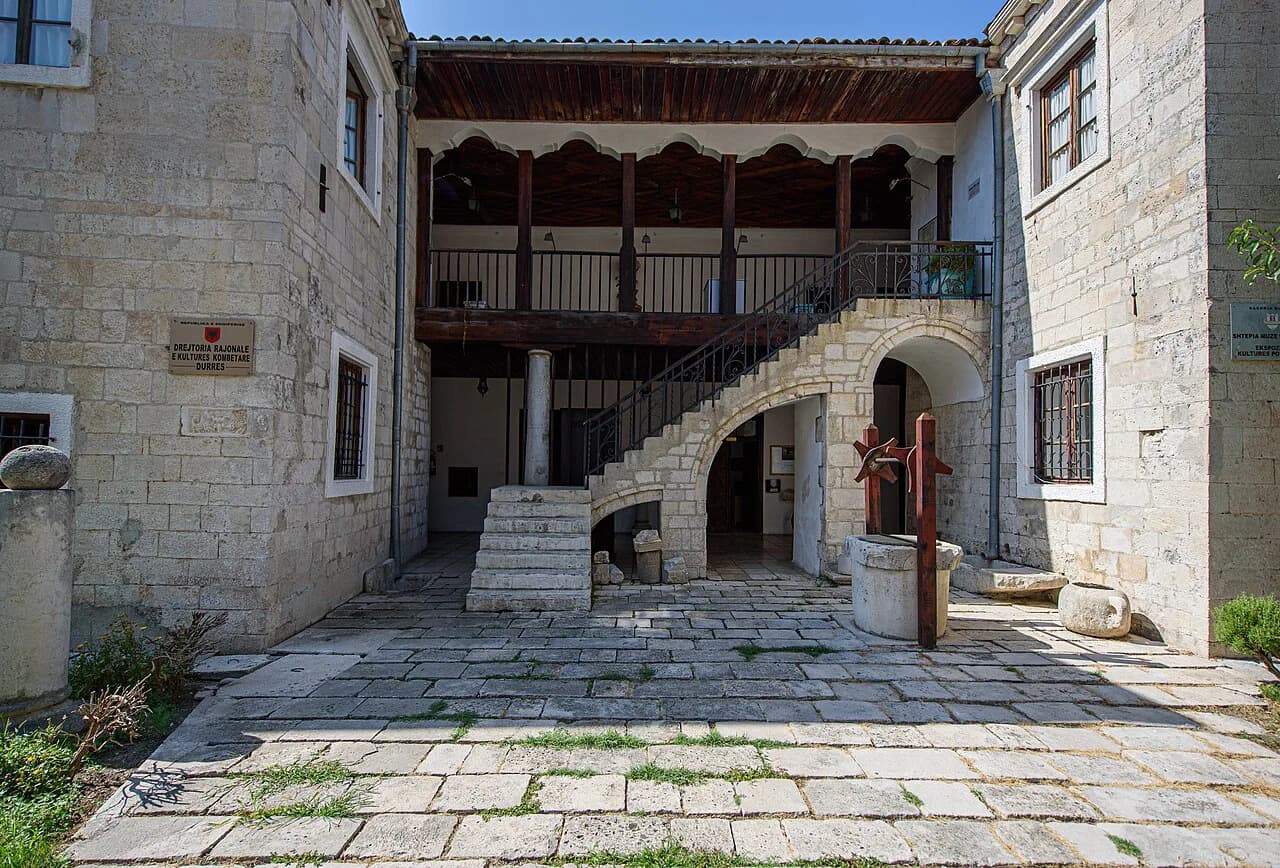
This is a house museum in two parts. The first two rooms cover the acting career of Aleksandër Moisiu, a German-speaking actor born in Albania, through posters, photographs and documents. Upstairs, the ethnographic collection holds traditional costumes and objects of daily life. It is a small museum and suits a short stop rather than a full morning.
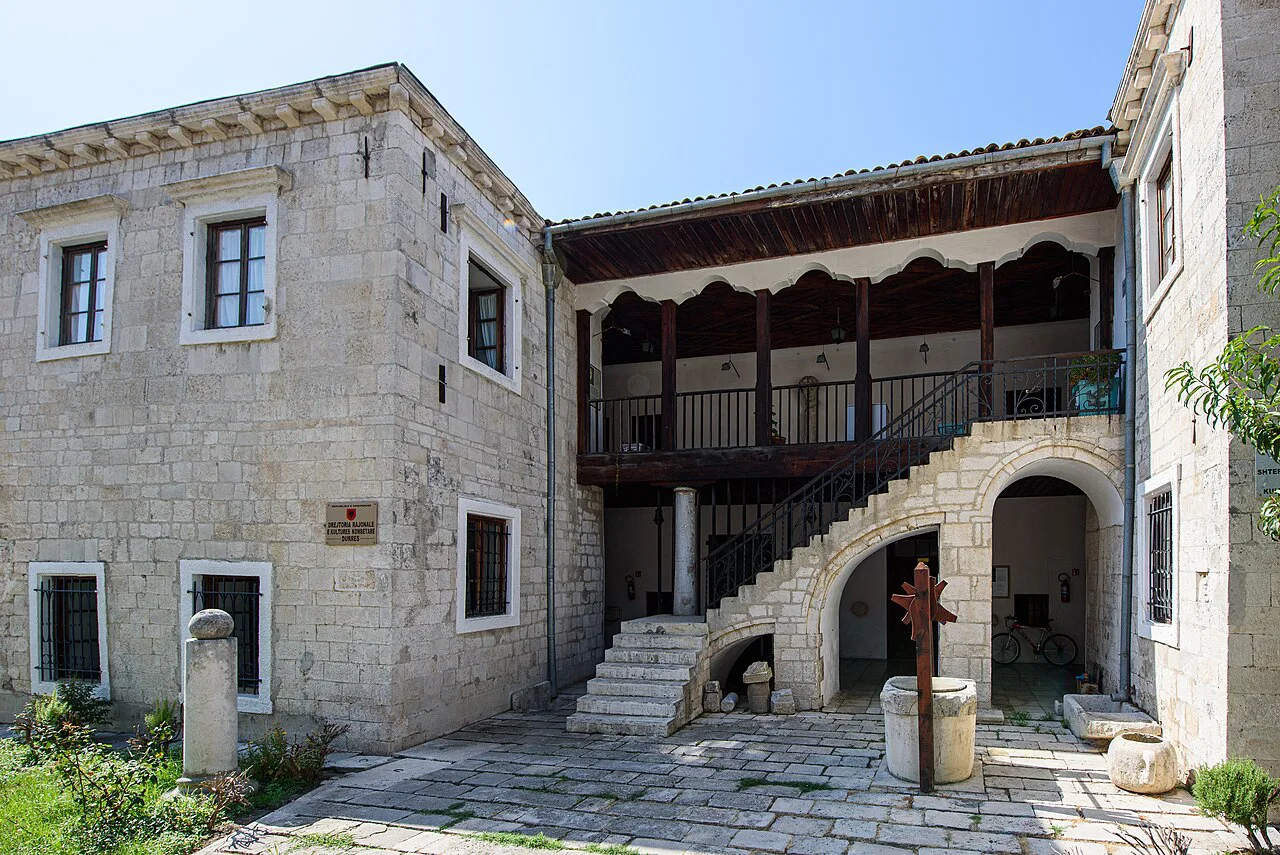
Where the Ethnographic Museum sits between the Venetian Tower and the Roman amphitheatre
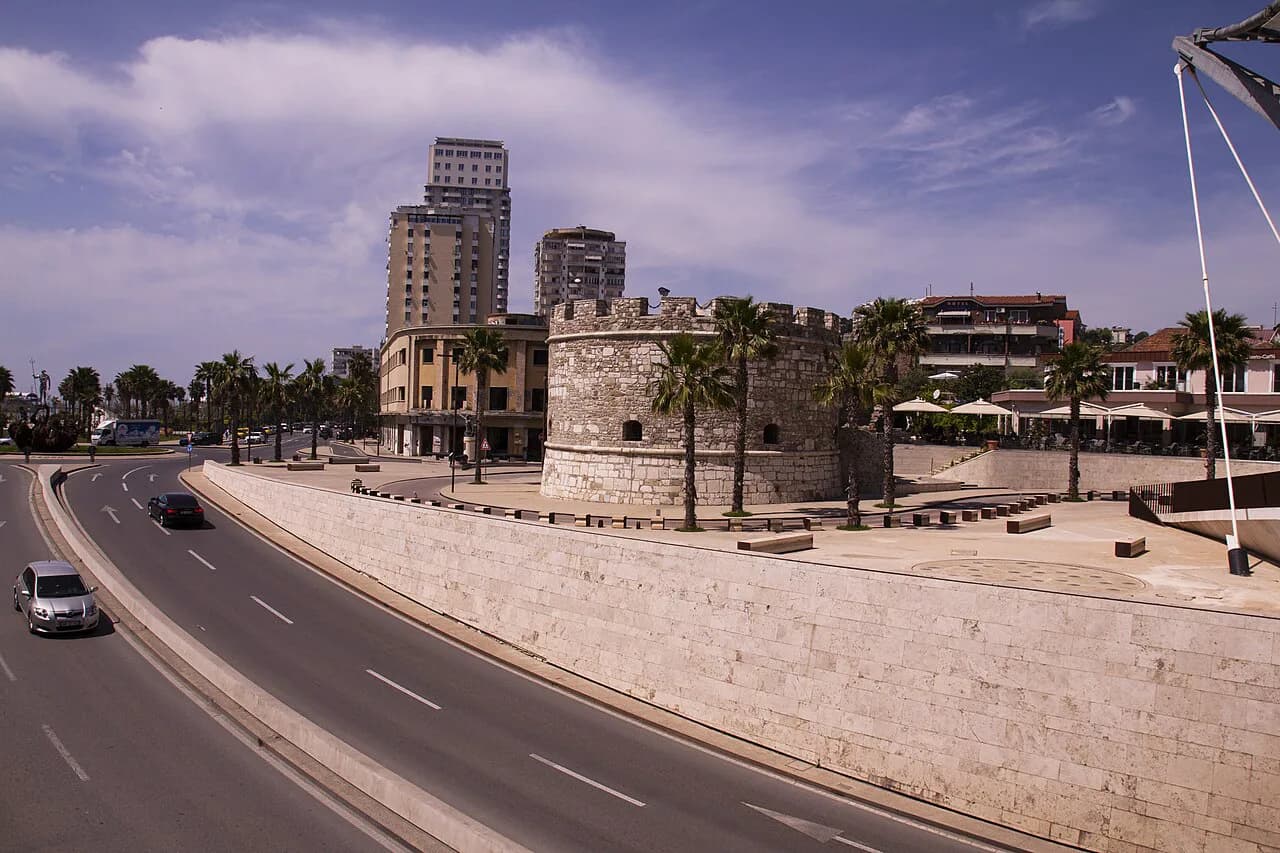
The museum stands on a side street off Rruga Xhamia, about halfway between the Venetian Tower at the top of Rruga Anastas Durrsaku and the Roman amphitheatre. That position makes it an easy add-on: see the tower, drop into the ethnographic house, then carry on to the amphitheatre. If you are following a fixed route, the walking tour sequence below covers this stretch in one go.
The Mansion of Zog: outside only
The Mansion of Zog sits on the hill above the city and was built in 1926 as a royal summer residence. It is now used as a military headquarters and is not open to the public, so do not plan a visit around it. Glimpse it as a landmark on the skyline instead, and put your museum time into the collections you can enter.
Which museum suits which visitor, and how long each needs
Choose the Archaeological Museum if you want the substance: the Roman sculpture and funerary material make it the reason to set aside an hour or more, and the garden adds a further stretch. Choose the Ethnographic Museum if you like small house museums with a local-life angle, or if you want a short stop between the tower and the amphitheatre. With one day in the city, do the archaeological collection in the morning and the ethnographic house in the afternoon between outdoor sights.
Museums to see alongside the Roman amphitheatre and the Venetian Tower
The best value comes from grouping the two museums with the remains of the old town: the amphitheatre, the surviving Venetian tower at the head of Rruga Anastas Durrsaku and the fragments of the old wall. The Durres attractions hub lists the individual sights so you can build the order around opening days; do the indoor museum on a day it is open, then walk the outdoor remains without time pressure.
Which museum should you do first?
Start at the Archaeological Museum on Rruga Taulantia if you have only one museum slot, because the Roman collection and the outdoor garden carry the city's story in a way the small ethnographic house cannot. Add the Ethnographic Museum only if the tower-to-amphitheatre walk leaves you with spare time. Both are close enough to the old town to combine with the castle remains in a single morning.
Frequently Asked Questions
How much does the Archaeological Museum of Durrës cost?
The entrance fee is 300 lek according to the city guide that lists the museum, with opening Tuesday to Sunday from 9am to 4pm. Confirm the current ticket price and hours with the museum before you travel, since these can change between seasons.
Is the Mansion of Zog in Durrës open to visitors?
No. The villa is now used as a military headquarters and is not open to the public, so it can be seen only from outside. Plan your indoor museum time around the Archaeological Museum and the Ethnographic Museum instead.
How long do the Durrës museums take?
Allow at least an hour for the Archaeological Museum's indoor rooms plus time in the garden and porticoes, and roughly half an hour for the small Ethnographic Museum. Grouping them with the Venetian Tower and the amphitheatre fills a comfortable half day on foot.
Sources
Notes for your Albania trip
Optional updates to our Albania town guides.
You might also like
Continue reading
More guides you'll find useful