Bunkers in Albania: What They Are and Where to See Them
Albania's concrete bunkers were built under Enver Hoxha's communist regime. Here is what they are, where travellers see them and how to visit the bunker museums.
On this page
Albania's concrete bunkers are small military and civil-defence structures built under Enver Hoxha's communist regime between the 1960s and 1980s. You will meet them as roadside domes, hillside lumps and coastline oddities, and two converted sites in Tirana plus a tunnel in Gjirokastër are set up for visitors.
This guide separates the two Tirana bunker museums so you can choose between them, explains what an ordinary roadside bunker actually involves up close, and sets out the practical points that decide whether a stop is worth twenty minutes or not. The regime context stays factual: these are civil-defence and military structures, not a theme-park attraction.
What Albania's bunkers are and when they were built
The bunkers are concrete structures dating from the 1960s to the 1980s, when the Hoxha regime built them by the thousand across the country. The Architectural Review describes them as impervious nuclear bunkers designed to accommodate both families and troops.
They are not ancient monuments and not a single site, so treat them as a layer across the landscape rather than a destination. Once you know the shape, you will start noticing them on the edge of fields, above roads and along the coast.
They are numerous enough that photographs of Albanian bunkers run into the hundreds, covering coastline and underground military examples. That spread is exactly why the bunkers reward a little context before you start pointing at domes.
Why the Hoxha regime built them: the fear of invasion behind the programme
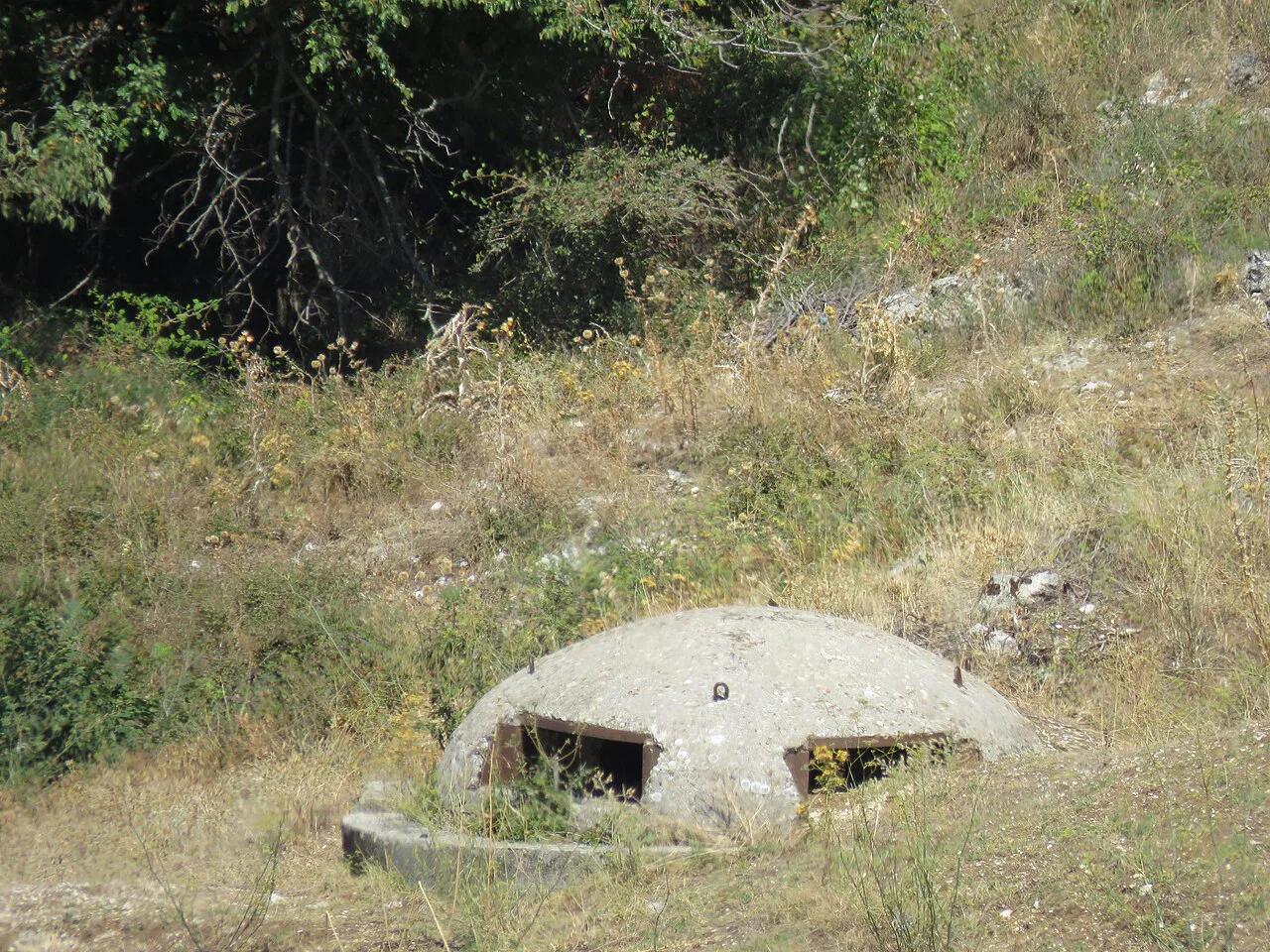
Enver Hoxha led the communist state that ordered the bunker programme, and the structures were built between the 1960s and 1980s as part of a defensive system. The scale reflects a regime preparing for invasion rather than any single battlefield.
Are there bunkers in Albania? Yes. Concrete bunkers were built across the country under Enver Hoxha's communist regime between the 1960s and 1980s, and you will still see them beside roads, on hillsides and near the coast.
Who was Albania's dictator? Enver Hoxha led communist Albania and ordered the bunker programme. Reading the communist period before you visit helps you understand why so much concrete was poured into civil-defence structures.
Can you go inside the bunkers you find by the road? Sometimes, but many are sealed, flooded or on private land. Only enter one with a clear, safe entrance, a torch and sturdy shoes, and ask locally before crossing a field.
For the wider political story behind the concrete, the period sits inside the long chapter of communist Albania, when the country was run under Enver Hoxha's one-party rule. Reading that background before you visit makes a plain dome legible as a political decision.
If the Cold War period is the part that interests you, start with the Albanian History overview and then move to the communist period in detail. It is a more useful preparation than any list of bunker coordinates.
What a bunker looks like up close: concrete dome, firing slit, family-size interior
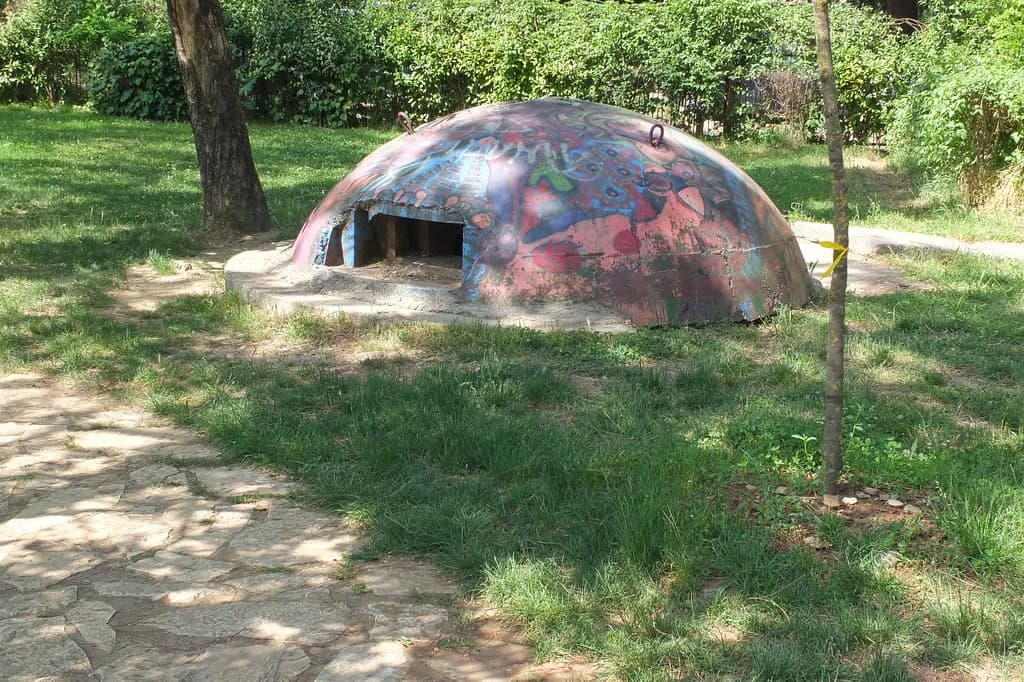
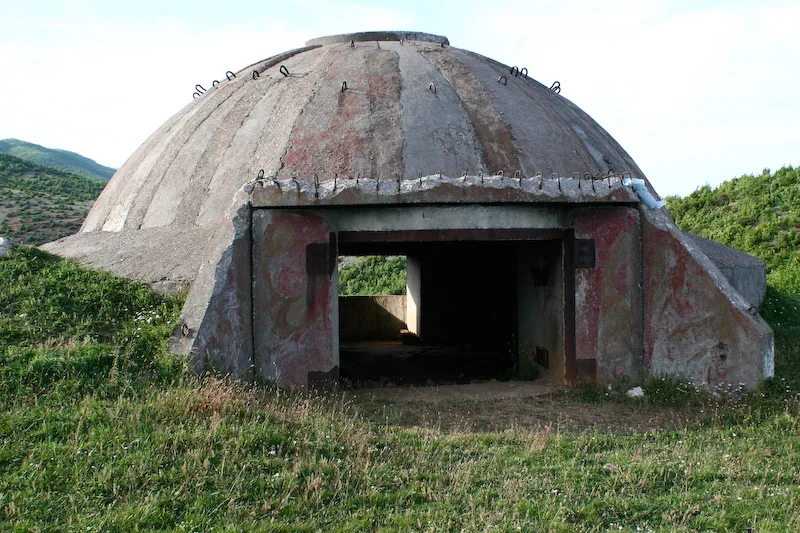
The commonest form is a low concrete dome, often half-buried, with a narrow opening facing the approach. Sizes vary from cramped one- or two-person posts to chambers built to hold a family, which is why the interior can feel surprisingly roomy after the entrance.
The entrance is usually the awkward part: a low slot or a short stepped passage, with no lighting and no handrail. Wear shoes with grip, carry a torch, and look at the floor before you step in, because debris and standing water collect in the low points.
Do not force a rusted hatch or squeeze through a gap that is clearly too tight. If the entrance is blocked, the outside tells you most of what the inside would, and the converted sites in Tirana are the place to see a full interior properly.
Bunk'Art 1 in Tirana: the large underground bunker converted into a museum
Bunk'Art 1 is the big one: a large underground bunker in Tirana converted into a museum, and the natural choice if you want one substantial bunker visit rather than several small ones. Allow it its own slot in the day rather than tacking it onto a city walk.
Because it sits in a converted structure, the practical experience differs from a roadside dome: you get a managed route, lighting and interpretation instead of a torch and a low doorway. That makes it the sensible option for anyone travelling with children or with limited mobility.
It also works as an introduction before you notice the smaller structures elsewhere on your trip. Once you have seen the interior of a bunker of this type, the purpose-built layout of the ordinary domes makes more sense.
Bunk'Art 2 in Tirana: the smaller city-centre bunker museum
Bunk'Art 2 is the smaller bunker museum in central Tirana, and its advantage is position rather than size. If you are already walking the centre, it fits into a morning without a separate journey.
Choose between the two on time and appetite. Bunk'Art 1 takes more of your day and gives you the full-scale underground experience; Bunk'Art 2 suits a shorter, city-centre stop when the bunkers are one item on a longer list.
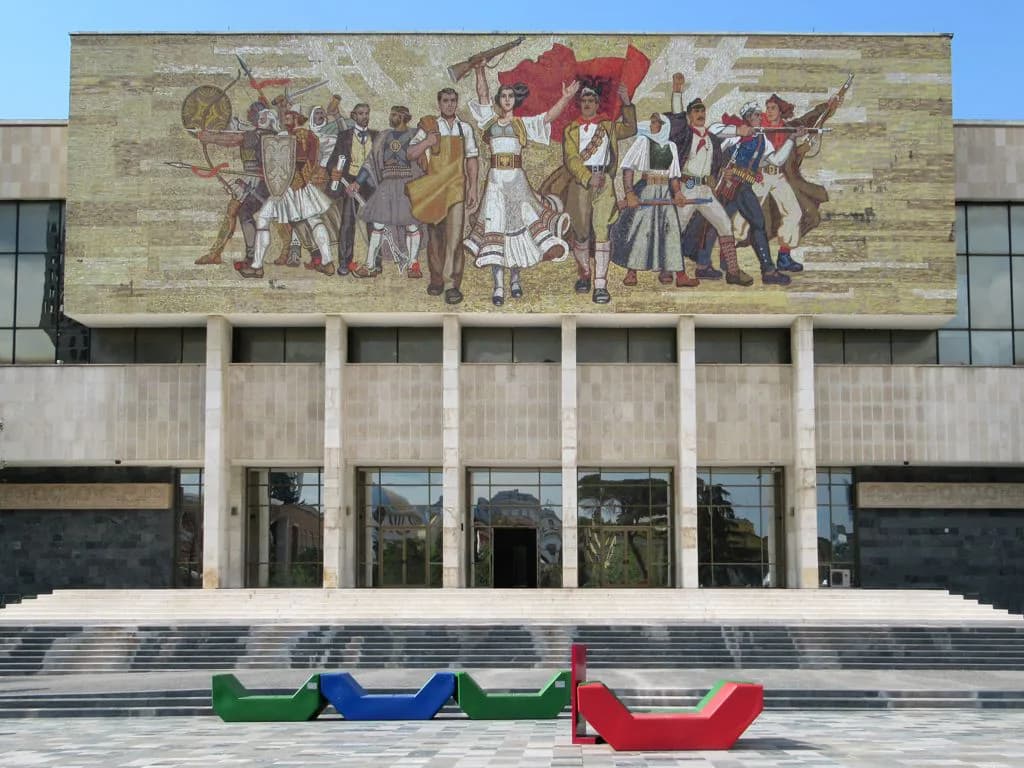
The buildings around both sites are part of the point, since the Albanian architecture of the communist years is what set the scale for the bunker programme. Look up at the blocks and squares on the walk between them.
The Cold War tunnel in Gjirokastër
Gjirokastër has its own Cold War tunnel, a sheltered route built into the town's steep, stone-built landscape. It pairs naturally with the castle and the old quarter, which sit on the same climb.
Treat the tunnel as a shelter and a piece of infrastructure rather than a display, and go in with the same expectations as for a converted bunker: hard surfaces, uneven footing and confined air. The reward is the sense of how civil defence was designed into an Ottoman-era town.
Berat and Gjirokastër both punish thin soles on their cobbles, so wear proper shoes if you plan to combine the tunnel with the old town. The Gjirokastër streets are steep and polished by use.
Bunkers you pass without trying: roadside, coastline and hillside examples
Most bunkers you see will not be signposted. Expect them beside rural roads, on hillsides above the coast and in fields just outside town, which means the best sightings happen on a drive rather than at a paid attraction.
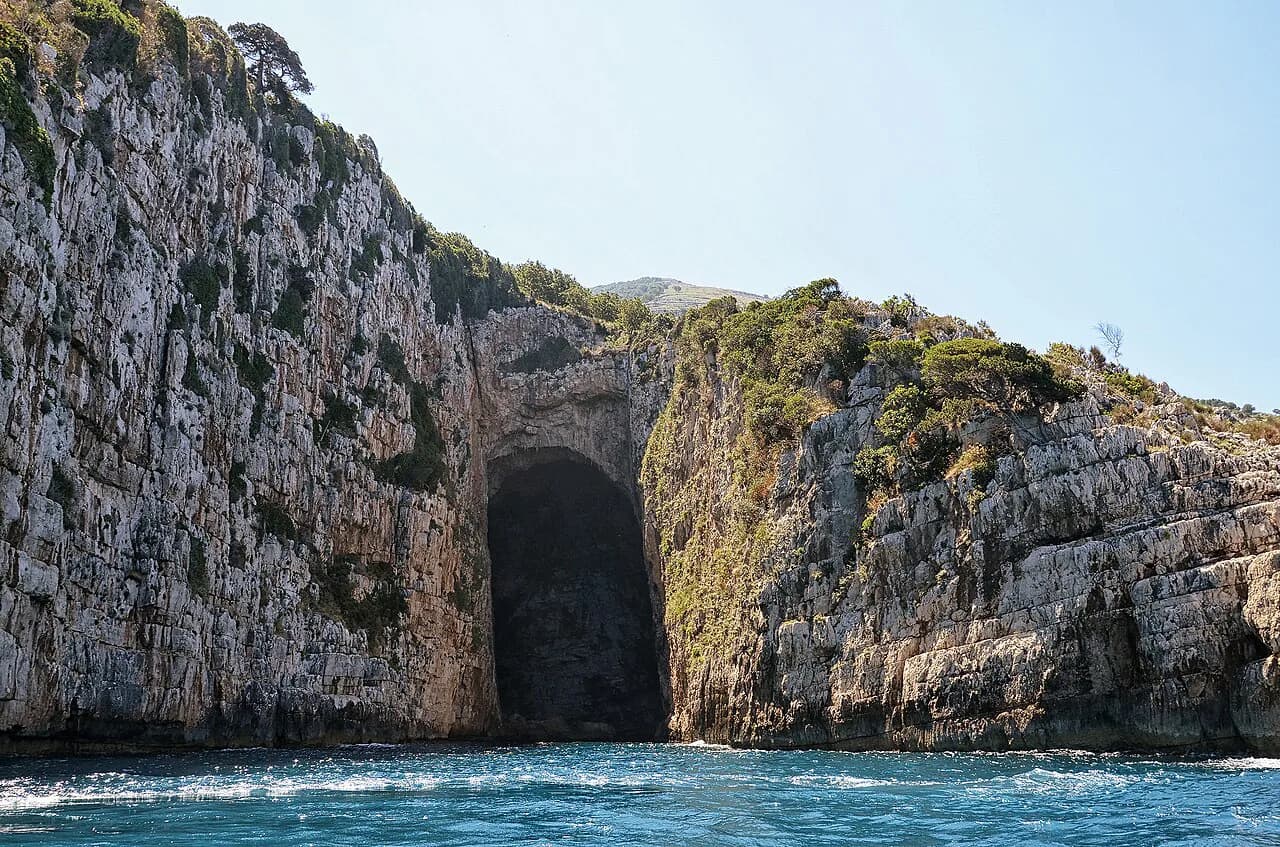
On the coast, the domes sit close to the shoreline, as photographs of the Albanian coast show. Up in the mountains, they turn up on tracks and passes where you would not think to look for them.
Stop only where there is a safe pull-off, and never on a blind bend or a narrow mountain road. A photograph from the verge is enough; climbing onto a dome above a road is not.
Visiting a bunker respectfully: these are not adventure playgrounds
These structures were built to shelter people, and some are remembered that way by local families. Walk in quietly, take nothing out, and leave hatches as you find them.
Not every bunker is abandoned or open to the public. Some stand on private land or form part of a working site, so ask at a nearby house or farm before crossing a field.
If you want the human story behind the concrete, the prison sites of the communist period are the companion subject, and Spaç Prison is the place to read up on before you travel. It sits in the same period and the same political landscape.
Practical points: uneven ground, torches, sturdy shoes and checking current opening times
Carry a torch with fresh batteries, wear shoes with tread, and take a light jacket even in summer, because the interior of a concrete structure stays cool and damp. Gloves help if you plan to handle rusty metal.
Opening hours, ticket prices and any guided-tour arrangements for Bunk'Art 1, Bunk'Art 2 and the Gjirokastër tunnel change with the season and are set by the museums themselves. Check the official Bunk'Art pages or ask at the door before you build a day around one.
The one hard rule is not to enter a structure that is dark, flooded or sealed. A dome seen from outside, with the landscape around it, is a perfectly good way to understand what the programme was.
What to read next if the Cold War period interests you
The bunkers make most sense when the communist period is read as a whole, including the way the state organised daily life and the security apparatus around it. The communist Albania guide is the next step.
For cultural context that is not political, Albanian traditions covers customs and calendar days that survived the period and are still observed. It is a useful balance after a morning of concrete and wire.
If you are building a wider history itinerary, the Albanian history pillar links the earlier periods, including King Agron and Queen Teuta, to the modern state. Read it before you plan the route so the stops fall in order.
Which bunker should you actually visit?
If you have one visit in you, go to Bunk'Art 1 in Tirana for the full underground experience, and take Bunk'Art 2 only if you are already in the centre with an hour to spare. In the south, the Gjirokastër Cold War tunnel is the one to fold into a castle day.
Whatever you choose, keep the roadside domes as scenery rather than objectives, and check the current opening arrangements before you set out. The interesting part of a bunker is what it says about the regime that built it, and that stays with you long after the concrete.
Explore more Albania guides
Frequently Asked Questions
Are there bunkers in Albania?
Yes. Concrete bunkers were built across the country under Enver Hoxha's communist regime between the 1960s and 1980s, and you will still see them beside roads, on hillsides and near the coast. Two converted bunker museums in Tirana and the Cold War tunnel in Gjirokastër are the organised sites for visitors.
Who was Albania's dictator?
Enver Hoxha led communist Albania and ordered the bunker programme. Reading the communist period before you visit helps you understand why so much concrete was poured into civil-defence structures.
Can you go inside the bunkers you find by the road?
Sometimes, but many are sealed, flooded or on private land. Only enter one with a clear, safe entrance, a torch and sturdy shoes, and ask locally before crossing a field. The museum sites are the reliable way to see a proper interior.
Sources
Notes for your Albania trip
Optional updates to our Albania town guides.
You might also like
Continue reading
More guides you'll find useful