Spaç Prison: Visiting Albania's Communist-Era Labour Camp
Spaç Prison is a ruined communist-era labour camp in northern Albania, reachable on a guided day trip from Tirana. Here is what you see and how to plan the visit.
On this page
Spaç Prison is a ruined forced-labour camp in the hills of Mirditë, northern Albania, and the most practical way to see it from the capital is a guided day trip that runs about seven and a half hours. Independent visitors can drive there, but they arrive at an unguarded site with no visitor facilities.
This guide covers what the camp was, what survives on the ground, the 1973 revolt that gives the place its meaning and how to plan a visit by tour or by car. For the wider story of the period, see the Stone & Eagle pages on communist Albania and Albanian history.
What Spaç Prison is and where it sits
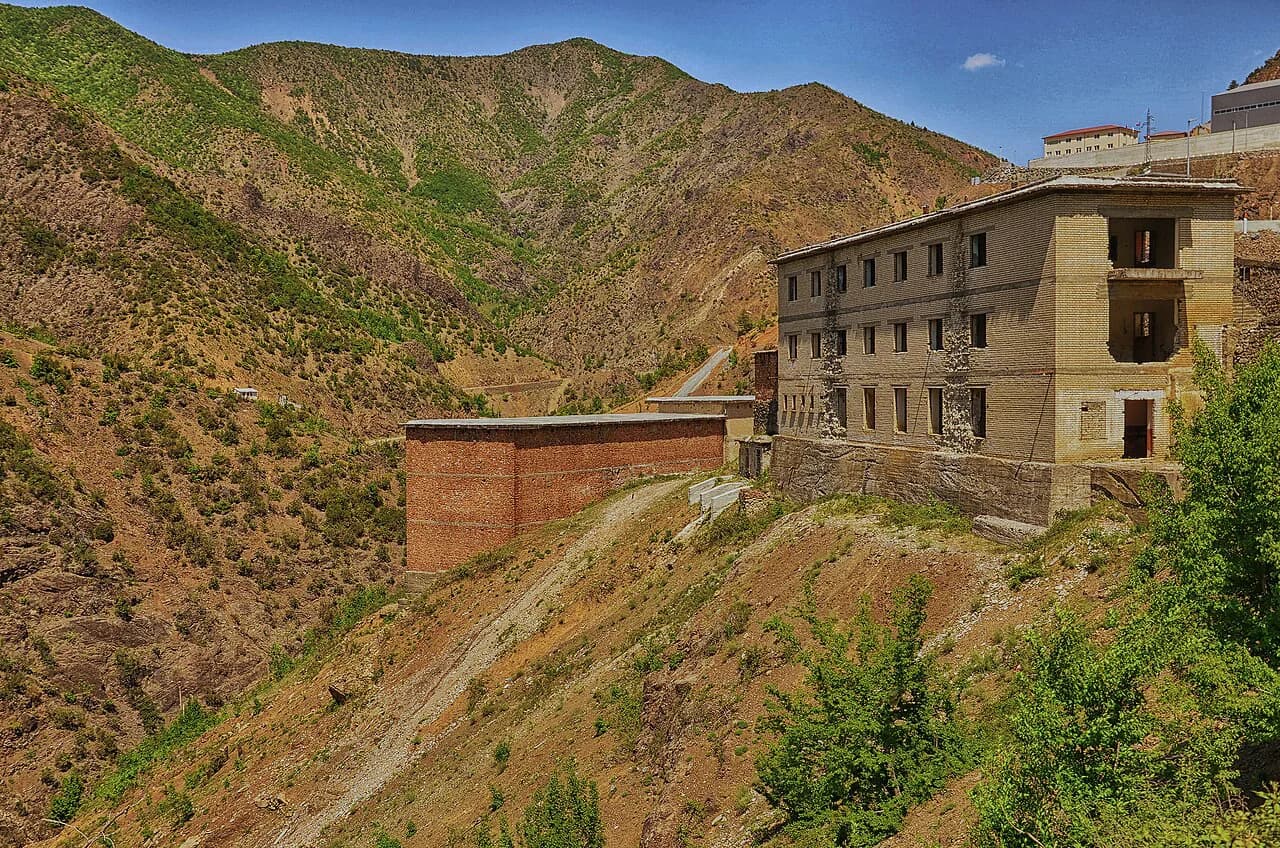
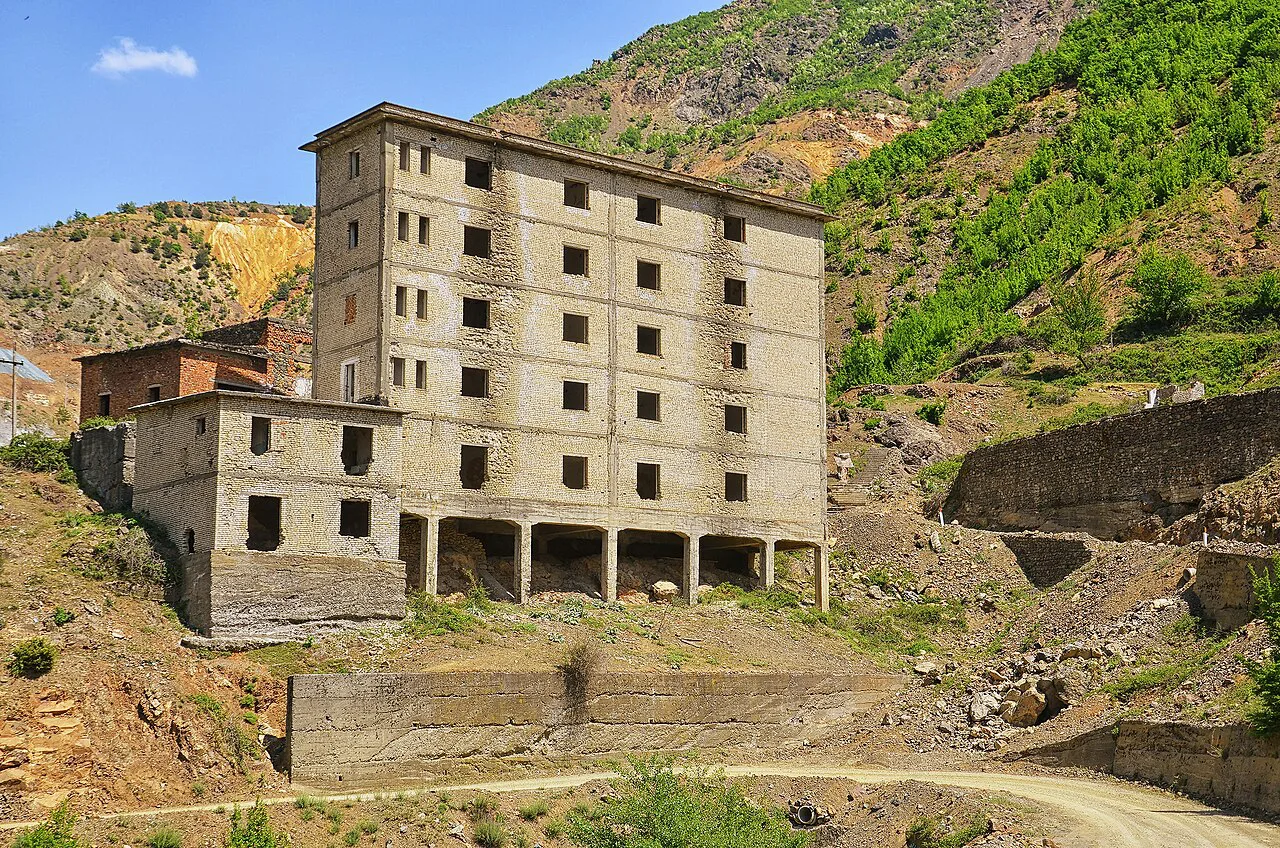
The camp lies among the hills around the small municipality of Mirditë in the north of the country. It was built as a forced-labour camp and, unlike the regime's isolation prisons, combined confinement with hard work in the adjacent copper and pyrite mines.
Tour operators date its construction to 1968, under Enver Hoxha, whose government ran Albania as the People's Socialist Republic of Albania between 1944 and 1985. Sentences at Spaç ranged from years of imprisonment to execution, and the camp held people convicted on political grounds rather than ordinary criminals.
At its peak the camp held about 1,400 prisoners. Many were intellectuals, artists and public figures, which gave the site a symbolic weight beyond its size within a system that the National Museum of History in Tirana counts as 23 prisons and 48 internment camps.
How the camp worked: isolation plus mine labour
Spaç was run as a re-education unit: the files of the former State Security record it as Re-education Unit No. 303. Prisoners worked in the mine galleries under production norms and were punished when they failed them, and the archive holds a 1980 Interior Ministry document discussing violence by guards.
Conditions extended to clothing and food. Prisoners received brown uniforms or Blue summer uniforms with brown and white stripes, and those held in cells over winter were allowed only summer clothing even in sub-zero temperatures.
Meals were weighed separately for men working underground, those on the surface and those unfit for work, and the drinking water was contaminated by underground minerals. Prisoners could buy extra food at a camp store with the little money they earned in the galleries.
What survives on the ground
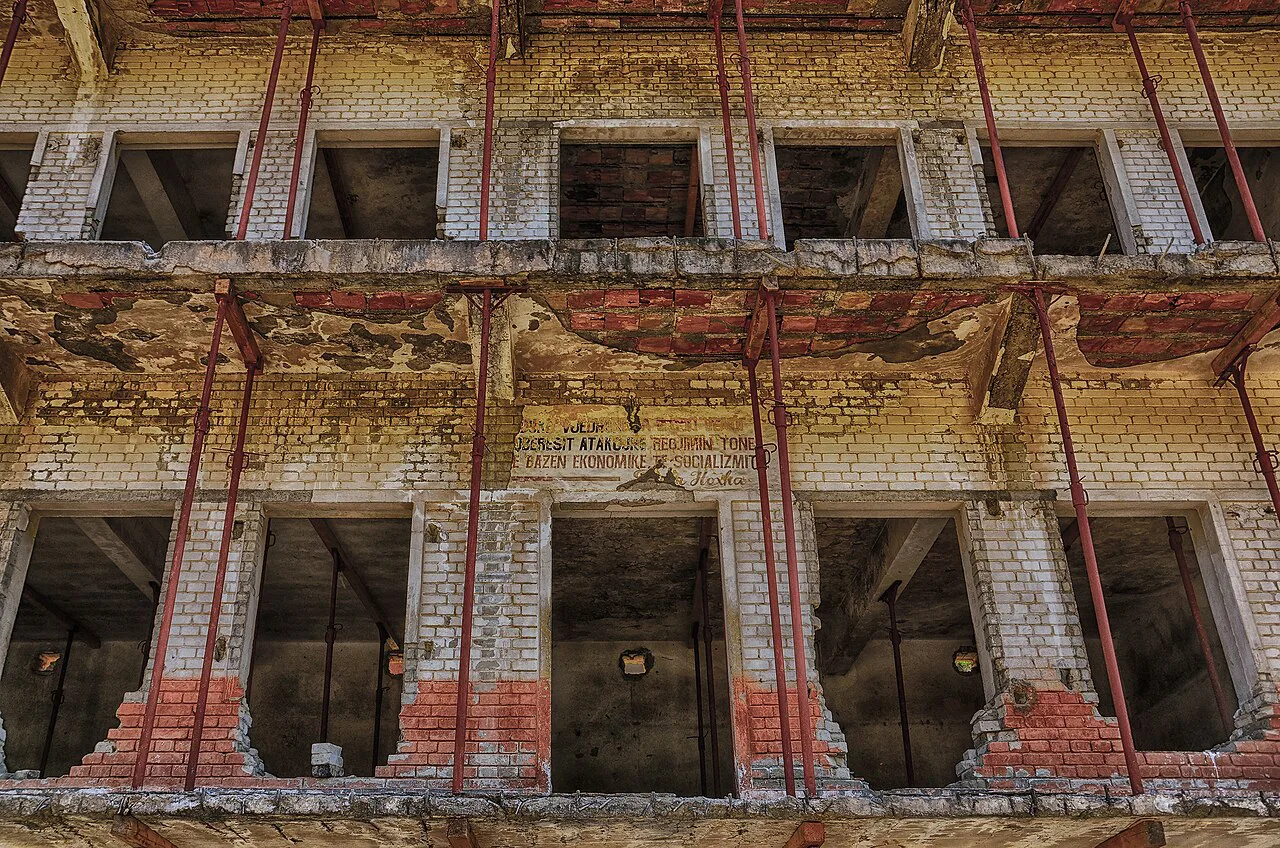
Seven buildings remain, roofless in places and stripped of doors and windows. A Swedish-funded restoration project in 2017 put in new supporting pillars and replaced old roofs in some of the buildings, described at the time as the first physical maintenance since the fall of communism.
The detail most visitors come for is the graffiti left by prisoners: tallies of days, months or years inside, names, phrases and drawings. Some are the work of artists and writers who were held here, and they survive on walls that are otherwise exposed to the weather.
Prisoners found ways to keep working at their professions inside the camp. The writer Fatos Lubonja, held for more than seventeen years in total, wrote on cigarette papers, carved objects from peach pits and made boxes covered with fruit seeds while at Spaç.
The 1973 revolt and the flag without the star
On 21 May 1973 prisoners sick of the mine labour rose against their guards, and the protest spread through the camp. It was put down on 23 May; four prisoners were executed and 66 had their sentences extended.
The defining gesture came at daybreak on 22 May, when the national flag was raised without the communist star. Mersin Vlashi painted the eagle from the model on a cigarette case, and that case is kept in the National Historical Museum in Tirana.
Commemorations of the revolt have been held at the site since, and in 2018 a serving president attended for the first time and backed the idea of a museum. The executions, the extra sentences and the flag all belong to this one short episode, which makes the ruins easier to read when you walk through them.
Visiting independently: open access and what is missing
The ruins can be entered freely on foot, with no ticket desk, no guided panels beyond a few signs and no facilities. That was the position reported in 2018, when the site was described as unguarded and slowly deteriorating.
In the same period the Spaci Museum organisation estimated at least 3,000 visitors in 2017 and paid a gatekeeper from 2014 to stop metal being stripped from the buildings. Treat any gate you find as part of site management rather than a ticket office.
Expect loose masonry and uneven ground, and keep to the paths and solid floors. Photography is the main thing to plan for: the graffiti fades and the light inside the buildings is poor for much of the day.
The guided day trip from Tirana
The guided option is a day trip of about seven and a half hours, starting at 08:00 and offered in English. The tour is sold through Almanart on Expedia and listed by Booking.com, which puts the meeting point at the Carousel near Skanderbeg Square in Tirana, with pickup from some hotels included.
One listing prices the trip at 135 euros per adult including taxes and fees, with the site visit given two hours and a stop at Rubik of about 45 minutes. That is the figure on that page rather than a fixed rate, so compare operators and confirm the price at the time you book.
The tour includes transport, bottled water and wifi on board but not food and drinks or personal expenses. It is listed as unsuitable for pregnant travellers, children under six and people with mobility impairments or wheelchair users.
Getting there by car and how long to allow
By road the camp sits in Mirditë, north of Tirana, in hill country reached on ordinary roads that reward an early start. Allow most of a day for the round trip and the visit rather than slotting it between two city stops.
The guided trip gives two hours at the prison itself, which is enough to walk the seven buildings and read the graffiti at an unhurried pace. Independent visitors should budget a similar stretch on site and add time for the final approach, which is slow going.
Fuel and food should be sorted before the last stretch, since there is nothing at the site. If you are also touring the bunkers in Albania, Spaç makes a stark counterpoint to the concrete domes along the coast.
Cultural monument status and the museum proposal
Spaç was declared a cultural monument in 2007, the only site of communist repression in the country to carry that status at the time. Plans to turn it into a remembrance museum have circulated for decades and are supported by former prisoners.
Progress has depended on non-government funding. The Ministry of Culture told reporters in 2018 that no money had been earmarked for conservation or a new project, and Cultural Heritage without Borders Albania led the practical work with a Swedish grant.
Treat the museum as a proposal, not something you can visit, and judge the site as a monument in a slow state of rescue. The prison files, artefact records and testimony collected by the AIDSSH documentation centre give context that the ruins themselves cannot.
How to behave at the site and what to bring
Spaç is a memorial as much as a ruin. Walk quietly, take nothing from the buildings, do not add to the graffiti and leave the walls as you find them; the pencil marks and scratched names are the record the museum proposal is built around.
Wear sturdy shoes for rubble and keep long trousers for rough ground and insects. Bring water, sun protection and a rain layer, and a torch for interiors that have lost their roofs and windows.
Photograph the graffiti without touching it, and do not move objects or stones to improve a shot. If you join a tour, the guide's introduction on arrival sets the sequence for the visit and is worth hearing before you wander.
Should you book the day trip or drive yourself?
Book the guided day trip if you want the drive handled, a guide's introduction on site and a fixed seven and a half hours from Tirana. Drive yourself if you want longer at the graffiti and the buildings and are comfortable with rough ground and no facilities.
Either way, check current prices and dates before you commit, since these are commercial details that change. Read the AIDSSH material on the camp beforehand so the ruins read as a place of record rather than an empty shell.
Explore more Albania guides
Frequently Asked Questions
Can you visit Spaç Prison without a tour?
Yes. The ruins have been open to walk through without a ticket, and visitors have found their own way there. You need your own vehicle, and you should expect unguarded buildings with missing doors and windows rather than a staffed attraction.
How long does the Spaç Prison day trip from Tirana take?
The guided trip is listed at about seven and a half hours, starting at 08:00, with two hours given to the prison itself and a short stop at Rubik. The meeting point is the Carousel near Skanderbeg Square, with pickup from some hotels.
What is there to see at Spaç Prison?
Seven surviving buildings, prisoners' graffiti counting days and naming names, and the walls where the 1973 revolt played out. Artefacts linked to the camp, including the cigarette case used as a model for the starless flag, are held at the National Historical Museum in Tirana.
Sources
- Depuis la prison de Tirana Spaç, l'Albanie dévoile son passé sombre
- Spaç, Enver Hoxha's cultural heritage that Albania wants to forget
- Kamp-Burgu Spaç / Fakte & Artefakte - Burgu i Spaçit
- Albanians Hope to Turn Political Prison into Museum | Balkan Insight
- From Tirana Spaç Prison Unveiling Albania's Dark Past Tiranë - Booking.com
Notes for your Albania trip
Optional updates to our Albania town guides.
You might also like
Continue reading
More guides you'll find useful