Albanian Rugs: What Visitors Find in Krujë's Craft Market
Albanian rugs sold in Krujë's craft market range from new handwoven pieces to antiques. Here is how to judge size, price and the trip home before you buy.
On this page
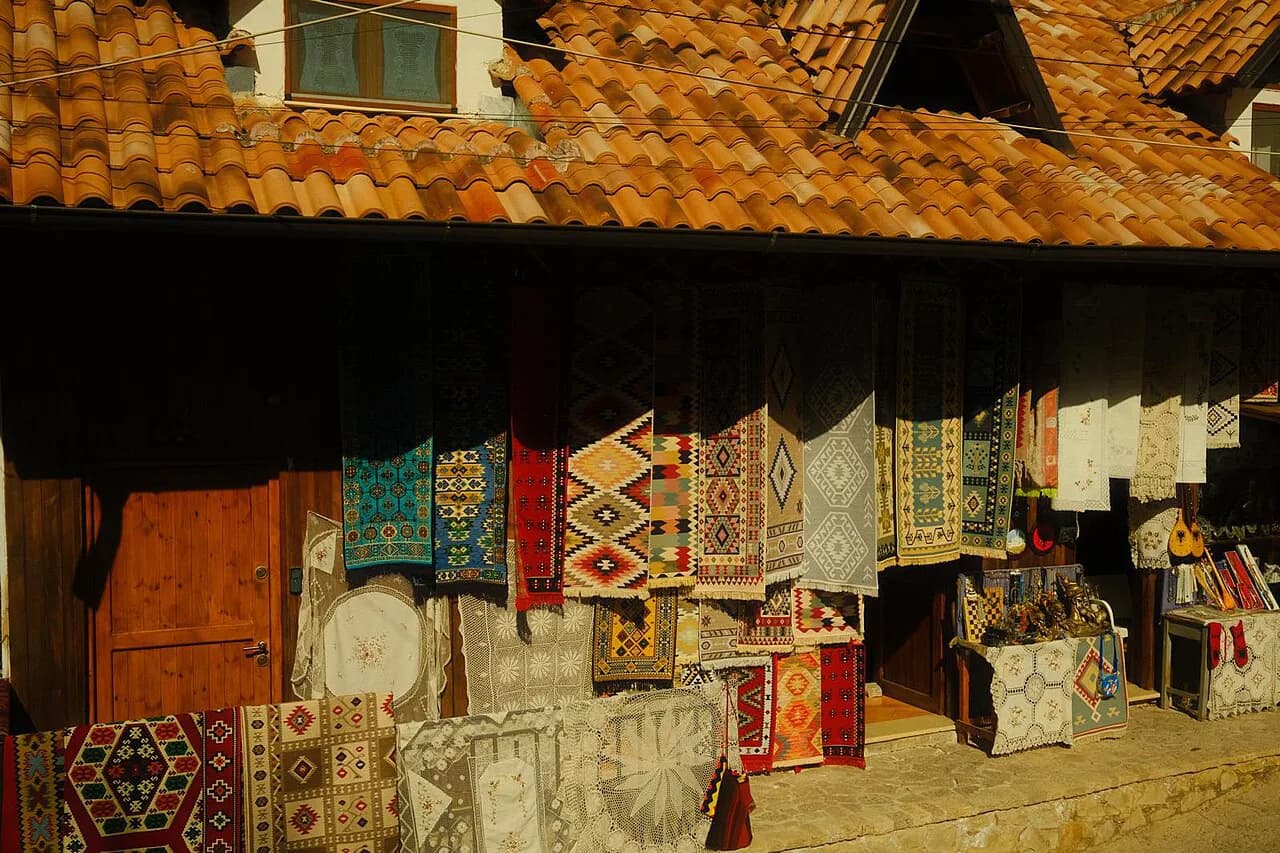
Albanian rugs turn up for sale in Krujë, the hill town north of Tirana, in a craft market lined with stalls and antiques shops a short walk from the castle. If you want to see rugs and buy one in the same morning, Krujë is the practical stop; this guide covers what is on offer, the sizing and payment questions to settle before you commit, and the 2017 prices one buyer reported.
The trade here sits inside a wider story of craft and rule, from the Ottoman period through the isolation of communist Albania, and the shops are a good place to start reading up. For the background, see our guide to Albanian history.
What Albanian rugs are and where you will see them for sale
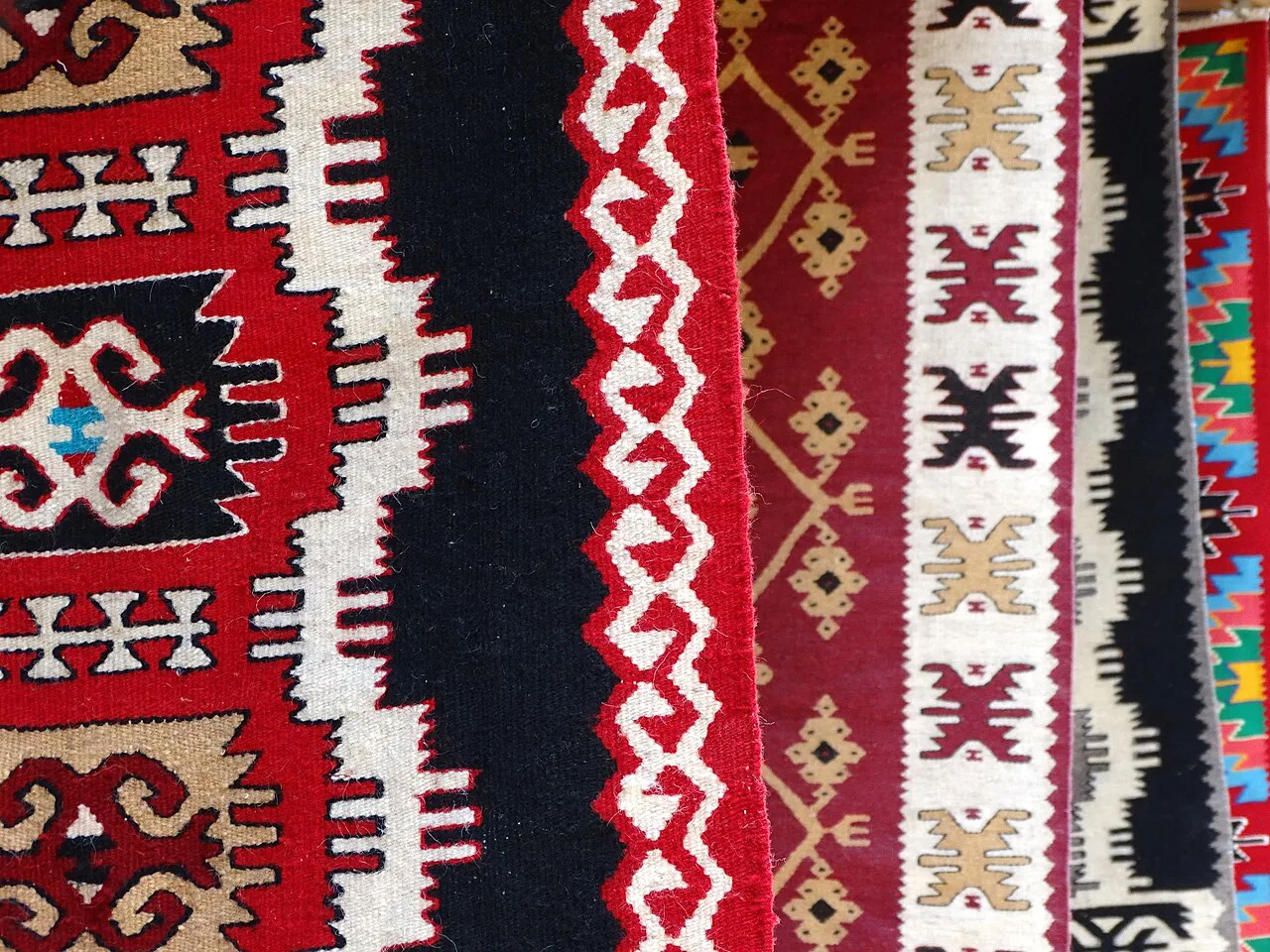
Albanian rugs are woven textiles within the broader family of oriental carpets produced across the former Ottoman lands. A specialist dealer groups Romanian, Bulgarian and Albanian rugs as regional production, but notes that Albanian and Bulgarian output is limited in both quantity and the range of qualities and designs compared with Romania, even where individual pieces match Romania's highest-quality work.
The same dealer is blunt about value: resale value for these rugs is typically poor, so buy one as a good-value furnishing rather than an investment. That framing matters in the shop, because a rug you love on the floor at home is a different purchase from a rug you hope to sell on. Krujë's craft market and its antiques shops are the realistic places for a visitor to see both new and older pieces side by side.
Why Krujë is the place most visitors connect with Albanian rugs
Krujë has a compact, walkable centre with the castle above the bazaar streets, and the town has been investing in squares, parks and walkways, which makes browsing on foot straightforward. A visitor who went specifically for handmade rugs found a crafts market, several antiques stores with historical pieces, and stalls where hats and shoes were being made on the spot.
Are Albanian rugs a good investment? No. A specialist dealer describes resale value for Romanian, Bulgarian and Albanian rugs as typically poor and treats them as good-value furnishing pieces rather than investments.
Can I ship a rug home from Albania instead of carrying it? Some shops offer shipping, so ask what the service covers and whether the price includes customs paperwork. Compare that with your airline's excess baggage charge, which can be substantial for an oversized roll.
Krujë sits within day-trip range of Tirana and pairs naturally with the castle and its museums, so you can look at rugs without building a whole trip around the purchase. The town also draws on a longer craft tradition that runs through Albanian culture more widely, which is why the market reads as a place where things are made as well as sold.
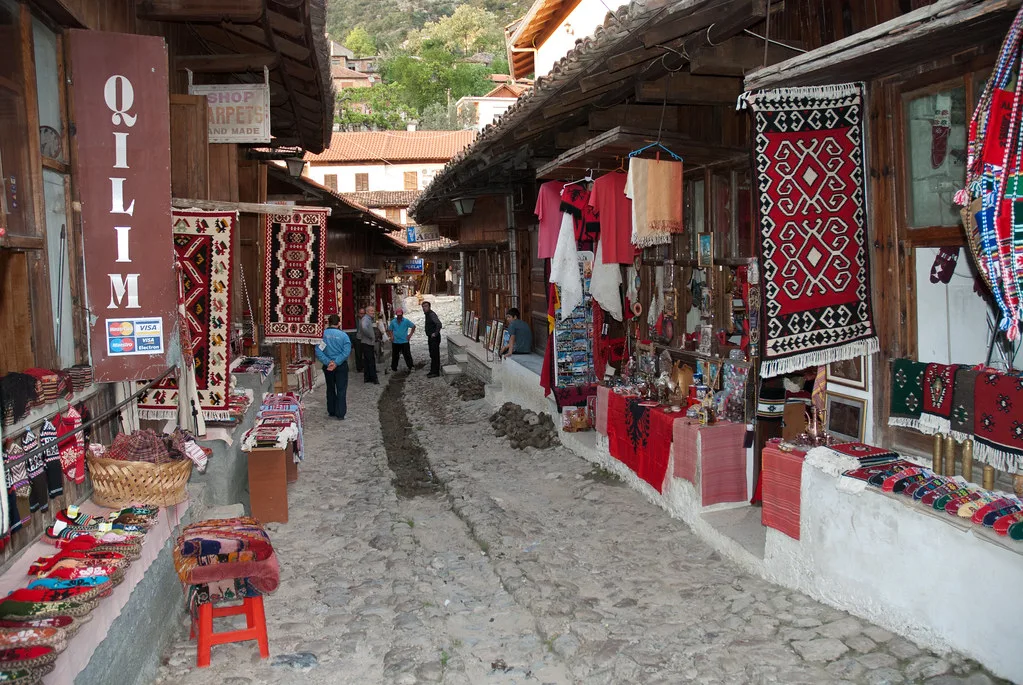
The craft market in Krujë: stalls, antique shops and workshops
Expect two distinct experiences within a few minutes of each other. The market stalls lean towards new work, and a 2017 visitor watched hats and shoes being made on the spot, while the antiques shops hold older pieces that need closer inspection. If rugs are the priority, ask at each stop whether the piece is new or old before you discuss anything else, because the two carry very different prices and risks.
Accommodation exists inside the castle walls, and the craft market is a short walk from them in the town centre, though where to stay is not the point of this page. Go early in the day if you want unhurried conversation with sellers, and carry cash in lek as a fallback even if cards are accepted.
What new and antique rugs cost: figures reported by a visitor in 2017
The only concrete figures available come from a buyer writing in 2017: 100 euro for a beautiful antique rug, and 225 euro and 285 euro for two brand-new rugs of roughly two metres by three metres. Treat these as 2017 history, not as today's asking prices, and expect the shop to quote you its own figure.
Online listings give a sense of the spread but not a local price guide. A quick scan of Albanian rugs offered abroad shows pieces in the thousands of dollars, while the same search on Etsy surfaces handwoven wool and cotton kilims at craft-market levels. Neither tells you what a Krujë stall will ask, so use them only to calibrate what different constructions look like.
Ask the seller to state the size and the material in writing on the receipt, then compare that with the price quoted. If a figure feels high for the piece in front of you, walk the market and look at two or three others before returning; the comparison is free and it is the only reliable local benchmark you will get.
Sizing and weight: what a 2m by 3m rug means for your luggage
A two-by-three-metre rug is six square metres of wool or cotton, and it will not fold into a cabin bag. Rolled and wrapped it becomes a long, heavy parcel that counts against airline baggage allowances and may need to travel as oversized luggage. Measure your allowance before you buy, and ask the shop to roll and wrap tightly rather than folding, which creases the pile.
Bargaining: what one buyer advises and why
The 2017 buyer's advice was pointed: do not push the bargaining too hard, on the argument that Albania is a country where the margin matters to the seller. That is one person's judgement rather than a rule, but it is a reasonable starting position for craft purchases in a small market. Ask politely whether there is any movement on price, accept the answer, and remember that a fair price for a piece you will keep for years is not the same as the lowest price achievable.
Bargaining works best when you have already narrowed the field to one or two pieces and know their sizes and materials. Haggling over a rug you do not want wastes everyone's morning, and in a compact market you will pass the same stall again on the way back to the castle.
Buying an antique rug: what to check before you commit
Older pieces need a slower look than new ones. Unroll the rug in daylight if the shop can manage it, check the edges and the ends for fraying, and look along the length for patches or colour that shifts abruptly from one section to another. Ask plainly how the seller dates the piece and what they know about where it was woven; a confident answer with detail is more useful than a label.
The dealer's warning about weak resale value applies most strongly to older rugs bought quickly. Budget for cleaning and possible repair at home, and treat the antique price as the start of the total cost rather than the end of it. If a piece has been stored folded for a long time, creases may settle after some weeks flat, so plan where it will lie before you buy.
Paying and taking a rug home: questions to settle in the shop
Settle five things before money changes hands: the exact size, the material, whether the piece is new or antique, how it will be packed, and what documentation you get. A written receipt with the seller's details and the price in lek or euro protects you if customs or your airline asks questions. Ask whether the shop can arrange shipping and what that covers, because a courier option can be simpler than carrying a rolled rug through two airports.
Check your home country's rules on importing wool and cotton textiles, and keep the receipt with the rug until it is home. If you are travelling on by bus or furgon rather than flying out of Tirana, confirm the parcel fits the luggage space before you buy. For the wider reading on how Albania's trading towns and crafts developed, our communist Albania section covers the decades when private craft was suppressed and later revived.
Should you buy a rug in Krujë or just look?
Buy in Krujë if you have a clear spot at home, a measured allowance for the flight, and the patience to compare three or four pieces in daylight. Look rather than buy if you are mid-trip with a tight itinerary, since a six-square-metre parcel changes how you move for the rest of the journey. The market rewards a slow morning, not a rushed one.
Either way, the visit earns its place: the craft market, the antiques shops and the castle above them make a half-day that fits easily into a Tirana itinerary. Decide your ceiling before you walk in, ask for size and material in writing, and leave the bargaining to a single polite question.
Explore more Albania guides
Frequently Asked Questions
Are Albanian rugs a good investment?
No. A specialist dealer describes resale value for Romanian, Bulgarian and Albanian rugs as typically poor and treats them as good-value furnishing pieces rather than investments. Buy one because you want it on your floor, not because you expect to sell it on at a profit.
Can I ship a rug home from Albania instead of carrying it?
Some shops offer shipping, so ask what the service covers and whether the price includes customs paperwork. Compare that with your airline's excess baggage charge, which can be substantial for an oversized roll. Keep the receipt with the rug either way.
Sources
Notes for your Albania trip
Optional updates to our Albania town guides.
You might also like
Continue reading
More guides you'll find useful