Albanian Traditions: Etiquette & Customs Guide for Albania
Albanian traditions explained for visitors: how hospitality, head gestures, coffee and mixed-faith neighbourhoods shape everyday life, and how to behave.
On this page
Expect to be offered coffee, and possibly lunch, before you have finished asking for directions: hospitality is the tradition visitors notice first in Albania. This guide covers the customs that shape everyday encounters, from the head gestures that reverse yes and no to mixed-faith families, the communist-era ban on religion and what happens on Independence and Flag Day. It then points to the old towns, castles, mosques and churches where these traditions are easiest to see.
None of it requires special study. A few practical habits — accepting a coffee, watching how someone moves their head rather than nodding along, dressing modestly at places of worship — carry you through most situations. Read this before your first day in Tirana, Berat, Gjirokastër or Shkodër and the rest of the trip makes more sense.
What Albanian hospitality looks like in everyday life
Guests are treated as a priority, and that often means an invitation to sit down for coffee or a meal. Travellers routinely find themselves pulled into homes or cafés by people they have just met, sometimes without a shared language. Accept when you can: refusing warm offers can read as distance, and a short coffee is usually all that is expected of you.
The same instinct shapes the café and restaurant side of daily life. Coffee is a social occasion rather than a quick fix, and sitting over one cup for a long conversation is normal. If you are short of time, say so early and warmly; Albanians generally take a clear, friendly refusal better than a vague one that drags on.
Albania's religious make-up is more mixed than many visitors expect, which feeds into a broadly relaxed, secular outlook in daily life. Muslim, Catholic and Orthodox communities live alongside each other, and families often include members of different faiths. That tolerance is a working part of the culture, not a talking point, and it shows in how casually religion comes up in conversation.
The head gesture that trips up visitors: yes and no
The body language for yes and no is often the reverse of what visitors from the UK, Ireland or the US expect. A shake or wobble of the head means yes, while a nod or tilt means no. Younger Albanians and people used to foreigners may follow international norms instead, so watch the whole face and the context rather than one movement.
What are Albanian funeral traditions? Family and community obligations are strong when someone dies, and neighbours and relatives are expected to show up and help. Customs vary by region and by whether the family is Muslim, Catholic or Orthodox, so if you are attending a funeral, follow the family's lead and ask a local contact about dress and timing rather than relying on a general description.
How do I say hello in Albania? A simple greeting in Albanian is enough, plus a handshake and a smile. Younger people and anyone working in tourism will usually switch to English once they hear your accent.
Is Albania friendly to Muslims? Muslims, Catholics and Orthodox Christians live alongside each other across the country, and families often include several faiths. Plenty of Albanians are non-practising, partly because religion was banned under the communist regime.
This matters most at counters and in markets, where a wobble in reply to a question about whether something is available can look like a refusal. Ask a clarifying question or point at what you want, and you will get there. Do not copy the gesture back at random; use plain words and let the other person set the register.
Guest etiquette: coffee, raki and meals offered to you
Raki, a strong spirit, is the drink most likely to be pressed on you in a home or village setting. It is fine to take a small sip and leave the rest, and it is fine to decline with a smile; what counts is the tone of the exchange, not the volume drunk. Home-made raki served in rural areas is notably stronger than what you would order in a bar.
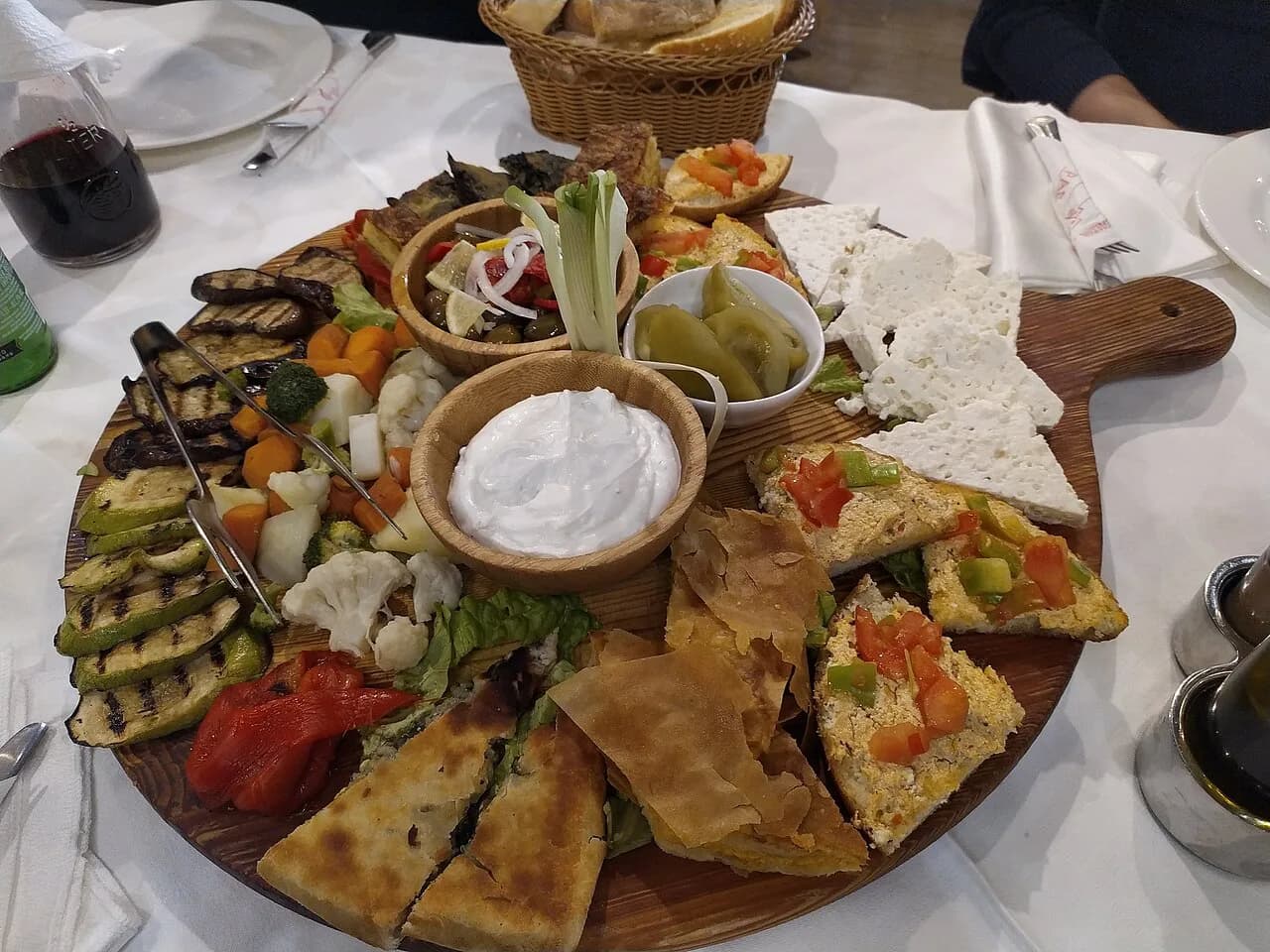
At meals, expect food to keep arriving and your plate to be refilled before you have emptied it. Eating what you are given, or taking a small second helping, is a simple way to return the generosity. If you have dietary restrictions, mention them at the start rather than at the table.
Tipping is not a big ritual. Rounding up to the nearest note is the usual approach at restaurants, with around ten per cent normal on larger bills. Smoking is officially banned in enclosed public places, though in practice you will still encounter it in restaurants, so pick your table with that in mind.
Religion and everyday life: mixed-faith families and relaxed practice
Most Albanians are Muslim by background, with Christian communities making up the rest, but a large share are non-practising. Religion tends not to define identity or friendship groups, and people move easily between communities. For a visitor, this means you should not assume religious observance from a name, a neighbourhood or a family.
That relaxed attitude has deep roots. Islam spread during more than four centuries of Ottoman rule, while Catholic and Orthodox Christianity continued in different regions, and the country's Albanian history runs through all of it. You see the overlap in towns where a mosque and a church stand within a few minutes' walk of each other, and in families who keep a foot in more than one tradition.
When you visit a mosque or church, dress plainly with shoulders and knees covered, and take your shoes off at the door of a mosque. Keep your voice down, ask before photographing people at prayer, and stay out of the way during services. These are courtesies rather than rules you need to memorise.
How the communist ban on religion still shapes what you see
Under Enver Hoxha, Albania was declared the world's first officially atheist state. Places of worship were closed and public religious practice was banned, though many families kept small customs going quietly at home. That period explains why some older Albanians know their traditions better than they know their local mosque or church.
The 1967 Cultural Revolution pushed the campaign further, and religious practice was largely stamped out. Since the early 1990s, mosques and churches have reopened and faith has returned to public life, but the secular habit of the decades before has not disappeared. In practice, you will meet people who observe festivals without attending services.
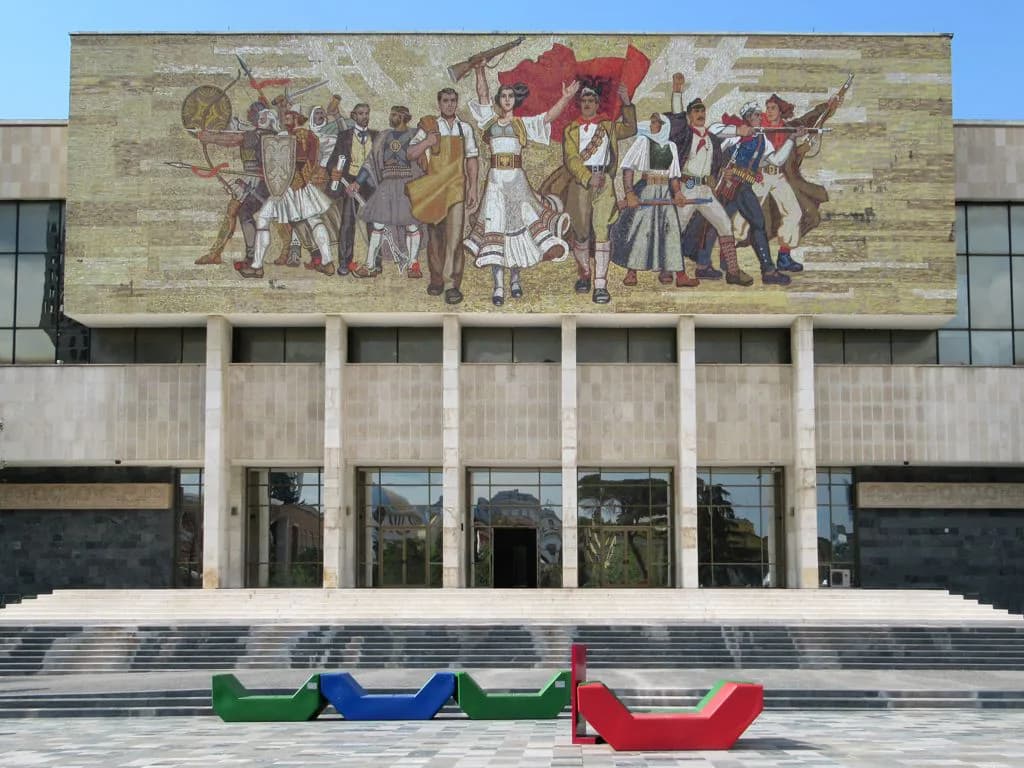
Concrete bunkers scattered across the countryside are the other visible legacy of the same era, built as shelters and never used as intended. Many now sit in fields or beside roads, and a few have been turned into museums. If the period interests you, it is worth reading about communist Albania before you travel, because the sites make far more sense with the background in place.
Family, the Kanun and the code of honour behind Albanian behaviour
Family sits at the centre of Albanian social life, and obligations to relatives still organise much of daily routine. That can look formal to visitors: elders are greeted first, and questions about your family are a friendly opening rather than an intrusion. Answering them briefly and asking back is the expected move.
The Kanun, a customary code of honour, underpins older ideas about hospitality and the protection of guests. You do not need to study it, but it helps explain why a guest can be treated as a responsibility rather than a customer.
The practical effect for travellers is simple: accept the offered seat, say thank you, and do not be surprised if someone insists on paying. Pushing back too hard on a small kindness is the one move that feels off. Let the host win the small battles and treat them to something later in the trip.
What Independence and Flag Day mean in Albania
Independence and Flag Day are the country's most important national holidays, marked with ceremonies, fireworks and family time. They commemorate the 1912 declaration of independence from the Ottoman Empire. If you are in a town on the day, expect crowds in main squares and a lot of red and black in the streets.
For visitors, the main practical point is that public holiday days can shift transport and museum plans, so build some slack into those days rather than a tight schedule. The rest of the page is about customs you can see any week of the year.
Albanian language basics visitors hear most
Albanian is its own branch of the Indo-European family. Greetings are short and worth learning: a simple hello and thank you get you a long way, and an attempt is usually met with encouragement rather than correction.
Pronunciation is consistent once you know the rules, so place names read the way they are written. That helps on buses and in stations, where you will see Gjirokastër, Shkodër and Vlorë written in full. Say the name as printed and you will be understood.
Traditional dress and folk music at major celebrations
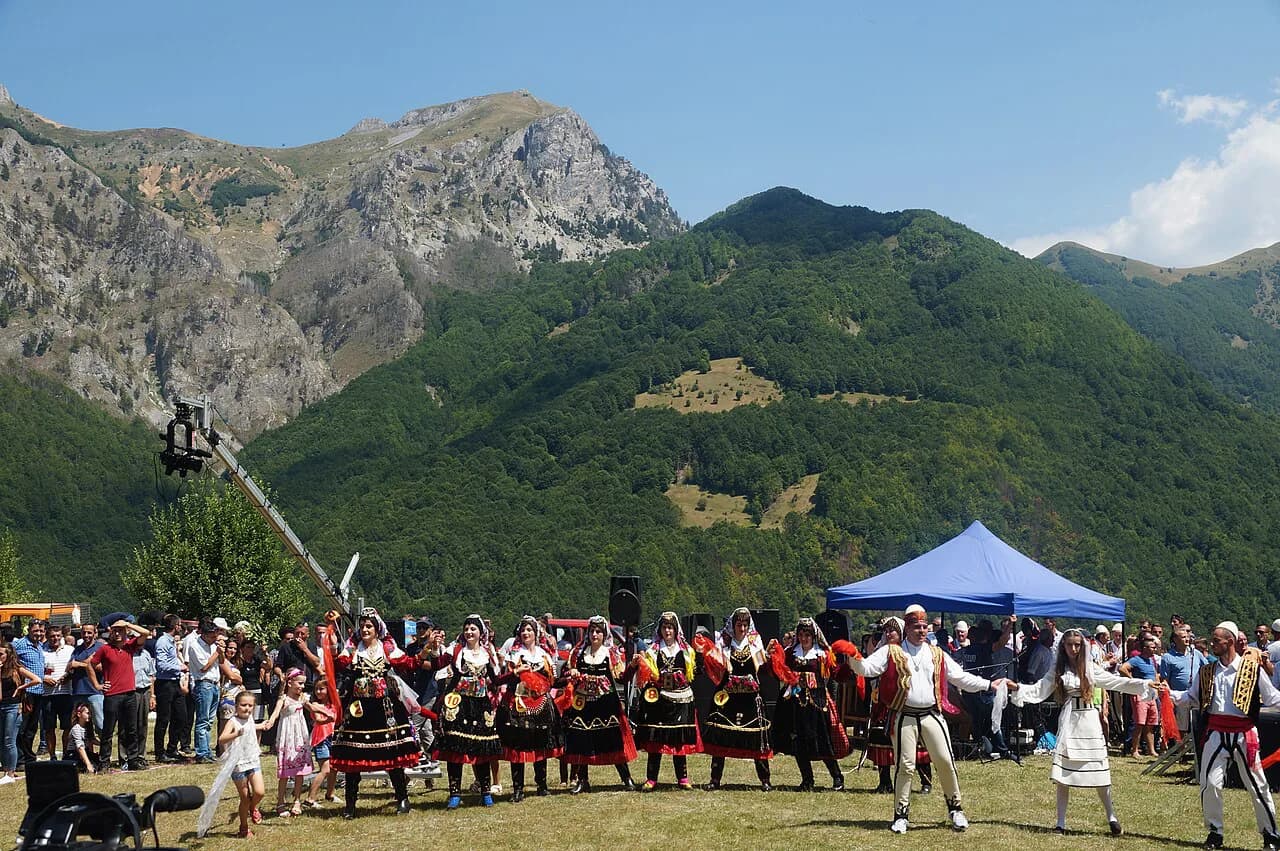
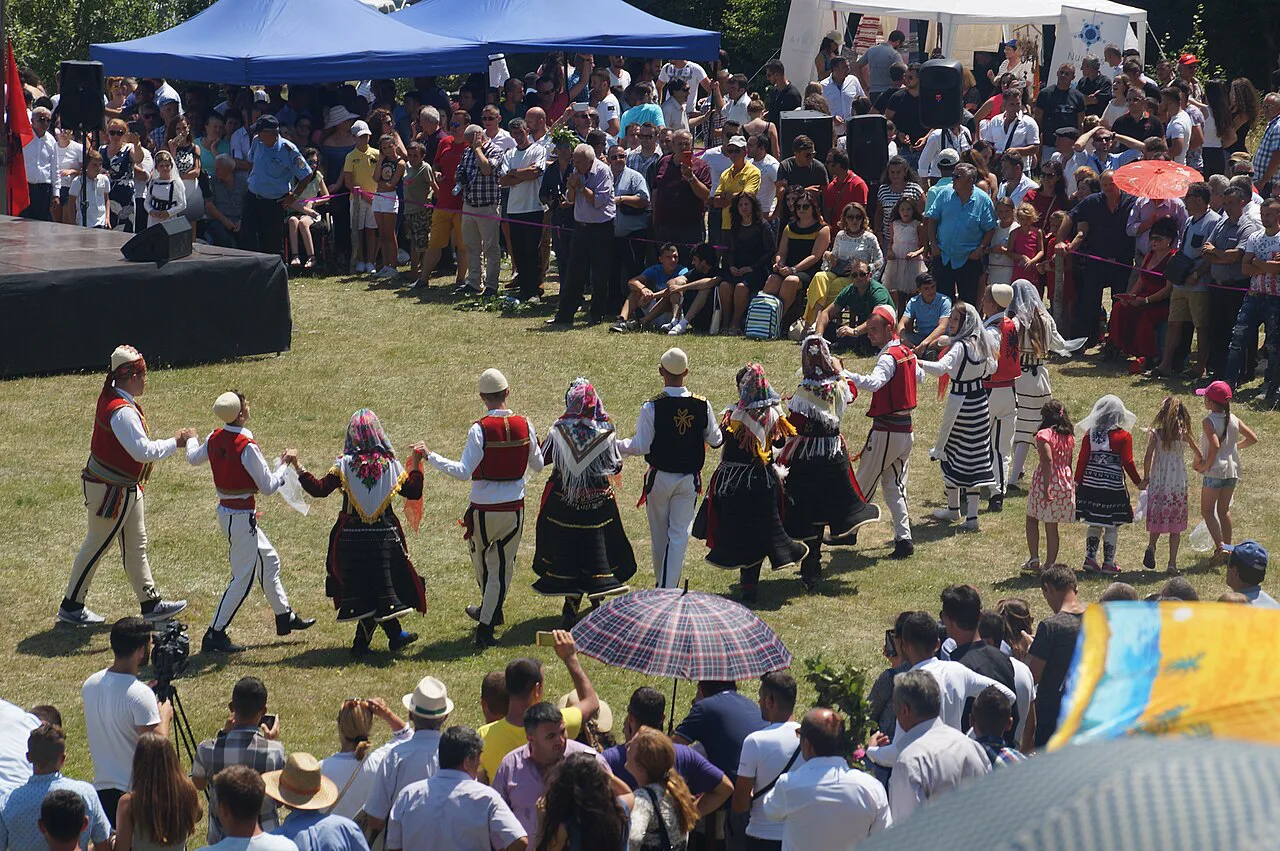
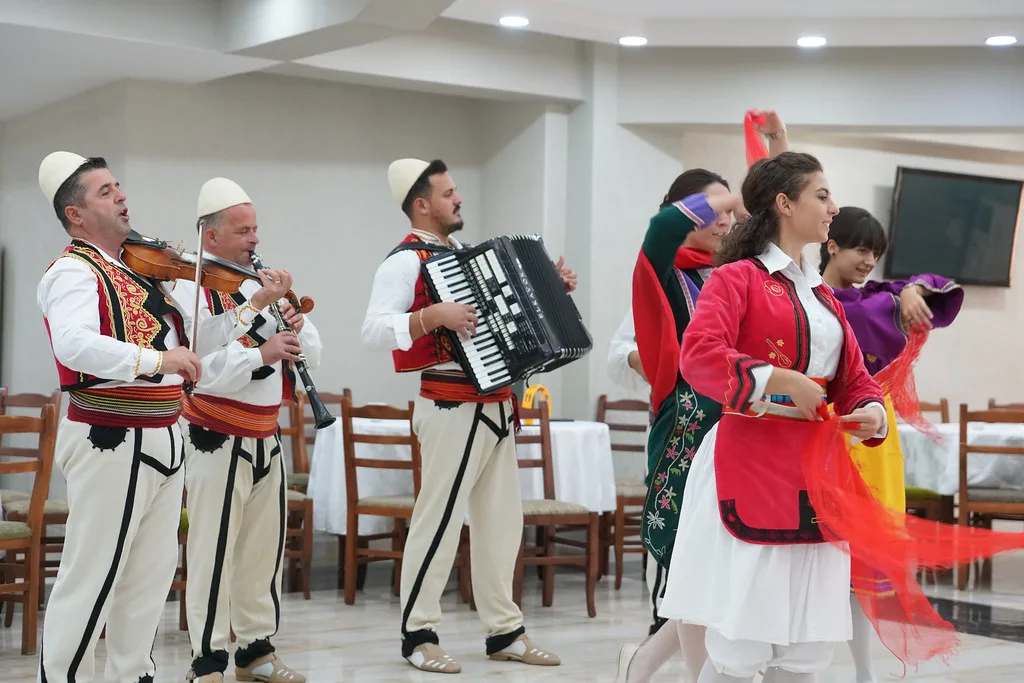
Traditional dress comes out for major events rather than daily life, and the eagle motif on embroidered silk, wool or cotton is common. If you catch a public celebration, stay and watch for a while rather than passing through.
You do not need to seek these out. Town squares and family gatherings bring them into view during national holidays, and a local museum or old-town street is a reasonable place to see costume and craft up close on an ordinary day. Dress codes for visitors remain modest and simple wherever you go.
Where you notice these traditions: mosques, churches, old towns and castles
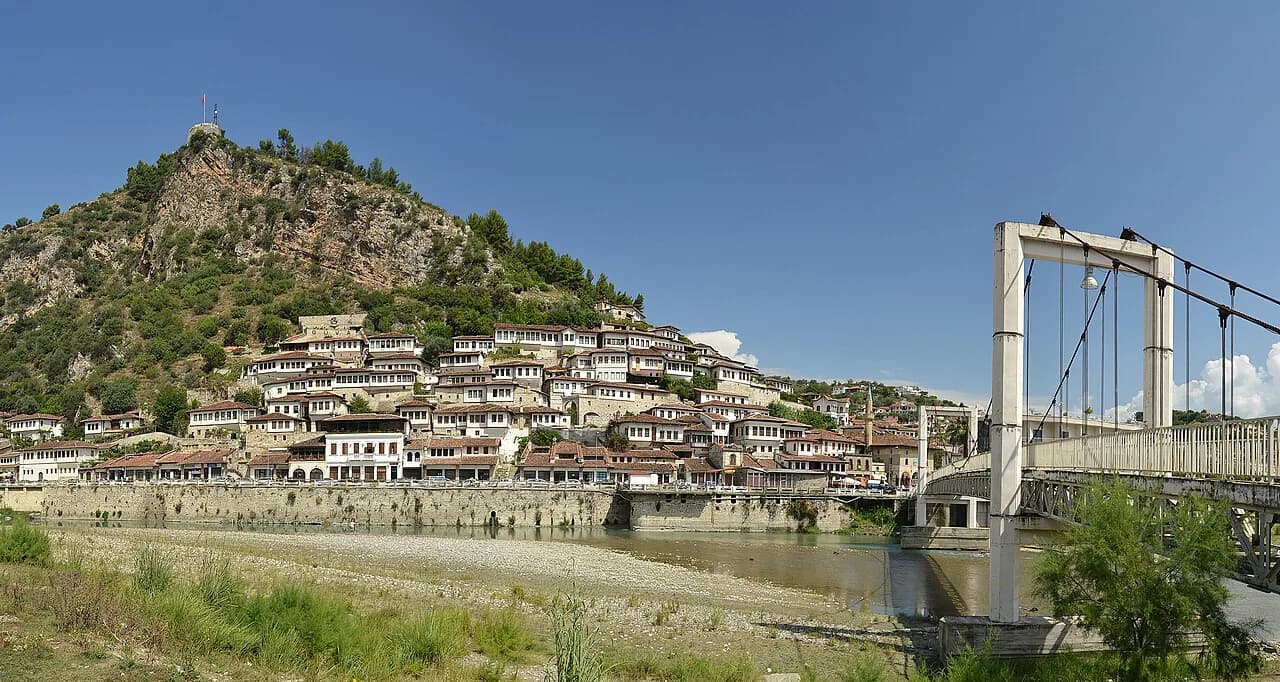
The customs on this page show up most clearly when you walk through an old town. The Ottoman-era quarters of Berat and Gjirokastër, with their stone houses, sloping cobbled lanes and castle walls above, are where the architecture and the social rituals sit side by side. Give yourself a slow half-day rather than a rushed hour.
For religious buildings and their etiquette, plan on Tirana and Shkodër, where the mix of mosque and church is easy to see within a short walk. The same is true of hilltop castles and their surrounding villages, which are often the setting for local festivals. A little background on Albanian architecture makes the details legible.
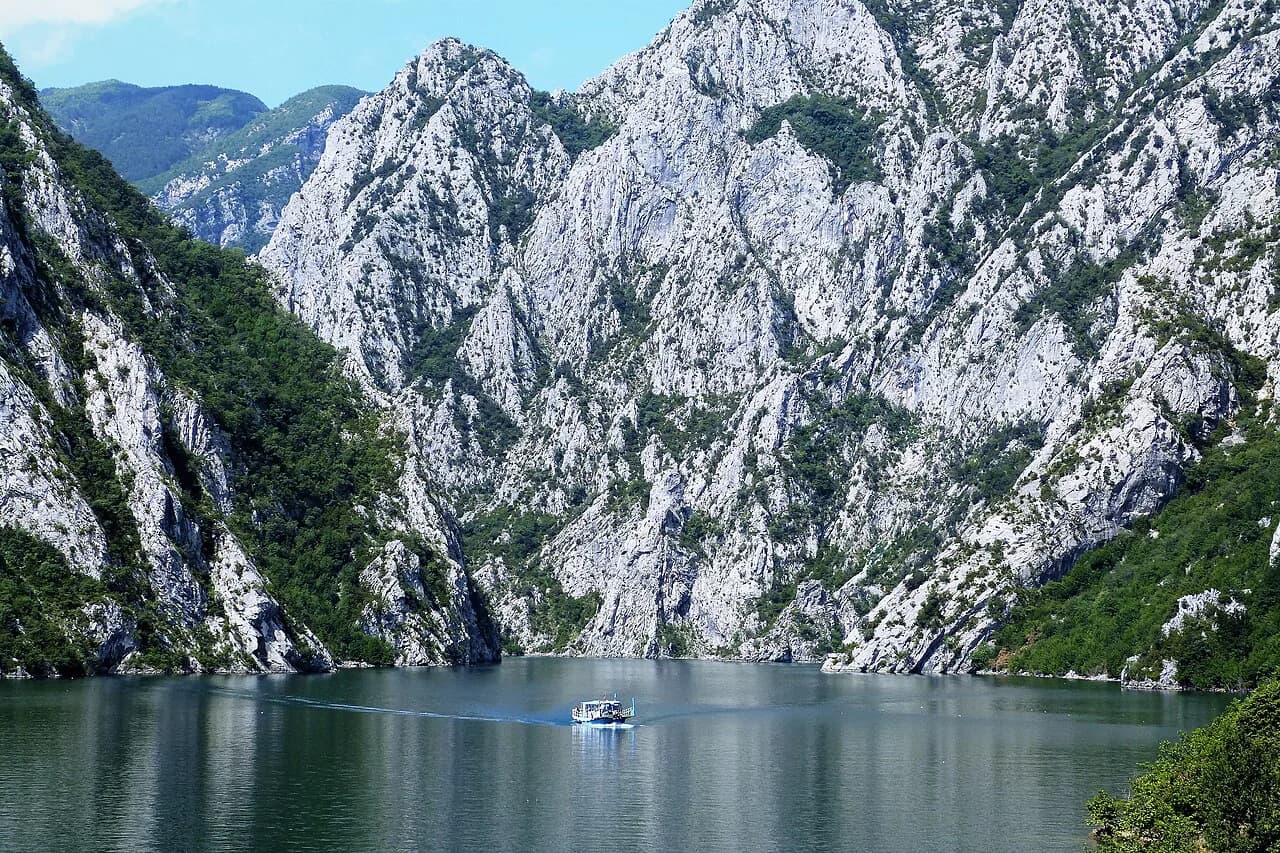
Outside the towns, the same courtesy expectations hold. On the roads around Lake Koman and in the northern villages, offers of coffee are a social opening and a quick chat is valued. Be ready to stop rather than treat every encounter as an interruption.
What not to assume about Albanian traditions
Start by dropping the assumption that Albania is a single-faith country. Muslim, Catholic and Orthodox communities share the same neighbourhoods, and religious labels rarely predict how someone lives. Asking respectful questions about customs is welcomed; assuming them is what misfires.
Do not read formality as coldness either. A direct question about your family or your journey is friendliness, not nosiness, and a short, honest answer is enough. Likewise, an offer of food or drink is not a transaction, so treat it as a gesture rather than a bill to settle.
Finally, keep the communist period in proportion. Bunkers, faded slogans and the memory of the atheist years are part of the landscape, but modern Albania is not defined by them. Treat those sites with the same respect you would give any grave or memorial: factually, and without jokes.
Should you learn the customs before you go?
Yes, and briefly: the head gestures, the value placed on accepting a coffee or small meal, and modest dress at mosques and churches are the three things most likely to come up on a first visit. Get those right and the rest of Albanian daily life reads as warmth rather than confusion.
Build the customs into your route rather than treating them as homework. Plan a slow morning in Berat or Gjirokastër, an hour around a mosque and a church in Shkodër or Tirana, and a little reading on the communist years before you visit a bunker or memorial. If you want the historical background in more detail, the Albanian history hub is the next stop.
Explore more Albania guides
Frequently Asked Questions
What are Albanian funeral traditions?
Family and community obligations are strong when someone dies, and neighbours and relatives are expected to show up and help. Customs vary by region and by whether the family is Muslim, Catholic or Orthodox, so if you are attending a funeral, follow the family's lead and ask a local contact about dress and timing rather than relying on a general description.
How do I say hello in Albania?
A simple greeting in Albanian is enough, plus a handshake and a smile. Younger people and anyone working in tourism will usually switch to English once they hear your accent. Learning one or two words is a courtesy, not a requirement.
Is Albania friendly to Muslims?
Muslims, Catholics and Orthodox Christians live alongside each other across the country, and families often include several faiths. Plenty of Albanians are non-practising, partly because religion was banned under the communist regime. Visitors of any faith are treated as guests, and standard modest dress works well at mosques and churches.
Why do Albanians shake their heads for yes?
The yes and no gestures are often the reverse of what visitors from the UK, Ireland or the US expect: a head wobble means yes and a nod means no. Younger Albanians and people used to foreigners may follow international norms instead, so read the whole face and ask a short clarifying question if you are unsure.
Sources
Notes for your Albania trip
Optional updates to our Albania town guides.
You might also like
Continue reading
More guides you'll find useful