Communist Albania: Sites and Museums a Visitor Can See
A visitor's guide to Albania's communist-era sites: bunkers, Bunk'Art, the House of Leaves and the prisons, and how to approach them with care.
On this page
Communist Albania means the People's Socialist Republic of Albania, the state that existed from 11 January 1946 to 29 April 1991. For a visitor, it divides into two very different things: the concrete bunkers that lie across fields and hillsides, and the museums, prisons and memorial sites where the regime is interpreted and remembered. This guide covers both, names the places you can plan around, and sets out the questions to settle before you travel to a site away from the towns.
The material legacy is unusually visible. Bunkers are described as the most universally known feature of the communist-period landscape, and the campaign that produced them reflects a regime that felt threatened from outside and turned that anxiety into concrete. That makes them a useful starting point: you will meet them before you reach any museum, often beside a road or above a town.
What communist Albania was
The People's Socialist Republic of Albania was founded on 11 January 1946 and ended on 29 April 1991, the dates to hold on to when a memorial panel or a guide refers to 'the socialist period'. Within that span, the state organised public life around the party, and the constitution's guarantees of speech and other freedoms did not match how the system worked in practice.
If you want the deeper chronology before you start on the sites, our background guide to Albanian history covers the earlier periods that the communist state built over and replaced. It helps to know what came before, because several memorial sites sit in towns whose older layers are the reason most travellers arrive in the first place.
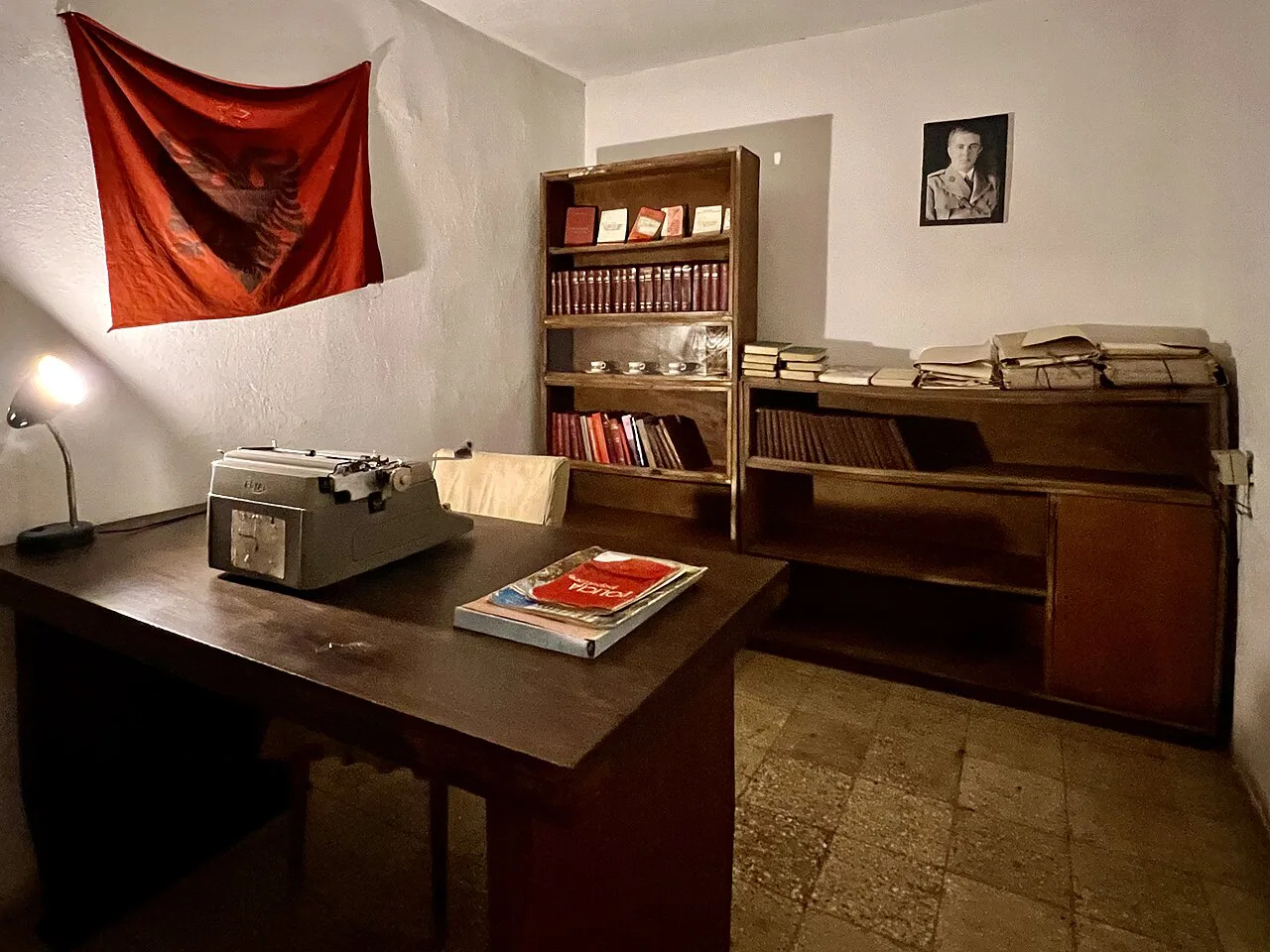
Why the regime built bunkers, and what to look for
The bunker programme was a project of the Enver Hoxha years, and the numbers explain why the structures are everywhere. Between 1960 and 1986, 800,000 bunkers were constructed, and by 1989 there was one for every four Albanians. Building them was presented as a collective duty, part of a wider effort to remake the country physically and to convince its population that the state could protect them.
When did communism end in Albania? The People's Socialist Republic of Albania ended on 29 April 1991, having been founded on 11 January 1946. That date marks the change of state, and the years that followed reshaped the towns and the memorial landscape you see today.
Why did communism fail in Albania? The regime's collapse has been linked to its inability to sustain the utopian promise it made, and the built environment it created became the setting for challenges to the system. The period's economic isolation and the weight of defence spending are part of the picture, as is the wider collapse of state socialism in Europe.
Is Albania still a dictatorship? No. Albania has been a pluralist Republic since the end of the socialist state in 1991, and elections and a free press operate, though the country's politics remain closely debated.
When you come across one, look at how it sits in the ground: the low dome, the firing slit, the way it is half-buried in a slope above a road or a valley. These are small structures built to a standard pattern, and their value to a visitor is in what they represent rather than any military function. Our guide to Bunkers in Albania goes further into where they appear and how to read them in the landscape.
Treat the ones on open ground as part of the landscape rather than as an attraction. Many stand on private land or beside working roads, and some have been reused for storage or shelter, so look from the outside unless a site is clearly set up for visitors. The best photographs come from a distance that shows the setting: the concrete against the field, the slope or the sea.
Bunk'Art and the museum side of Tirana
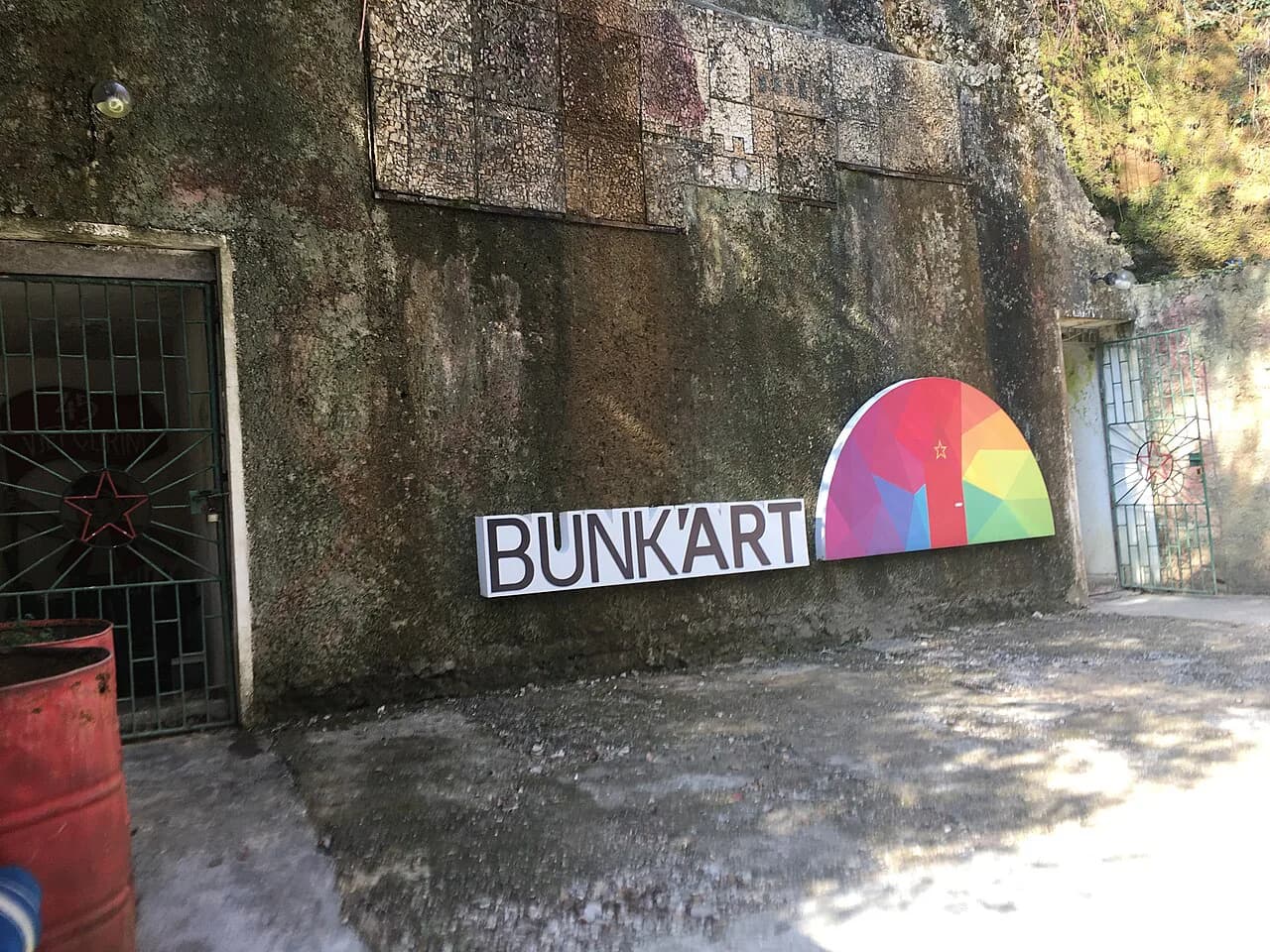
Tirana is where the regime is interpreted for visitors, and the city's bunker museums are the obvious place to start. Plan them as an indoor stop: they are a sensible choice in the middle of the day in summer, and they suit a half-day rather than a full one.
Opening days, ticket prices and whether a particular gallery is running can change, and the sites publish their own details. Check the site's own page or ask at your accommodation before you set out, and carry cash in lek as a backup.
Tirana's other memorial sites are within the city, so a single day can combine a bunker museum with a walk through the central streets. Leave the rest of the day for the city itself, which is where most visitors notice how much of the modern town was laid out during the socialist period.
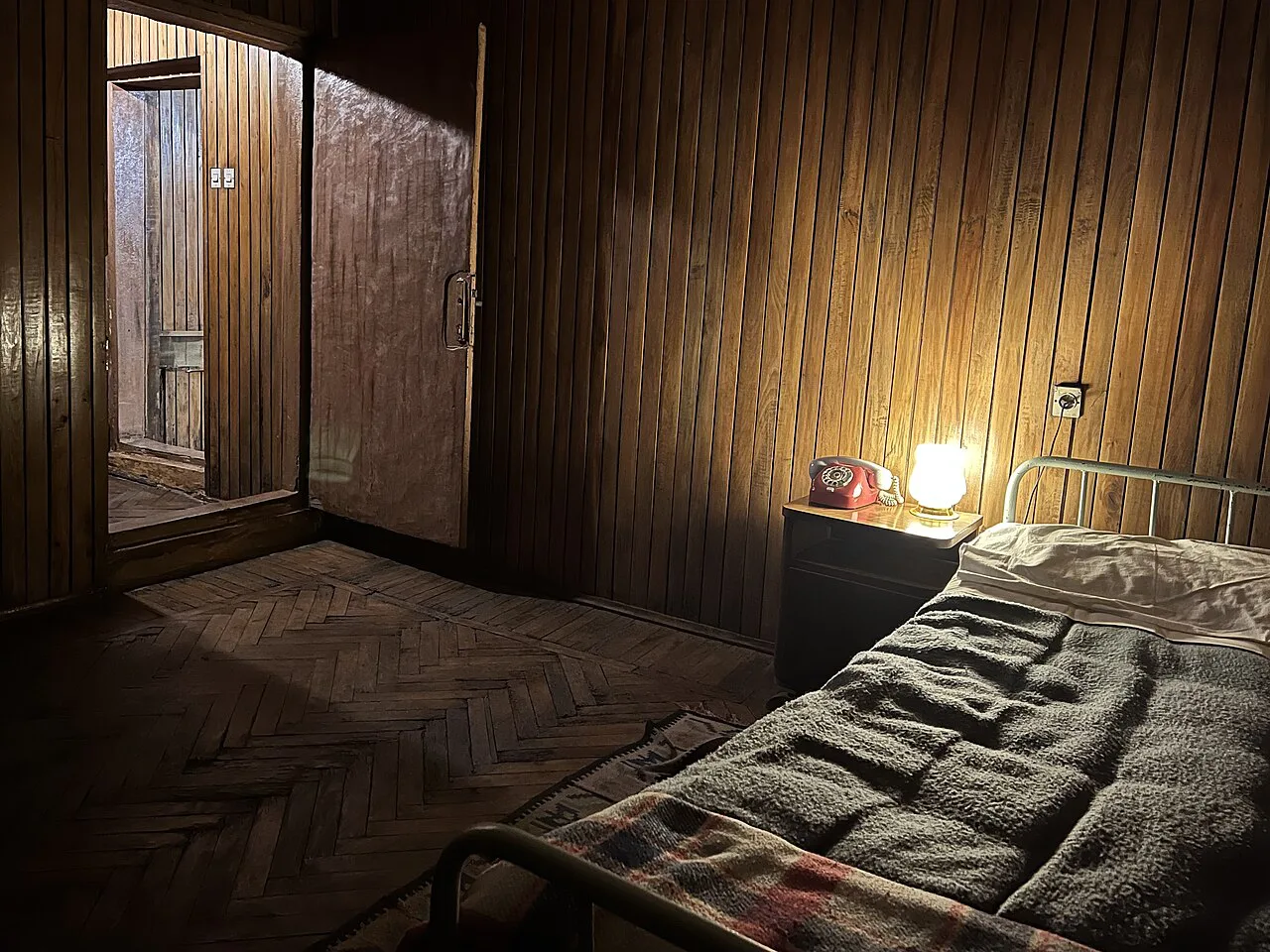
The House of Leaves and the memory of surveillance
The House of Leaves is the museum in Tirana to choose if you want to understand how the regime watched its own population. Allow an hour or more, and expect to read rather than look at objects.
Testimony from Albanians makes the files mean more than they do on their own. In one account, a 16-year-old student called Abi describes security officers searching her grandfather's office for any note that could implicate him, and her grandparents, both writers, hiding their work to keep themselves and the family safe. Another student describes a great-grandfather arrested in 1944, sentenced to 24 years and dead in Burrel's prison in 1949, with his body never returned to the family.
That context is worth holding on to in the exhibition rooms. The museum's subject is not abstract: it is the system that produced those searches, files and sentences, and the families who lived with the results for decades afterwards.
Prisons and labour camps: Spaç, Burrel and Gjirokastër
Spaç and Burrel are the prison names that recur in Albanian accounts of the period, and both sit away from the main visitor routes. Burrel appears in family testimony as a place where prisoners died and where bodies were not returned, which is the register in which these sites should be approached. Our page on Spaç Prison sets out what is known about the site and how to plan a visit.
For a site closer to a town on a normal itinerary, the Site of Witness and Memory in Gjirokastër is the practical choice, since the old town and its castle are already on most routes through southern Albania. Pair it with the castle and the Ottoman houses rather than treating it as a separate excursion, and give it proper time after the walking.
One published testimony describes the labour camp at Maliq, in the swamp fields southeast of Lake Ohrid, as modelled on Dachau and run on forced labour, with prisoners working from Monday to Saturday between four in the morning and seven in the evening and daily quotas of five cubic metres of earth. It is one man's account of what he endured, and it is the kind of detail that turns the word 'camp' into something a visitor can grasp.
What life was like, told through testimony
The memoir material is candid about how ordinary the machinery of fear was. One witness, a schoolteacher arrested in August 1947 as he went to collect his monthly salary, describes being beaten for refusing to sign a confession and watching a trial in which the verdict was settled before he spoke. His account is one person's record of what he endured, and it is the kind of detail that turns the word 'prison' into something a visitor can grasp.
Not every memory is of suffering. In the same set of young people's accounts, one student says her grandparents were party members and that her grandfather, a border officer in places such as Tropoja and Kukës, lived well under the system. Held together, the two kinds of story show why the sites need interpretation rather than a single narrative.
For travellers who want the cultural background that the regime suppressed and reshaped, our pages on Albanian culture and Albanian traditions cover language, custom and family life. Read one before you go and the testimonies in the museums land differently.
How to visit respectfully
Prison and memorial sites are places of remembrance first. Keep your voice down in cells and execution yards, do not stage photographs in them, and do not treat a labour camp as a curiosity. If a site has a visitors' book or a memorial room, sign or read it, and leave the way others will use it.
At religious buildings that survived or reopened in the period, dress modestly and follow the house rules. Our guide to churches in Albania covers the etiquette for the country's Orthodox and Catholic sites, which is useful if you are combining a memorial visit with a church in the same town.
Cemeteries and roadside memorials should be visited quietly and briefly, with no assumption that a local family wants to talk. If someone does want to tell you their family's story, let them lead, and do not press for details they have not offered. In one of the young people's accounts above, the writer's advice is simply to ask relatives what they remember before those memories are lost, which applies to visitors and Albanians alike.
Before you go: the questions that matter
For any site beyond the main museums, settle four things before you set off: who runs it, whether it is open to the public that day, whether you need to arrange a visit in advance, and what the ticket costs. Smaller memorial sites in Albania are often run by local authorities, museums or associations rather than by a national body, and access changes with staffing.
Where you cannot confirm a detail, leave it out of your plan and build in an alternative. A town guide or a local museum can usually tell you the current position, and the tourist information offices and museum staff in the larger towns are the most reliable source for a site that day. Carry it as a flexible half-day rather than a fixed point.
Distances matter more than they look on a map. Spaç and the northern prison sites are far from the Riviera and the main towns, and roads in the mountains are slow, so a prison visit is a deliberate trip rather than a stop on the way south. Budget a day for travel in each direction from Tirana and check the road conditions with your driver or guesthouse.
Communist-era Albania beyond the museums
The period is also in the built environment of ordinary towns: the housing blocks, the factories on the edges, the wide squares and the monuments. Walking a town centre with those decades in mind changes what you notice, and it costs nothing. Our overview of Albanian architecture covers the layers from the Ottoman and Byzantine periods through to the twentieth century.
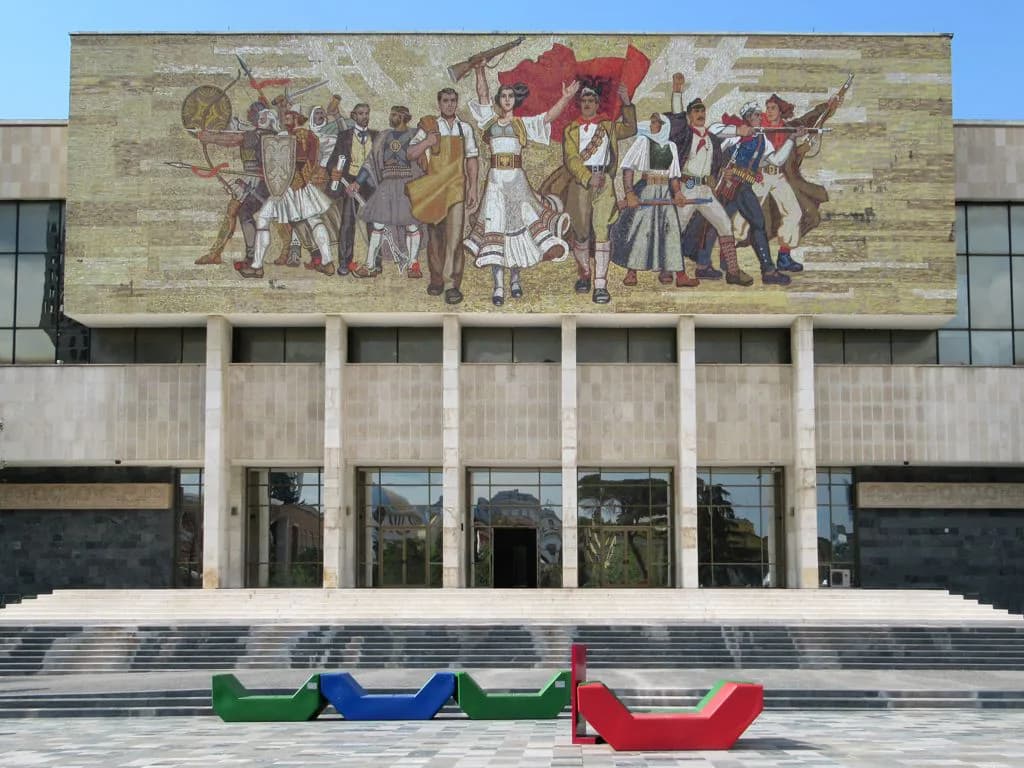
Public sculpture and memorials are part of that landscape. Some are maintained, some are weathered, and some have been moved or reinterpreted since 1991; treat them as public objects and check before photographing anything with people around. The same courtesy applies to the murals and mosaics that survive on building facades.
Albanian music and craft traditions that the state promoted and controlled are a separate thread, and the iso-polyphony tradition is part of the country's cultural life today. If you are in the south, a performance is one way to see a tradition that the regime both sponsored and restricted.
Where these sites fit into a town-focused trip
Most travellers will meet this history in two places: Tirana, for the bunker museums and the House of Leaves, and Gjirokastër, for the Site of Witness and Memory among the old town's Ottoman houses and castle. Both can be worked into a normal town day without dedicating the whole trip to the period.
Beyond those two, treat the prisons and camps as deliberate excursions that need research and time. If a site does not work out, the bunkers on the road and the modern townscape still carry the period. For a wider view, our guide to Albanian History sets the decades in sequence.
Which communist-era site should you add to your route?
Add Tirana's bunker museums and the House of Leaves if you have a city day, and the Site of Witness and Memory if Gjirokastër is on your route. Those three cover the material legacy, the surveillance state and the memorial side without a long detour.
Leave Spaç and the other prison sites for a trip when you have a spare day and can check access in advance. Go slowly, read the testimony before you travel, and remember that these places are used by Albanians as memorials, not as attractions.
Explore more Albania guides
Frequently Asked Questions
When did communism end in Albania?
The People's Socialist Republic of Albania ended on 29 April 1991, having been founded on 11 January 1946. That date marks the change of state, and the years that followed reshaped the towns and the memorial landscape you see today.
Why did communism fail in Albania?
The regime's collapse has been linked to its inability to sustain the utopian promise it made, and the built environment it created became the setting for challenges to the system. The period's economic isolation and the weight of defence spending are part of the picture, as is the wider collapse of state socialism in Europe.
Is Albania still a dictatorship?
No. Albania has been a pluralist Republic since the end of the socialist state in 1991, and elections and a free press operate, though the country's politics remain closely debated. The memorial sites in this guide exist precisely because the period is now remembered and discussed openly.
Can you go inside the bunkers?
Many roadside bunkers are locked, on private land or reused for storage, so treat those as landscape features. The converted bunker museums in Tirana are the reliable way inside a structure, and their operators publish current access details, which you should check before travelling.
Do you need to book prison and memorial sites in advance?
For smaller sites, it is worth asking who runs the site and whether a visit needs arranging in advance; local museums and tourist information offices can confirm. The main museums in Tirana and the site in Gjirokastër are the easiest to fit into a day, and ticket prices should be checked directly with each site.
Sources
Notes for your Albania trip
Optional updates to our Albania town guides.
You might also like
Continue reading
More guides you'll find useful