Albanian Costume: What Traditional Dress Defines Albania
A plain guide to the Albanian costume: the fustanella, xhubleta, jelek and opinga, how northern and southern styles differ, and where folk dress appears today.
On this page
An Albanian costume is a group of garments worn together, not one standard outfit: the fustanella and qeleshe for men, the xhubleta and jelek for women, with opinga shoes finishing both. Styles vary by region, with heavy wool in the northern highlands and lighter cloth with floral designs in the south. This guide names the parts, explains how to read a costume you see in a museum or at a performance, and sets out where folk dress still appears in Albania today.
The parts of the outfit
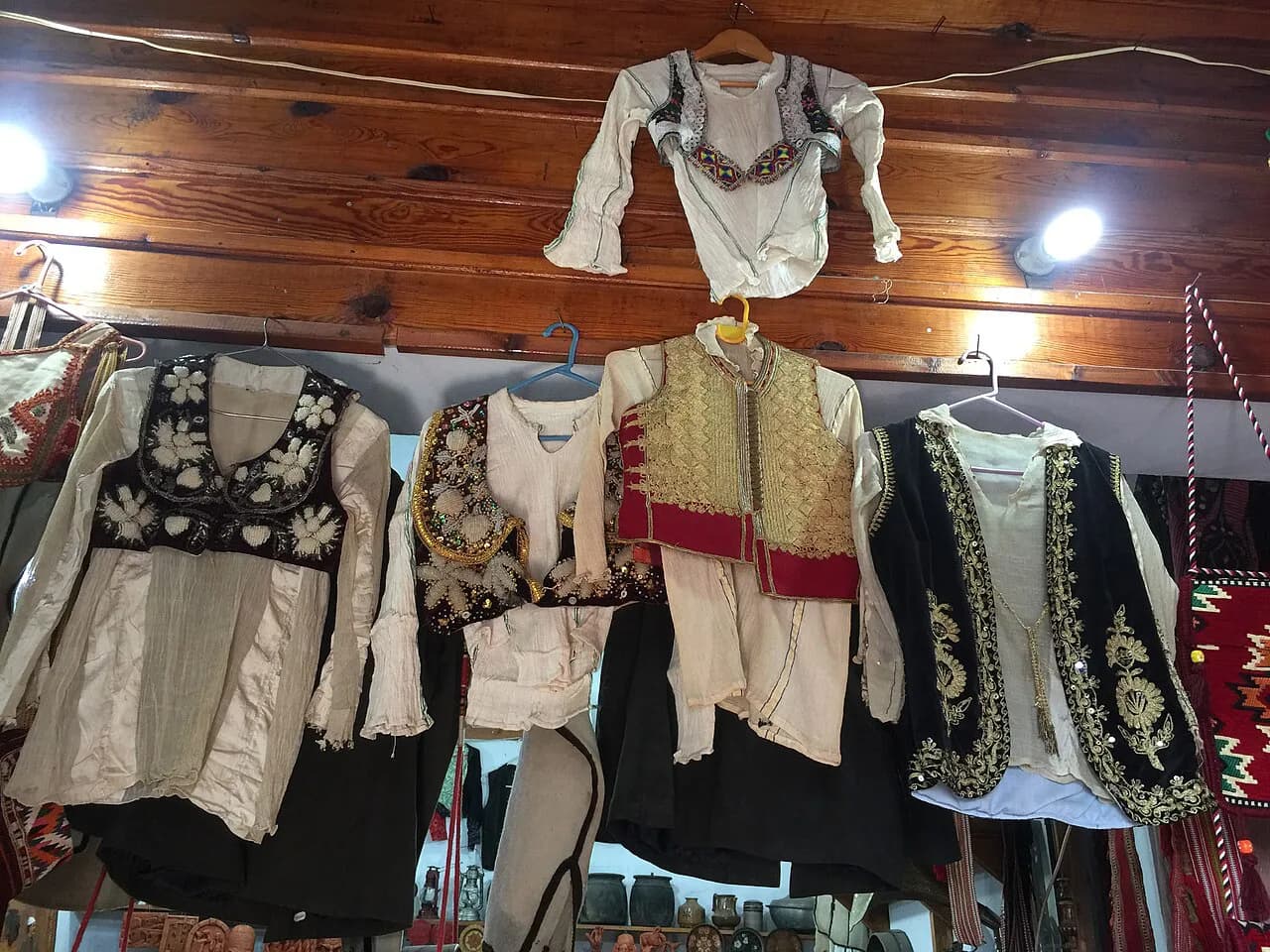
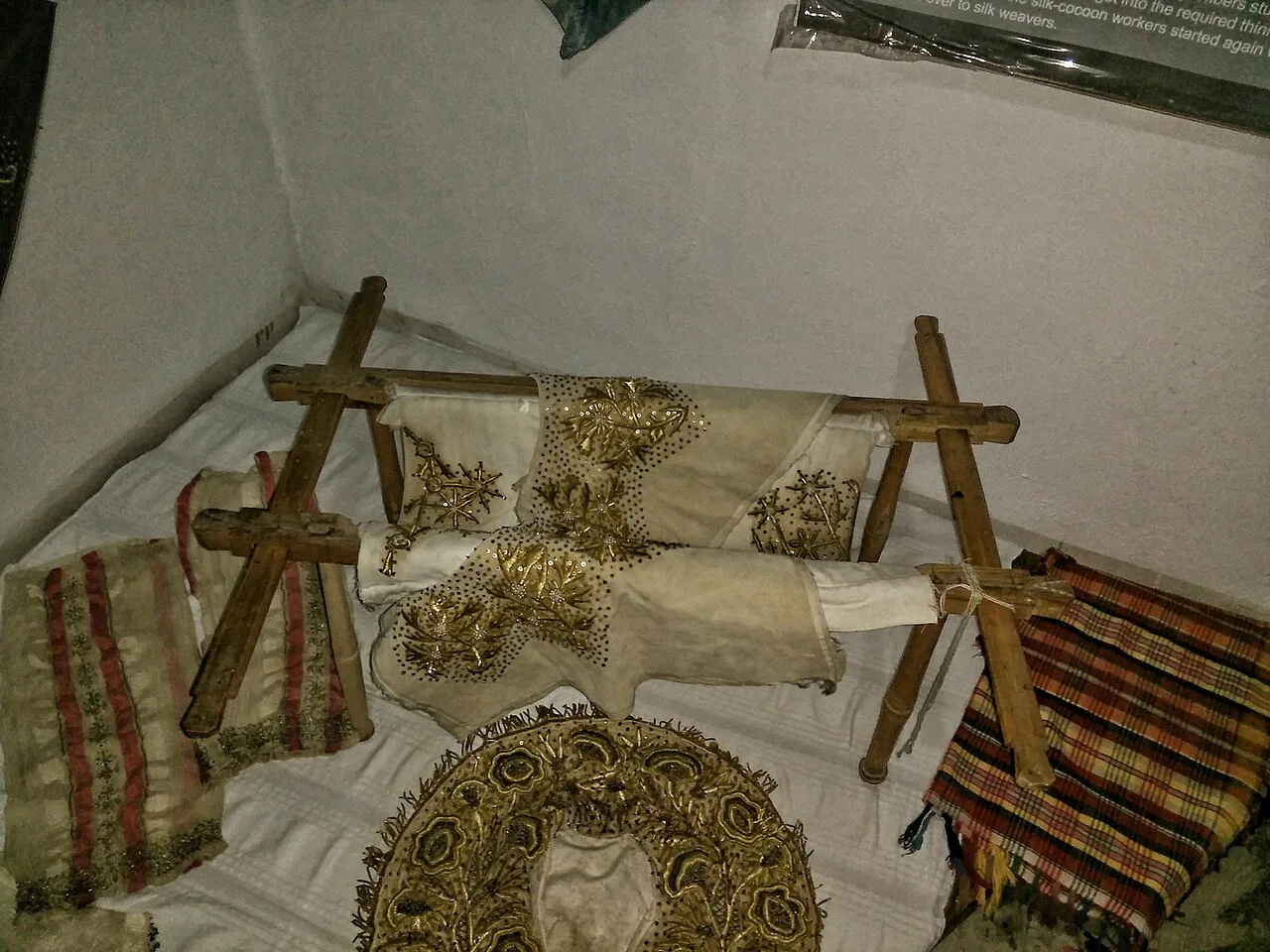
Four garments come up again and again. The fustanella is a pleated skirt worn by men, particularly in the south, usually paired with a fitted vest and a sash. The xhubleta is a bell-shaped skirt worn by women in the north, decorated with dense patterns, while the jelek is a short embroidered vest worn by both men and women. The opinga is the traditional leather shoe, pointed at the toe and stitched with decoration.
Keep the headwear separate in your mind, because shopping pages blur it. The qeleshe is a man's cap; a woman's head covering is a different piece, and the STITCH catalogue lists it separately for the Mirdita bridal set. If you are reading an online listing that calls a woman's headscarf a qeleshe, treat the description as unreliable and check a catalogue that documents the dress garment by garment.
How the north and south differ
The simplest way to read a costume in front of you is to start with fabric and colour. Costumes from the northern highlands use heavy woollen fabrics and bold geometric patterns, while those from the southern regions use lighter materials and floral designs. Once you know which half of the country the dress comes from, the weight of the cloth and the style of the embroidery usually confirm it.
Which pieces should I know? The fustanella and qeleshe for men, the xhubleta and jelek for women, with opinga shoes for both.
Where can I see a full outfit? At weddings, national holidays and staged performances; costumes are now worn for festive occasions rather than daily life.
Regional dress is not only a matter of taste or climate. Different areas absorbed different influences over centuries, and costume areas that changed religion from Christianity to Islam followed a different path from those that did not. The history sits behind the pattern rather than in it, and our guide to Albanian traditions covers the wider calendar of customs the dress belongs to.
The Mirdita costume in the north
The Mirdita area of the northern highlands has one of the best-documented costumes, and the STITCH project catalogue breaks it down piece by piece: shirt, skirt, jacket, sleeveless coat, apron, belt, socks, pantalettes and head covering. That list is useful because it shows how many layers sit under what looks from a distance like one outfit. A bridal version adds cap, jewellery and shoes to the same base.
The catalogue also explains how a family shaped the result. The household a woman came from affected how complex and heavily decorated her costume was, so two dresses from the same area could differ in the amount of ornament. The catalogue offers 3D scans of the Mirdita dress, which is the clearest way to study the cut of a garment without handling it.
Bridal dress and metal ornaments
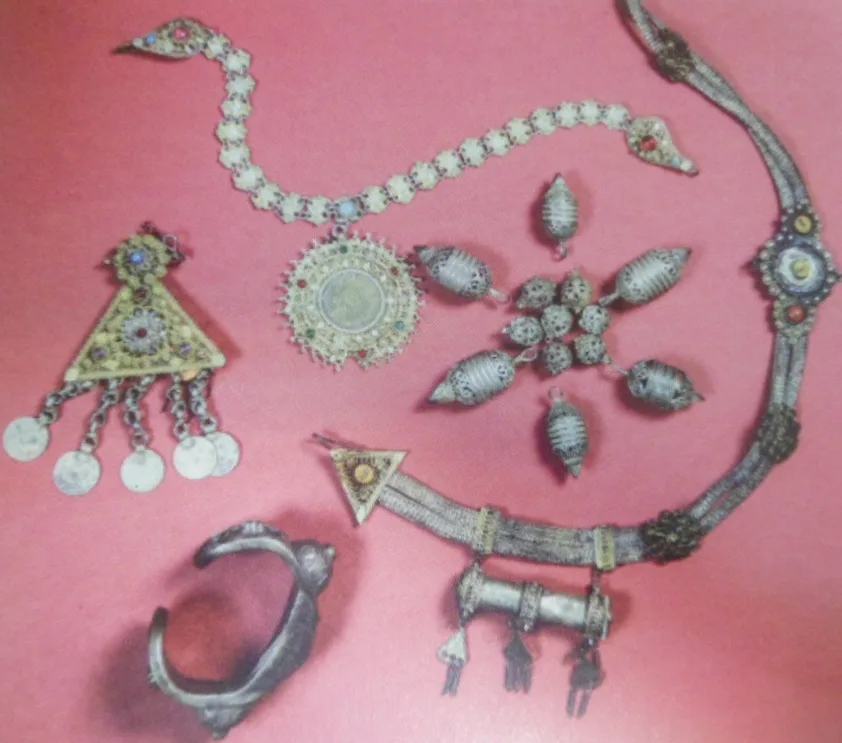
The wedding dress was the richest version of a region's dress, for grooms as well as brides. For brides, metal ornaments were unavoidable and used more heavily than at any other time, because they carried a decorative and a protective role rather than simply looking festive. Head decoration had particular importance in the bridal set.
The dress then changed over a married life. A few years after the wedding, the decoration was gradually lightened, so a costume you see in a photograph can belong to a specific stage rather than to a whole lifetime. That is why a careful catalogue separates bridal dress from everyday regional dress instead of treating them as one thing.
Wool, shajak and home dyeing
Wool processing anchored the whole craft, especially in mountain areas. Women wove, knitted and crocheted, and worked wool into felted cloth called shajak, prepared in water mills that drove wooden hammers to beat the fabric. Shajak was used widely across Albanian territories, which is why it turns up in costumes from quite different regions.
Colour came from the household rather than a workshop. Natural wool shades of white, black, beige and brown dominated, and yarns were dyed at home using materials such as white vinegar, wild apple juice, fermented cabbage juice and sea salt, with iron and copper compounds used more widely later. The process took days, which helps explain why the colours held so well.
Embroidery, carving, beating and filigree made the accessories, and these skills were taught from an early age and passed down through families. A costume therefore records both a region and a line of makers. If your interest runs to other Albanian crafts, our guide to Albanian rugs follows the same thread of household production.
Where visitors see Albanian costume today
Folk costumes and accessories are now worn for festive occasions and cultural performances rather than daily life. Weddings, national holidays and staged performances are where you are most likely to see a full outfit, and a performance is usually the easier option for a visitor because you can look at the dress without intruding on a private celebration.
Read costumes in museums as technical objects. Look at the fabric weight to place the region, then check whether metal ornament suggests a bridal piece, then look at the head covering to see whether it is the man's cap or a woman's scarf. This order of looking stops a display from becoming an undifferentiated wall of embroidery.
For the political and social setting behind the costumes, the Albanian history section of this site gives the wider timeline, and the separate Communist Albania guide covers the years of communist rule, when many traditions were reshaped. Folk dress has always sat inside a wider culture, and the craft details make more sense once that background is in place.
How to look at an Albanian costume
Start with fabric and region, move to the ornament to judge whether the dress is bridal, and finish with the shoes and head covering. That reading works in a museum case, at a cultural performance and in a photograph, and it keeps the layers distinct. The STITCH project catalogue is the most detailed illustrated reference for the Mirdita set if you want to check a garment name afterwards.
Explore more Albania guides
Sources
Notes for your Albania trip
Optional updates to our Albania town guides.
You might also like
Continue reading
More guides you'll find useful