Albanian Food: The Dishes to Try and Where to Eat Them
A practical guide to Albanian food, from Tavë Kosi and Fërgesë to byrek, petulla and grilled fish, with the split between mountain cooking and the coast.
On this page
Order Tavë Kosi, Fërgesë and byrek first, then add grilled fish on the coast or a slow-cooked meat platter inland. Albanian cooking draws on Mediterranean produce with Turkish and Balkan elements, and what lands on your table depends heavily on whether you are in the mountains, the countryside or by the sea.
This guide names the dishes with their Albanian spellings, explains how a meal runs, covers desserts and drinks, and flags the vegetarian options that go beyond side salads. It is written for visitors who want to order confidently rather than point at a neighbour's plate.
What Albanian food is like
Expect plenty of citrus, olives, figs and olive oil, with Turkish-influenced kebabs, baklava and filo pies and Balkan meat dishes in the mix. Seasonal, locally sourced ingredients matter, and vegetables often arrive in greater variety and colour than visitors anticipate.
The regional split shapes what you order. In mountain and rural areas, hearty meat-and-vegetable cooking dominates, while the coast leans on fish and seafood grilled, baked or fried. A menu in Gjirokastër or Korçë will read differently from one in Vlorë or Sarandë, so adjust your expectations rather than hunting for the same dish everywhere.
Portions tend to be generous and platters are shared, family-style. Albanian cooking also prioritises seasonality, so a dish listed in one month may be built around different produce the next.
The dishes to order first
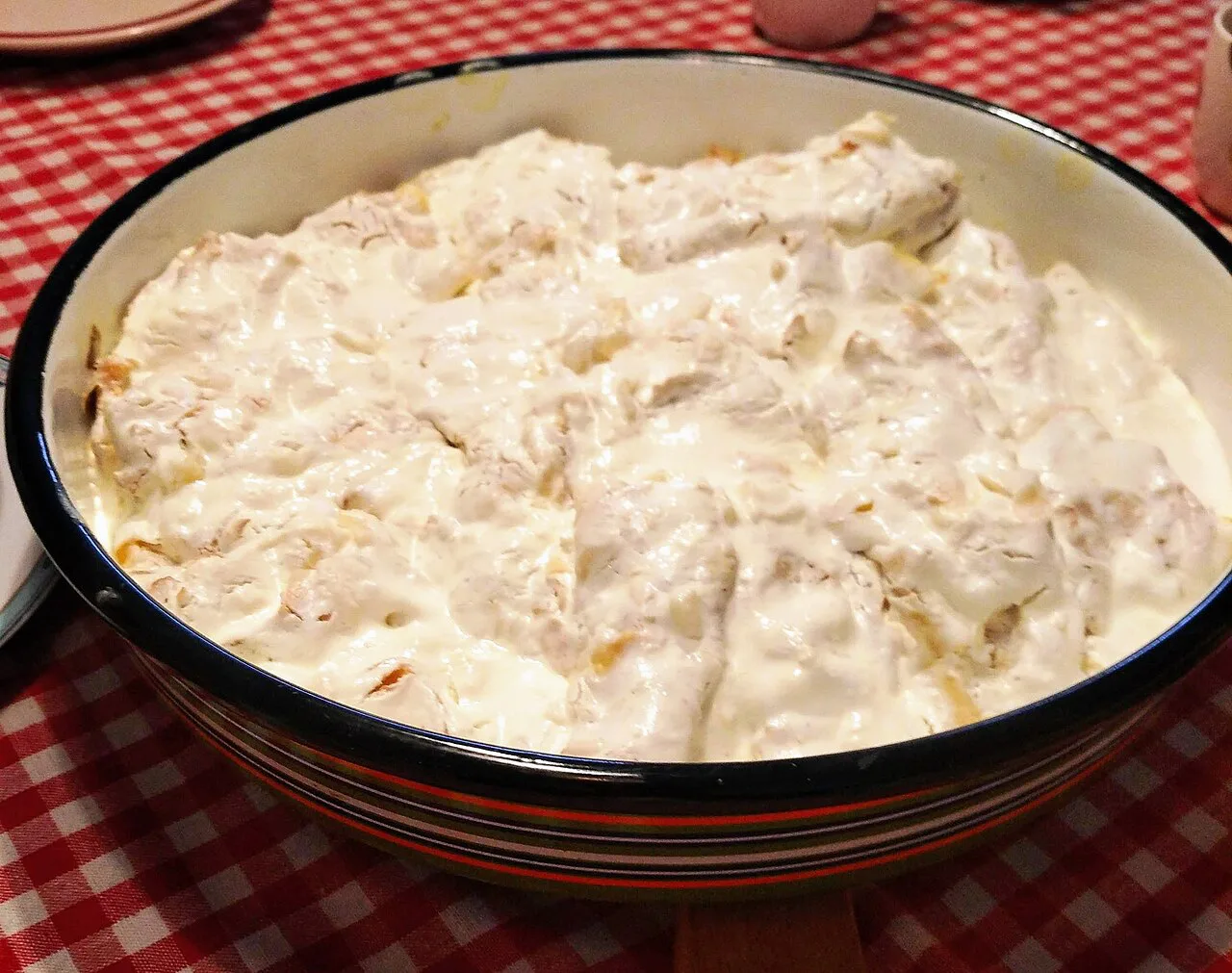
Tavë kosi is the benchmark dish: lamb, or sometimes chicken, baked under a mixture of yoghurt, rice and eggs, seasoned with salt, pepper, garlic and oregano. It is also known as Elbasan tava after the town it comes from. Our guide to Tavë Kosi explains the layers and how it is served.
Is Albanian food similar to Greek food? There are clear overlaps: olive oil, grilled vegetables, filo pies, fish and salads all feel familiar to anyone who has eaten in Greece. Albanian cooking also carries Turkish elements such as kebabs, baklava and layered pastry, plus Balkan meat dishes, so the menu reads as its own blend rather than a copy of Greek food.
What is the traditional dessert of Albania? Bakllava made with homemade filo is the one most visitors meet first, alongside revani and sheqerpare. Ashure, a porridge-like dessert of grains, fruits and nuts, is the other traditional sweet worth knowing by name, and it appears on family tables and in bakeries rather than only in restaurants.
Where can I try farm-to-fork Albanian cooking? Mrizi i Zanave at Fishta near Lezhë, roughly 90 minutes from Tirana, is an agrotourism restaurant and farmhouse where the menu follows the seasons and ingredients come from the farm or nearby producers. Contact them directly for current visiting arrangements and any cellar tasting.
Fërgesë is a tomato-based dish of green peppers, garlic and cottage cheese, usually eaten with bread. Albanians like it once it has cooled and thickened, which is why it is nicknamed summer stew; it is best after roughly two to three hours of resting. It shows up more often in countryside restaurants serving traditional cooking than on city menus, so treat it as a reason to eat outside the centre.
Byrek is layered filo pastry stuffed most commonly with cheese, vegetables or meat, eaten at breakfast or as a late-evening snack and sold in bakeries across the country. Petulla are fried dough, served with honey or jam to dunk, and a popular breakfast option. Qofte, minced meat shaped and grilled, rounds out the easy first orders.
Byrek in detail: fillings, shapes and timing
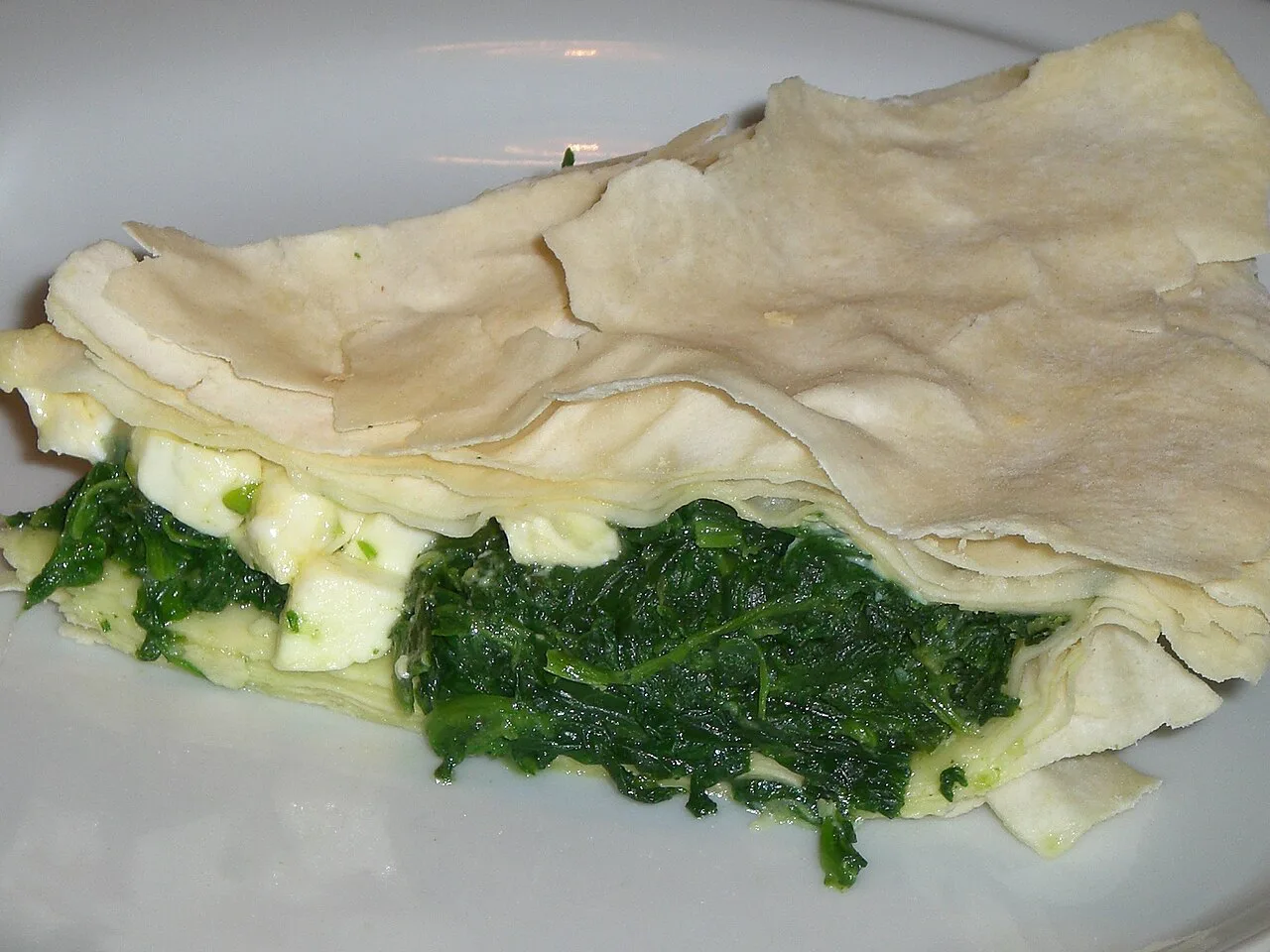
The filo is rolled thin, traditionally with a long pin, then layered into a golden pie. Fillings range from meat and spinach with feta to tomato and onion, with leek, potato and bean versions appearing regionally. Byrek also comes in rolled sticks and small triangular pies, the sort sold from food trucks and bakeries as a quick bite.
Its place in the day is flexible: breakfast, a mid-afternoon stop, or something late after a long walk through an old town. Buy it from a bakery rather than waiting for a restaurant menu, and expect it to be one of the cheapest and fastest meals of your trip. For the fillings and shapes in more detail, see our byrek guide.
Vegetable and cheese plates
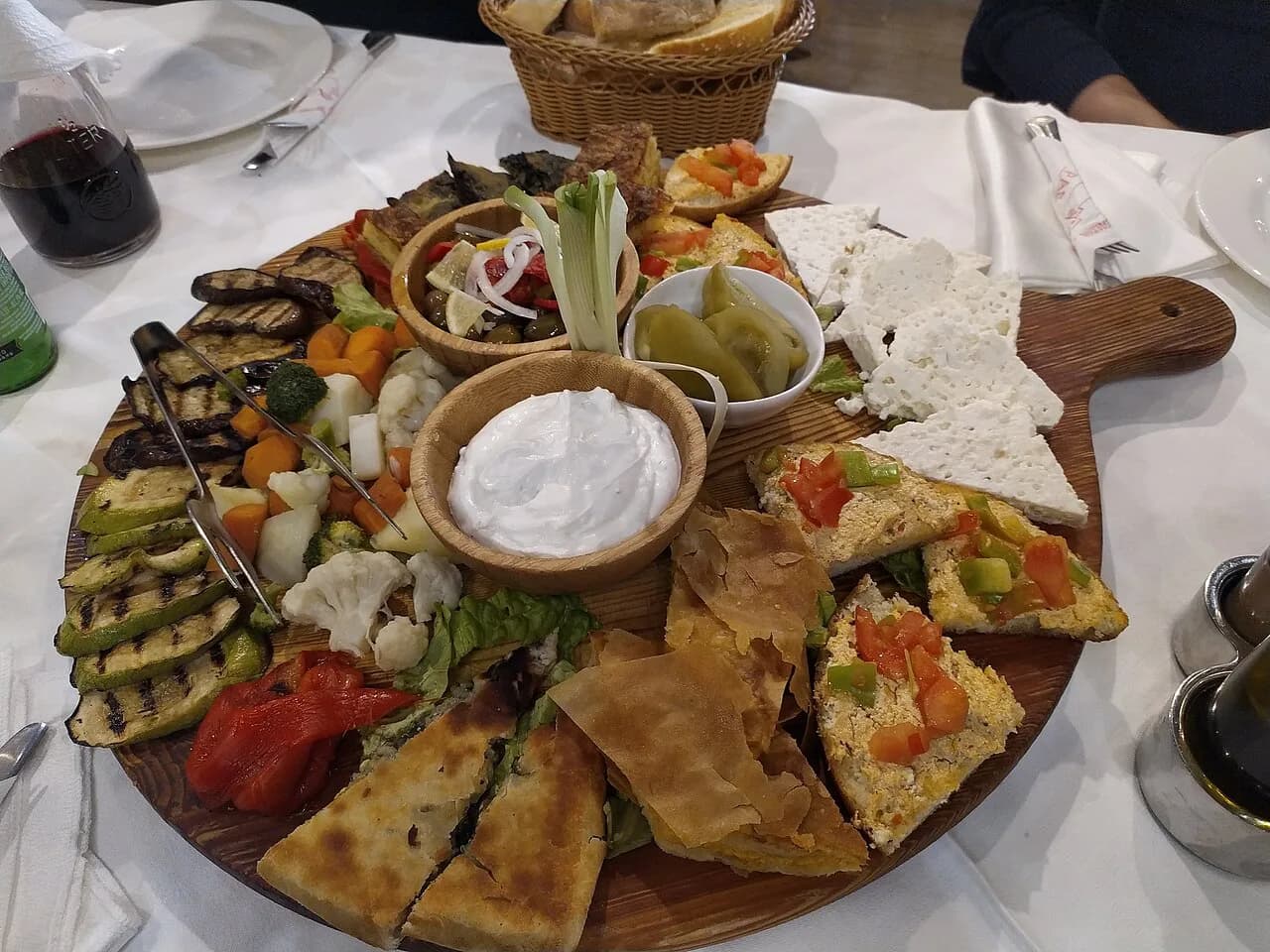
Albanian menus often carry a cheese section of their own, and baked cheese with tomatoes, kackavall ne furre me domate, is a good place to start. Speca të mbushura, peppers stuffed with rice and seasoned with chilli or black pepper, vary by family and sometimes include lamb or tomato. Perime në zgarë, a plate of grilled peppers, courgettes, aubergines and mushrooms, sometimes drizzled with balsamic vinegar, works as a shared side or a light main.
Coast and lakes: fish and how it is served
Peshk në zgarë means grilled fish, and it is popular along the Riviera as well as near Albania's rivers and lakes. Trout is the common inland choice, baked whole and served with grilled vegetables, potatoes, herbs and a generous pour of olive oil. On the coast, the day's catch often dictates the menu, so ask what came in that morning rather than working down a printed list.
Meat and slow-cooked plates
Tave mishi is a mixed meat platter, and sarme are cabbage rolls filled with meat and rice; both suit a table ordering several dishes to share. Grilled lamb platters appear in the mountains and inland towns, where the cooking is heavier and built around meat and vegetables. Order one meat dish between two or three people and add vegetable plates, because the portions are large.
Soups, tarator and family-style portions
Fasule, a white bean soup, is the simple dish to fall back on, and it appears under variations of the name. Tarator is a cold yoghurt starter of Greek yoghurt, cold water, grated cucumber and salt, served in summer before a meat main and with the consistency of a soup. It tastes close to the drink dhalle, which is why visitors are sometimes surprised to be handed a bowl and a spoon.
Expect platters rather than individually plated portions, with bread on the table and dishes passed around. Lunch is the main meal, with the evening meal typically lighter, so plan your biggest sit-down meal for midday and keep dinner to salads and mezzes. That rhythm changes how you order: fewer courses at night, more sharing at lunch.
Desserts to finish with
Bakllava is made with homemade filo layers, and revani and sheqerpare are the other sweet staples worth knowing by name. Ashure is a porridge-like dessert of grains, fruits and nuts, and hashure follows a similar idea with wheat. Our guide to Albanian desserts covers the full range if you want to plan a bakery stop.
Drinks: raki, wine and coffee
Raki is the drink to try at least once, served before or after a meal, and Albanian wine is worth taking seriously: indigenous grapes include Kallmeti, Vranac and Vlosh among the reds and Shesh and Debin among the whites. Wine is made inland and in the mountains as well as along the coast, so a house red in Shkodër may come from a family winery rather than a large producer.
Beer and coffee fill out the rest of the day; coffee culture runs from a quick stand-up cup to a long sit in a café. Our guide to Albanian coffee explains the ordering, and Albanian raki covers the spirit properly. Drink wine where the list names the grape, and you will get a clearer sense of what Albania grows.
Eating as a vegetarian or vegan
Vegetarian eating is easier than the meat-heavy reputation suggests: byrek with spinach, leek, potato or pumpkin, grilled vegetable plates, stuffed peppers, bean soup and the cheese dishes all work without meat. Fërgesë without the liver version is a pepper-and-cheese dish, and tarator is vegetarian.
Say no meat, no fish and no chicken stock clearly, and check whether a dish is finished with meat drippings or served with a meat-based side. The salad and meze list is often the strongest vegetarian section on a menu, so build a shared table from it rather than relying on a single main.
How a meal runs
Lunch is the main meal in Albania, and the evening meal is usually lighter, so book your appetite for the middle of the day. Dishes come as shared platters, bread is eaten with Fërgesë and dips, and the table fills up rather than arriving in courses. Order fewer dishes than you think you need, then add another round once you see the size of the first.
Where to eat well
Farm-to-fork cooking has a flagship at Mrizi i Zanave in Fishta near Lezhë, about 90 minutes' drive from Tirana, an agrotourism restaurant and farmhouse where the menu follows the seasons and ingredients come from the site or neighbouring farms. Ask about the tour of the meat and cheese stores and a cellar tasting when you make contact.
On the coast at Radhime, near Vlorë, the Fisherman's Collective restaurant, Bujtina e Peshkarit, is the place for the day's catch. In Shkodër, Kantina Mani is a family-run winery producing red wines from Kellmet and Merlot. Our guide to Albania's national parks is useful if you are planning meals around time in the mountains between towns.
Elsewhere, the best food tends to come from family-run places in the countryside and smaller towns, where recipes have survived through households. Look for a short menu, traditional dishes and a full room at lunchtime rather than an English-language tourist list. A guide to the country's background is useful context for why regional cooking narrowed and then revived.
Ordering vocabulary
Say the dish names and the meal goes smoothly: Tavë Kosi, Fërgesë, byrek, petulla, qofte, tarator, fasule, speca të mbushura, perime në zgarë, peshk në zgarë, sarme and tave mishi. For the yoghurt-baked dish, Elbasan tava is the name to use if Tavë Kosi draws a blank, and the name refers to the town it comes from.
Ask for bread as bukë and water as ujë, and say pa mish for without meat. If you want a smaller portion, the phrase for a half portion is worth learning before you sit down, because platters are built for sharing rather than for one.
What to order on your first night
Start with byrek at breakfast, order Tavë Kosi or Fërgesë at lunch with bread and a vegetable plate, and keep the evening light with fish on the coast or a shared meze table inland. Add raki or a bottle of wine with an indigenous grape, and finish with bakllava or sheqerpare.
Prices, opening hours and any winery tour details should be confirmed directly with the restaurant or winery before you travel, since these change with the season. Check the bill in lek and ask about costs locally rather than relying on older figures.
Explore more Albania guides
- Albanian Breakfast
- Albanian Coffee
- Albanian Desserts
- Albanian Olive Oil
- Albanian Raki
- Albanian Street Food
- Byrek
- Flija: What Albania's Layered Pancake Is and How It's Made
- Fërgesë: Albania's Pepper and Cheese Dish Explained
- Qifqi
- Qofte: Albania's Minced-Meat Dish, Explained
- Tavë Kosi
- Trileçe: what Albania's three-milk cake is and how it is made
Frequently Asked Questions
Is Albanian food similar to Greek food?
There are clear overlaps: olive oil, grilled vegetables, filo pies, fish and salads all feel familiar to anyone who has eaten in Greece. Albanian cooking also carries Turkish elements such as kebabs, baklava and layered pastry, plus Balkan meat dishes, so the menu reads as its own blend rather than a copy of Greek food.
What is the traditional dessert of Albania?
Bakllava made with homemade filo is the one most visitors meet first, alongside revani and sheqerpare. Ashure, a porridge-like dessert of grains, fruits and nuts, is the other traditional sweet worth knowing by name, and it appears on family tables and in bakeries rather than only in restaurants.
Where can I try farm-to-fork Albanian cooking?
Mrizi i Zanave at Fishta near Lezhë, roughly 90 minutes from Tirana, is an agrotourism restaurant and farmhouse where the menu follows the seasons and ingredients come from the farm or nearby producers. Contact them directly for current visiting arrangements and any cellar tasting.
Sources
Notes for your Albania trip
Optional updates to our Albania town guides.
You might also like
Continue reading
More guides you'll find useful