Albanian Street Food: What to Eat and Where to Find It
What Albanian street food is, how byrek and petulla are made and sold, where to try them in Tirana, and what to drink alongside on the go.
On this page
Albanian street food means byrek and petulla first, with a few kiosk staples alongside them: pizza slices, hot dogs and falafel in Tirana. The pastry shops, called byrektore, and the bakeries that sell byrek are where most quick eating happens, and the food is cheap enough that lunch on the move rarely needs planning. This guide explains what each snack actually is, how it is made and served, which regional versions to look for, and where to find them in the capital.
What Albanian street food is and how it fits into the day
Street food in Albania is pastry-led and bakery-based rather than a scene of stalls and grills. Byrek is the everyday constant: a flaky savoury pie filled with spinach, gjizë, meat, onions and tomatoes or wild greens, sold across Albania in furre bukë and bakeries and eaten as a filling snack that is easy to order. Most Albanians treat it as a breakfast or a late-evening bite rather than a sit-down meal.
The restaurant dishes people associate with Albanian cooking, Tavë Kosi and Fërgesë among them, belong at a table with bread and time. Street eating is a different register: something hot and handheld that you buy from a counter and finish in five minutes. Keep the two separate when you plan a day, and you will eat better in both settings; the wider Albanian Food guide covers the sit-down plate separately.
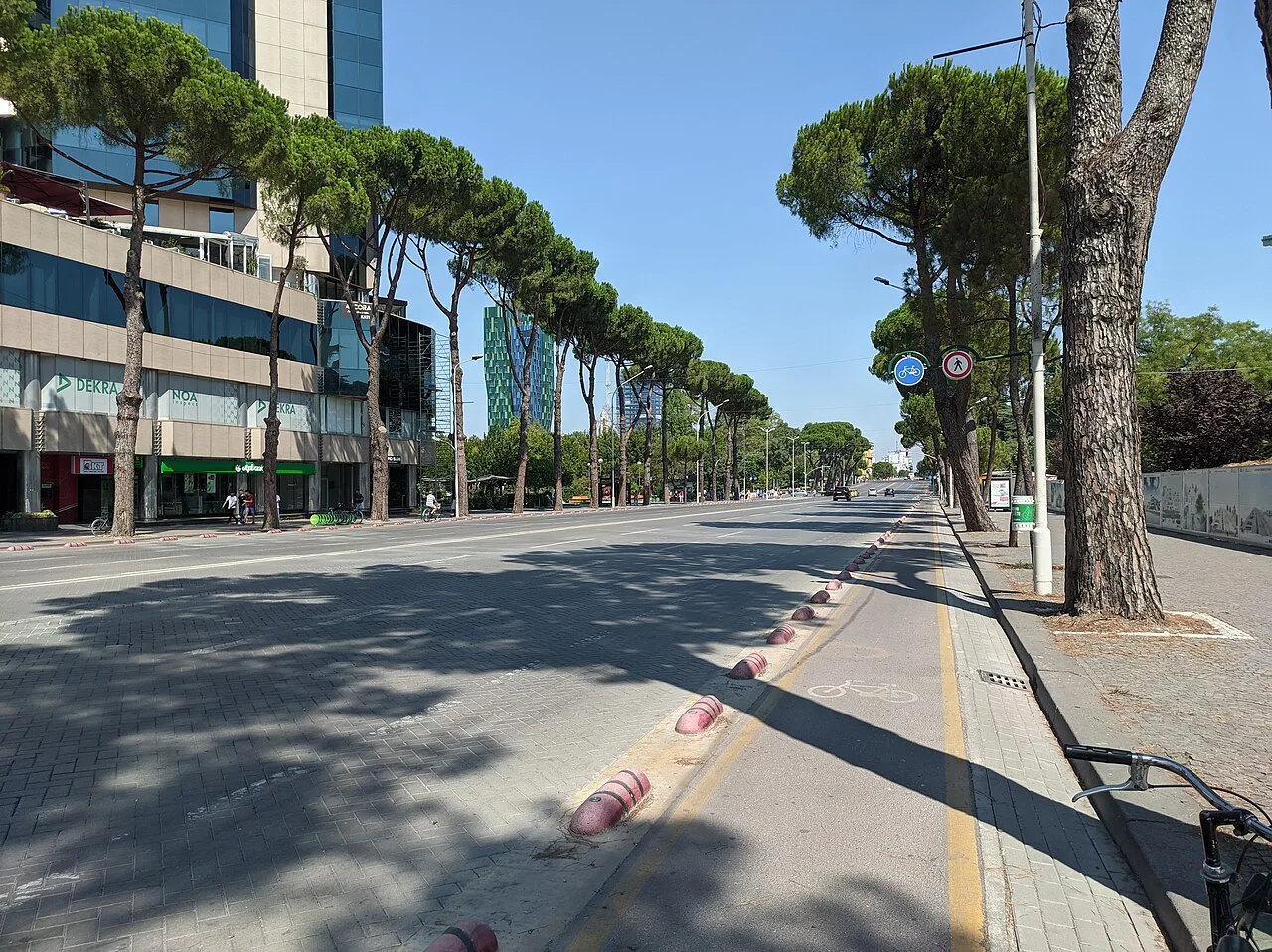
Byrek: the filo pie sold in byrektore and bakeries
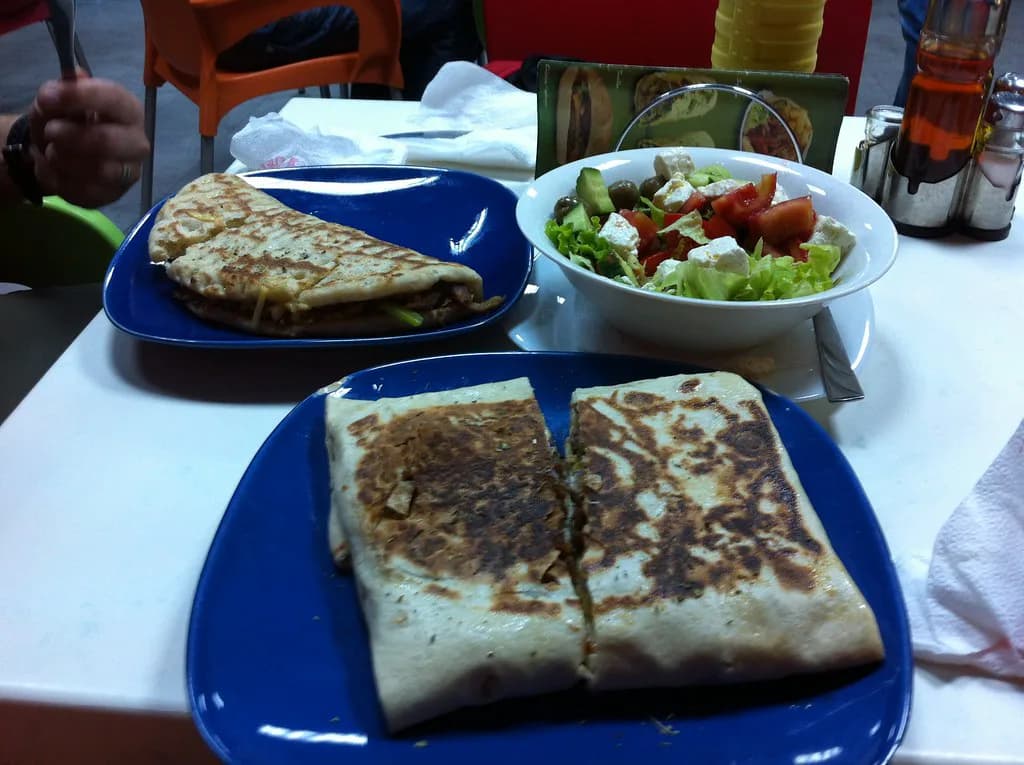
Byrek is layered filo pastry wrapped around a filling of cheese, vegetables or meat, and in Albania it is bought from a byrektore, a shop that specialises in baking it. The same pastry appears throughout the Balkans under names such as burek, with each country giving it its own treatment. Order by name: byrek me spinaq for spinach, byrek me mish for meat, byrek me fasule for beans.
Eat it hot and with your hands; the pastry is at its best straight from the tray. Many Albanians take a glass of dhallë alongside, which is practical on a hot day when you want something salty and hydrating rather than sweet. A byrek and a drink is a full light meal, not a garnish before one.
Lakror: the Korçë version baked in a wide pan
Lakror is the southeastern Albanian relative of byrek, associated with the Korçë region, and it is different enough to order deliberately. Its dough is usually batter-like rather than a proper rolled pastry, spread in thin layers and baked in a large pan over an open fire. The result is softer and more open-textured than a crisp filo byrek, and it is worth trying when you see it on a bakery counter.
Petulla: fried dough eaten as a snack or breakfast
Petulla are fried dough balls, found across the Balkans under other names, and in Albania they turn up as a snack, a side with dinner or a breakfast served with honey or jam to dip into. They are heavier than byrek and less portable, so they suit a sit-down morning rather than a walk between sights. If you want a proper Albanian breakfast with coffee, petulla is the item to look for.
What to drink with it: dhallë and raki
Dhallë is a salty, watery yoghurt drink and the natural partner to pastry, particularly in summer when you want fluid and salt rather than sugar. Raki is the other staple, a strong spirit produced in village houses across the country, and it is sipped rather than gulped, usually after eating or with a longer meal. For a street snack in the middle of the day, dhallë is the more useful order.
Where to eat street food in Tirana: Byrektore Paskali and Byrektore Çaku
Byrektore Paskali sits in the heart of Blloku, opens on weekdays and, unusually for a central byrektore, has seating, so you can sit down with a byrek me mish instead of eating standing up. Blloku is the neighbourhood most visitors pass through anyway, which makes it a convenient stop rather than a detour.
Byrektore Çaku is tucked into an alley next to Skanderbeg Square, which puts it on the route between the main sights and the centre. The byrek here is doughier than at some counters; try byrek me fasule or byrek me spinaq. Everything is baked on the spot and the pastries usually run out by 15:00, so treat it as a lunch stop rather than an afternoon one.
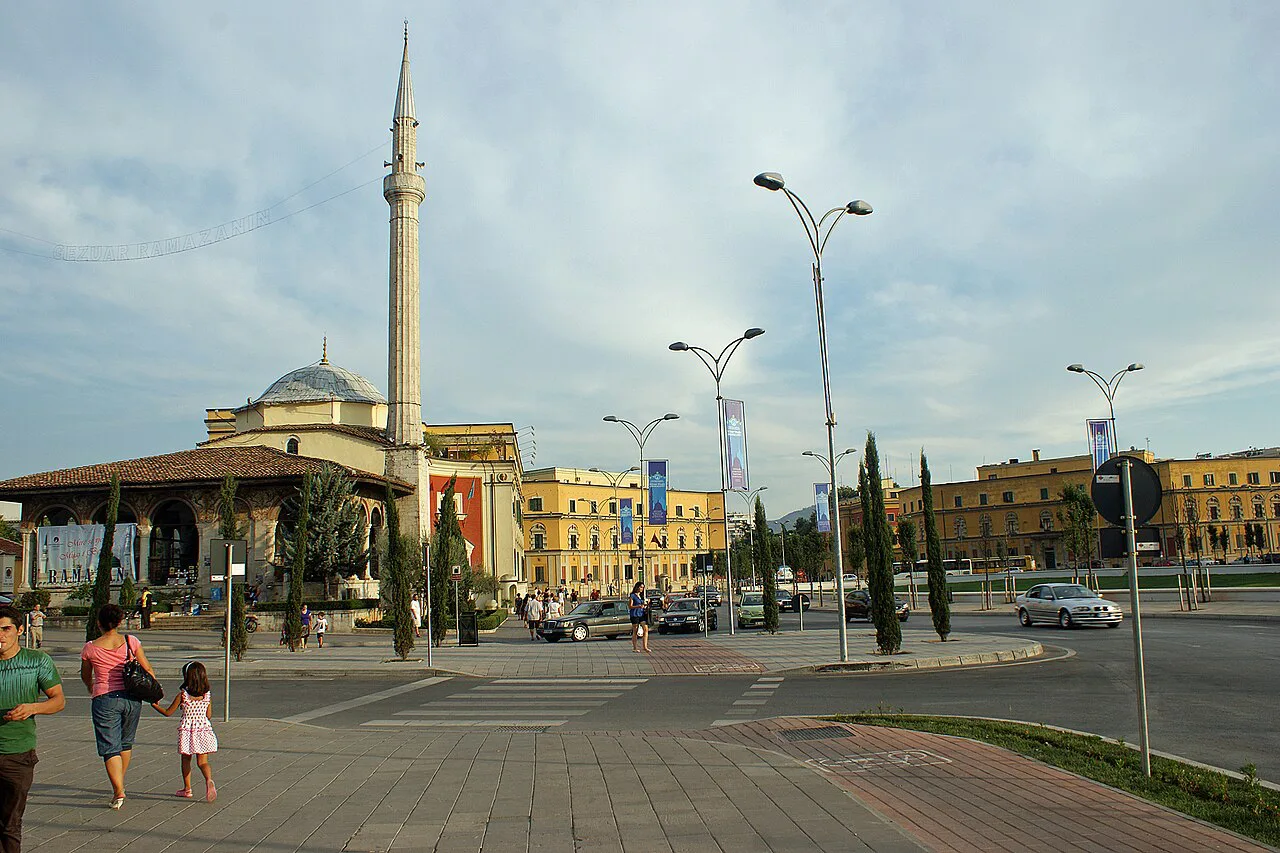
Quick snacks beyond pastry: kiosk pizza, falafel and hot dogs in Tirana
Tirana also runs on kiosk food, and Laguna Pizza & Ice Cream is one of the few remaining kiosks from the wave that opened after the communist regime fell in the 90s. It serves thick, freshly baked pizza and ice cream every day and stays open late, which makes it a useful fallback when a byrektore has sold out.
For something meat-free, Falafel House Tirana sits next to Taiwan Park, close to Skanderbeg Square, the Orthodox Cathedral and the park itself, so it slots into a walking loop through the centre. Hot dogs and burgers are covered by chains with several branches, including Dogu in Blloku. None of this is Albanian cooking, but it is what is actually sold on the street when you want a change from pastry.
Grilled food and seafood around the coast and lakes
On the coast and around the lakes, the quickest good eating moves from pastry to grilled fish. Peshk në Zgarë means grilled fish, baked whole and served with grilled vegetables, potatoes, herbs and olive oil, and it is common along the Riviera and near Albania's rivers and lakes, with trout the usual choice inland. This is restaurant food rather than street food, so plan it as a meal.
Wine is the other thing worth ordering with grilled food, and Albania grows indigenous grapes including Kallmeti, Vranac and Vlosh for reds and Shesh and Debin for whites. Kantina Mani in Shkodër is a family-run winery producing reds only, mostly Kellmet with Merlot, and it serves slow-roasted spit lamb alongside. Both are sit-down affairs, so treat them as an evening rather than a snack.
Vegetarian choices on the street
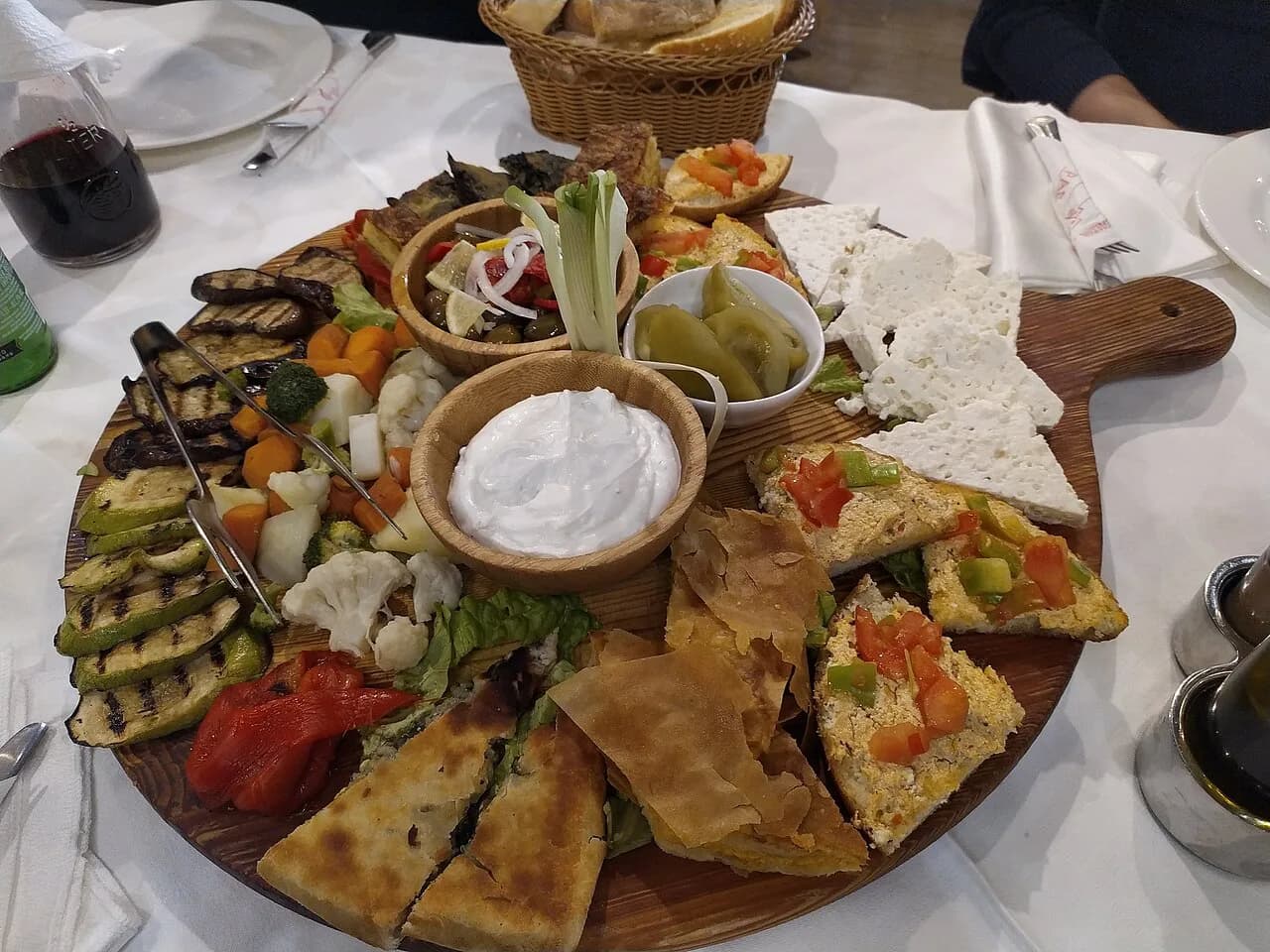
Vegetarians eat well from bakery counters: byrek with spinach, gjizë or wild greens, and lakror made without meat, are reliable meat-free choices, and Fërgesë, the baked dish of roasted peppers, tomatoes and gjizë, is a restaurant plate worth ordering when you sit down. Ask which fillings are on the tray, since the meat versions sit beside the vegetable ones, and check current prices and daily trays at the counter, as Fërgesë also comes in a liver version, Fërgesë me melçi.
How to order and eat on the go without overpaying
Prices are best checked at the counter itself: ask before ordering, pay in lek, and keep small notes for bakeries where a large bill is awkward. Portions are sold by the piece, so point at what you want rather than ordering a number. If you want a proper sit-down Albanian meal later, save Tavë Kosi and Elbasan tava for a restaurant with bread and time.
Which street snack should you try first?
Start with byrek from a byrektore, because it is the one snack you will find everywhere and the easiest to order by name; add dhallë if the day is hot. In Tirana, aim for Byrektore Çaku before 15:00 or Byrektore Paskali in Blloku if you want to sit down, and try lakror when you see it for the Korçë texture. Leave the grilled fish and the winery meals for the evening, when you have time to sit.
Explore more Albania guides
Sources
Notes for your Albania trip
Optional updates to our Albania town guides.
You might also like
Continue reading
More guides you'll find useful