Albanian Breakfast: What's on the Table and How to Order It
Albanian breakfast means byrek, petulla, Fërgesë, fresh cheese, olives and strong coffee. Here's what fills the table and what to try first.
On this page
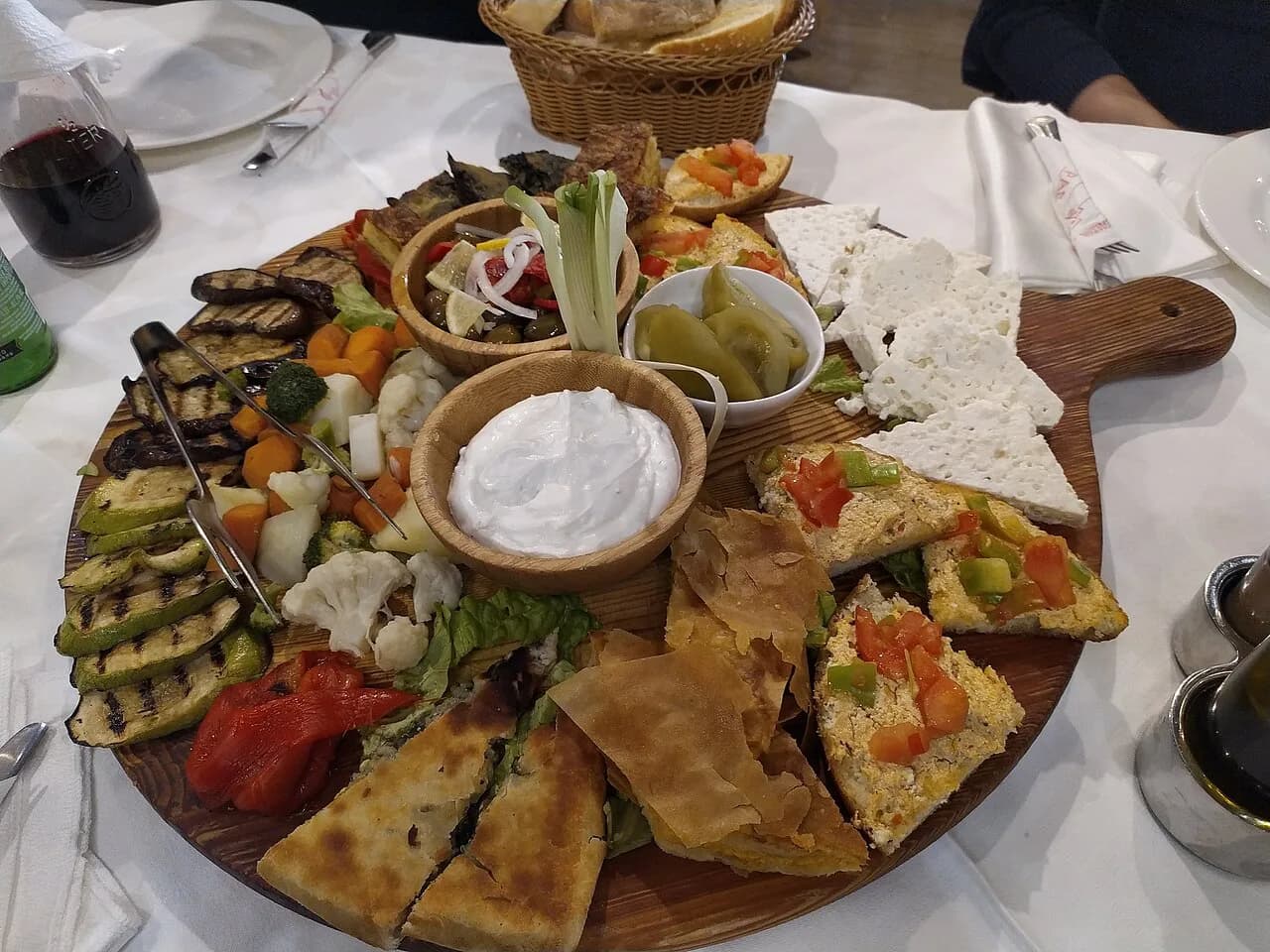
An Albanian breakfast is a shared savoury table rather than one plate: flaky byrek, fried petulla dough, eggs with peppers, Fërgesë, fresh cheese, olives, bread and small cups of strong coffee arrive together. Expect to eat more than you planned and to linger; the meal is built for picking, not for speed. This guide explains each item on the table, how the spread is served, what to drink with it and how to choose between a sit-down breakfast and a bakery stop.
What an Albanian breakfast actually is
The meal is savoury and built around bread and pastry, with dairy, eggs and vegetables alongside, and often sliced liver cooked with onions and peppers. A traditional spread is described as a hearty meal meant to fill you for the day, with pastry, fried dough and fresh vegetables such as tomatoes, cucumbers and peppers. It reads like a series of small dishes eaten in any order rather than courses, so take a little of what appeals and go back for more.
For visitors, the useful shift is to stop looking for a main event. Coffee, bread and something from the pastry or cheese side of the table make a complete breakfast here, and the heavier dishes are optional extras rather than requirements. If you are moving early, a bakery breakfast covers the same ground in far less time.
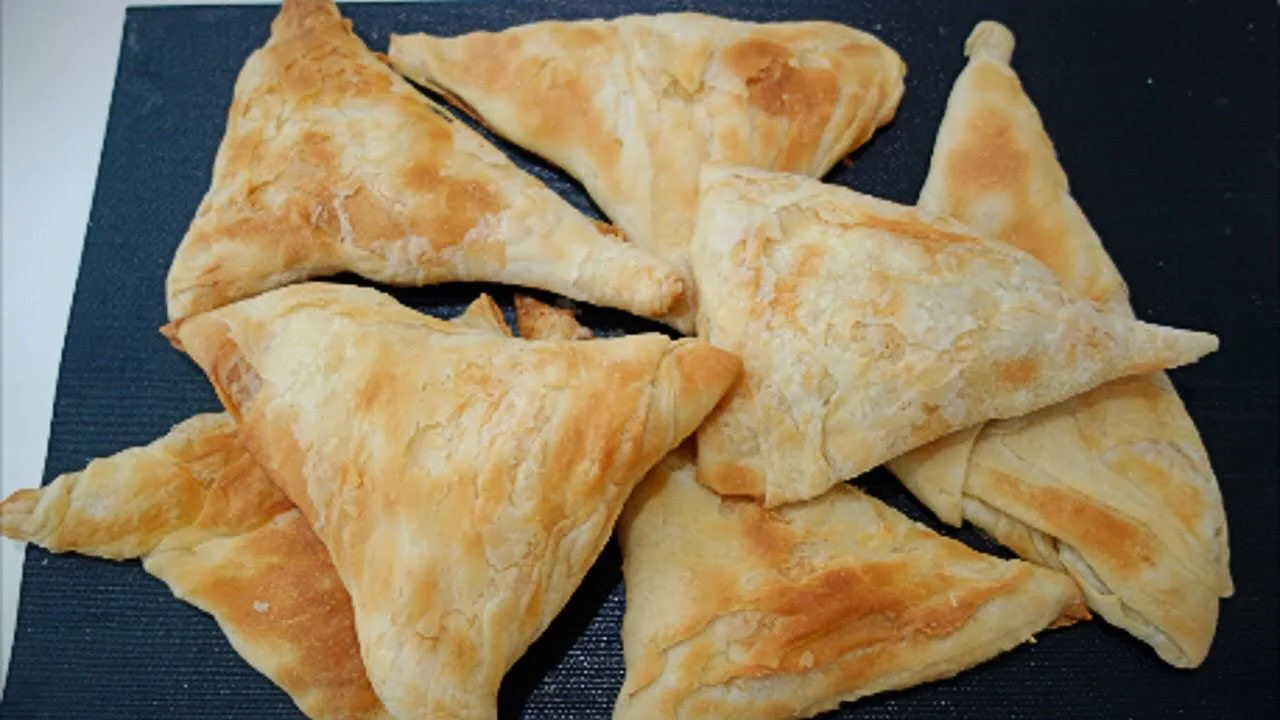
The core dishes: byrek, petulla and eggs
Byrek is the backbone of the morning: layers of phyllo filled with cheese, spinach or meat and baked in large trays, then cut into pieces. It is sold by the slice from bakeries and eaten warm. If you want the detail on the fillings and how it is built, Byrek: What Albanian Filo Pastry Is and How to Eat It covers it.
What is gliko? Gliko is whole fruit preserved in a thick sugary syrup, served in small spoonfuls alongside bread or petulla at breakfast. It is sweet and gummy rather than a jam, and a little goes a long way; the Berat preparation is described as taking 16 days.
Is Albanian breakfast the same as Turkish breakfast? No. Both are shared savoury spreads with bread, cheese and olives, but the Albanian table leans on byrek, petulla and Fërgesë, and coffee is served Turkish-style in small cups.
Can I get a vegetarian breakfast? Yes. Byrek with cheese or spinach, petulla, Fërgesë, fresh cheese, olives, bread, yogurt and gliko are all meat-free, and the main risk is a meat-filled byrek, so ask before you buy.
Petulla are deep-fried dough balls, crisp outside and fluffy inside, usually served with honey, jam or feta. They are the sweet-or-savoury hinge of the table, and they work either way depending on what you spoon over them. Eggs with herbs and peppers are the other constant, often scrambled with red and green peppers and cheese rather than served plain.
Fërgesë is the dish that surprises people most at breakfast. It is a creamy mix of peppers, tomatoes and onions with melted cheese, and in the Berat version it came with scrambled eggs and cheese folded through. It is rich, so treat it as one component of the table rather than a plate to finish on your own.
Fresh white cheese, hard-boiled eggs, olives and bread make up the quiet middle of the spread. The bread is worth attention: in Berat it was baked in the kitchen, made with corn, and spread with butter churned on the premises. None of this is decorative, so pace yourself across the savoury items before reaching for the sweet ones.
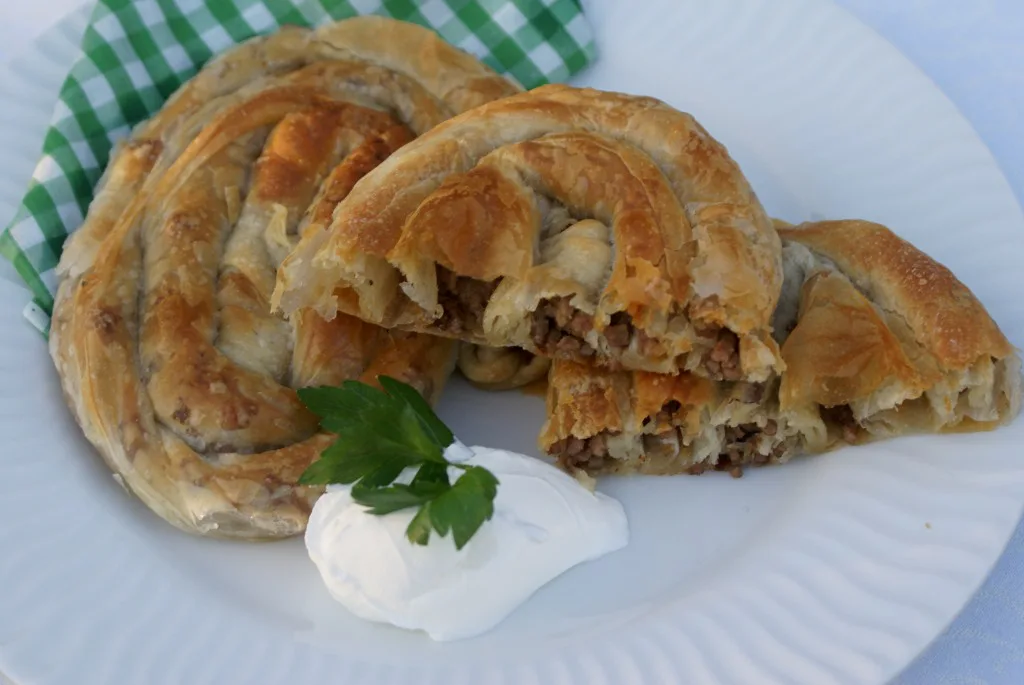
Gliko, marmalades and the yogurt from the butter
Two items on the table confuse visitors most, and both are worth trying. Gliko is whole fruit set in a thick sugary syrup, gummy in texture and served in small spoonfuls alongside bread or petulla rather than eaten as a dessert. The Berat account notes that preparing it takes 16 days, which explains why it appears in small quantities.
Marmalades of quince and cherry turn up next to the petulla, and the savoury side has its own supporting cast. The yogurt served at breakfast is often the watery kind drained off during butter-making, thin and slightly tart. Try a spoonful on its own first so you know what you are dealing with, and if the sweet preserves are the part you enjoy most, Albanian desserts covers the wider territory.
How the table is served
The spread arrives on shared plates, with warm bread and butter close at hand. In a Berat guesthouse kitchen, cooks fried petulla and baked bread while butter was churned by hand in the same room, so what reaches the table is often made that morning rather than bought in. That style of service means you help yourself, pass plates and take small amounts at a time.
Portions can defeat a solo eater. If you are alone and the table is set for a group, ask for a smaller selection rather than leaving food, and take the cheese, olives and bread at your own pace. The olive oil used on the table is worth noticing too; Albanian olive oil explains what you are tasting.
Drinks: coffee, raki and sherbet
Coffee is part of the meal, not an afterthought. Albanians drink Turkish-style coffee brewed strong and served in small cups, often with something sweet on the side, and it is a social drink taken slowly with company. Order one at the start rather than at the end, and ask for it the way locals take it if you want the full experience; Albanian coffee goes deeper into the method and the café routine.
Raki is a clear spirit made from grapes or other fruit such as plums and apricots, served before a meal as an aperitif or after a heavy one as a digestif. It is not a breakfast drink in the way coffee is, but it will appear at long lunches and celebratory tables. Albanian raki covers the varieties and how it is drunk.
In hot weather, sherbet is the lighter option: fruit juice or syrup mixed with water and sugar, served cold. It is a traditional drink associated with Ramadan and with summer, refreshing rather than heavy. Wine and brandy exist in quantity but belong to later in the day.
A Berat breakfast, described
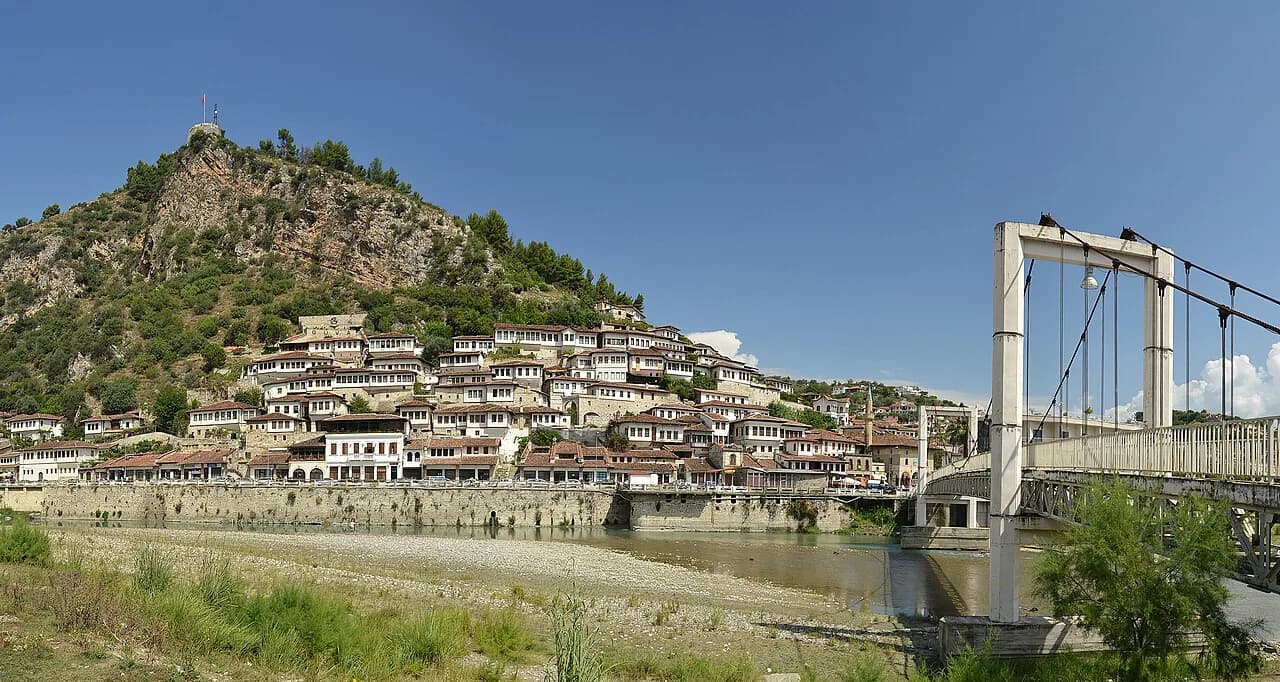
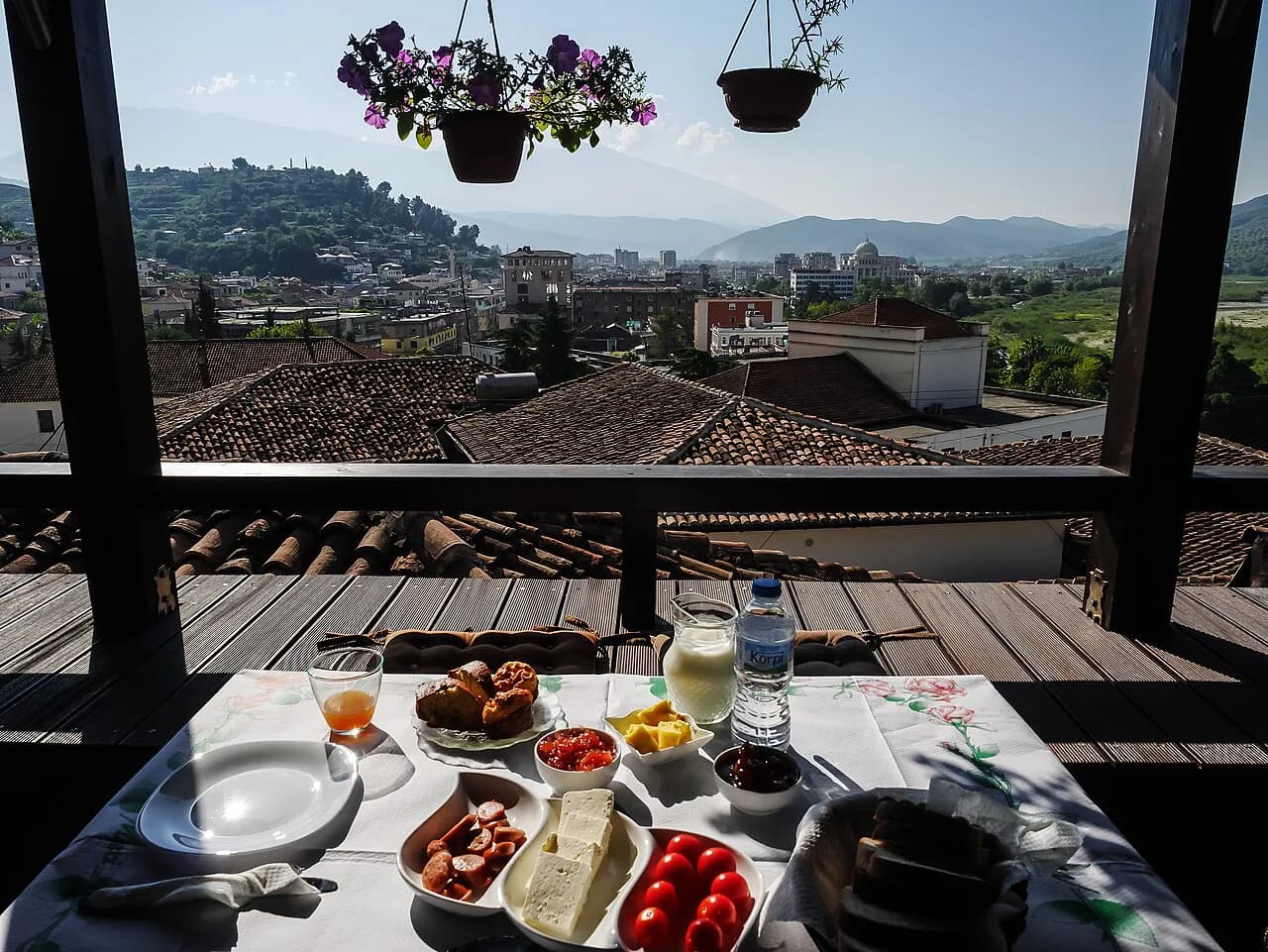
A traditional spread in the old town of Berat gives the clearest picture of what to expect. One account of a breakfast there lists eggs with herbs, hard-boiled eggs, Fërgesë, petulla, gliko, fresh cheese, olives, yogurt and bread with fresh butter, with the Fërgesë carrying scrambled eggs, cheese and red and green peppers. The petulla came with quince and cherry marmalades, and the bread was made with corn.
What makes the Berat version useful as a model is the balance: plenty of savoury items, a small amount of sweet preserve and a lot of bread. It is a table for a group with time on its hands, not a quick fuel stop before a walking day. If you are staying in the old town, plan the morning around it rather than squeezing it in.
If you only have one sit-down breakfast
Order byrek and petulla first, then add one egg or cheese dish and a coffee. That gives you the pastry, the fried dough and the coffee culture in a single sitting without over-facing yourself. Ask for Fërgesë only if you are sharing, and take the gliko in a small spoonful rather than a portion.
If you want one heavier dish to anchor the meal, Tavë Kosi is the classic choice at lunch or dinner: a baked casserole of lamb or beef with yogurt and eggs, served with rice or bread. It is less common as a breakfast centrepiece, so treat it as the main meal later in the day.
Skip the second round of bread if you want a light start, and choose the yogurt and olives over the fried dough. Nothing is compulsory, and a coffee with a slice of byrek is a perfectly normal Albanian breakfast for someone in a hurry.
Buying breakfast from a bakery before an early start
Bakeries sell byrek by the slice, which makes them the practical option when you are leaving early for a castle, a furgon or a day on the coast. Buy two slices if you are walking, wrap them and eat while warm. Petulla are usually served with honey or feta at a table, so byrek is the better choice for the road.
If you want something hot and savoury later in the day, Albanian street food covers grilled meats, qofte and the cheese-and-pepper dishes that appear at lunch counters. Sufllaqe, a wrap of grilled meat, salad and chips, is a lunch option rather than a breakfast one.
How to eat it well
Take small amounts, keep the bread close and let the coffee anchor the meal. The combination of pastry, fried dough, cheese and eggs is heavy in total but manageable in small portions, and nobody expects you to clear every plate. Eat the savoury items first, then finish with gliko, marmalade or petulla with honey.
If you are invited to a family table, wait to be shown where to sit and let the host serve, then take what you are offered. Breakfast is a shared meal, and matching the pace of the table matters more than trying every dish.
Which breakfast to plan for
Choose a bakery breakfast of byrek and coffee if you are moving early, and plan one long sit-down spread in Berat or another old town if you have the morning free. In the sit-down version, start with byrek, petulla and eggs, add a spoonful of gliko and a small cup of Turkish-style coffee, and stop when you are comfortable rather than when the plates are empty.
Explore more Albania guides
Frequently Asked Questions
What is gliko?
Gliko is whole fruit preserved in a thick sugary syrup, served in small spoonfuls alongside bread or petulla at breakfast. It is sweet and gummy rather than a jam, and a little goes a long way; the Berat preparation is described as taking 16 days.
Is Albanian breakfast the same as Turkish breakfast?
No. Both are shared savoury spreads with bread, cheese and olives, but the Albanian table leans on byrek, petulla and Fërgesë, and coffee is served Turkish-style in small cups. Expect regional differences between Berat, Tirana and the coast.
Can I get a vegetarian breakfast?
Yes. Byrek with cheese or spinach, petulla, Fërgesë, fresh cheese, olives, bread, yogurt and gliko are all meat-free, and the main risk is a meat-filled byrek, so ask before you buy.
Sources
Notes for your Albania trip
Optional updates to our Albania town guides.
You might also like
Continue reading
More guides you'll find useful