Byrek: Albania's Filo Pastry, Fillings and How to Eat It
Byrek is Albania's layered filo pastry, baked in a round pan with cheese, spinach, meat or leek fillings. Here is what it is, how it is made and how to eat it.
On this page
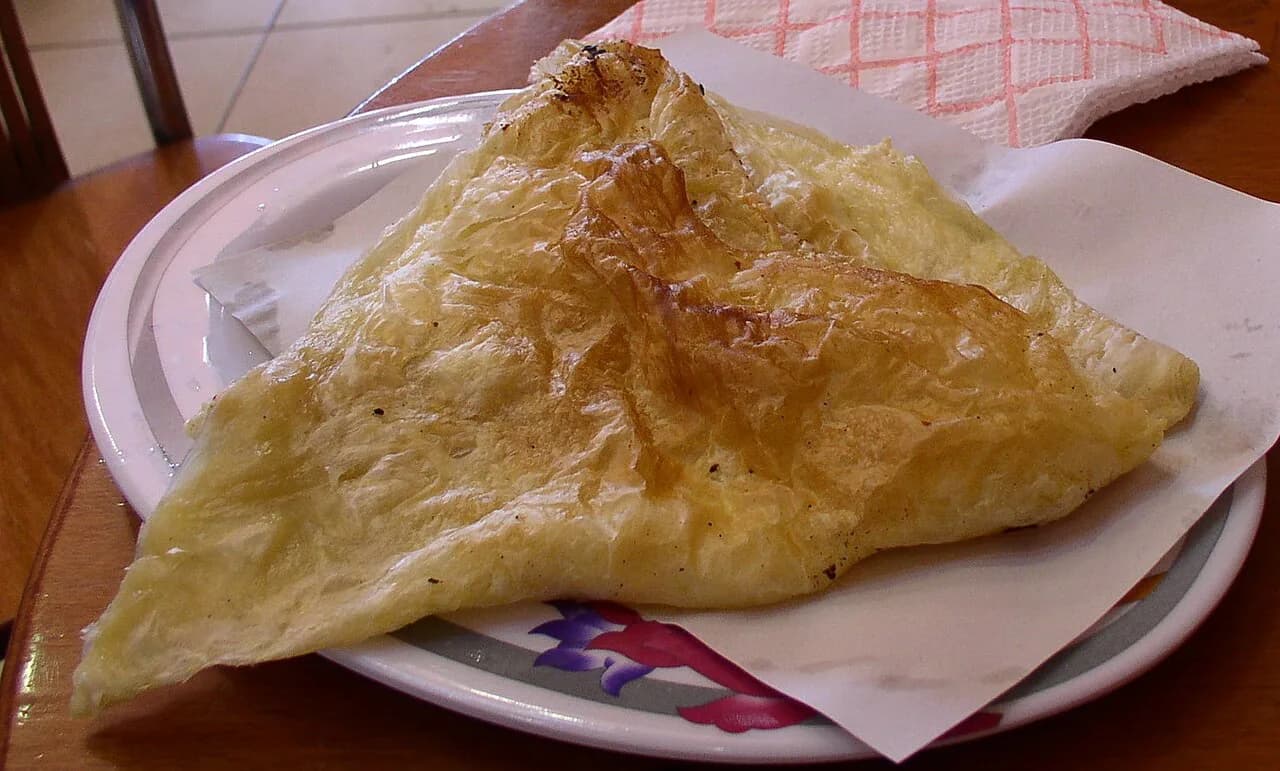
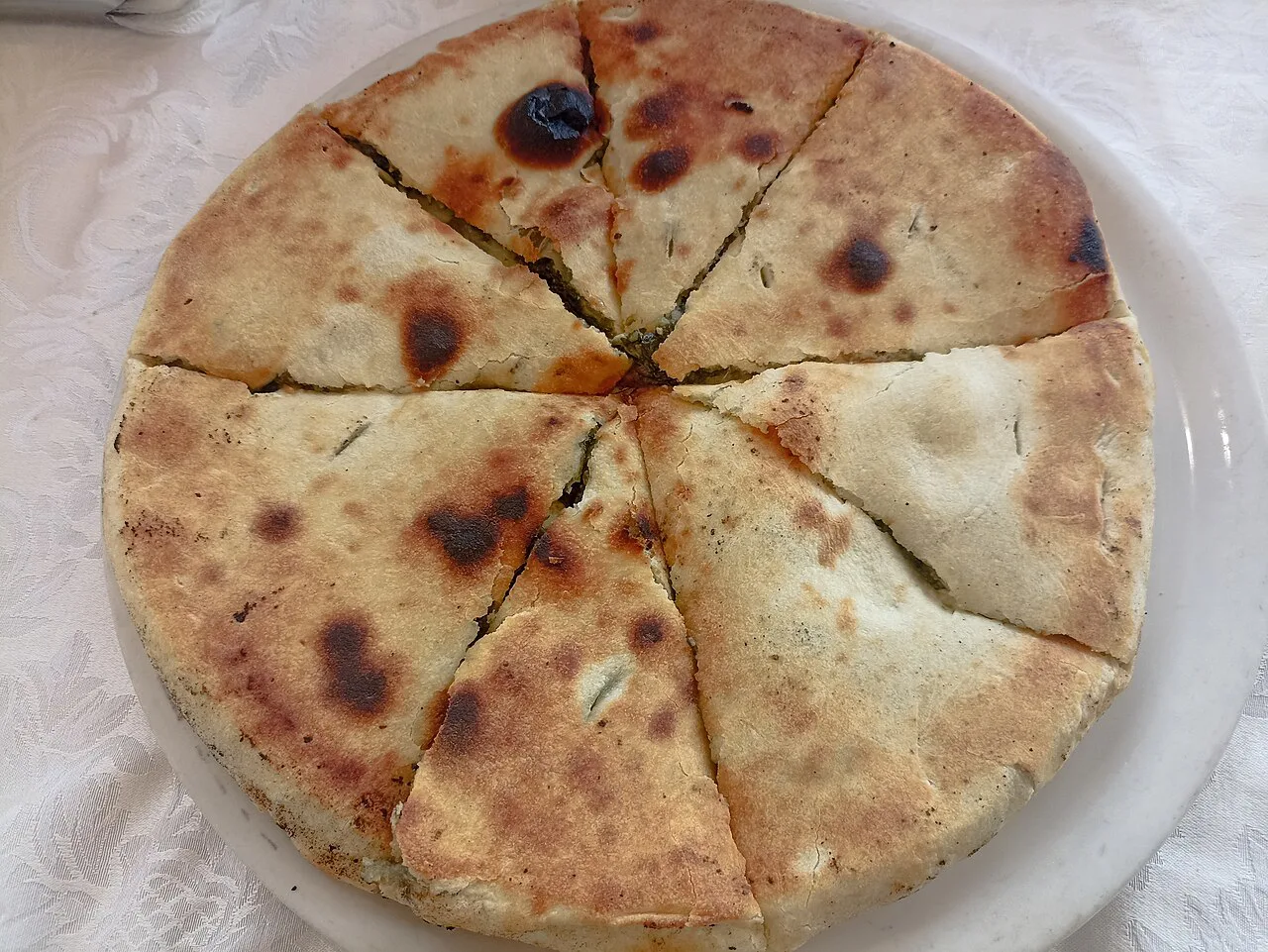
Byrek is Albania's layered filo pastry: paper-thin sheets of dough stacked with a savoury filling and baked in a round pan until the top is deep golden. You buy it by the slice or the wedge, warm or at room temperature, and the fillings run from cheese and spinach to meat, leek, pumpkin and wild greens. This guide explains what goes into it, how to read the names at a bakery counter, and how it fits on a table with other Albanian food.
It is everyday food rather than a restaurant dish. The same pastry turns up at a family Sunday lunch, on a meze spread alongside raki, and as a quick bite between buses, which is why a slice is worth understanding before you order.
What byrek is: layers, filling and the tepsi pan
The structure is simple and consistent. A stack of between five and twelve paper-thin dough sheets goes into a round metal pan called a tepsi, the filling is spread across them, a second stack goes on top, and the whole thing bakes at moderate-high heat until the surface puffs slightly and colours.
Olive oil is brushed between the layers, which is what separates the sheets and gives the pastry its flake. It is cut into wedges or squares and eaten warm or at room temperature; a wedge holds a lot of layers, so a modest slice goes further than its size suggests.
How it is made: petë dough and the layering
The dough is petë, Albanian filo, traditionally rolled by hand on a wooden board with a long thin pin until the sheets are thin enough to read newsprint through. Most home cooks now use frozen phyllo from the supermarket, and the sources treat that as perfectly acceptable: the ratio of layers to filling matters more than where the sheets came from.
A home method in common use divides the dough into ten balls, rests them under a damp cloth for about 30 minutes, then rolls each one out to cover the baking dish, brushing oil between every layer before adding the filling and repeating on top. The assembled pie goes into an oven at around 200°C and is done when both the top and the underside are golden.
In Albania the pastry is also described as peta, a dry, very thin, tortilla-like dough that forms the base of the pie. Either way, the method is layering rather than rolling and folding, which is why byrek is built for a communal pan.
The fillings: how to read byrek me [filling]
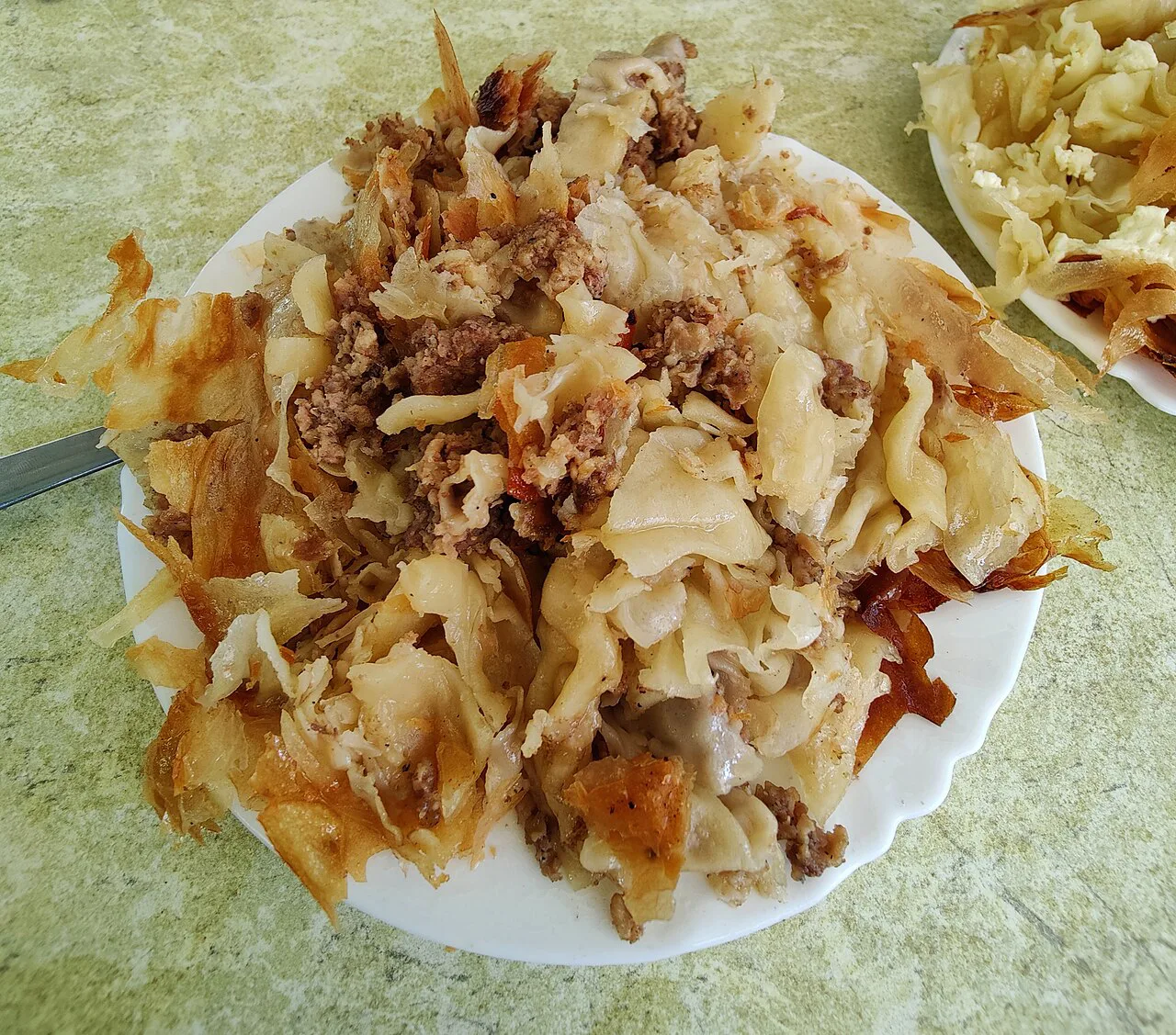
The names follow one pattern, byrek me followed by the filling, and learning it lets you read a counter at a glance. Byrek me spinaq is spinach, byrek me djath is cheese, byrek me mish is meat, and byrek me gjize uses gjize, a cottage-style cheese.
Beyond those four, the common fillings include egg, bean, and onion with tomato, spelled out as byrek me veze, byrek me fasule and byrek me qep dhe domate. Leek, pumpkin, wild greens and beet also appear, and the categories stay stable even as individual families vary the seasoning.
Cheese byrek is usually made with kaçkavall or feta, and the spinach-and-cheese version combines the two. If you only try one, order byrek me spinaq dhe djath, which travels well and shows off both the pastry and the filling.
How Albanian byrek differs from spanakopita, börek and banitsa
The Balkan filo pies are cousins, and the differences are structural rather than a matter of one being better. Greek spanakopita is typically a spinach-and-feta filling bound with egg, while the Albanian version uses kaçkavall or feta, layers the filo more thinly and covers far more fillings than spinach alone.
Turkish börek is smaller and shaped into individual cigars or coiled rosettes, whereas Albanian byrek is built for a communal pan and cut into wedges. Bulgarian banitsa mixes cheese, yogurt and egg between the layers, while Albanian byrek leans on a plain brush of olive oil between the sheets.
The English spelling burek also circulates for the same family of pastry across the Balkans, and it is the term you will meet in English-language food writing about the street version. If a menu says burek, expect the same layered pie under a different transliteration.
The name comes through Ottoman Turkish börek, and the derivation most often cited traces it to a Turkic root meaning kidney, from the shape of the filled pastry. A rival account links the word to a root for a twisted or folded shape; the kidney derivation is the one usually given, but treat the etymology as unsettled rather than the whole story of the dish.
What byrek tastes like
Expect a crisp, faintly oily top layer giving way to a soft, steamed interior, with the filling carrying the flavour. Cheese versions taste savoury and lightly salty, spinach versions are greener and looser, and meat versions are the richest of the everyday fillings.
Because the pastry is brushed with olive oil rather than butter or a yogurt batter, the finish is drier and less rich than a banitsa, a plainer contrast that lets the filling carry the flavour. A spinach-and-cheese slice is the mildest starting point; meat and leek are heavier and better shared.
Where you see it in Albania: bakeries, meze and family tables
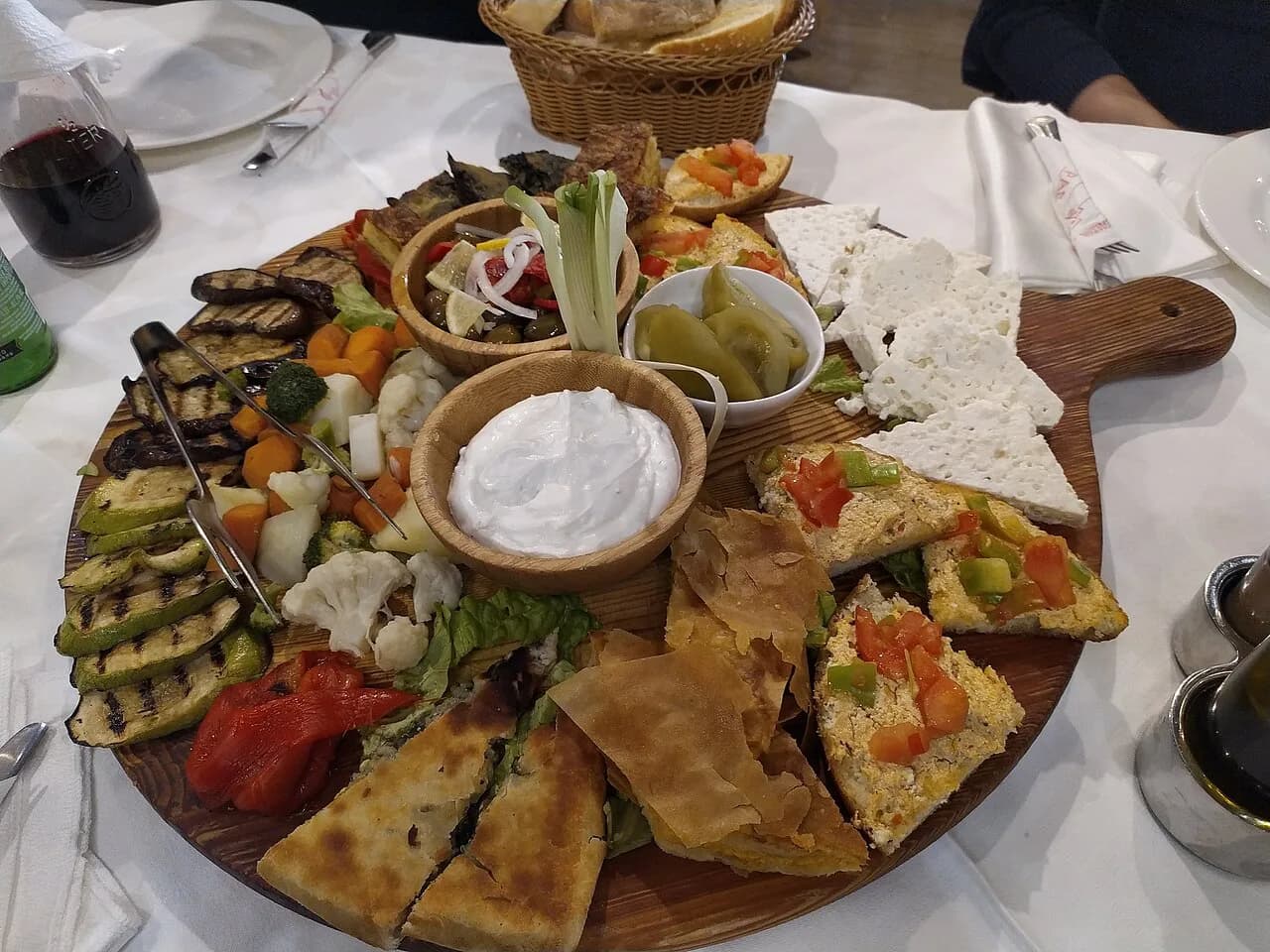
Byrek is sold by the slice in bakeries and eaten as street food across Albania and the wider Balkans, a habit that the sources trace back to the Ottoman era. It is also a home dish, appearing on meze spreads in place of a full meal.
At home it anchors family occasions: Sunday lunch, holiday tables, and weeknight dinners built from whatever filling is in the fridge. On a meze table it sits alongside small plates and Albanian raki, which cuts through the oil in the pastry.
For a wider picture of what to order with it, from Tavë Kosi to grilled dishes and coffee, it helps to read around Albanian food before you travel. A bakery slice is a cheap introduction; the meze table is where the rest of the repertoire shows up.
How it is served and eaten
Byrek is served warm or at room temperature, cut into wedges or squares from the round pan. Ask for it warm if you can: the layers are at their crispest shortly after baking and soften as the pie cools.
Eat it with your hands, ideally with a coffee or a glass of raki. If you are buying from a counter, point at the filling you want rather than trying to pronounce the full name, and take a smaller slice than you think you need.
Leftovers keep, and the pastry is commonly eaten the next day. If you are assembling a picnic or a longer bus journey, a wedge wrapped in paper is more practical than a plate of hot food.
Spinach-and-cheese byrek: the version to know
The spinach-and-cheese pie is the version most Albanian households abroad actually cook, ahead of meat, leek and pumpkin, partly because the ingredients are in any supermarket and the technique fits inside two hours. The pan feeds a family, and the leftovers hold.
It is also the easiest to make at home if you want to learn the layering. Thaw frozen phyllo, make a spinach and cheese filling, layer the bottom, spread the filling, layer the top, tuck and score, then bake. The usual failures are a soggy bottom, a dry top, and cutting in too soon.
For a home kitchen, the cheese matters less than the layering. Frozen filo is fine; what you are practising is the brushing and the tuck, which is what makes the difference between a crisp pie and a dense one.
Practical notes for buying and eating byrek
Bakeries do not always label fillings in English, so learn the four words that do the most work: mish for meat, spinaq for spinach, djath for cheese and gjize for the cottage cheese. That is enough to order confidently in most towns.
Pricing varies by town and by the weight of the slice, and bakeries display it at the counter rather than in any published list. Check the price before you point, and carry small notes in lek so a quick purchase does not stall.
Byrek works well at breakfast, which is why it sits naturally in a morning routine with coffee rather than a sit-down restaurant meal. If you are moving on to a fuller Albanian table later, keep it light: a single wedge and a coffee is a reasonable start.
Ordering your first slice
Start with byrek me spinaq dhe djath or byrek me djath, served warm, and use the me pattern to try a second filling the next day. Mish and qep dhe domate are the heavier, mealier options; gjize is the one most worth seeking out if you want to taste something you will not find at home.
If you want the wider context, read around the Albanian table before you go, from Fërgesë and qofte to the desserts that follow, so a single bakery stop fits into a bigger picture of what you are eating.
Explore more Albania guides
Frequently Asked Questions
What is borek in English?
Borek, usually written börek for the Turkish version and byrek for the Albanian one, is a savoury pie made from thin layers of filo dough around a filling, baked in a round pan. The English spelling burek also appears. It translates roughly as a layered filo pie rather than as a single fixed recipe.
Who makes burek?
In Albania and across the Balkans it is both home cooking and bakery food. Families make it in a round pan for lunches and holidays, while bakeries sell it by the slice as street food. Outside the region, Albanian households commonly bake the spinach-and-cheese version at home.
Can you eat byrek cold?
Yes. It is served warm or at room temperature, and leftovers are commonly eaten the next day. The pastry softens as it cools, so if you want the crisp layers, ask for a slice straight from a recent bake.
Sources
Notes for your Albania trip
Optional updates to our Albania town guides.
You might also like
Continue reading
More guides you'll find useful