Flija: Albania's Layered Pancake Dish Explained
Flija is a highland Albanian dish of thin batter layers cooked one at a time and brushed with butter and yoghurt. Here is how it is made, served and varied.
On this page
Flija is a layered pancake cake from Albania's highlands: thin layers of plain batter cooked one at a time and brushed between with melted butter and yoghurt, then sliced into wedges and eaten warm. It is celebration food rather than an everyday dish, cooked under a domed lid with embers piled on top. This guide covers what the dish is, how the saç method works, why making one is a group effort, how it is served and where it sits alongside the rest of Albanian food.
What flija is
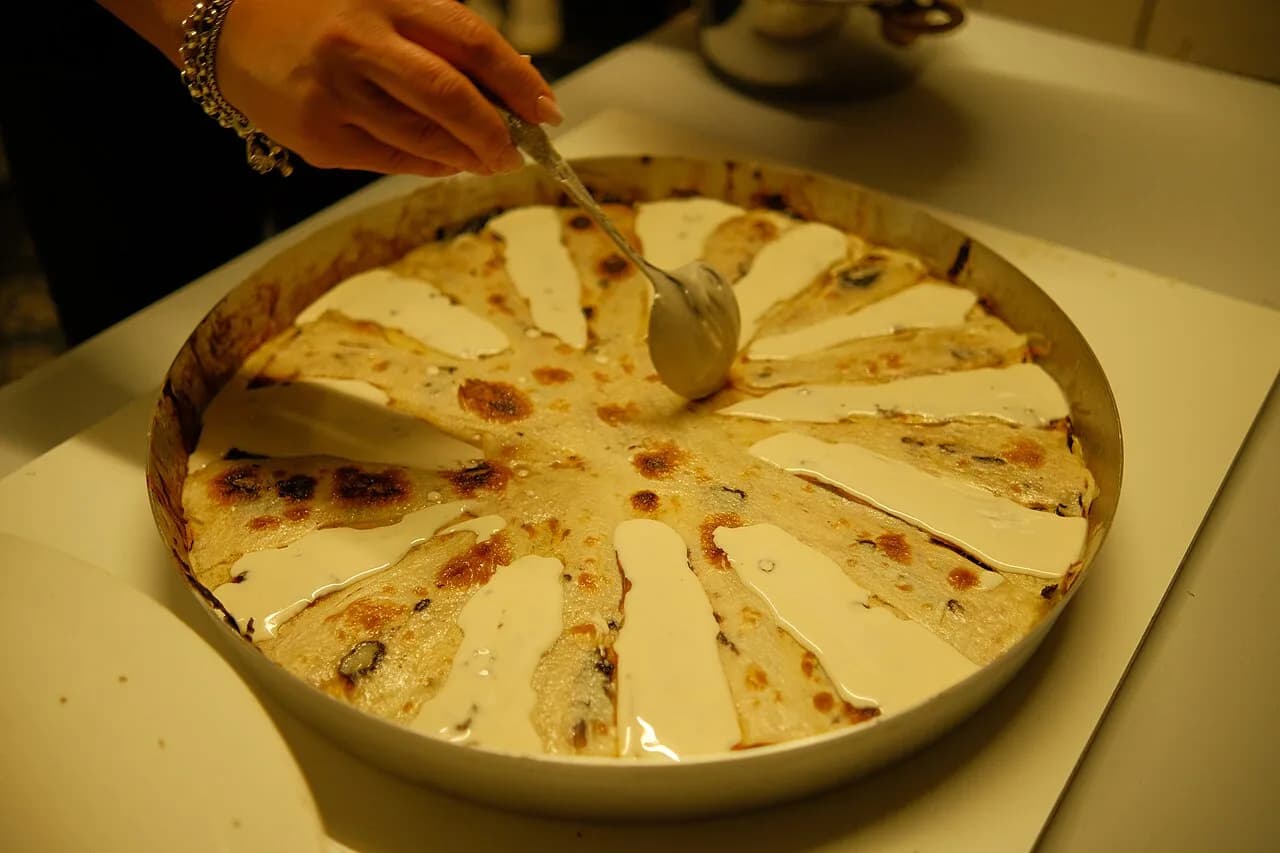
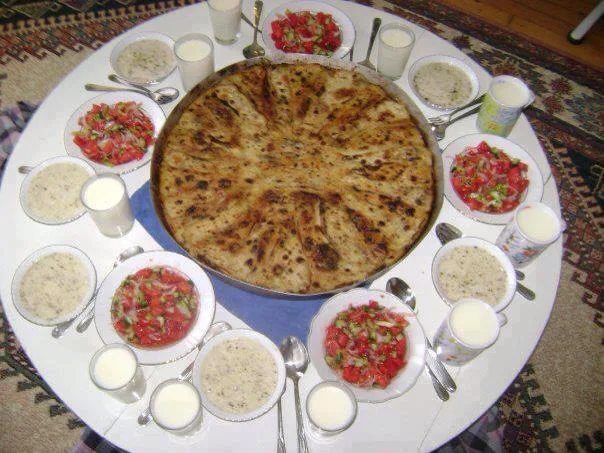
Structurally, flija is a stack of eight to fifteen paper-thin pancakes pressed into a single round cake and cut into wedges. The batter is deliberately plain: flour, water and salt whisked smooth, rested, and used unleavened, with no egg, yeast, sugar or milk in the traditional version. All the richness comes from what goes between the layers and from the smoke of an open fire.
Do not confuse it with a pie or a cake. There is no filling, and the layers are cooked individually rather than assembled raw and baked in one go, so the butter brushed between them saturates the stack as it builds. That structure is what makes it such a distinctive item on an Albanian table.
Where it comes from and when it is eaten
Flija belongs to the malësi, the highland belt that runs through northern Albania, Kosovo and Montenegro, and it appears on festive tables at weddings, Bajram, Christmas and other milestone meals. It is a highland and celebration dish, not a national staple, and the sources treat it as food for an occasion rather than a weekday supper. If you are in the north during a family celebration, this is the dish to accept a second slice of.
Across the border in Kosovo it is cooked and eaten in the same way and carries the same celebratory weight. A Kosovo version follows the same logic of thin batter layers alternated with a creamy mixture of yoghurt, butter and sometimes egg, which shows how the dish travels under slightly different recipes without changing its character.
The saç method: heat from above
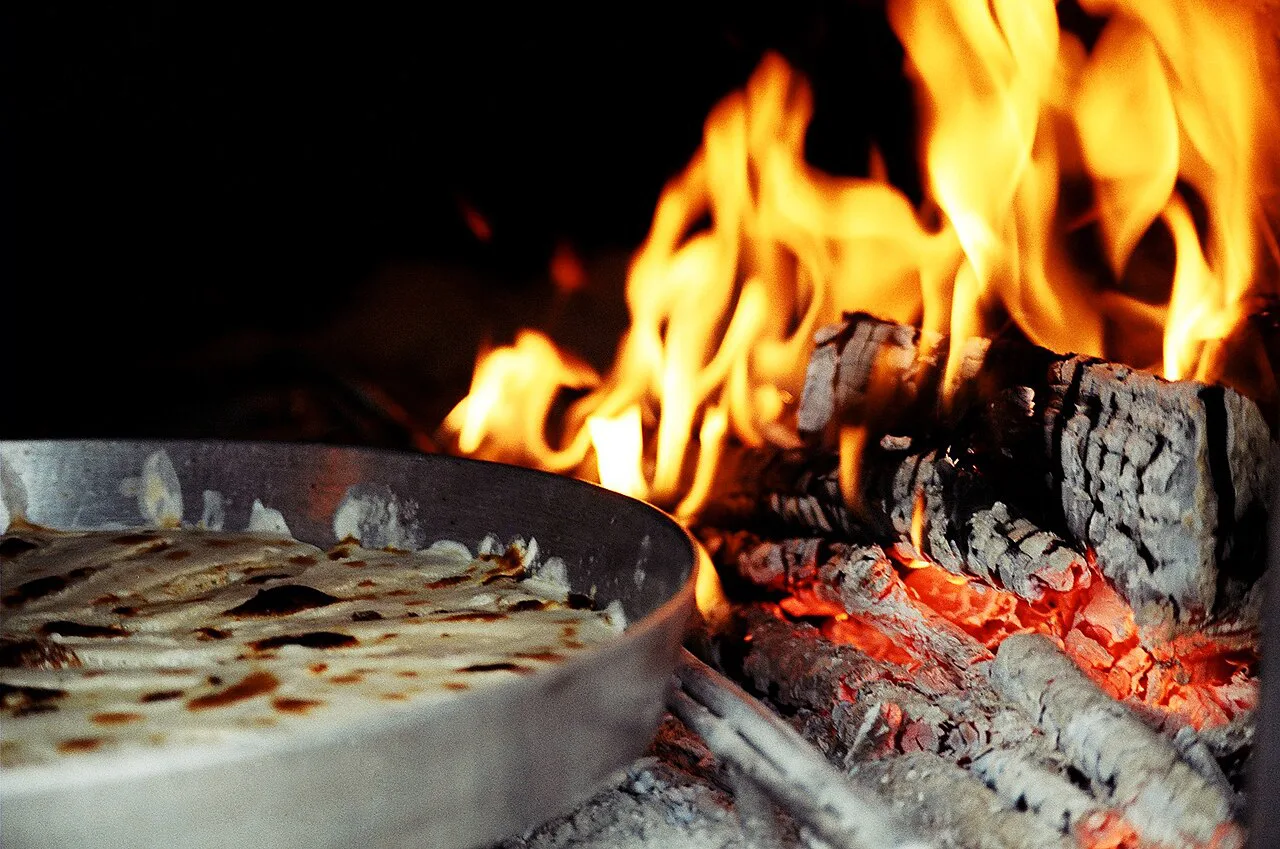
The defining piece of equipment is the saç, a domed iron lid that is heated by piling glowing embers on top, so the heat comes down onto the batter rather than up from below. The cook spreads a thin layer of batter in a round tray, holds or sets the hot lid over it for a short burst, then brushes the surface with butter or a butter-and-yoghurt mix before adding the next layer. Each layer cooks in seconds to minutes, and the cook repeats the cycle until the batter runs out.
Understanding the saç as a method rather than a pan explains the dish's texture. Because every layer sets under direct heat from above, it browns lightly on top and stays pale underneath, and the butter brushed on each surface lets the next layer of batter spread evenly. Wood smoke from the fire adds another flavour layer that an oven cannot reproduce.
Batter and brush: the two-part structure
Traditional flija is built on two mixtures, not a long ingredient list. The first is the plain batter of flour, cold water and salt, rested for about half an hour so it flows thinly. The second is the brush: melted butter, often blended with kos, the Albanian-style yoghurt, which is spread over each cooked layer before the next is added.
Some family versions enrich the second mixture further. One Albanian recipe brushes on a blend of egg, oil and melted butter between the batter layers, which gives a richer, more golden finish. Either way, the seasoning and fat sit between the layers rather than in the batter, and that is where the flavour of the finished dish comes from.
How long it takes and why it is a group effort
A traditional flija run takes three to four hours, because each layer is cooked separately and the cook moves constantly between the fire, the batter bowl and the saç. In a highland household this is often a shared job, with one person tending the embers, another spreading batter and another brushing and watching the stack. Treat an invitation to help as part of the meal, not a chore.
It is not a last-minute dish, and the sources are clear that the timing depends on the method. An outdoor saç over a fire runs longer than an oven version, where each thin layer can set in a couple of minutes under a hot grill. If you are cooking it at home, plan an unhurried afternoon rather than squeezing it in before dinner.
Oven versions for anyone without a saç
The saç is hard to find outside Albania, so home cooks adapt. The usual approach is a round or shallow tray set close under an oven grill: spread a thin layer of batter, grill it until just set, brush with the butter or egg mixture, and repeat until the tray is full and the top is golden and slightly crisp. It is slower than it sounds in attention, even when the clock says an hour.
The oven version will not taste identical, because it loses the wood smoke that comes from an open fire. What it keeps is the layered structure and the butter between layers, which is most of the point. A domestic version also lets you scale the effort to a smaller tray, which is a fair trade for cooking it in a British or Irish kitchen.
How it is served and eaten
Flija is left to cool slightly, then cut into wedges or triangles and served warm. It is commonly eaten with yoghurt or pickles on the side, and in some households with honey drizzled over the top, which suits the plain, savoury batter. Serve it as a shared plate in the middle of the table and let people help themselves.
Flija, byrek and the rest of the table
Flija is often mentioned in the same breath as byrek, but the two are different dishes. Byrek is filo pastry wrapped around a filling and baked once, while flija has no filling and is built layer by cooked layer. If you enjoy the thin-pastry side of Albanian baking, start with byrek and work up to flija when you have an afternoon to spare.
Around it sit the other dishes that define the cuisine, from Tavë Kosi, the baked lamb and yoghurt dish, to the sweets that finish a celebration meal. Trileçe, the three-milk cake, is a good example of how Albanian cooking borrows and adapts. Flija belongs on that wider map of Albanian food, as the highland celebration bake rather than the everyday one.
Regional differences and what the name covers
Recipes vary by household and region. Some cooks use just batter and butter, some brush an egg and oil mixture between layers, and some add a yoghurt-and-cream mix; the number of layers and the exact timing of the grill or lid also move. What stays constant is the principle: thin layers, cooked one at a time, separated by fat. In Kosovo and northern Albania the same idea turns up under similar names.
Where flija fits in an Albanian trip
Flija is worth seeking out if you are travelling through northern Albania or Kosovo around a celebration, and it is worth trying at home once if you have a grill and a free afternoon. Expect a layered, buttery dish eaten warm with yoghurt, pickles or honey, and expect the cooking to take longer than a standard bake. For the wider picture of what to eat, start with the Albanian Food guide, and if you enjoy the thin-pastry side of Albanian baking, read our byrek guide.
Explore more Albania guides
Frequently Asked Questions
What is flija made of?
Traditional flija is made from a plain batter of flour, cold water and salt, rested and used unleavened. Between the cooked layers, cooks brush melted butter, sometimes blended with Albanian-style yoghurt or with an egg-and-oil mixture, and the finished stack is cut into wedges and served warm.
Is flija the same as Albanian byrek?
No. Byrek is filo pastry wrapped around a filling and baked once. Flija has no filling and is built from thin batter layers cooked individually, then stacked and brushed with butter between each one. Both are Albanian staples, but the method and the structure are different.
How many layers does a flija have?
A traditional flija is built from roughly eight to fifteen paper-thin batter layers, each cooked under a saç or grill before the next is added. The exact count depends on the size of the tray and the household, and the number of layers helps explain why making one takes hours rather than minutes.
Where does flija come from?
Flija is associated with the malësi, the highland belt running through northern Albania, Kosovo and Montenegro, and it is eaten at celebrations such as weddings, Bajram and Christmas. It is treated as a festive highland dish rather than an everyday food in Albania.
Can you make flija without a saç?
Yes, with an oven grill. The usual home method is a shallow tray set close under the grill: spread a thin layer of batter, grill until just set, brush with butter or the egg mixture, and repeat. You lose the wood smoke of an outdoor saç, but the layered structure stays the same.
Sources
Notes for your Albania trip
Optional updates to our Albania town guides.
You might also like
Continue reading
More guides you'll find useful