Tavë Kosi: What Albania's Baked Lamb and Yoghurt Dish Is
Tavë kosi is Albania's baked lamb, rice and yoghurt dish, also called Elbasan tava. Here is what goes into it, how it is cooked and served, and how it tastes.
On this page
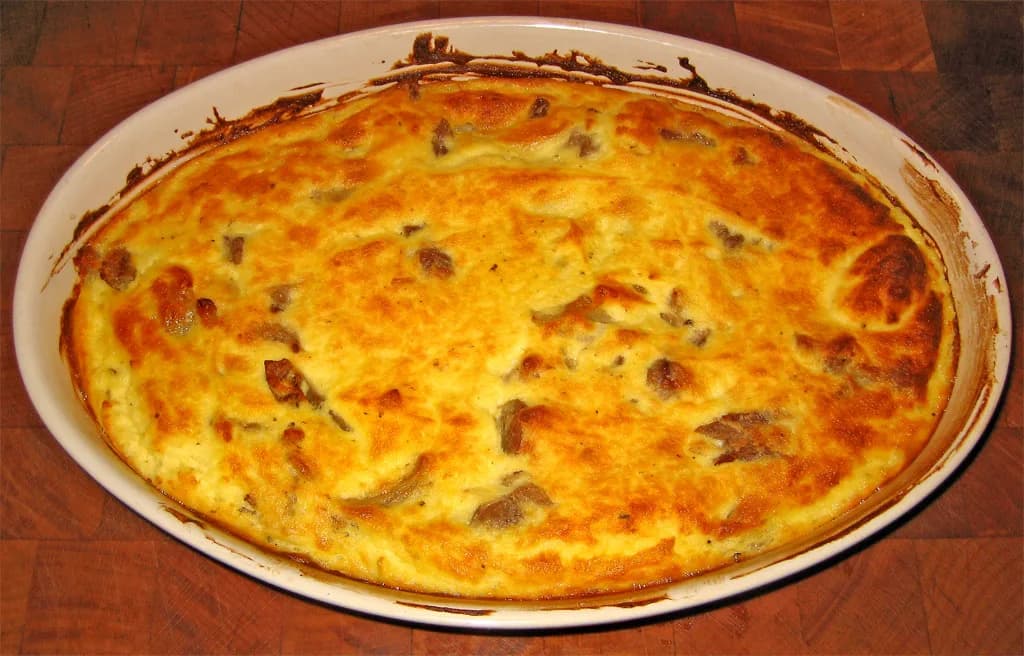
Tavë kosi is a baked casserole of lamb and rice covered with a yoghurt-and-egg custard that sets to a golden crust. It is often called the national dish of Albania, and you will also find it in Greece, North Macedonia, Kosovo and Turkey. This guide explains what goes into it, how it is cooked and served, how it should taste, and how to spot it on a menu under its other names.
What Tavë Kosi is
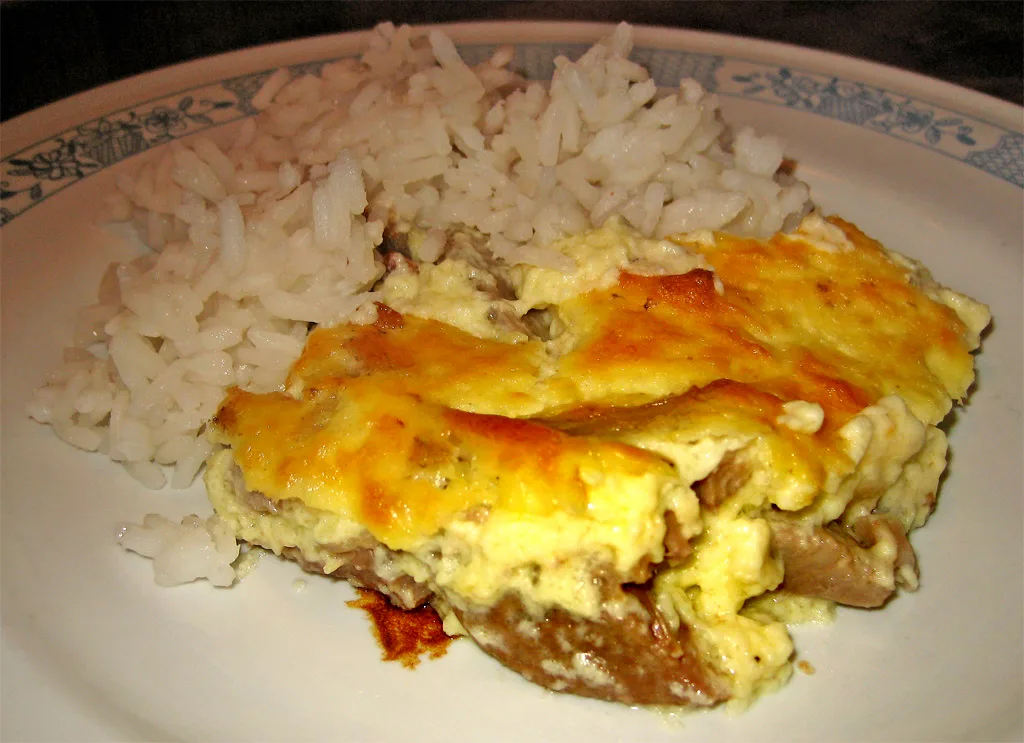
The dish is built in layers: lamb cooked until tender, rice stirred through the meat, and a savoury yoghurt custard poured on top and baked until it puffs and browns. Rick Stein, writing for BBC Food, describes it as the same sort of dish as moussaka, which is a useful reference point for anyone who has eaten in the eastern Mediterranean. It arrives as a solid bake you cut into portions rather than a stew spooned from a pan.
What the name means
In Albanian, Tavë means baking pan or casserole and kos means yoghurt, so the name describes exactly what the dish is: a pan of yoghurt. Food writers also gloss kos as yoghurt made from goat's milk, which points to the thick homemade yoghurt Albanian kitchens traditionally use. Knowing the two words makes the dish easy to remember when you are reading a menu.
The dish carries a second name tied to the town of Elbasan in central Albania. You will see it as Tavë Elbasani or, in Turkish and Greek kitchens, as Elbasan tava. Both forms mean the same bake, just as travellers commonly find on menus across the region, so there is no need to assume you are looking at two separate recipes when ordering.
What goes into it
Lamb shoulder is the usual cut in home recipes, though shoulder, neck, shank or shin all work because the meat needs long, slow cooking to become spoon-tender. Garlic and oregano are the standard seasonings, with thyme or rosemary standing in; Greek-style or other thick plain yoghurt forms the topping, bound with eggs and thickened with plain flour. A grating of nutmeg finishes the surface before baking.
Rice is what makes the dish filling, and it goes in with the lamb rather than being served on the side. Individual cooks vary the proportions, and some Albanian cooks add a handful of rice to stretch a modest amount of meat further. On the side, a plain lettuce salad is the usual foil for the richness.
How it is cooked and served
The lamb is browned, then simmered with garlic, oregano and a little water until tender, which takes roughly three-quarters of an hour to an hour in a home kitchen. The rice is stirred into the meat, the lot is tipped into an ovenproof dish, and the yoghurt mixture is poured over the top. It then bakes until the surface turns golden brown, and it should rest for a few minutes before serving so the custard firms up.
How it tastes and what to expect
Expect a set, sliceable topping rather than a runny sauce, closer in texture to moussaka than to a stew. The lamb should be soft enough to cut with a spoon, the rice plump with meat juices, and the crust lightly tangy from the yoghurt. The dish is rich but not spicy, which is why the salad alongside matters.
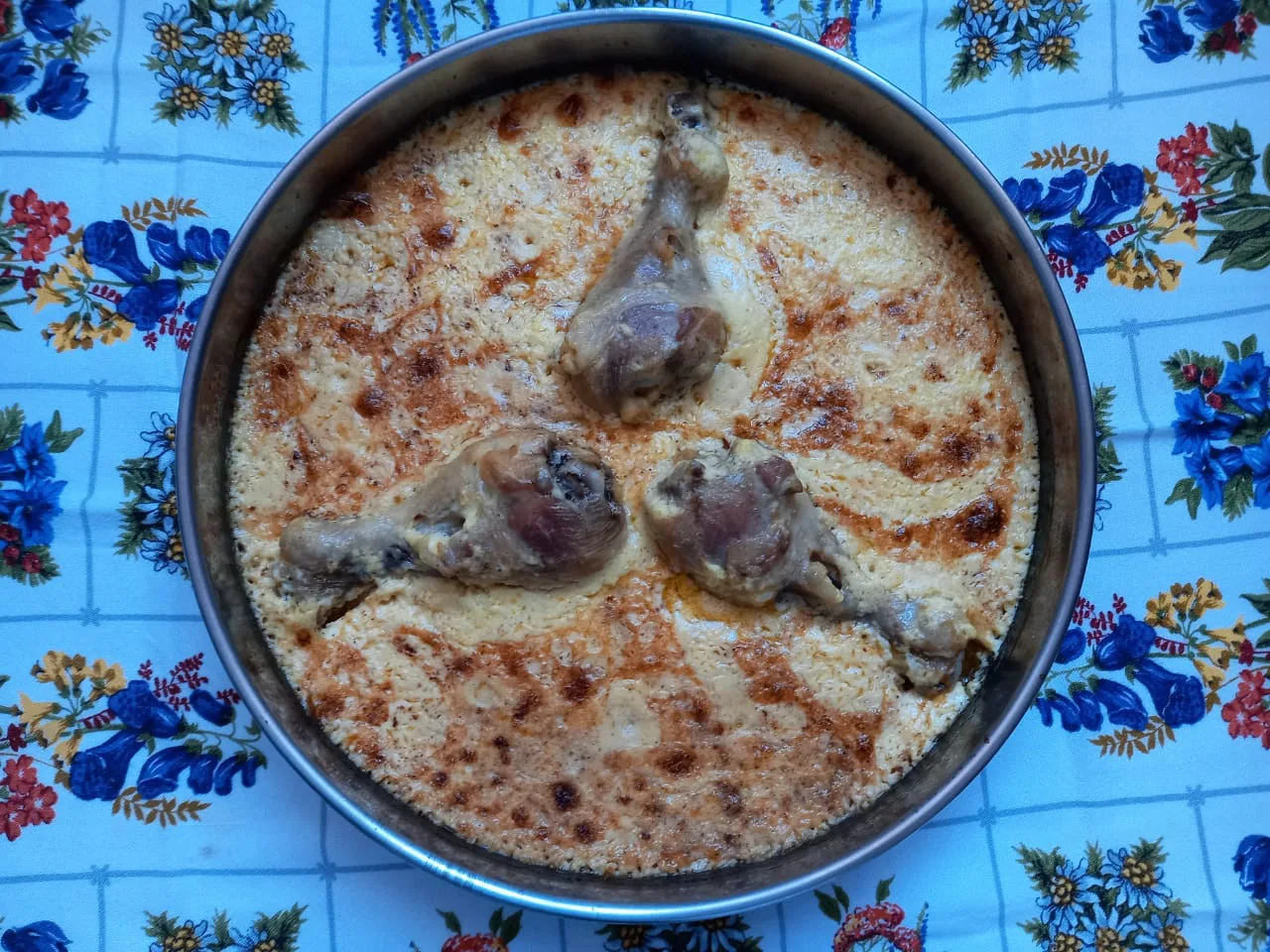
Texture is where Tavë Kosi can go wrong. Lean lamb dries out under the crust, and too much egg makes the topping rubbery, close to an overcooked frittata. Some cooks add feta to the yoghurt and go easy on the eggs to keep the custard soft, which is a sensible way to judge a good version: it should wobble slightly rather than sit firm like a slab.
The Elbasan story told about the dish
The usual account places the dish in the fifteenth century, when lamb was marinated in spiced yoghurt for the Ottoman Sultan Mehmed II. In one version the episode happens at Elbasan, and the leftover marinated lamb and yoghurt were baked together rather than wasted; another version sets the siege at Krujë. Treat this as a story told about the dish rather than a fixed fact, since the details shift between accounts.
Where you will see it
Tavë kosi appears on tables across Albania, and among Albanian communities in Greece, North Macedonia, Kosovo and Turkey, where the Elbasan tava name is common. Albanian cooks are also scattered further afield; in New York, restaurants in the Arthur Avenue area of the Bronx serve Albanian dishes to a largely local crowd. If you are eating your way through the Albanian repertoire, it sits alongside other bakes and pies such as byrek.
Eating it in Albania
Lunch is the main meal of the day in Albania, with dinner often a smaller plate, so the middle of the day is when a baked dish like this fits most naturally. Order it as your main and add a simple salad or bread rather than another heavy course. It is substantial food, best treated as the centre of a sit-down lunch rather than a quick stop.
If you want to build a fuller Albanian table, pair it with vegetable-led dishes and finish with something sweet; the guide to Albanian food covers the wider repertoire, including Fërgesë and qofte. Save Trileçe, the three-milk cake, for the end of the meal if you still have room. Albanian coffee is the usual way to close a long lunch.
Ordering Tavë Kosi without surprises
Look for Tavë Kosi, Tavë Elbasani or Elbasan tava on a lunch menu and expect a set bake of tender lamb, rice and a tangy yoghurt crust, not a saucy stew. Ask for a salad alongside, and judge the kitchen by whether the meat pulls apart easily and the topping still has a slight wobble.
Explore more Albania guides
Frequently Asked Questions
Is Tavë Kosi good?
It is rich, savoury and mild rather than spicy, and the combination of slow-cooked lamb, rice and tangy yoghurt is easy to like if you enjoy baked dishes such as moussaka. The quality depends on the kitchen: tender meat and a soft, slightly wobbly topping are the signs of a good version, while dry lamb and a rubbery crust are the usual faults.
What is Tavë Kosi made of?
Lamb, rice, garlic and oregano or thyme form the base, and a mixture of thick plain yoghurt, eggs and flour is poured over the top and baked until golden. Nutmeg is often grated over the surface, and some cooks add feta to the yoghurt for extra tang.
How do you pronounce Tavë Kosi?
Say it roughly as TAH-vuh KOH-see, with the ë a short, unstressed sound close to the 'a' in 'about'. The stress falls on the first syllable of each word.
Where is Tavë Kosi popular?
It is eaten throughout Albania and among Albanian communities in Greece, North Macedonia, Kosovo and Turkey, where it often appears on menus as Elbasan tava. Albanian restaurants further afield serve it too, including in New York.
Sources
Notes for your Albania trip
Optional updates to our Albania town guides.
You might also like
Continue reading
More guides you'll find useful