Qifqi: Gjirokastër's Rice Dish and the Pan That Makes It
Qifqi is Gjirokastër's baked rice dish, made with eggs, dried mint and black pepper in a copper pan with hollows. Here is what it is and how it is made.
On this page
Qifqi is Gjirokastër's own rice dish: cooked rice bound with eggs and seasoned with dried mint and black pepper, then baked in a special pan whose shallow hollows give it small round, browned shapes. It belongs to the city and its region rather than to menus across Albania, so it is a dish to seek out on a visit to Gjirokastër. This guide covers the ingredients, the cooking method, the copper pan itself and how to fit the dish into a day in the old town.
What qifqi is
Qifqi is boiled rice combined with eggs, dried mint and black pepper, then baked in a pan with hollows so that each portion browns on the outside while staying soft within. The dish is closely tied to Gjirokastër's culinary identity and is treated as one of the city's signature specialities rather than a nationwide staple. Its shape and its pan are specific to the south.
For a traveller, the practical point is that qifqi is a regional marker: seeing it on a menu tells you the kitchen is cooking Gjirokastër food. Order it as part of a spread rather than the whole meal.
Why Gjirokastër claims it
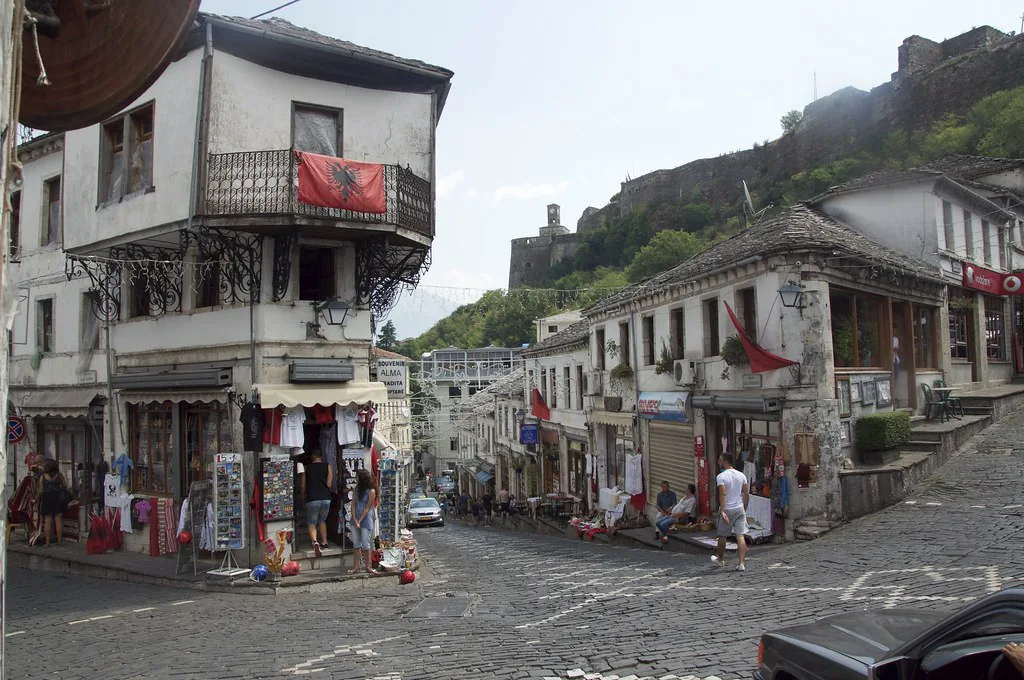
Qifqi's association with Gjirokastër runs through both the dish and the craft behind it. The pan used to make it is recorded in the National Inventory of Intangible Cultural Heritage under the Gjirokastra region and Gjirokaster municipality, which places the dish and its equipment in the same local tradition. That entry ties the pan to the arrival of rice cooking in the south of the country.
The dish also appears in descriptions of Gjirokastër's food culture as a traditional Albanian rice dish originating in the city, which is why it is worth ordering here rather than elsewhere. Other dishes from the same region, such as oshaf, a dessert of dried figs and sheep's milk, are grouped with it in local food writing. For the wider picture, our guide to Albanian food sets qifqi beside the country's other regional plates.
The ingredients that define it
The defining ingredients are rice, eggs, dried mint and black pepper, with olive oil and salt in the classic version. Dried mint is the flavour that marks the dish out; feta or another white cheese, onions or extra herbs are additions rather than the core recipe.
The inventory entry gives a shorter list: boiled rice with eggs and herbs, naming mint and black pepper. Either way, the ingredients are ordinary kitchen staples, which is part of the dish's character as home food rather than restaurant show cooking.
How it is cooked
The mixture is baked in the hollow pan until lightly browned, which produces the contrast that defines good qifqi: a crisp, browned exterior against a soft, tender centre. The hollows do the work of portioning, so each piece browns in its own depression rather than in a flat tray, and the dried mint leaves a distinctive herbal aroma.
This is not a deep-fried dish; the browning happens in the pan's shallow depressions. That matters if you are comparing it with other Albanian snacks, which are cooked quite differently. Our byrek guide explains the filo-based side of the country's baking, a separate tradition from qifqi's rice-and-egg mixture.
The qifqi pan
The pan is a piece of metalwork in its own right: rolled copper, made as a 5-hole or 7-hole version, with 4 cm high sides and a concave rather than flat bottom. The handle averages 35 to 40 cm and is iron rather than copper, fixed to the body with two copper rivets and finished with a wooden grip. The whole piece is tinned after cleaning so the cooking surface is food-safe.
Copper is chosen because it conducts heat well, which is why the pan browns the rice evenly across its hollows. The rivets are made ready by the metalsmith and the handle is assembled onto the body rather than cast in one piece. If you see one for sale in Gjirokastër, look for the tinned cooking surface and the two copper rivets fixing the iron handle.
How the pan is made
Making a hollow frying pan takes 6 to 8 hours of work. The metalsmith cuts a circular disc from copper sheet with hand-operated shears, marks the hole positions across a ring, then hammers each hole over a steel ring on an anvil until the depressions take shape, heating the pan between rounds to keep the copper workable.
After shaping, the pan is cleaned with hydrochloric acid and then with sal ammoniac before being tin coated, with pure heat-resistant cotton rubbed over the surface to get a good finish. The iron handle is fitted at this stage with its wooden grip and two copper rivets. The craft is recorded as an element of intangible cultural heritage, which is why the pan is worth noticing as more than kitchen equipment.
What it tastes like and what to order alongside it
Expect a savoury, herby flavour dominated by dried mint and black pepper, with the egg binding the rice into a soft interior under a browned crust. It is light enough to open a meal and starchy enough to share. Order it as a starter, then follow with a larger dish from the same menu.
Our guide to Tavë Kosi covers the yoghurt-and-lamb bake that appears widely on Albanian menus, and makes a natural follow-on course. For dessert from the same region, oshaf with dried figs and sheep's milk is the local choice.
Where the dish fits in a Gjirokastër visit
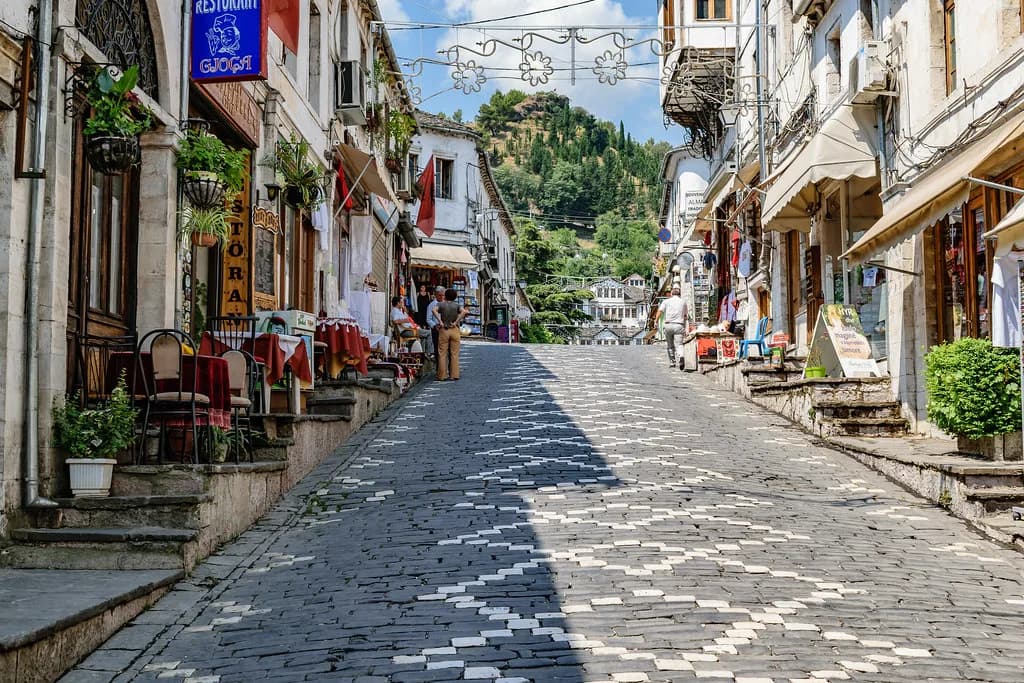
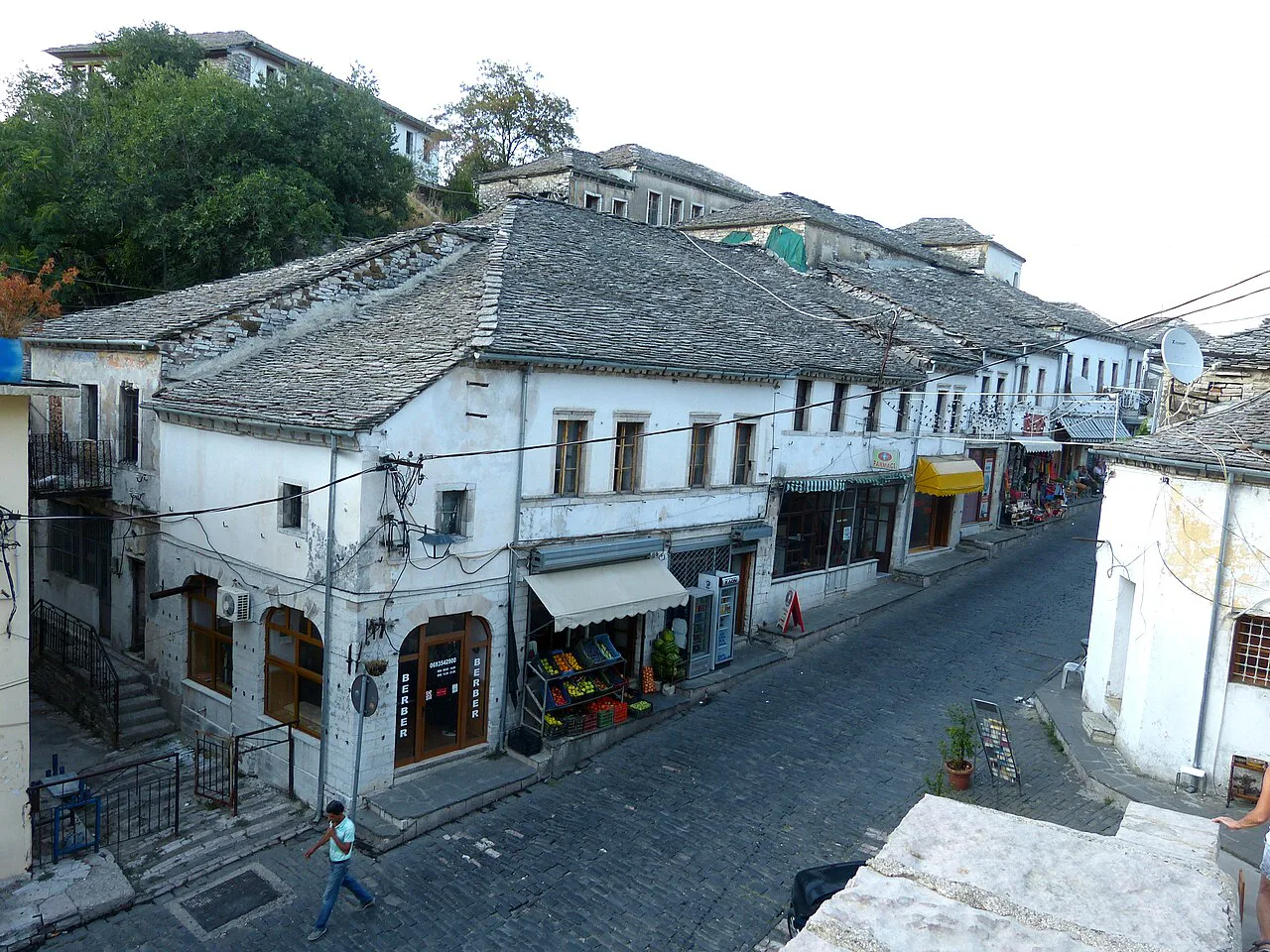
Qifqi belongs to the old town's eating rather than to a specific address, so plan it around a walk through the bazaar quarter and the steep cobbled lanes below the castle. Ask what is being baked that day rather than expecting a fixed listing.
Pair it with a simple salad or a plate of cheese and you have a lunch that suits the town's pace. If you are eating your way through the country, keep qifqi as the Gjirokastër stop on a wider route through Albanian food.
Variations worth knowing
Modern versions add feta or other white cheeses, onions or additional herbs, while dried mint stays the defining note. These additions make the dish richer and more of a main course, and they are a fair indication that a kitchen is cooking a contemporary take rather than the plain home version.
If you want a sense of how Albanian cooking varies by town, our guides to Fërgesë and qofte cover two other dishes with strong regional identities. Comparing them with qifqi shows how much of the cuisine is built on local ingredients and local equipment rather than a single national menu.
Should you order qifqi in Gjirokastër?
Yes, if you want to eat something that is genuinely of the place. Qifqi is a Gjirokastër dish, made in a pan that takes a metalsmith most of a working day to produce, and it gives you a direct taste of the city's kitchen. Order it as a starter, share it, and follow it with something larger from the same menu.
Treat qifqi as part of a slow lunch in the old town, with the bazaar and the castle lanes as the walk either side of it. Ask on the day whether the kitchen has it, since it is a home-style dish rather than a fixed menu fixture.
Explore more Albania guides
Frequently Asked Questions
Is qifqi Albania's national dish?
No. Qifqi is associated with Gjirokastër and its region rather than presented as a national dish, so look for it there and treat other Albanian dishes as separate regional specialities.
Is qifqi fried?
It is baked in the hollows of a copper pan until lightly browned, not deep-fried. The pan's shallow depressions give each piece its shape and its browned crust while the centre stays soft.
What does qifqi taste of?
The dominant flavour is dried mint, supported by black pepper and egg, with the rice giving a mild base. The texture contrast is the point: browned and crisp outside, tender within.
Can I buy a qifqi pan in Albania?
The pans are made by metalsmiths in the Gjirokastra region, in 5-hole and 7-hole versions with copper bodies and iron handles. Look for a tinned cooking surface and copper rivets fixing the handle, and ask the seller about the tin coating before you buy.
What is a typical Albanian breakfast?
Breakfast in Albania tends to be light: byrek, bread with cheese or jam, and coffee. Our guide to Albanian breakfast covers the usual options and how they are served.
Sources
Notes for your Albania trip
Optional updates to our Albania town guides.
You might also like
Continue reading
More guides you'll find useful