Albanian Architecture Guide: Ottoman Houses to Modern Tirana
Albanian architecture spans Ottoman houses, stone hill towns, castles, mosques and Byzantine churches, plus Tirana's newer buildings. Here is where to see each.
On this page
Albanian architecture is best read as layers rather than a single style: Ottoman houses and stone hill towns, castles, mosques, Byzantine churches, bazaar streets, and Greek and Roman archaeological sites, with contemporary buildings in Tirana layered on top. This guide groups those layers, names what to look for in each, and shows how to combine them on a short trip.
The practical point is that each layer rewards a different kind of looking. In an old quarter you read house form, roof line and street width; in a castle you read gates, walls and the ground they command; in a mosque or church you read plan, dome and the rules for entering. Once you can tell them apart, a single afternoon in a hill town stops being a blur of cobbles.
What Albanian architecture covers
The country's building stock runs from Ottoman houses, stone hill towns, castles, Byzantine churches, mosques and bazaars through to Greek and Roman archaeological sites. That range means a traveller can see four or five distinct traditions within a few days, provided you plan by style rather than by distance alone.
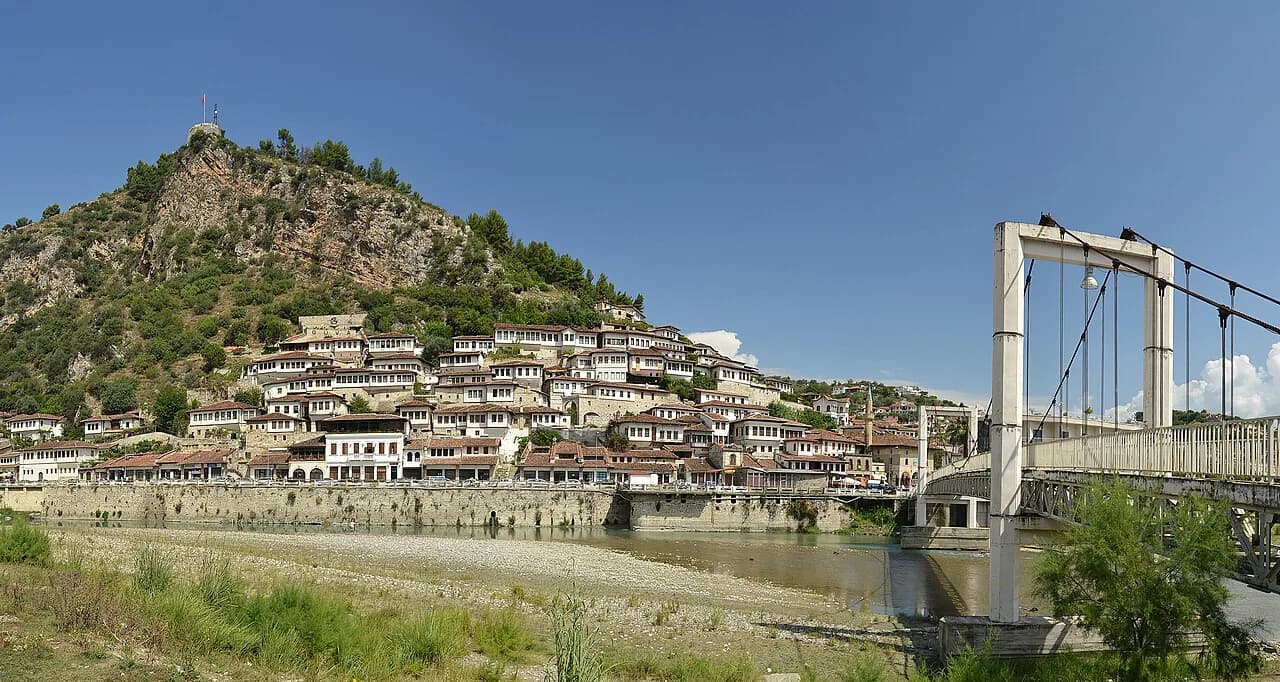
Cities such as Berat, Gjirokastër, Krujë and Shkodër carry much of the Ottoman domestic and defensive work, while Tirana concentrates the contemporary end. Treat the old towns as the place to study materials and layout, and the capital as the place to see how new buildings are inserted into an existing street pattern.
Tirana: new architecture by international offices
Tirana's recent transformation has been shaped heavily by internationally recognised architectural offices, whose projects introduce new forms and typologies rather than extending local building habits incrementally. Practices named in coverage of this phase include OMA, MVRDV, 51N4E, Stefano Boeri Architetti, BIG, Steven Holl Architects, Oppenheim Architecture and Ricardo Bofill Taller de Arquitectura.
Do I need tickets for Albania's castles and archaeological sites? Some sites are ticketed and others are open freely, and the arrangement varies by site and season. Rather than guess, check the site's own noticeboard or ask at the entrance when you arrive, and carry cash in lek in case a ticket office takes it.
How should I dress when visiting a mosque or church? Cover shoulders and knees, remove shoes where that is expected at a mosque, and keep voices low if people are praying. A light scarf is useful for covering your head, and it doubles as sun protection on exposed castle walls.
Can I see Ottoman houses and modern architecture in the same trip? Yes. An old town such as Berat or Gjirokastër gives you the Ottoman layer, and Tirana is a short journey away for the contemporary buildings, so two or three days covers both without rushing.
The useful way to look at these projects is as individual gestures set into the city rather than as a unified plan. Walk the centre and note how each large building meets the street, what it does at ground level, and whether it opens to or turns away from what surrounds it.
Older modern work sits alongside the new. The Xezhmy Delli Street apartments in Tirana, designed by baukuh and built between 2006 and 2009, hold 28 dwellings in a block whose mass is deliberately left exposed rather than disguised.
Ottoman houses and stone hill towns: what to look for
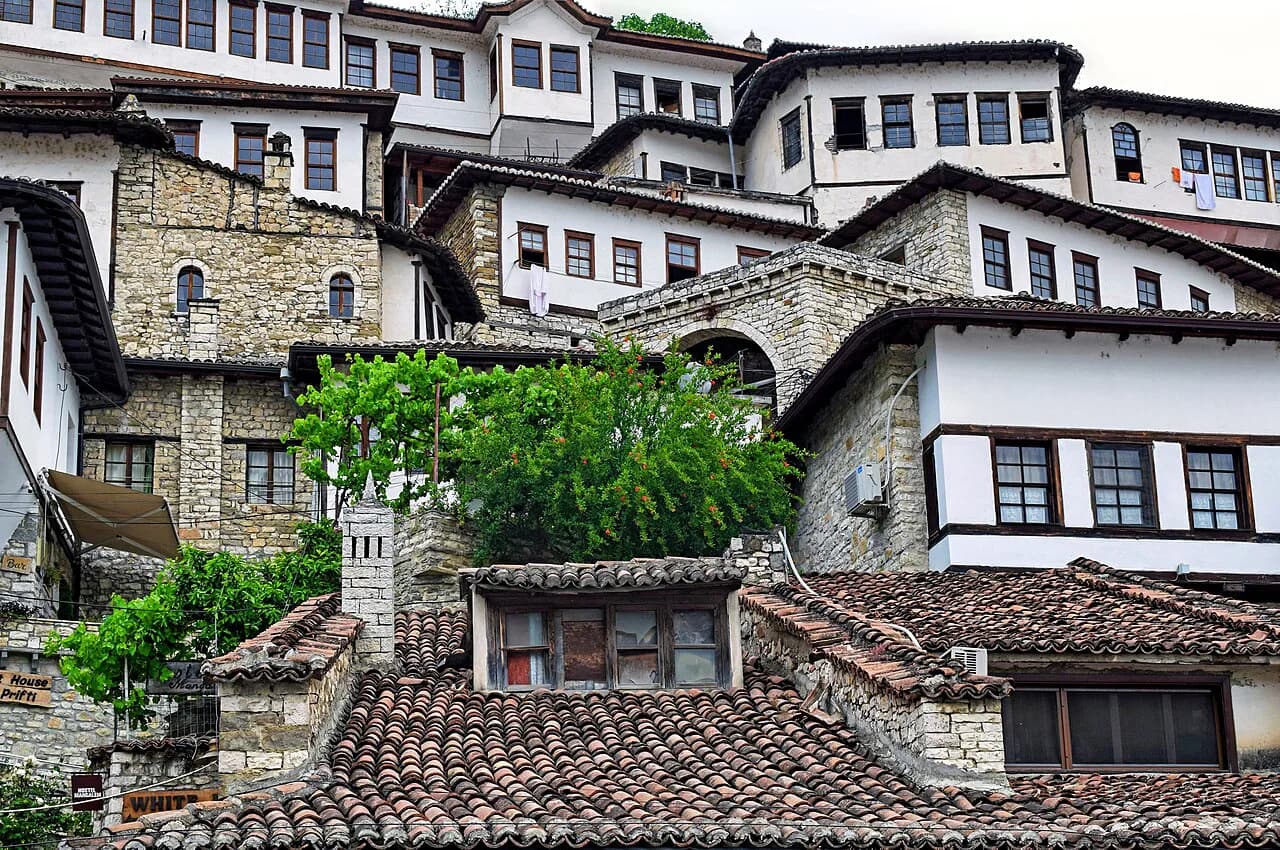
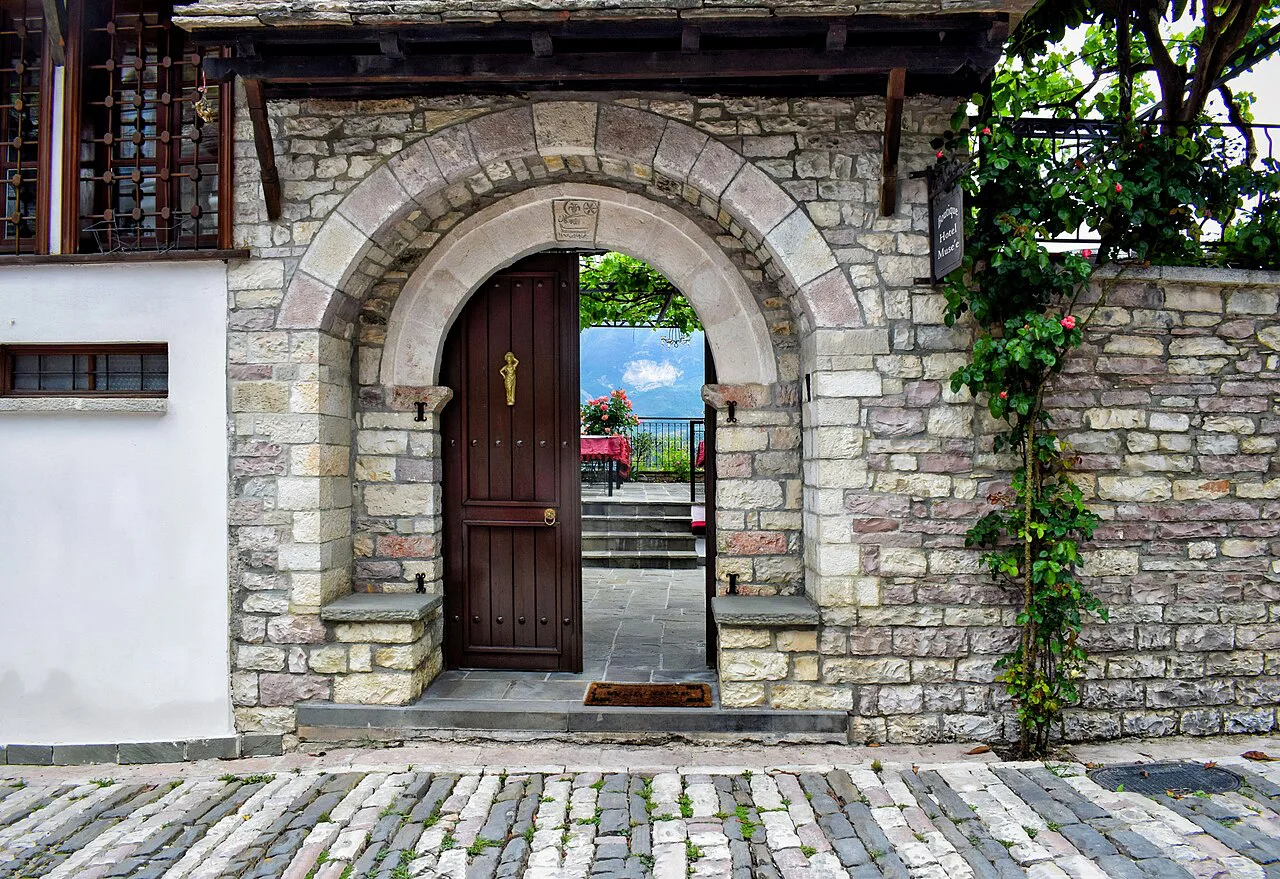
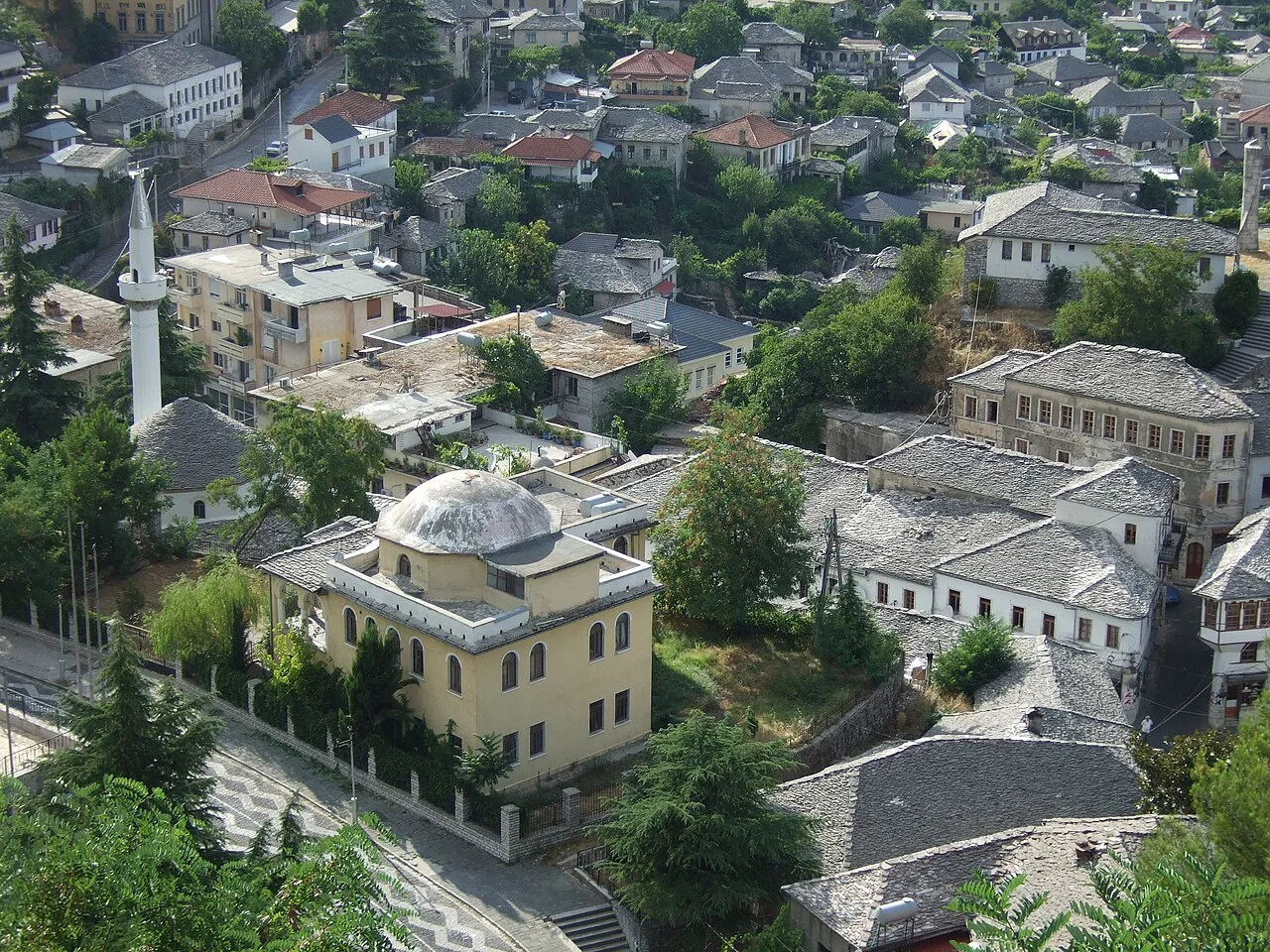
In the old quarters, look up first: steep stone roofs, overhanging upper floors and small windows set high in thick walls are the signals of an Ottoman house adapted to defensible hill terrain. Street width matters too, because narrow lanes and stepped paths are part of how these quarters were laid out, not an inconvenience added later.
Berat and Gjirokastër are the clearest places to study this, and both involve steep cobbled ground, so build in more time than the map suggests and wear shoes that cope with polished stone. Work quarter by quarter rather than trying to cross the whole town in one push, and pause where a lane opens onto a view so you can read how the houses step down the slope.
The same domestic logic appears in towns across the country, and reading a few houses closely teaches you more than rushing through a dozen. Notice where a house turns its back to the street, where a courtyard takes over, and how the roof pitch follows the local stone.
Castles and fortified sites
Castles are the easiest layer to navigate because their logic is visible: gates, wall lines and the high ground they hold. Approach from below where you can, so the gate and the wall read in sequence, then walk the circuit and note which direction the defences face and where the settlement sat in relation to them.
The castle at Krujë and the citadels above Berat and Gjirokastër are the obvious stops when you are already in those towns. Treat the climb as part of the visit and allow for heat in summer, since exposed walls and stone offer little shade at midday.
The medieval period that produced much of this defensive work is covered in more detail in our guide to Albanian history, which sets the castles alongside the rulers and conflicts that shaped them.
Mosques and Byzantine churches: what distinguishes each
A mosque and a Byzantine church ask different things of the eye. In a mosque look for the prayer hall's orientation, the treatment of the dome or ceiling, and the portico or porch that frames the entrance; in a Byzantine church look for the plan, the dome over the central space and the masonry bands that break up the walls.
Both are places of worship first, so dress modestly, cover shoulders and knees, remove shoes where that is expected, and stay quiet if a service is under way. If a site is closed or has restricted hours when you arrive, ask locally rather than assuming, and never treat an interior as a photo set.
Reading the two traditions side by side is easier in a town that has both within walking distance, which is most of the old centres. Go early, when doors are more likely to be open and the light inside is softer.
Bazaars and town centres
A bazaar street is architecture as much as commerce: low shopfronts, narrow frontages, a covered or shaded line and a route that bends rather than runs straight. Krujë's bazaar is the clearest example for most visitors, and the point is to look at how the shops frame the lane rather than at the goods alone.
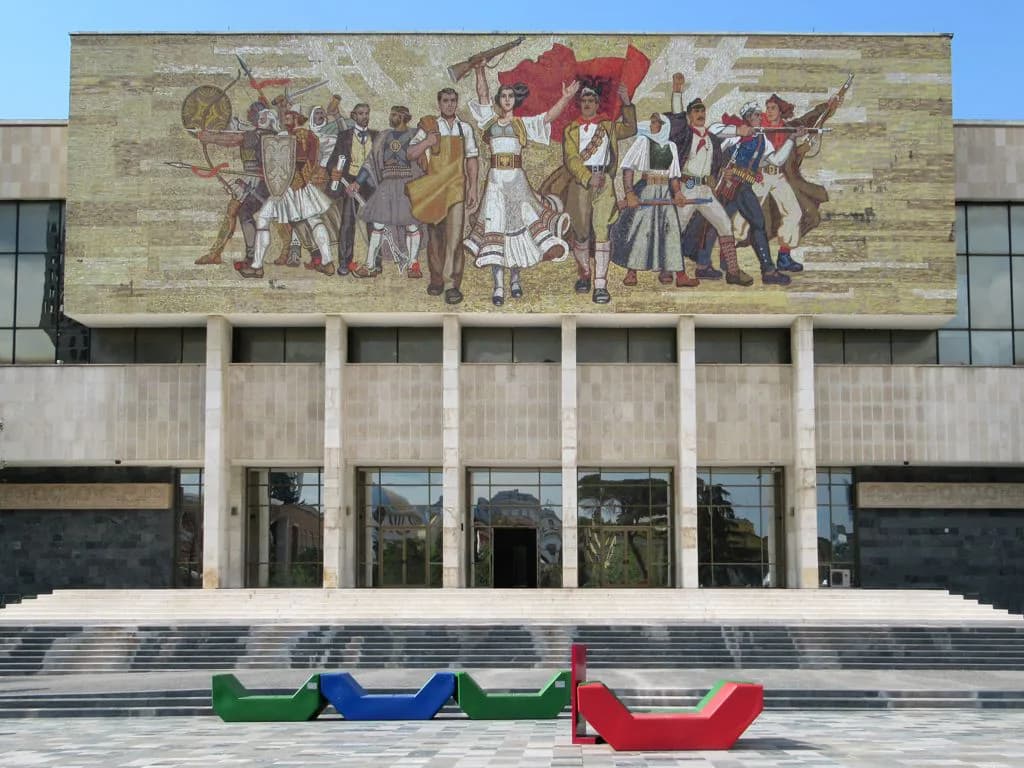
Town squares sit at the other end of the scale. A large open square shows how a centre is organised for crowds and events, and it is the natural place to start a walk before narrowing into older streets.
Greek and Roman archaeological sites
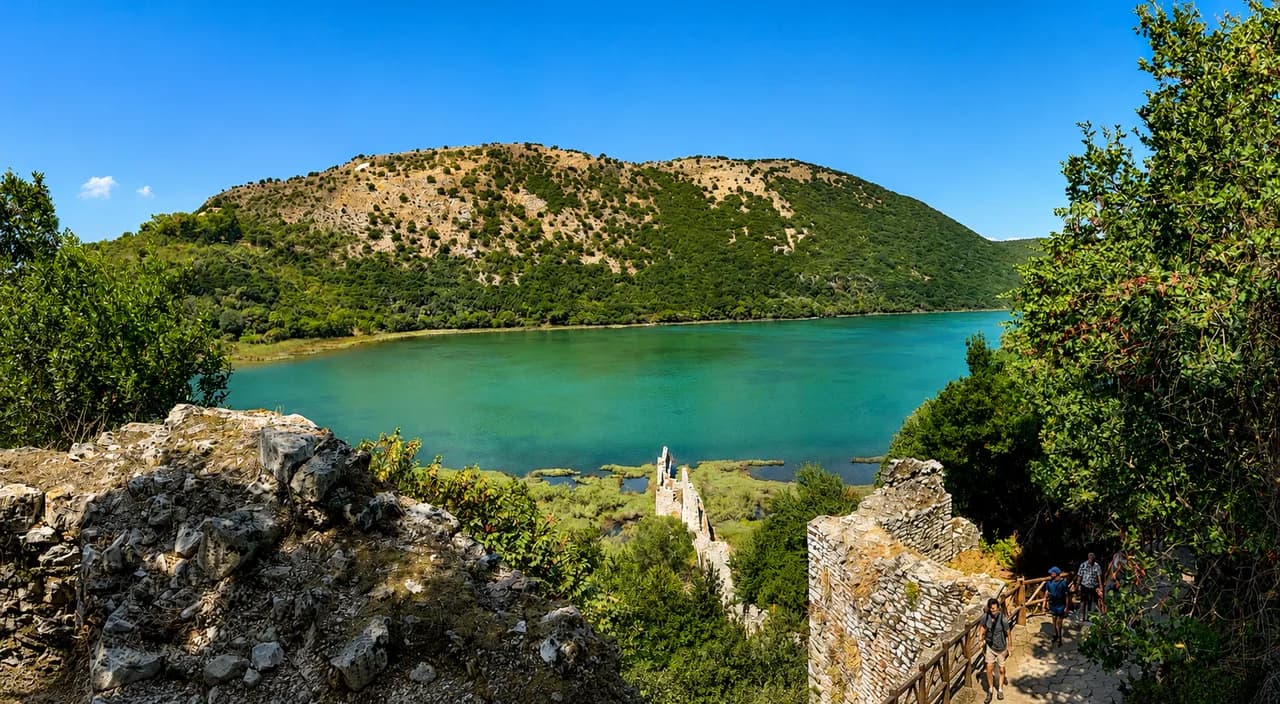
Roman and Greek remains add a different reading skill: ground plans, paving, columns and the shape of public space rather than standing buildings. The sites are often exposed and unshaded, so visit in the cooler part of the day and carry water.
Butrint in the south is the most complete place to see these layers together with later building on the same ground, and it is worth giving it a half-day rather than a quick stop. Check how you will reach it and what is open before you set out, since boat and transport arrangements vary by season.
How to plan a route through the styles in a few days
Base yourself in Tirana for the contemporary layer and one old town for the Ottoman layer, then add a castle or archaeological site that sits on the way. Three or four days is enough to see distinct traditions without spending them all in a minibus.
Allow a full day for an old town and a half-day for a castle, and keep one day flexible for heat, transport delays or a site that turns out to be shut. Albanian transport and site access change with the season, so confirm the details you are relying on before committing to a tight schedule.
What to notice on the ground
Materials tell you a lot quickly: stone in the hill towns, brick and plaster in later urban work, concrete and glass in the newest buildings. Roof lines are the other fast signal, since a run of steep stone roofs usually means you are in the older quarter.
Finally, look at how new buildings meet old ones. Where a modern block abuts a low street of shops and houses, note whether it steps back, matches height or ignores its neighbours entirely, because that relationship is the real subject of Albania's current architectural phase.
Which layer should you see first?
Start with an old town such as Berat or Gjirokastër to learn the Ottoman house and castle vocabulary, then finish in Tirana where the contemporary work makes sense against what you have already seen. If your time is short, pick one old town and the capital rather than spreading across the country.
The twentieth century sits between those layers, and our guide to communist Albania explains the urban changes of that period so the newer buildings read as a continuation rather than a break.
Explore more Albania guides
Frequently Asked Questions
Do I need tickets for Albania's castles and archaeological sites?
Some sites are ticketed and others are open freely, and the arrangement varies by site and season. Rather than guess, check the site's own noticeboard or ask at the entrance when you arrive, and carry cash in lek in case a ticket office takes it.
How should I dress when visiting a mosque or church?
Cover shoulders and knees, remove shoes where that is expected at a mosque, and keep voices low if people are praying. A light scarf is useful for covering your head, and it doubles as sun protection on exposed castle walls.
Can I see Ottoman houses and modern architecture in the same trip?
Yes. An old town such as Berat or Gjirokastër gives you the Ottoman layer, and Tirana is a short journey away for the contemporary buildings, so two or three days covers both without rushing.
Sources
Notes for your Albania trip
Optional updates to our Albania town guides.
You might also like
Continue reading
More guides you'll find useful