Mosques in Gjirokastër: The Bazaar Mosque and What to Expect
The Bazaar Mosque sits in Gjirokastër's old bazaar, just below the castle. Here is how to find it, what to expect inside and how to visit respectfully.
On this page
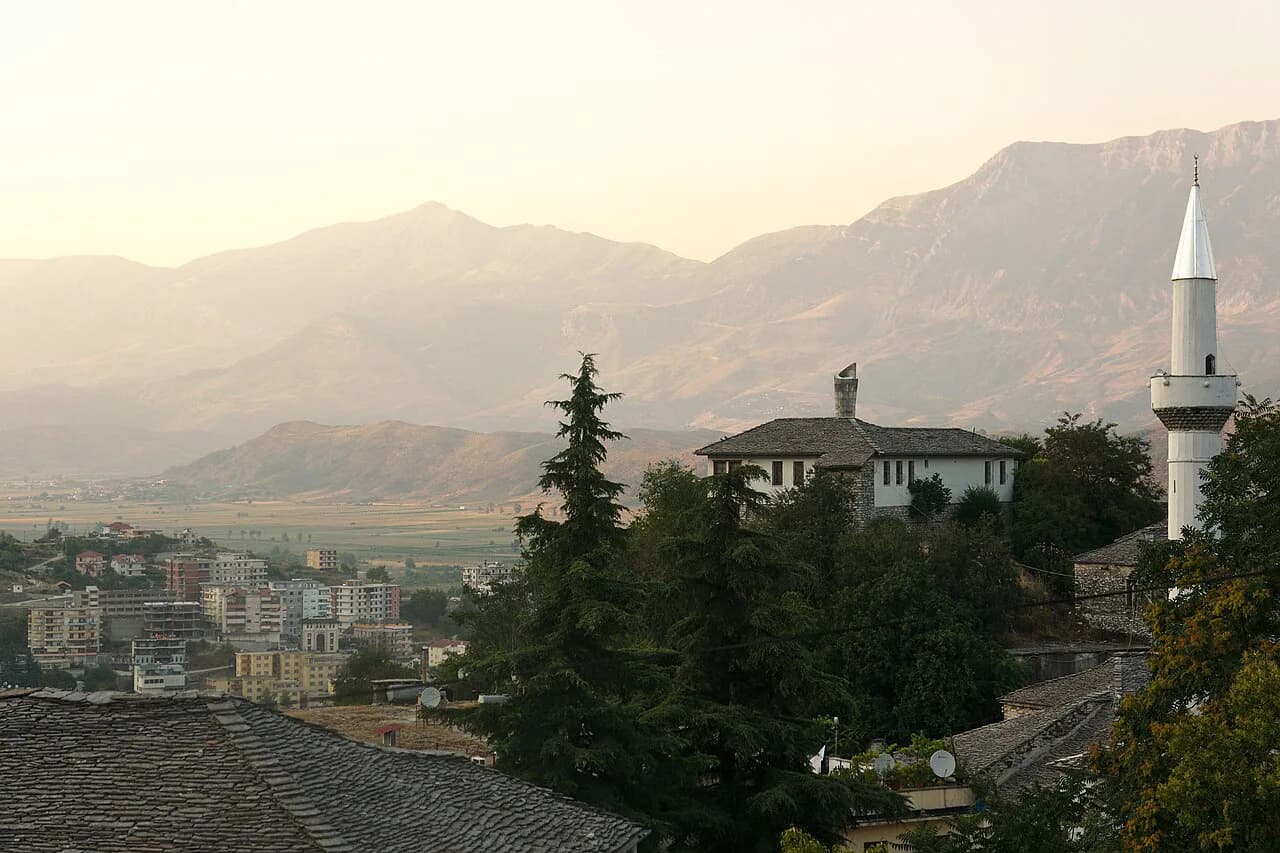
The Bazaar Mosque is the historic mosque visitors will actually see in Gjirokastër, standing in the old bazaar quarter on the hill below the castle. It is a working place of worship, so the custodians — not a ticket desk — decide when you can step inside. This guide covers where it sits in the old town, the names on signs and maps, dress and behaviour, and how to fold it into a walk through the bazaar.
Where the Bazaar Mosque sits in the old bazaar
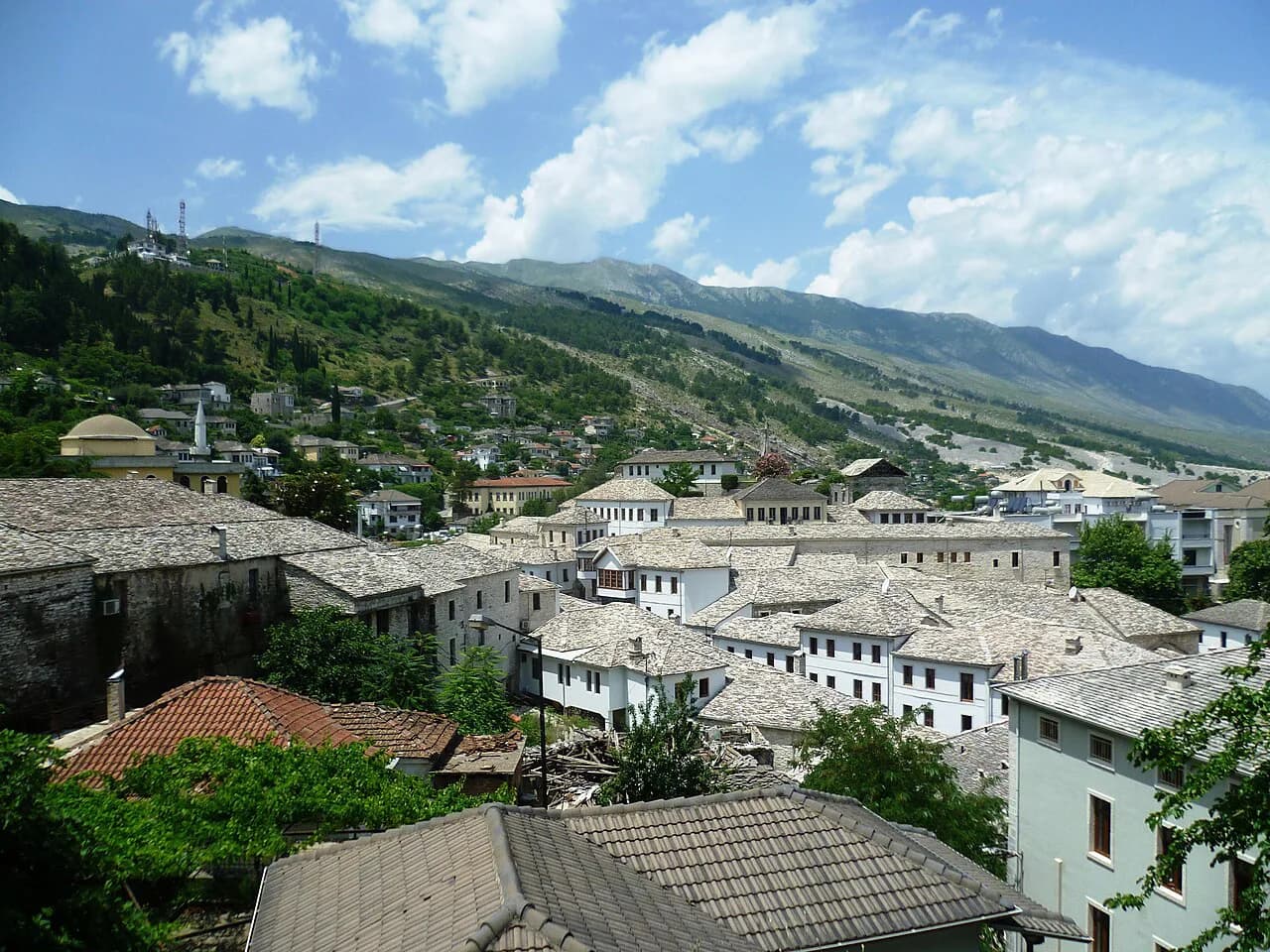
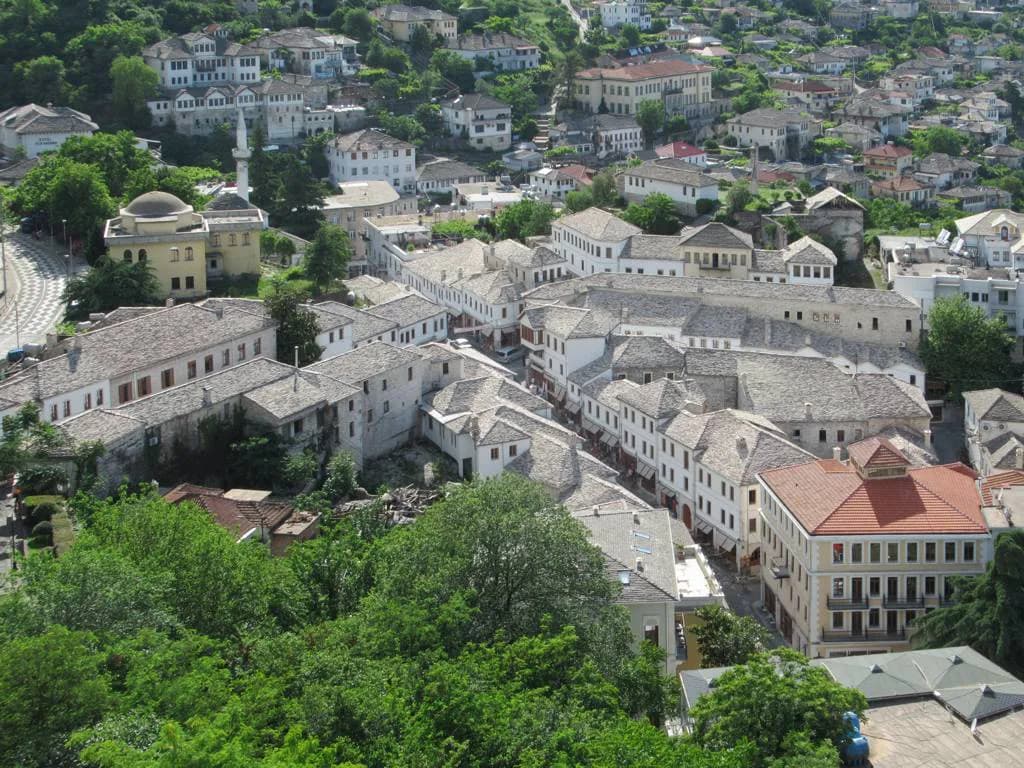
Gjirokastër's old town spreads across the hillside below the castle, with the new town at the foot of the hill and the historic quarters — Bazaar and Hazmurat — up the slope. The bazaar area, with the mosque at its heart, is the historic commercial quarter of the old town.
To picture the layout before you climb, use a Gjirokaster map: the mosque sits between the bazaar shops and the lanes rising towards the castle, so it works as a natural pause on the way up rather than a separate trip.
The old town rewards slow walking rather than a tick-list. If you want the full picture of what surrounds the mosque, our guide to things to do in Gjirokaster sets the castle, bazaar and historic houses in a sensible order.
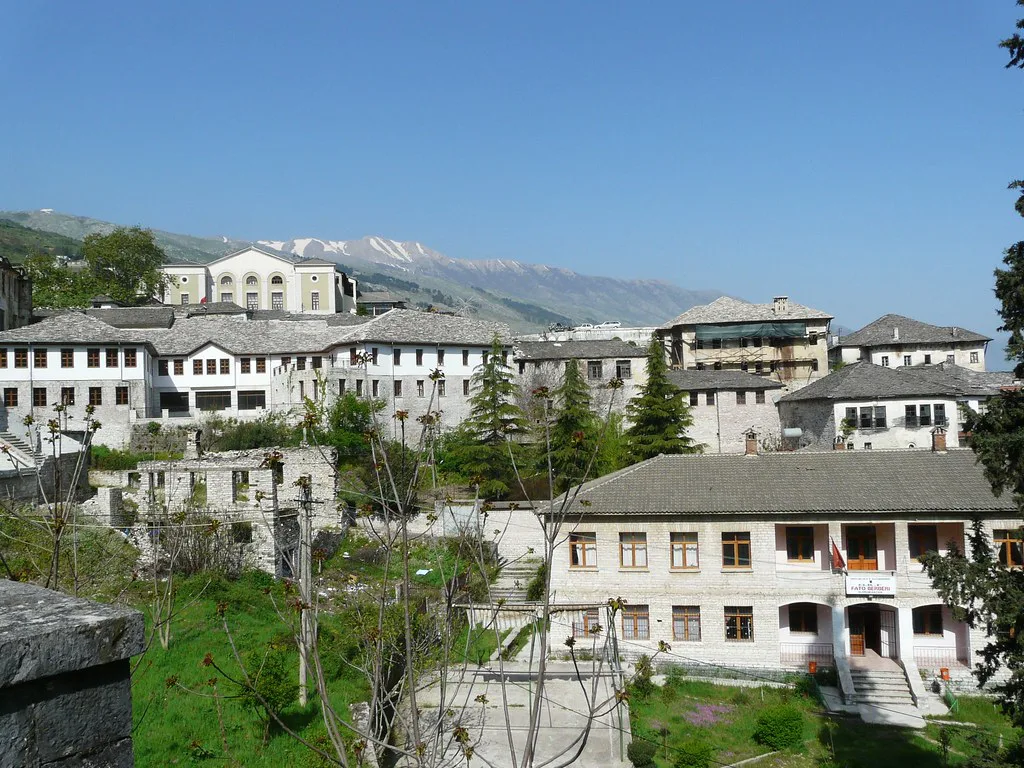
The names you will see: Xhamia e Pazarit and Memi Bey Mosque
Signs, map pins and booking sites use several names for the same building. The Bazaar Mosque also appears as Xhamia e Pazarit, the Albanian form, and as Memi Bey Mosque, and older references sometimes call it the Gjirokastër Mosque.
Recognising the alternatives saves confusion when you cross-check a phone map against a street plaque. They all point to the mosque in the bazaar quarter below the castle, so you are not looking for two different buildings.
Orienting yourself between the bazaar and Hazmurat
The old town's two central quarters are the bazaar itself and Hazmurat, just below it on the hill. A visit usually starts in the bazaar lanes, passes the mosque, and then continues up towards the castle. Our Gjirokaster old town guide sets out the streets and quarters in more detail if you want a plan before arriving.
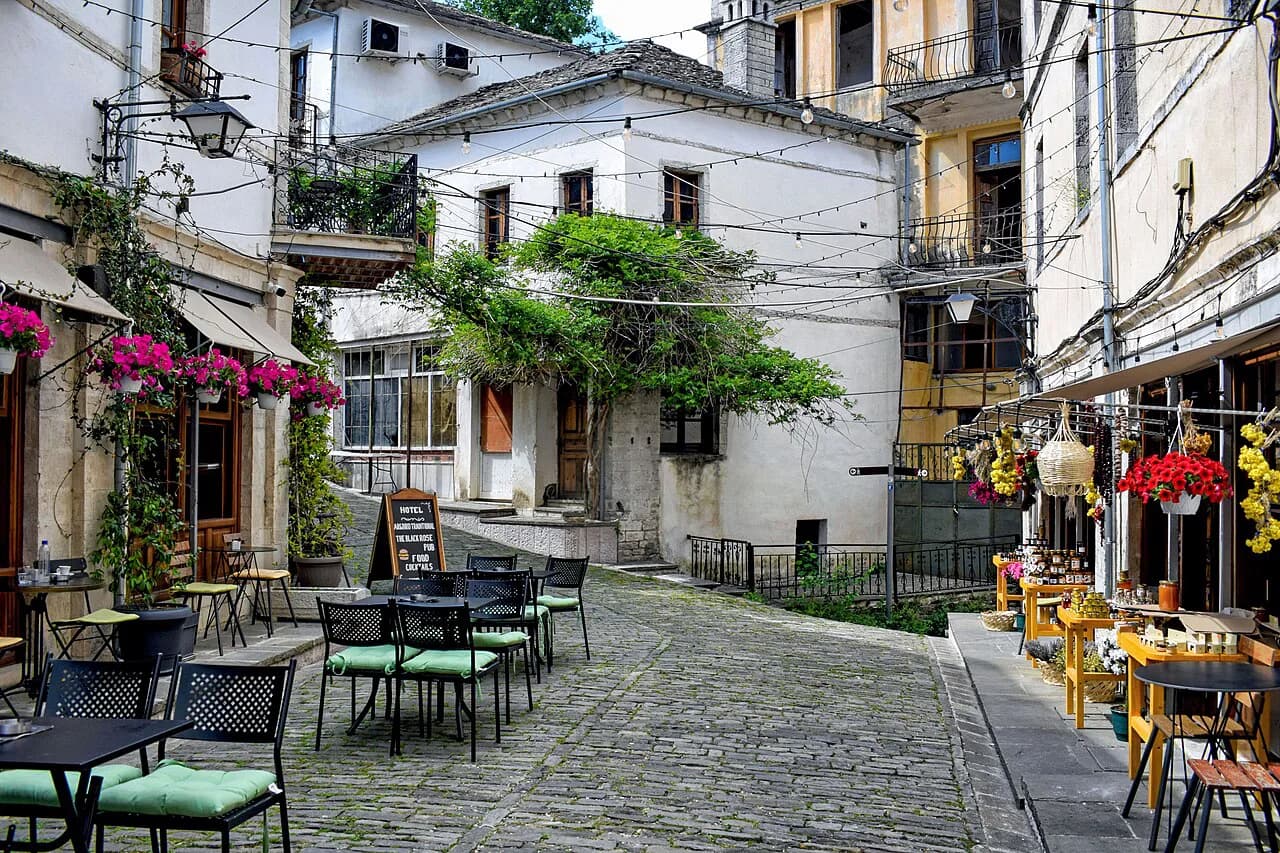
The bazaar's cobbled main lane is lined with shops, cafés and restaurants, and small family businesses still sell traditional goods alongside the tourist fare. The mosque sits close to that commercial heart, so you can visit it between browsing and lunch without a detour.
If you have only an afternoon, a short Gjirokaster itinerary is a better frame than a long list of pins: bazaar, mosque, castle, then down.
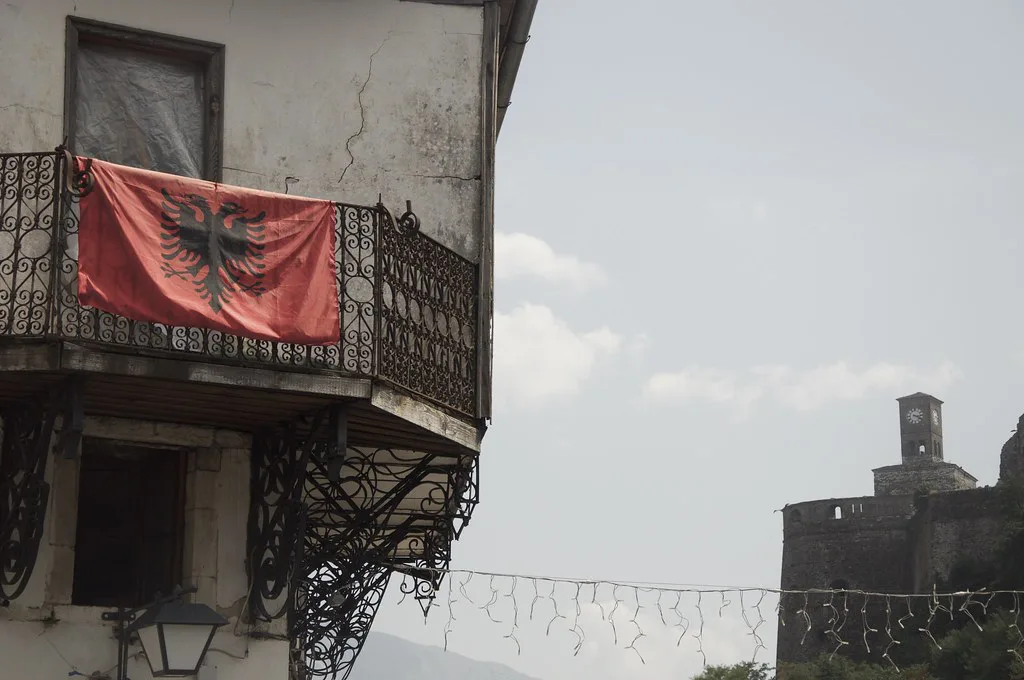
What to expect inside the prayer hall and washing area
This is an active mosque, not a museum, and the rites of washing before prayer still take place here. On the west side, an octagonal structure is used for the ritual washing of hands and feet before entry.
Inside, the space is arranged for prayer, with women praying apart from men and a separate entrance for women under religious tradition. Photography and access during worship are for the custodians to set, so follow any instruction from those on site.
The mosque is treated as a living sacred place rather than a sight to be inspected. Visitors are asked to give worshippers and caretakers space and to stay in public areas rather than exploring every corner.
Dress and behaviour: shoes, head covering and quiet
Dress modestly and be prepared to remove your shoes at the threshold, as at any working mosque. Women should carry a scarf to cover their hair; men should avoid shorts. Keep voices low and phones silent, and step aside when worshippers arrive for prayer.
The ethical default is simple: treat the mosque as a sacred place before treating it as a photograph. If someone is praying, wait or leave; do not walk across a prayer space or film people at worship, and ask before photographing anyone.
Timing your visit around prayer
The mosque keeps no published visitor timetable, and prayer times shift through the year, so plan to call in when you are passing rather than around a fixed schedule. If the door is shut or worshippers are gathering, come back later or view the outside only.
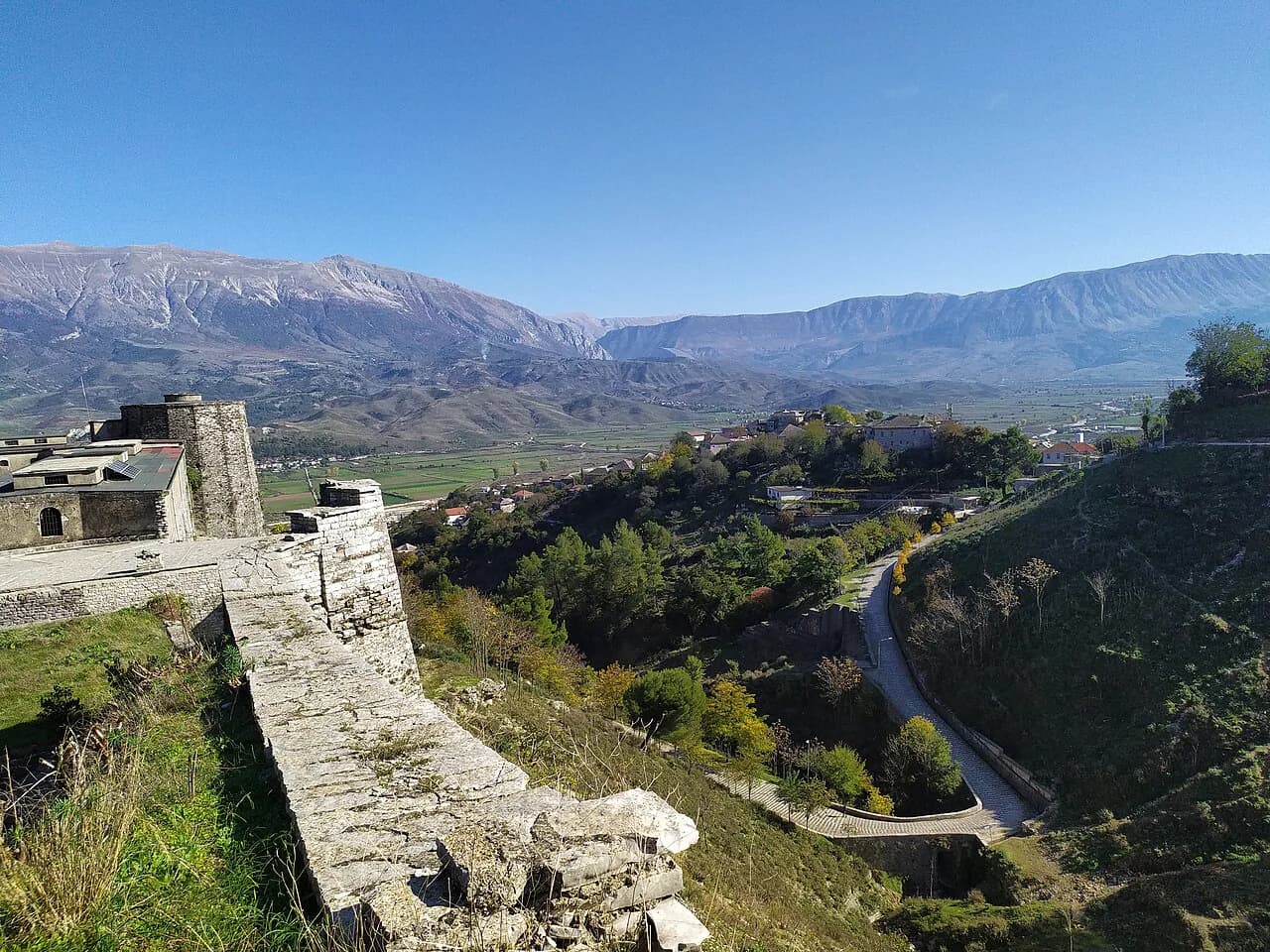
Midday in summer is hot on the slopes of Mali i Gjerë, and the stone lanes give little shade. Morning or late afternoon is more comfortable for the climb, and the castle's stone tunnels stay noticeably cooler than the courtyard above them.
How much time the mosque needs
No fixed visit duration is asserted for the mosque. It is small, and the visit is mostly about the building, the washing area and a quiet moment rather than a collection of displays. If you linger, it is usually the bazaar outside that holds you.
The bazaar lanes themselves are cobbled and rise and fall without a straight stretch, and the climb from the new town to the old town is steep. Wear shoes with grip and leave the heels at the hotel.
If the climb is too much in the heat, the mosque can be skipped and the castle reached by road; if you want context for what you are seeing, the Gjirokaster history guide covers the Ottoman period and the town's UNESCO status.
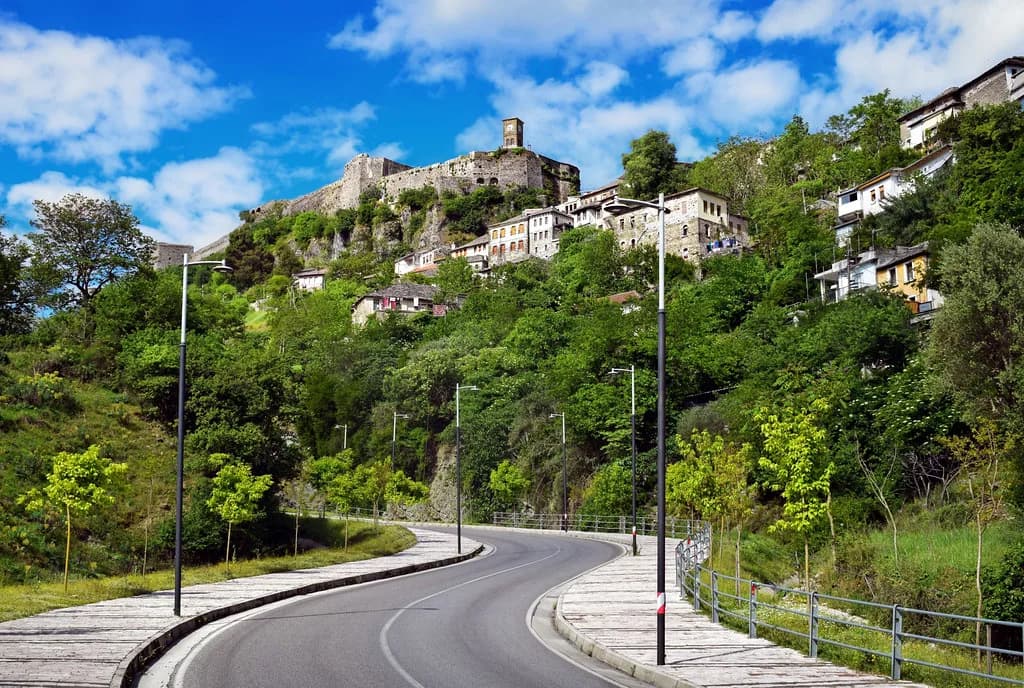
Getting up to the old town and the climb to the mosque
The road that leads to the top of the old town is steep, and only one point along the main road is wide enough for two vehicles to pass at the same time. On foot, the lanes between the new town and the bazaar climb hard; allow 15 to 20 minutes if you are walking up from the lower town.
A taxi or a lift from your accommodation saves your legs for the cobbles, though the final stretch on foot is unavoidable. The town is also called the city of a thousand steps, and the name is earned.
What to pair with the mosque in the old town
The Old Bazaar, the castle, the Skenduli and Zekate houses and the Cold War Tunnel all sit within the old town and can be combined with the mosque without a second climb. The castle, with its clock tower and prison cells, is the obvious next stop.
For the historic houses and museums, check current entry arrangements when you are there, since several are open to the public on limited terms.
Most Gjirokaster tours in the old town include the bazaar and the castle, and stops shift with the day, so confirm before booking. Our tours page sets out the typical shapes of a day in the old town, if you prefer structure over wandering.
Is the Bazaar Mosque worth a stop?
Yes — a short, respectful stop inside the bazaar walk, not a destination on its own. Go early or late, dress modestly, and treat the interior as a working place of worship rather than a sight. If the door is shut, the lanes and the castle more than fill the morning.
For the rest of the old town in a sensible order, the Gjirokastër Old Town guide pulls the castle, houses and viewpoints into one plan.
Explore more Gjirokaster guides
Frequently Asked Questions
What is the Bazaar Mosque also called?
It appears in sources as Xhamia e Pazarit, Memi Bey Mosque and the Gjirokastër Mosque. All three refer to the mosque in the old bazaar below the castle.
Can non-Muslim visitors go inside the Bazaar Mosque?
Access is set by the mosque's custodians. Visitors should dress modestly, remove shoes, carry a headscarf if a woman, and stay quiet. If worshippers are gathering or the door is closed, view the exterior and return later.
Is there an entry fee?
No published visitor ticket price is given for the Bazaar Mosque. Because it is a working place of worship, any access arrangements are for the custodians to set, so confirm on arrival rather than assuming a paid ticket.
Where is the bazaar in Gjirokastër?
The old bazaar runs along the hillside below the castle in the old town, uphill from the newer town below. The mosque sits in its heart, beside the main shopping lane.
Sources
Notes for your Albania trip
Optional updates to our Albania town guides.
You might also like
Continue reading
More guides you'll find useful