Best Restaurants in Gjirokastër: Where to Eat and What to Order
Our picks for eating well in Gjirokastër: bazaar tavernas, terrace tables with castle views and the local dishes to order, from qifqi to oshaf.
On this page
Gjirokastër rewards eaters who order the region's own dishes rather than generic Albanian menus. Our picks are Restorant Gjoca and Taverna Tradicionale Kardhashi for qifqi and other stone-city specialities, Restorant Tradicional Urat for lakrori, and Argjiro Patisserie for oshaf. This guide covers what each kitchen does best, where it sits between the bazaar and the castle hill, and what dishes and prices to expect.
Treat the list as a starting set of tables, not a ranking. Many of the strongest meals come from restaurant terraces above the old town, where slow cooking and a castle view matter more than a printed menu. If you are still building the rest of your days here, our guide to Things to Do in Gjirokastër pairs well with this one.
The short answer: where to eat in Gjirokastër
Start with Restorant Gjoca for the dish that belongs to this city alone, then move on to a terrace for a longer dinner. For the signature rice balls, qifqi, Gjoca is a frequently recommended table, and the same kitchen also serves Pasha qofte and byreku qahi. Expect to pay about three to five euros for a plate of qifqi.
For a slower meal, head to a terrace. Restorant Tradicional Urat and Taverna Panorama Zhuli both pair castle views with traditional cooking, with Urat noted for moussaka and qifqi. Te Kalaja Restaurant & Rooms is a family-run option praised for hospitality and traditional dishes including oshaf and Tavë Kosi.
Two flavours run through the local kitchen: mountain lamb, rice and sheep dairy on one side, and mint, cinnamon and olive oil on the other. The dishes are tied to Ottoman recipes that home kitchens and guesthouses keep largely unchanged. That is why much of the best food here reads as homely rather than restaurant-showy.
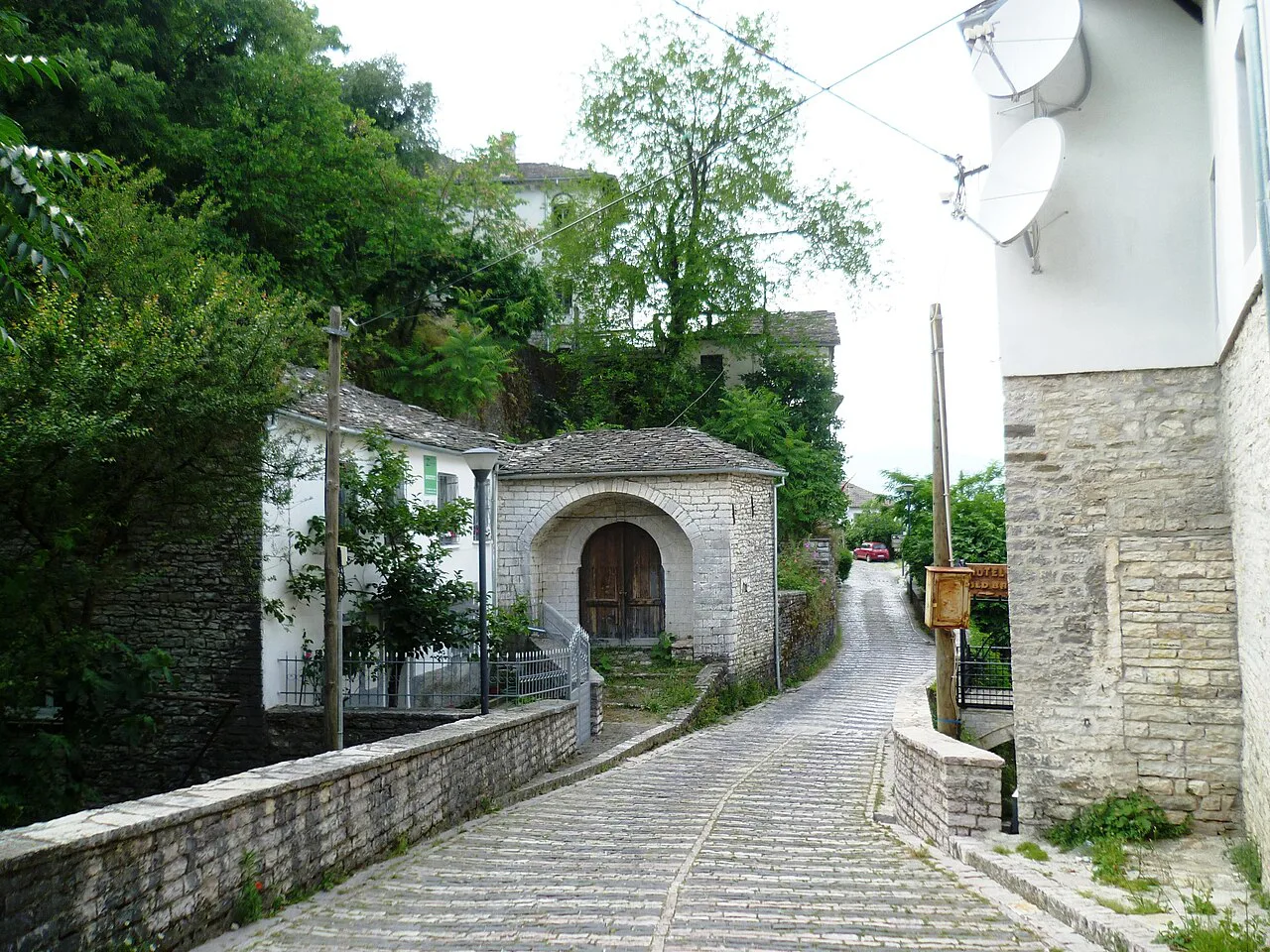
What Gjirokastër cooking is built on
The city's food is mountain food. It leans on lamb, wild greens, rice and sheep dairy, slow-cooked and herb-led, with mint, cinnamon and olive oil providing the defining notes. Dishes arriving as pies, puddings and rice bakes rather than grill platters are a good sign.
Guesthouse tables carry much of this tradition. Slow-cooked lamb with dried plums and walnuts, trahana soup and soft local cheese with olive oil and herbs turn up in family-run places, particularly around the bazaar. Some kitchens need advance notice for the long-cooked dishes, so ask when you arrive rather than at the table.
Gjirokastër sits in the Albanian olive belt, and olives are excellent here, which shows at breakfast as much as dinner. The standard guesthouse spread is local soft cheese with olive oil and herbs, olives and bread, and breakfast is often included in the room rate. If you are planning your days around meals, Gjirokastër Old Town keeps most of these tables within a short walk of each other.
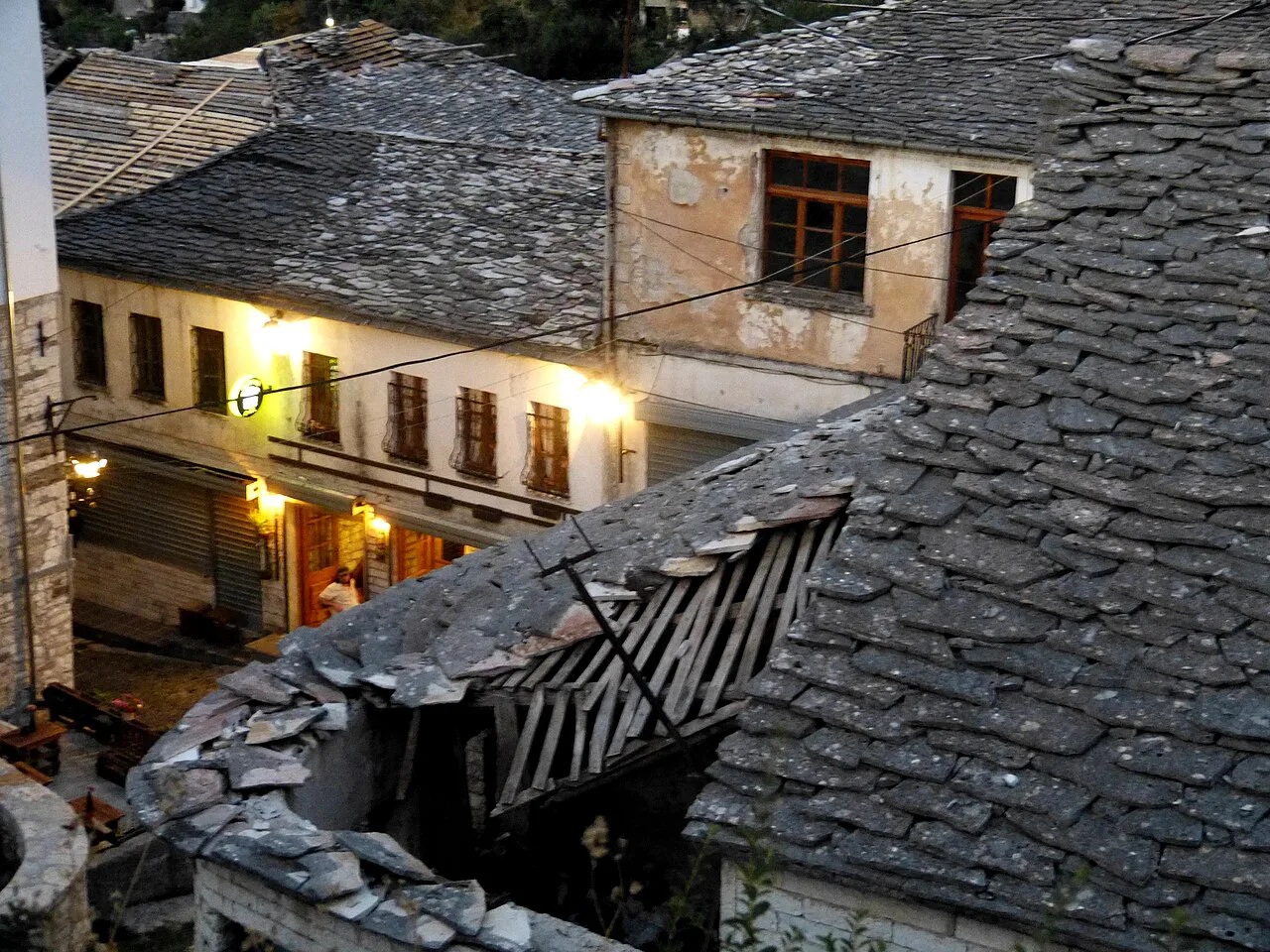
The dishes to order: qifqi, oshaf, lakrori and byreku qahi
Qifqi is the one dish to seek out specifically. These are rice balls fried in seven-socket pans with mint, butter, fennel and pepper, crisp outside and fluffy within, and they are found almost exclusively in this region. Gjoca and Taverna Tradicionale Kardhashi both serve them.
Oshaf is the city's signature dessert: a baked sheep-milk pudding with dried figs, sugar, cinnamon and cloves. It is thick, sweet and worth leaving room for, and Argjiro Patisserie is the most frequently cited place to try it. Look for it at bazaar stalls too.
Lakrori is a savoury pie, and the versions here vary: one local speciality is lakrori me thember, a turkey and onion pie, while other kitchens bake a thin-crust pie with spinach and egg or meat and onion in the large round pans you will see in bakeries. Restorant Tradicional Urat is the pick for the turkey version, priced at eight to twelve euros.
Byreku qahi is a local twist on byrek, made with qahi spinach, dill, olive oil and pepper. Snack Bar Simple and Gjoca sell it fresh. Shapkat, a sorrel and corn pie, is the seasonal alternative, found at the bazaar and at Taverna Tradicionale Kardhashi. If you only have one day, work these two into a bazaar walk with our Gjirokaster walking tour.
Restaurants in the old bazaar and around the castle
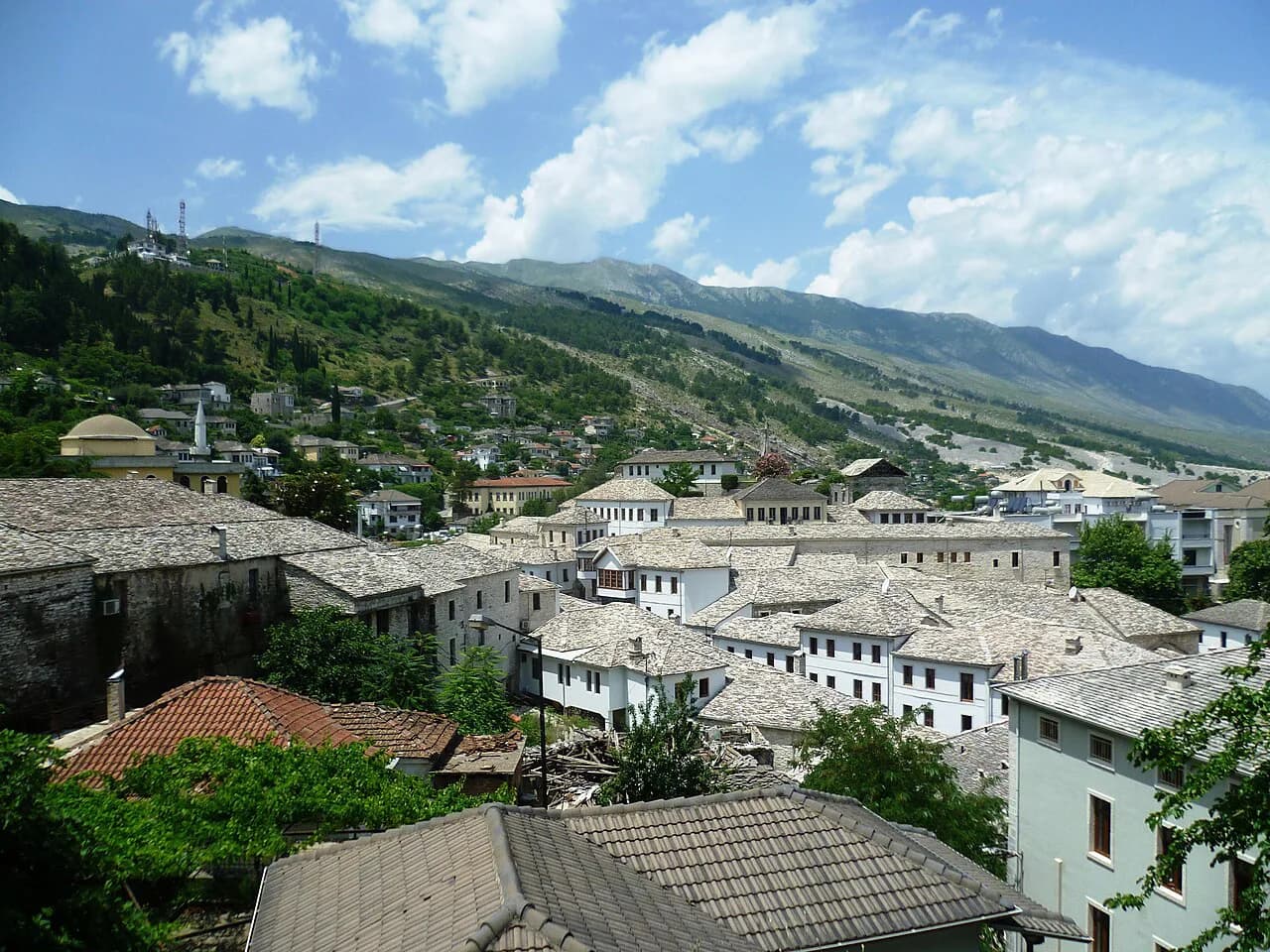
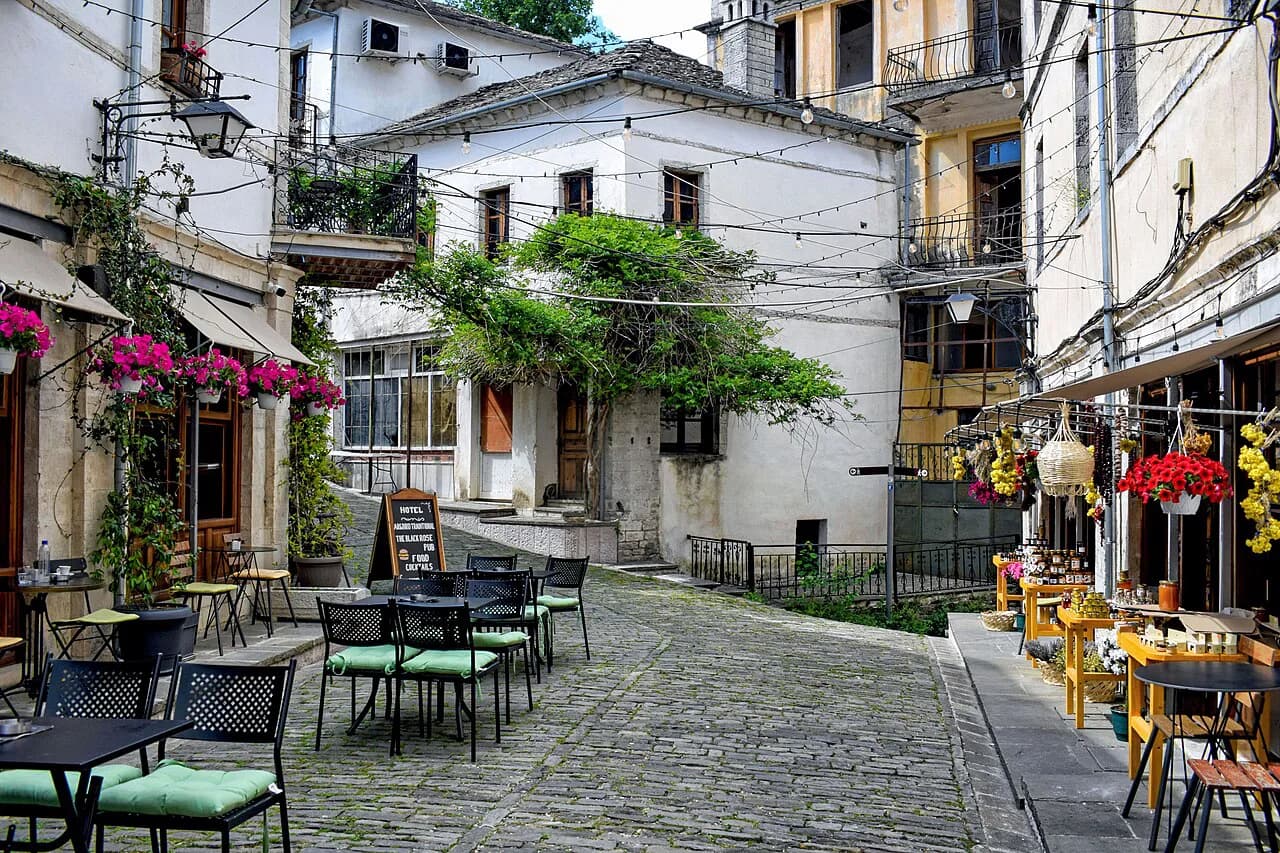
The bazaar is the most practical place to eat if you are sightseeing on foot, with snack counters and tavernas close together. Snack Bar Simple handles byreku qahi, while Taverna Tradicionale Kardhashi covers both qifqi and shapkat. Several more traditional restaurants sit in the surrounding lanes of the old town.
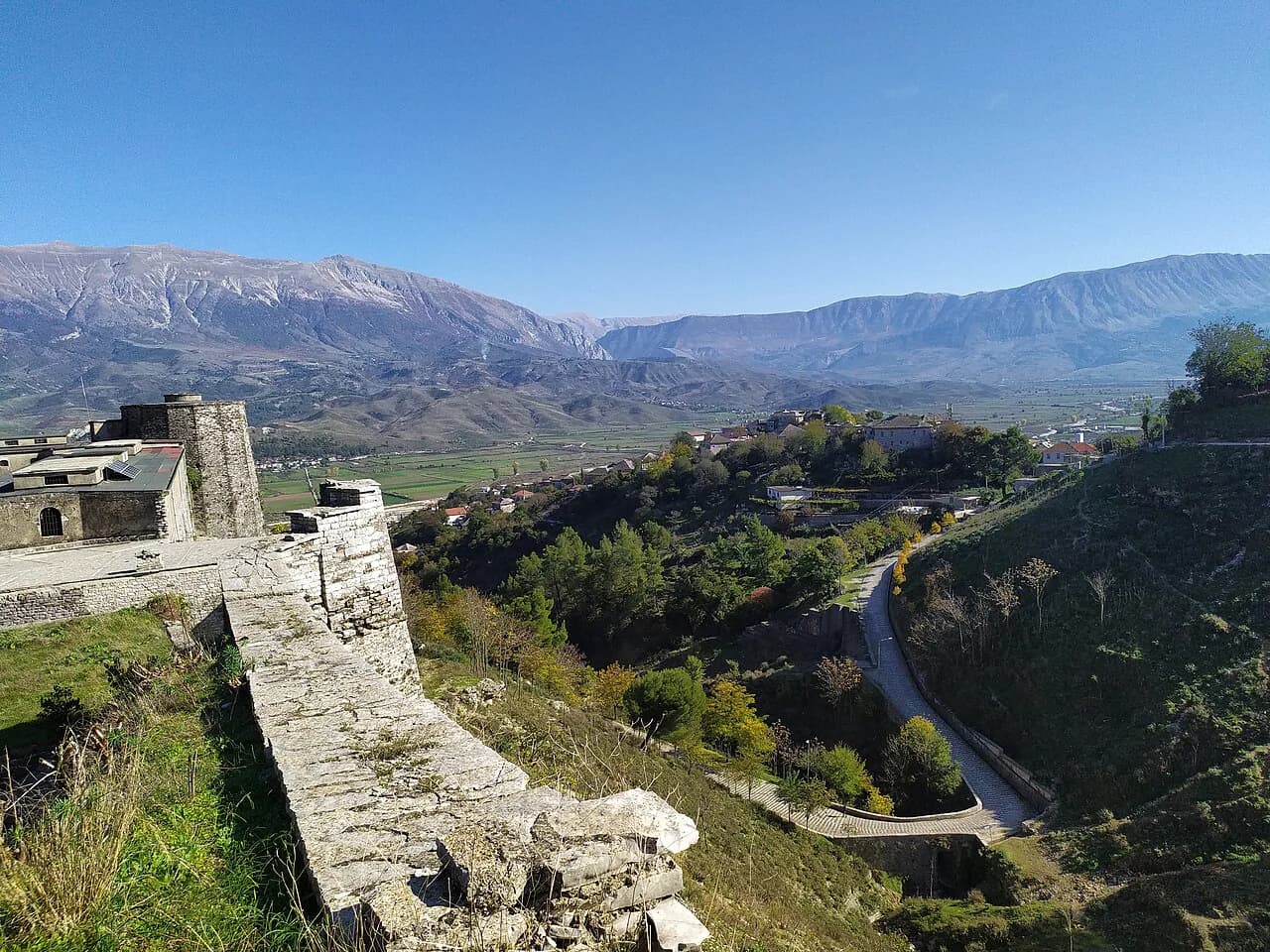
Around the castle, the trade-off is convenience against value. Restaurants directly at the castle entrance tend to be overpriced for tourists and are not representative of Gjirokastër cooking. Walk back down into the old town instead.
Menus in this area run from stuffed peppers and imam bajaldi to qofte fërguara and hand-rolled pasta with lamb. Odaja does stuffed peppers that are vegetarian-friendly and Pasha qofte, while Kujtim serves imam bajaldi and qofte. Restorant Gjoca and Restorant Tradicional Urat work well after a morning in the castle.
Family-run terrace restaurants with castle views
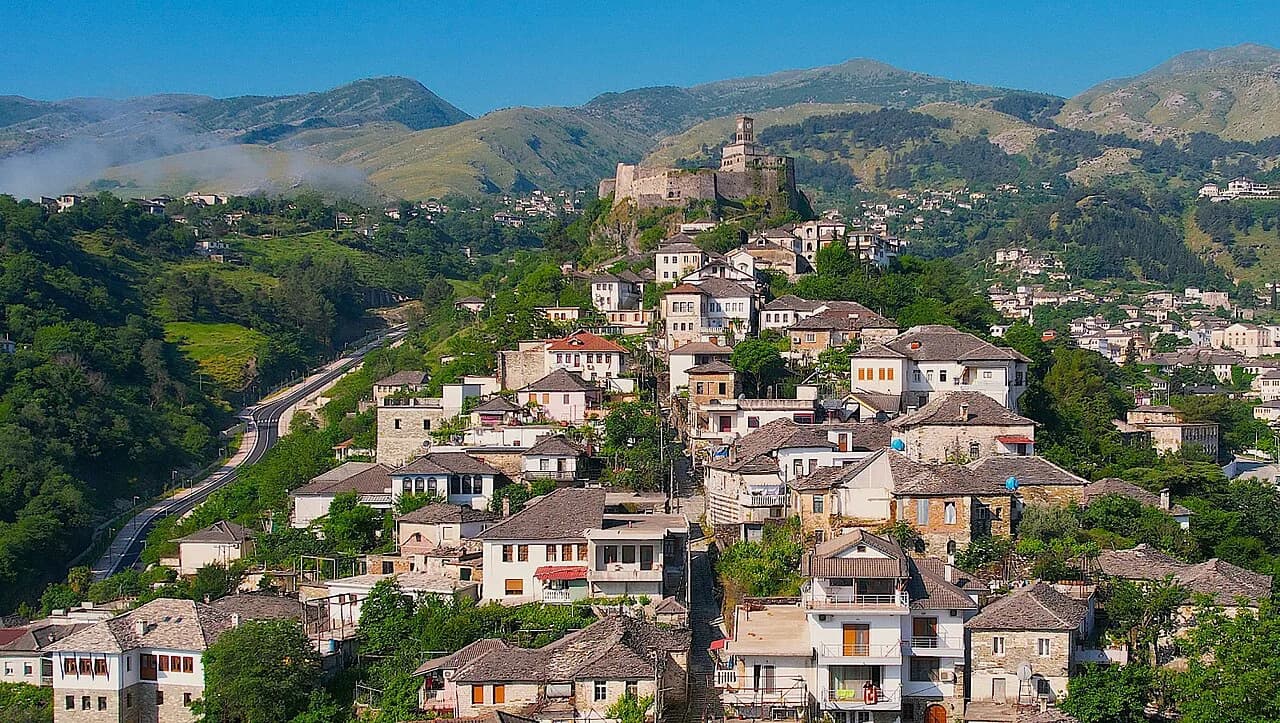
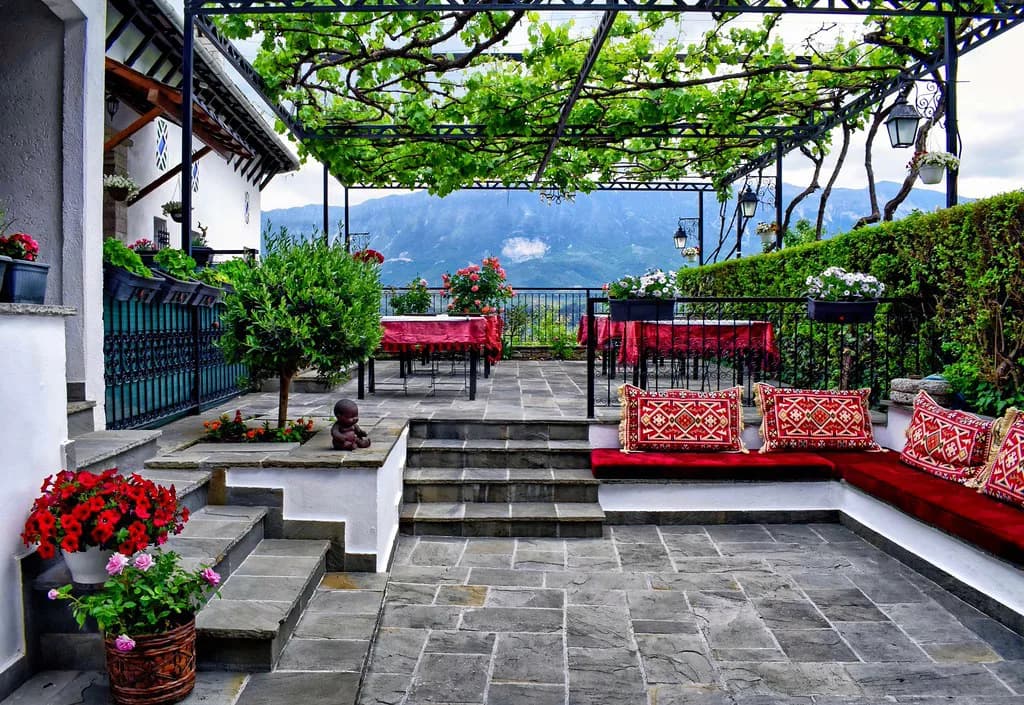
A handful of family-run places trade on their terraces, and the climb is usually repaid. Taverna Panorama Zhuli is a hilltop option with views over the castle and mountains, and staff are noted for small touches like lending binoculars. Traditional Food Balcony View is a balcony table with generous portions and mountain views.
Bar - Restaurant Traditional Çani cooks garden-to-table dishes using produce grown on site, including stuffed aubergines, qifqi and oshaf. It is a sensible stop for walkers coming back from the Ali Pasha Bridge. If you plan to eat around sunset, our guide to Gjirokastër's viewpoints makes a good pre-dinner loop.
Service at these terraces is warm and personal, and several places send out small extras such as fruit or bread. Quality can wobble at busy times even where the views and hospitality are excellent. Book a terrace table earlier in the day if you want a castle-facing seat.
Guesthouse tables cooking slow-cooked Albanian food
Some of the most satisfying meals in Gjirokastër are cooked in guesthouses rather than restaurants. Family-run places in the old town, particularly near the bazaar, cook slow lamb, stuffed vegetables and traditional pies for guests. Tell them in advance that you want traditional cooking rather than a standard menu, and book a table if you are not staying the night.
Expect the food to be home-style rather than restaurant-polished. Trahana soup, lamb with dried plums and walnuts, and soft local cheese with olive oil and herbs are the sorts of dishes that appear. The cooking is described as meat-heavy and traditional, so vegetarians should plan around pies, stuffed vegetables and salads.
Cafés, patisseries and bazaar snacks between meals
Gjirokastër gives you plenty of reasons to stop between sights. Petulla, fried dough with jam, is the standard bazaar breakfast, and hot-sand coffee at Gjyshi Café is a slow-brewed ritual.
For sweets, Argjiro Patisserie does oshaf and Trileçe, a three-milk soaked cake. Baklava and sheqerpare turn up at bazaar stalls, and raki is the standard local toast. Te Kubé is an artsy café tucked into historic stone walls, good for coffee and dessert after a walk.
If you want to learn the cooking rather than just eat it, guided cooking classes around hand-rolled pasta with lamb are bookable in the city. Our Gjirokaster itinerary shows how to fit a class around castle and bazaar time.
What a meal costs and how to share dishes
Prices at traditional restaurants are modest by western European standards. A typical meal costs ten to fifteen euros per person, or around twenty-five euros for a fuller meal with wine. That makes Gjirokastër an easy place to eat well for two without blowing a budget.
Portions are generous, so order to share. Three or four dishes between two people is the usual approach, with a pie, a rice or meat dish, a vegetable dish and a dessert. A single plate of qifqi or byreku qahi is not a full meal on its own.
Raki is the usual accompaniment, with local Shesh i Zi wine an alternative for lamb dishes. Raki is priced at around two euros a shot and the local red at about three euros a glass. Keep some small change for bazaar snacks and coffee.
Vegetarian choices
Vegetarian eating in Gjirokastër works best if you pick dishes rather than venues. Byreku qahi, stuffed peppers, japrak, shapkat, tarator and imam bajaldi are all meat-free. Odaja's stuffed peppers and Kujtim's imam bajaldi are straightforward orders.
The local kitchen is otherwise meat-heavy. If you want a meat-free dinner beyond pies and stuffed vegetables, say so when booking and expect a smaller choice.
Common mistakes: castle-entrance places and booking ahead
One mistake catches many visitors: eating at the restaurants directly by the castle entrance, which tend to be overpriced for tourists and are not representative of the city. Walk down into the old town instead, where the bazaar tavernas and guesthouse kitchens offer better value.
The second is leaving slow-cooked guesthouse food to chance. It is worth booking ahead at family-run guesthouses and telling them you want traditional cooking rather than a standard menu. Sort your table in the morning, then spend the afternoon on the castle and bazaar.
Which table should you book first?
Book Restorant Gjoca or Taverna Tradicionale Kardhashi for qifqi, adding Argjiro Patisserie for oshaf and the bazaar for byreku qahi. Then pick one terrace, Restorant Tradicional Urat or Taverna Panorama Zhuli, for a longer dinner with a castle view.
If you want the fullest picture of the city beyond its kitchens, our Things to Do in Gjirokastër guide covers the castle, bazaar and old town. Confirm menus and prices with each restaurant when you book, since both change with the season.
Explore more Gjirokaster guides
Frequently Asked Questions
What food is Gjirokastër known for?
Qifqi is the dish most closely tied to Gjirokastër: rice balls fried with mint, butter, fennel and pepper, served almost exclusively in this region. Oshaf, a baked sheep-milk pudding with dried figs and cinnamon, is the city's signature dessert. Lakrori, byreku qahi and shapkat are the savoury pies to look for.
How much does a meal cost in Gjirokastër?
A meal at a traditional restaurant is roughly ten to fifteen euros per person, and around twenty-five euros for a fuller dinner with wine. Portions are generous, so sharing three or four dishes between two people usually works out cheaper than ordering separately.
Are there vegetarian options in Gjirokastër?
Yes. Byreku qahi, stuffed peppers, japrak and shapkat are all available without meat. Ordering individual vegetable and pastry dishes works better than looking for a wholly vegetarian venue, since the local kitchen is otherwise meat-heavy.
Where can I eat after visiting Gjirokaster Castle?
Walk down from the castle into the old town, where the bazaar tavernas and family-run terraces sit within a short stroll of each other: Restorant Gjoca and Taverna Tradicionale Kardhashi for qifqi, Snack Bar Simple for byreku qahi and Restorant Tradicional Urat for lakrori.
Sources
Notes for your Albania trip
Optional updates to our Albania town guides.
You might also like
Continue reading
More guides you'll find useful