Gjirokastër History: A Short Timeline Tied to the Old Town
A short Gjirokastër history for visitors, linking the castle, Old Bazaar and stone tower houses to the dates and people behind them.
On this page
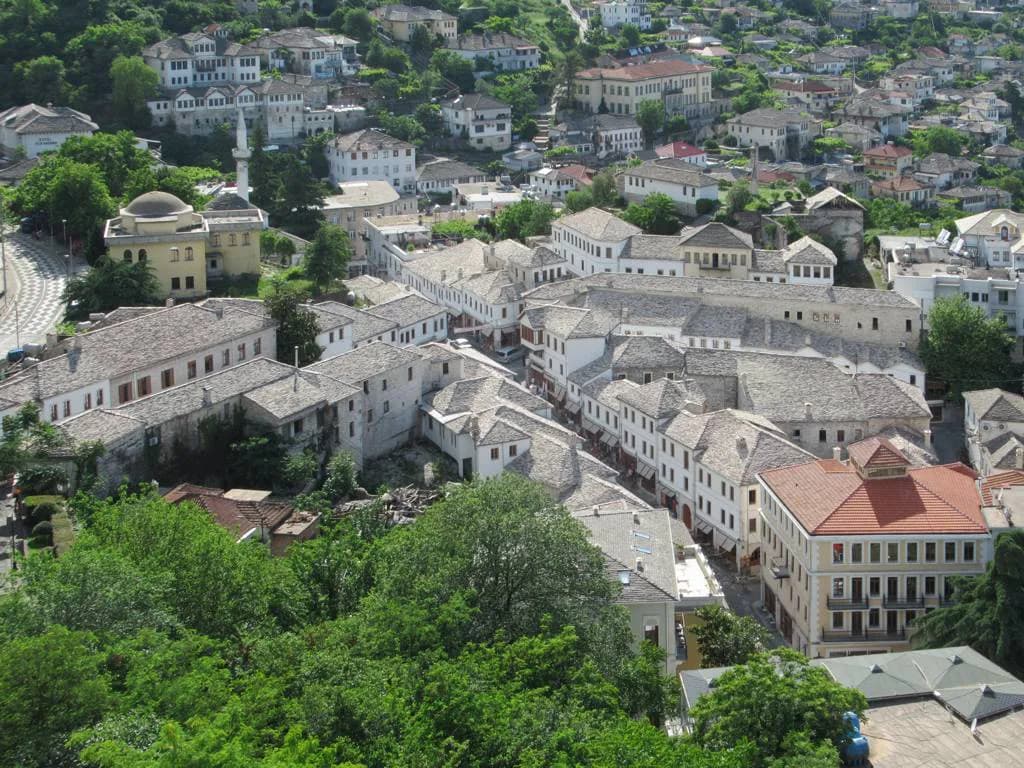
Gjirokastër's history reads best as a walk, not a timeline: the fortress on the ridge, the bazaar below it and the stone tower houses on the slope were each shaped by a different century. This guide ties those periods to specific buildings and streets you can still see, so the town stops looking like one undifferentiated grey mass. Allow half a day for the core, more if you want the museums.
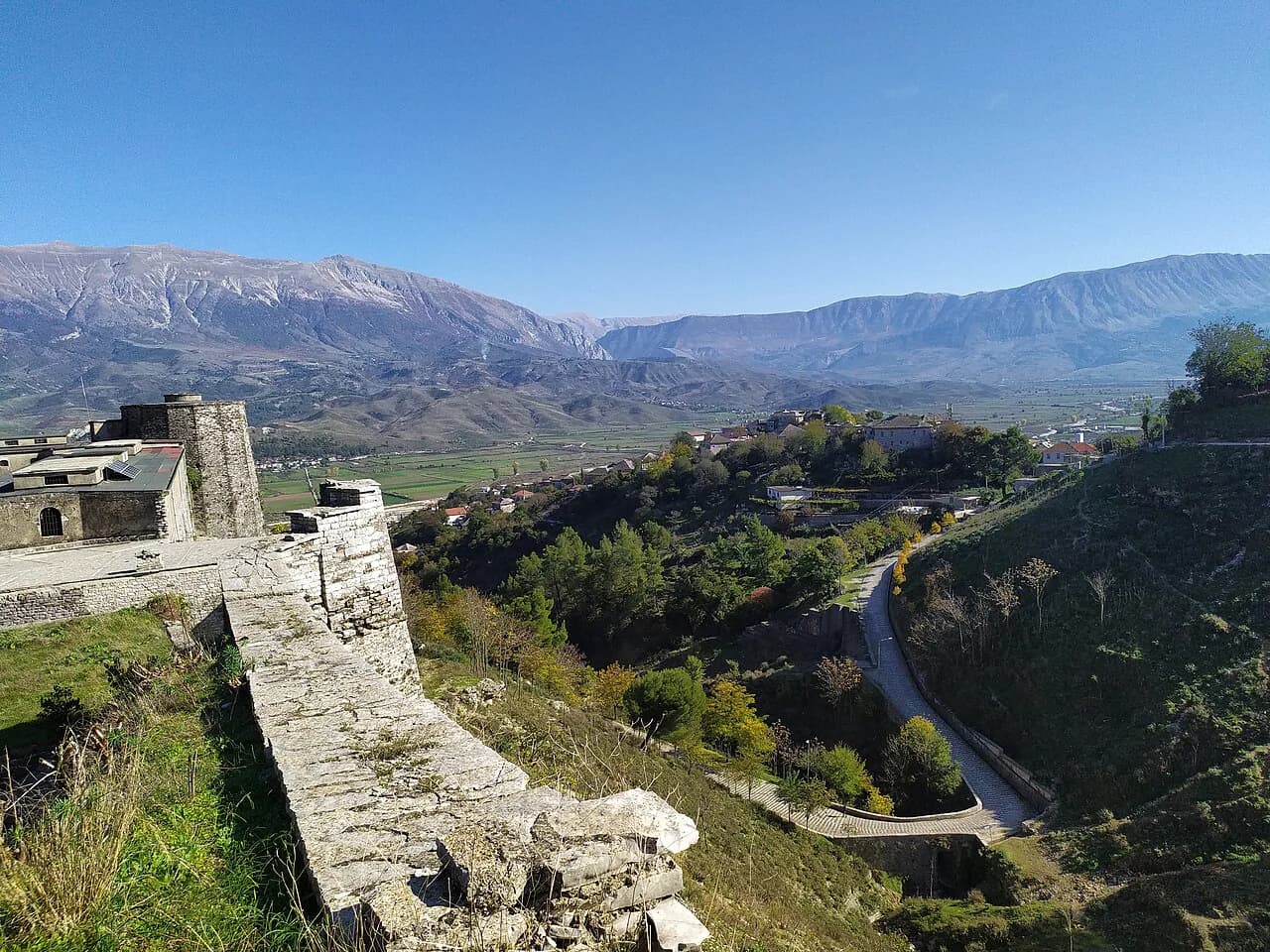
The order matters. The old town climbs the eastern slope of the Mali i Gjerë above the Drino Valley, and every route to the castle is uphill on cobbles. Start at the top in the cool of the morning and work down through the bazaar rather than the reverse.
Why the history is readable on foot
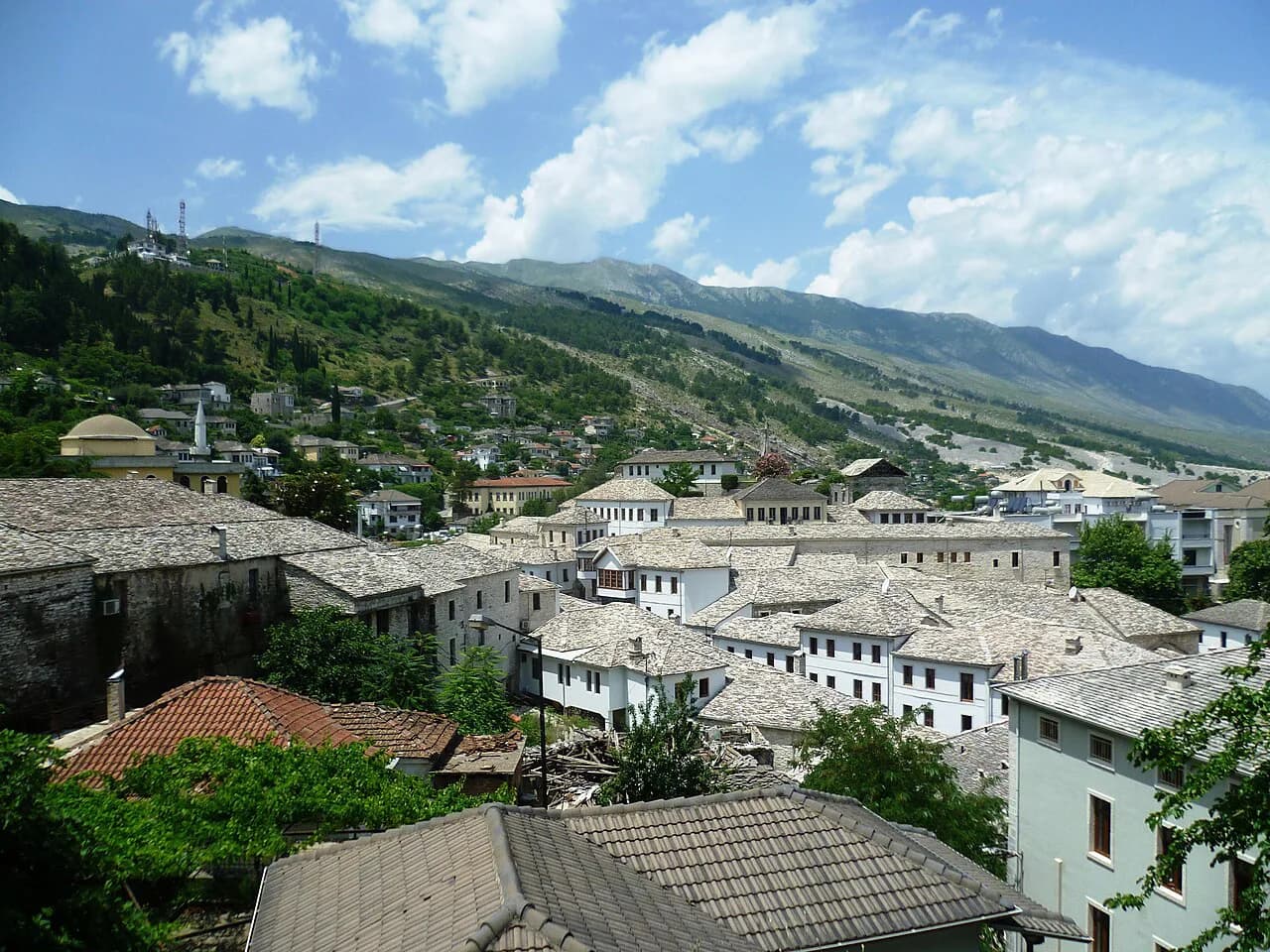
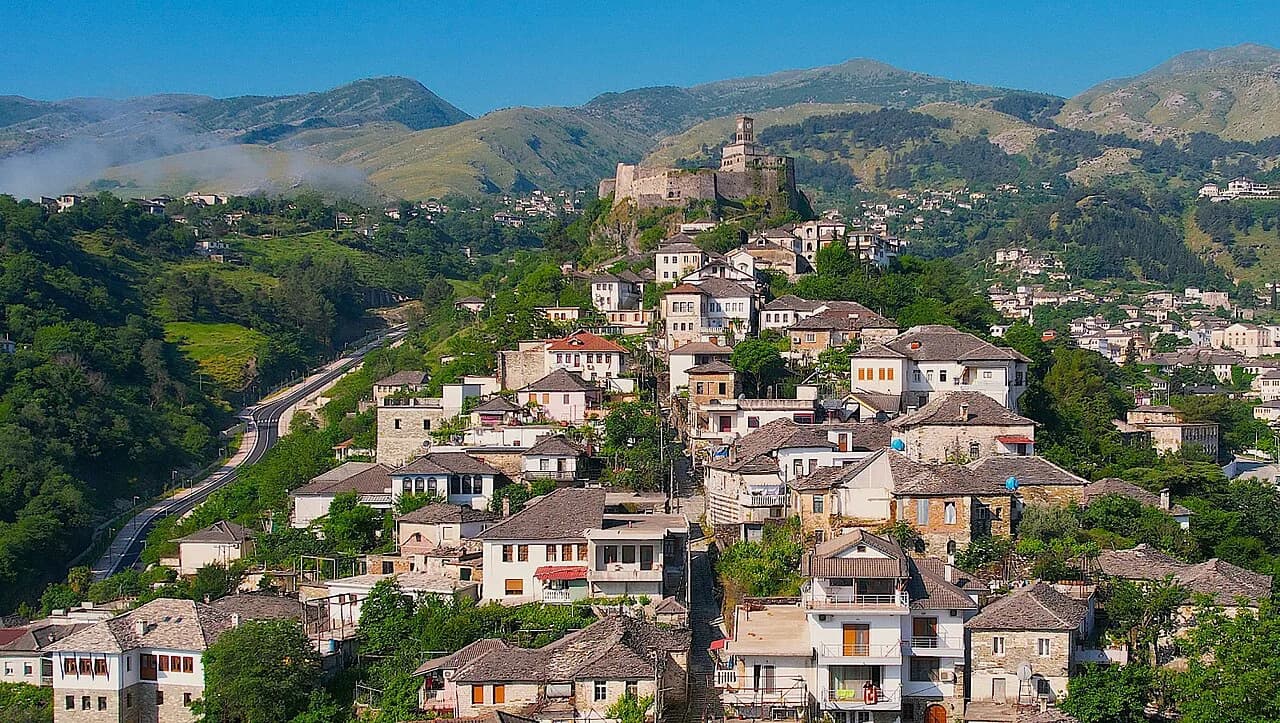
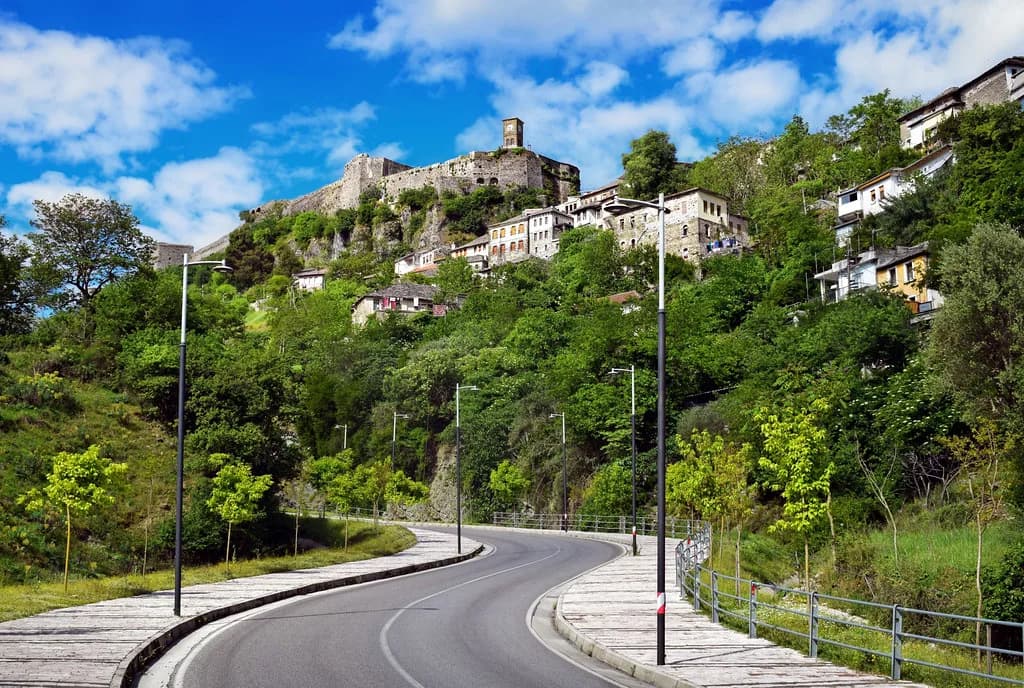
Three layers sit within a few minutes of each other: the castle along the ridgeline, the Old Bazaar on the saddle below it, and the residential lanes of stone houses filling the slope between. Walking from the bazaar up to the castle gate takes you from the 17th-century trading town to the medieval and Ottoman fortress in one climb.
UNESCO inscribed the historic centre in 2005 as a well-preserved example of Ottoman-era urban architecture, which is the layer most visitors actually see. The earlier fortifications and the 20th-century additions sit inside and around that fabric.
Argyrokastro, the silver castle
The first reliable written mention of the town comes in 1336, in the chronicle of the Byzantine emperor John VI Kantakouzenos, under the name Argyrokastro, meaning silver castle. The Greek form persists in Greek-language sources; Albanian shortened it to Gjirokastër. You will still meet both names on maps and signage.
Archaeological finds point to habitation in the Drino Valley well before that record, and the castle hill was probably fortified earlier still. Treat 1336 as the first date in the documents, not the founding of the settlement.
The hilltop fortress
The castle's origins are usually placed in the 12th century, when the first serious fortifications were built on the hill. Its walls and towers mix Byzantine foundations, Ottoman reconstruction and 20th-century additions, which is why the fabric looks less uniform than a single-period castle.
Ali Pasha of Tepelena, ruler of Yanina, took the city in 1811 and expanded the fortress, adding a clock tower and building an aqueduct to supply the citadel with water. Look for the water infrastructure as you approach the upper enclosure; it is the clearest physical trace of his works.
For the walk up, plan on a steady climb rather than a stroll, and carry water in summer. The fortress sits on the ridgeline above the town, and the approach is cobbled most of the way. The castle has a published entrance fee and seasonal hours, quoted as roughly 500 lek (about €4) and 08:00–19:00 in summer; confirm both before you commit to the climb.
The tower houses and the 17th-century boom
The houses that define Gjirokastër date mostly from the 17th to 19th centuries, when local merchants and landowners built fortified residences on the slope below the castle. Grey limestone walls and slate roofs produced the uniform appearance you see from across the valley. The word kulla refers to this tower-house form.
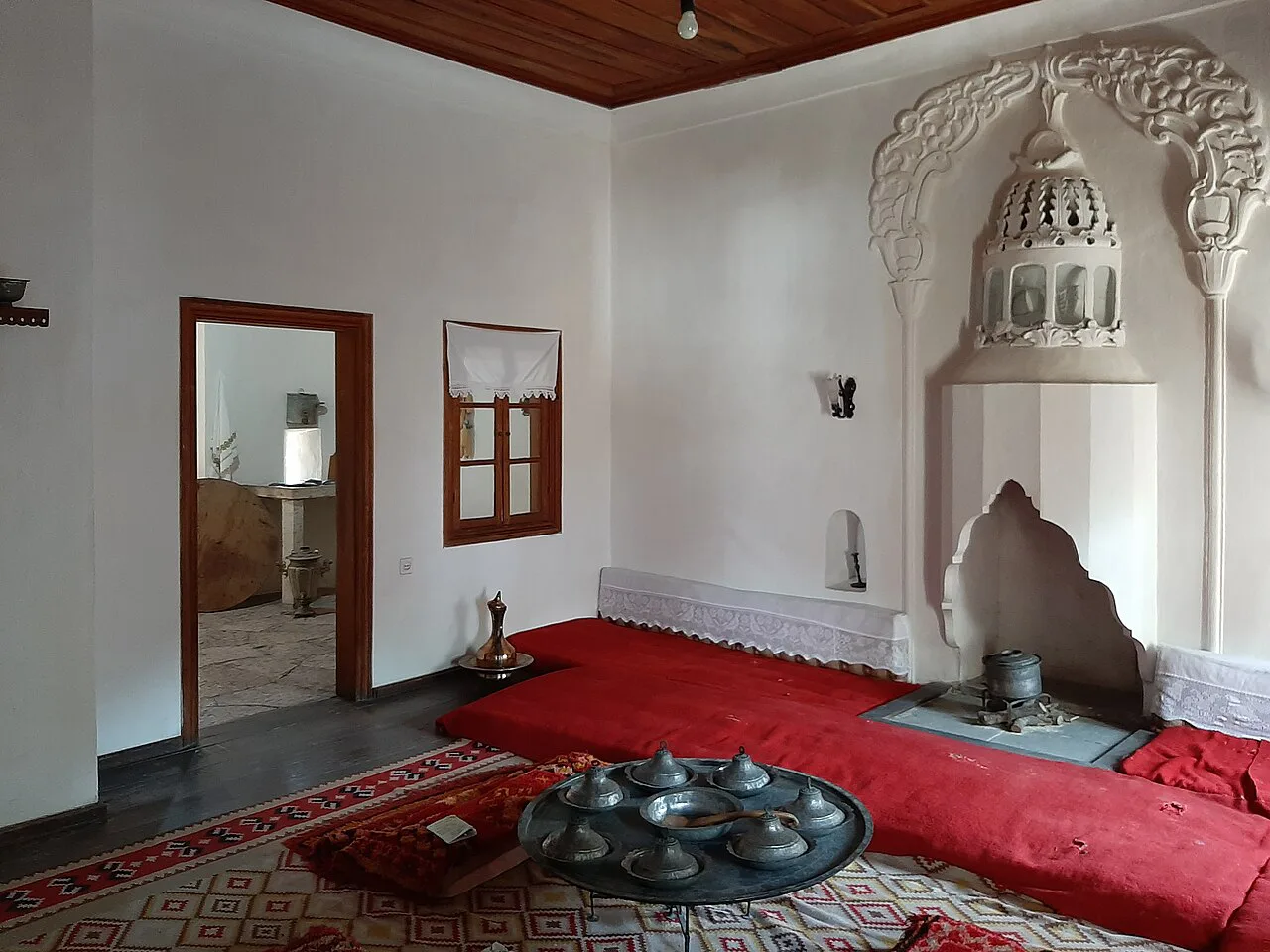
Two interiors are open to visitors and worth the detour: the Skenduli and Zekate houses, known for their carved wooden ceilings and rooms arranged for a wealthy household. They make the exterior make sense. A visit to one is enough if time is tight, since the layout repeats.
For a wider choice of sights beyond the houses, the wider list of things to do in Gjirokaster covers museums, viewpoints and the bazaar in one place.
The Old Bazaar and what the restoration changed
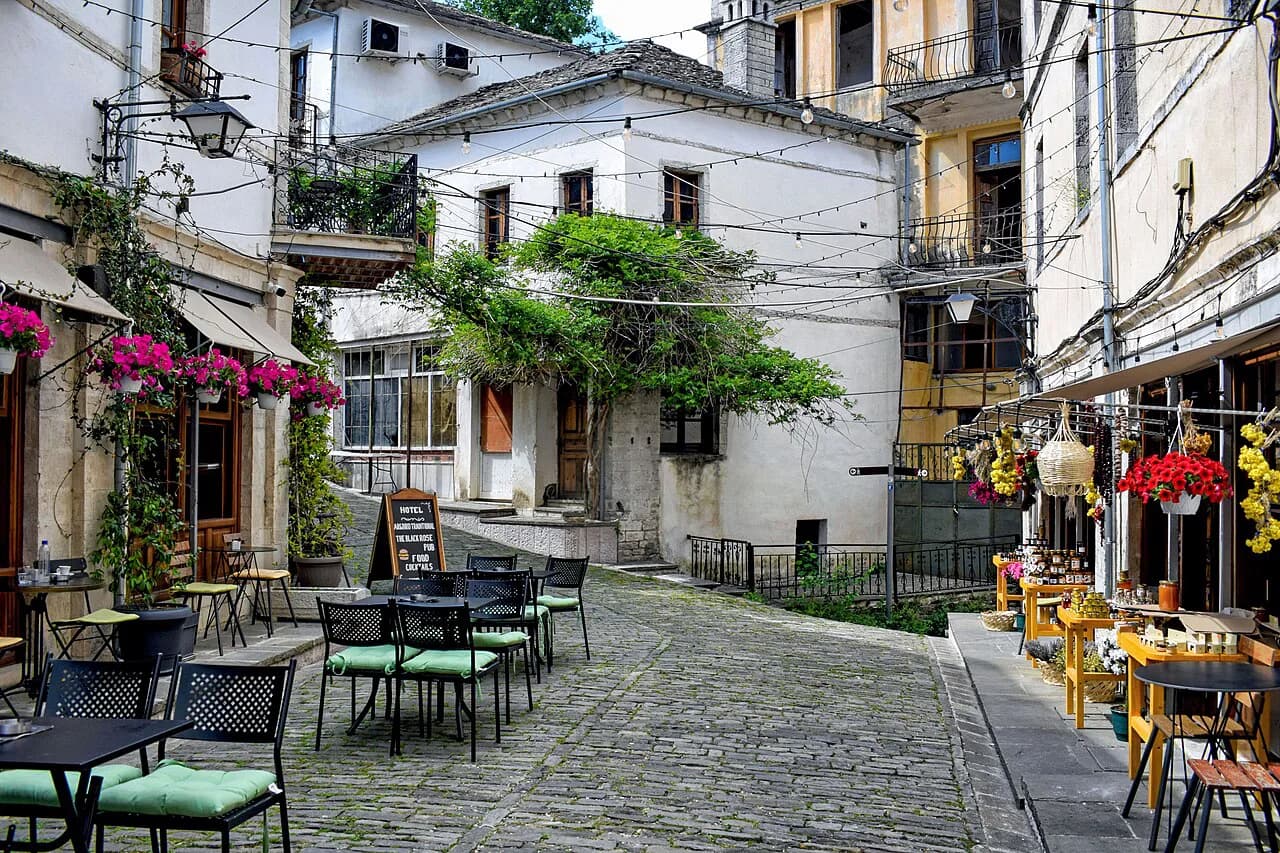
City life centred on the Old Bazaar, Qafa e Pazarit, where stonework, woodcarving and embroidery were the established crafts. It remains the commercial heart of the upper town and the place to buy local work.
A large-scale restoration of the bazaar and adjacent streets was carried out in 2017–2018, returning the historic centre to a tidier state. That means much of what you see in the main bazaar lanes is restored rather than untouched; the backstreets show more of the older, unrepaired fabric.
Expect the bazaar to be at its busiest in the middle of the day when tour groups pass through, and quieter early. It is also where most of the local restaurants cluster, so it works as a natural break between the castle and the lower lanes.
Ottoman administration and the Zenebishi family
Before Ottoman rule, the local Zenebishi family governed the town. The Ottomans took Gjirokastër in 1417, after which it became the seat of a sanjak and later a vilayet, drawing population and capital into an administrative centre.
That administrative status is why the town has the density of public and religious buildings you find in the lanes today, rather than the scattered layout of a village. When you walk the old town, you are walking an Ottoman district capital's street plan.
The 19th-century cultural awakening
The Assembly of Gjirokastër met in 1880, a milestone in the Albanian national revival that strengthened the cultural identity of the town's residents. In 1908 the Liria school opened, the first to teach in the Albanian language, marking a step in local education. Both belong to the same short period of cultural organising.
Gjirokastër was recognised as part of the independent Albanian state in 1913, closing the Ottoman chapter. The 19th-century institutions are mostly remembered through plaques and museum displays rather than intact buildings, so read them as context rather than as stops.
Two 20th-century figures and the Ethnographic Museum
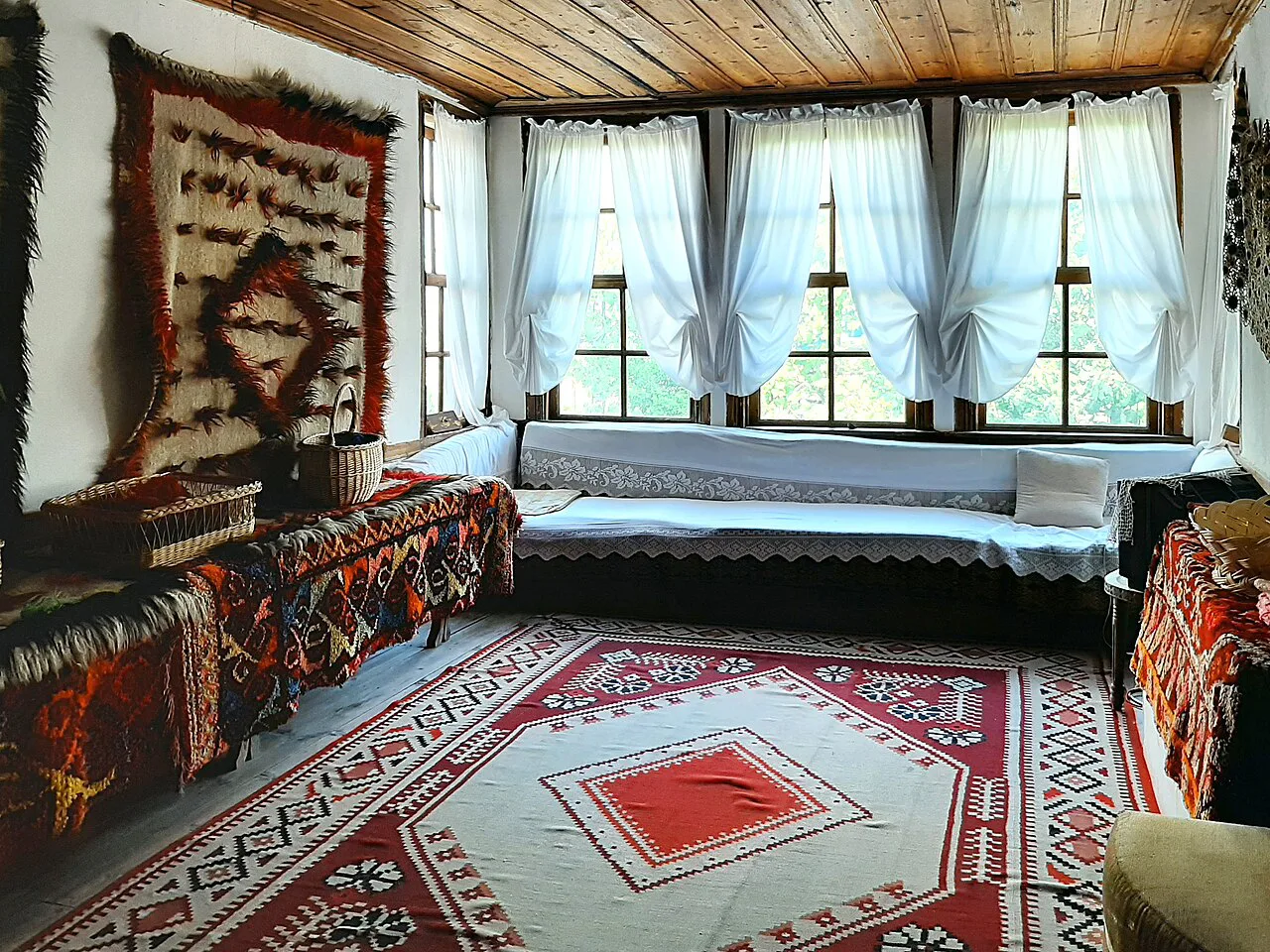
Gjirokastër is the birthplace of Enver Hoxha, who led the People's Socialist Republic of Albania, and of the writer Ismail Kadare. The Ethnographic Museum opened in 1966 in Hoxha's birth house and shows the traditional lifestyle of wealthy 19th-century families. It is the one site attached to either name.
The museum's value to a visitor is the domestic interior rather than the biography: room settings, furnishings and household objects from the merchant class that built the tower houses. If you only see one interior in town, this or a kulla house covers similar ground.
The 1961 museum-city designation
In 1961 the government designated Gjirokastër a museum-city, a decision that saved the historic centre and its mansions from demolition and modernisation. That protection, not later restoration, is why the old town survives as a coherent whole.
The distinction is useful when you walk: the street pattern and the bulk of the houses are protected fabric, while individual façades and the bazaar lanes have been repaired since.
Inside the castle today
The Museum of Armaments opened within the fortress grounds in 1971 and holds weaponry from various periods. The castle also contains prison cells, barracks and storage areas that show how the fortress was used beyond defence.
The National Folklore Festival was first held at the fortress in 1968 and has continued periodically since, bringing performers from across the country. It is not an annual fixed date; check locally before planning a trip around it.
On the ticket, the published adult price has been quoted at roughly 500 lek, about €4, with reductions for students, seniors and children. Treat that as a 2025 figure and confirm at the entrance.
Published hours put summer opening at around 08:00 to 19:00, with shorter hours in winter. Morning visits are cooler and quieter, which matters on a steep cobbled climb.
Half a day: which buildings to see
With half a day, take the castle first, then the Ethnographic Museum, then one tower house, and finish in the bazaar. That order follows the hill downhill and keeps the hardest walking at the start. Skip the second tower house and the armaments collection if time or heat is against you.
If the climb is too much, the bazaar and one nearby interior still give you the shape of the town without the upper fortress. The cobbles are steep and slippery in rain, so grippy shoes matter more than any ticket.
Which part of the story to see first
Start with the castle for the long view, then the bazaar and one house interior for the centuries you can actually stand inside. That pairing covers the fortress, the trading town and the merchant domestic life in a single morning.
The dates are useful mainly as labels: 1336 for the name, 1417 for Ottoman rule, 1811 for Ali Pasha's works, 1961 for protection and 2005 for UNESCO. Everything else is detail you can read on the buildings themselves.
Explore more Gjirokaster guides
Frequently Asked Questions
Was Gjirokastër founded by the Ottomans?
No. The town is recorded in Byzantine chronicles in 1336 as Argyrokastro, and archaeological evidence points to habitation in the Drino Valley before that. The Ottomans took the city in 1417 and made it an administrative seat, which is when much of the surviving street pattern took shape.
What does the name Gjirokastër mean?
It comes from the Greek Argyrokastro, meaning silver castle, first recorded in 1336. Albanian shortened the name to Gjirokastër, while the Greek form remains in use in Greek-language sources and on some signage.
Can you visit the Ethnographic Museum and a tower house on the same day?
Yes, and they are close enough in content that one of each is plenty. The Ethnographic Museum shows a wealthy 19th-century interior in Hoxha's birth house, while the Skenduli and Zekate houses show carved ceilings and room layouts in the tower-house form.
Is the folklore festival held every year at the castle?
It runs periodically rather than on a fixed annual schedule, and the first edition was at the fortress in 1968. Dates are announced locally, so check in town or with the castle before building a trip around it.
Sources
Notes for your Albania trip
Optional updates to our Albania town guides.
You might also like
Continue reading
More guides you'll find useful