Gjirokastër Old Town: What to See and How to Walk It
Walk Gjirokastër old town sensibly: the bazaar, stone-roofed Ottoman houses, steep cobbled lanes and the castle above, on a route that limits the climbing.
On this page
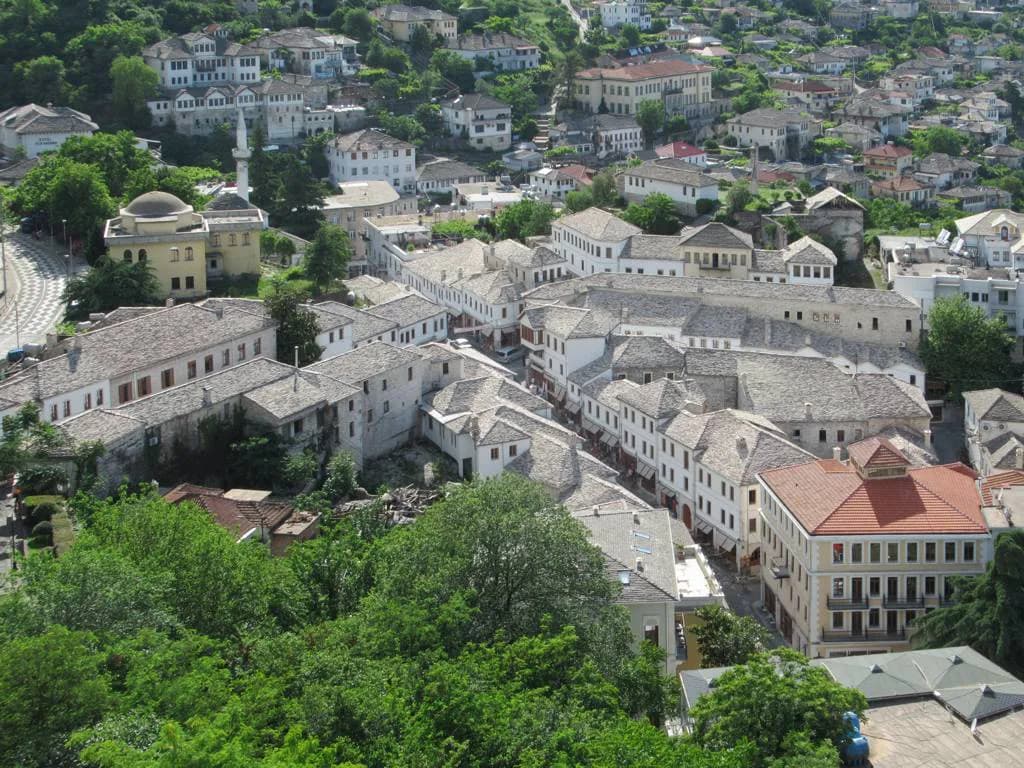
Gjirokastër old town is a compact hillside of stone-roofed Ottoman houses and cobbled lanes wrapped around a ridge, with the castle sitting above it. Give it half a day if you want the bazaar, the backstreets and the climb; a full day lets you add the castle and a museum without rushing the slopes. The old town takes its character from the old bazaar and Ottoman architecture, and the Gjirokastër Bazaar is where most walks begin. This guide sets out how the town is laid out, what to look at in each part, a route that takes the climb in stages, and how much time each section needs.
What the old town actually is
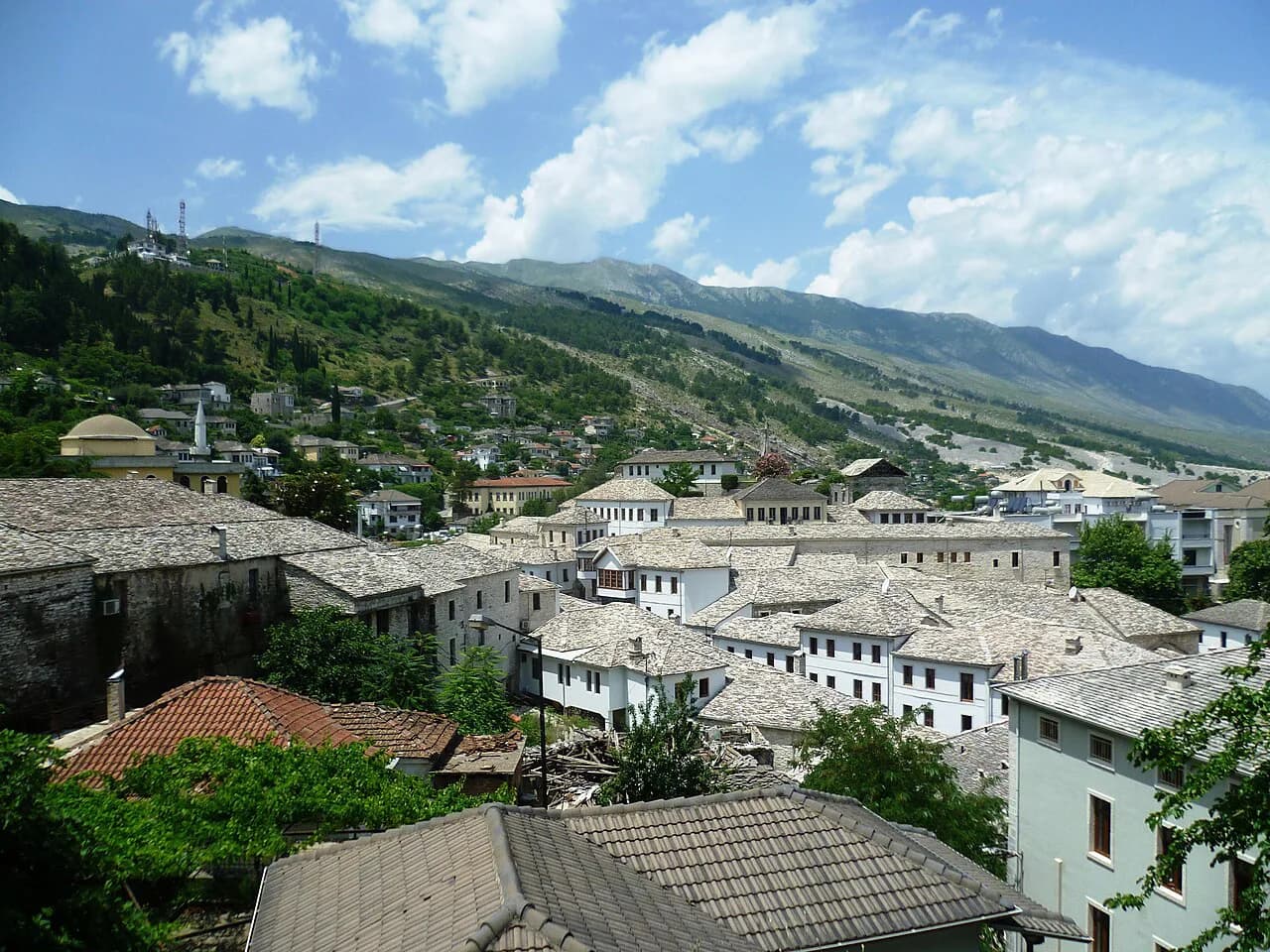
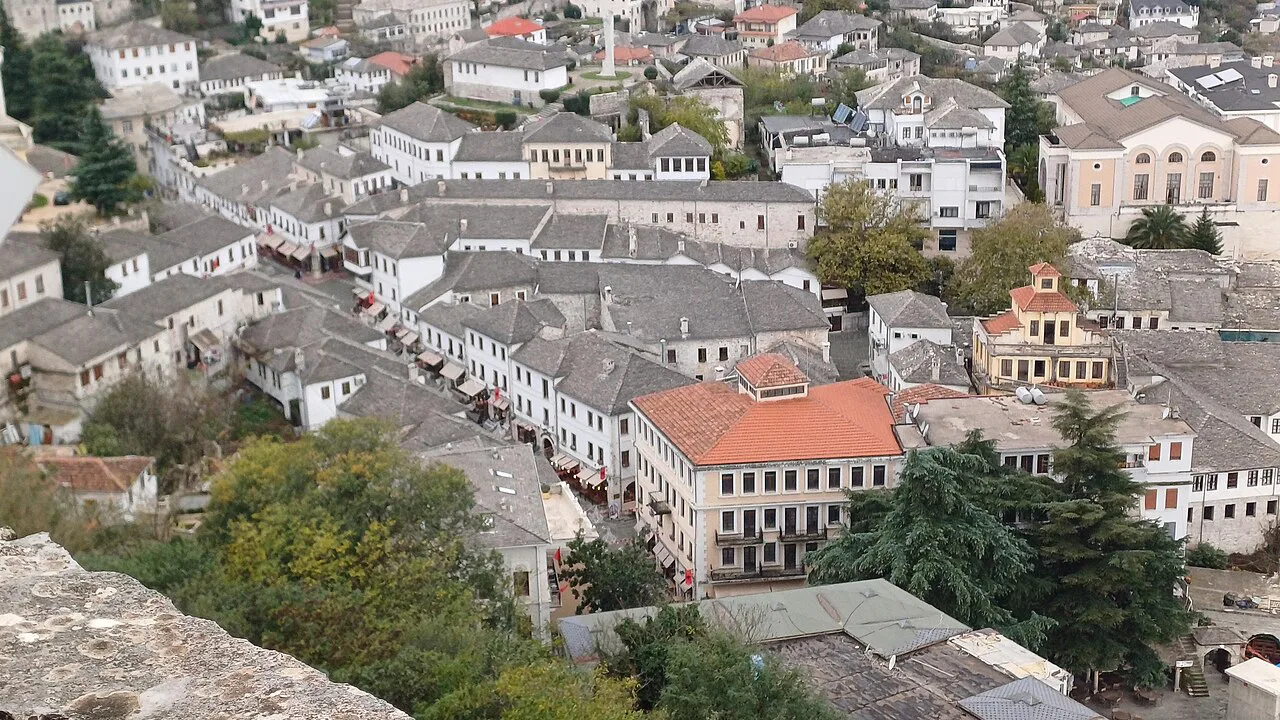
Two Albanian towns hold the museum-town label and a place on the UNESCO World Heritage List, and Gjirokastër is one of them, alongside Berat. The listing rests on the number of preserved Ottoman buildings, and the old town is dense with them: stone houses with slate roofs stacked up the slope on either side of the main lanes.
Expect height, not distance. Gjirokastër sits on a hillside where almost every sight is uphill from the last, which is why the town is nicknamed the city of a thousand steps. Treat the walking as a series of short, steep pulls rather than one long climb, and plan the day around that rather than around a map distance.
How the old town is laid out
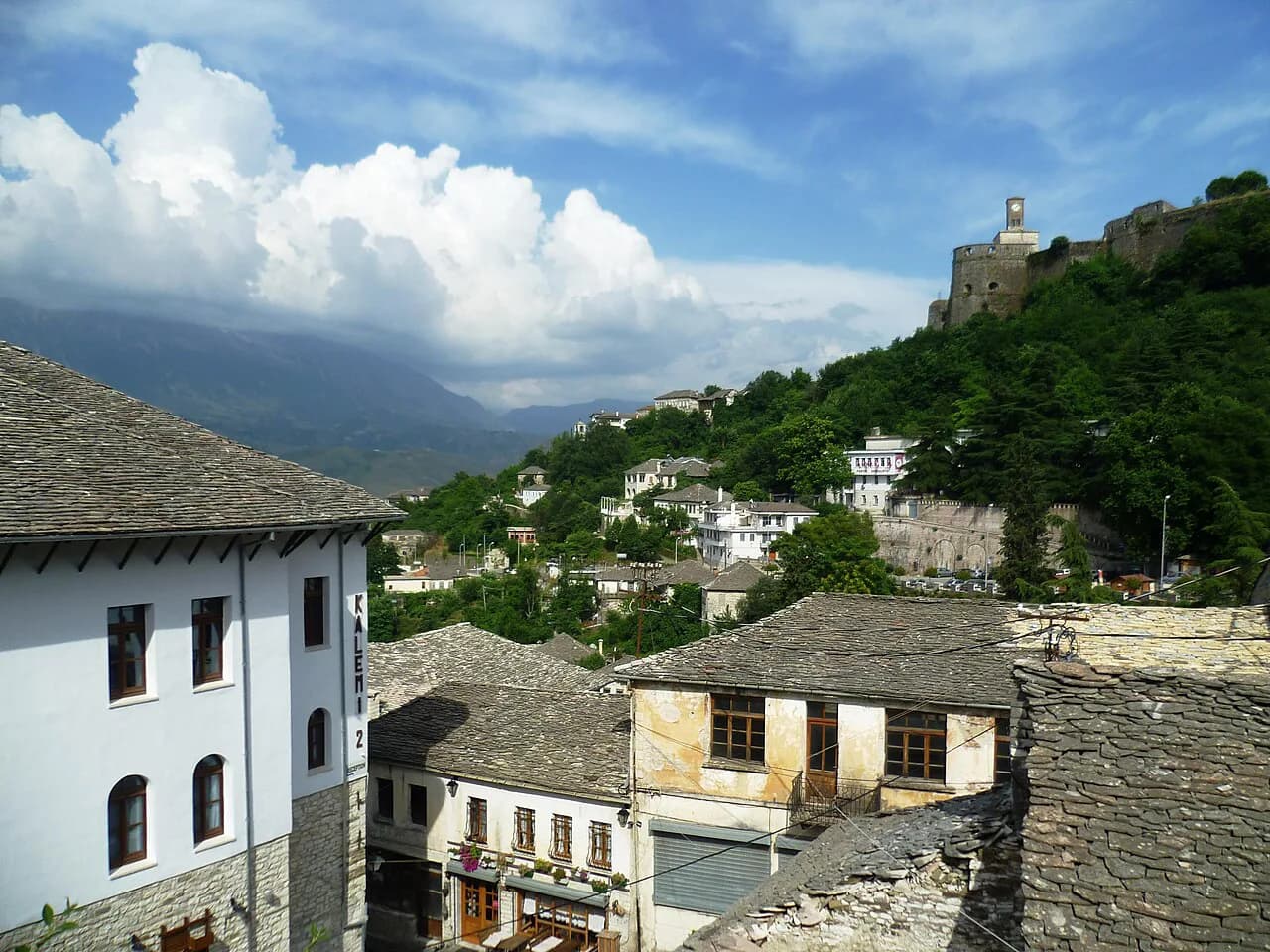
Think of the town in three bands. The bazaar and main shopping streets sit lowest and flattest; the residential backstreets of old houses spread above and behind them; the castle occupies the ridge at the top, visible from most of the lanes. Walking from the bazaar up through the backstreets and on to the castle gate is the natural order of a visit.
The old town reads as a sprawling Ottoman-style bazaar area, originally laid out in the seventeenth century and rebuilt around two hundred years later. Because the lanes curve with the hill rather than forming a grid, a Gjirokaster map helps you see which alley connects to which before you commit to a climb.
The bazaar: shops, souvenirs and somewhere to eat
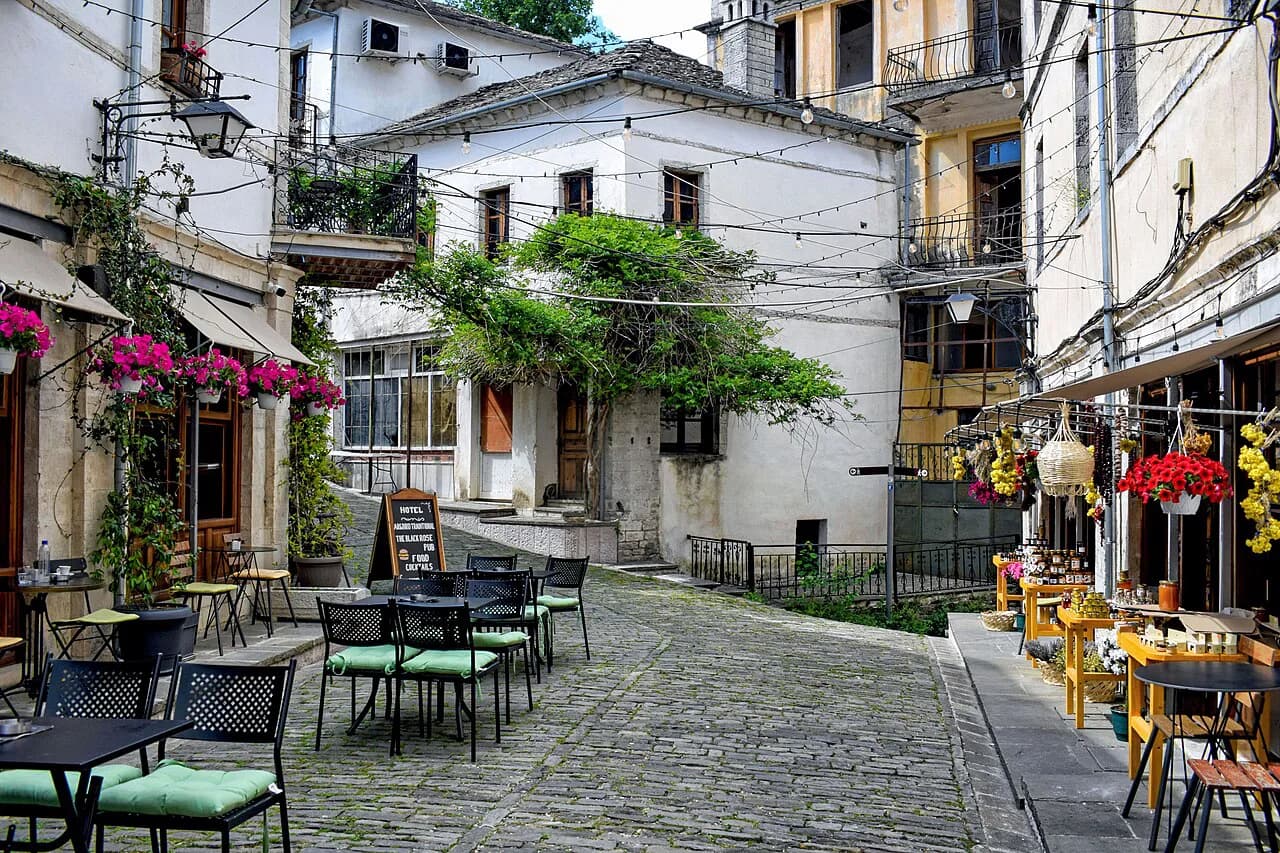
The bazaar is the busiest, most commercial stretch of the old town and the easiest place to start. Its shops sell Albanian souvenirs, and the surrounding streets hold restaurants serving local food, so it works as both a browsing stop and a lunch stop before or after the climb.
Even without shopping, the bazaar is worth half an hour: duck into the backstreets behind the main frontage, where the crowds thin and the old shopfronts and stone walls are more visible. If food is the priority, compare menus along the street before sitting down, since the choice within a few minutes' walk is wide and not all of it is on the main frontage.
The old houses and the backstreets
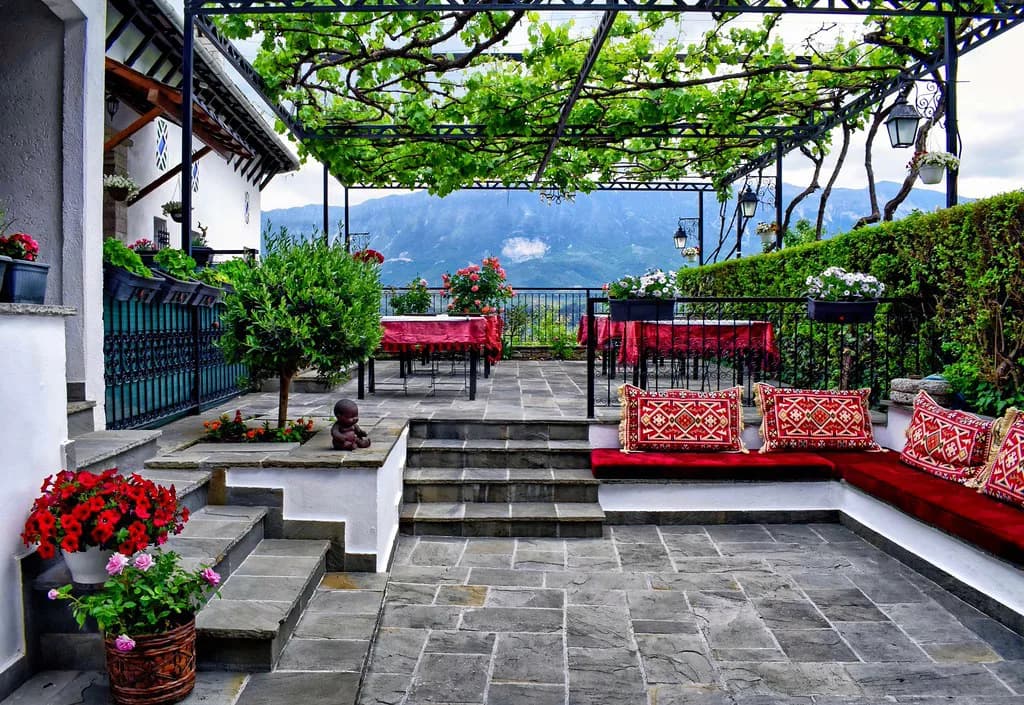
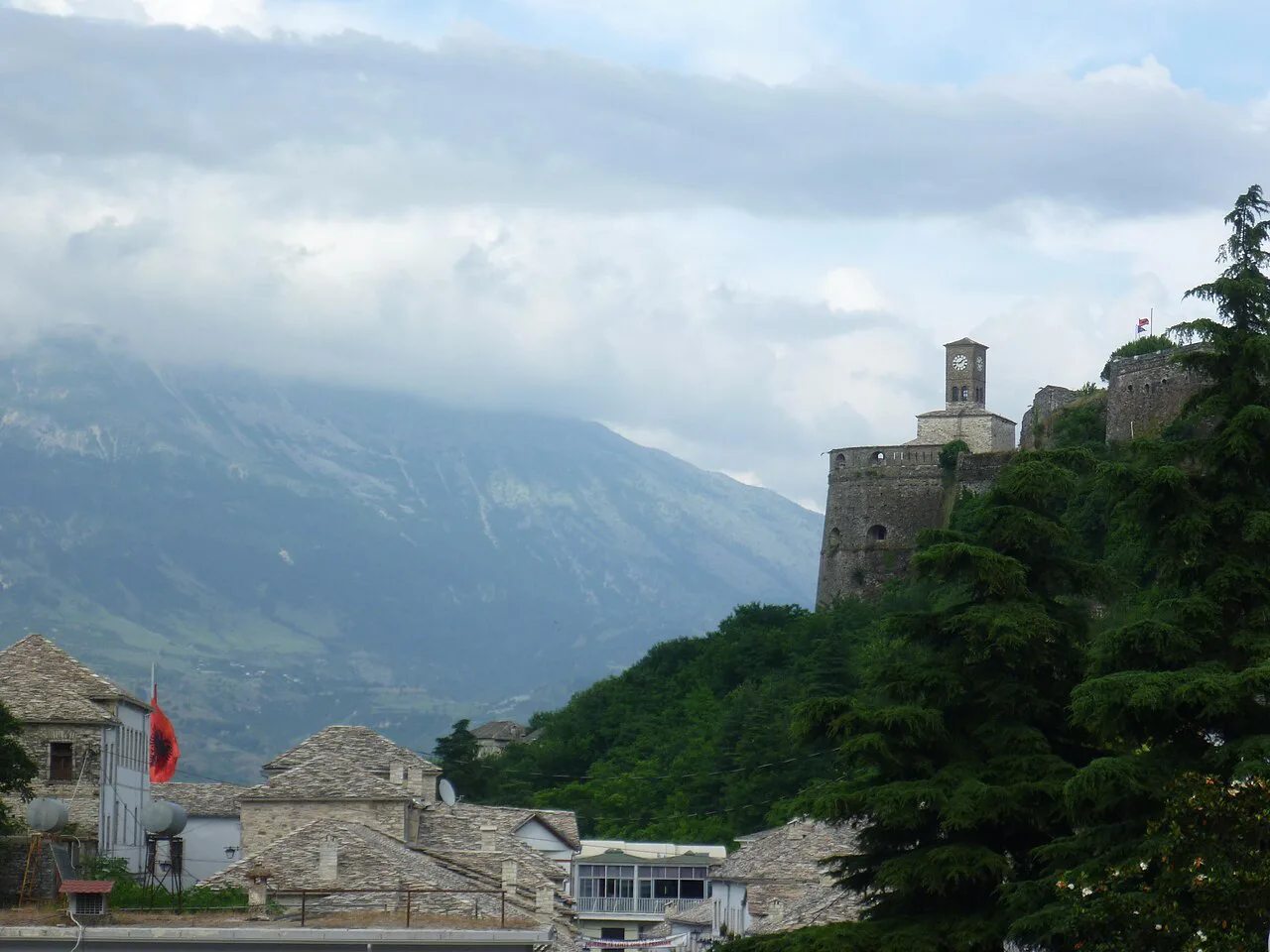
The houses are the reason for the listing. Look for the stone walls, the slate roofs and the timber balconies that overhang the lanes, all characteristic of the Ottoman-era houses the town is known for. The façades along the main streets are carefully restored, while the backstreets show houses still waiting for work, which makes the two areas read very differently.
Wander the quiet alleys between the bazaar and the castle rather than sticking to the signed route; balconies, roof lines and sudden mountain views are the reward, and the lanes are also where you escape the tour groups. If architecture is your main interest, a guided Gjirokaster walking tour will point out details on the façades that are easy to walk past.
The castle above the town
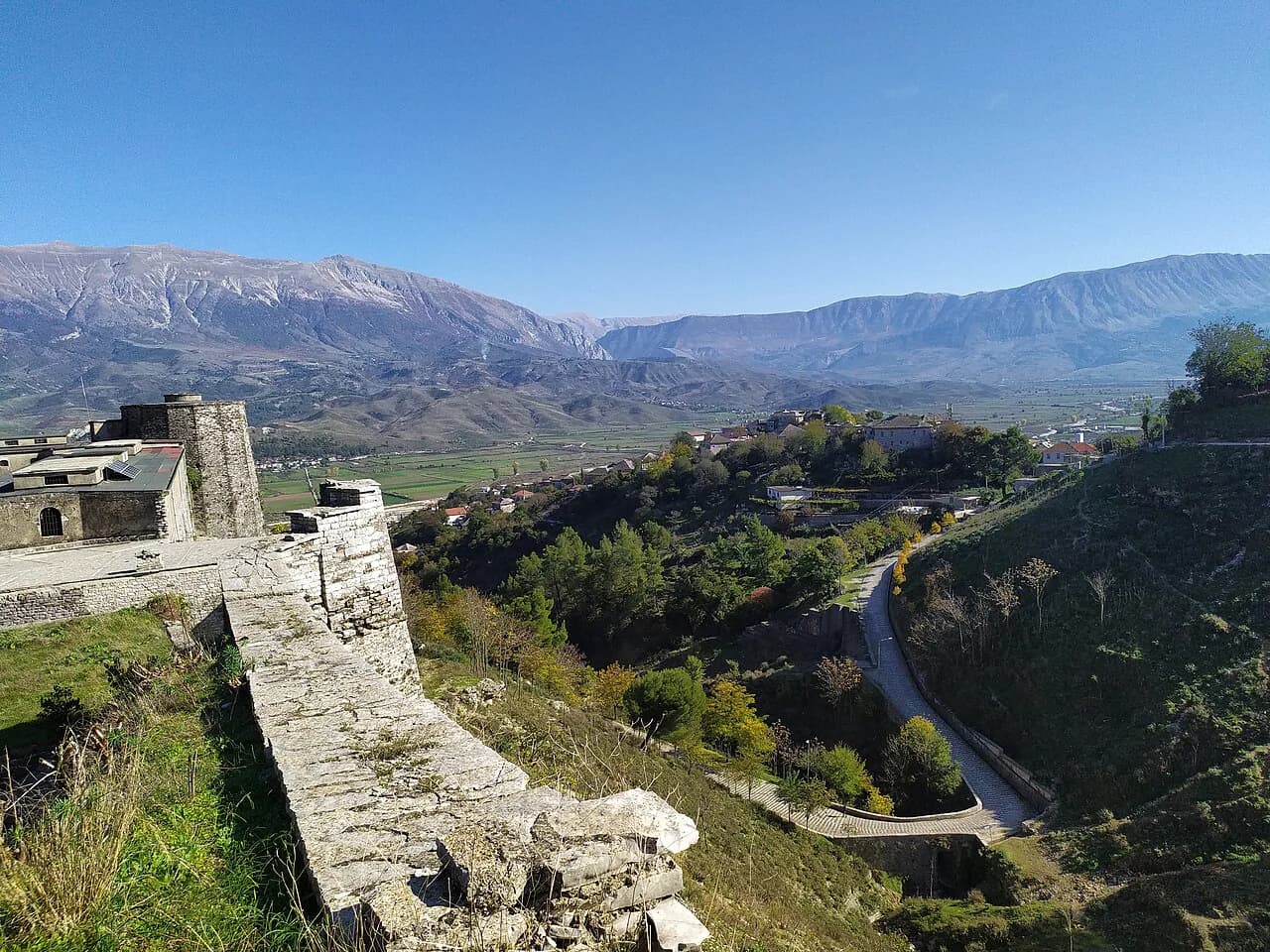
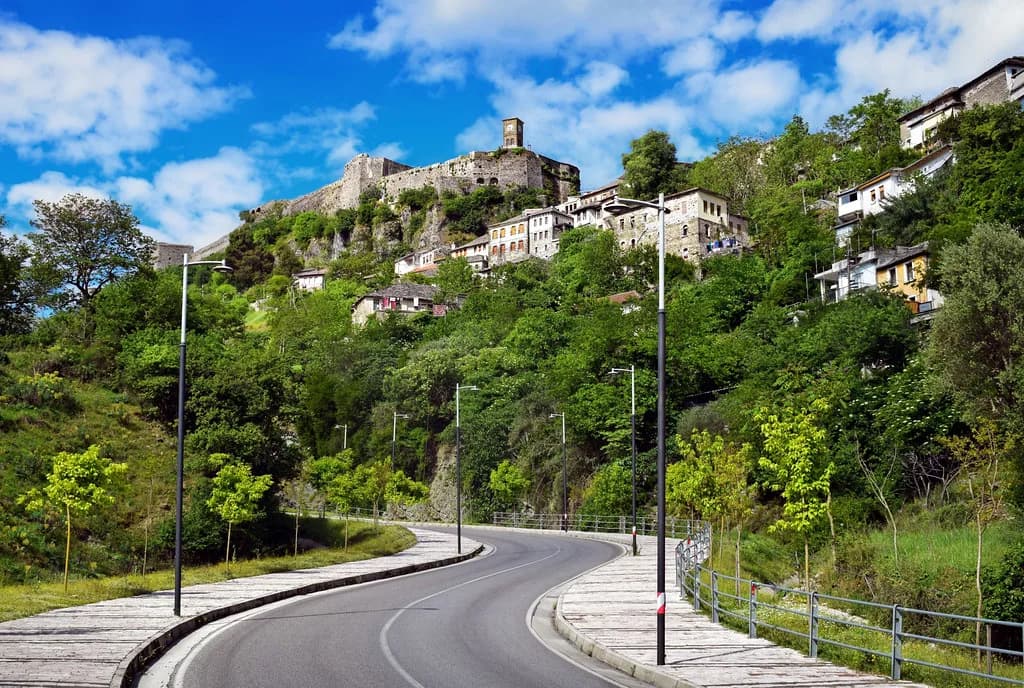
The castle sits on the ridge and frames the old town from almost every lane, so you do not need to enter it to appreciate it. The walk up to the gate is part of the day even if you save the interior for later, and the slope means the last stretch is the steepest.
Walk up early if you want the castle with cooler air and fewer people, or leave it for another day if the heat is heavy and you have already done the bazaar and backstreets.
A walking route that takes the climb in stages
Start at the bazaar, spend time on the main street and in the alleys behind it, then climb gradually through the backstreets towards the castle rather than heading straight up. Break the ascent with stops at viewpoints and cafés so the steepest cobbles come in short bursts; the lanes are rough and polished in places, so grippy shoes matter more than distance.
Finish at the castle gate or, if you have had enough climbing, drop back down to the bazaar for food. Viewpoints on the slope give you the town's mountain setting without the full ascent, so a short detour can take the place of the climb.
Religious buildings in the old town
Mosques and churches sit among the houses rather than on a separate circuit, so you will pass them on the way up. Dress modestly when you go in: shoulders and knees covered, and shoes off at a mosque. Outside prayer times is the easier moment to look inside.
The bazaar area also holds religious buildings worth a look from the street even if you do not go in. If you want the interiors and the detail, plan for an extra stop on the descent rather than squeezing them into the climb.
How much time, and what to leave out
With half a day, do the bazaar, a loop through the backstreets and one viewpoint, and skip the castle interior. With a full day, add the castle and one museum; with less than three hours, stay in the bazaar and lower lanes, where the walking is gentlest.
The old town rewards slow walking more than ticking off sights, so cut the number of stops rather than the time in each. A short Gjirokaster itinerary that fits the hillside is better than a long list you rush through.
Getting there and getting around
Most visitors arrive on foot from the lower town or by road, and the old town itself is walkable once you are in it. The slopes are the constraint: parking sits below much of the old town, and the last stretch to the castle is steep, so build in time for the climb whichever way you arrive.
The lanes are cobbled and uneven rather than paved, which slows anyone with a suitcase, a pushchair or mobility limits. If you are staying in the old town, ask about vehicle access to the door before you book, and travel light on the final stretch. The stone-roofed houses, winding cobblestones and mountain setting make the walking worth it.
Crowds and heat
Organised groups cluster in the bazaar, especially in the middle of the day and in high season, while the backstreets stay much quieter. If you want the lanes to yourself, walk them early or late and leave the bazaar for the middle of the day, when shade and cafés are welcome anyway.
Summer heat makes the climb harder than the distance suggests, so carry water and start the uphill sections before the day peaks. Rest in the bazaar or a café when the sun is strongest, then finish the climb in the cooler afternoon.
Is the castle climb worth it on the same day?
Yes if you start early and keep the bazaar for later; no if you arrive in the afternoon heat with limited time, in which case the backstreets and viewpoints give you the town without the climb. Either way, check the castle's current opening hours and ticket price before you set out.
For the wider picture beyond these lanes, from the castle to the museums and day trips, the things to do in Gjirokaster guide covers the rest of the town. Build the old town around one firm plan and let the slopes set the pace.
Explore more Gjirokaster guides
Frequently Asked Questions
Is the old town of Gjirokastër free to walk around?
The bazaar, backstreets and lanes are public streets that you walk through without an entry ticket; individual sights, such as the castle, are separate and may charge. Confirm the castle's current ticket price and hours before you go.
How steep is the walk through Gjirokastër old town?
It is a hillside town of cobbled lanes and steps, so expect short, steep climbs between the bazaar, the houses and the castle. Taking the ascent in stages and wearing grippy shoes makes it manageable.
Sources
Notes for your Albania trip
Optional updates to our Albania town guides.
You might also like
Continue reading
More guides you'll find useful