Gjirokastër UNESCO: What the World Heritage Listing Covers
Gjirokastër's UNESCO listing covers its Ottoman old town, bazaar, mosque and tower houses. Here is what is included and how to walk it on foot.
On this page
Gjirokastër's UNESCO protection covers the inhabited Ottoman centre of the town, not the whole settlement, and it was inscribed in 2005 alongside Berat as a joint listing for the historic centres of the two cities. The listed area is the part you walk: the bazaar, the mosques and churches, and the stone tower houses on the slope below the castle. This guide explains what the designation includes, which buildings you can enter and how to pace the climb.
Plan on half a day for the core of the old town and a full day if you add the castle interiors, the Cold War Tunnel and one of the tower houses. The streets are cobbled and constantly climbing, so the realistic limit is your legs rather than the number of sights.
What the UNESCO listing actually covers, and when it was inscribed
The World Heritage inscription dates from 2005 and takes in the historic centres of Berat and Gjirokastër together, both Ottoman-era towns that have stayed continuously inhabited. In Gjirokastër the listed fabric includes 17th-century houses with tower-like upper floors, a bazaar, an old mosque and 18th-century churches, while Berat contributes its own terraced houses on the hills.
The designation is about the town as a lived-in place, not a single monument: the Ottoman townscape was shaped by wealthy landowners working with the imperial administration, and the listing recognises how different religious communities shared the same streets. That is why the ordinary lanes between the bazaar and the houses matter as much as the castle above them.
For the fuller picture of the quarters, gates and individual buildings inside the listed area, work through the things to do in Gjirokaster before you arrive, because the town rewards a little preparation more than most.
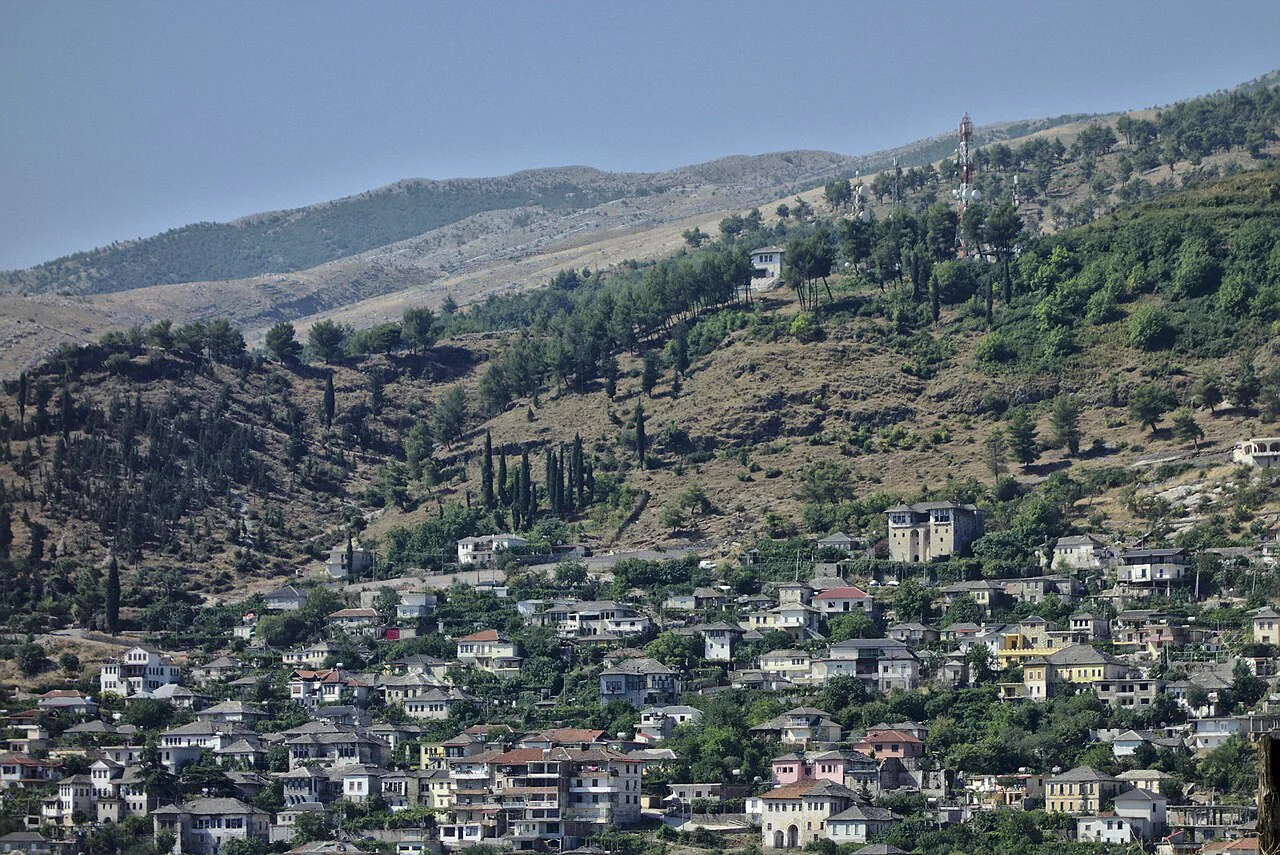
Why Gjirokastër is stone: tower houses, slate roofs and the steep cobbled layout
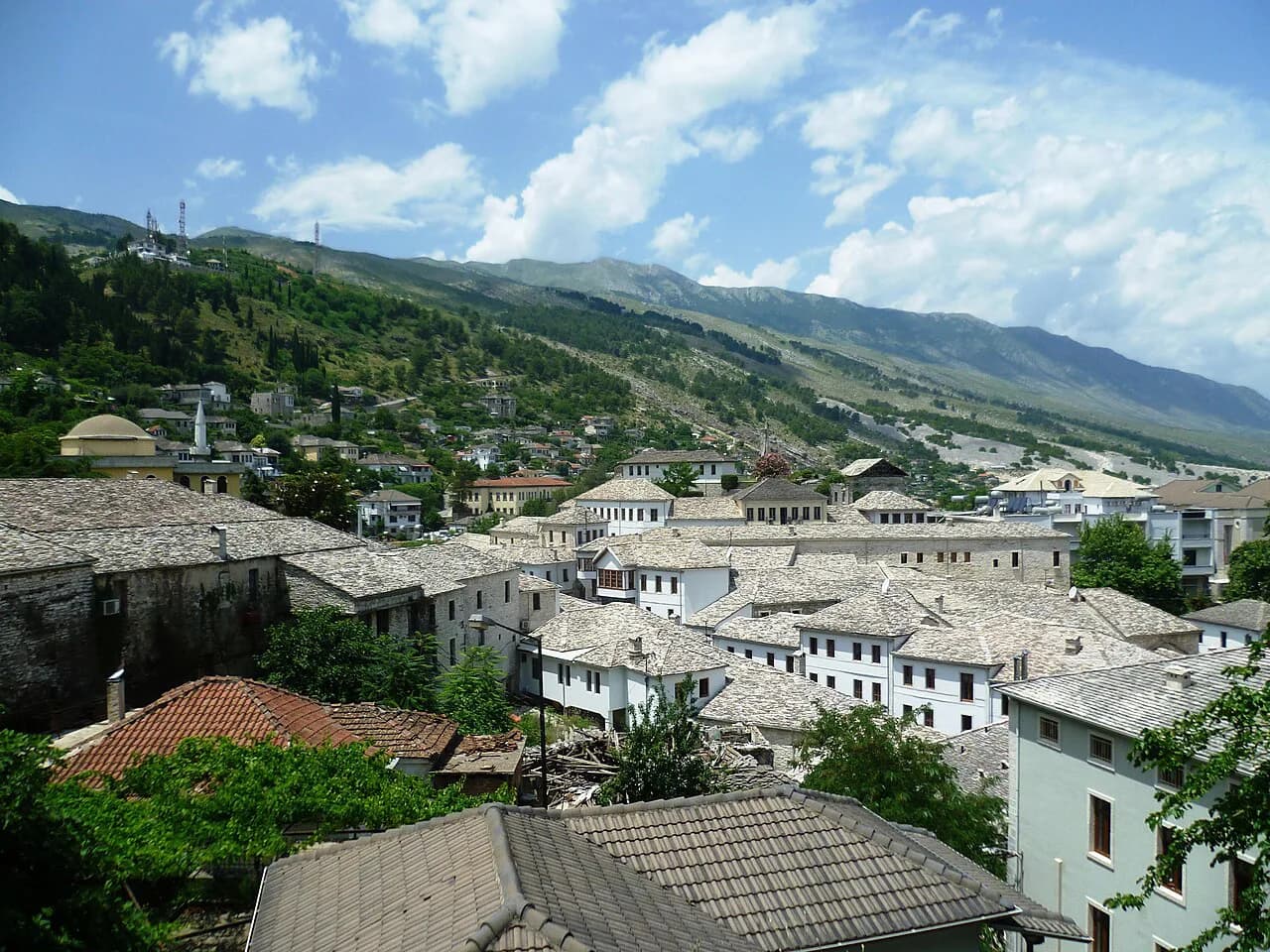
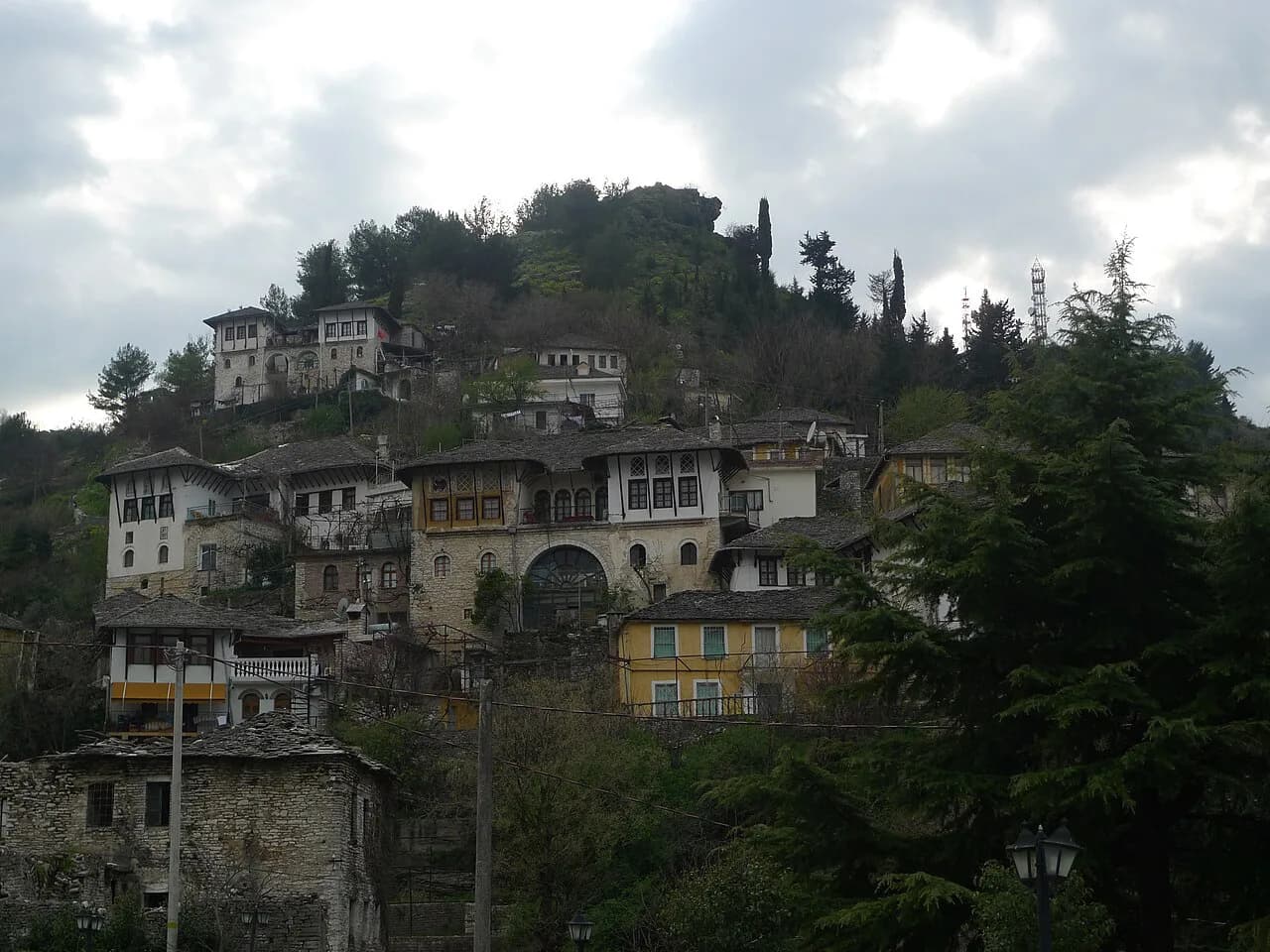
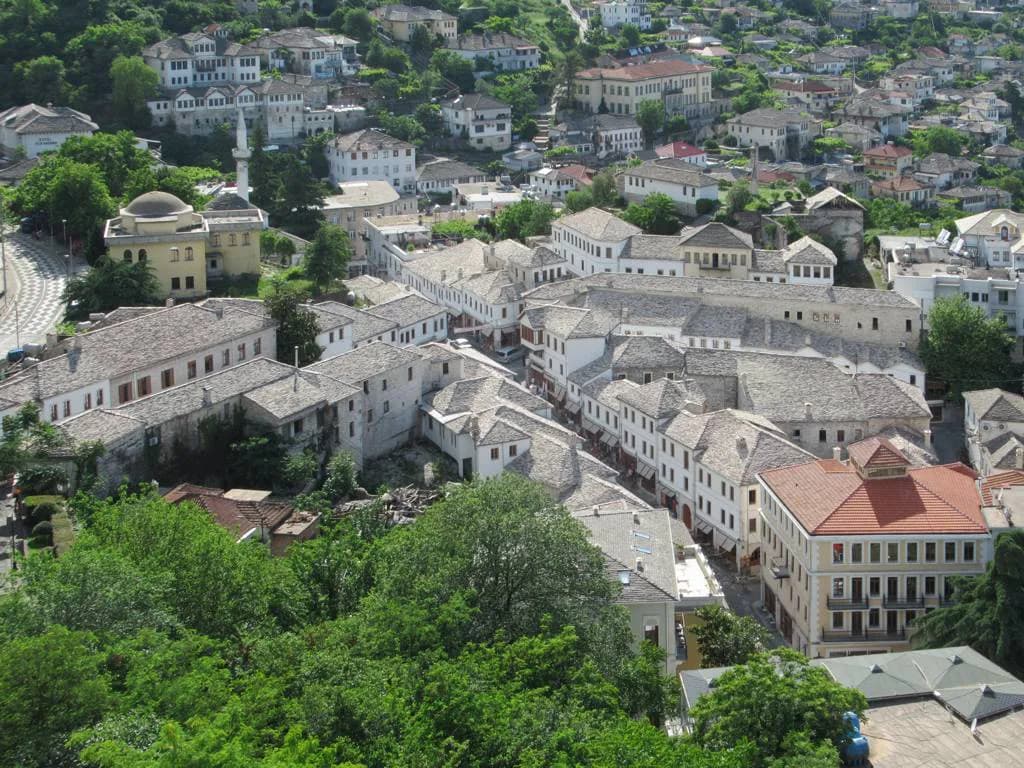
Gjirokastër is known as the stone city, and the material is the point: grey stone paving, stone slab roofs and stone-built tower houses stacked up the flank of the Mali i Gjerë range. The effect is fortified rather than pretty, with the houses reading almost as a single wall of masonry from across the valley.
The layout follows the slope. Only one road through the old town is wide enough for two vehicles to pass, and the lanes between the houses bend and climb rather than running straight, which is why the town has picked up the nickname the city of a thousand steps. Leave the car below and treat the centre on foot.
The Gjirokaster old town page lays out the quarters and the main lanes in walking order if you want a route rather than a wander.
The Old Bazaar (Pazari i Vjetër) and the Bazaar Mosque
The Old Bazaar, Pazari i Vjetër, is the open-air commercial heart of the listed town and the natural place to start a walk, since it sits below the castle and feeds into the lanes of the old quarter. The Bazaar Mosque stands within the bazaar district, one of the Ottoman-era religious buildings the listing covers.
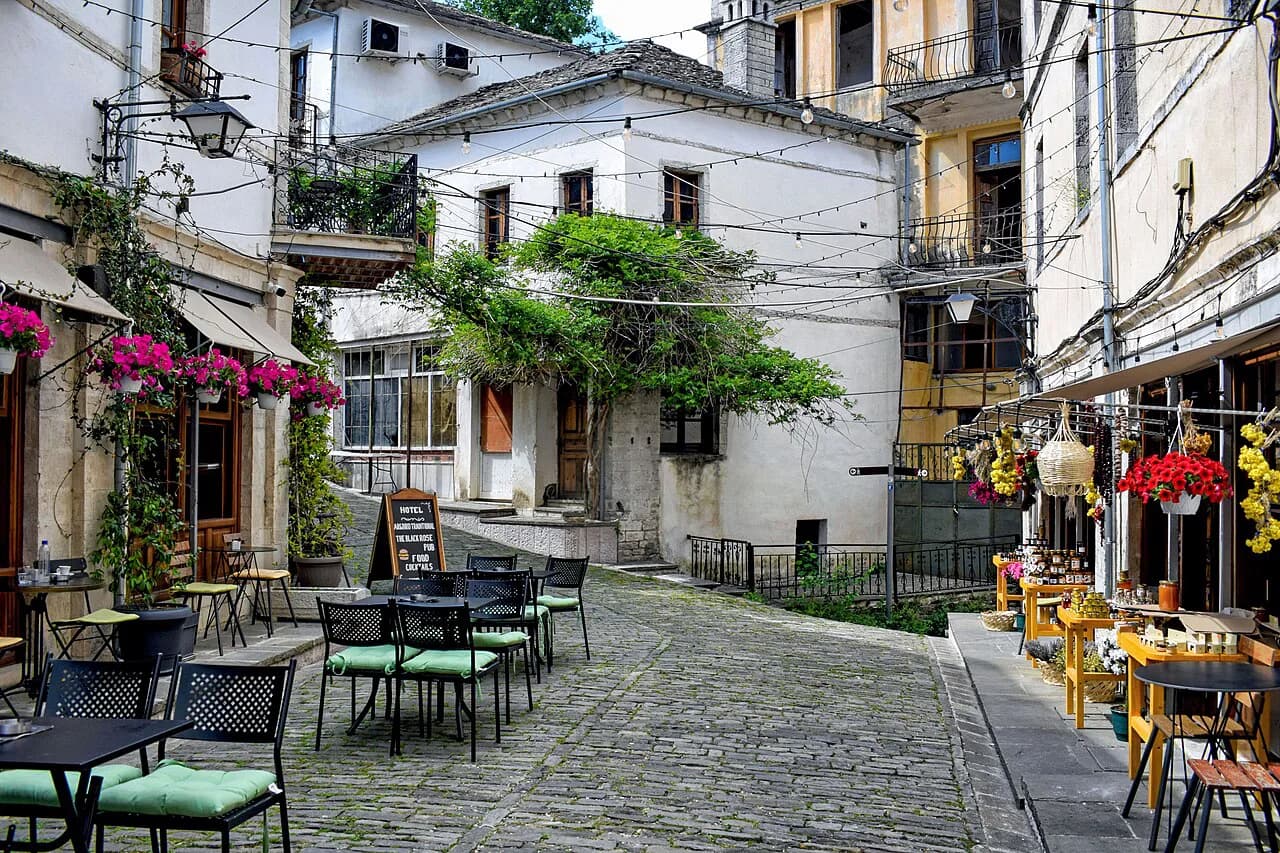
It is a working quarter rather than a museum piece, so the bazaar is where you will also find cafés and food shops between the stone frontages and the mosque. Dress modestly if you step into the mosque, with shoulders and knees covered, and keep voices low while anyone is praying.
The Gjirokaster bazaar guide picks out the streets of the bazaar district in more detail, useful if you want to shop and eat without backtracking up the hill.
Gjirokastër Castle (Kalaja e Gjirokastrës): walls, clock tower and the view back over the bazaar
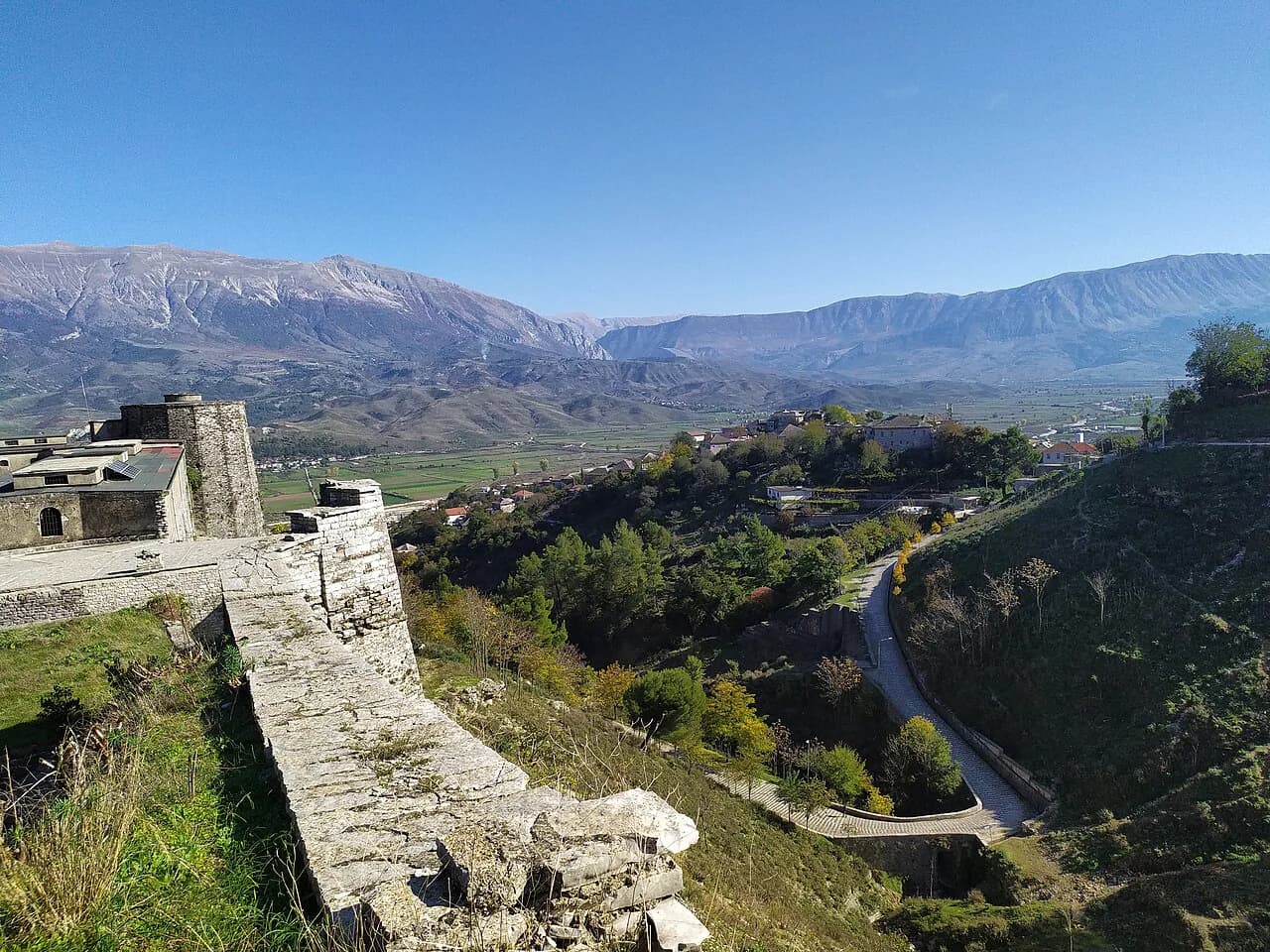
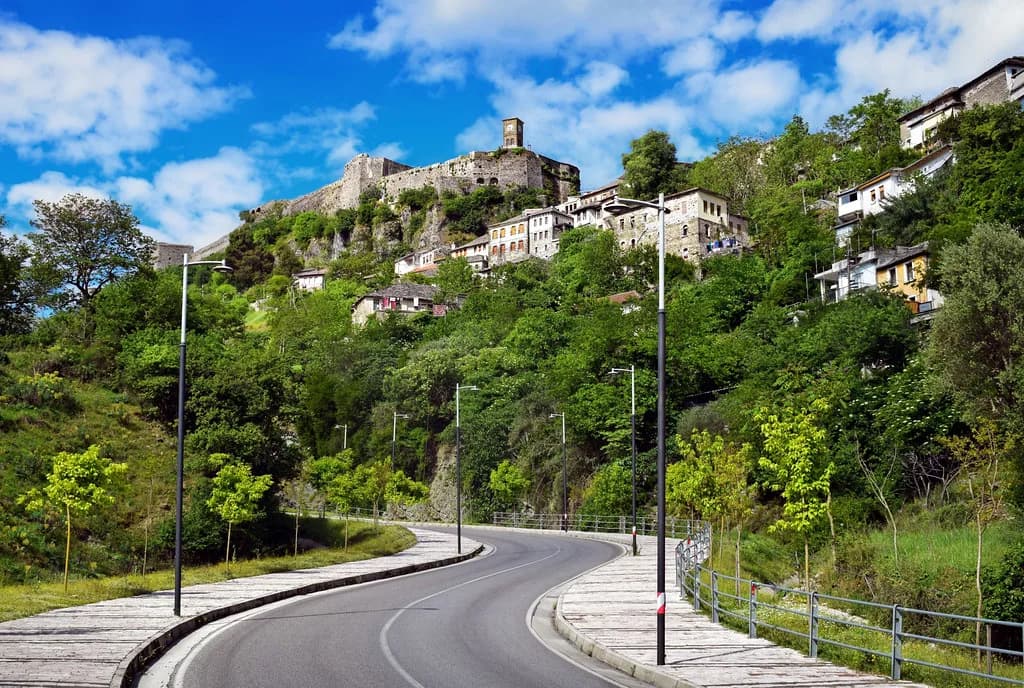
The castle sits on the highest hill above the town, and construction of its walls is dated by different accounts to anywhere between the 3rd and 6th centuries, so treat the earliest date as a range rather than a fixed fact. An 18th-century clock tower was added, along with a church, wells and stables inside the walls.
The reward for the climb is the open courtyard with its cannon and the view down over the old bazaar, plus the high stone arches inside the defences. The stone tunnels inside the castle stay noticeably cooler than the streets, which makes the castle a sensible place to be during the hottest part of a summer day.
The Gjirokaster map page shows where the castle gate, the bazaar and the main lanes sit in relation to each other.
The Cold War Tunnel and the castle's prison history, covered factually
The castle has a second, harder history. Under King Zog parts of the fortress were converted into cells for political prisoners, and it continued as a prison under the communist regime until the 1970s; that record is part of what you are walking through and deserves a quiet visit rather than a novelty hunt.
The Cold War Tunnel is a separate underground site in the town, built during the communist era, and appears in the same round-up of things to do as the castle and the bazaar. Opening times and entry are arranged on site, and the town's tourist information office can tell you the current schedule before you build a day around it.
Tower houses you can go inside: Zekate House and Skenduli House
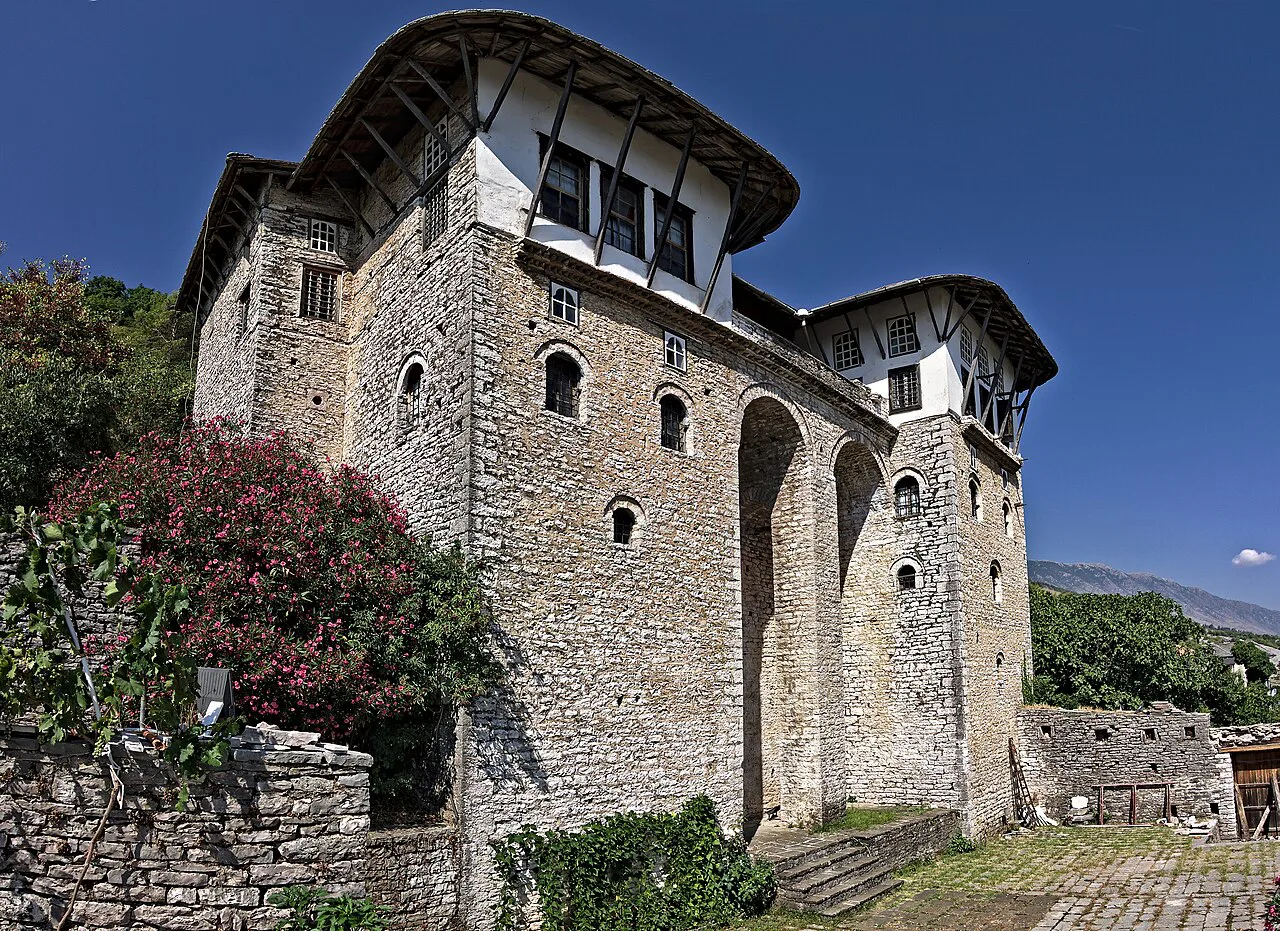
Two of the grand stone houses open their interiors to visitors: the Zekate House and the Skenduli House, both used to show how wealthy Gjirokastër families lived in the Ottoman period. They are the quickest way to understand the carved ceilings and tiered guest rooms you cannot see from the street.
The houses are family-scale rather than palace-scale, so allow perhaps half an hour inside each and read the notice on the door for the day's arrangements, since there is no fixed timetable. The steep approach lanes are the real cost, not the entry.
The Ethnographic Museum in Enver Hoxha's birth house
Gjirokastër is the birthplace of Enver Hoxha, the communist leader, and his childhood home now holds the Ethnographic Museum, displaying the interior of an 18th-century merchant household with carved wooden ceilings and tiered guest rooms. It is a museum of domestic life in the town, and it is worth an hour.
The town is also the birthplace of the writer Ismail Kadare, which sits alongside the merchant houses and the castle in what the town is known for today. Check current museum hours before you go, since opening times can vary with the season.
The Gjirokaster museum guide covers the town's other collections if you want more than one indoor stop.
Neighbourhoods to walk: the bazaar district and the Manalat viewpoints
Beyond the bazaar, the Manalat district on the upper side of town gives the best viewpoints back over the stone roofs, and it is reached by continuing up the lanes rather than by any road. Walk it in the late afternoon when the light hits the facades and the worst heat has gone.
The Ali Pasha Bridge is a short walk out from the town on foot, worth adding if you have the legs left after the climb to the castle. Keep it as a stroll to a monument rather than treating the surrounding slopes as a hiking objective.
For the best of the evening light from the upper lanes, the Gjirokaster sunset guide marks the viewpoints worth the extra climb.
How long the old town needs and how to pace the climb
Give the old town four to five hours on foot: an hour in the bazaar and the mosque, an hour and a half for the castle and its interiors, and the rest split between one tower house, the Ethnographic Museum and the walk through the lanes. Add the Cold War Tunnel only if you have a second day or a long afternoon.
Start early. The stone streets take the sun badly in July and August, when summer heat in the valleys can be punishing, so plan the climb for the morning and keep the midday hours for interiors or shade. This is a town that rewards a slower pace than the sight count suggests.
A structured Gjirokaster itinerary helps if you have only one day and want the order fixed in advance.
Getting up to the old town from the bus station and the main road
Arriving by furgon or bus drops you on the main road below the historic centre, and from there the old town is a sustained uphill walk of 20 to 30 minutes on steep cobbles. The climb is the constraint, not the distance: allow for it at both ends of the day, and plan a taxi if you are carrying a full pack.
Driving into the centre is a poor trade, since the road through the old town is only wide enough for two vehicles in one place. Park below and walk up; the lanes are pedestrian in practice even where a car can squeeze through.
Practical points: footwear for cobbles, summer heat and midday timing
Wear shoes with grip. The stone paving is polished by use and slippery after rain, and many lanes are stepped rather than ramped, which matters more here than in almost any other Albanian town on a short break.
Carry water for the climb and treat the castle tunnels as your midday refuge in summer. In the cooler months the stone holds the cold, so bring a layer for the interiors.
If you want the walking worked out for you, the Gjirokaster walking tour options cover the old town on foot with a guide.
Berat versus Gjirokastër in one line
Both were inscribed in 2005 and both are living Ottoman towns, but Berat is white-rendered houses with large windows above a river valley, while Gjirokastër is grey stone houses with slate roofs on a mountainside beneath a large fortress. If you can only manage one, choose by character rather than importance.
The two towns are a few hours apart in central and southern Albania, so most travellers take them on separate days rather than back to back. That apartness is also why the pair works well as part of a southern loop through Apollonia and on towards the Riviera.
Is Gjirokastër's old town worth a full day?
Yes, if you commit a full day and start it early enough to climb before the heat. The bazaar, the mosque and the castle carry the weight of the visit, with one tower house or the Ethnographic Museum filling the afternoon, and the Cold War Tunnel taken as a serious stop rather than an add-on.
If you have two days, spend the second on the upper lanes and the covered interiors rather than on a rushed exit. If you have one, skip the tunnel and give the castle the better part of your energy.
Explore more Gjirokaster guides
Frequently Asked Questions
Is the whole of Gjirokastër a UNESCO World Heritage Site?
No. The inscription covers the historic centre of the Ottoman old town, shared with Berat, rather than every part of the modern town. Plan your visit around the bazaar, the tower houses, the mosque and churches, and the castle that overlooks them.
Do I need a ticket for Gjirokastër Castle?
Entry to the castle and its museums is ticketed, but the price and daily opening hours are not fixed in published lists, so check at the gate or with the town's tourist information on the day. Budget time for the climb as well as the visit.
Can I walk from the bus stop to the old town?
Yes, but it is a steep 20 to 30 minutes uphill on cobbles from the main road where buses stop. Carry light bags if you plan to walk, or take a taxi up and walk back down.
Which tower houses can I go inside?
The Zekate House and the Skenduli House are the two grand stone houses open to visitors, both showing Ottoman-era family interiors. Check the door for the day's arrangements before you climb up.
Sources
Notes for your Albania trip
Optional updates to our Albania town guides.
You might also like
Continue reading
More guides you'll find useful