Albanian Souvenirs: What to Buy and What to Skip
Albanian souvenirs worth considering include olive oil, raki, wine from indigenous grapes and boxed sweets, plus craft from stalls where you can ask who made it.
On this page
The most useful Albanian souvenirs are food and drink: fresh byrek from a bakery, a bottle of raki, wine made from indigenous grapes, and olive oil. Craft and household goods exist too, but stalls vary widely in what they stock, so ask who made a piece before you buy it. This guide separates what travels well from what does not, and explains what each item actually is. For the wider trip, see things to do in Albania.
What counts as an Albanian souvenir: food, drink, craft and everyday objects
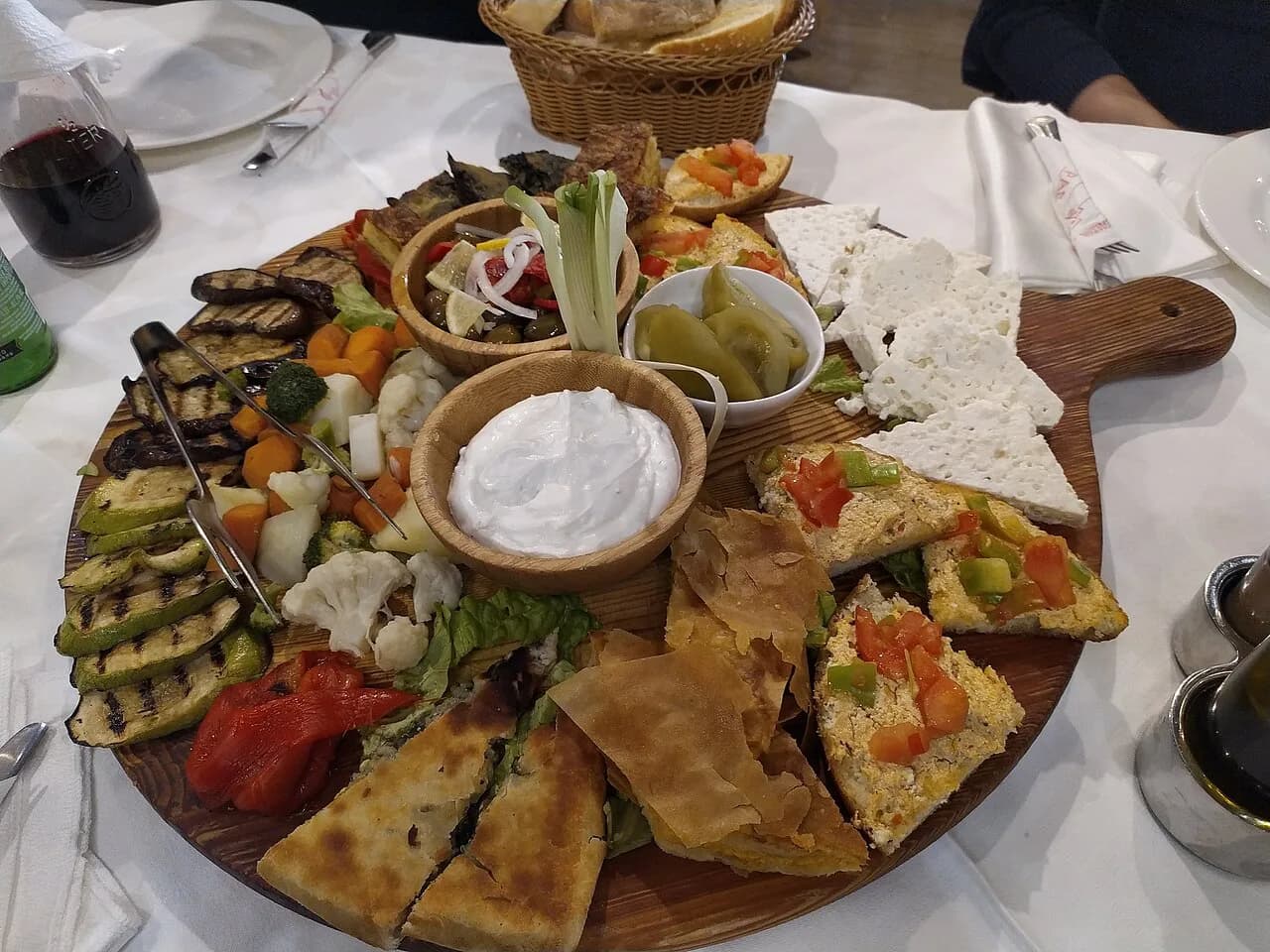
Albanian food blends Mediterranean freshness with Turkish influences, so the edible souvenirs you will see most are olive oil, soft cheeses, grilled and preserved vegetables, and pastries. Albanians eat seasonally and cook resourcefully with what is available, which means the best food souvenirs follow the season rather than a fixed shopping list. For a visitor, that argues for buying what is in the market that week rather than hunting for a packaged version of a dish. The same logic applies to drink: wine and raki are everyday products, not luxury items.
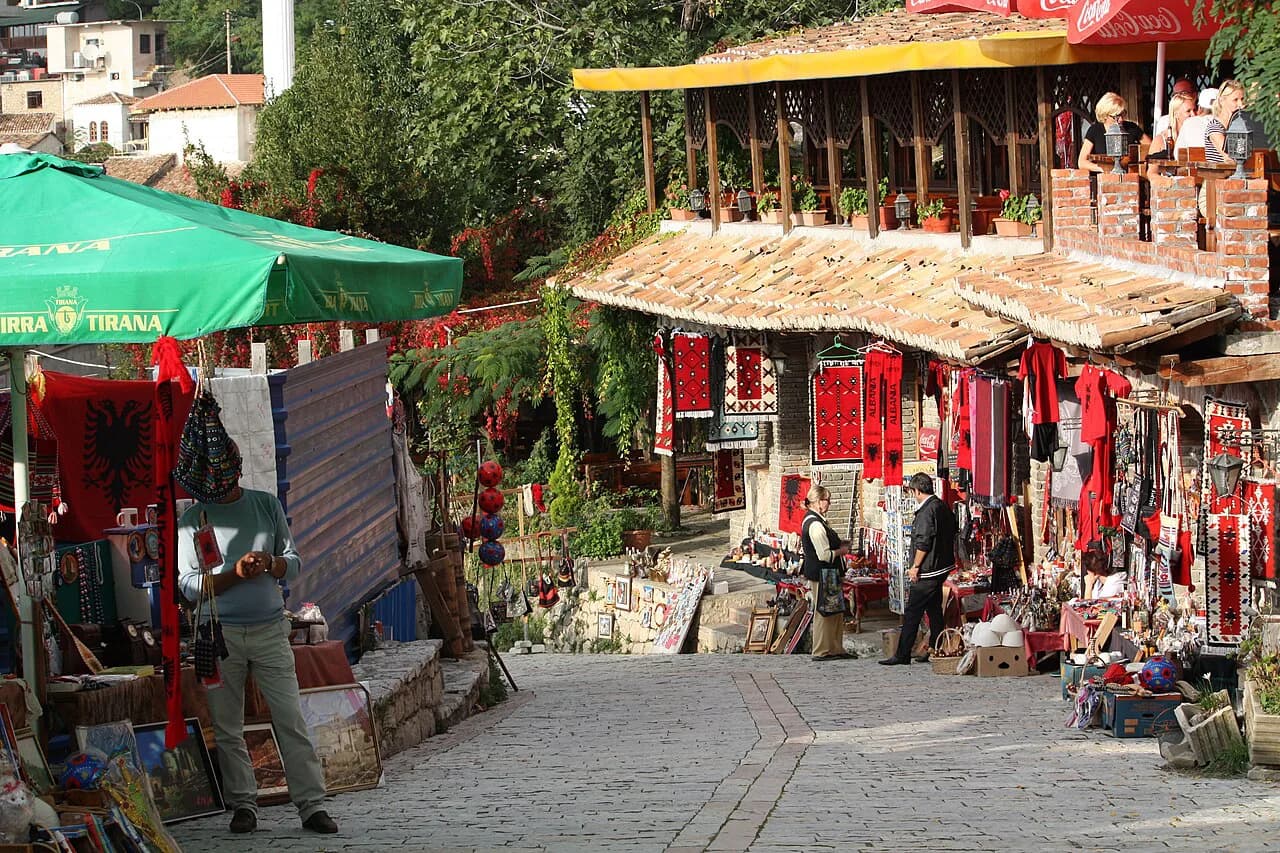
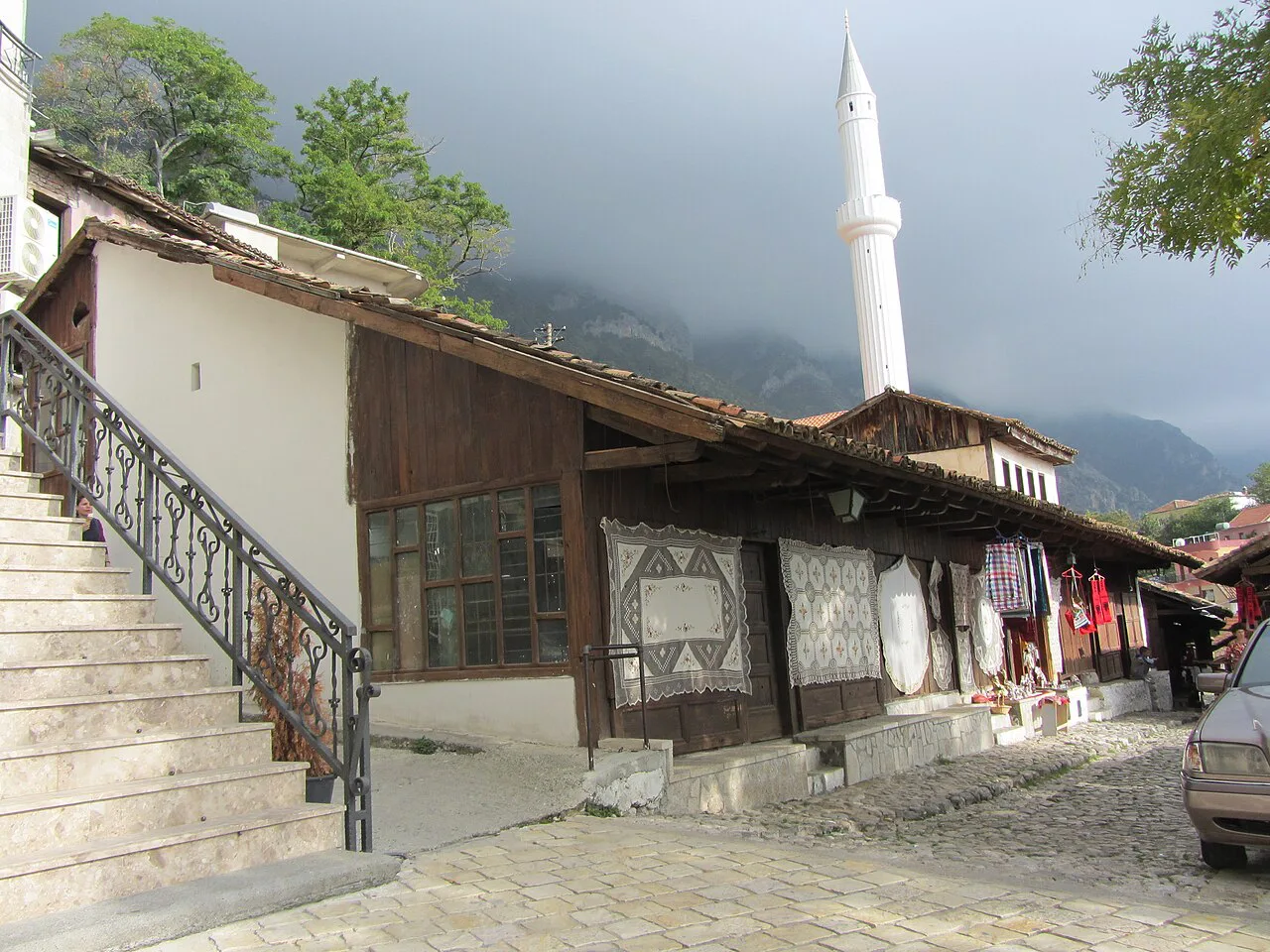
Craft and household objects sit in a different category. Stalls and markets sell textiles, rugs, carved stone and small decorative items, but the stock varies and quality is not uniform. Treat a stall as a place to ask questions rather than a museum label: ask who made the piece and where. If the answer is vague, walk on.
Food souvenirs you can carry home: byrek, petulla, bakllava and sheqerpare
Byrek is a layered filo pastry filled with cheese, vegetables or meat, and it is eaten as a breakfast or late-evening snack rather than a restaurant dish. That matters for shopping: you buy it in bakeries and small food shops, often as a slice or a small rolled piece, not as a boxed gift. Petulla are fried dough, served with honey or jam to dip, and they are best eaten fresh on the day. Neither is a sensible item to pack for a flight home.
What is the most bought souvenir in Albania? Food and drink are the most practical purchases: byrek from a bakery, olive oil, wine made from grapes such as Kallmeti or Shesh, and raki. Craft stalls also sell rugs and carved stone, but stock varies and some items are generic merchandise rather than local work.
What should I bring home from Albania? Bring home what travels well: sealed olive oil, a bottle of wine from an indigenous grape, raki, and boxed sweets such as bakllava or sheqerpare. Eat fresh byrek and petulla while you are there rather than packing them.
How do I choose a good bottle of Albanian wine? Look for the indigenous grape names on the label: Kallmeti, Vranac and Vlosh for reds, Shesh and Debin for whites. A winery visit lets you taste before buying, which is more reliable than choosing from a shelf.
Bakllava and sheqerpare are the sweets more likely to survive a journey. Bakllava is made with layers of homemade filo, and sheqerpare are small syrup-soaked cookies. Both can travel in a tin or box, but they are heavy and sticky, so wrap them separately from clothes. Buy them from a bakery or sweet shop where they are made on site rather than from a generic gift display.
Fërgesë is a tomato, pepper, garlic and cottage cheese dish that Albanians often eat once it has cooled and thickened, usually with bread. It is a home and countryside dish rather than a typical restaurant menu item, so it is not something to hunt for as a takeaway souvenir in a city. Eat it there, and buy the olive oil or cheese that goes with it instead. Tavë Kosi, baked lamb or chicken in yoghurt, is another sit-down dish rather than a travel item.
Raki and homemade liqueurs: what they are and how they are usually served
Raki is a spirit, and homemade liqueurs are common alongside it. Both appear at the end of a meal or as a welcome drink rather than as a cocktail ingredient, so a bottle makes a practical gift for someone who enjoys a strong digestif. The flavour varies by household and by fruit, which means there is no single standard to look for. Buy from a producer or a shop that can tell you what it is made from.
If you are carrying a bottle home, treat it as luggage rather than a handbag item and check your airline's rules before you fly. This guide does not cover customs allowances or liquid limits, so confirm those with your carrier and destination authority. A bottle wrapped in clothing in a checked bag is the usual approach.
Albanian wine: indigenous grapes Kallmeti, Vranac, Vlosh, Shesh and Debin
Albania grows several indigenous grapes, and knowing the names helps you read a label. Kallmeti, Vranac and Vlosh are red, while Shesh and Debin are white. Wine is made across the country, not just on the coast, with vineyards inland and in the mountains. A bottle with one of these names on it is a more interesting souvenir than a generic blend.
Kantina Mani is a family-run winery in Shkodër that produces red wines, predominantly from Kellmet grapes with some Merlot. A winery visit gives you the chance to taste before buying, which is the practical way to choose a bottle to carry home. Wine is heavy and fragile, so one good bottle beats a mixed case you have to lug through airports.
Olive oil and Riviera olives as a practical edible gift
Olive oil is the edible souvenir that earns its luggage space: it is useful, it keeps, and it carries the taste of the place. Look for oil and olives sold by producers or at markets rather than in decorated gift tins. Peshk në Zgarë, grilled fish, is served with a generous pouring of olive oil, which tells you how central the oil is to Albanian cooking.
For seafood, the Fisherman's Collective restaurant in Radhime, near Vlorë, is a coastal place to eat the catch rather than a shop for taking food home. Use a meal there to decide what you like, then buy oil or preserved olives from a market. Olive oil is a liquid, so pack it in a checked bag and wrap it well.
Textiles, rugs and carved stone: what the souvenir stalls actually sell
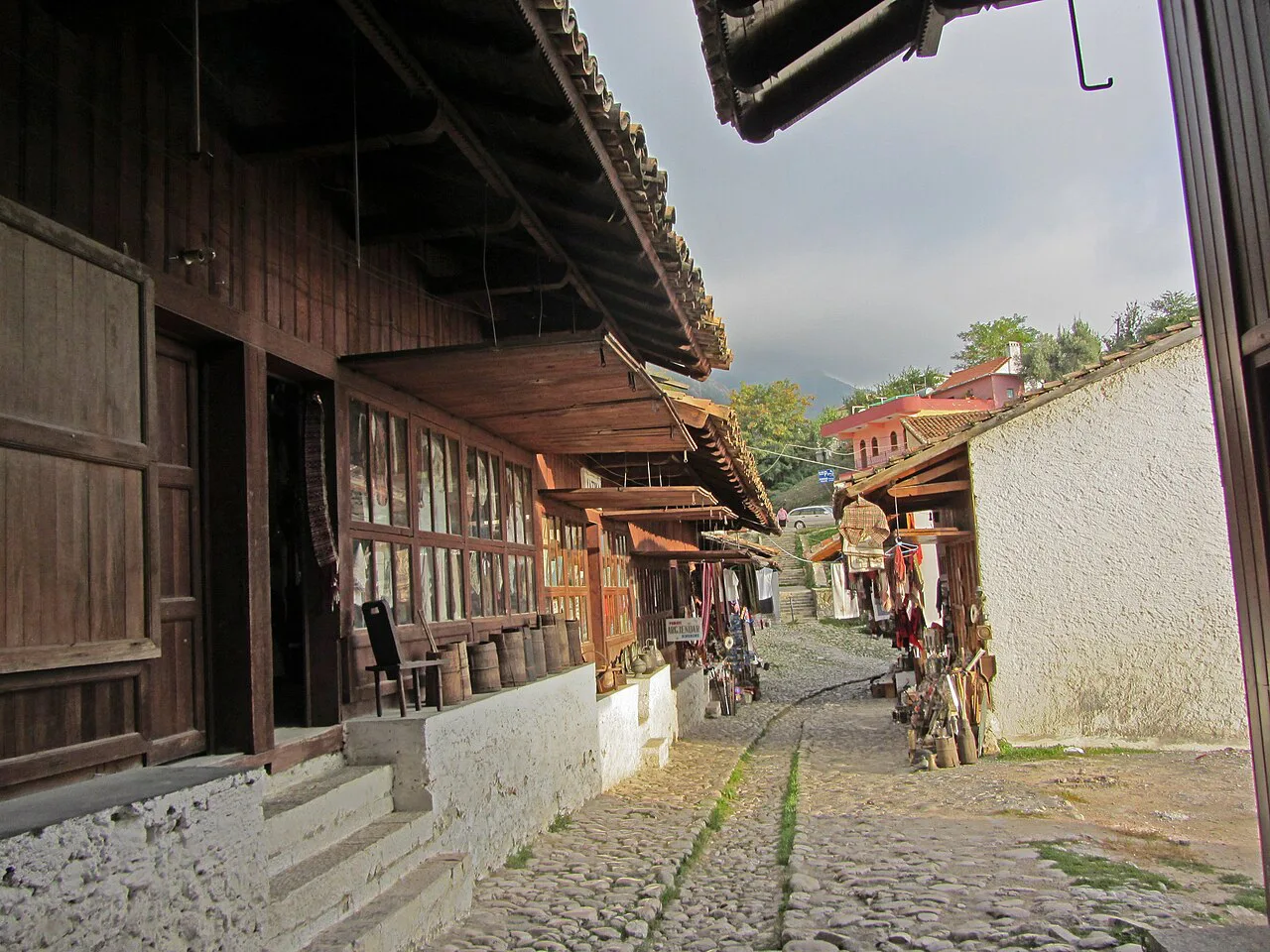
Souvenir stalls sell textiles, rugs, carved stone and small decorative objects, and stock images of Albanian souvenirs show colourful fridge magnets, carved stone pieces and rugs alongside antique items. Because a table can hold pieces of very different quality, look at the finish and the weight, and ask where the piece was made. A rug or textile that is genuinely local will usually come with a story about the workshop or the family that made it.
How Albanian food differs by region, and why that guides what you buy
Albanian cooking changes with the landscape: the coast leans on fish, olive oil and vegetables, while inland areas lean on lamb, dairy and slow-cooked dishes. Tavë Kosi is also known as Elbasan Tava after the town it came from, and Fërgesë is associated with home and countryside cooking. That regional split is your best guide to buying: on the Riviera, buy oil and olives; inland, look for cheese and preserved foods.
Mrizi i Zanave, an agrotourism restaurant and farmhouse in the village of Fishta near Lezhë, grows or sources its ingredients locally and lets the seasons set the menu. A meal there shows you what a region actually produces, which makes the market shopping afterwards much easier. It is a place to eat and learn, not a shop.
Buying food souvenirs: what travels well and what does not
The rule of thumb is simple: dry, sealed and sturdy travels; fresh, wet and soft does not. Byrek, petulla and Fërgesë are eat-there foods, while bakllava, sheqerpare, sealed olive oil, wine and raki survive a flight if packed carefully. Cheese is somewhere in between, so buy it only if you can keep it cool and eat it soon after arrival. Leave the fresh pastries for breakfast on your last morning.
How to pay and where souvenirs are sold, in markets, bakeries and wineries
Souvenirs come from three kinds of place: markets and stalls for craft and produce, bakeries and sweet shops for pastry, and wineries and producers for drink. Each has its own rhythm, so shop for food in the morning and for craft when the stalls are busy. Prices are set locally, so compare a couple of stalls before you commit.
For orientation between the coast and the interior, use the Albania map before you plan a shopping stop, and note that the route from the Adriatic Sea inland passes through very different food regions. A stop in Shkodër for wine and a stop on the coast for oil can sit on the same itinerary if you plan the driving.
Souvenirs that are really just generic merchandise
Customisable templates and printed gifts sold online under an Albania theme are merchandise, not Albanian craft, and they tell you nothing about the place. The same goes for fridge magnets and generic trinkets on a stall: they are fine as a small token but they are not the reason to make room in your bag. Spend the space on something edible, drinkable or genuinely made locally instead.
What to put in your bag on the last morning
On your last morning, buy pastry fresh to eat, then spend your remaining space on sealed olive oil, a bottle of wine from a named grape, and raki if you have room. Skip the fridge magnets and printed merchandise, and ask about the maker before you buy any textile or carved piece. Check your airline's liquid rules before you pack, since this guide does not cover them.
Explore more Albania guides
Frequently Asked Questions
What is the most bought souvenir in Albania?
Food and drink are the most practical purchases: byrek from a bakery, olive oil, wine made from grapes such as Kallmeti or Shesh, and raki. Craft stalls also sell rugs and carved stone, but stock varies and some items are generic merchandise rather than local work.
What should I bring home from Albania?
Bring home what travels well: sealed olive oil, a bottle of wine from an indigenous grape, raki, and boxed sweets such as bakllava or sheqerpare. Eat fresh byrek and petulla while you are there rather than packing them. If you buy craft, ask who made it before you pay.
How do I choose a good bottle of Albanian wine?
Look for the indigenous grape names on the label: Kallmeti, Vranac and Vlosh for reds, Shesh and Debin for whites. A winery visit lets you taste before buying, which is more reliable than choosing from a shelf. Kantina Mani in Shkodër produces red wines from Kellmet and Merlot.
Can I take olive oil or raki home in my hand luggage?
Check your airline's rules and your destination's customs allowances before you fly. This guide does not cover liquid limits or duty-free allowances. In practice, pack bottles and oil in a checked bag, wrapped in clothing to protect them.
Sources
Notes for your Albania trip
Optional updates to our Albania town guides.
You might also like

Continue reading
More guides you'll find useful