Roman Ruins in Albania: Butrint, Apollonia, Durrës and Berat
Roman ruins in Albania cluster at Butrint, Apollonia and Durrës, with medieval Berat nearby. See what survives at each site and how they differ.
On this page
Roman ruins in Albania come down to three main sites: Butrint in the far south, Apollonia inland on the Vjosë plain near Fier and the amphitheatre in the middle of Durrës. Butrint is the fullest day out, Apollonia the quietest, and Durrës the one you can walk to from a city street. This guide sets out what survives at each, how they differ on the ground and how to string them into a route.
The sites are spread widely, so most travellers pick two rather than chasing all three. Placing them on an Albania map before booking anything saves a lot of backtracking, because Butrint sits near Sarandë while Apollonia and Durrës lie much further north.
What survives from the Roman period in Albania
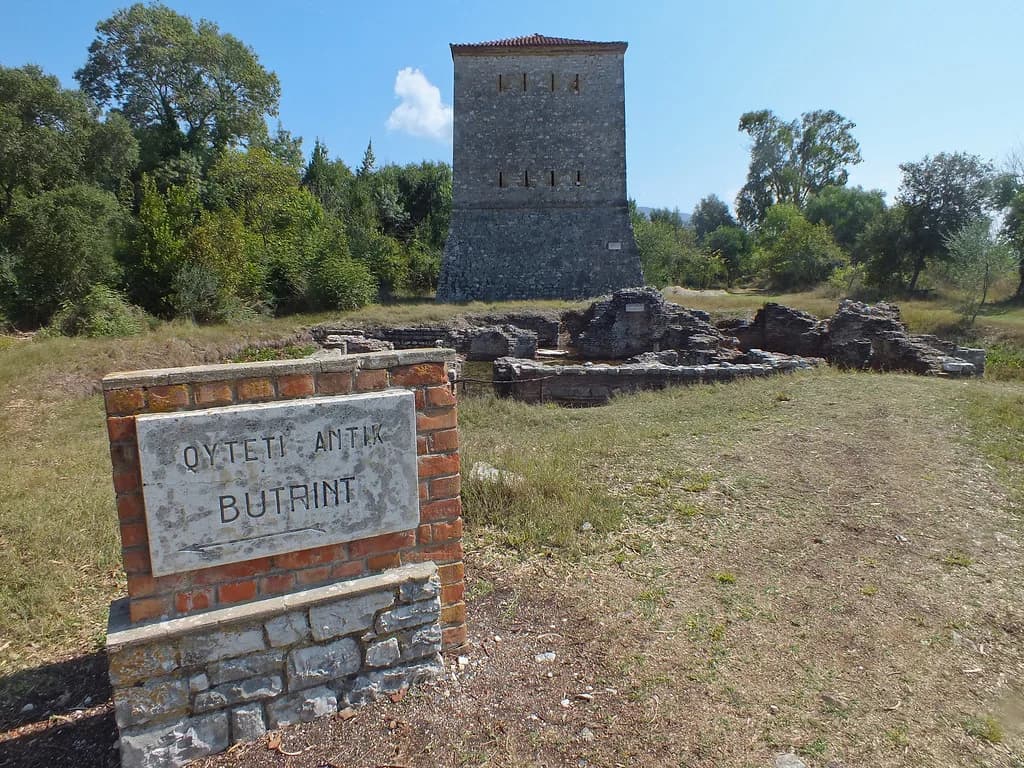
Albania's Roman remains sit inside much longer histories. Butrint was occupied by the ancient Greeks, the Romans, the Byzantines and the Venetians, so its ruins date from the 7th century BC onwards and include a Greek theatre alongside Roman villas, public baths, fortifications and a Christian basilica. Expect to walk through layers rather than a single Roman streetscape.
Apollonia began as a Greek colony founded from Corinth and Corfu around 600 BC, and the Romans ruled it from the 3rd century BC. An earthquake in 234 AD altered the riverbed and silted up its harbour, which contributed to the city's decline. That sequence explains why you see Greek and Roman fabric in the same field.
Durrës keeps a Roman building in the city centre rather than a rural archaeological park. The amphitheatre was built in the 2nd century AD under Trajan and later damaged by earthquakes in the 6th and 10th centuries, with chapels built on the site in the medieval period. Visitors describe Butrint's half-submerged temples, agora, gymnasium and Byzantine basilicas as the region's most atmospheric classical ruins, which is a fair steer on what to prioritise if time is short.
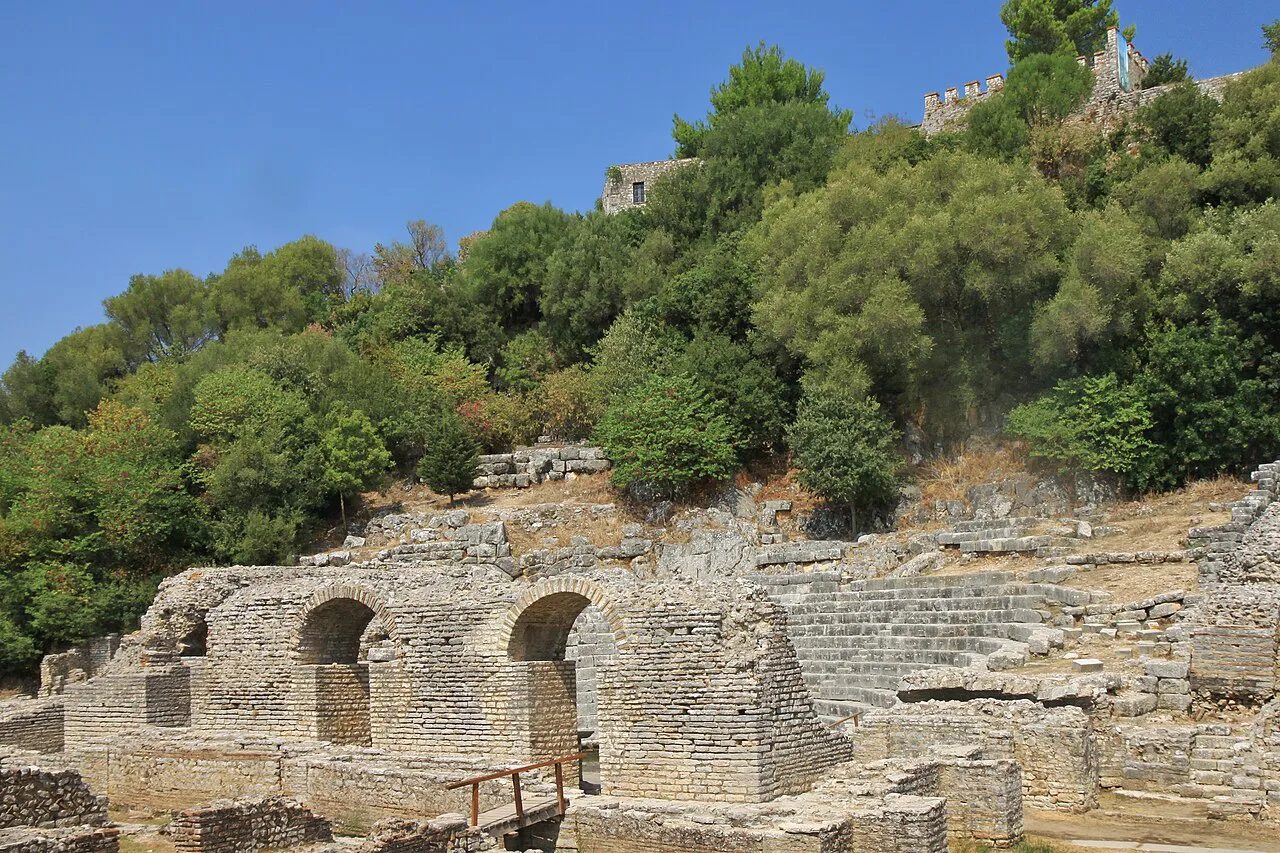
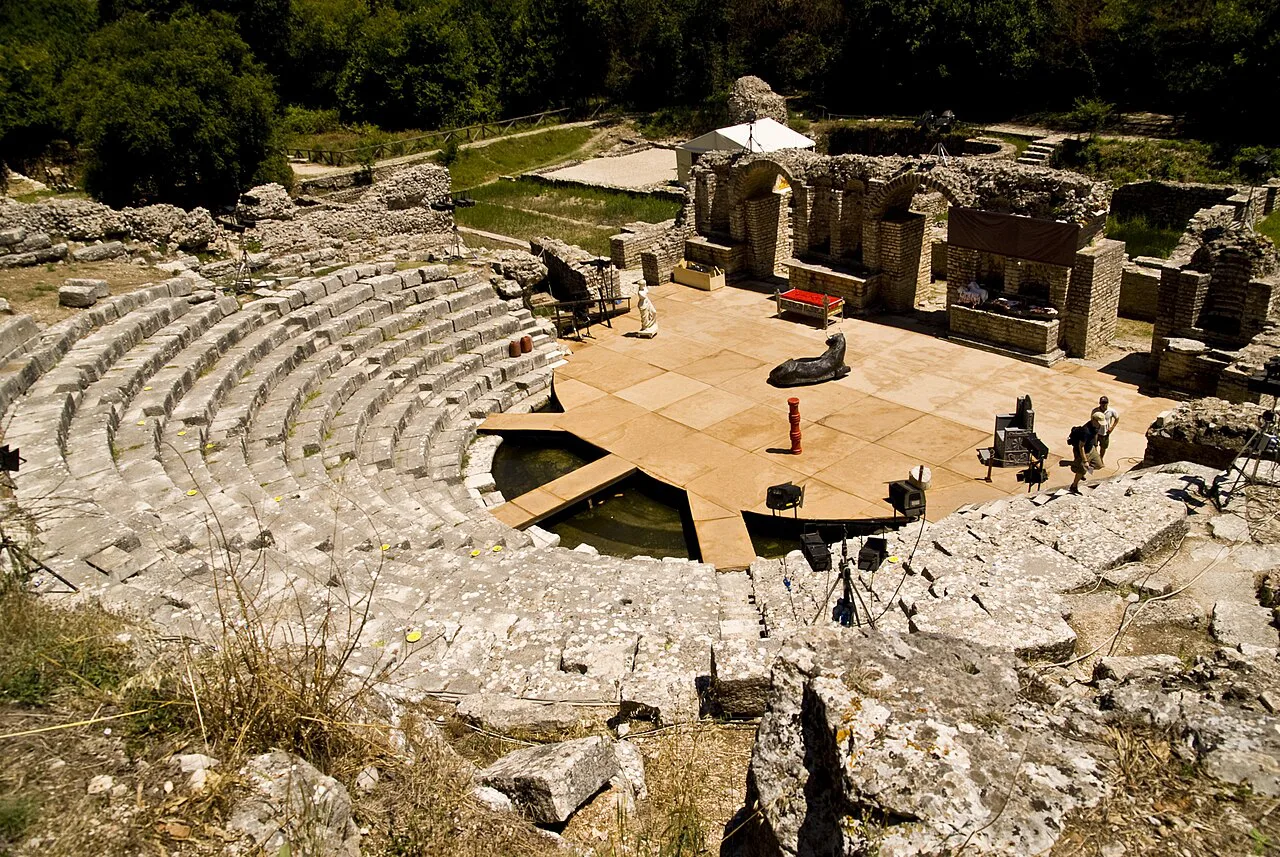
Butrint: theatre, villas, baths and a basilica in a national park
Butrint is an archaeological national park and a UNESCO World Heritage site, which shapes the visit: you are moving through a landscape of ruins beside water rather than a walled museum plot. The Greek theatre, fortifications, Roman villas, public baths and Christian basilica are the structures to look for. Because the site spans so many phases, allow more time here than at the other two.
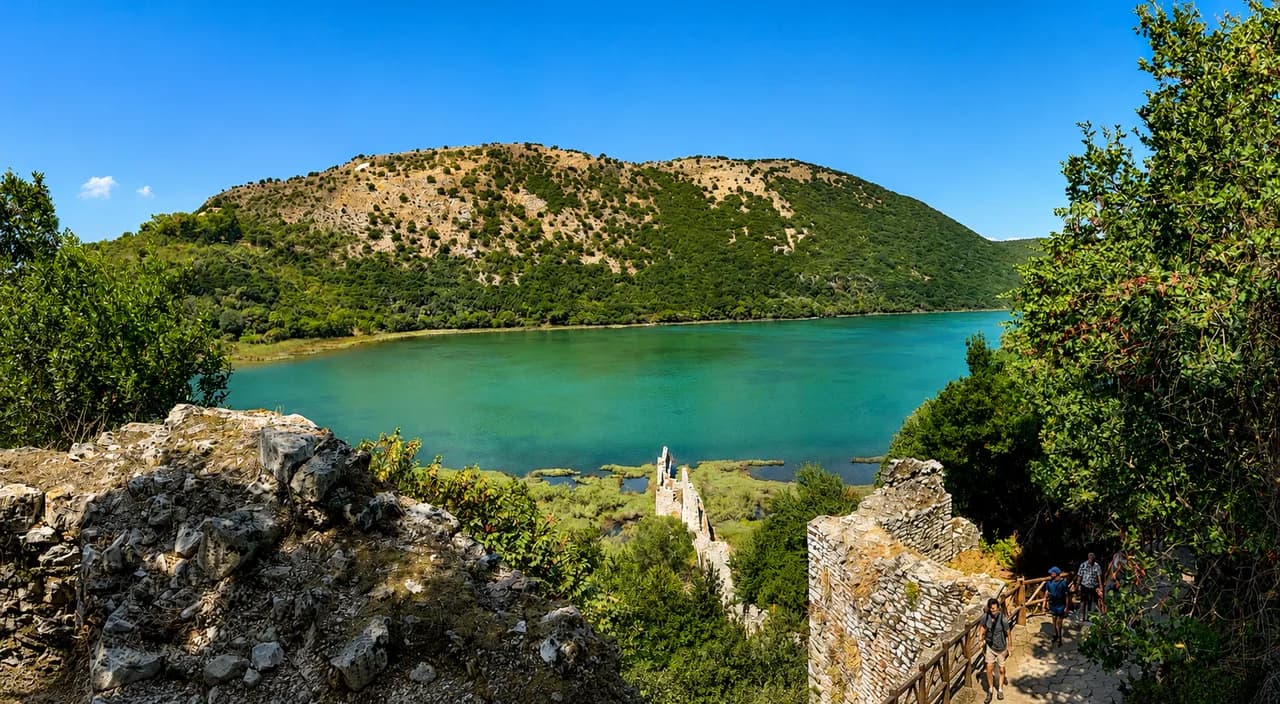
Butrint was abandoned during the Ottoman period when the surrounding area turned to marshland, which is part of why the ruins read as a place swallowed by its setting. The classical authors Virgil and Dionysius of Halicarnassus record that Aeneas visited ancient Butrint after the fall of Troy. Treat that as literary tradition attached to the site, not as archaeology you can point at.
Apollonia: a 137-hectare site with a museum
Apollonia covers 137 hectares and takes in the ruins of a triumphal arch, a library and several temples, plus the remains of a city council building with a surviving façade. Walk it expecting open ground between monuments rather than a dense street plan.
The on-site museum collects artefacts from the excavations, and both the museum and the site interpretations carry French and English translations. That makes Apollonia genuinely self-guided: you can follow the labels without booking a tour or arriving with a guidebook. If you want one site where reading the panels does most of the work, choose this one.
The setting on the bank of the Aous, now the Vjosë, is central to the story rather than decorative. That riverside position made Apollonia a trade and economic hub, and the later silting of its harbour explains the emptiness around the ruins today. Bring water and sun protection, since the scale means more walking between shade than at Durrës.
The Amphitheatre of Durrës: a Roman building in the city centre
The Amphitheatre of Durrës is the easiest of the three to reach on foot, sitting in the centre of Durrës close to other archaeological sites and the Archaeological Museum. It hosted gladiator combat, and the structure could have held between 10,000 and 20,000 spectators. Combining it with the museum gives you a compact Roman half-day without leaving town.
Guided walking tours of Durrës cover the Roman ruins, the old town streets and the seafront promenade in one loop. That suits anyone who wants the amphitheatre explained in context, though the building itself needs no tour to see. Decide based on whether you want the old town and promenade woven in, not on access to the ruins alone.
Berat: a 13th-century castle rather than a Roman site
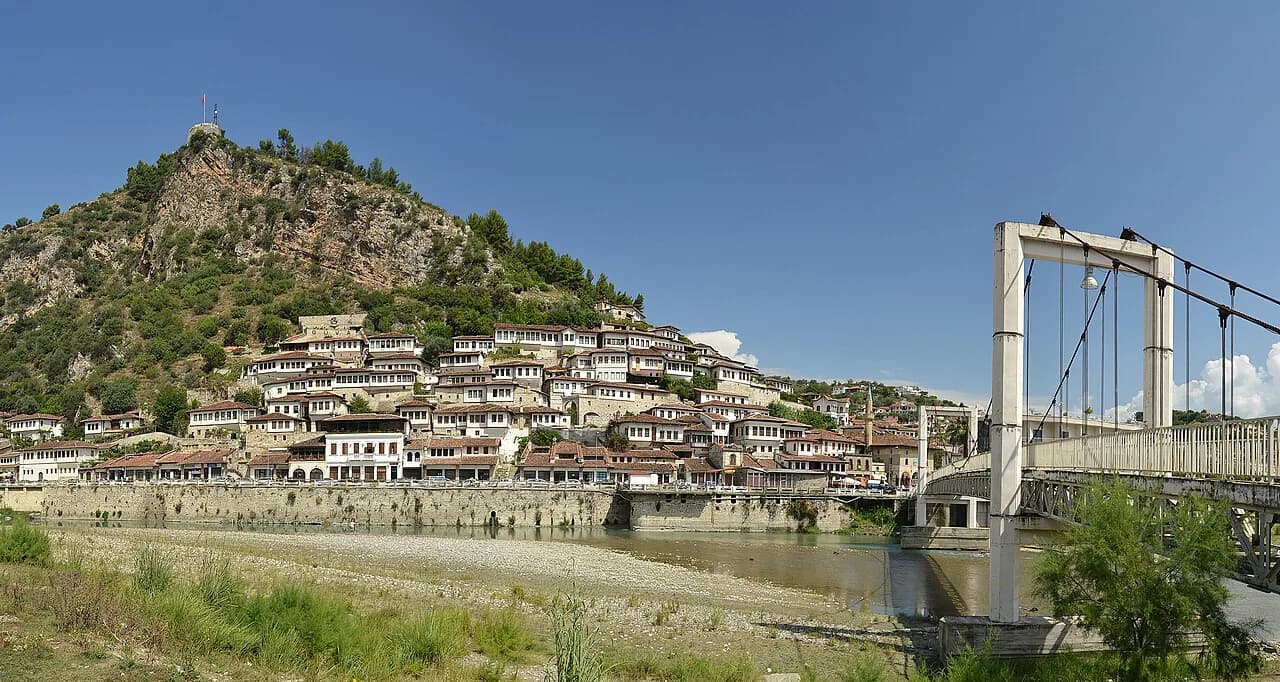
Berat belongs on a historic route but not under a Roman label. Its castle, the Kala, dates in its current form to the 13th century AD, and inside you find the material remains of Christian and Muslim religious sites rather than classical masonry. The Cathedral of St Nicholas has been restored as the Onufri Museum, which collects works by the 16th-century painter Onufri.
What most visitors photograph is the housing on the slopes below the citadel, the dense white houses that earned Berat the name 'town of a thousand windows'. The climb is the trade-off: the views over the area are excellent, and the cobbled approach is steep. Include Berat to see Ottoman urban life, not to tick off another ruin. More of the country's walled sites are gathered in our guide to castles in Albania.
The same logic applies to Krujë Castle in north-central Albania, which was ruled by Skanderbeg after his 1443 rebellion against the Ottomans and now houses the Skanderbeg Museum. Its appeal is medieval and national history rather than Rome. If your interest is specifically the classical period, spend the time at Apollonia instead.
How the sites compare: size, setting and what you walk through
Butrint is the most varied walk: a park with water, a theatre, villas, baths and a basilica spread across a large site. Apollonia is flatter and more scattered, at 137 hectares, with the museum as its indoor anchor and English and French labels throughout. Durrës is the shortest visit and the most urban, with city traffic and other monuments immediately outside the amphitheatre.
If you only have one day for classical ruins, Butrint gives you the widest range of structures and the strongest sense of a lost city. If you are based in Tirana or Durrës and cannot head south, the amphitheatre plus the Archaeological Museum is the realistic substitute. Apollonia rewards anyone driving between central Albania and the coast who wants a quiet hour or two on open ground.
Grouping the sites by region to plan a route
Treat the country as two clusters. The southern cluster is Butrint, best paired with Sarandë and the coast, and it sits within reach of other Unesco sites in Albania if you are building a longer heritage itinerary. The central cluster is Durrës and Apollonia, both manageable from Tirana, with Berat and Krujë as medieval add-ons on the same loop.
A sensible southern run is coast first, ruins second: base yourself near Sarandë and give Butrint a full morning before the heat builds. For the centre, take Durrës as a half-day from the capital, then drive to Apollonia on the way towards Berat. Villages along the way make good overnight stops, and our Albania villages guide covers the options that keep driving days short.
Do not try to link north and south in a single day. The distances are longer than the map suggests, and the mountain roads slow you down. Pick one cluster per trip and accept that you will leave something for next time.
Practical points: tours, uneven ground and opening hours
Ground at all three sites is uneven: worn stone, steps and, at Butrint, damp or partly flooded areas beside the ruins. Sturdy shoes matter more than any other item, and the exposed layouts at Apollonia and Butrint mean you should carry water. None of this requires special equipment.
Guided options exist for Durrës, where a walking tour bundles the Roman ruins with the old town and the promenade. Butrint and Apollonia can be done independently, helped at Apollonia by the bilingual panels. Choose a tour where you want the city context explained, not simply to gain entry.
Opening hours and ticket arrangements vary by site and season, so check the official Albanian tourism pages for each before you travel. This is the one detail worth confirming in advance, particularly out of season.
Which Roman site should you choose?
Choose Butrint for the fullest classical day out, Apollonia for a self-guided wander with English signage, and Durrës if you want Roman masonry without leaving the city. Add Berat or Krujë when you want the medieval and Ottoman story that sits alongside the Roman one.
Sort out your route on the map first, then book any guided walk you want in Durrës. For the rest of the trip, the wider things to do in Albania picks fill in the towns and coast around each site.
Explore more Albania guides
Sources
Notes for your Albania trip
Optional updates to our Albania town guides.
You might also like
Continue reading
More guides you'll find useful