Apollonia, Albania: What to See and How to Get There
Plan a visit to Apollonia Archaeological Park near Fier with this practical guide to its ruins, museum, layout, tickets and how to reach it from Fier or Berat.
On this page
Apollonia is an ancient Greek colony and later Roman city whose ruins now form the Apollonia Archaeological Park, set on a hilly plateau above the Myzeqe Plain near the village of Pojan. Give it two to three hours: enough to walk the main monuments, the circuit path and the museum in the old monastery. This guide covers what you will actually see, how long the site takes, and how to get there from Fier, Berat or Tirana.
The nearest town of any size is Fier, and the site is usually approached through it. Pojan sits close enough to Apollonia that the last stretch can be walked, which matters if you are relying on local transport rather than a car.
What is Apollonia and where is it?
Apollonia lies in the Fier region of south-western Albania, on the right bank of the Vjosë and about 12 kilometres west of Fier, near the village of Pojan. The ancient city stood on a hilly plateau overlooking the fertile plain, with the Adriatic beyond and the hills of Mallakastra behind.
It began as a Greek colony founded in the 6th century BC and grew into a substantial city before passing into Roman hands. It declined and was eventually abandoned in the medieval period, leaving the plateau as a field of monuments rather than a living town.
A visit is not a museum-then-ruins sequence. The land is high and open, the monuments are scattered, and the main pleasure is walking between them with the plain falling away below.
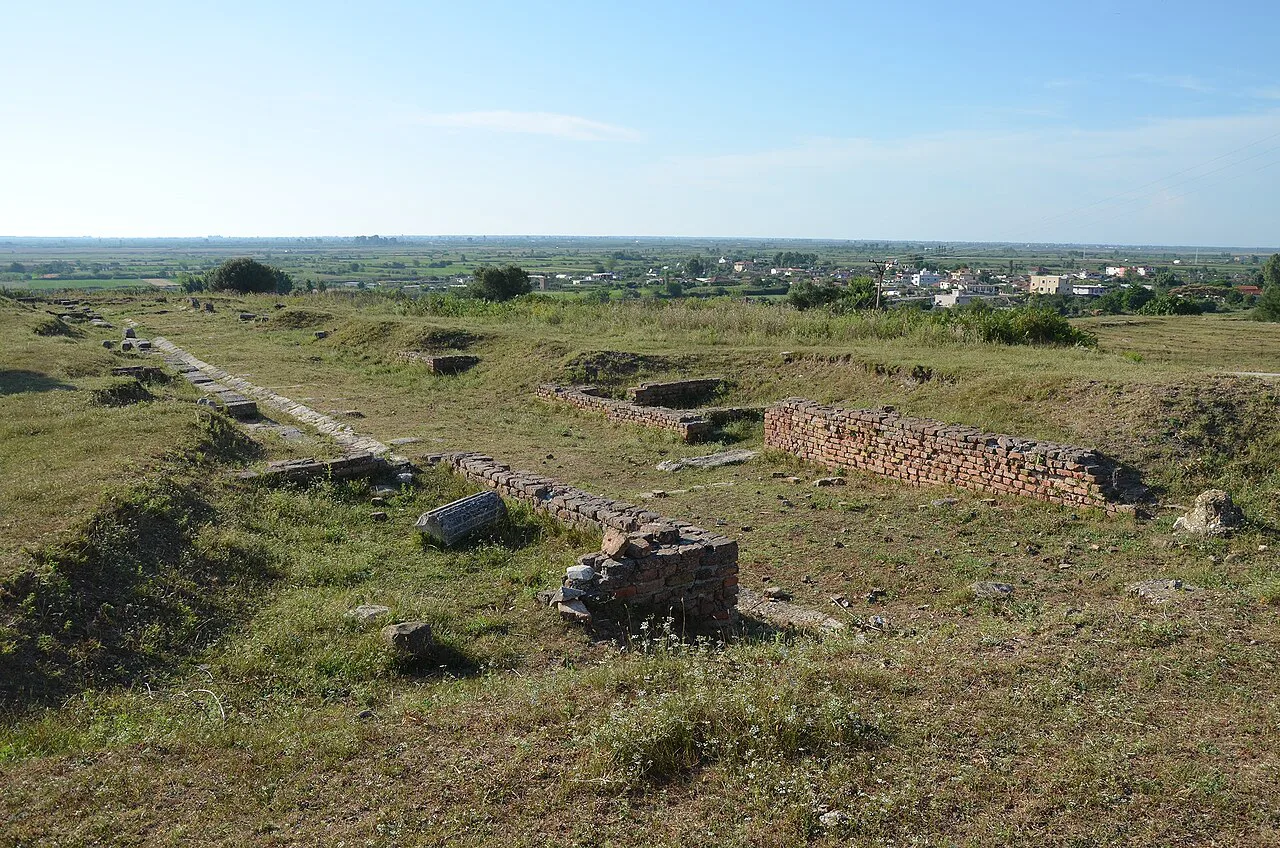
What you'll see: the Bouleuterion, the odeon and the Temple of Artemis
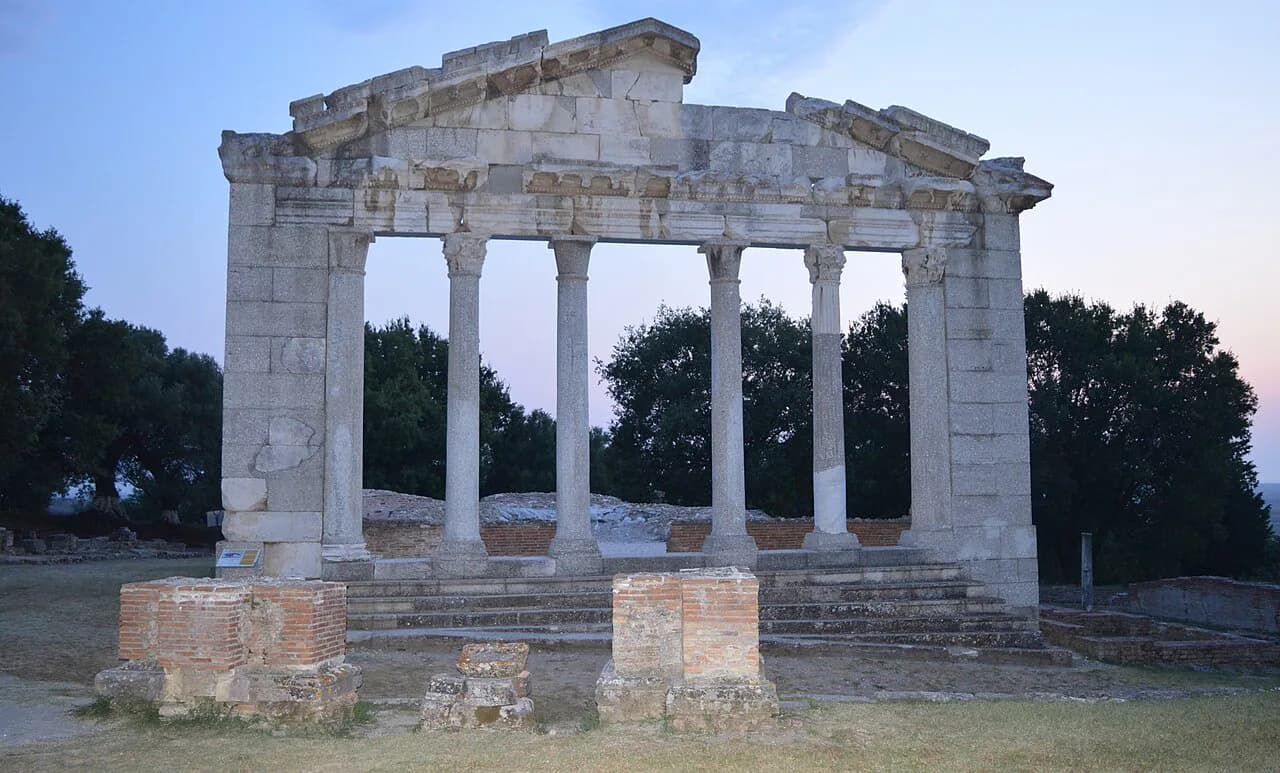
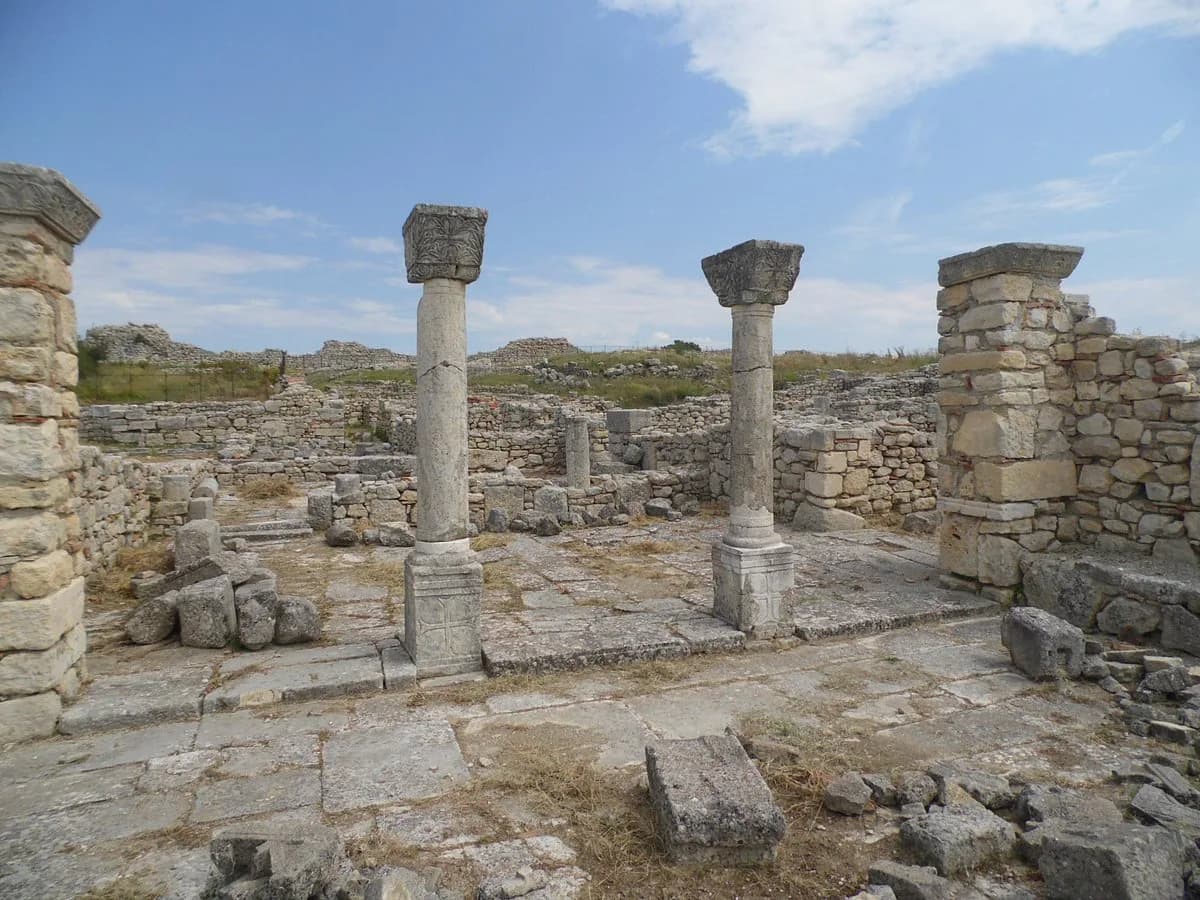
The Bouleuterion, the ancient council house, is the image most photographs of Apollonia show: the reassembled frontal columns standing where the building once stood, with amphitheatre steps facing them. Sitting on those steps is one way to take in the site, and school groups tend to gather there in waves for photographs.
Nearby, the odeon is the small theatre used for music and gatherings. The Temple of Artemis shows where the city's religious life was conducted, and the surrounding sacred area around the temple of Apollo occupies one of the two hilltops above the public buildings.
The second hilltop held the Arx, the city's military citadel, with the public buildings spread between the two heights. Knowing this helps you read the site: you are looking at two crowned hills with a civic saddle between them, not a single flat forum.
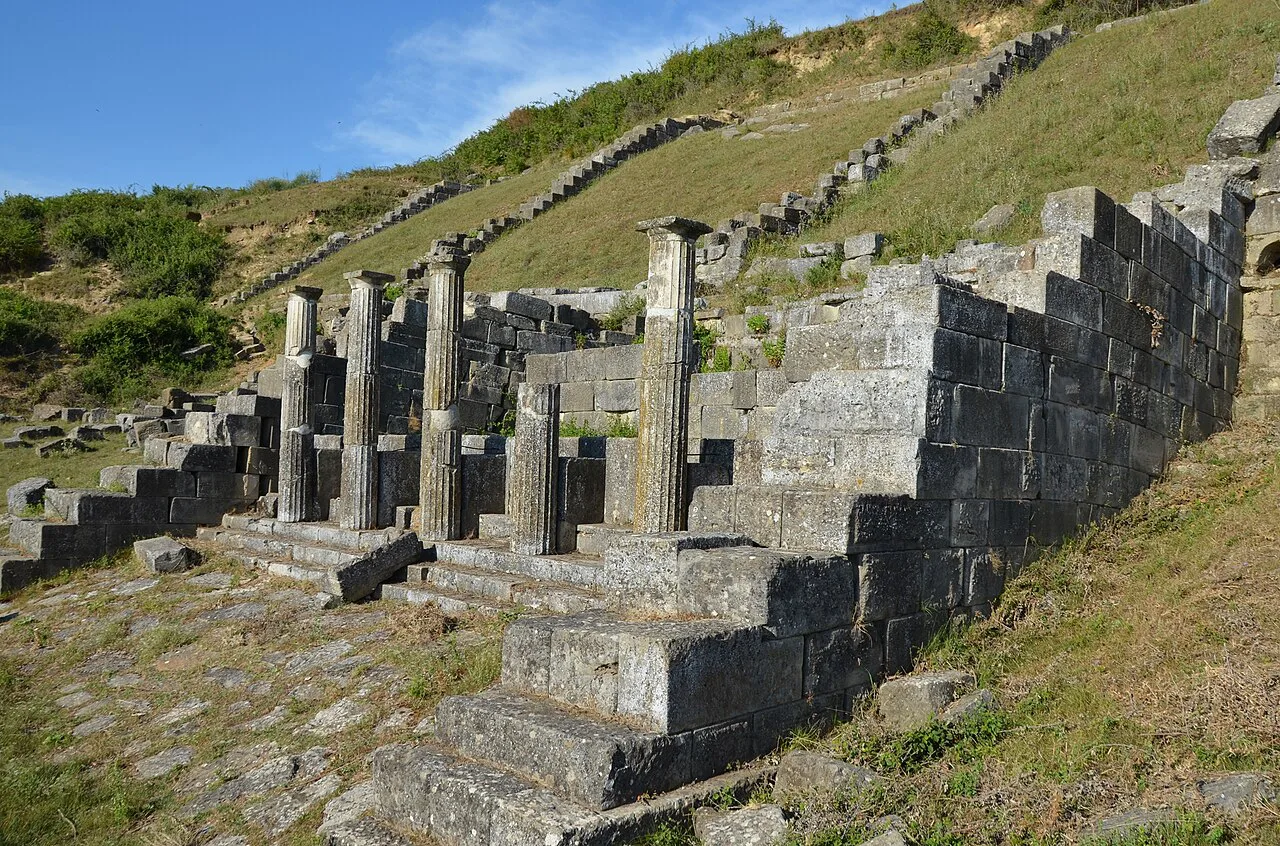
The Monument of Agonothetes and the city walls
The Monument of Agonothetes is a Roman structure commemorating the officials who put on the city's public games, and it sits among the central monuments rather than in isolation. Look for it as you cross between the theatre, the council house and the temples.
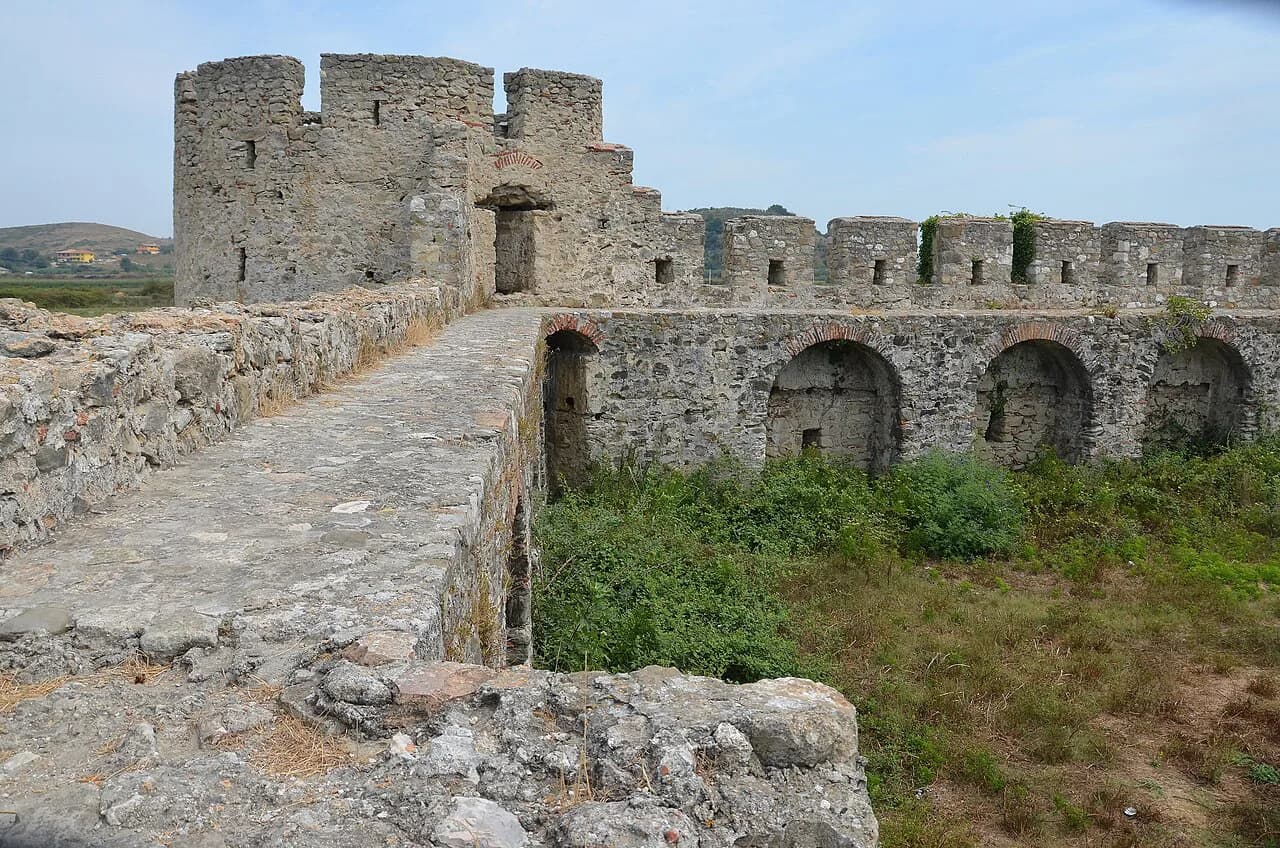
The city was enclosed by a wall of roughly 3 kilometres in length and 3 metres in width, spanning an area of about 81 hectares. You will not trace that circuit on foot in a short visit, but the line of the fortifications explains why the monuments are spread across a broad plateau.
A footpath circles much of the site and yields views over the rolling country around the hill, including the approach road. If you have walked in from Pojan, the circuit is the best place to see the ground you crossed.
The Byzantine monastery and the Museum of Archaeology
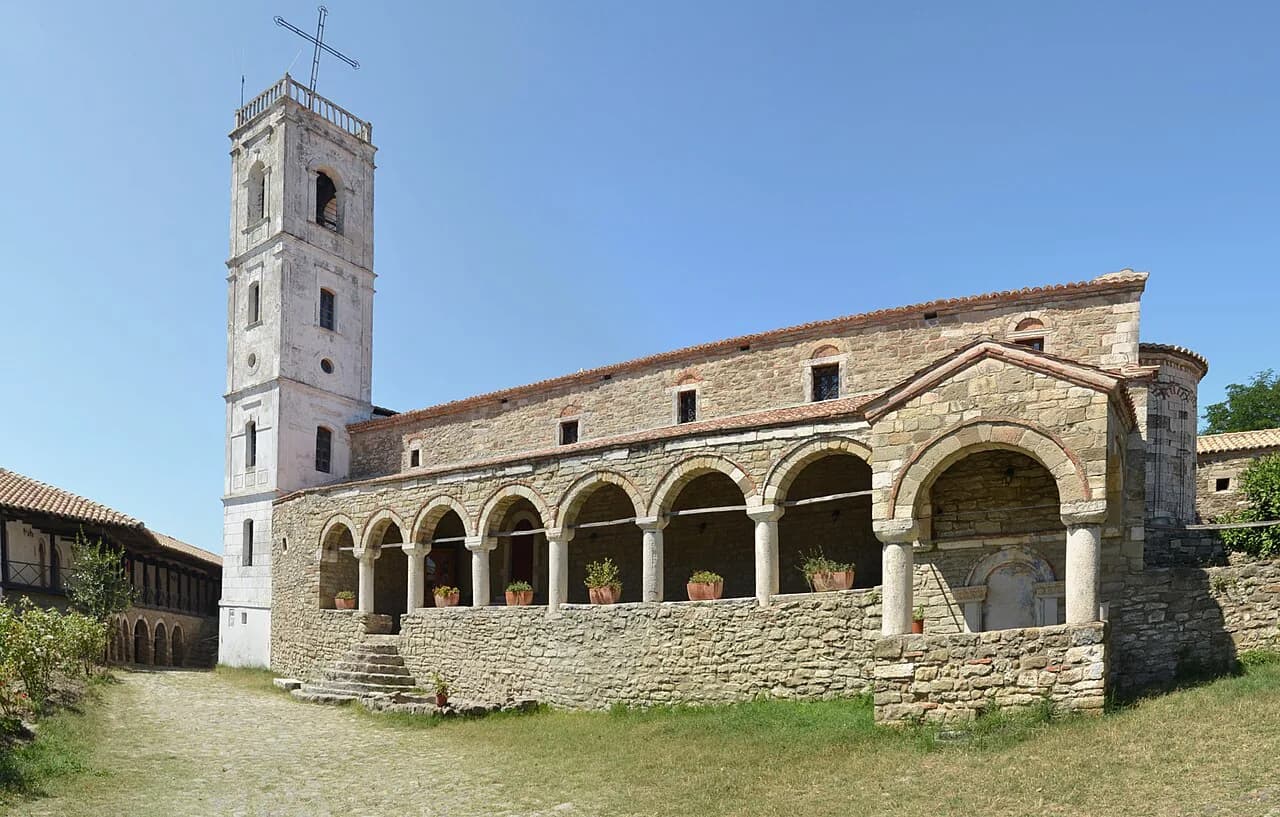
The most conspicuous building on the hill is not ancient at all: a medieval church and monastery, often called Shen Meri, was built using stone taken from the Greco-Roman city. It is the landmark you can pick out from the valley below.
The Museum of Archaeology is housed in the old Monastery of Saint Mary rather than in a purpose-built gallery. Its collection covers pottery, coins, statues and inscriptions from the city, which is where the objects make sense of the bare stones outside.
Treat the monastery as part of the archaeology, not a detour from it. The building reuses the ancient city, and the museum inside continues that reuse.
How the site is laid out, and how long to give it
Plan on two to three hours for the monuments, the circuit path and the museum, and add time if you are walking up from Pojan. The site is large and open, with the main structures in the middle and the views from the edges.
Bring water, sunscreen, a hat and shoes that cope with rough ground and slopes. The plateau is exposed, and the walk between monuments is over unshaded grass and track for much of the way.
The last kilometre from Pojan to the ticket window climbs. If the heat is on, that short ascent is the hardest part of the day, so leave it for the cooler end of the morning.
Tickets and opening hours
One listing gives opening hours of daily 8:00 to 20:00 with a note that times vary by season. Treat that as a guide and confirm the day's hours before you travel, since seasonal shifts are exactly what such caveats flag.
The same listing shows a charge of €6 per day for the park and mentions student and group discounts, but it does not set out the concession terms in detail. Check the price and any reduction you qualify for at the ticket window rather than budgeting from a secondary page.
Carry some cash in lek or euros to cover the ticket, and do not assume card payment works on a quiet day. Fier is where you top up supplies and cash before heading out.
How to get there: from Fier by bus, by car, or on foot from Pojan
By car, Fier is about a 20-minute drive from the park on maintained roads, and Tirana is roughly two hours away by car or bus. Those are useful planning figures rather than timetables, so allow for traffic on the Fier approach.
By public transport, the pattern is two legs: a minibus or bus from Berat or Fier to Fier, then a local bus towards Pojan and Apollonia, with a walk of under half an hour from Pojan to the ruins. One 2019 account found the Fier departure point on a busy street corner with a posted schedule and a wait of close to an hour and a half for the next service, so do not plan on a tight connection.
Walking the whole way from Fier is possible but long: one visitor measured it at about six miles, mostly over dirt roads through fields. It is a pleasant route in cool weather and a punishing one in summer.
Taxis from Fier are readily available if you would rather skip the connection, and that keeps the day short. Agree the fare and the return pickup before you set off, because the hill is not a place where you can flag one down.
Getting to Apollonia from Berat or Tirana
From Berat, take a minibus to Fier and change there for Pojan or Apollonia; the site makes a workable day out rather than a stop on the way to somewhere else. From Tirana, the listing allows roughly two hours by car or bus, so plan the better part of a morning for the outward journey.
A car gives you the most control over timing, and it lets you add a second stop in the same day without depending on a return connection. If you are coming from Berat, the Ardenica monastery is the natural stop to pair with Apollonia, and both sit within reach of the same road.
One practical tip: leave Fier early in the morning if you are using buses, so that a missed connection does not eat your time on the hill.
When to go: heat, school groups and the quiet edge of the day
Spring and early autumn are the kindest months for the exposed plateau, and the listing that gives opening hours also flags those windows for mild weather and fewer crowds. Midsummer visits work best at opening time or late in the afternoon.
Expect school groups, especially mid-morning: they gather at the Bouleuterion columns for photographs, move in waves and use the snack bar. That noise is part of a weekday visit, and if you want the columns to yourself, arrive at opening or late in the day.
There is no shade to speak of on the plateau. A hat and a full water bottle change the day more than any itinerary tweak.
What to combine with Apollonia: Ardenica, Nartë and Vlorë
The Ardenica monastery is the most natural companion stop, and it appears alongside Apollonia on organised day tours from Tirana. With a car you can do both comfortably in a day.
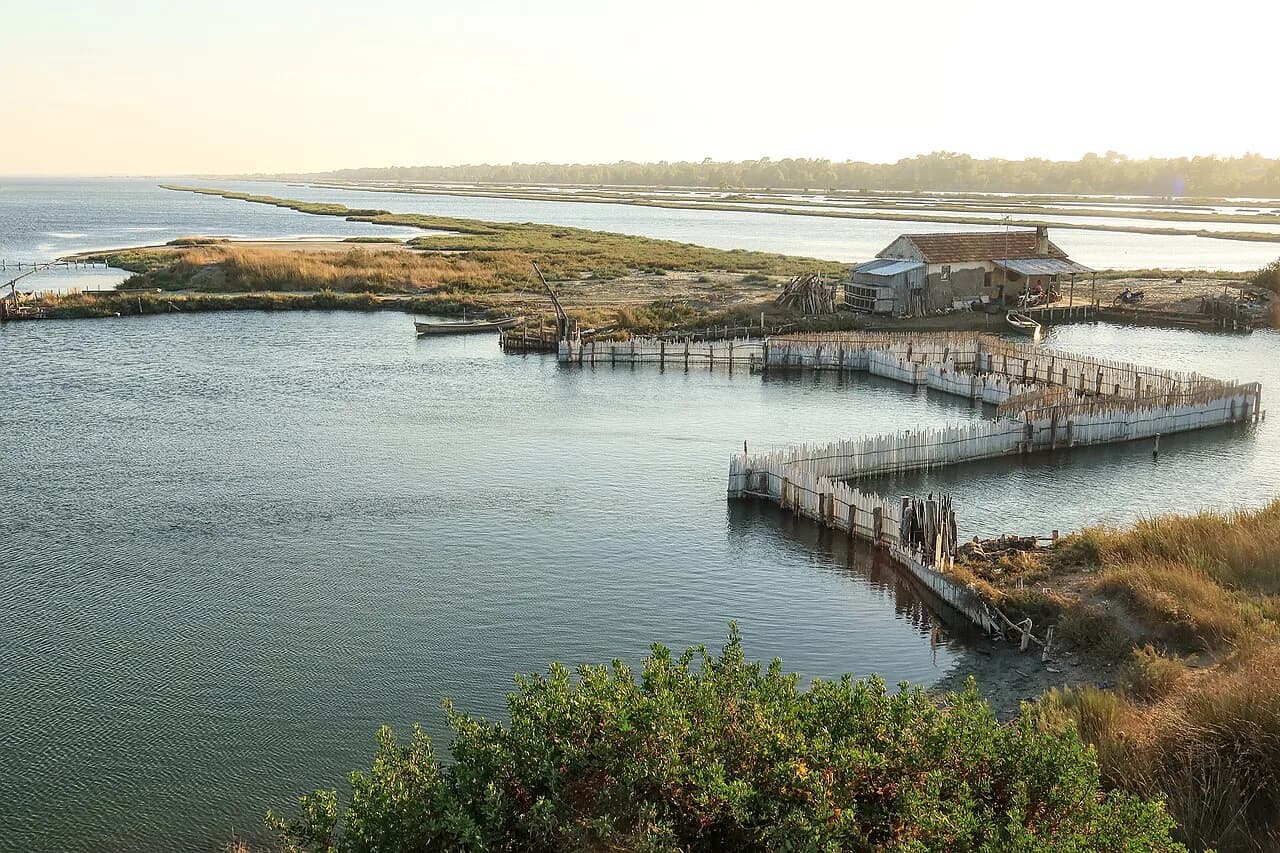
Other published itineraries pair Apollonia with the Nartë Lagoon and Vlorë, or with Berat, which shows the realistic radius of a single day out from Tirana. Closer to Fier, the wetlands at Divjaka national park and the Karavasta lagoon suit an early or late stop when birds are active and the heat has eased.
If you want a second archaeological site in the region, Byllis offers a comparable hilltop setting within a day of Fier. Bashtova castle is another option for travellers with time in the coastal plain.
Which Apollonia trip suits you?
With a car, go early from Berat or Fier, spend two to three hours on the plateau and add Ardenica on the way back. Without one, take the Fier bus, accept the wait for the Pojan connection and walk the last stretch.
Either way, carry water, wear proper shoes and confirm the day's hours and ticket price before setting out.
Explore more Fier guides
Frequently Asked Questions
Does Albania have Roman ruins?
Yes. Apollonia is one example: a Greek colony that later came under Roman rule, with Roman-era structures including the Monument of Agonothetes on the plateau near Pojan.
Why did Apollonia decline?
The city went into a long decline and was eventually abandoned in the medieval period. The monastic church on the hill was later built with stone from the ancient city.
Sources
Notes for your Albania trip
Optional updates to our Albania town guides.
You might also like
Continue reading
More guides you'll find useful