Berat Old Town: Quarters, Bazaar Streets and Castle Routes
A practical walk through Berat old town: the Mangalem and Gorica quarters, the castle and its churches and mosque, the Gorica Bridge and how long each part takes.
On this page
Berat old town is best understood as three pieces: Mangalem on the north bank of the Osum, Gorica on the south bank, and the inhabited castle on the hill above Mangalem. Allow half a day for the two lower quarters and the Gorica Bridge, and a further two to three hours if you want to walk the castle properly. This guide sets out the layout, the specific buildings to look for and a sensible order for walking it.
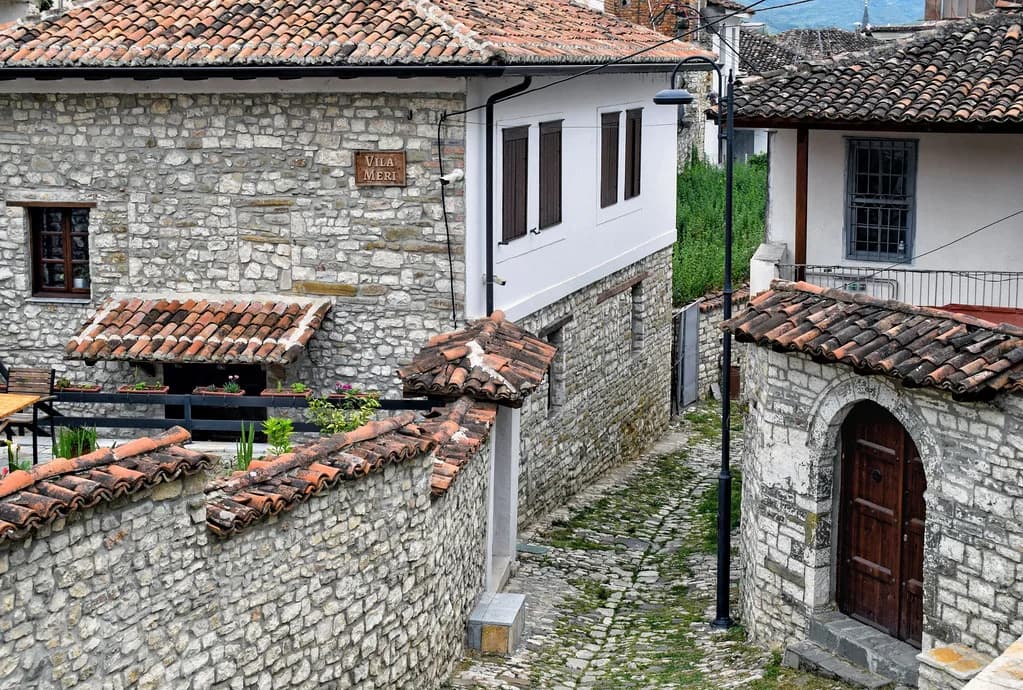
The whole historic centre is a UNESCO World Heritage Site, inscribed in 2008 as a rare surviving example of an Ottoman-era town. That status is the reason the streets look as they do: white limestone houses with closely spaced windows, cobbled lanes and a walled quarter that people still live in.
What Berat old town is
Berat sits in southern Albania, with the old town strung along the Osum River between two hills. The historic core is not a museum district: it is a working set of lanes with houses, small churches, mosque remains and shops, and the castle above is still inhabited.
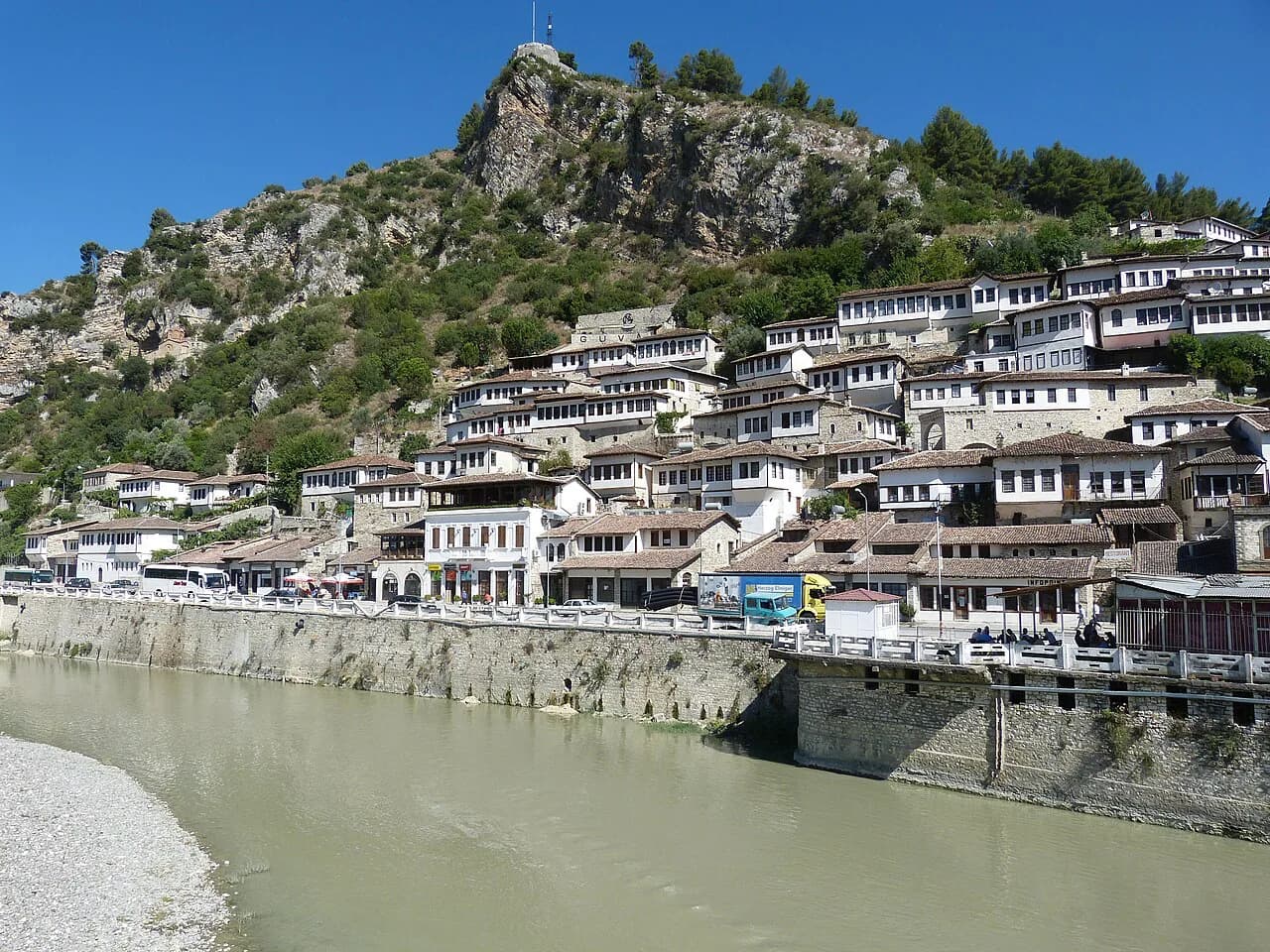
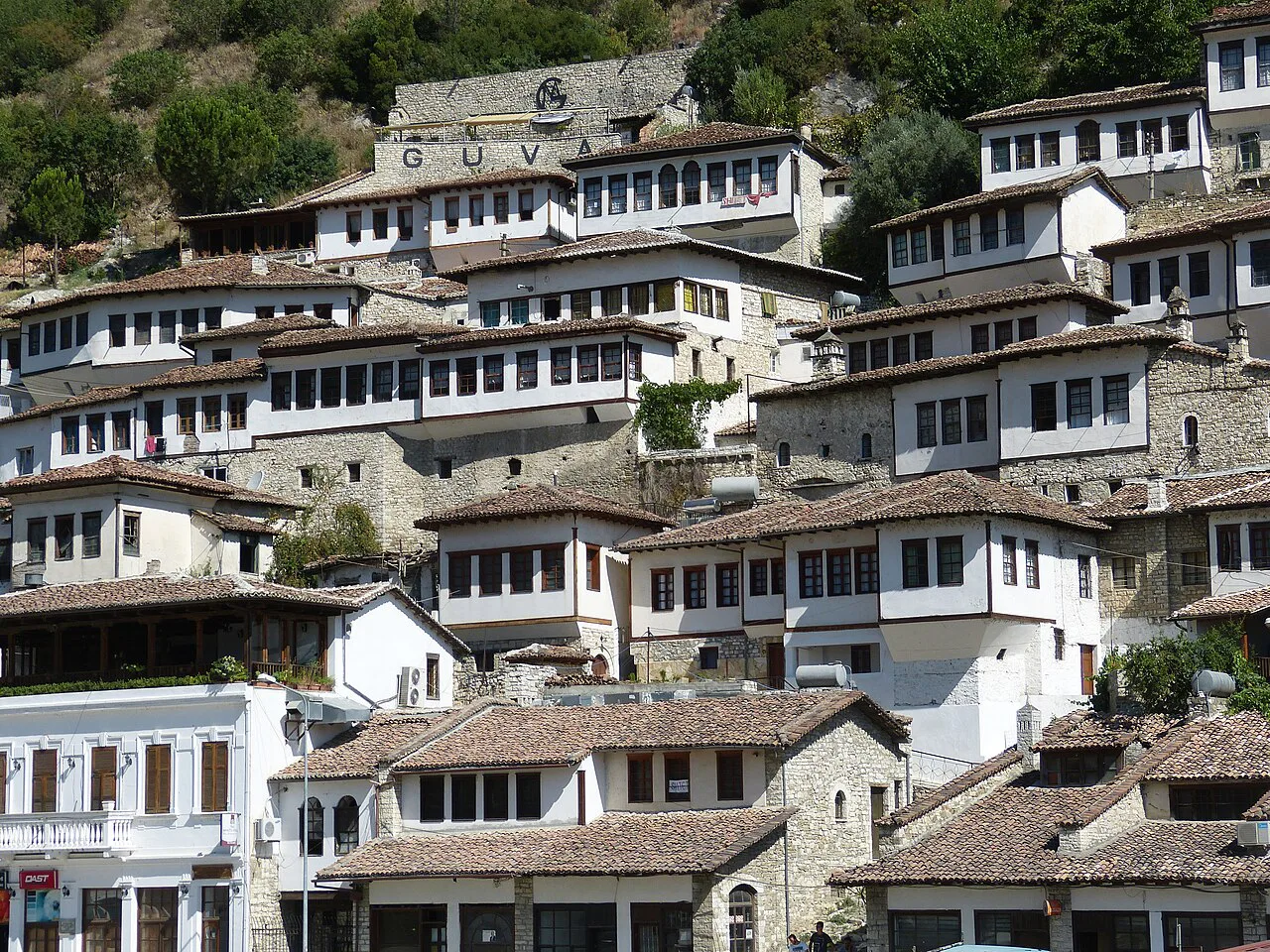
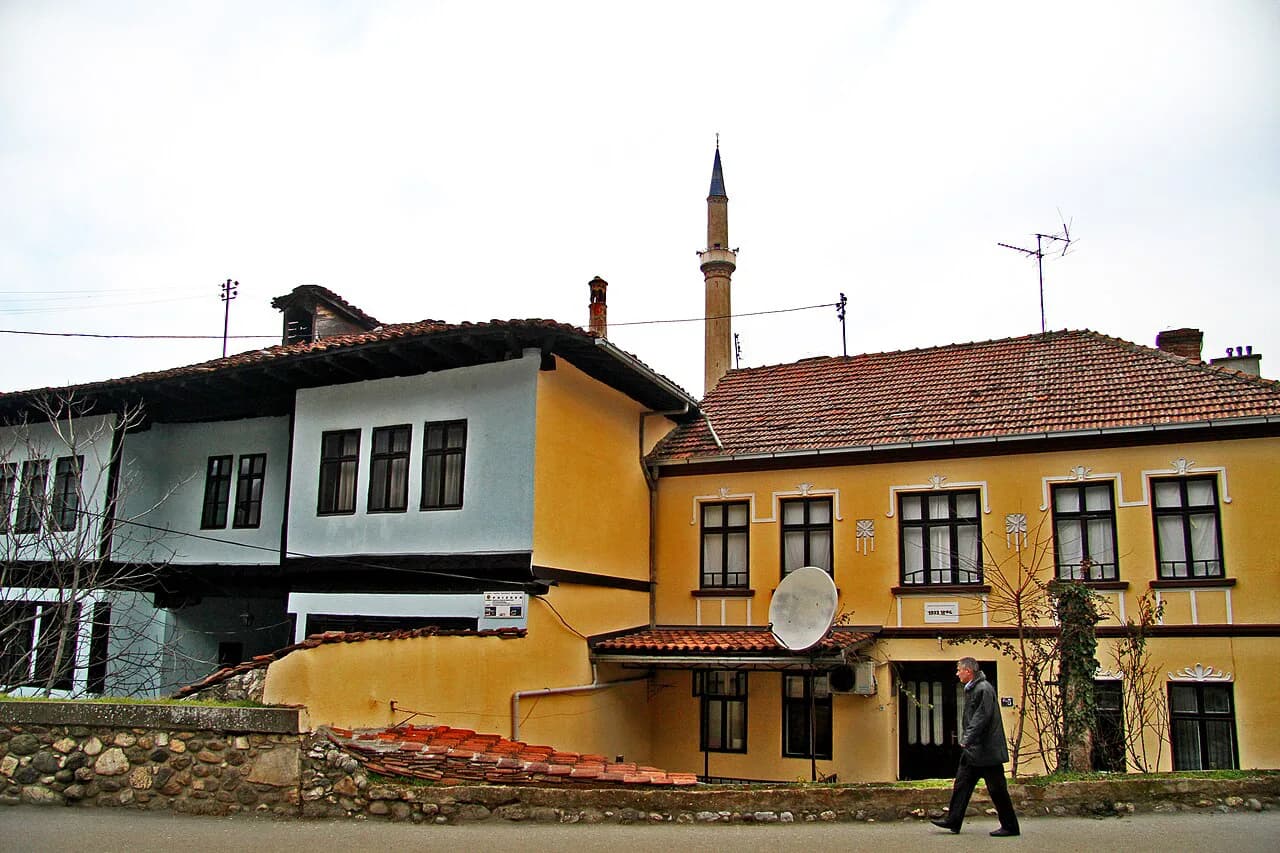
The look visitors come for is the Ottoman-era housing: white houses stacked up the hillside with rows of windows facing the river, which is why the town is nicknamed the City of a Thousand Windows. The old town's address is given as Rruga Kol Myzeqari in Berat, and the streets themselves are open to walk at any time.
How the town is laid out: Mangalem, Gorica and the bridge
Mangalem and Gorica cling to opposite banks of the Osum, and the Gorica Bridge links them. Mangalem is the quarter under the castle, with the dense rows of white houses and windows that face the river; Gorica, across the water, is quieter, with stone streets and a slower feel.
Practically, this means you can plan the day in two halves: the Mangalem side and the castle first, then cross the bridge for Gorica. The bridge is also a good single place to see both banks at once, so keep it for a moment when the light is good rather than treating it as a through-route.
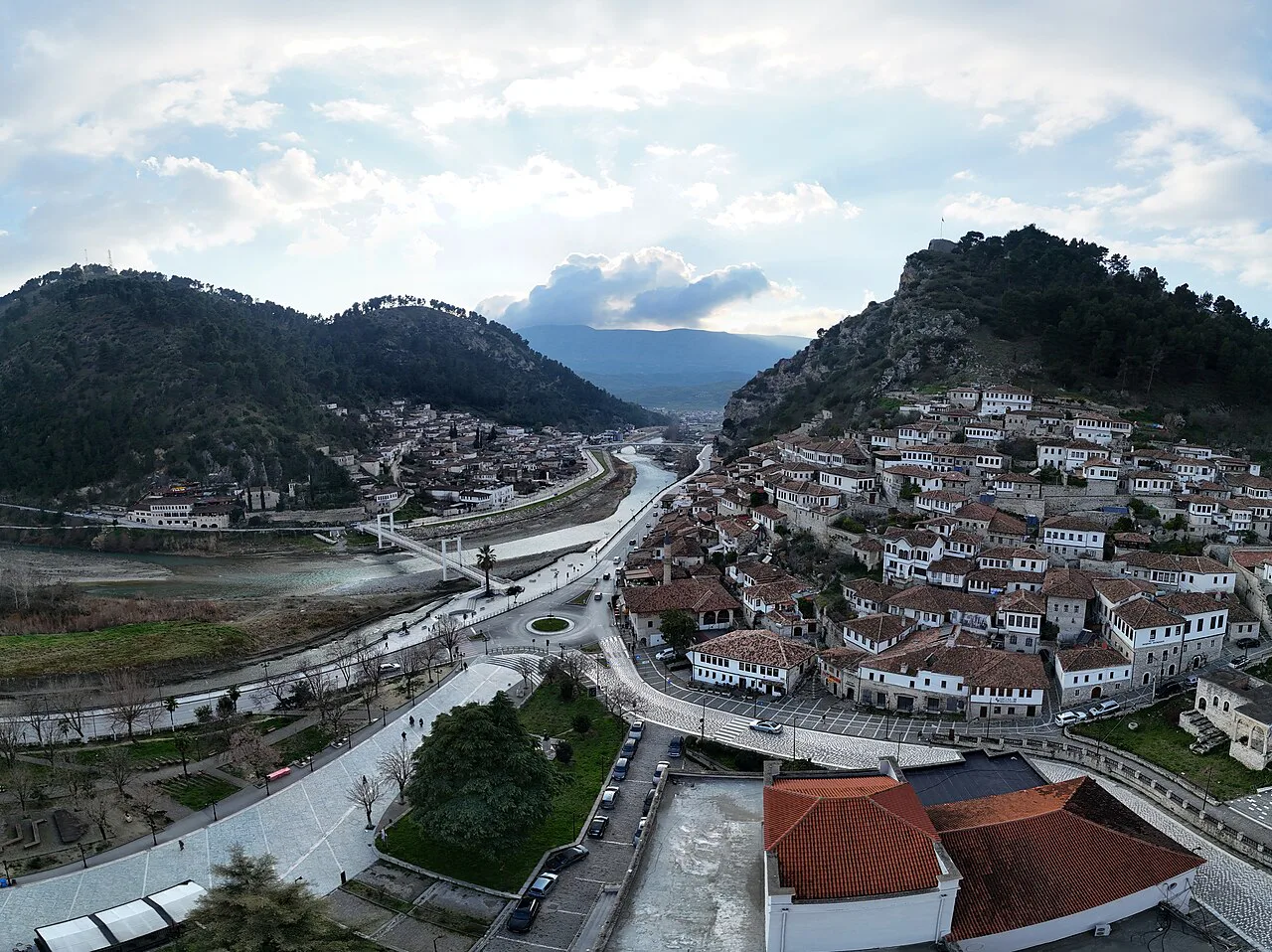
Mangalem: stacked houses above the river
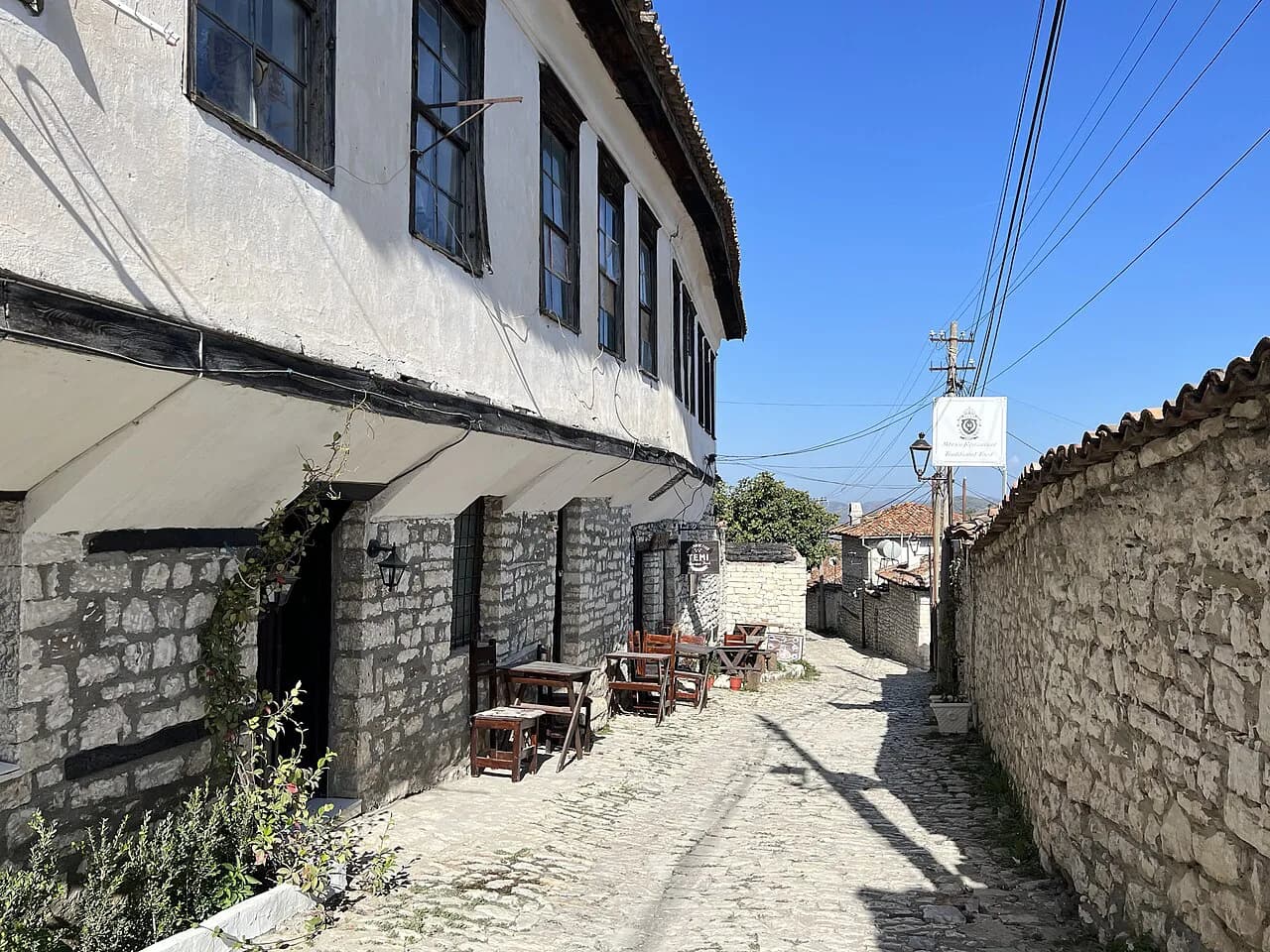
Mangalem is where the postcard view comes from, and it is also where the walking is hardest. The lanes climb steeply between the houses, with cobbles underfoot and few flat stretches, so a slow pace and shoes with grip matter more here than distance does.
Walk it as a loop rather than a straight line: drop to the riverside for the frontal view of the windows, then climb back through the lanes toward the castle approach. The quarter's streets are residential, so expect to step aside for locals going about their day.
Gorica: the quieter bank
Cross the Gorica Bridge and the noise drops. Gorica's appeal is its stone lanes and the sense of a separate village that happens to face Mangalem across the water, and it rewards wandering without a fixed target.
The most useful thing to do on this bank is look back: the view of Mangalem and the castle from Gorica shows how the town is built into the hillside, in a way you cannot see from inside Mangalem itself. Give Gorica an hour on foot, more if you stop.
Berat Castle (Kalaja e Beratit): a living walled quarter
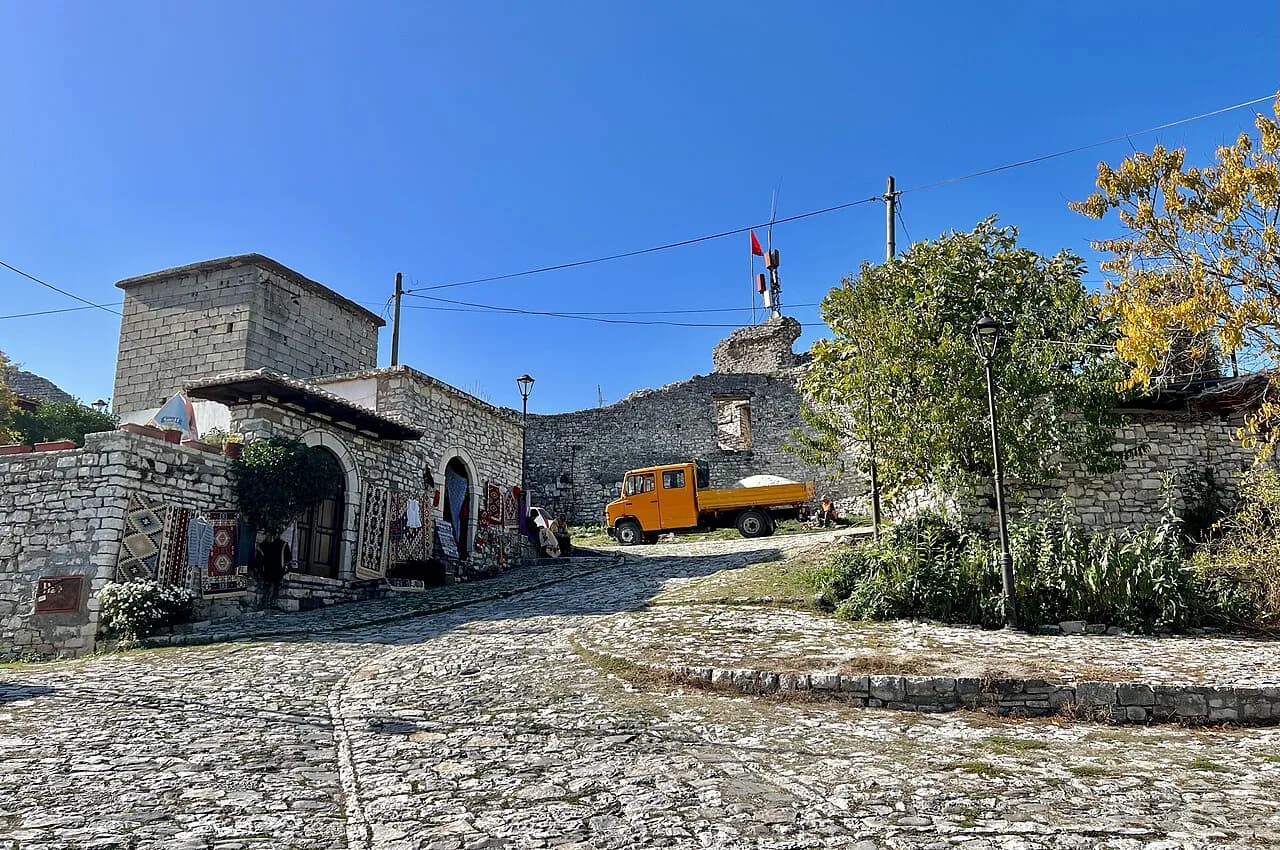
The castle, Kalaja e Beratit, is not a ruin to circuit and leave. People still live inside the walls, and the lanes between their houses are narrow, uneven and easy to lose track of, with small churches, traditional houses and wide views over the town below.
Take a photograph of the map at the castle entrance before you start. The area is extensive and disorienting, and a picture of the layout saves time later when the alleys stop matching your sense of direction.
Residents sell handmade items, jams, wine and raki from their doorways, so bring some lek cash if you want to buy. Several viewpoints sit along the walls; one platform gives a clear overview of the town and the Osum River and is the classic sunset spot.
Inside the castle: the Holy Trinity Church and the Red Mosque
The Holy Trinity Church, Kisha e Shën Triadhës, is the building to seek out inside the walls, a Byzantine church of red and white brick. It sits among several small churches in the castle area and can be awkward to find, so it is worth asking directions rather than circling.
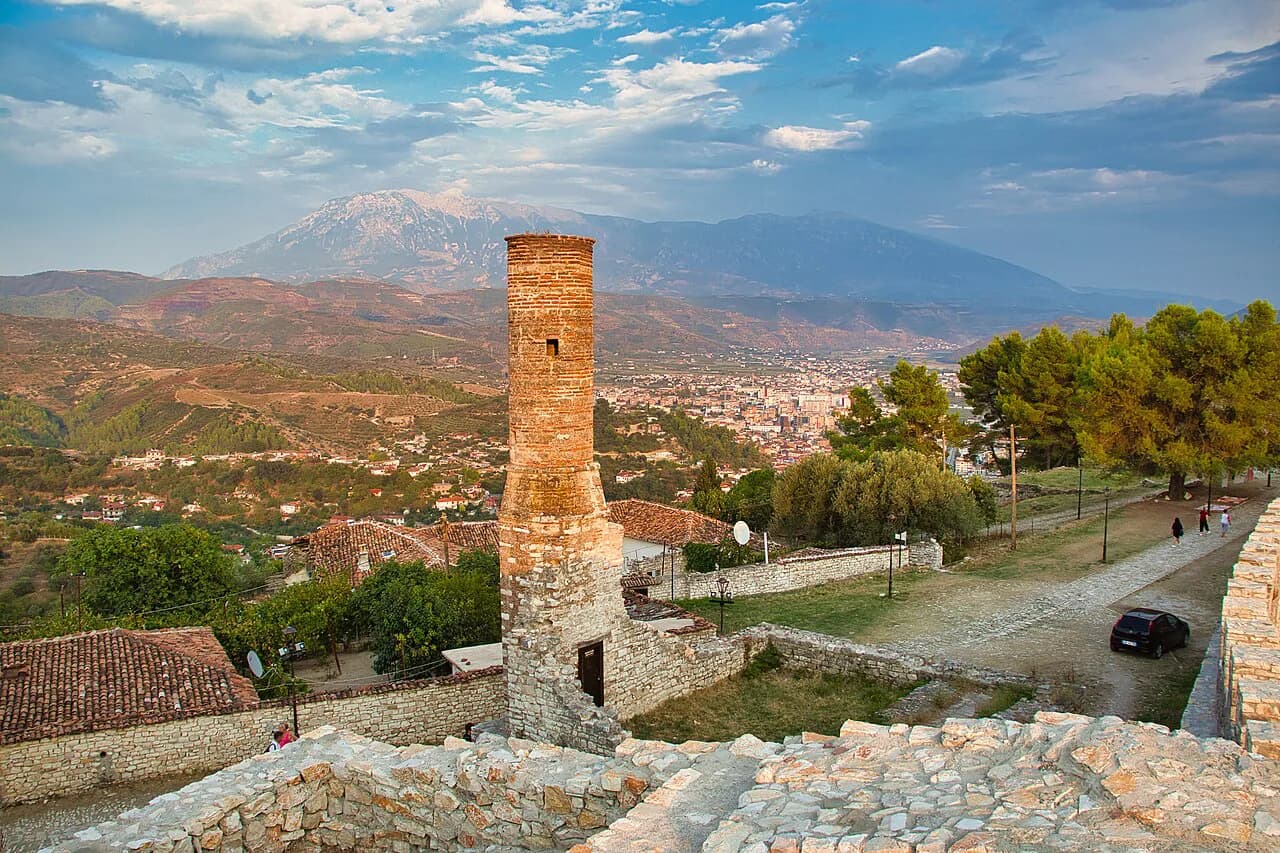
The Red Mosque, Xhamia e Kuqe, survives mainly as its circular minaret, with little else of the building left. It is believed to have been built in the 1500s, shortly after the Ottoman conquest of Berat, and the stump of the minaret is now one of the castle's landmarks.
Elsewhere in the castle you will come across a large sculpture of a head, which depicts the Roman ruler Constantine the Great. It is bigger than most visitors expect from photographs and sits on the route through the walled area.
Walking up to the castle
The west-side trail up to the castle takes just under half an hour at a leisurely pace, with several good places to stop for photographs on the way. Walking gives you the approach views and needs no vehicle, but it is a climb, and the cobbles are uneven.
A taxi up is the honest alternative if you have limited time, bad knees or summer heat to contend with. My pick is to walk up in the morning and take a taxi back down if the day has turned hot, which saves the least rewarding part of the climb.
The lower town: Republika Boulevard and everyday Berat
Below the old town, Republika Boulevard is the modern town's spine and the natural way to link a morning in the quarters with lunch or an afternoon on foot. It is flatter and faster than the lanes above, and useful for getting your bearings before you start climbing.
For the broader history of how the town developed across its quarters, the background is worth reading before you walk rather than after; our Berat History guide covers it. It makes the difference between Mangalem and Gorica, and the survival of the castle as housing, much easier to read on the ground.
Where to eat in the old town
The old town's small taverns serve Albanian dishes, and the most popular ones may ask you to book a table a day ahead, so reserving is sensible in season. Build lunch into the middle of the day rather than the end, when the castle walk has already used up your legs. Pair the walk with our Berat Walking Tour for the street-by-street connections.
How long Berat old town needs
Half a day covers Mangalem, the Gorica Bridge and a pass through Gorica at an unhurried pace. Add two to three hours for the castle if you want the churches, the minaret and a viewpoint without rushing, plus the walk up and back.
If you only have a few hours, choose one bank and the castle. Trying to do Mangalem, Gorica and the castle thoroughly in one short visit means spending most of it walking between them, which is the least interesting part.
Getting to Berat and getting around on foot
Once you are in Berat, the old town is a walking proposition: the quarters, the bridge and the castle trail are all on foot, and a car is a hindrance on the cobbled lanes. Furgon minibuses and buses from elsewhere in Albania arrive in the modern town, from which you walk or take a short taxi to the old town.
Heat, cobbles and crowds
The walking surfaces are the main practical constraint: steep cobbles in Mangalem and the castle lanes, stone steps in Gorica, and little shade on the climb. Start early, carry water and treat the castle as the day's main effort rather than an add-on after a long morning.
Summer brings heat and the fullest lanes, particularly around the bridge and the castle viewpoints. Spring and autumn make the same walk easier, and the light on the white houses is better for photographs outside the middle of the day.
Near Berat
Berat works well as a base for a wider loop, and the obvious pairing is another historic Albanian town rather than a single sight. Durrës old town on the coast and Shkodër Old Town in the north both reward a day, and both are better tackled as separate stops than as a rushed add-on to Berat. If you are weighing which to add, our Durrës Old Town guide sets out the streets and castle to compare against Berat's.
Which half of Berat old town comes first?
Start with Mangalem and the castle, then cross the Gorica Bridge and slow down on the far bank. That order puts the climbing and the specific buildings in the morning, when the lanes are quieter, and leaves Gorica for the part of the day when wandering matters more than ticking things off.
If the castle is the reason you came, walk up the west-side trail and photograph the map at the entrance; if you are short of time, take a taxi up and walk down through Mangalem instead. Either way, keep the bridge for a return crossing rather than a first move.
Explore more Berat guides
Frequently Asked Questions
Where is Berat old town?
Berat is in southern Albania, and its old town runs along the Osum River between two hills. Mangalem sits under the castle on one bank and Gorica faces it from the other, joined by the Gorica Bridge.
Do you need a ticket for Berat old town or the castle?
The old town streets are open to walk, and the castle area is entered on foot with a map posted at the entrance. Individual churches and museums inside may have their own arrangements, so check locally before setting out if a particular building matters to you.
How long does the walk up to Berat Castle take?
The west-side trail takes just under half an hour at a leisurely pace, with photo stops along the way. Allow extra time inside the walls, since the castle lanes are extensive and easy to get lost in.
Is Berat old town suitable for visitors with limited mobility?
Expect steep cobbles in Mangalem and the castle lanes, stone steps in Gorica and uneven surfaces throughout. A taxi to the castle removes the climb, but the ground inside the walls is still rough, so plan a shorter route centred on the bridge and the flatter streets.
Sources
Notes for your Albania trip
Optional updates to our Albania town guides.
You might also like
Continue reading
More guides you'll find useful