Berat Old Town: Streets, Quarters and the Castle Walk
Walk Berat Old Town's lanes through Mangalem and Gorica and up to the inhabited castle, with practical notes on cobbles, gradients and getting there.
On this page
Berat's old town is the lanes themselves, with Ottoman houses stacked on both banks of the Osum rather than a single market square to aim for. Start in Mangalem, cross the stone bridge to Gorica, then climb to the castle gate if your legs allow. This guide sets out the order to walk it, what each quarter offers and how to get there from Tirana.
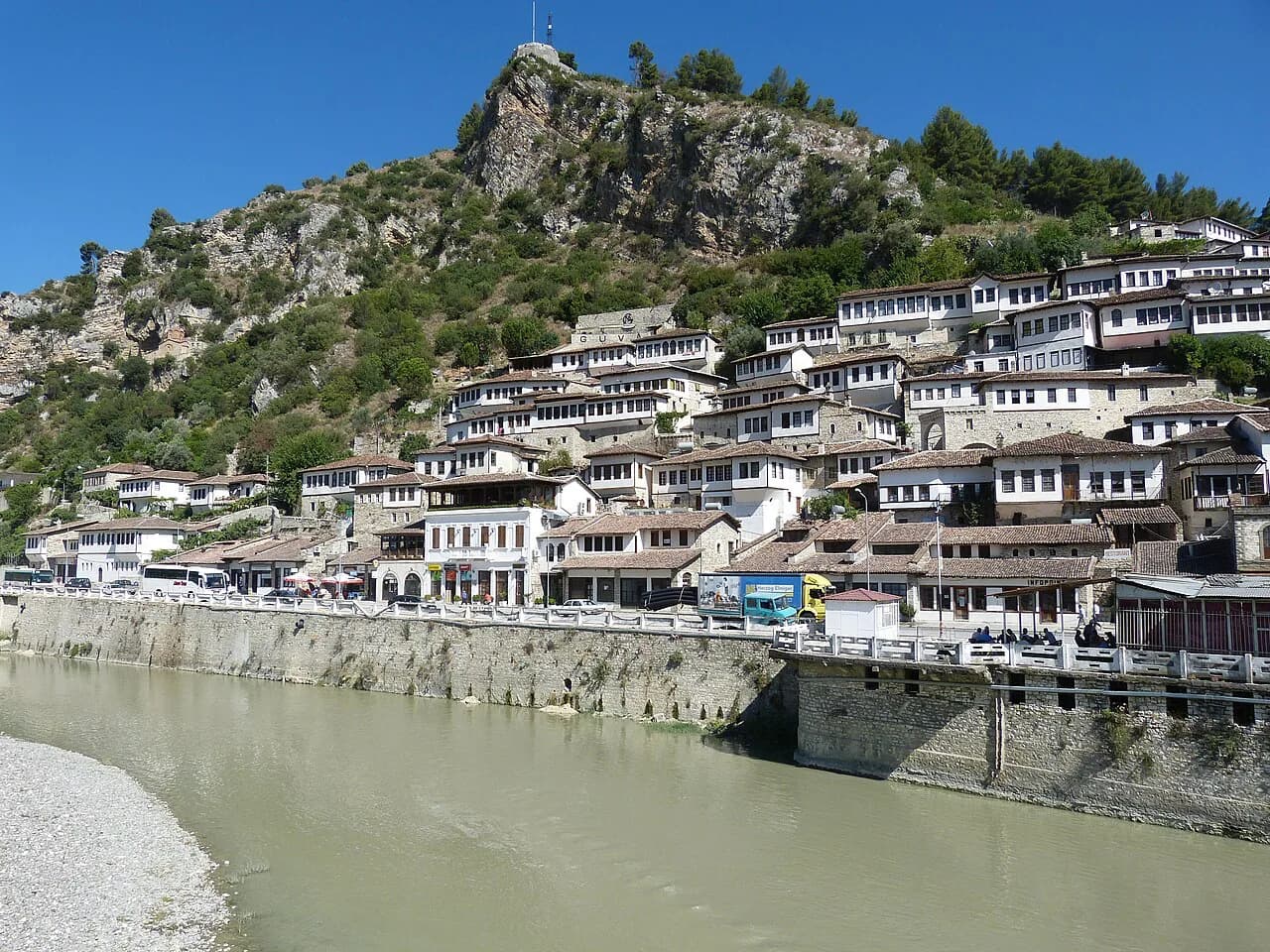
Old Town Berat is a UNESCO World Heritage site, and its nickname, the City of a Thousand Windows, comes from the white Ottoman houses of Mangalem climbing the hillside above the river. Allow half a day for the streets and a full day if you add the castle and a museum.
Where the bazaar streets sit in the old town
The historic centre runs along the Osum River, with Mangalem on the slope below the castle and Gorica on the opposite bank. The lanes run through both quarters, so you wander between them rather than following one street. The castle hill sits above Mangalem and forms the top of the route.
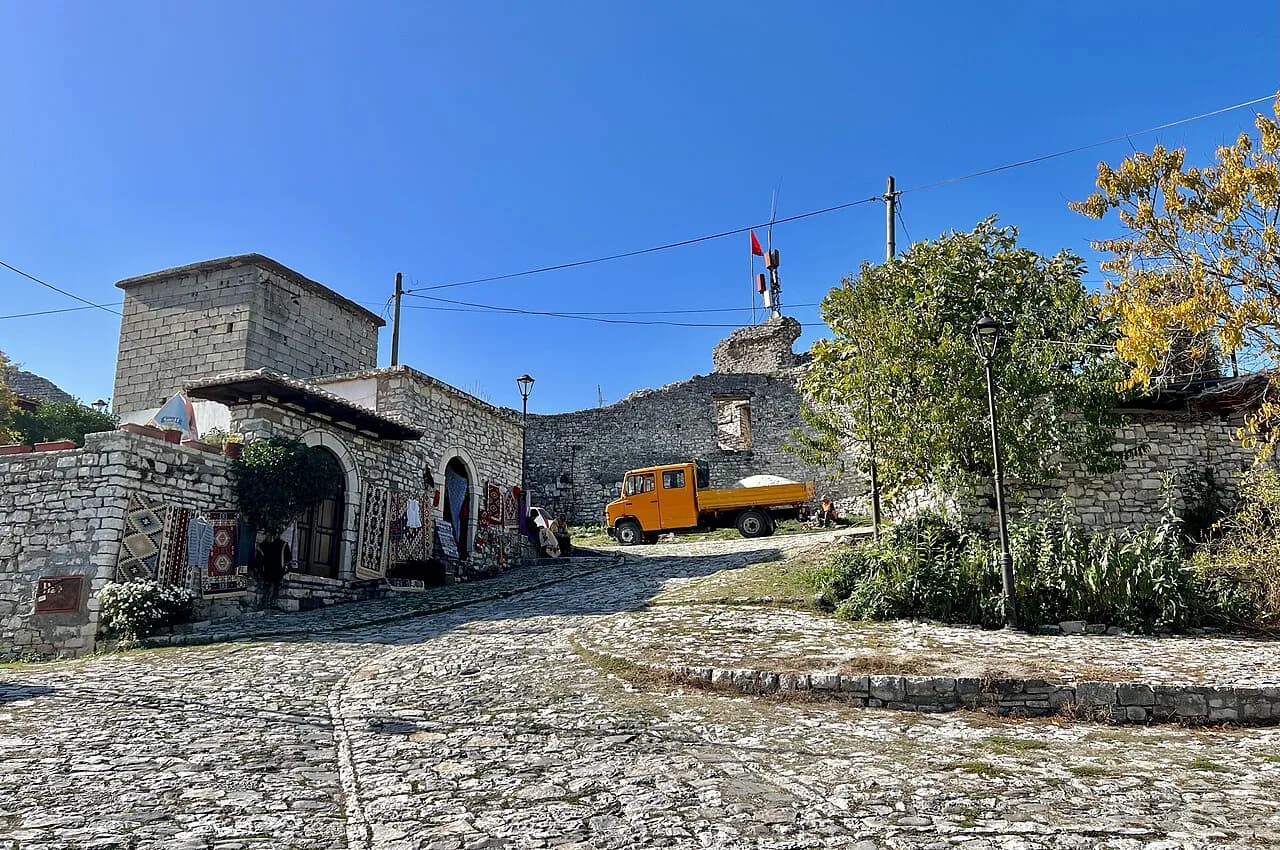
Treat the old town as a compact, walkable area: the Albania Turism guide describes centuries of layered history packed into a small space, which means most of it is covered on foot in a loop rather than by vehicle. Wear shoes with grip, because the surfaces are cobbled and often uneven.
There is no separate modern district to hunt down. What you are walking is the historic quarters themselves — the Ottoman houses, lanes and river views — with the castle neighbourhood at the top.
Mangalem: cobbled streets, Ottoman houses and shops
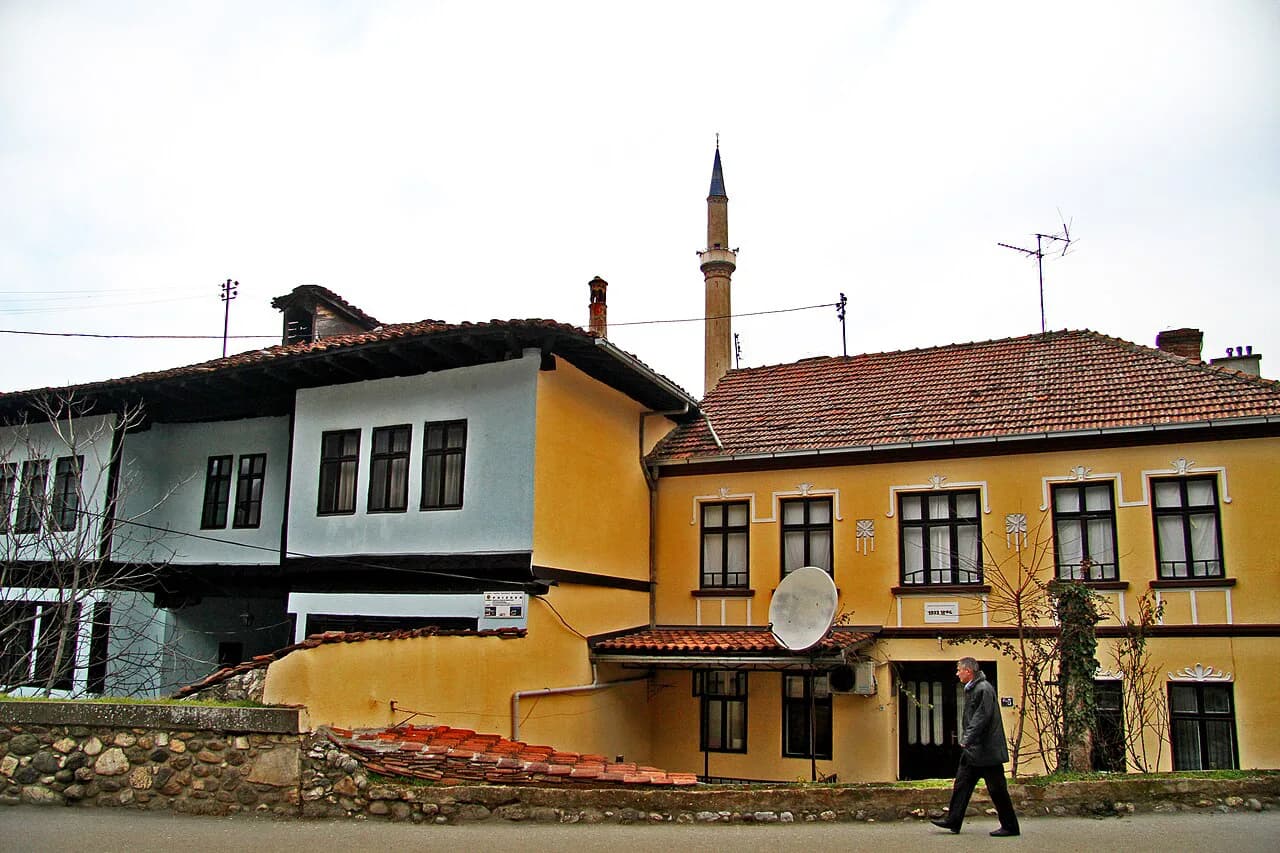
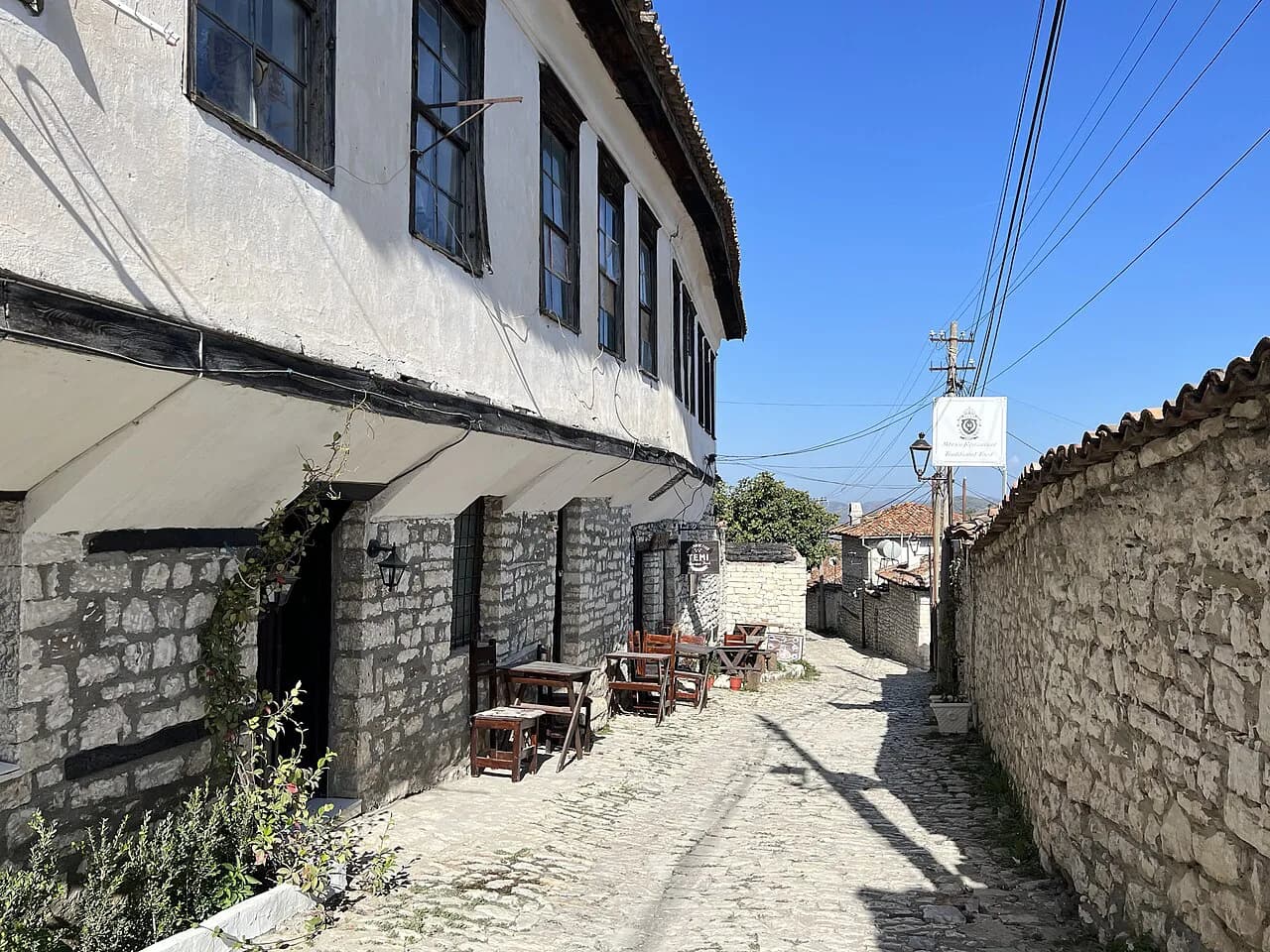
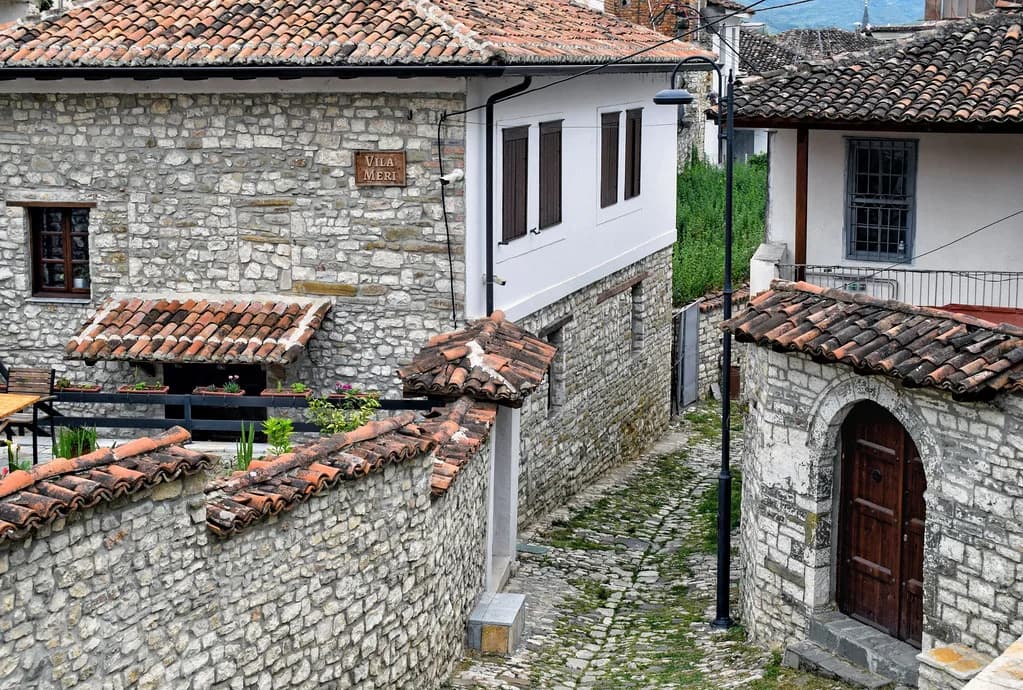
Mangalem is the quarter to start in. Its Ottoman wooden houses, narrow cobbled streets and rows of large windows give the city its nickname, and the district is described as ideal for leisurely strolls, photography and taking in the atmosphere at an unhurried pace.
The lanes narrow and steepen the higher you climb. Morning is the calmer time for photographs of the facades before the day's visitors arrive.
Because the houses are still lived in, keep noise down in the alleys and ask before photographing doorways. The lanes double as people's front paths, which is worth remembering as you go.
Gorica across the Osum: the quieter side
Cross the Gorica stone bridge for the traditional Christian neighbourhood on the far bank, which mixes churches, smaller houses and river views. It is quieter than Mangalem and makes a gentler place to finish a walk, with the old town's main sights still within walking distance.
Gorica's lanes give you the classic view back across the water to the stacked windows of Mangalem, so save some camera space for the return leg.
From Gorica a trail behind the quarter leads up to the Gorica ruins, with signs posted around the streets pointing to the trailhead. It is an optional detour rather than part of the main loop, and it adds a climb.
Berat Castle: the top of the walk
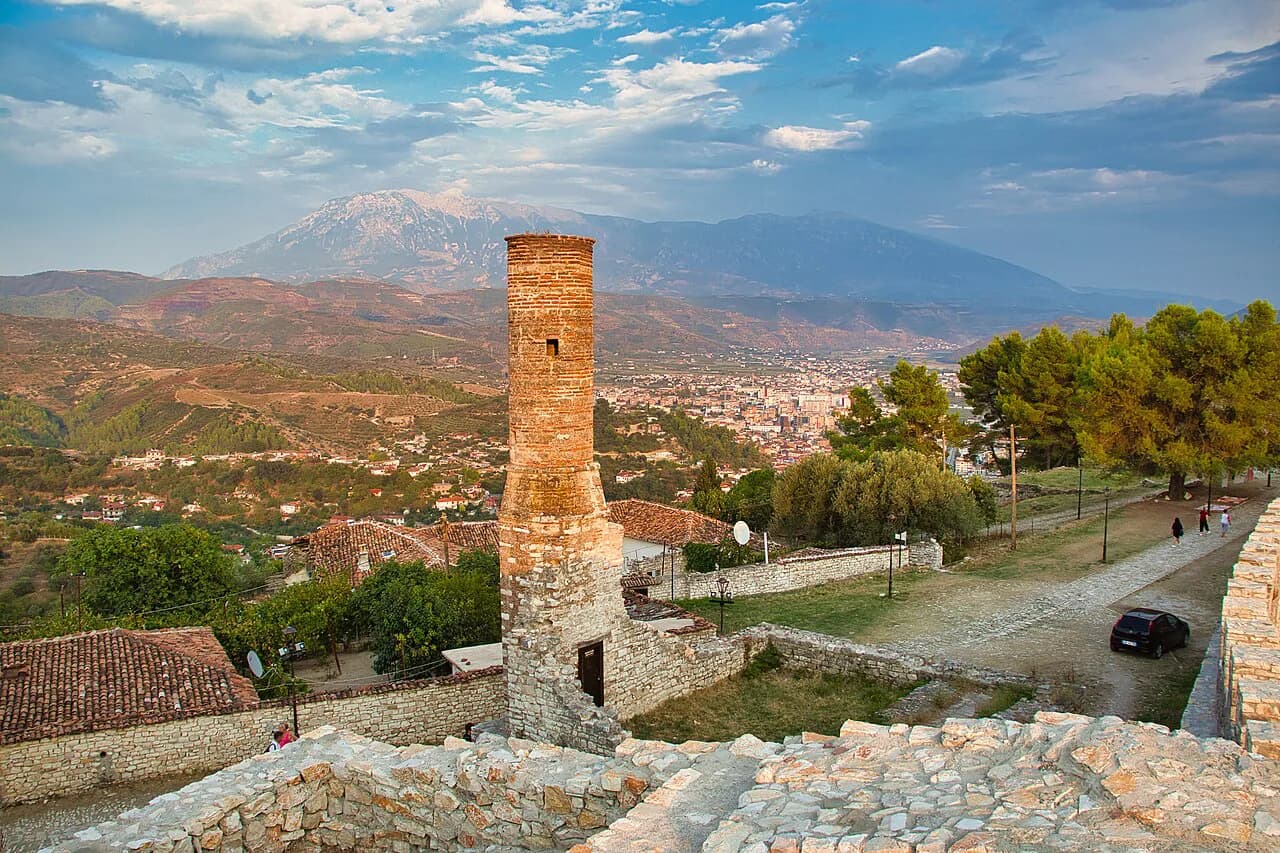
The castle crowns the hill above Mangalem and is a living neighbourhood rather than an empty ruin, with houses, bars, restaurants, churches and museums inside the walls. That means the walk continues past the gate instead of ending there, and you can wander lanes inside the fortifications.
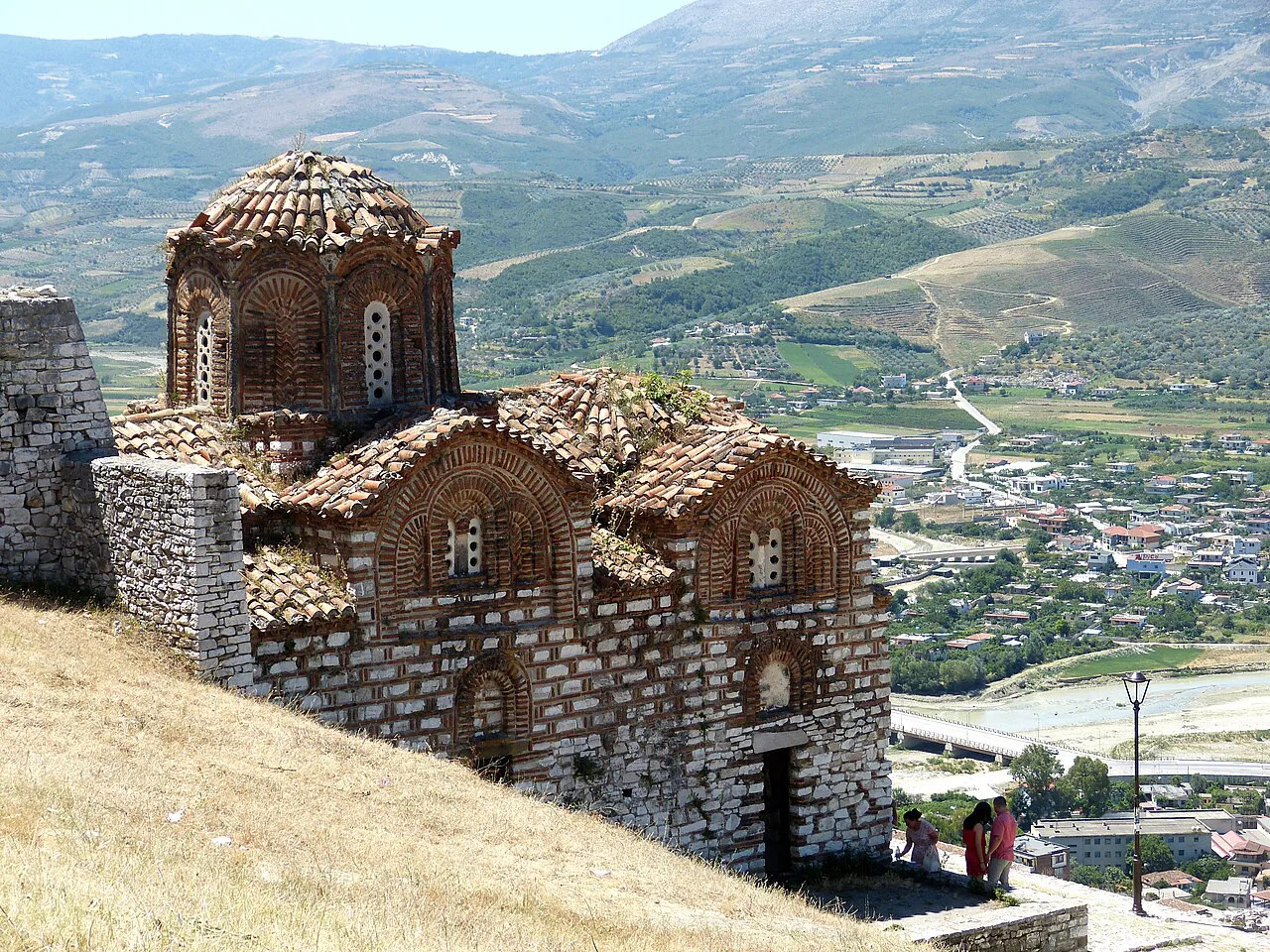
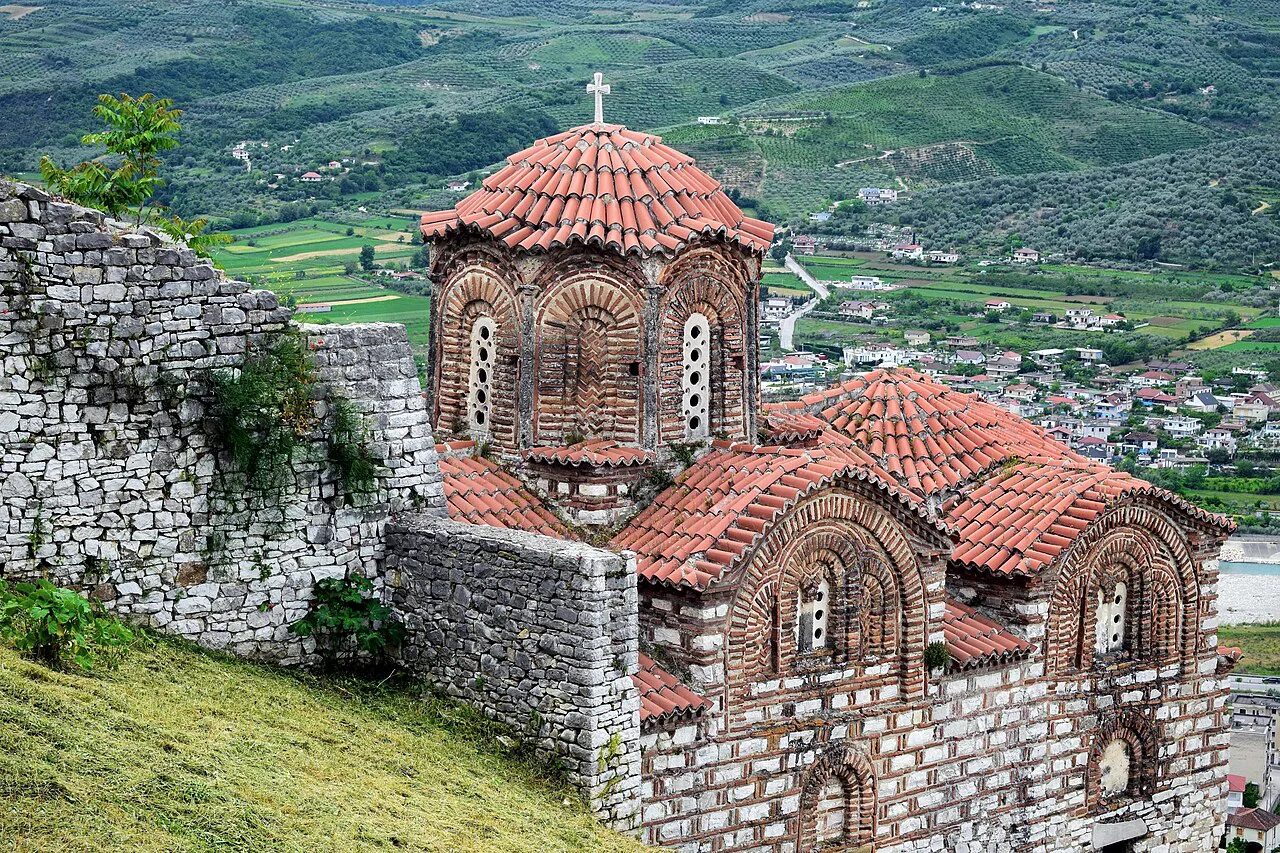
Inside, the Holy Trinity Church, built between the 13th and 14th centuries, sits below the main fortress and is the highlight for many visitors, with the old barracks and the remains of the White Mosque nearby. The Cathedral of the Assumption of Saint Mary houses the Onufri Iconography Museum, which is the obvious stop if you want the museum visit inside the walls.
Access has varied over time, so confirm at the gate whether an entrance fee applies rather than relying on older figures, and check the museum's current opening hours before planning the day around it.
The castle viewing platform gives a bird's-eye view over the Gorica quarter and the Gorica bridge, which makes a natural end point before you walk back down. One guide also describes an unattended entry point off Rruga Mihal Komnena about halfway up, useful if you are approaching on foot from Mangalem.
What the walk involves: steep cobbles and how long to allow
Expect uphill walking on cobbles for much of the route. The climb from the old town streets to the castle is a sustained gradient, and the lanes are uneven underfoot. Sturdy shoes matter more than any other kit.
In summer, walk early or late because the middle of the day is hot. One guide advises tackling the castle ascent first thing in the morning or towards sunset, and that logic applies to the lanes too.
Plan on half a day for Mangalem and Gorica at a browsing pace, and a full day if the castle and the Onufri museum are included. The old town is small enough that you will pass the same corners twice, which is no bad thing for spotting shops you missed.
If you would rather not navigate the quarters alone, a guided walk covers the history behind the houses, mosques and churches, and a planned route can take in the main corners without backtracking.
What to see along the old-town lanes
If you want a sense of how an Albanian old-bazaar street looks, Albania's official tourism site describes Kruja's Old Bazaar: a 17th-century market street of Ottoman houses and shops selling filigree, woodwork, copper, carpets and traditional clothing. That is Kruja, not Berat, so treat it as a comparison rather than a map of these lanes.
Berat's lanes are a place to walk and look rather than a scheduled shopping stop, so build the day around the quarters, the churches and the castle. Pay in lek for small purchases and carry some cash, since card machines are not guaranteed in smaller places.
For a structured look at the quarters beyond the lanes, the town's religious buildings are worth an hour of your time: mosques and churches stand close together across the old town, reflecting centuries of coexistence between Muslim and Christian communities.
Getting there from Tirana and around town
Berat lies south of Tirana, and the drive is the usual approach for independent travellers. Once in town, the old quarters are best covered on foot, with the river bridge linking the two banks.
For the wider picture of what to see once you have finished the lanes, the attractions hub collects the individual sights, and the old town guide covers the layout in more depth.
Which side of the river to start on
Start in Mangalem for the Ottoman facades and the climb, cross to Gorica for the quieter streets and the view back, and finish at the castle gate if you have the legs for it. That order keeps the uphill work in one direction and puts the best light on the river for the descent.
Go early in summer, wear grippy shoes, and confirm castle and museum arrangements at the gate on the day. The rest of the walk needs no booking at all.
Explore more Berat guides
Frequently Asked Questions
Is there a market in Berat old town?
Not a defined market square. Berat's old town is the lanes themselves: Ottoman houses, narrow cobbled streets and river views across Mangalem and Gorica, with the inhabited castle neighbourhood above. For a preserved Albanian bazaar street, Albania's official tourism site describes Kruja's Old Bazaar, a 17th-century market street of Ottoman houses and craft shops.
How long does the Berat old-town walk take?
Allow half a day for Mangalem and Gorica at a browsing pace, and a full day if you add the castle and the Onufri Iconography Museum. The climb to the castle is uphill on cobbles, so build in rest stops.
Where does the walk to Berat Castle start?
The main route climbs from Mangalem through the old town to the castle gate. One guide also describes an unattended entry point off Rruga Mihal Komnena about halfway up the hill, and reports on whether the main gate charges an entrance fee have varied, so confirm at the gate on the day.
Sources
Notes for your Albania trip
Optional updates to our Albania town guides.
You might also like
Continue reading
More guides you'll find useful