Berat Mosques: Decide Which to Visit and Etiquette
A practical guide to the mosques of Berat: the King Mosque in Mangalem, the Lead Mosque in the centre, and what to expect when you step inside.
On this page
See the King Mosque in Mangalem and the Lead Mosque in the city centre, and you have covered the two mosques in Berat that visitors can plan around. They sit in different quarters, so the order you take them in shapes your day: the King Mosque belongs to the climb through the old town, the Lead Mosque to the flat streets below. This guide covers each building, the King Mosque interior, dress and behaviour, and how both fit into a route up to the castle. For the whole climb and the lanes below it, see our Berat Walking Tour and the wider Berat Old Town guide.
The King Mosque (Xhamia Mbret) in the Mangalem quarter
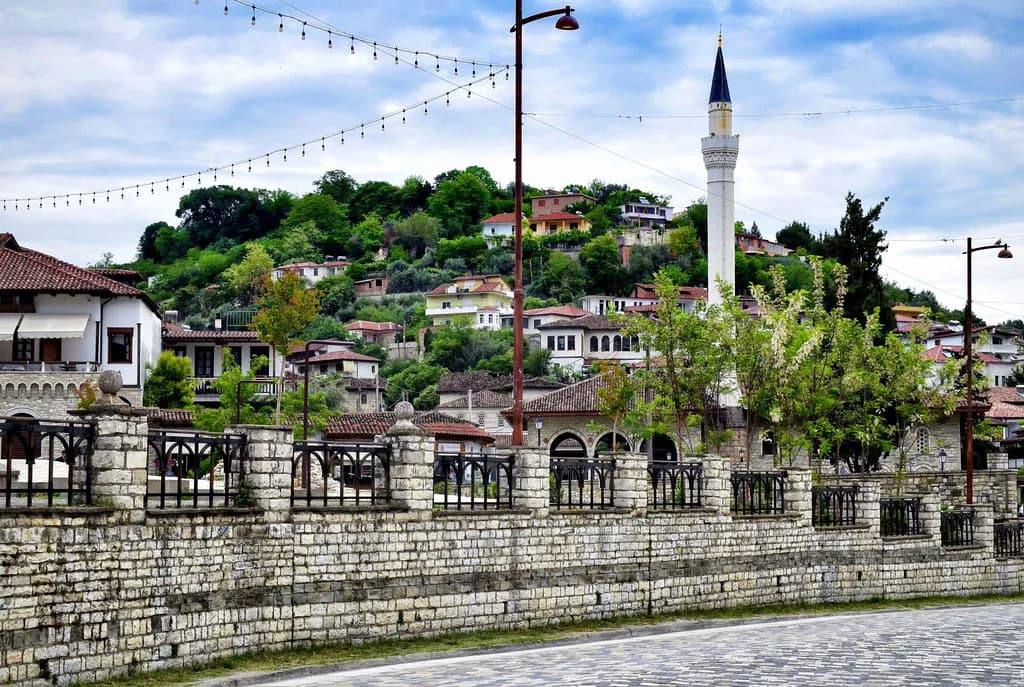
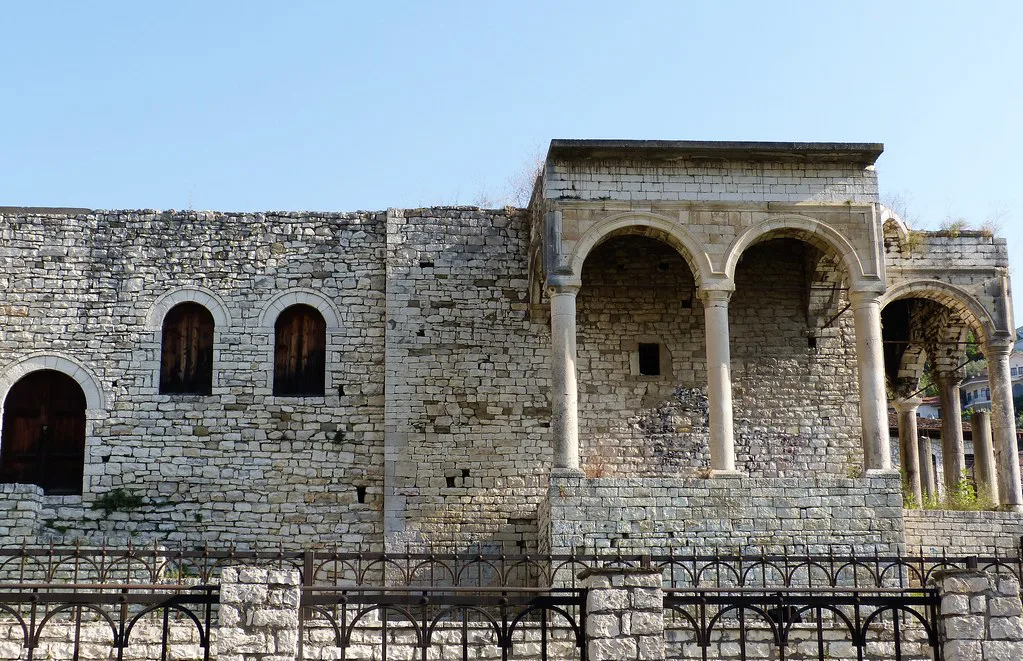
The King Mosque, Xhamia Mbret in Albanian, is a 15th-century Ottoman mosque in the Mangalem quarter. That places it on the hillside above the Osum River, among the white houses that stack up towards the castle ridge, so you meet it while walking the lanes of the old town rather than on a separate trip. Treat it as a stop on the way up and down rather than a destination in itself.
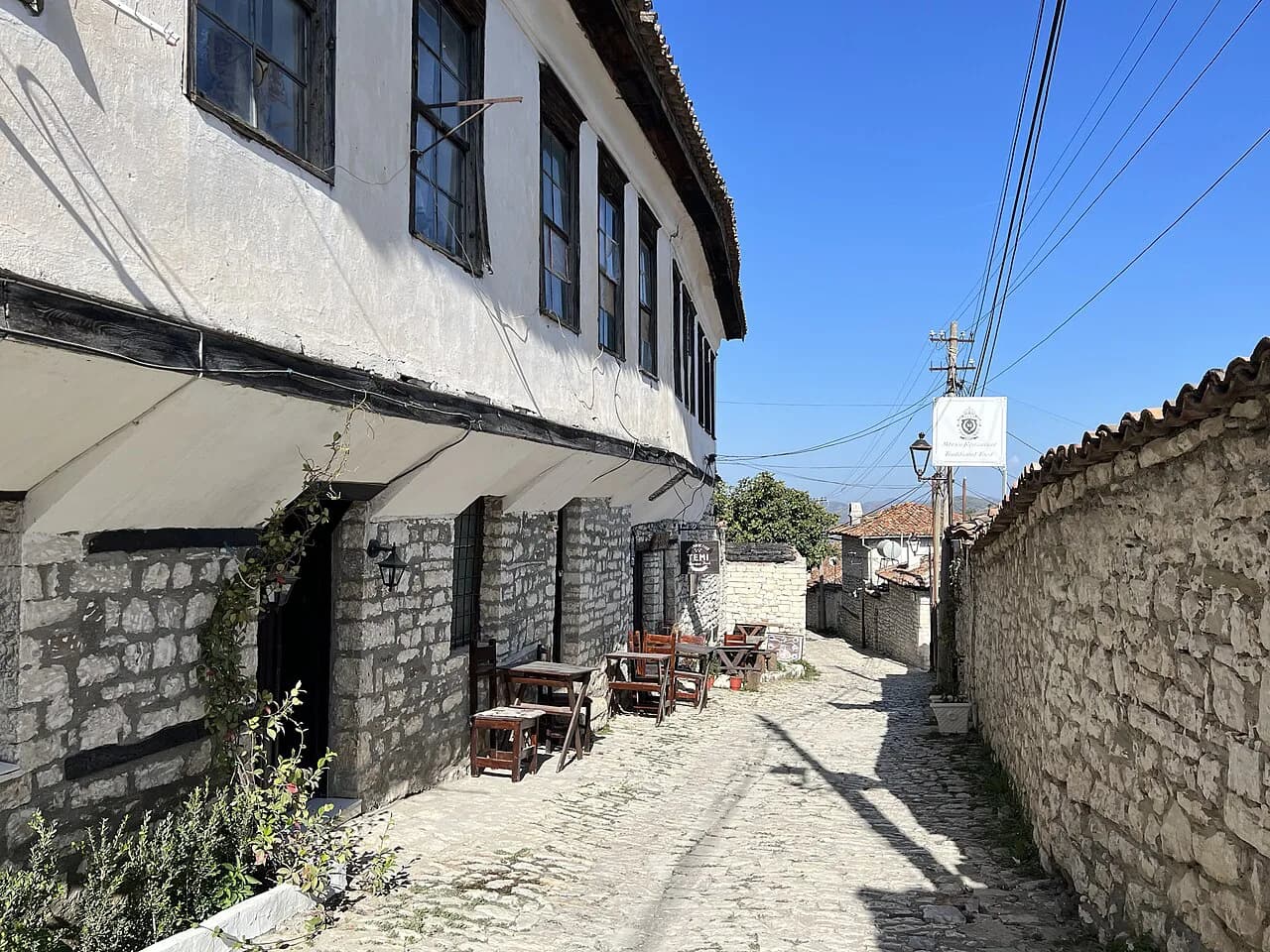
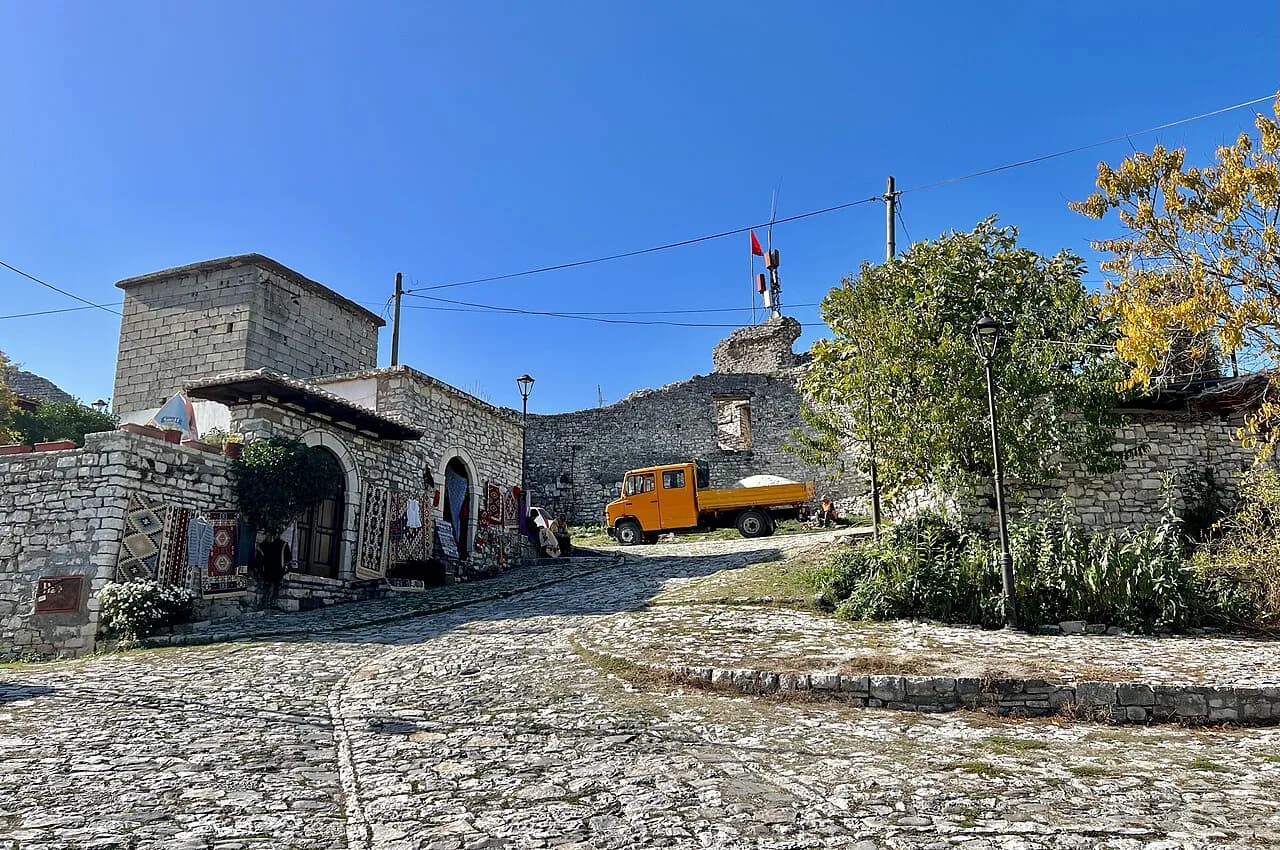
Mangalem is the quarter you cross on foot, and the mosque sits inside its street pattern, so the sensible approach is to fold it into a wider wander of the old town. Allow time for the lanes themselves: the cobbles are uneven and the gradients steep, which slows progress more than the distances suggest. Walking shoes matter more here than any single sight.
Opening patterns for the King Mosque change with prayer times and with the building's use, so there is no fixed visitor slot to plan around. Look at the door when you arrive: if it is open and people are inside, step in quietly; if it is shut, admire the exterior and move on. Your hotel or the local tourist information point can confirm the current situation on the day you visit.
The Lead Mosque (Xhamia e Plumbit) in the city centre
The Lead Mosque, Xhamia e Plumbit, is a 16th-century building put up in the city centre by the local nobleman Ahmed Bey. It is an example of 16th-century architectural heritage in Albania, and its central position makes it the easier of the two to reach if you are short of time or arriving late in the day. Pair it with the lower town rather than with the castle climb.
Because the Lead Mosque sits in the centre, it is the more convenient of the two if you are starting or finishing in the flat streets. Coming down from the castle, it is also the natural place to end a walk, with the flat streets a relief after the cobbles above. Plan your route around your energy rather than around opening times.
What you see inside: the King Mosque interior
Photographs of the King Mosque interior show a prayer hall laid out for worship. Expect a quiet space in use rather than a museum room, and remember that people may be praying while you look around. Keep your voice low, stay behind anyone at prayer and do not walk across the prayer area in shoes.
The interior is the part that rewards a short pause: painted surfaces and repeated geometric patterns are easy to miss if you only photograph the doorway and leave. Ten minutes inside tells you more about Ottoman craftsmanship in Berat than a quick exterior glance. If you want the architecture of the town in more depth, the churches and Ottoman houses nearby round out the picture.
Visiting etiquette: dress and behaviour
As at working mosques elsewhere, follow the conventions you see at the door. Cover shoulders and knees, and women should carry a scarf in case a head covering is expected at the door. Take shoes off where others have left theirs, and keep voices low inside.
Time your visit around prayer rather than pushing in during it. If worshippers are arriving, wait outside until they have finished, and do not photograph people at prayer. A small donation is a reasonable gesture where a box is provided, but nobody should be asking you for an entry fee to a working mosque.
Berat's religious buildings sit within a Unesco-listed townscape, and that listing is part of why the old quarters are protected as they are. Behaving respectfully in a place of worship is part of the same deal as not climbing on the castle walls. The wider heritage context is worth reading up on before you go.
Other mosques you pass in the old town
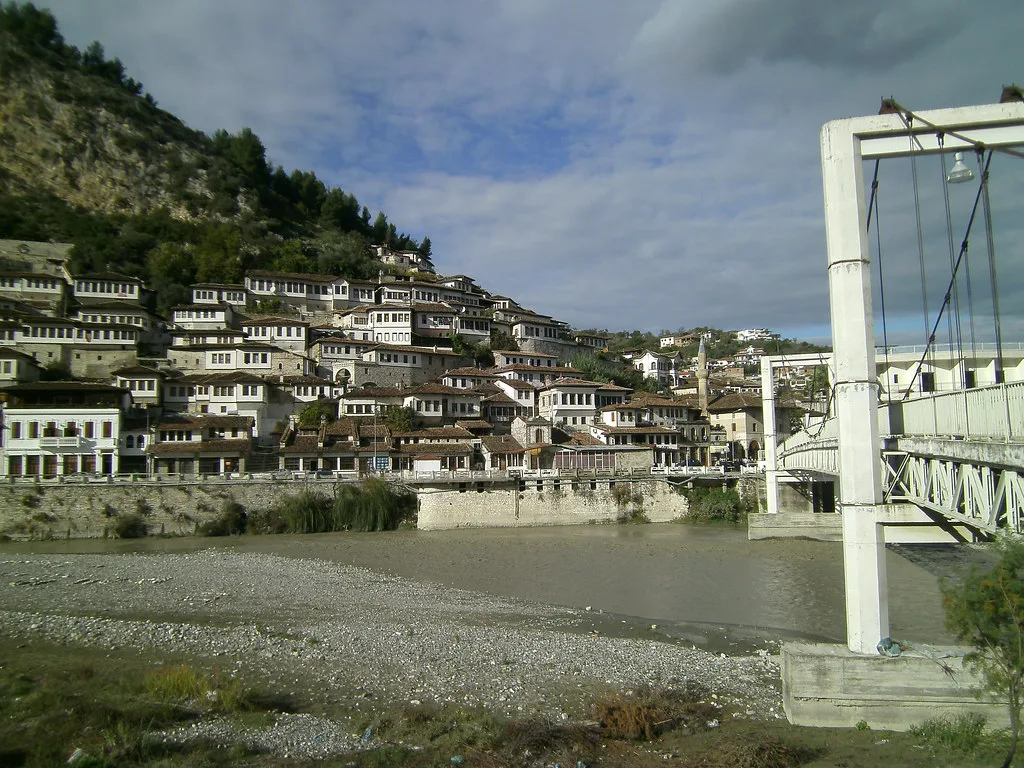
Beyond these two, Berat's old quarters are dense with religious buildings, and you will pass small mosques and former prayer spaces on almost any walk through Mangalem and the lower town. Treat them as part of the streetscape: a minaret above a roofline is a way to read the quarter, not always a sight to enter. Some are closed, some are in use, and some are fragments within other buildings.
The same applies to the churches that sit among them, a reminder that Ottoman Berat held several faiths within a small area. If you want the fuller picture of how the town's buildings fit together, a broader survey of Berat's sights helps you decide what to prioritise. Use the mosques as landmarks on a route rather than as a checklist to complete.
How the mosques fit into a walk through the old town
A workable sequence is the Lead Mosque first, then the climb into Mangalem for the King Mosque, then on up to the castle, and back down through the lanes. That order keeps the uphill stretch in the middle of the day when you are freshest and leaves the flat centre for the end. The castle gate road, Rruga Mihal Komnena, gives you a steep but direct line up from Mangalem.
If you only want the mosques, the pair will not fill a day; add the castle and one museum to make a proper half-day, or spread the two mosques across separate mornings. Berat rewards slow movement over tight scheduling, and the mosques are best seen as pauses on a route rather than as the route itself. That is also how you avoid spending your whole visit on cobbles.
Which mosque should you see if you only have time for one?
If you have one spare hour, choose the Lead Mosque for its central position and easy approach, then look into the King Mosque only if you are already walking Mangalem. If you are climbing to the castle anyway, reverse that: the King Mosque sits on your way up, and the Lead Mosque makes a sensible finish in the flat streets below.
Whichever you pick, go with covered shoulders and knees, carry a scarf, and take your shoes off at the door as others do. Check with your accommodation on the morning of your visit about current access, since prayer times and building use shape when the doors are open.
Explore more Berat guides
Frequently Asked Questions
How old is the King Mosque in Berat?
It is a 15th-century Ottoman building in the Mangalem quarter, which places it among the older surviving Islamic monuments in the town.
When was the Lead Mosque built?
The Lead Mosque is 16th-century work, built in the city centre by the local nobleman Ahmed Bey, and it stands as an example of that period's architectural heritage in Albania.
Do you need to cover your head to enter a mosque in Berat?
As at working mosques elsewhere, cover shoulders and knees and carry a scarf in case a head covering is expected at the door. Watch what people entering ahead of you do and follow suit.
How many mosques are there in Berat?
There is no reliable count to give you. What matters for a visit is the pair worth planning around, the King Mosque in Mangalem and the Lead Mosque in the centre, plus the smaller buildings you pass on any walk through the old quarters.
Sources
Notes for your Albania trip
Optional updates to our Albania town guides.
You might also like
Continue reading
More guides you'll find useful