Berat Architecture: Ottoman Houses, Castles and What to See
A practical guide to Berat architecture: Ottoman houses in Mangalem and Gorica, the castle, Byzantine churches, mosques and bridges, and what to look for.
On this page
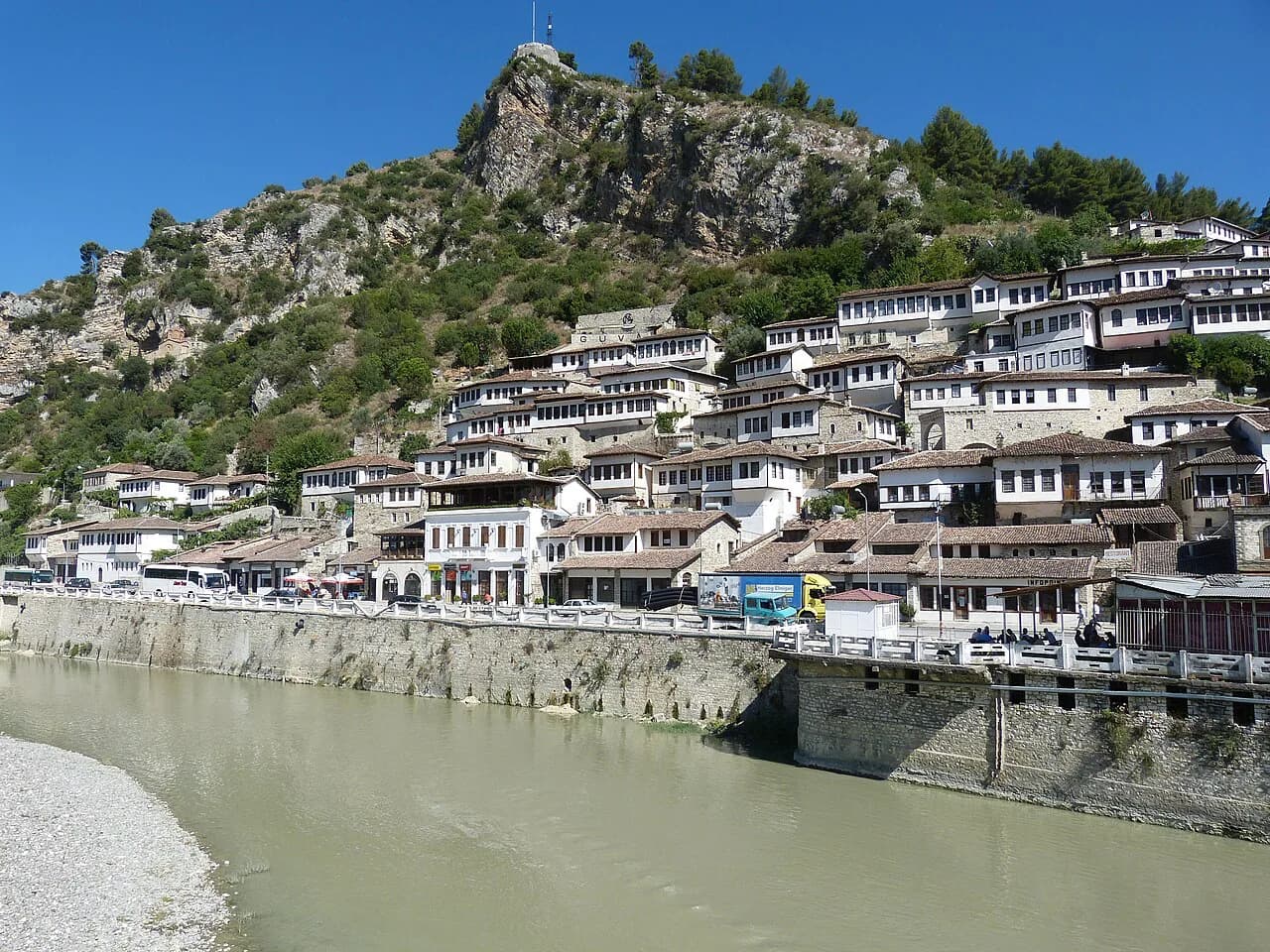
Berat's architecture is best read as layers on a slope: hillside Ottoman houses, Byzantine churches, Ottoman mosques, castle walls, stone lanes, bridges and river views all sit within a compact historic centre. The city is known as the City of a Thousand Windows for its white stone houses, and visitors see most of what matters on foot. This guide separates the castle, Mangalem, Gorica and the river so you can plan a route, then explains what to notice on an individual house rather than just naming it.
Allow a full day for the architecture circuit, and expect steep cobbles to slow you down more than distance does. The old town's lanes climb between houses that are attached to one another, so a short stretch can take longer than the map suggests. For the wider layout of quarters, bazaar streets and the river, start with our guide to the Berat old town before you fix a route.
What Berat's architecture is made of
The main layers are hillside Ottoman houses, Byzantine churches, Ottoman mosques, castle walls, stone lanes, bridges and river views, and they sit close enough together to cover in one walk. Most of the housing is Ottoman in character, with white walls and rows of windows stacked up the slope. The castle, locally known as the Kala, sits above the town, and UNESCO describes Berat and Gjirokastra together as rare examples of an architectural character typical of the Ottoman period.
The easiest way to make sense of the layers is to divide the town into three walks: the castle on top, Mangalem on the slope below it, and Gorica across the river. Each has a different building type and a different ground surface. Our Berat Attractions: 11 Visitor Guides hub links the individual sights if you want to pick only two or three.
Why the city looks the way it does
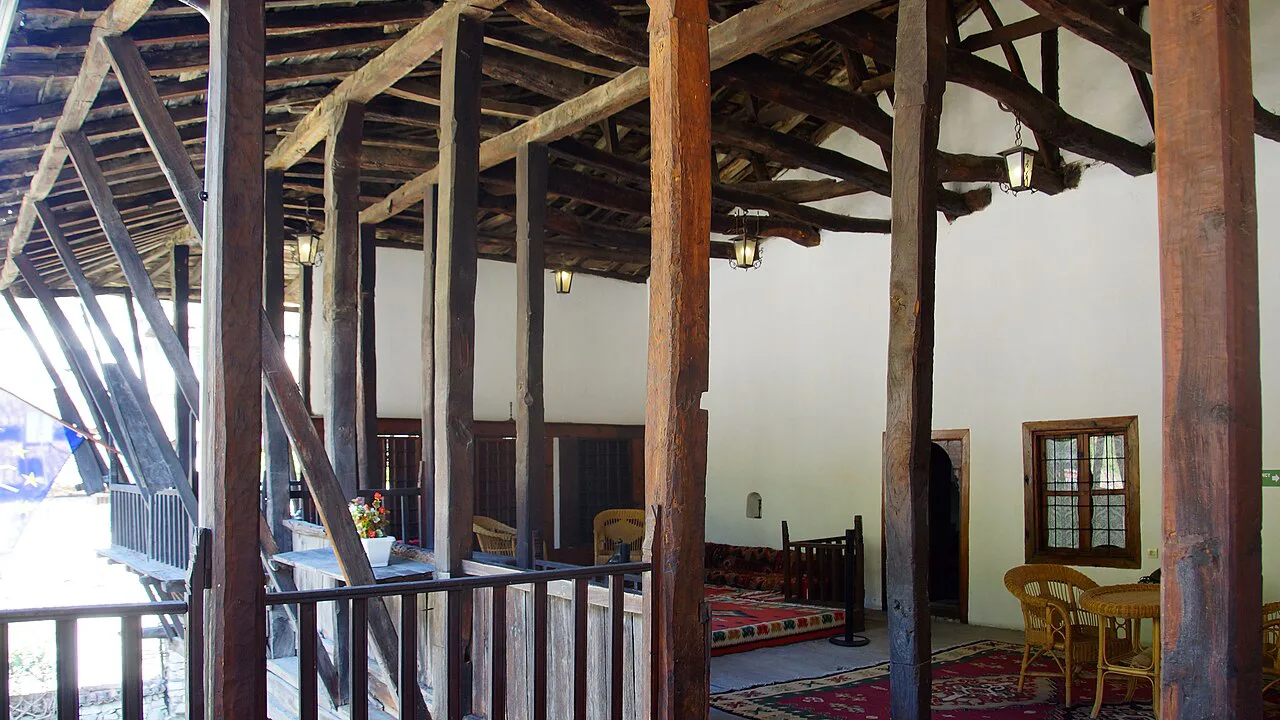
The look of the town comes from its Ottoman-period character and the slope it is built on, not from any single monument. UNESCO's inscription covers the historic centres of both Berat and Gjirokastra, which share that Ottoman housing tradition. That matters for how you walk the town: the houses step up the hill, roofs overlap, and the view from the river is of a wall of white facades and windows.
Berat's architecture is often discussed alongside Gjirokastra's, and the comparison helps you spot what is specific here: white stone houses stacked on a steep bank above a river, rather than the grey slate roofs visitors associate with Gjirokastra. If you want the background in more depth, our Berat history page sets out the periods that produced these building types.
Mangalem: Ottoman houses, alleys and the Pasha's Gate
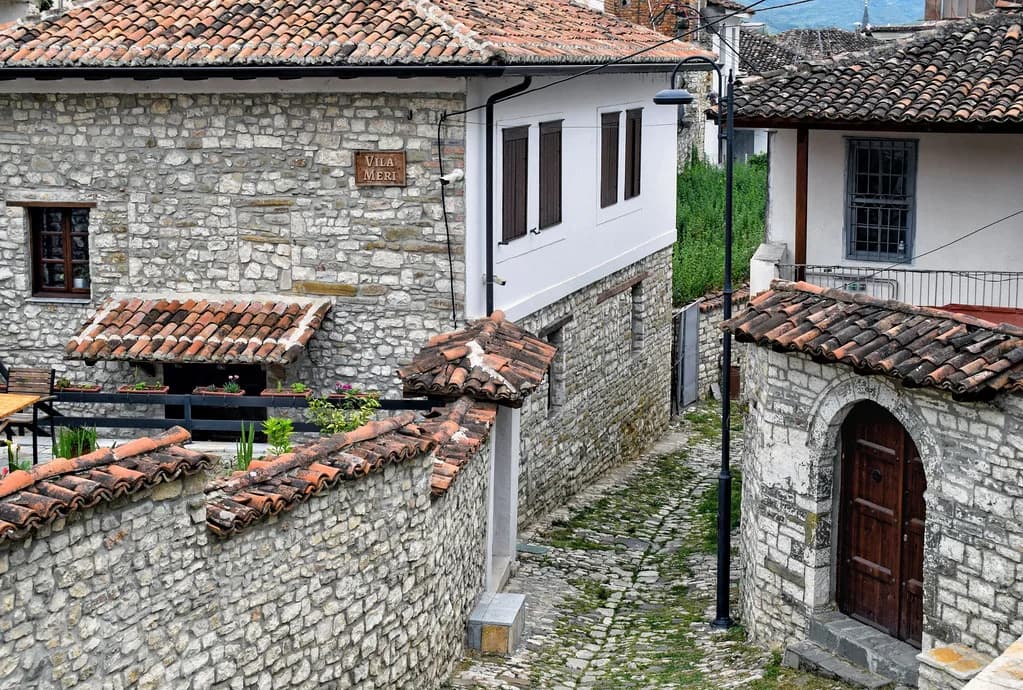
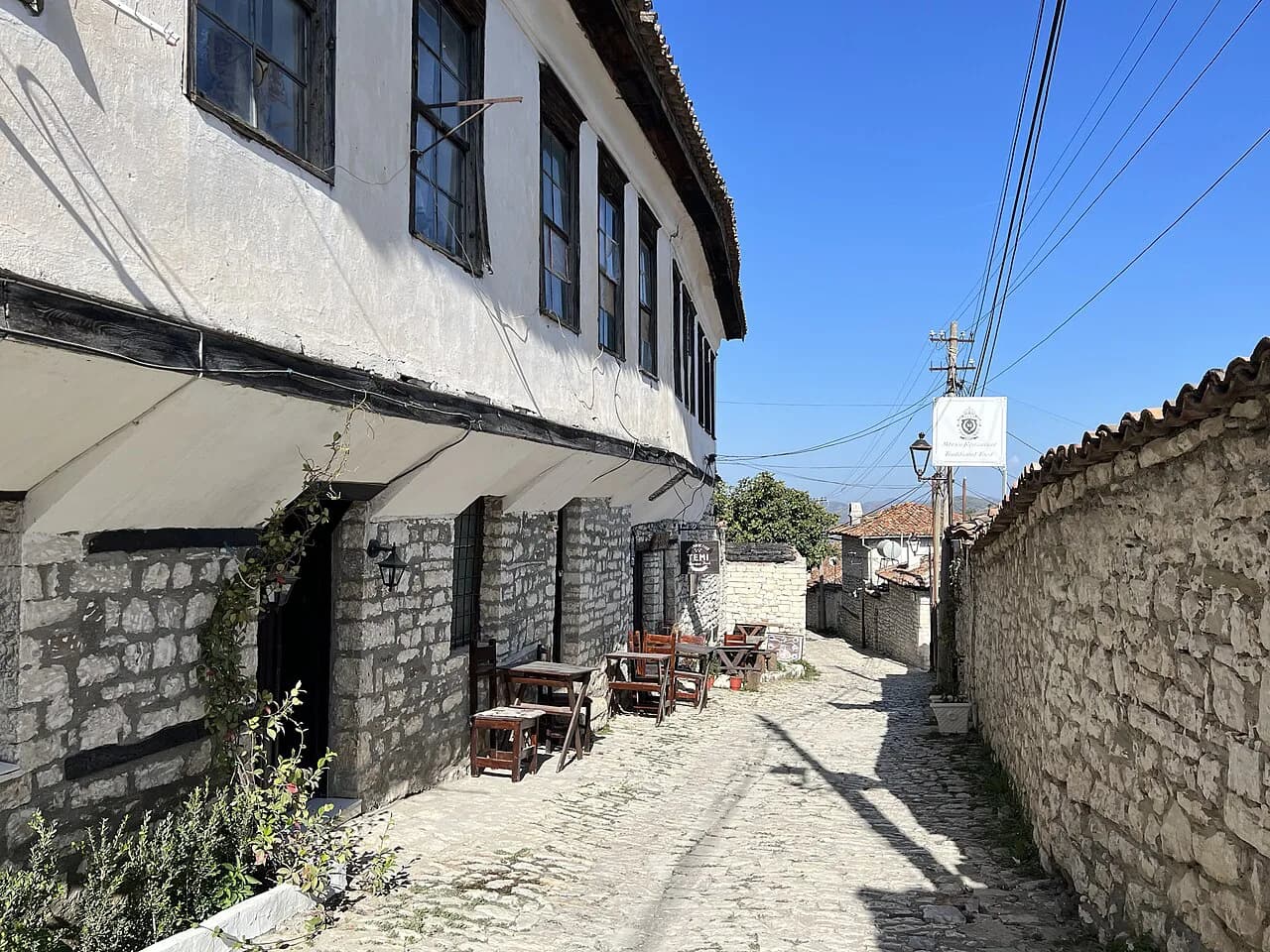
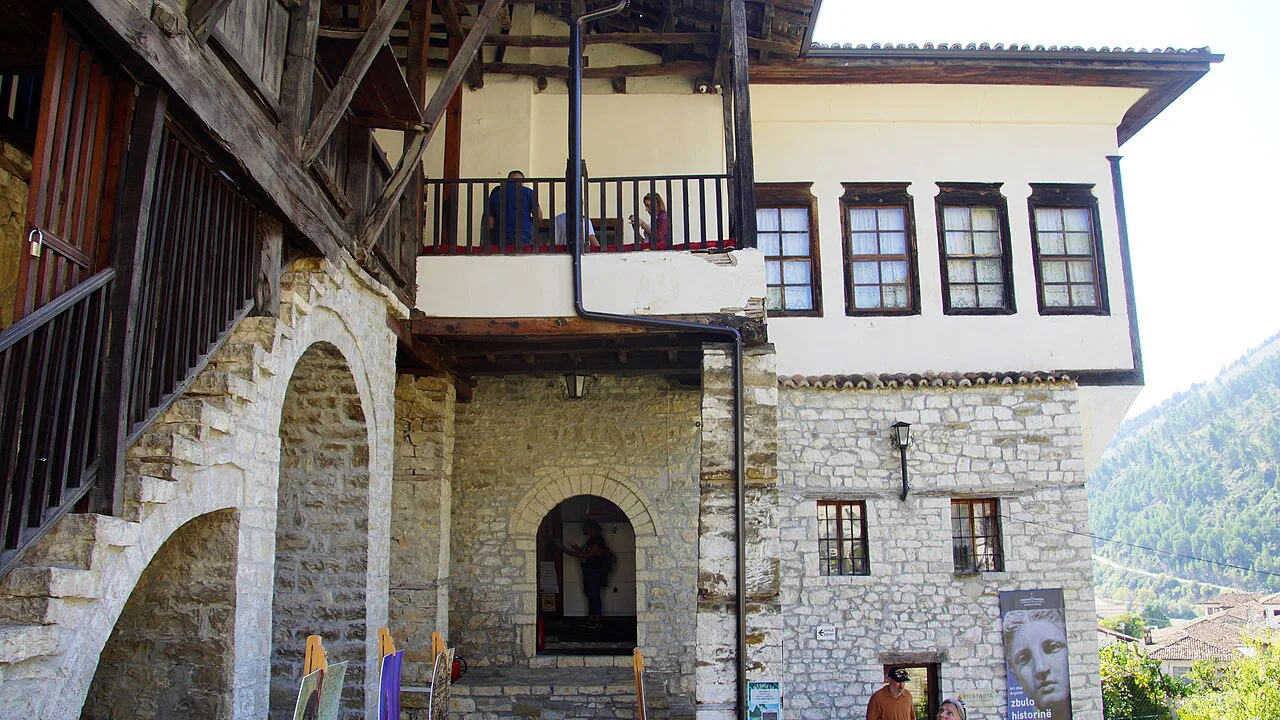
Mangalem is the neighbourhood on the slope below the castle, where Ottoman-style houses are mostly small and attached to each other, without yards or gardens. This is why the quarter reads as a continuous wall of facades from a distance. Up close, the alleys are the point: when you think a street has ended, a hidden alley usually leads somewhere else.
Several specific buildings sit along the historical Mangalem district: the Teqeja of Halveti, the Dervish House of Berat, the Pasha's Gate and the Plum Mosque. Treat them as markers on a walk rather than separate stops, since they come up as you climb through the quarter. Our guide to the mosques in Berat explains the Ottoman religious buildings in more detail, and the Berat walking tour is the practical way to link them without doubling back.
Gorica and the Osum River
Gorica sits across the Osum River from Mangalem, and the two quarters face each other over the water. The Gorica Bridge is one of the many treasures of Albania's historical and cultural heritage, still in use, and it gives you a view back to the stacked houses on the far bank. Build it into the route rather than treating it as a minor point on the map.
On the Gorica side, the Ethnographic Museum occupies one of the most magnificent Ottoman-era houses in the region, and it is the one place where you can step inside the house type you have been looking at from outside. Go here after you have walked Mangalem, so the interiors mean something. Check the museum's current opening days and ticket price locally before you cross the river for it.
The castle: stone streets, churches and lived-in houses
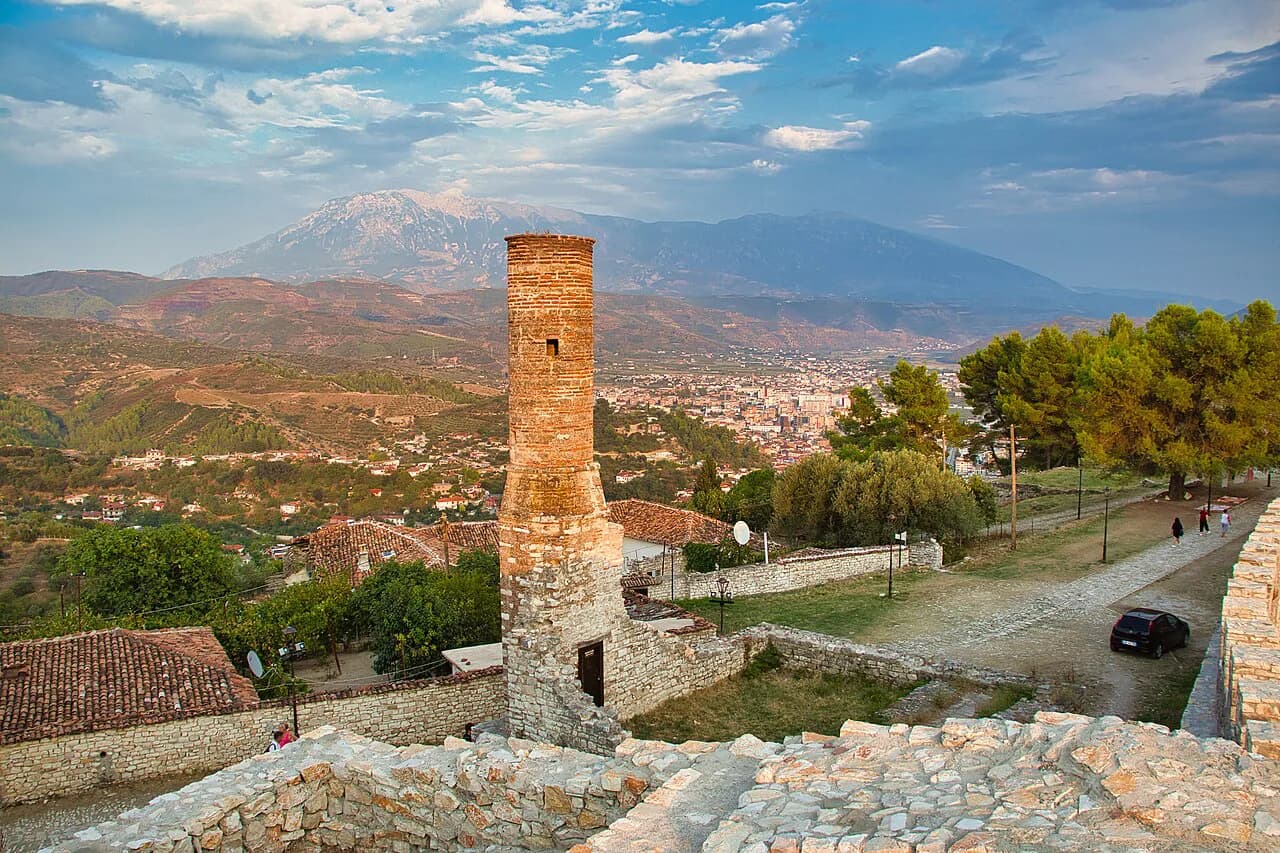
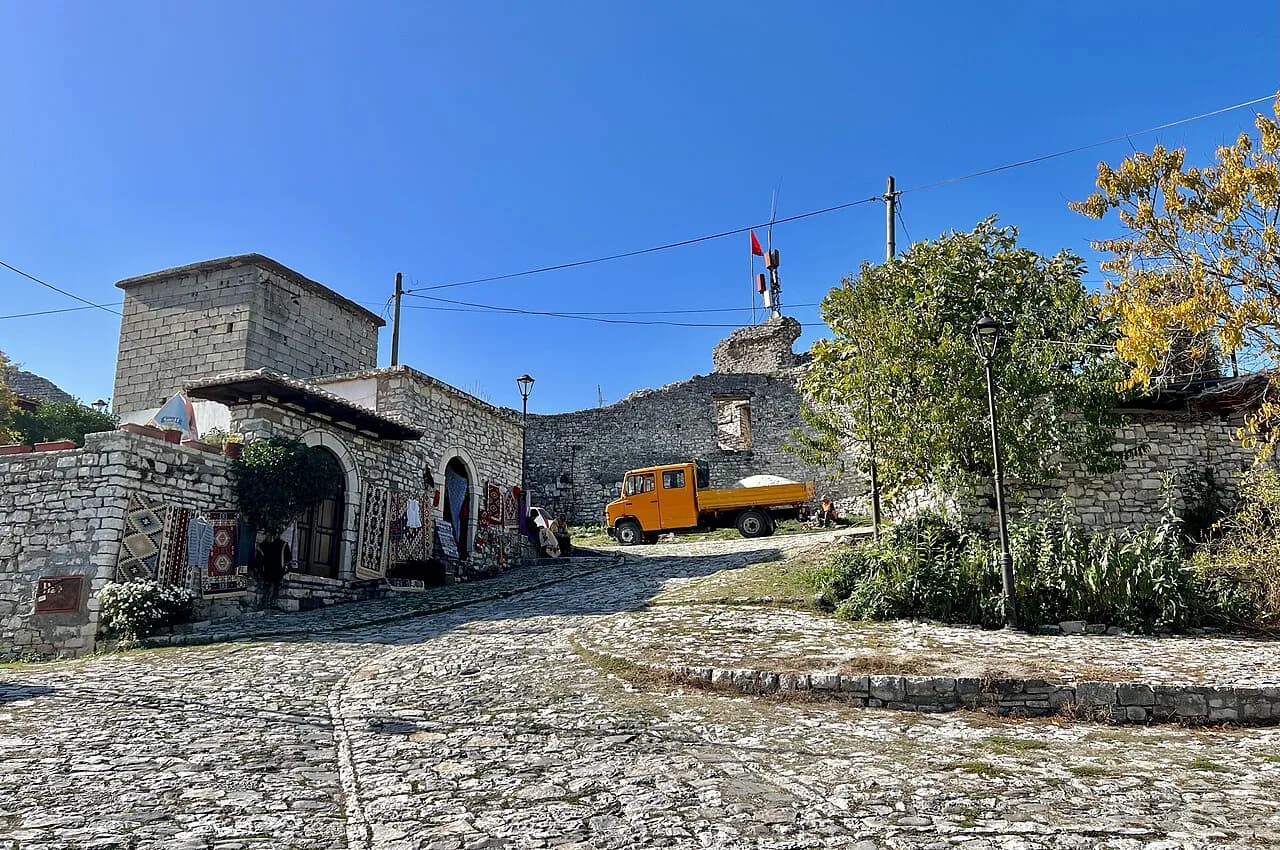
The castle occupies the old city on a hill 187 m above sea level. Inside you find stone streets, Byzantine churches and ruins from different periods. What makes it unusual to walk through is that many families still live inside the walls, and some houses have been converted into guesthouses, restaurants or shops.
Because people live there, the castle is a neighbourhood as much as a sight: keep to the lanes, keep noise down near doorways, and treat courtyards as private unless a sign says otherwise. Sunrise and sunset from that height are the reason many visitors time the climb, though the light also means the walk down can be dim. UNESCO lists the castle as part of the inscribed historic centre.
Churches to look out for
Two churches inside the castle carry most of the architectural interest. The Church of Saint Triadh stands near the second surrounding walls, built in a western Byzantine style, and its brickwork and curved forms are worth a slow look from outside. The Church of Saint Mary Vllaherna is the older of the two, and its frescoes were painted by Nikolla, son of the painter Onufri.
Dress modestly for any church you enter, and keep voices low where services or worshippers are present. Frescoes fade quickly in bright light, so avoid flash where it is restricted. Opening arrangements for individual churches change, so confirm on the door or with the museum staff rather than planning around a fixed time.
Mosques and teqes: reading the Ottoman layers
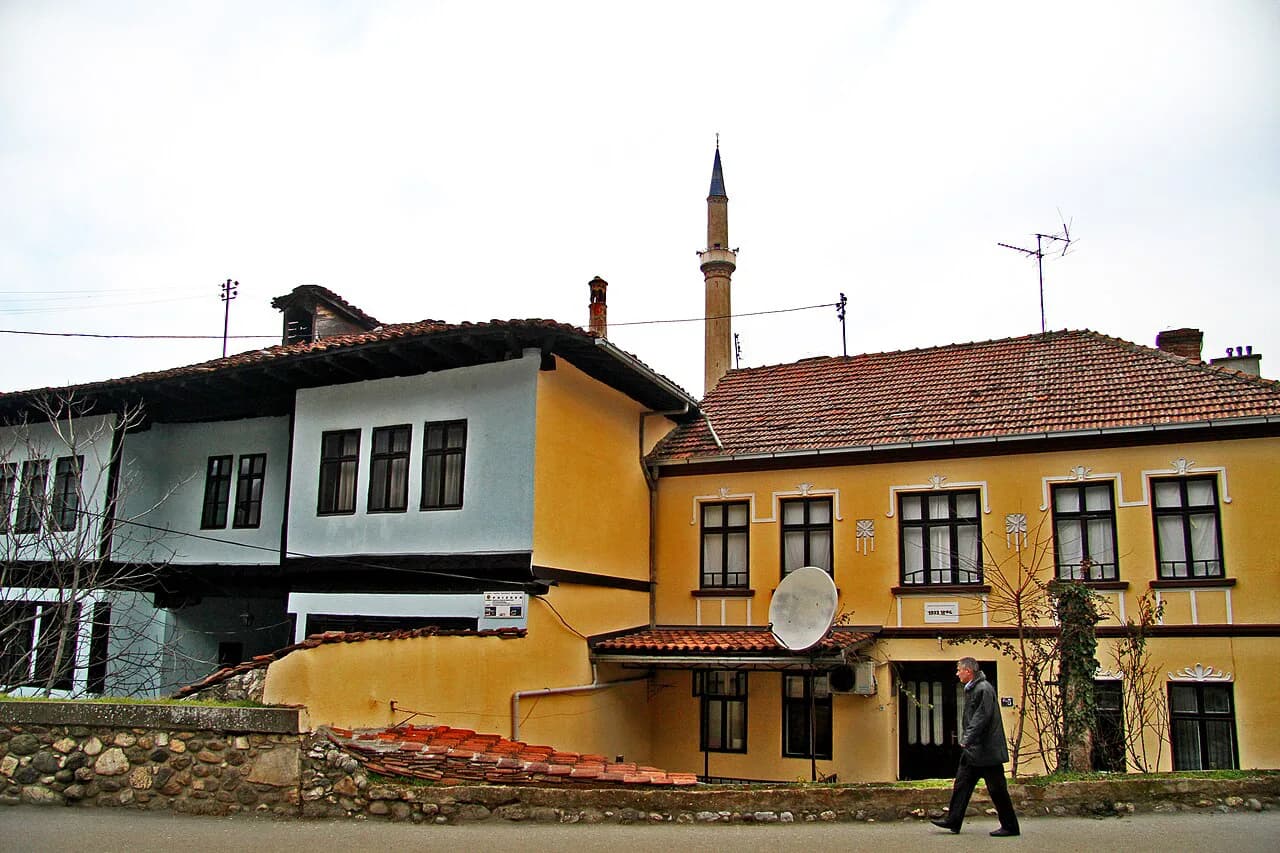
The Plum Mosque and the Halveti teqe, together with the Pasha's Gate, are the Ottoman markers you pass in Mangalem. A teqe is a dervish house rather than a congregational mosque, which is why the buildings read differently from the street. Look for the position of the minaret relative to the slope, since the hillside often hides part of a mosque until you are level with it.
If a mosque is open to visitors, dress modestly, remove shoes where indicated, and stay out of the prayer hall during prayers unless invited. Our mosques in Berat guide covers the individual buildings, and the Berat bazaar is a natural continuation once you drop back into the lower town.
What to notice as you walk
On an Ottoman house, start with the windows: rows of them, closely spaced, are what gives the town its nickname and its texture from the river. Then look at how the roof sits on the walls, how the stone base meets the plastered upper floor, and whether the house has a walled courtyard or none at all. In Mangalem most have none, which is exactly why the houses are attached and the alleys are narrow.
Watch the ground as well as the buildings. Stone lanes and the slope are what dictate the pace, and the gradient is why so many viewpoints open up without warning. Carry water and wear shoes with grip; smooth-soled trainers are a poor choice on polished cobbles, especially on the descent from the castle.
How long the architecture circuit takes
A single day covers the castle, Mangalem and Gorica at an unhurried pace, provided you accept that the hills will set the schedule. Split it in two: the castle in the cooler part of the day and the lower quarters afterwards, or the reverse if you want the river light. Trying to add a museum and a bazaar walk to the same half-day is where most itineraries break down.
Cobbles and stairs are the real constraint, not the distance between buildings. Allow extra time if anyone in the group has knee or ankle trouble, and note that some lanes are too narrow and stepped for wheels. A short walking tour earns its place here, since a guide can route you around the steepest sections while keeping the key buildings in view.
Beyond the old town: the Osum Canyon and Bogova waterfalls
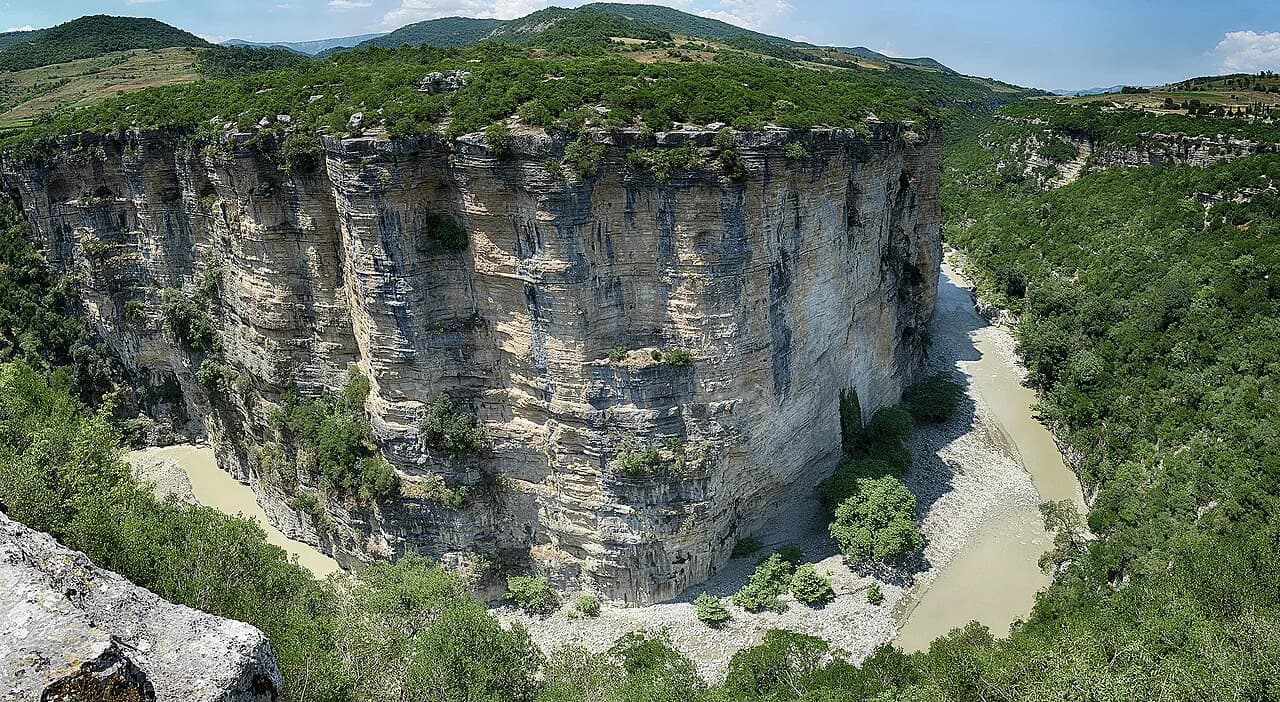
The Osum Canyon and the Bogova waterfalls are about an hour from Berat, and the walk down from the main road to the falls takes roughly 40 minutes. That makes them a half-day add-on rather than a quick stop, so pair them with a short morning in the old town rather than a full architecture day. Check road and path conditions locally before setting out.
The return climb from the falls is the part people underestimate, so wear the same grippy shoes you used on the castle cobbles. There is no need to book a formal tour to see the architecture circuit itself; the sites are in the town. The add-on is the only part that needs its own transport.
Which quarter should you walk first?
Start in Mangalem, below the castle, because the attached houses and hidden alleys make most sense before you see the same building type from above. Then cross the Gorica Bridge for the river view and the Ethnographic Museum house, and finish on the castle hill when the light is lower and the climb is the only thing left to do.
If you have only half a day, drop the outside add-on and keep the castle plus one quarter. Leave the Osum Canyon and Bogova for a separate trip, and confirm current opening and ticket details for any museum or church you plan to enter.
Explore more Berat guides
Frequently Asked Questions
Why is Berat called the city of a thousand windows?
The name comes from the rows of windows stacked across the white stone Ottoman houses on the hillside. Seen from the river, the facades read as a continuous wall of windows, and that view is best taken from the Gorica side. Walking through Mangalem shows you how closely the houses are built together to produce that effect.
Is Berat the oldest city in Albania?
The historic centre is recognised for its Ottoman-period architecture, shared with Gjirokastra, rather than for a single age claim. Treat any ranking of Albanian towns by age with caution and look at the specific monument in front of you. The castle contains ruins from different periods, which is a more useful way to read the town's age than a label.
Can you walk between Mangalem, Gorica and the castle?
Yes. The three areas are close enough to link on foot, with the Gorica Bridge crossing the Osum River between the two lower quarters and a climb up to the castle from Mangalem. The constraint is the steep, cobbled ground rather than the distance, so allow more time than the map suggests and wear shoes with grip.
Sources
Notes for your Albania trip
Optional updates to our Albania town guides.
You might also like
Continue reading
More guides you'll find useful