Berat UNESCO World Heritage Site: What the Listing Covers
Berat is UNESCO-listed jointly with Gjirokastër for its Ottoman houses, castle and bazaar quarters. Here is what the listing covers and how to walk it.
On this page
Berat holds a joint UNESCO World Heritage listing with Gjirokastër, and the protected area is the historic centre, not the whole modern town. The inscription covers a fortified Ottoman-era settlement that has stayed continuously inhabited, with a castle, tiered houses and religious buildings inside and below its walls. This guide sets out exactly what the listing covers, which quarters and buildings it takes in, and how to walk the old town without missing the parts that earned the designation.
The practical picture matters as much as the paperwork: Mangalem climbs one bank of the river, Gorica sits opposite, and the Kala occupies the hill above both. Distances are short but the ground is steep and cobbled, so the order you walk them in shapes the day. A little planning on where the climb starts makes the difference between a pleasant morning and a hot, grudging slog.
What the UNESCO listing actually covers
Berat and Gjirokastër appear together on the World Heritage List as historic centres in Albania, with Berat in the centre of the country and Gjirokastër in the south. The citation focuses on their Ottoman-era architecture and on the fact that both towns have been lived in for centuries without a break. That framing is worth holding on to: the listing protects a living townscape, not a walled-off monument.
The inscription, as described for the joint entry, singles out remains of medieval and Ottoman date that have survived unusually intact. For Berat that means the castle on its hill, the tiered housing on the slopes below, and the religious buildings that grew up around them. When you read that Berat is a UNESCO site, this combination is what is being referred to.
Bear in mind that the designation is shared rather than Berat's alone, so any list of "Albanian UNESCO towns" that names one without the other is incomplete. The pairing also explains why the two are so often visited on the same trip.
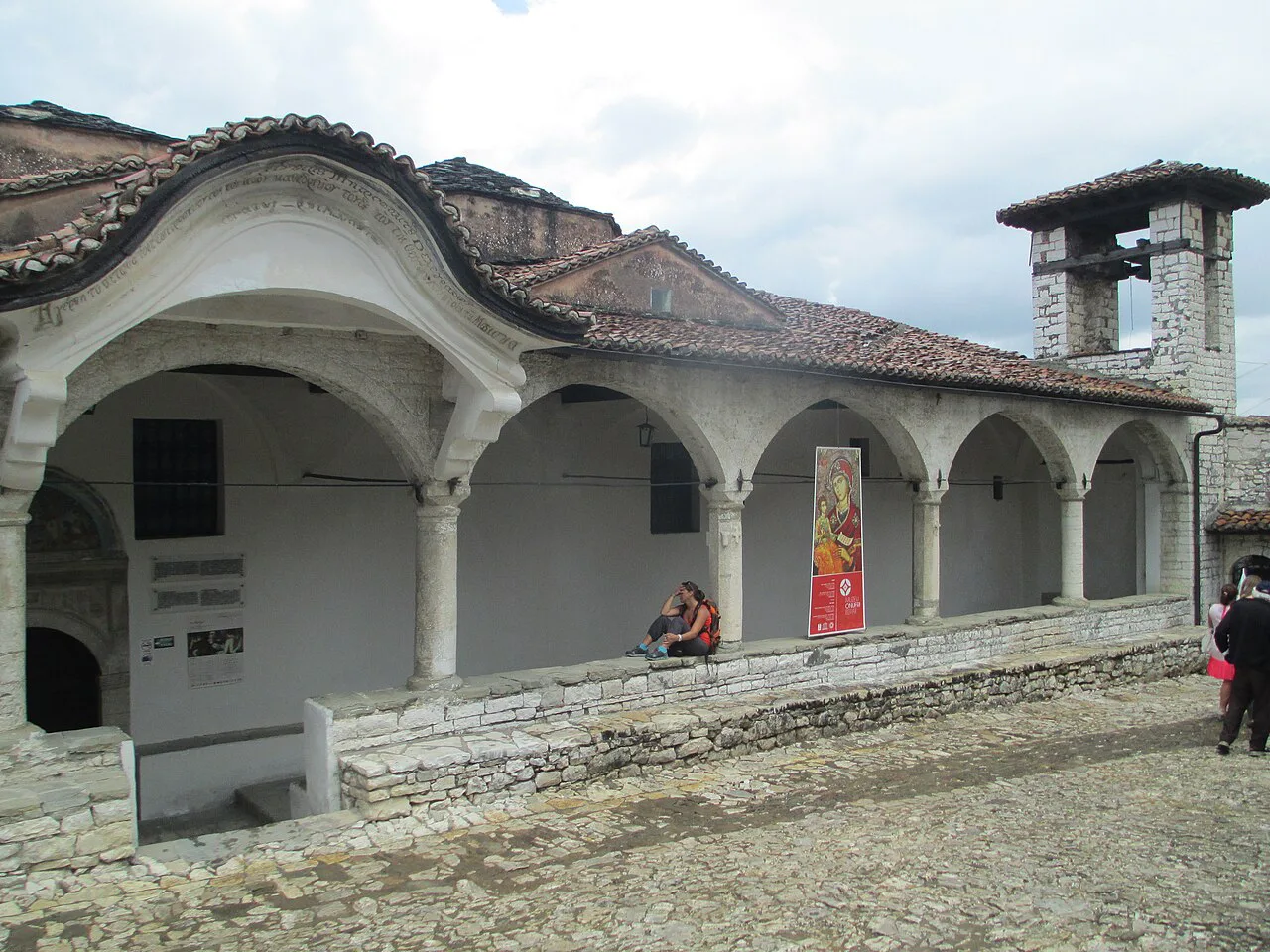
The three quarters: Mangalem, Gorica and the Kala
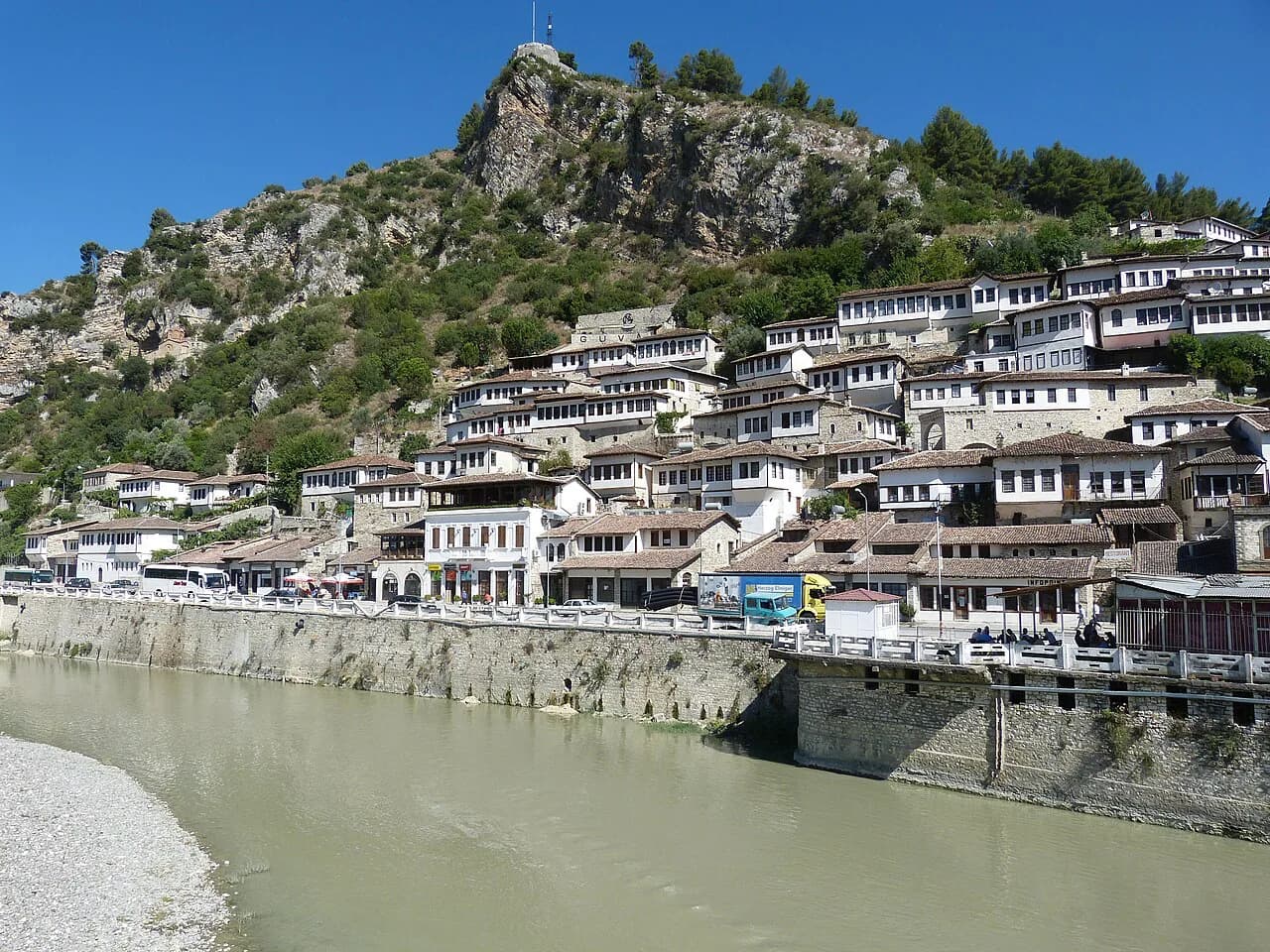
Old Berat divides into three named quarters, and knowing them makes the map legible. Mangalem sits on the right bank of the Osum, Gorica faces it from the opposite bank, and the Kala is the castle quarter on the hill above. The first two are residential slopes of old houses; the third is the fortified enclosure.
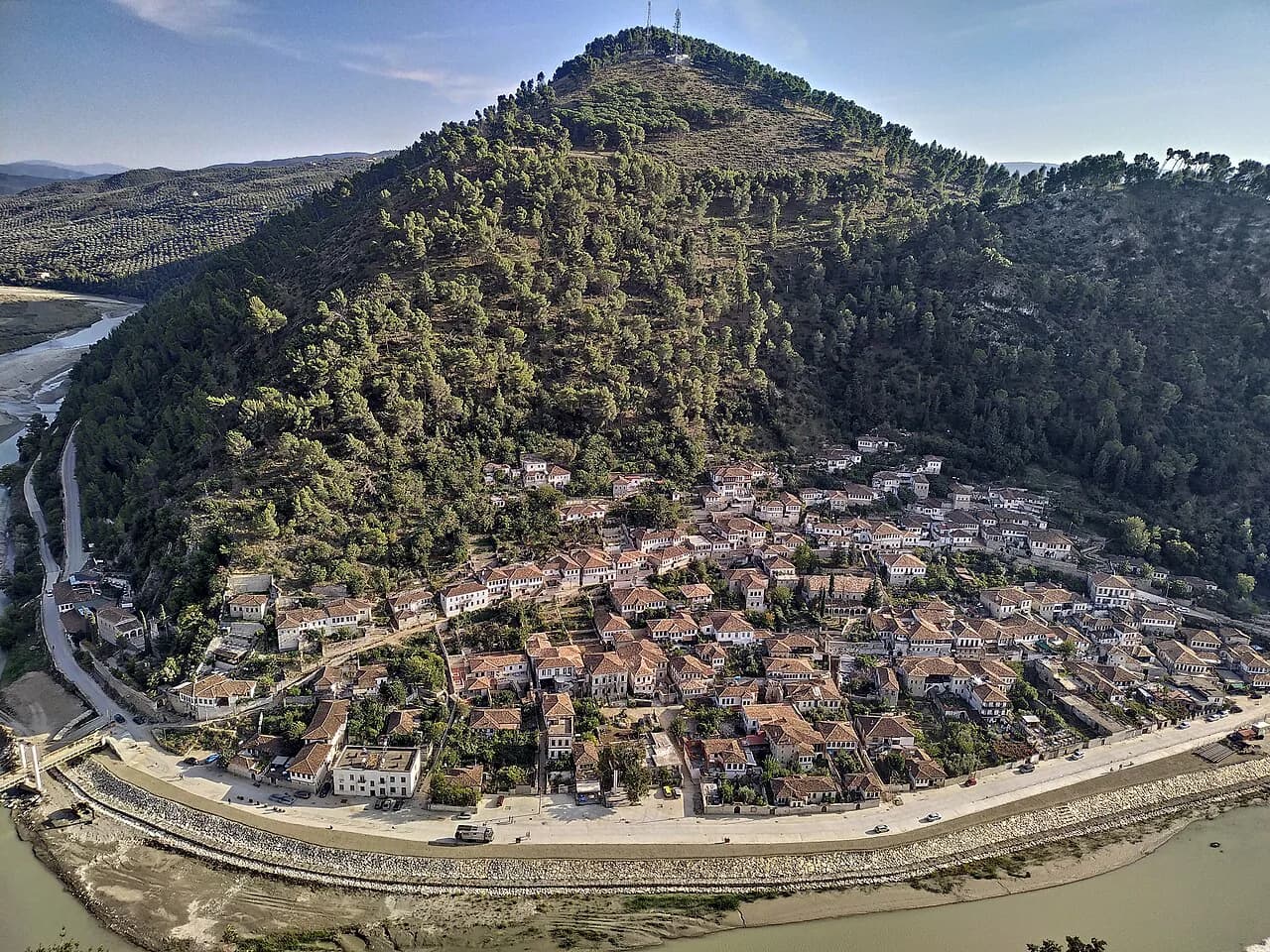
Mangalem is the quarter most visitors photograph, a stack of tiered houses rising from the river with the castle hill behind. Within it, the King Mosque (Xhamia e Mbretit) and the Halveti Tekke, with its carved wooden ceiling, are the named stops in the lower town. Gorica, across the water and reached by an old stone bridge, is quieter and largely residential, with stone houses and red-tiled roofs spilling down the slope.
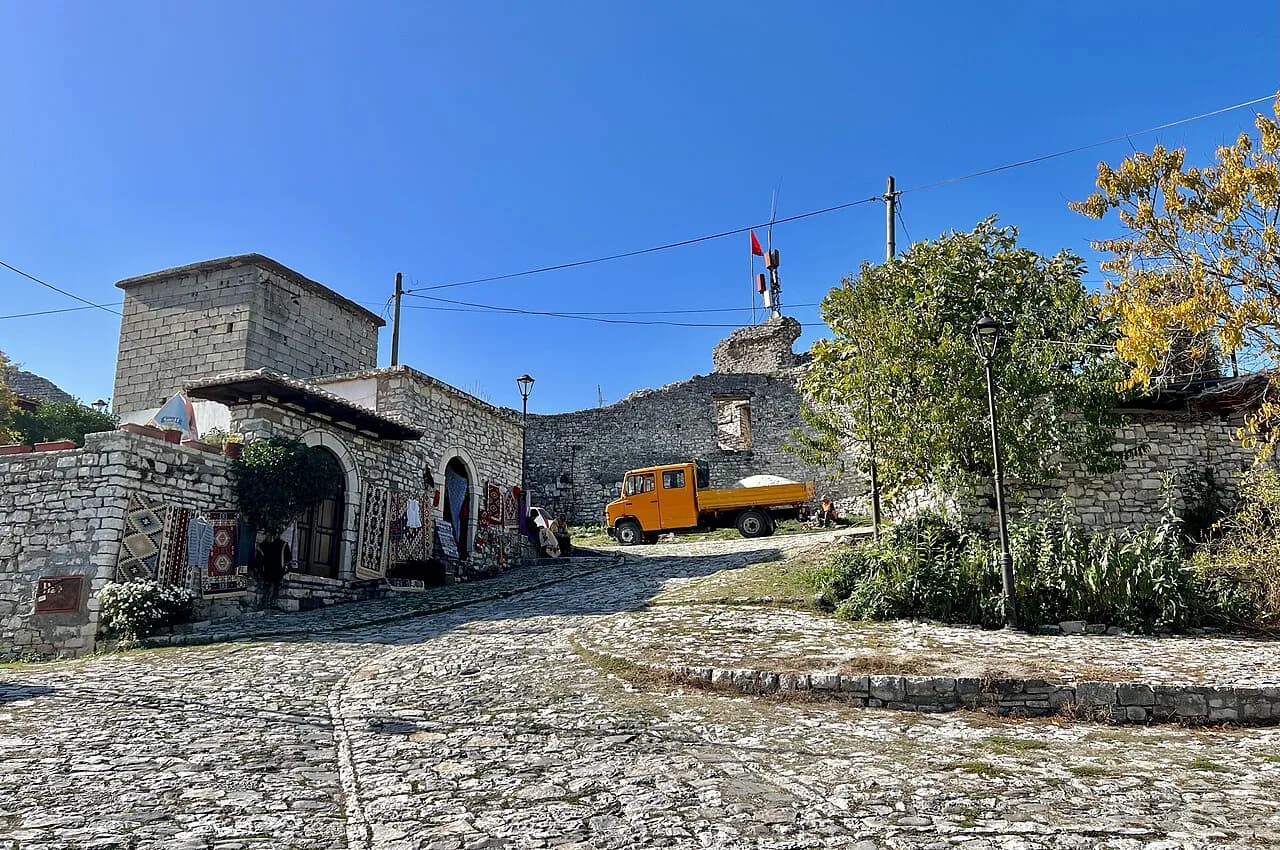
The Kala is the quarter that surprises people: it is still inhabited, with families living inside the castle walls alongside Byzantine churches and the remains of mosques. That mix of ordinary life and protected fabric is central to how the site reads on the ground. Treat the lanes inside the walls as somewhere people live rather than as an open-air exhibit.
The tiered Ottoman houses and the thousand-windows nickname
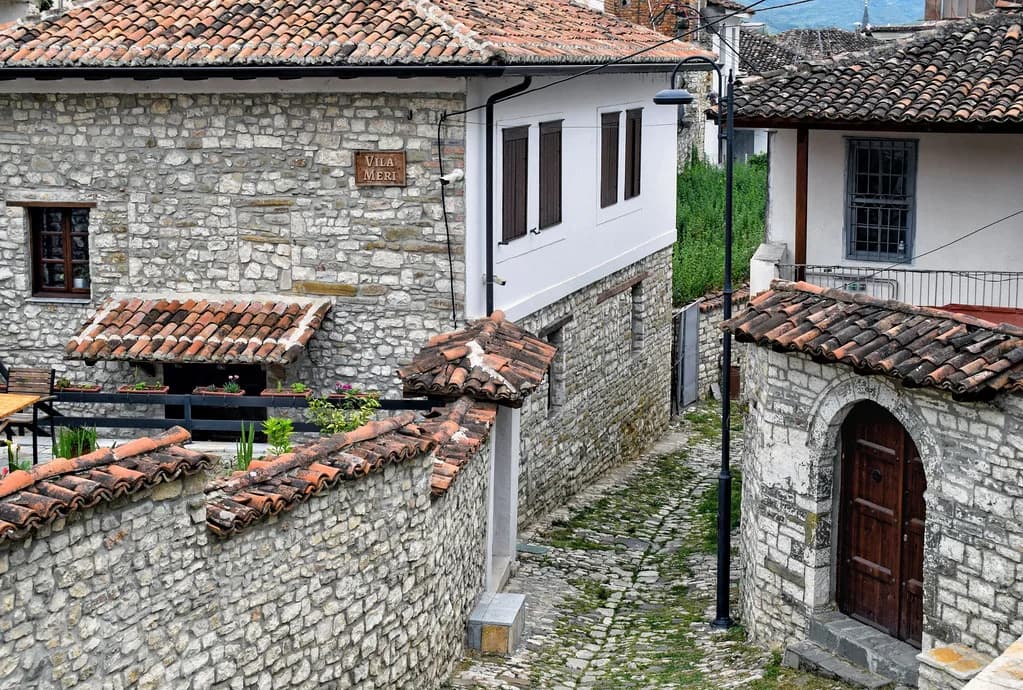
Berat's houses were built to suit a town on slopes, standing in terraces, broad in form and arranged so that daylight reaches deep into the rooms. That description of the housing tradition, adapted to local life, is the architectural core of the listing. It is also why the town reads as a single composition from across the river rather than as a scatter of individual monuments.
The nickname "City of a Thousand Windows" comes from those rows of large wooden windows catching light in tiers up the hillside, and it has stuck for good reason — the effect is clearest from a distance, looking across at Mangalem. Whether you count a thousand or a thousand and one is beside the point; the composition is what you came for.
Late eighteenth and nineteenth-century houses dominate the protected centre, with earlier and more elaborate examples mixed in. Look at rooflines and window placement as you climb: the tiers step with the hill, and the orientation repeats from house to house.
Inside the castle: churches, mosques and a lived-in citadel
Berat's castle stands on a hill with foundations reaching back to antiquity and most of the visible structure dating from the medieval period; within its walls are Byzantine churches, mainly of the thirteenth century, and mosques built after the Ottoman arrival. The result is a walled neighbourhood of consecrated and former religious buildings rather than a single ruin. Allow time to wander rather than treating it as one photo stop.
The coexistence of these buildings is part of what the listing recognises: the citation describes a townscape shaped over centuries by Ottoman and Islamic traditions while Orthodox Christian life continued alongside. That layering is visible in the castle and in the town below, and it is the reason the site is described as an example of communities living side by side.
The Onufri National Iconographic Museum
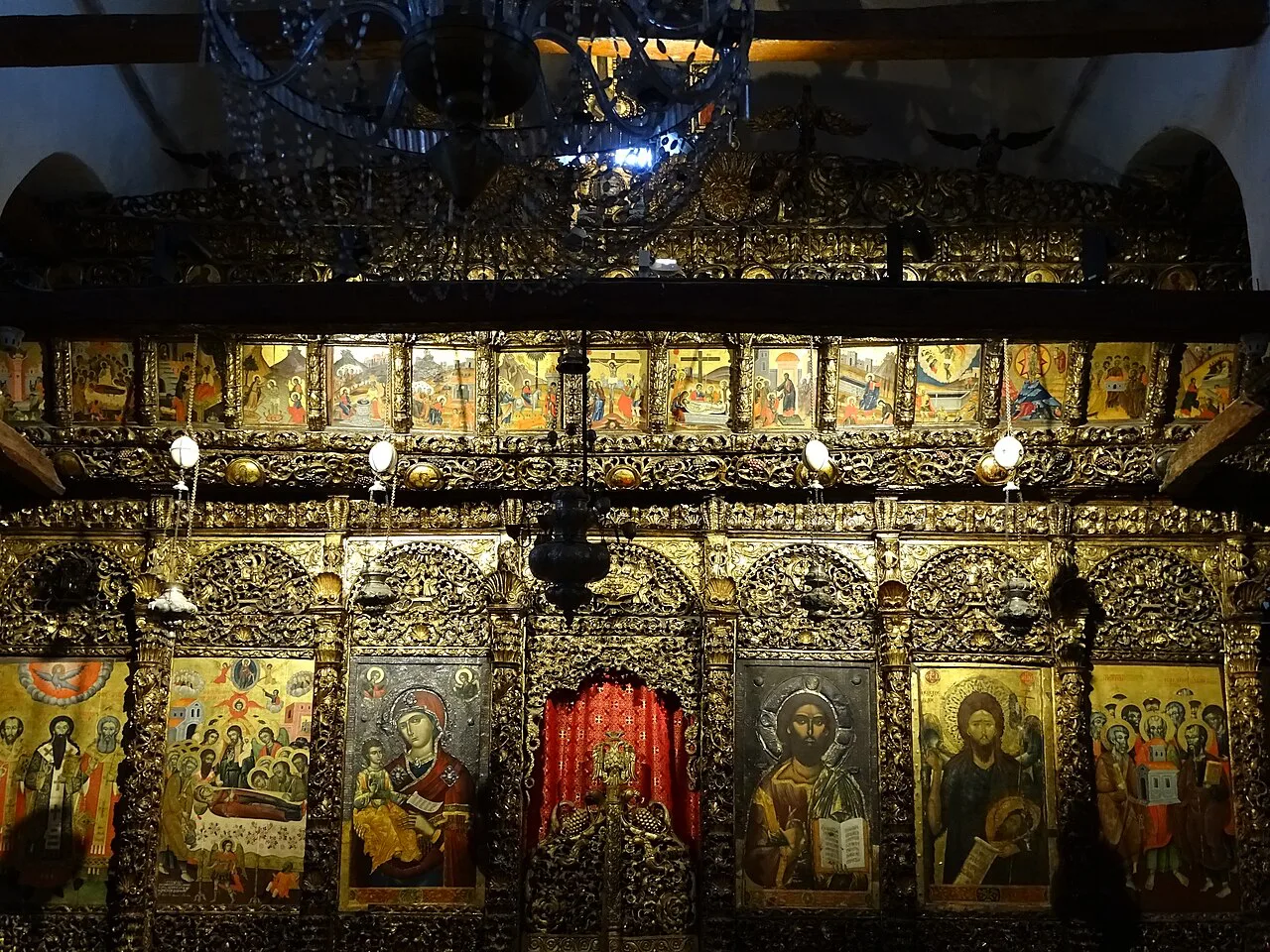
Housed in the Cathedral of Saint Mary inside the castle, the Onufri National Iconographic Museum holds the vivid icons of the sixteenth-century painter Onufri and his school. For many visitors it is the main reason to give the castle more than a passing visit, and it rewards a slower pace than the lanes outside.
Plan the museum into the middle of the castle circuit rather than the end, so you are not climbing back up tired legs. Opening hours and ticket prices for the museum and for the castle are not given here; check them with the museum or the castle entrance before you set out, as they can change by season.
Walking the old town: riverbank, Gorica Bridge and the climb
The natural walking shape is a loop: the Mangalem riverbank first, the bridge across to Gorica, then the climb to the Kala, and back down through the lower bazaar streets. The quarters and the climb are set out in more detail in our Berat Walking Tour guide; the order above puts the steepest section earlier in the day.
One route up to the castle is given as a twenty to twenty-five minute climb, which is a fair guide for a steady pace without long stops. Treat it as one route's timing rather than a fixed measure for every path up, and add time for heat, photos and the occasional wrong turn in the lanes.
The Gorica Bridge is the classic crossing point for photographs back towards Mangalem, and the old stone span is part of the Ottoman-era fabric rather than a modern addition. Sunset light on the white houses is the reason many people time the walk late; the same light leaves the cobbles in shadow, so watch your footing on the way down.
Berat and Gjirokastër on the same listing
Because the inscription is joint, the one material difference visitors notice is material itself. Berat is white-rendered houses with large windows along a river valley; Gjirokastër is grey stone, slate roofs and steep streets on a mountainside, with a castle of a very different scale above it. The two are not duplicates of each other.
They sit a few hours apart, Berat in central Albania and Gjirokastër in the south, so most travellers take them on separate days rather than back to back. A common southern loop runs from Berat via Apollonia to Gjirokastër and on towards the coast. If you only have room for one, choose by character rather than by ranking.
Adding nearby heritage: Apollonia and the wider route
Near Berat lies Apollonia, a ruined classical city with temples and an odeon, which pairs naturally with a Berat stay and adds a different period to the Ottoman townscape. Further south, Butrint and the Ohrid region carry Albania's other World Heritage designations, so a longer heritage route through the country is easy to construct.
Practical points: cobbles, footwear and how long to allow
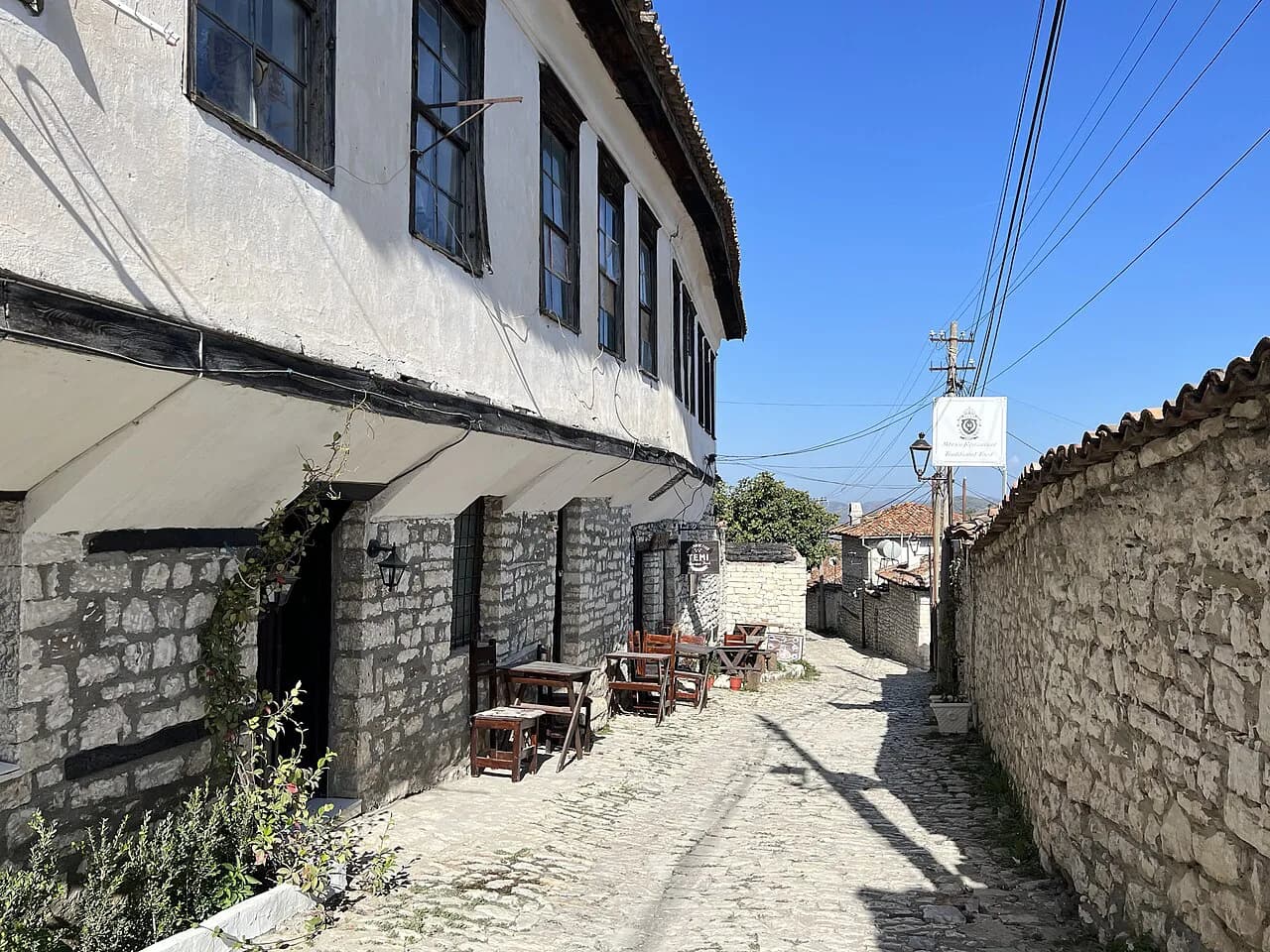
The old town is steep and cobbled throughout, with polished stone underfoot in the lanes and a sustained climb to the castle. Wear shoes with grip rather than smooth soles, and carry water for the ascent. This is the single most common piece of advice the town earns.
A half day covers Mangalem, the bridge and a first look at the castle; a full day lets you add the Onufri Museum, the ethnographic house and a slow circuit of the lanes. Both towns on the joint inscription are best seen in gentler spring and autumn light, when the climb is less punishing than in high summer.
How to build the day around the castle
Treat the castle as the anchor and work outwards: Mangalem and the riverbank in the morning, the bridge and Gorica next, then the climb, the Onufri Museum, and a slow descent through the bazaar lanes. That order keeps the one unavoidable ascent in the coolest part of the day and leaves the gentler walking for when you are tired.
Sort out the two details this page cannot fix for you before you go: museum and castle opening hours and ticket prices. Everything else — the quarters, the houses, the churches and the views — you can plan from the map in your head.
Explore more Berat guides
Frequently Asked Questions
When was Berat inscribed on the UNESCO World Heritage List?
The joint historic centres of Berat and Gjirokastër entry was inscribed in 2005, according to the Dutch UNESCO Commission's page for the site. The same citation describes the Ottoman-era architecture, the continuously inhabited old centres and Berat's castle on foundations from the fourth century BC.
Is Berat Castle inside the UNESCO site?
Yes. The castle on its hill, with its Byzantine churches and later mosques, is part of the protected historic centre, and the housing on the slopes below forms the rest of the inscribed area.
Do people still live inside Berat Castle?
They do. Families live inside the castle walls alongside the churches and mosque remains, which is why the castle reads as a lived-in quarter rather than a bare ruin.
Is Berat the same listing as Gjirokastër?
It is one inscription covering the historic centres of both towns. The citation treats them as a pair of well-preserved Ottoman-era towns, which is why they are usually described together.
Sources
Notes for your Albania trip
Optional updates to our Albania town guides.
You might also like
Continue reading
More guides you'll find useful