Berat Walking Tour: A Self-Guided Route Through the Old Town
Walk Berat on foot: old town streets, Berat Castle, the Gorica Bridge and the free tours on offer, with realistic timings and what to look at.
On this page
Allow three to four hours on foot to link the lower old town, the climb into Berat Castle and the crossing to Gorica, and treat that as a half-day rather than an afternoon squeeze. The castle is the part that sets your pace, because everything inside is walked over cobbles and the return is downhill. This route keeps the three areas separate so you can drop one in heat or with limited time.
The walk below covers the order of stops, the specific points inside the castle worth naming in advance, the Osum crossing and the museums on the way. It also sets out the guided alternatives, including what free tours in Berat cover and how their pay-what-you-want model works with cash.
What a Berat walking tour covers
Berat spreads across three distinct pieces of ground. The old town sits below the castle on the slope above the Osum River, the castle occupies the ridge itself, and the Gorica quarter faces it from the far bank. Walking all three in one day is possible because the distances are short, but the vertical gain is what you feel.
The layout rewards a fixed order. Start low in the historic centre, climb once into the castle, come back down and finish by crossing the river to Gorica, where the light on the opposite slope is the reason to leave that section last. Choosing this order means one climb instead of two.
How long you need and how the climb changes the day
Give the castle interior at least an hour once you are through the gate, and count the approach separately. Guided castle walks listed as two hours include eight stops and begin at the fortress entrance, which gives a fair idea of how much ground there is to cover inside.
In summer, do the castle first thing and leave Gorica for late afternoon. The climb is steep and largely unshaded in stretches, so a slow, broken ascent with stops beats pushing through it at midday. If you are travelling with someone who cannot manage steep cobbles, keep to the lower town and Gorica and skip the ridge.
Start point: the historic centre below the castle
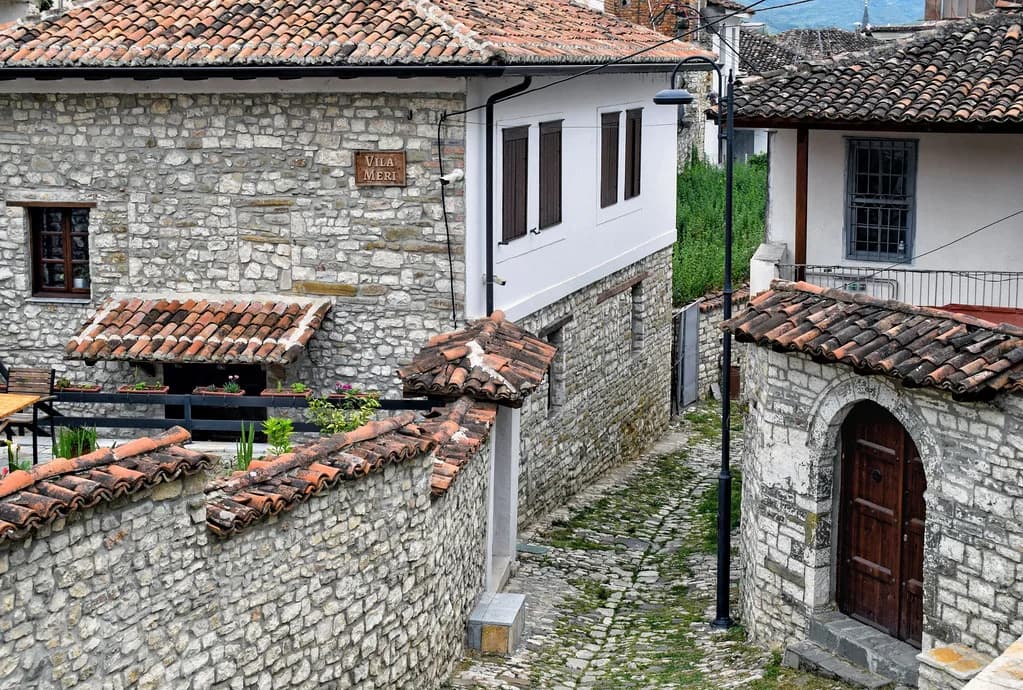
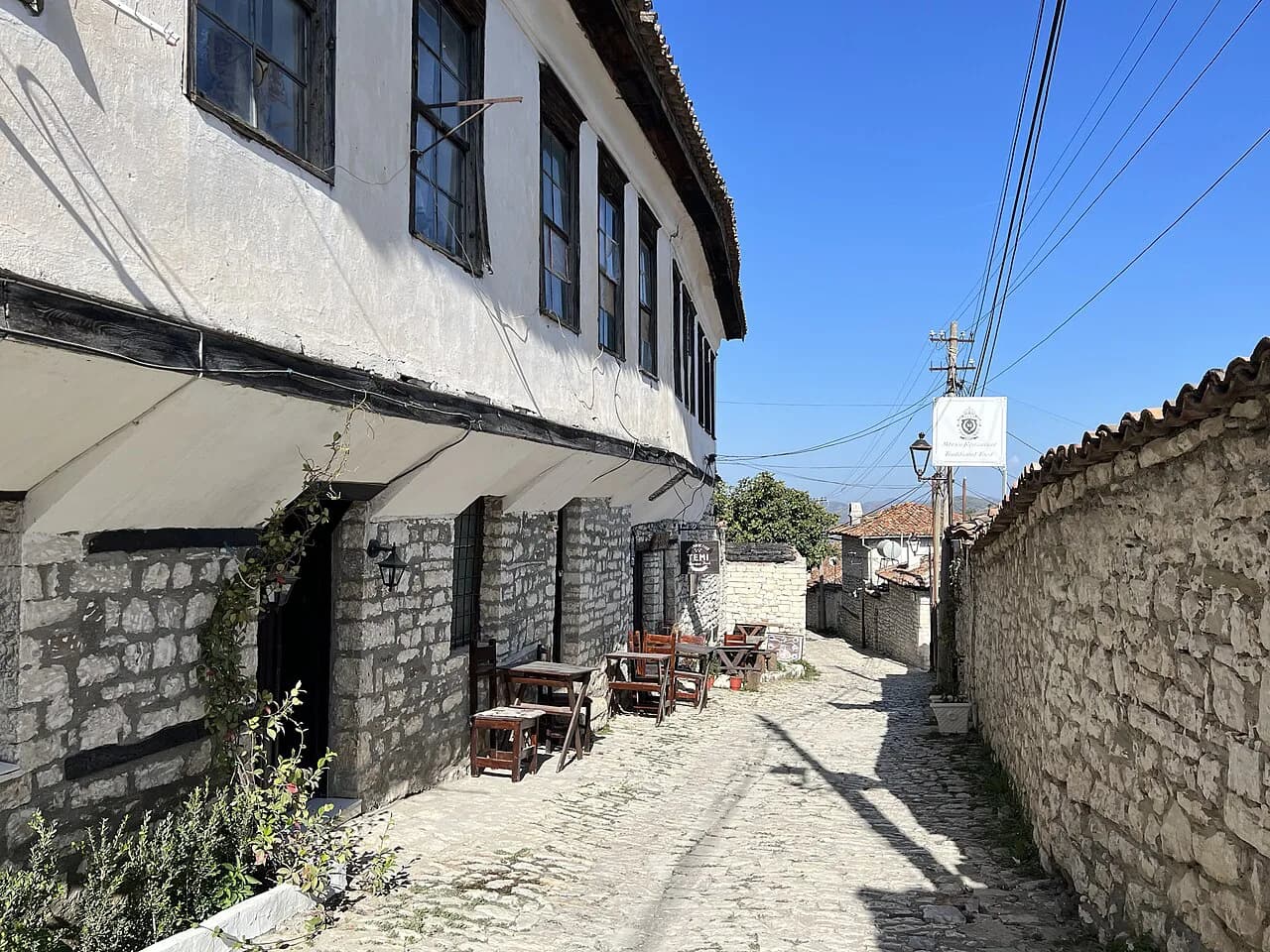
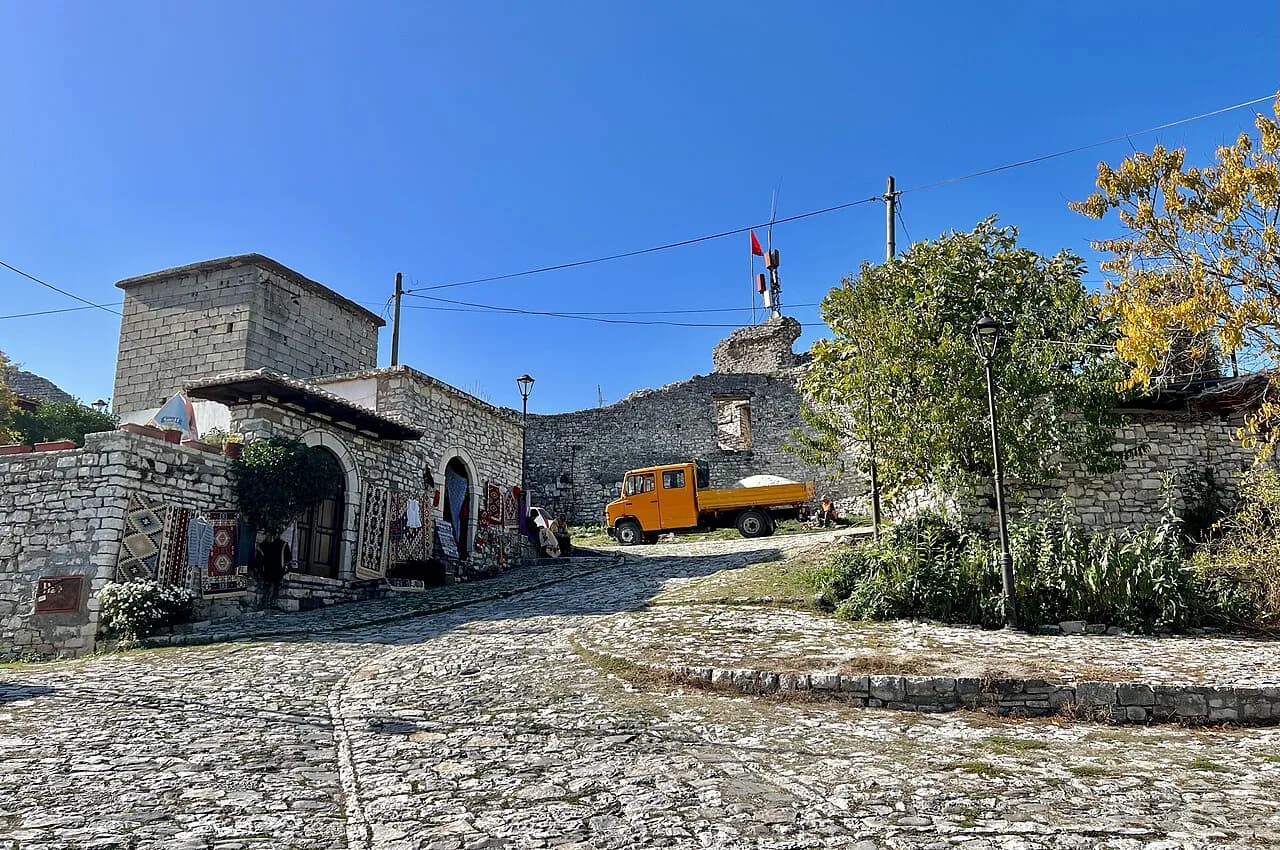
Begin in the historic centre and walk uphill towards the fortress gate rather than trying to drive to the top. The approach is where the town's Ottoman house fronts appear, and it works better as a slow warm-up than as a transfer. This is also the stretch where you will notice the shopfronts and cafés that break up the gradient.
The old town's fabric is what most visitors come for, and its quarters and bazaar streets are worth reading up before you set off so the route means something. A short primer on Berat history makes the layers of walls and churches along the climb easier to follow as you go.
Inside the castle: gate, square and Byzantine churches
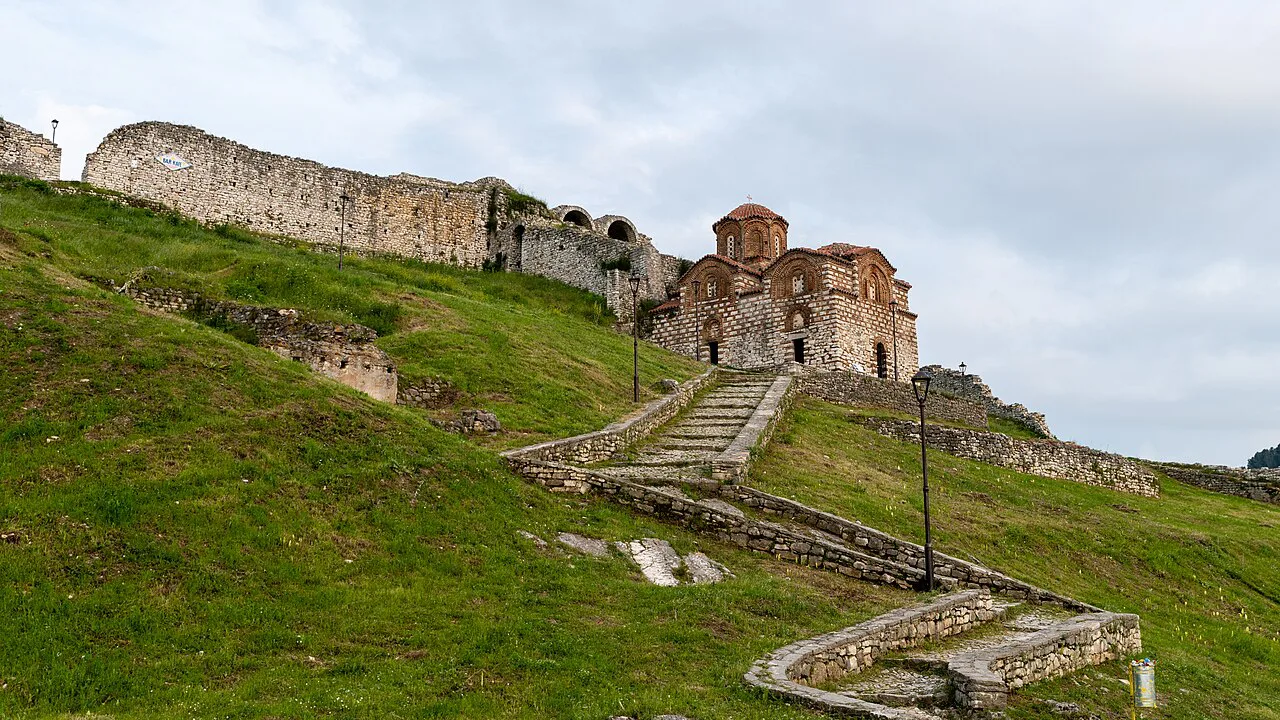
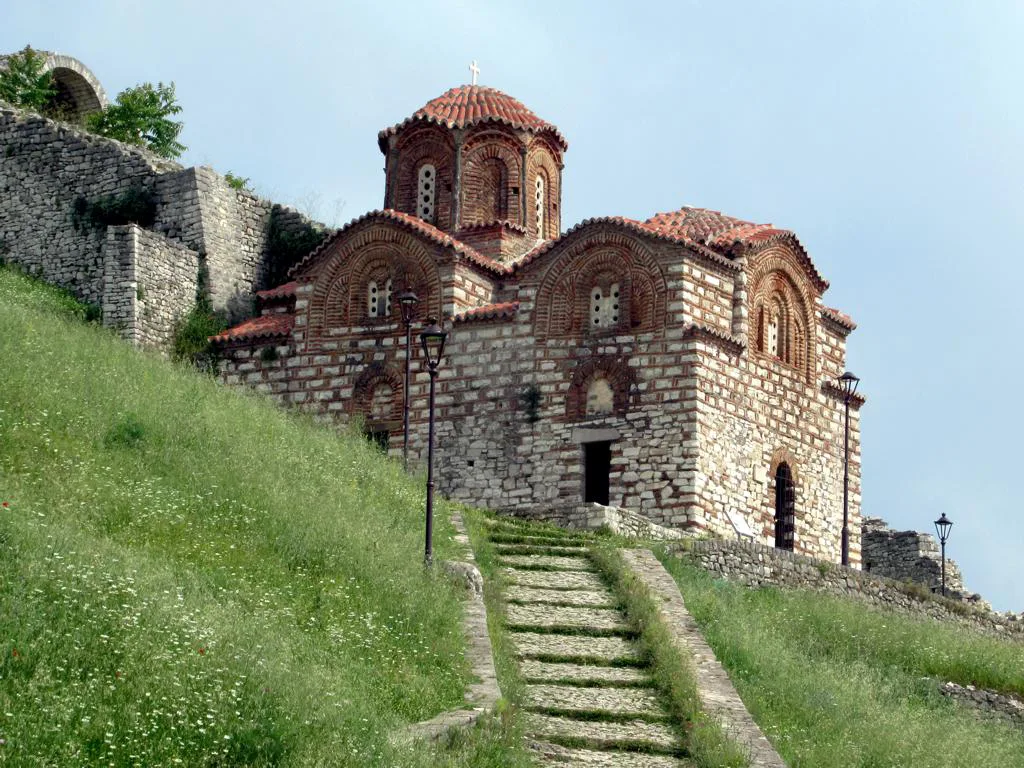
Inside the walls, the useful sequence is the main gate, then Constantine the Great Square as an open breathing space, then the Byzantine Church of Saint Mary of Vlacherna with its frescoes, and finally the acropolis at the highest point. The ruins of early Ottoman mosques sit near the top, and the panorama back over the town opens out from the same area.
People still live within the walls, so the castle reads as a village as much as a monument. Keep voices down in the residential lanes and treat courtyards as somebody's front step. The citadel's churches are the main indoor stops, and a dedicated guide to churches in Berat helps you tell the frescoed interiors apart before you commit time to each.
Berat's Ottoman houses and the 'City of a Thousand Windows'
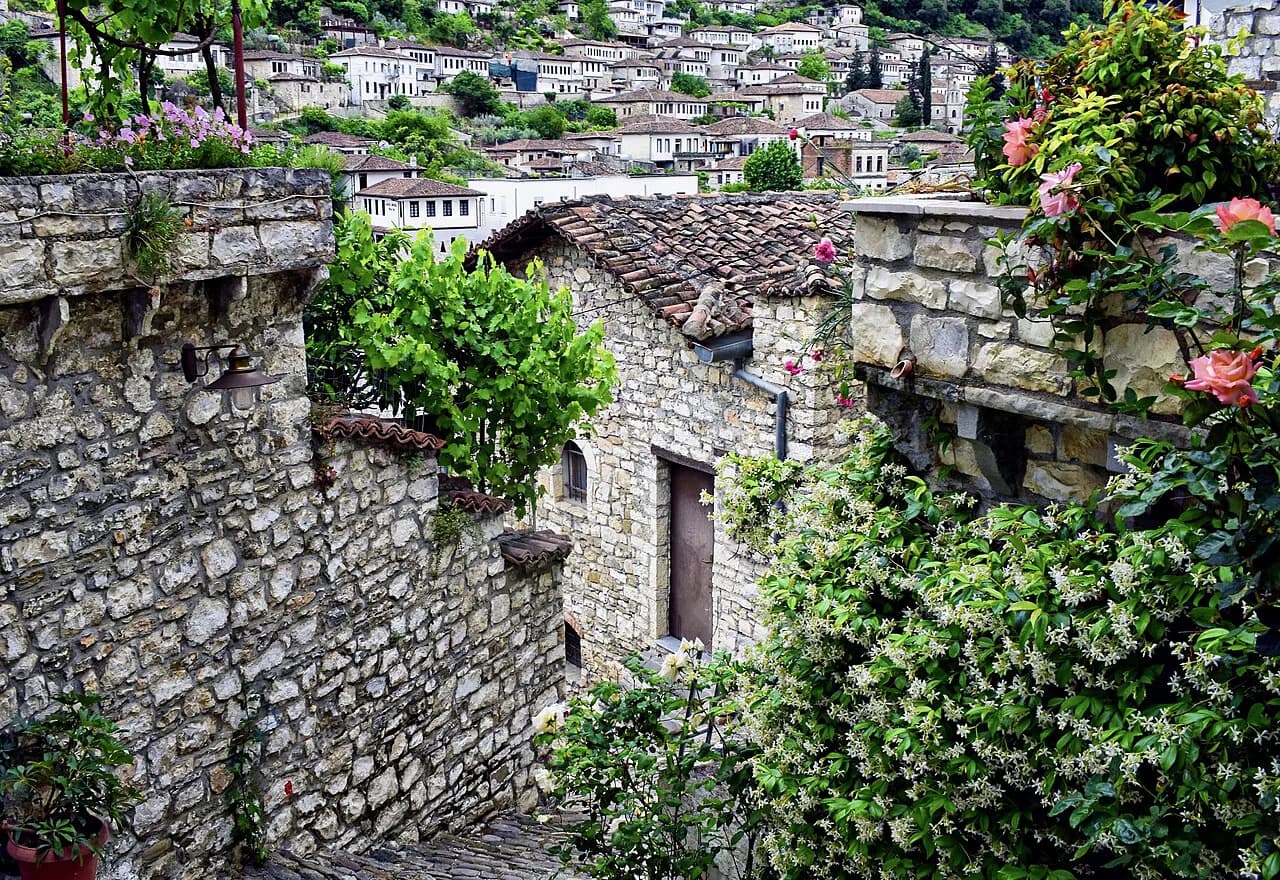
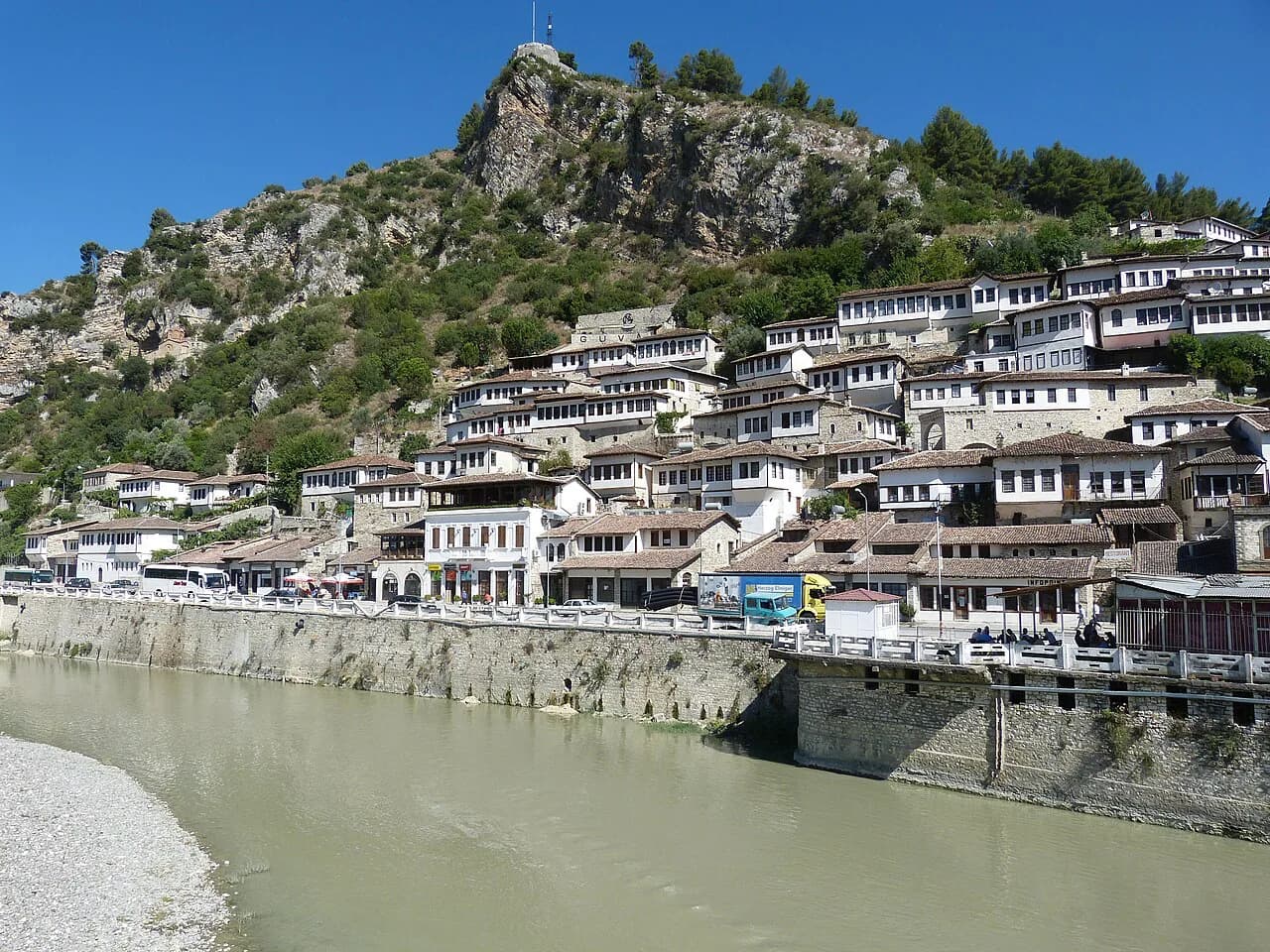
The nickname City of a Thousand Windows comes from the Ottoman-era houses stacked on the hillside, with their many glazed openings facing across the valley. Look up rather than ahead on the lower streets: wooden balconies, stonework and painted facades are the details that repay a slower pace. This is also why the best photographs come from Gorica, facing back at the slope.
For the construction details behind those facades, floor plans and balcony types, spend a few minutes with a primer on Berat architecture before the walk rather than stopping mid-climb. The Unesco listing of the historic centre is the reason the streetscape has kept its coherence, and knowing which areas are covered shapes how you read the restoration work.
The Gorica Bridge and the Gorica quarter
Cross to Gorica over the Ottoman bridge and walk a short loop on the far bank before heading back. The bridge is the photographed view of the town, and the quarter opposite is quiet in a way the castle side is not. Allow twenty to thirty minutes for the crossing and the loop, more if you want the slope from the far side in good light.
Museums on the route: Ethnographic and Onufri
Two museums fit naturally into the walk: the Ethnographic Museum, which covers traditional Albanian culture and handicrafts, and the Onufri Iconographic Museum, which holds a collection of religious icons. Both sit in the old-town stretch, so slot them before the climb or after the descent rather than mid-route.
Entry fees and opening times for both museums are worth confirming on the day, either at the door or with your guide, and build the visit around what is actually open. A museum stop of forty-five minutes each is realistic; squeezing both into one afternoon alongside the castle is where the day starts to feel rushed.
Walking times, cobbles and steep streets
Budget one hour for the lower old town at an unhurried pace, an hour to ninety minutes for the castle including the climb and the acropolis, and half an hour for Gorica. That totals roughly three hours of walking with pauses, before any museum time. Add forty-five minutes for each museum you actually enter.
Wear shoes with grip. The cobbles inside the castle and on the slopes are polished by foot traffic and slick when wet, and the steps between levels are uneven in height. A firm sole matters more than a light one here. Carry water for the upper section, where shade is patchy and there is little to buy.
Guided options: free walking tours in Berat
Berat's free walking tours run on a pay-what-you-want basis rather than a fixed ticket. GuruWalk, which lists several Berat walks, recommends a contribution of between €15 and €50 per participant at the end, paid in cash only. Reserve in advance because booking is how you receive the meeting point details, and a listed castle walk requires a minimum of five people to run.
Listings show a spread of formats: a two-hour UNESCO old-town walk covering history, art and culture, a two-hour historical and modern Berat route, and a walk built around a house dating from the 1790s. Durations and start times come from each guide's own GuruWalk listing rather than a guarantee, so confirm your departure time in the booking confirmation.
A local guides' collective also runs a voluntary free walking tour in Berat, meeting at the castle and the Ethnographic Museum, and its organisers describe the aim as a warm welcome plus information on history, art and life in the city. Contact details are published on their page if you want to ask about a date directly.
Guided castle tours: what a two-hour walk includes
A dedicated castle walk starts at the fortress entrance and covers the Illyrian walls, the cobbled lanes, the Byzantine churches with their frescoes and the acropolis with its early Ottoman mosque ruins. The same route passes Constantine the Great Square and the Church of Saint Mary of Vlacherna. Two hours is the listed duration, with eight stops.
The GuruWalk listing is explicit about who it does not suit: it is not accessible for people with reduced mobility and does not accept large group bookings. Cancellation is free, but cancel if you cannot attend, or the guide waits for you. These constraints are worth reading before you book a slot for a family group.
Booking, meeting points and paying in cash
Free-tour bookings are made online and confirmed by email, and the meeting point and map arrive with the confirmation rather than being advertised publicly. That is why the listings tell you to reserve first. Some platforms also let you message the guide with questions before the start, which is useful for accessibility or timing queries.
Bring cash in lek for the tip, since the GuruWalk castle listing accepts cash payment only. Groups larger than a handful should check the per-booking limit with the individual guide before reserving, as each sets their own cap.
Where the walk fits with food and the river
Pair the walk with lunch rather than trying to do both at once. Berat's cooking leans on Mediterranean and Balkan flavours, with byrek, Tavë Kosi and Fërgesë as the dishes to look for, and cooking classes in the area teach the same recipes if you want more than a meal. Rafting on the Osum is the other half-day option, best treated as a separate outing from the walking route.
Which part of Berat do you walk first?
Start in the lower old town, climb to the castle once, and cross to Gorica last. That order keeps the steepest ground in the coolest part of the day and leaves the far-bank views for the afternoon light. If you only have an afternoon, cut the museums and keep the castle and the bridge.
Book a free tour if you want the castle's churches and square explained in sequence; walk it yourself if you want to set the pace on the cobbles. Either way, confirm the meeting point and bring cash for the guide.
Explore more Berat guides
Frequently Asked Questions
How much do you pay for a free walking tour in Berat?
There is no fixed ticket price. Guides are paid a contribution at the end of the walk, and the amount is left to you based on how useful the tour was; the GuruWalk castle listing sets out its suggested range and states that payment is cash only. Booking in advance is still required so you receive the meeting point.
Do you need to book a Berat walking tour in advance?
Yes. Free tours are reserved online, and the meeting point and map come with the booking confirmation rather than being posted publicly. One listed castle walk also needs a minimum of five people to go ahead, so a same-day attempt can fail on numbers alone.
Can you walk from Berat old town to the castle?
Yes, the castle sits above the old town and is reached on foot through the gate. The climb is steep and cobbled, and the castle walk itself is not suitable for people with reduced mobility. Allow an hour to ninety minutes inside and on the approach at an unhurried pace.
Sources
Notes for your Albania trip
Optional updates to our Albania town guides.
You might also like
Continue reading
More guides you'll find useful