
Onufri Museum in Berat: Icons, the Iconostasis and What to Expect
The Onufri Museum is the icon collection in Berat, up inside the castle walls, and it rewards an hour of unhurried looking rather than a quick circuit. It gathers around 200 icons and liturgical objects from churches across Berat, spanning the 14th to the 20th century, with the painter Onufri as the headline name. This guide covers what the collection holds, how the visit fits into a walk up into Berat castle, and what sits close enough to pair with it.
What the Onufri Museum is and where it sits in Berat
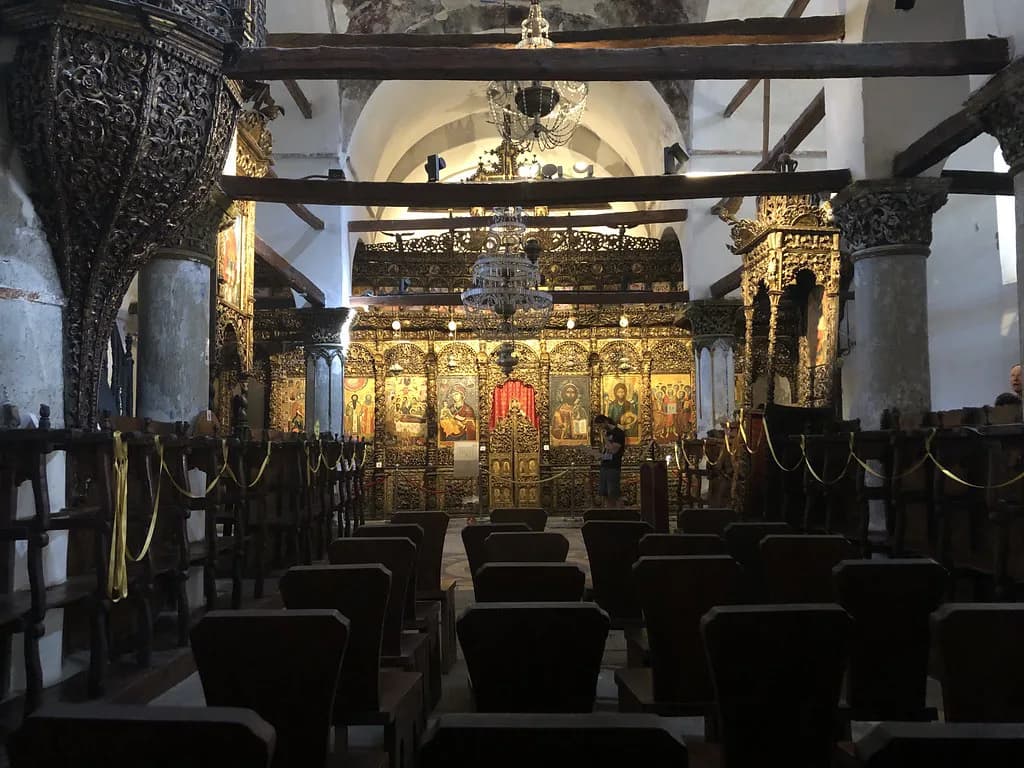
The museum sits in a church building inside the castle quarter on Berat's hill, which puts it above the Mangalem and Gorica neighbourhoods rather than in the lower bazaar streets. Because the collection is shown in a historic church interior, you are walking through painted space rather than a modern gallery with white walls. That setting is half the reason to come, so give yourself room to look up at the ceiling and around the walls as well as at the panels.
The collection is described as around 200 objects, brought together from several churches in the area. The iconostasis of the Cathedral of the Dormition of the Virgin carries a date of 1807, which tells you the furnishing of that church is early nineteenth century even though some of the icons are far older. Keep those two things separate in your mind as you walk round: the building's fittings and the moved panels are on different timelines.
Getting there: the walk up into Berat Castle
You reach the museum on foot through the castle gate and then along the lanes inside the walls, which means a sustained climb on cobbles rather than a doorstep arrival. Wear shoes with grip and carry water in summer, because the ascent is hot and uneven in the middle of the day. If you are staying down in the bazaar or across the river in Gorica, treat the climb as part of the outing rather than an obstacle before it.
Coming from the lower town, the walk over the river and up through the old streets gives you the shape of Berat before you reach the museum, and the Gorica bridge is the natural link between the two banks. Allow more time than a flat map suggests, particularly if you stop for photographs on the way. Once inside the walls, the museum is among the buildings of the castle quarter rather than a separate attraction out on its own.

Inside the museum: what the collection holds and its range of dates
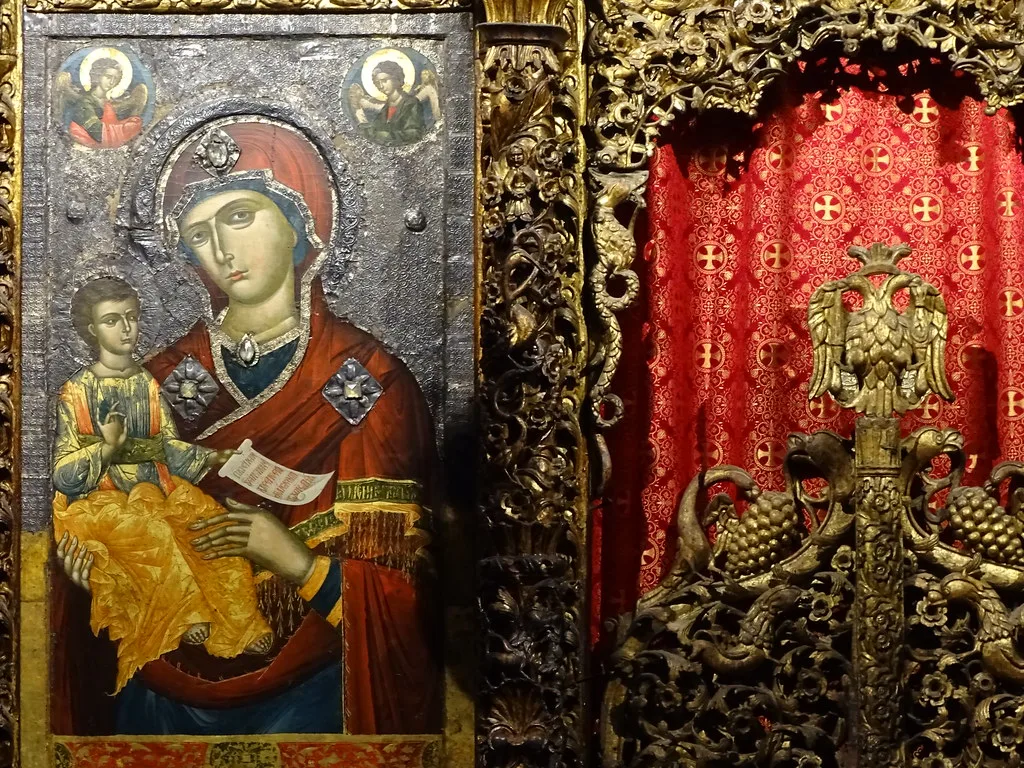
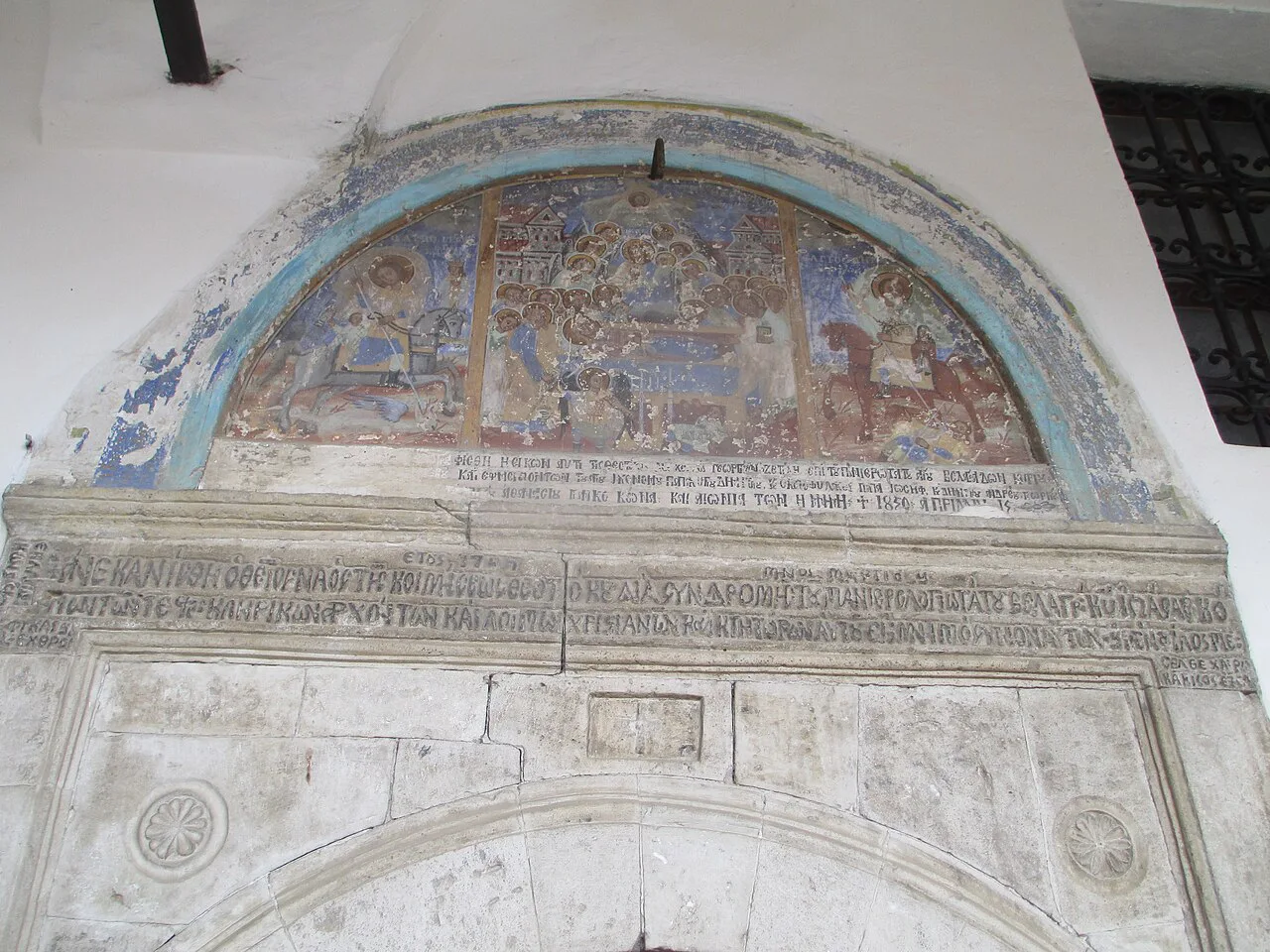
Expect painted icons, carved and gilded woodwork and liturgical items rather than sculpture or archaeology. The pieces come from churches in and around Berat and date from the fourteenth to the twentieth century, so the collection moves across several centuries of Orthodox painting in one compact space. Slower reading of the painted panels and their worn surfaces is how you make sense of a collection assembled from many buildings.
The scale is modest, which is the pleasure of it: you can look properly at individual panels instead of scanning a long hang. The carved iconostasis and the painted icons are the standouts. Go in expecting concentration rather than spectacle, and the visit will land better.
The icons and painters represented, including Onufri
Onufri is the name on the door, and his work sits alongside that of other painters: the Cypriot, Nikola, David Selenica and the Çetiri family of painters. Seeing them together lets you compare handling and colour between workshops rather than judging a single master in isolation. Look for the difference between the older, darker panels and the later, more decorative ones as you move through the room.
The museum draws a steady stream of visitors, and in 2023 the director reported 19,000 visitors between January and the end of May, with a further 3,300 in the first days of July. Those figures are a few years old now, so read them as an indication of popularity rather than a current crowd forecast. Arriving early in the day remains the sensible way to get the church interior to yourself for a few minutes.
The iconostasis and carved woodwork
The iconostasis is the screen that divides the sanctuary from the nave, and the one in this church is dated 1807. Treat it as a piece of woodwork in its own right: the carving and gilding repay close attention, and it frames the icons rather than simply holding them. Walk along it slowly and look at the tiers of panels in relation to each other.
Between the painted panels and the carved screen, the interior asks you to look at three things in turn: the images, the woodwork holding them and the church space around both. Ask the staff at the museum entrance before you start shooting whether photography is allowed. That one question saves you being asked to stop halfway round.
How much time to allow and how to pace a visit
Budget an hour for the museum itself, and more if you read the labels and sit with the iconostasis for a while. It is a single interior rather than a multi-room gallery, so the risk is rushing rather than running out of things to see. Two hours in total, including the climb up and a wander through the castle lanes afterwards, is a realistic block for most travellers.
Pace the day so the museum is not your last stop before the descent, particularly in hot weather. Do the climb earlier, see the collection while you are fresh, then take the rest of the castle at a slower pace. If you are travelling with people who tire on cobbles, the museum makes a good mid-morning pause rather than a final push.
Practical points before you go: opening hours and tickets
Opening hours, closing days and ticket prices for the museum can change, so confirm them locally when you arrive in Berat. The castle entrance, your accommodation and the town's tourist information point are the places to ask.
Some online booking pages list the museum as part of a wider activity offering, but currency conversion and bundled inclusions can make the actual entry cost hard to read. Ask the ticket desk directly what a standard adult entry costs and whether any concession applies. If you are visiting several paid sites in Berat on the same day, ask whether a combined arrangement exists rather than assuming one.
Nearby within the castle: what else to pair with the museum
The castle quarter holds several churches within a few minutes of each other, and the Church of St Michael and the Holy Trinity Church are the obvious companions to the museum. Seeing more than one church interior makes the collection's origins clearer, because you start to recognise where the icons came from. Allow time to walk between them rather than treating the castle as a single stop.
Back down in the town, the Ethnographic Museum and the mosques of the lower bazaar give you the other half of Berat's story, and the walk between them passes the streets you climbed earlier. The King's Mosque and the Lead Mosque sit in the lower town rather than the castle, so plan them for after the descent. If you have a full day, the castle in the morning and the bazaar in the afternoon is the natural order.
If you want to see how the pieces in the museum were used, the churches and mosques scattered across both banks make better sense once you have been through the collection. The Bachelors' Mosque and the riverside walks round out a day that stays compact and walkable. Berat Attractions: 11 Visitor Guides maps the whole set so you can order the stops without backtracking.
Is the Onufri Museum worth the climb?
Yes, if you want one interior that explains the religious art of Berat rather than a string of churches seen without context. The collection is compact enough to see properly in an hour, and the church setting does as much work as the labels. Skipping it leaves the icon panels in the other churches harder to read.
Go up early, confirm hours and ticket prices at the desk, and pair the museum with one or two of the castle churches before you walk back down. That sequence gives you the climb once and the context in the right order, and leaves the bazaar and riverside for the rest of the day.
Explore more Berat guides
Frequently Asked Questions
Is the Onufri Museum inside Berat Castle?
Yes. The museum sits in a church building within the castle quarter on the hill above the Mangalem and Gorica neighbourhoods, reached on foot through the castle gate and along the lanes inside the walls.
How many icons are in the Onufri Museum?
The collection is described as around 200 objects, gathered from churches in the Berat area and dating from the fourteenth to the twentieth century. It includes painted icons, carved woodwork and liturgical items rather than a single category of object.
Do you need tickets for the Onufri Museum?
Entry arrangements, prices and opening hours can change, so confirm the current position at the ticket desk or the castle entrance when you arrive rather than relying on an old figure.