
Ethnographic Museum, Berat: What You'll See Inside
The Ethnographic Museum is worth about an hour, and the building is half the reason to go. It occupies a two-storey 18th-century Berat house with an internal courtyard, a çardak and decorative fireplaces, and the official tourism site describes it as one of the most representative houses of traditional Berat architecture. This guide covers what sits on each floor, how the house itself works, how to pace the visit and what to pair with it in the old town.
Treat it as a single stop on a walk through Berat rather than a standalone outing. The collection is modest in scale but specific to the town, so it rewards a slow half-hour upstairs among the furnished rooms more than a quick sweep past the display cases.
What the Ethnographic Museum is
The museum documents everyday life, family organisation and craftwork in Berat and its surroundings, and it is housed in a period building rather than a purpose-built gallery. The official tourism site notes that the house itself has historic and cultural value, with Ottoman-period influences visible in its layout and fittings.
Object counts vary between the museum bodies: the Berat museums centre gives a collection of 1,300 objects, while the official tourism site puts it at around 1,400. Either way, plan for a compact collection shown across two floors, with the house's own architecture carrying much of the interest.
The building is a two-storey house with an internal courtyard, and the museum uses its original spaces rather than neutral rooms. That means your route through the displays follows the shape of a Berat home, from the ground-floor service and trade spaces up to the family rooms.

Where it sits in Berat and how to reach it on foot
The museum is in Berat, a city UNESCO lists as a World Heritage Site, and it is reached on foot through the steep cobbled streets of the old town. Wear shoes with grip and leave the car below; the lanes between the Ottoman houses are uneven and often stepped.
Build the climb into your time budget. Walking up through the old town takes longer than the distance suggests, especially in the middle of the day, so pair the museum with sights in the same quarter rather than criss-crossing the town.
For the wider set of sights in the town, from the castle to the quarters below it, start with our Berat Attractions: 11 Visitor Guides before you plan the day.
The ground floor: a recreation of the medieval bazaar
The ground floor is laid out as a recreation of the medieval bazaar. Craft tools, traditional costumes, household equipment and everyday items are displayed to show the economic and cultural life of the town in past centuries.
Look at the tools and costumes as objects with a place in a working town rather than as decorative pieces. This floor is the best introduction to the trades that supported Berat, and it sets up the domestic rooms above.
The upper floor: 18th- and 19th-century rooms
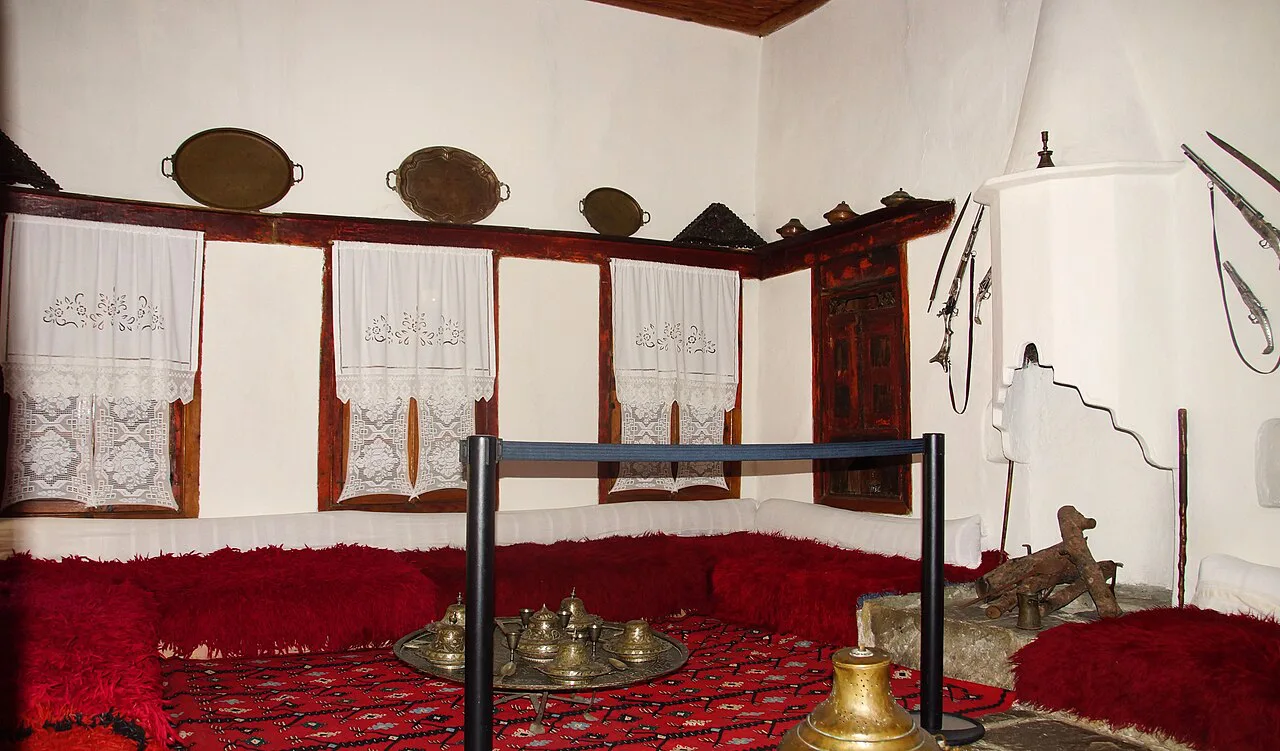
Upstairs, the museum presents typical rooms of a Berat house of the 18th and 19th centuries, with original furnishings and spaces divided by function into a guest room, a family room and a kitchen. Carpets, carved ceilings and handmade textiles are part of the display.
This is the floor to slow down on. The interest is in how the rooms were used and furnished, so give yourself time to read the partitions rather than treating the upper floor as a set of period photographs.
How the house itself works
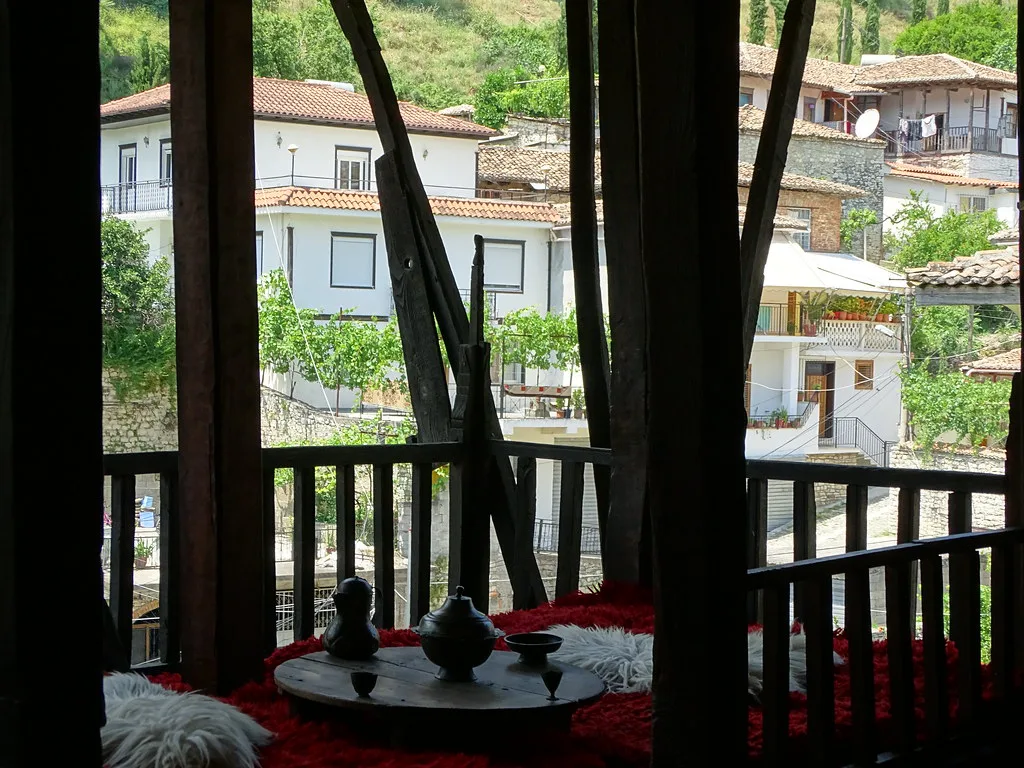
The house is the exhibit, so read the building as you go. The çardak, a covered gallery typical of this architecture, the internal courtyard, the decorative fireplaces and the functional partitions between rooms all show how a Berat dwelling was organised and how Ottoman-period influences were absorbed into local building.
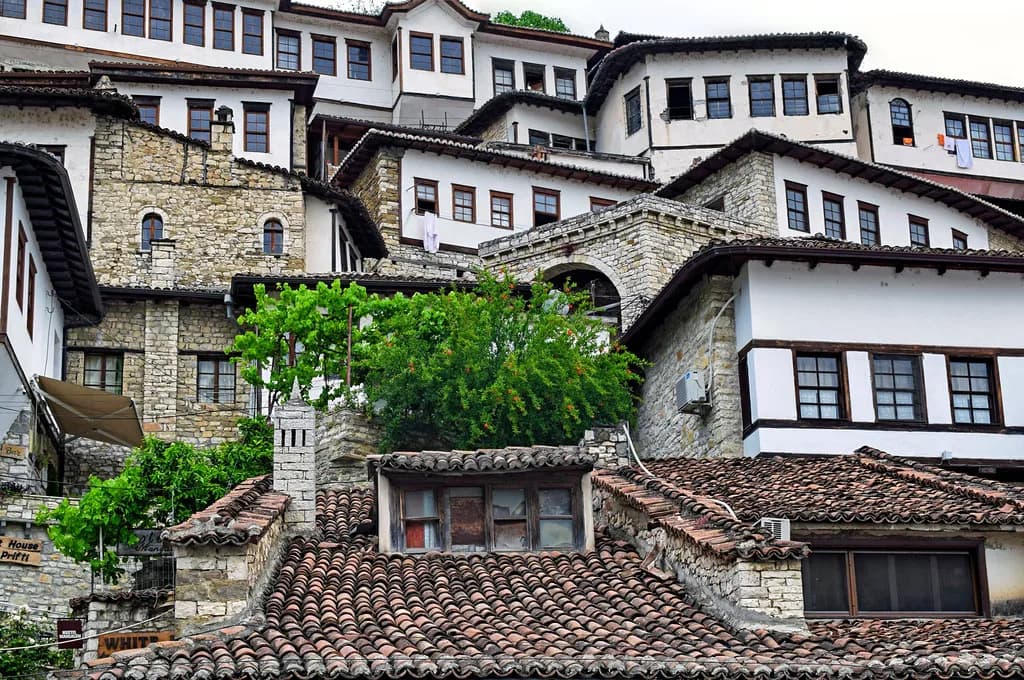
The same architectural language appears across the old town, especially in the Mangalem quarter of stacked Ottoman houses below the castle. Walking through it either side of the museum makes the interior details easier to place.
How long to allow
Allow roughly an hour inside, plus the climb to reach it. Two floors of modest size mean the visit fits easily into a half-day of old-town walking without feeling rushed.
If time is short, give the upper floor priority, since the furnished rooms and carved ceilings are what distinguish this museum from a general folk collection. Skip the ground floor quickly if you have already seen the bazaar displays elsewhere.
Opening hours and tickets
Check the museum's own page and the national tourism site for current opening times and admission before you set out, particularly outside the summer months.
Ask at your accommodation or at the museum door on the day as a backup, since hours can shift with the season.
What to pair with the museum
The museum sits naturally in a loop that takes in the castle up the hill and the bridge below the old town. Berat Castle (Kalaja e Beratit) holds the Onufri Museum in Berat and views over the town; the Gorica Bridge, Berat crosses the Osum river with the white Ottoman houses of Gorica on the far side.
A workable order is the museum first, then up to the castle, then down to the bridge in the late afternoon when the light softens the white facades. It keeps the climbing in one direction and avoids doubling back through the steepest lanes.
Is the museum worth an hour?
Yes, if you want to understand how a Berat house was built and lived in rather than just photograph it from the street. The museum's two floors are small, but the çardak, courtyard and furnished rooms make the architecture legible in a way the exterior alone cannot.
Confirm the day's opening hours before you climb up, then give the upper floor your attention, keep an hour for the visit and continue to the castle or the bridge.
Explore more Berat guides
Frequently Asked Questions
What is an ethnographic museum?
An ethnographic museum displays objects and interiors that document how people lived and worked locally, rather than fine art. In Berat's case that means craft tools, costumes and household items below, and furnished domestic rooms above.
How long should you spend at the Ethnographic Museum?
Allow around an hour inside, plus time for the climb through the old town. Two modest floors fit easily into a half-day of old-town walking, with the upper floor worth the slower look.