
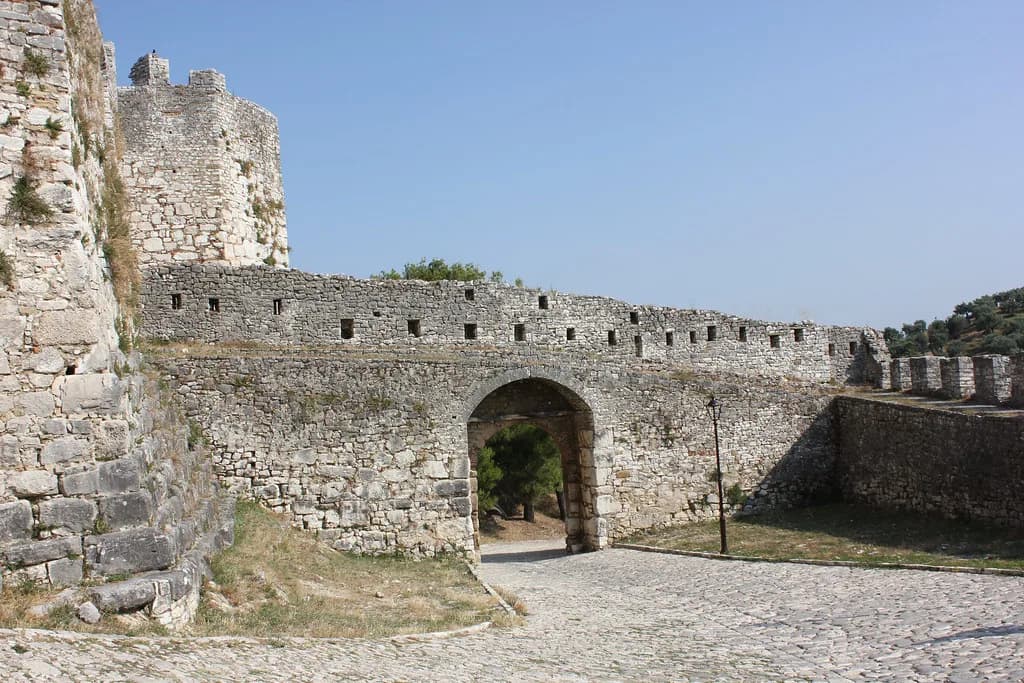
Berat Castle (Kalaja e Beratit): a visitor's guide
Berat Castle, the Kalaja e Beratit, is a walled citadel on the rocky hill above the old town, and most visitors should allow two to three hours once they are through the gate. The walk up from the suspension bridge takes roughly 15 to 20 minutes on a cobbled path, so the visit is a half-day outing rather than a quick photo stop. This guide covers the route from the town, the ticket and opening hours, the monuments inside the walls and how to pace the climb in summer heat.
What Berat Castle is and where it sits above the town
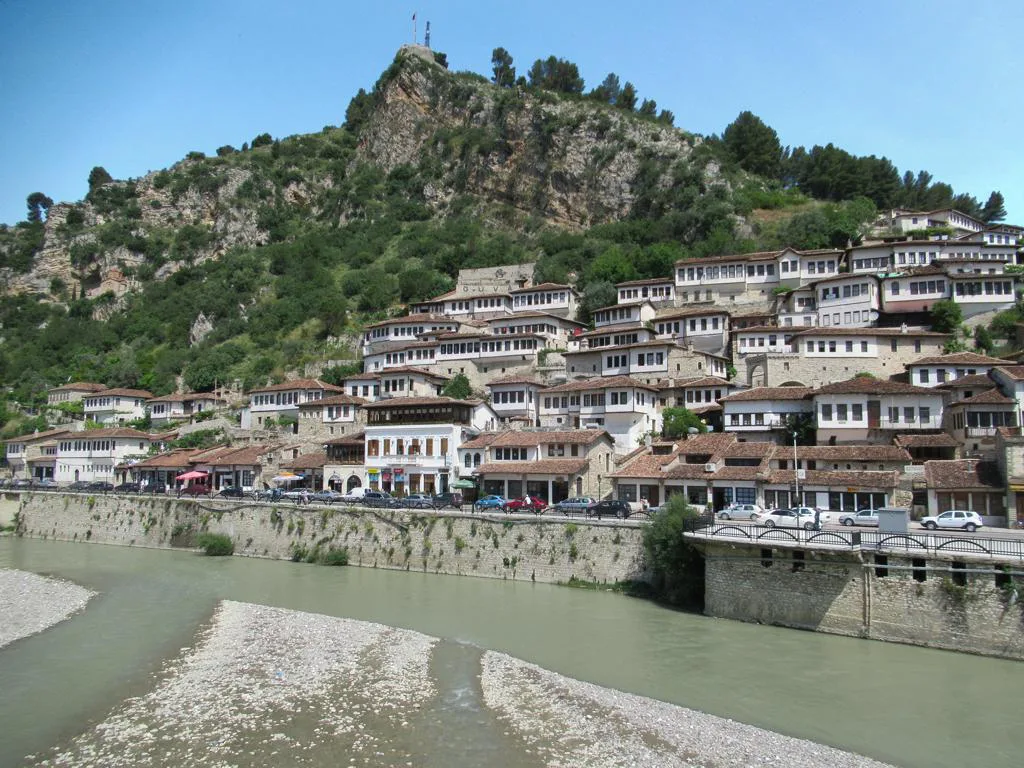
The castle occupies a rocky hill on the left bank of the Osum river, with the old town spread beneath it and the Gorica and Mangalem quarters on the slopes opposite. Its present walls date mainly from the 13th century, though the site's origins go back to the 4th century BC, and the address is on Rruga Mihal Komnena. You can see the flagpole on the summit from much of the town, which makes the fortress a useful landmark when you are finding your bearings along the river.
Berat's historic centre is a UNESCO World Heritage Site, and the castle is its highest point rather than a separate excursion outside town. That matters for planning: you can walk from a café in the old town to the gate without a car, taxi or tour bus. The walls are thick and the ground inside is uneven, so treat the visit as a walk through a lived-in village rather than a museum circuit.
Getting up to the castle: the cobbled walk from Mangalem and Gorica
From the suspension bridge, follow the road forward and round to the right onto Rruga Mihal Komena, the cobbled lane that climbs to the main entrance. The walk is about 1 km and takes 15 to 20 minutes at a leisurely pace, with views back over the rooftops most of the way. Halfway up, a shortcut on the left leads to the castle walls by a steep zig-zag; it is quicker but harder work, so choose it only if you are comfortable on a gradient.
The stones are worn and become slippery when wet, so trainers or shoes with grip are a better choice than sandals or smooth soles. If you would rather not climb, a car or taxi can drive up to a small car park near the entrance gates, which is handy in high summer when the hill is hot and exposed. The trade-off is that you miss the old lanes and the views that open up on the way.
Walkers coming from Mangalem start closer to the bridge, while those staying across the river in Gorica cross first, so both routes funnel onto the same lane below the gate. Allow extra time if you are carrying water, stopping for photographs or travelling with children, because the climb is steady rather than flat. Read our guide to the Mangalem Quarter, Berat if you want to combine the climb with a wander through the lower lanes first.
Entrance fee and opening hours
Berat Castle charges an entrance fee, and the figures circulating for it vary: one recent visitor guide reports 300 lek, cash only, with the main entrance staffed from 9am to 6pm, while a listings site gives 200 lek between 9:00 and 18:00 and describes the ground outside those hours as free. Carry cash in lek and confirm the current amount at the gate rather than relying on a published figure.
The fortress has no fence around its full circuit, so the hilltop itself is reachable outside the hours when the main entrance is staffed. The ticket covers entry to the walled area, not the individual museums inside, which are separate visits. If you arrive late in the day, go up for the light and the views, then return during staffed hours to see the monuments properly.
What to see inside the walls: the Red Mosque, the Church of the Holy Trinity and the Iconographic Museum Onufri
Inside the citadel you will find the Red Mosque alongside the Church of the Holy Trinity, a domed building with a cross-shaped plan, nave, narthex and altar area. The fortress was a Christian settlement for much of its life, with around 20 churches, most built in the 13th century, and a single mosque used by the Turkish garrison. Of that mosque only a few ruins and the base of the minaret remain, so look for the surviving fragment rather than a standing building. The White Mosque and the Lead Mosque are separate monuments in the lower old town, not inside the castle.
The Iconographic Museum Onufri is the castle's main indoor collection, dedicated to Byzantine art and icons, and it is worth an unhurried stop even on a warm day. Because the walls and churches are exposed, the museum also gives you a cool interval in the middle of the visit. Read our Onufri Museum in Berat guide for what the collection holds before you go in.
Many of the buildings inside the walls survive as ruins without interiors to explore, so the appeal lies in the architecture, the inscriptions and the setting rather than furnished rooms. Several Byzantine churches have weathered badly and only some remain standing, which is why picking out the surviving details repays a slower pace. Plan your route around the museum and the two main monuments rather than trying to cover every fragment.
Walking the walls and the viewpoints over the Osum and the old town
The main entrance on the north side is defended by a fortified courtyard, and there are three smaller entrances to the circuit. Walking the walls gives you the open views over Berat's white Ottoman houses and the Osum valley, and the summit by the flagpole is the best-known vantage point. Keep away from unguarded edges where the masonry is broken, and watch your footing on loose stone.
Even if you have little interest in the history, the panorama over the town can justify the climb on a clear day. Late afternoon light is the most comfortable window in summer, when the exposed rock and walls hold the heat. Bring water and a hat, and plan the steep sections for the cooler ends of the day.
The inhabited quarter: cafés, shops and life inside the citadel
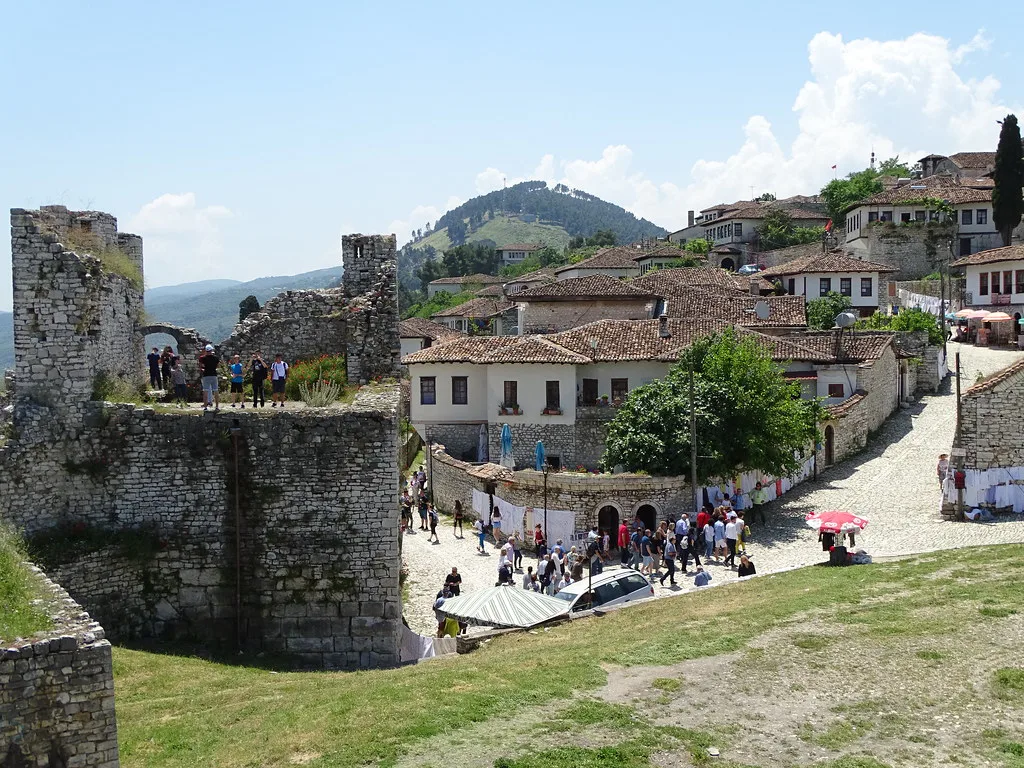
People still live inside Berat Castle, and the lanes function as a small village with houses, shops and stalls rather than a cleared heritage site. That living population is why the visit feels different from a ruin: expect everyday comings and goings alongside the monuments. Keep noise down near doorways and private gardens, and remember that photographed residents are not part of the exhibit.
There are a couple of bars and small cafés inside the walls, plus shops selling local handmade souvenirs, so a drink and a browse fit naturally into the route. Use them as a rest stop between the museum and the walls rather than as a destination in themselves. Opening patterns follow the day's footfall, so treat any single café as a bonus rather than a fixed plan.
How long to allow, and when the cobbles and heat make the climb harder
Allow around two hours inside the walls if you want the museum, the churches and a walk along the viewpoints, and add the 15 to 20 minutes each way for the climb. A brisk hour covers the gate, the main monuments and one panorama, but you will be moving steadily. Half a day is realistic if you stop for a drink and take the lane up slowly.
The climb is harder in July and August, when the cobbles reflect heat and there is little shade on the upper stretch. Wet weather makes the worn stones slippery, so the shortcut to the walls is best avoided after rain. If mobility is a concern, drive to the car park by the gates and keep your walking for the flatter lanes inside.
Nearby: the Gorica Bridge, Mangalem and Gorica quarters, and the Ethnographic Museum
Back down at river level, the Gorica bridge connects the two historic hillsides and is the natural end point of a castle walk. The Ethnographic Museum of Berat, with a collection of around 1,300 objects, tells you more about the culture and traditions of the area than the castle ruins can. Pairing either with the climb gives the day a shape beyond a single monument.
Mangalem and Gorica sit on opposite banks, and both repay a slow wander through the cobbled lanes and past the mosques and churches in the lower town. Accommodation in Gorica Berat tends to be cheaper than on the Mangalem side, which makes it a practical base if you plan to climb to the castle more than once. Either quarter puts you within walking distance of the bridge and the start of the lane up.
Should you walk up or drive to the gate?
Walk up if the weather is dry and you have the legs for it: the 15 to 20 minutes on Rruga Mihal Komena is part of the visit, and the old lanes are half the atmosphere. Drive or take a taxi to the small car park by the gates if it is hot, wet or you are short of time, and spend your energy inside the walls instead. Either way, carry cash for the entrance fee and confirm the current price at the gate before you commit to a guided tour that includes it.
Explore more Berat guides
Frequently Asked Questions
Do people still live inside Berat Castle?
Yes. The citadel is an inhabited quarter as well as a historic site, with residents, houses, shops and stalls inside the walls, which is why the lanes feel like a working village rather than a cleared ruin.
How old is Berat Castle?
The walls standing today date mainly from the 13th century, while the site's origins go back to the 4th century BC. The fortifications were strengthened and rebuilt across several later periods, and red-brick monograms in the masonry mark one of those phases.
Can you visit Berat Castle outside opening hours?
The fortress has no fence around its full circuit, so the hilltop ground is reachable when the main entrance is not staffed. The monuments and the museum are best seen during staffed hours; check the current entrance times locally before planning a late climb.