
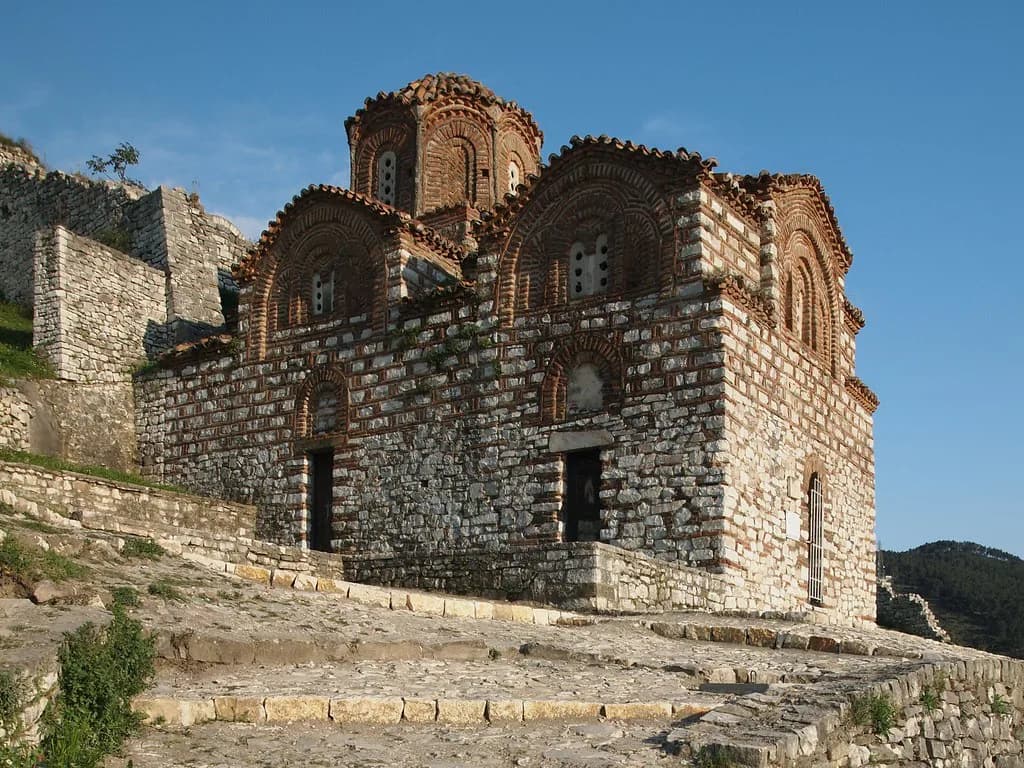
Holy Trinity Church, Berat: What to See Inside Berat Castle
Holy Trinity Church is the small domed Byzantine church on a grassy hill inside the walls of Berat Castle, in the Kalaja district above the town. Allow 20 to 30 minutes at the church itself and half a day for the castle as a whole, because the climb, the lanes and the viewpoints take longer than the building does. This guide covers where the church stands, the walk up, the architecture to look for and how to fit it into a visit to the citadel.
What the Holy Trinity Church is and where it stands
The Church of the Holy Trinity, Kisha e Shën Triadhës in Albanian, is a medieval Byzantine-era Albanian Orthodox church standing on a hill in the Kalaja district of Berat in southern Albania. Its address is given as Rrugica Shën Triadha, and it sits within the walled castle enclosure rather than in the lower town. That position matters: you reach it as part of a castle visit, not as a standalone stop on the Mangalem side of the river.
Dating is given as the 13th or 14th century, not a single fixed year. An inscription inside the church names Andronicus Paleologus, governor of the province of Berat from 1302 to 1326, which places construction within or before his period of rule. Treat any firm year you see quoted elsewhere with caution, and look for the building's own features instead of a date plaque.
The church is one element of the historic centres of Berat and Gjirokastra that together form a UNESCO World Heritage Site. If you are working through the town's sights, the wider collection of Berat Attractions: 11 Visitor Guides puts the castle, the mosques, the bridges and the museums in one place.
Getting up to the church through Berat Castle
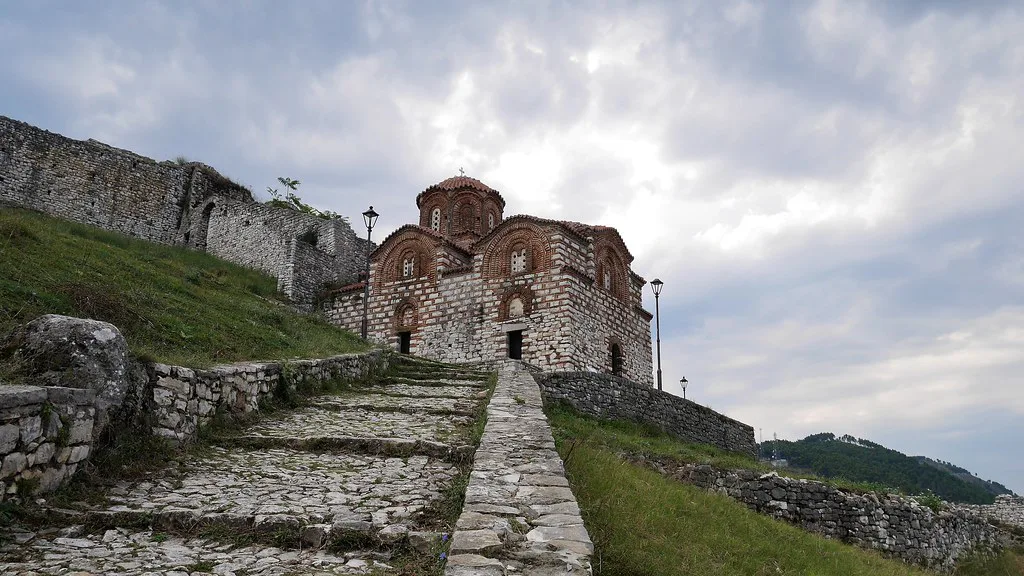
The church sits on the western side of the castle enclosure, just below the main fortress, reached by a short walk up zigzagging steps once you are through the gate. The climb to the castle itself is steep rather than long, so it is a workout in summer heat even though the distance is modest. Taxis and cars can drive up if the walk does not appeal.
A hiking path branches off Rruga Mihal Komnena and climbs to the castle walls, which gives walkers a second approach alongside the main gate route. Berat Castle (Kalaja e Beratit) has its own gate, lanes and ticket arrangements, so read that guide before you set out and decide whether you are walking up or taking a car.
Castle entry has been reported at 300 lek for the 9:00 to 18:00 window, with free entry outside those hours, and the same account notes that fees appeared to have been waived in the past year. Because that arrangement can change, check the position at the gate rather than budgeting on a fixed charge.
The exterior: a domed cross plan above the Osumi river
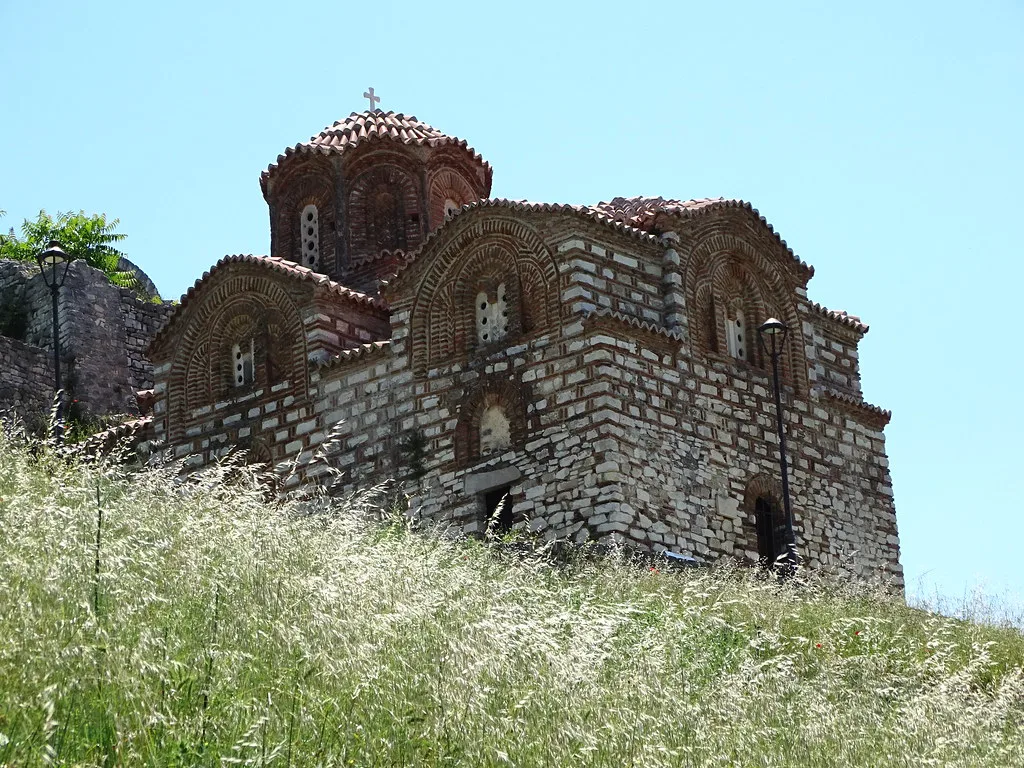
The plan is a cross shape with a dome, made up of a nave, a narthex at the entrance and the altar alcove. Byzantine handling of internal space and lighting is combined with western elements of the same period, and the pyramidal massing gives the building its distinctive silhouette on the hill. Walk round the outside before you try the door, because the exterior is what you will reliably see.
From the hill the view runs over olive orchards and the Osumi river, with Mount Shpirag in the distance and modern buildings spread below. It is a different prospect from the famous window-stacked houses of the old quarters, and a good reason to linger after the climb. The wider things to do in Berat picks cover how the river and the old quarters fit together.
The grassy setting and the stone walls make this one of the easiest churches in the castle to pick out, and it is usually the first one visitors walk to after entering. Other church ruins are scattered through the enclosure, several with signs giving brief information, so you can piece together the site as you wander.
What to look for inside, and why the doors are often locked
Do not count on getting in. As with most of Berat's churches, the doors are generally locked, and entry depends on finding one of the church's stewards with a key. Build the visit around the exterior and the hilltop position, and treat an open door as a bonus rather than the plan.
If you do get inside, look for two columns with reused capitals, thought to have been taken from classical ruins in the city. The inscription naming the governor is also within the church, though seeing it depends on the same access. These details are what make the interior worth the effort when the key turns up.
How long to allow and what else is in the castle grounds
Budget 20 to 30 minutes at the church and its immediate viewpoint, then add the walk up and down and time in the lanes. The castle enclosure holds a small inhabited village, so the visit stretches naturally as you pass houses, ruined churches and the fortress walls. A half day covers it comfortably without rushing the climb in the heat.
Within the walls you can also see the Red Mosque and the ruined White Mosque, both cultural monuments that suffered damage in the communist period. The Red Mosque stands just outside the citadel proper within the castle, built in red brick and limestone, and the White Mosque's minaret was destroyed and its prayer space later used as a football field.
Down in town, the Onufri Museum in Berat is the usual companion stop for anyone interested in the region's religious art, and the Church of St Michael (Kisha e Shën Mëhillit), Berat covers another of the town's churches. Pairing one of these with the castle gives you a full day rather than a single hill.
Nearby: the rest of the Kalaja quarter and the old town below
The Kalaja quarter is the walled settlement itself, and once you are back through the gate the Mangalem Quarter, Berat spreads below with its stacked Ottoman houses. The classic view of those windows is from across the river, so plan to cross later in the day when the light softens.
The Gorica Bridge, Berat is the old stone crossing between the two quarters and a natural end point for a walk down from the castle. From the bridge you can look back at the hillside you have just climbed, which makes the scale of the citadel clear.
On the town side, the Bachelors' Mosque (Xhamia e Beqarëve), Berat and the King's Mosque (Xhamia e Mbretit), Berat are both quick stops in the lower streets, and the Lead Mosque (Xhamia e Plumbit), Berat sits by the river. The Ethnographic Museum, Berat fills in the domestic side of Berati life if you have another hour.
Is the church worth the climb?
Yes, if you are going up to the castle anyway. The church is a short detour from the gate, its cross plan and dome are best appreciated from outside, and the view over the Osumi river and Mount Shpirag justifies the steps on its own. Go early or late to avoid the heat on the climb, and check the castle entry arrangement at the gate on the day.
Frequently Asked Questions
Can you go inside the Holy Trinity Church in Berat?
Usually not. The doors are generally locked and access depends on finding one of the church's stewards with a key. Plan around the exterior and the hilltop view, and treat an interior visit as a bonus if someone is on hand.
How old is the Holy Trinity Church?
It is dated to the 13th or 14th century. An inscription inside names Andronicus Paleologus, governor of the province of Berat from 1302 to 1326, which places the building within or before his rule.
How do you reach the church from Berat town?
Walk up to Berat Castle through the main gate, or take the hiking path off Rruga Mihal Komnena to the walls. Inside the enclosure, the church is on the western side below the main fortress, up a set of zigzagging steps. A taxi or car can drive up if you would rather skip the climb.