UNESCO Sites in Albania: What Each One Is and Where It Sits
Albania's UNESCO sites explained: Butrint, Berat and Gjirokastër, plus the Ohrid region and beech forests it shares with neighbouring countries.
On this page
Albania has three UNESCO World Heritage listings entirely within its own borders: the archaeological site of Butrint, and the historic centres of Berat and Gjirokastër, which are inscribed as one joint entry. Two further listings are shared with neighbouring countries, the Ohrid region and the primeval beech forests, and both reach into Albania. That split is the key to planning: the three wholly Albanian sites sit in the south and fit a single route, while the shared ones pull you east to Pogradec or north to the mountains.
This guide groups all five by region, describes what you actually see at each, and sets out how long to give them. Along the way it covers the Berat-or-Gjirokastër decision, driving and cobbles in the old towns, and the heat that shapes a southern itinerary in summer. For the rest of the country beyond these five, the wider things to do in Albania are worth reading alongside this.
What counts as an Albanian UNESCO site
Round-ups online give different totals, from three to five, because they count the shared listings differently. The three sites entirely in Albania are Butrint, the ancient city near Sarandë, and the linked historic centres of Berat and Gjirokastër. Added to those are the Natural and Cultural Heritage of the Ohrid Region, held mainly by North Macedonia and extended in 2019 to take in the Albanian shore around Pogradec, and the primeval beech forests spread across many European countries, with Albanian stands among them.
The dates of inscription are worth knowing because they explain why Berat and Gjirokastër are often listed as one entry. Butrint was recognised in 1992, Gjirokastër followed in 2005, and Berat was added as an extension of that listing in 2008. The dates come straight from the published record rather than from any ranking of quality.
For a trip, the practical grouping is geographical. Butrint, Berat and Gjirokastër lie in the southern half of the country and can be threaded together with Sarandë and the Riviera. Pogradec sits east on Lake Ohrid, and the beech forest stands lie further north and east again, well away from the southern touring circuit.
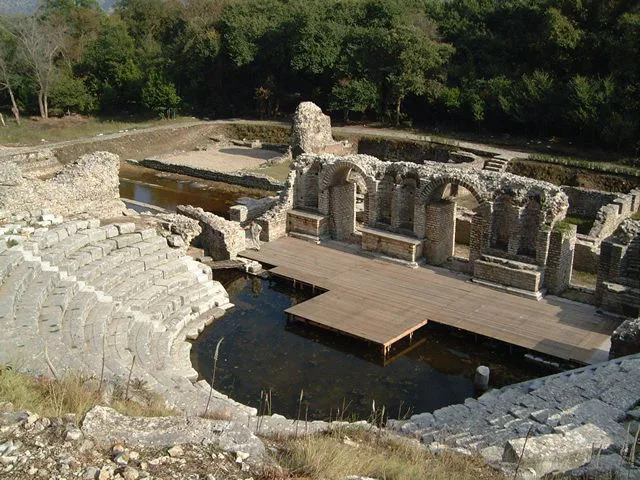
Butrint: the archaeological site near Sarandë and Ksamil
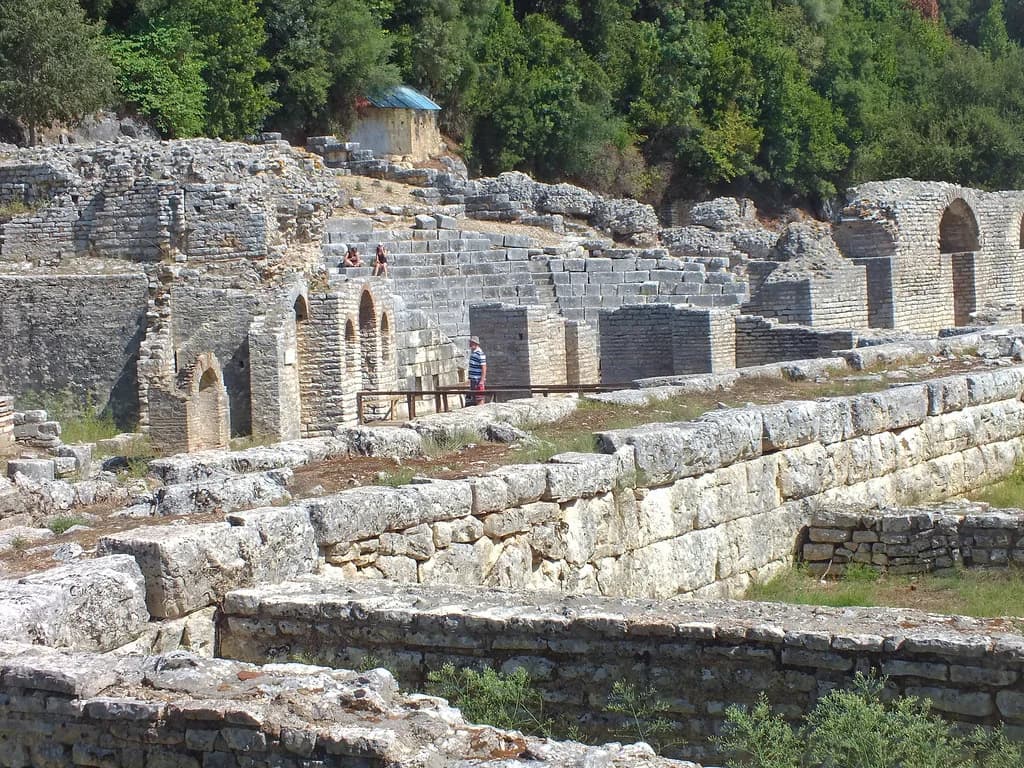
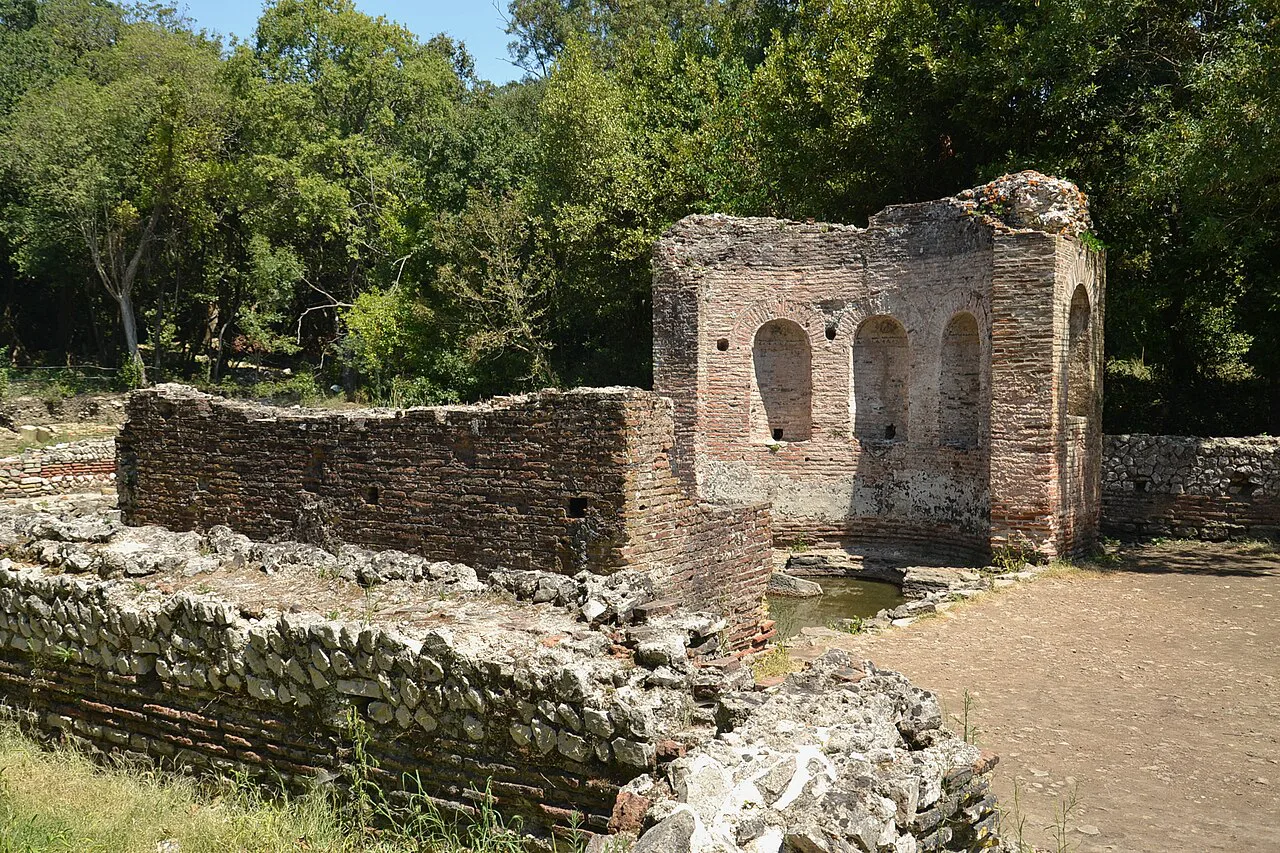
Butrint lies south of Sarandë, close to the Greek border and the village of Ksamil, and it is the site that surprises people who expect a single ruin. Within the wooded park you can see a Greek theatre, a late-antique baptistery, a ninth-century basilica and fortifications reaching back to the city's foundation. The site also holds two castles, and it carries wetland status as well as World Heritage listing because of the landscape around it.
The layers here run from the Chaonians through the Romans, Byzantines and Venetians to the Ottomans, which is why a walk through the park feels like reading strata rather than admiring one monument. Allow a half day if you want the theatre, baptistery and basilica without rushing, and longer if you intend to climb to the castle above.
Getting there by public transport is straightforward in principle: buses run from Sarandë, passing through Ksamil on the way. Services change with the season, so confirm the day's times at the Sarandë bus point rather than relying on a printed schedule. Taxis are an option, but agree the fare before setting off.
Berat: the Osum quarters and the climb to the Kala
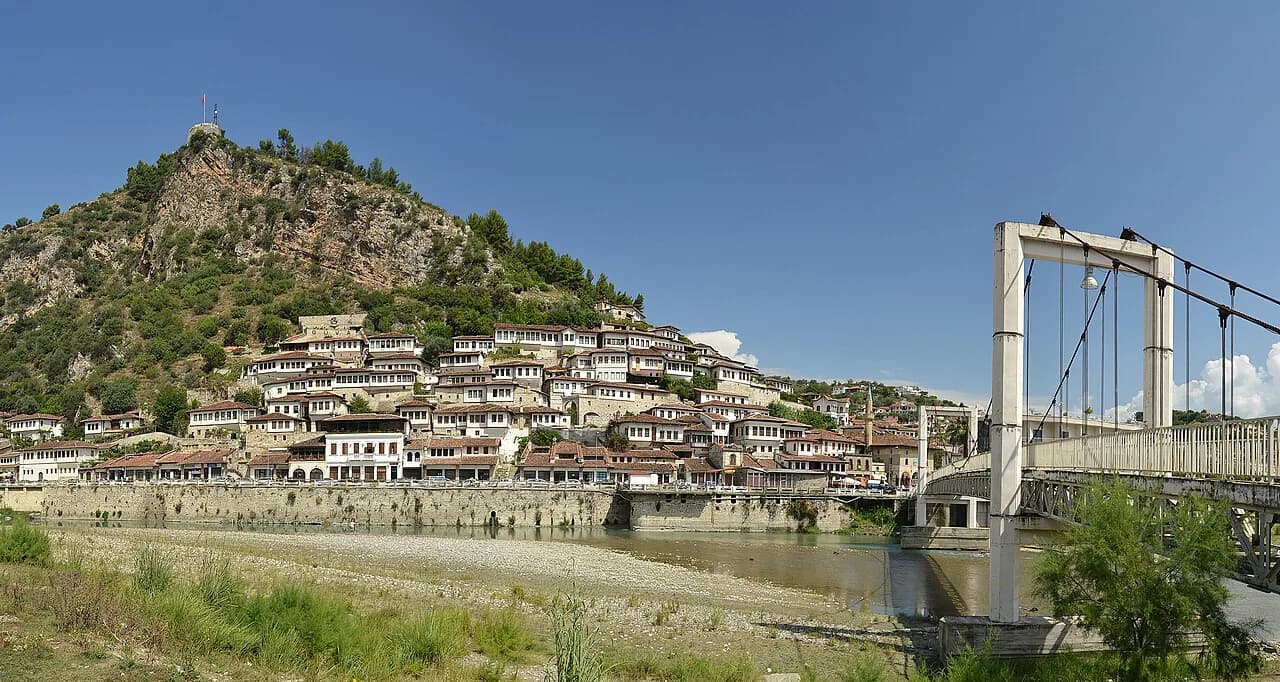
Berat spreads across the Osum river, with the Mangalem and Gorica quarters on the hillsides and the Kala fortress above. The old town works on two levels: houses with oversized windows stack up the slope, and a steep walk of about twenty minutes climbs from the lower streets to the fortress gates. Inside the walls are whitewashed homes, medieval churches and the Onufri Museum, which holds a collection of sixteenth-century icons.
The rewards are all in the walking, so plan around your legs and the temperature rather than around a checklist. Cobbled lanes twist between the houses, the riverfront promenade links the newer town to the historic centre, and evenings along that strip fill with people eating outside. Berat is easy to reach from Tirana, and a day trip is feasible, but a night lets you see the old town after the day visitors leave.
Gjirokastër: the Drino valley town, bazaar and fortress
Gjirokastër climbs a slope above the Drino valley, with two-storey stone houses, a bazaar and an eighteenth-century mosque in its lower streets. The streets are steep and cobbled, and the modern town at the foot of the hill is a different place entirely, with two-lane roads and a busy main roundabout. The old town above it was laid out long before cars, so expect narrow lanes and sharp gradients if you drive up.
The fortress is the reason many people come, and it holds more than walls: disused kitchens, prison cells, artillery pieces and, on the outer wall towards the Ottoman clock tower, a United States Air Force T-33 that landed here in 1957 after straying into Albanian airspace. A traveller in 2025 paid around eight euros to enter and walked up early to beat the heat, so treat that as a dated figure and check the price at the gate.
Summer heat is the real constraint. Temperatures of thirty-five degrees make the climb up and the fortress itself hard work in the middle of the day, and the sensible pattern is to walk up in the morning and stay indoors or in the shade until the evening. The bazaar streets and small family-run shops come alive again later on, when the stone gives back the day's warmth.
Berat or Gjirokastër first? The day-trip trade-off
If you are based in Tirana and have one free day, Berat is the easier fit. It sits about an hour and a half from the capital with frequent buses, so you can leave in the morning and be back the same evening. The cost is depth: a day trip gives you the Mangalem viewpoint and the climb to the Kala, but not the quiet hours inside the walls.
Gjirokastër asks more of you. It belongs on a southern route, reached after a long drive from Sarandë rather than as a morning outing from Tirana, and its hills make every walk a small effort. In return it feels less commercial, with no international chains jarring the old streets, and the evenings have a gentler buzz. If your trip runs south anyway, Gjirokastër is the more rewarding stay; if it does not, Berat wins on convenience alone.
Berat and Gjirokastër together: what one joint listing means on the ground
The two towns share a single inscription, first granted to Gjirokastër and later extended to Berat, so treat them as a pair rather than rivals. Both preserve Ottoman-era townscapes of stone houses on steep slopes, and both were shaped by Byzantine, Ottoman and Albanian influences visible in churches, mosques and domestic architecture. Visiting both gives you the comparison: Berat's windows and river setting against Gjirokastër's fortress and bazaar.
On the ground the joint status changes nothing about tickets or opening hours, which are handled town by town. What it does mean is that a route linking the two, with an overnight in each, covers a single World Heritage entry in depth rather than ticking two boxes. Allow a full day in each if you want the castle, the old quarters and an unhurried evening.
Pogradec and the Ohrid region: Albania's share of a shared listing
The Ohrid region was recognised on the Macedonian side in 1979 and extended in 2019 to include the area around Pogradec in Albania. That makes the lake's Albanian shore part of a listing held mainly by North Macedonia, and it gives Pogradec a genuine World Heritage connection rather than a marketing one. The lake itself is the draw, with the town as a base for the shoreline.
This is the one UNESCO site in the country that fits most naturally into an eastern itinerary rather than a southern one. If you are already heading for Korçë or the mountains around the lake, Pogradec slots in without a detour. If your trip is a Tirana–Berat–Gjirokastër–Butrint line, it does not, and forcing it costs a long drive.
The beech forests: where Albania's stands sit
The primeval beech forests listing is spread across eighteen European countries, with Albania holding stands along the Gashi river in Tropojë in the north-east and in the Perrenjas area further south. The protected areas mark where the European beech spread across the continent after the last Ice Age, so the interest is ecological and landscape-based rather than monumental.
Most visitors skip these entirely, and that is a reasonable choice. They sit in remote country with no convenient public transport, and seeing them properly means a dedicated trip into the mountains rather than a stop between towns. Go only if wild forest is the point of your journey; if it is, plan the access before you commit, and confirm locally what is reachable on the dates you have.
Putting a southern route together
The three wholly Albanian sites make a natural line from the coast inland and back. Start at Butrint from Sarandë or Ksamil, then drive north via Gjirokastër and finish in Berat before returning to Tirana, or reverse it. This order keeps the longest drives at the start and leaves the easy run to the capital at the end.
Between the sites, the Riviera gives you the coast without adding much distance. Himarë and the villages along the Ionian make sensible overnight stops, and boat trips out to the Karaburun peninsula fill a rest day when the heat makes ruins unappealing. Plot the whole thing on an Albania map before booking anything, because the road distances are larger than they look.
For anyone flying into Tirana with limited time, the opposite shape works: Berat as a day trip, then a decision on whether to push south for Gjirokastër and Butrint or stay in the centre of the country. Krujë Castle and the towns around Tirana fill a short stay, and they combine well with a late afternoon back in the capital.
Heat, driving and the ferry approach to Butrint
Summer heat is the single biggest factor in how a UNESCO itinerary actually runs. In August, temperatures reach the mid-thirties, and a car with working air conditioning makes the drive between Sarandë and Gjirokastër far less punishing. Do the outdoor sites early, keep the middle of the day for driving or museums, and return to the old towns in the evening.
Driving inside Berat and Gjirokastër is its own challenge. The old quarters were built for pedestrians and animals, with cobbles, tight bends and gradients that punish a careless clutch, and parking near the historic cores is limited. Park in the lower town and walk up, which also spares you the search for a space in the narrowest lanes.
There is a route decision at Butrint worth knowing about. A cable ferry crosses the Vivari channel that separates the site from the southern approach, carrying only a few cars at a time, so in high summer it can queue. Parking near the castle and walking or taking the short crossing avoids being stuck in the line, and it puts you inside the park sooner.
Which UNESCO route fits your trip
Choose by shape of trip rather than by prestige. A short stay based in Tirana gets Berat as a day trip and leaves the rest for another visit; a southern loop takes in Butrint, Gjirokastër and Berat in that order with the coast in between. Pogradec belongs to an eastern itinerary and the beech forests to a dedicated mountain journey, so leave both out unless the route already passes their way.
Whichever you pick, build the day around the heat, park below the old towns and walk, and treat the fortress entrance and any ferry or bus times as things to confirm on the spot. That leaves your attention where it should be, on the stone streets and the layered ruins themselves.
Explore more Albania guides
Sources
- UNESCO World Heritage Sites in Albania: Complete List & Guide - Baltic Travel Company Baltic Travel Company
- Visiting the UNESCO Sites in Albania - Erika's Travels
- Three Albanian UNESCO World Heritage Sites to Visit this Year
- 4 UNESCO Sites In Albania: World Heritage Sites You Have To See
- UNESCO Sites in Albania - Visit the World Heritage Attractions
Notes for your Albania trip
Optional updates to our Albania town guides.
You might also like
Continue reading
More guides you'll find useful