Lakes in Albania: Pick Shkodra, Ohrid, Koman or Prespa
Lakes in Albania grouped by region: Lake Shkodra, Lake Ohrid, Lake Koman, Lake Prespa, Bovilla and Dumreja, with what each is like and how to reach it.
On this page
The lakes in Albania that repay a deliberate trip are Lake Shkodra and Lake Koman in the north, Lake Ohrid and Lake Prespa on the south-eastern border, and Bovilla, a reservoir just above Tirana. Group them by region and a short trip falls into place: Shkodër for the first, Kukës or the Valbona road for the second, Pogradec for Ohrid and Prespa.
Two of the country's best-known waters are artificial. Koman and Bovilla were created by damming rivers to supply power and drinking water, which explains the drowned valleys and the vertical cliffs visitors come for. The others are karst or tectonic lakes formed over geological time, and they behave quite differently as places to swim, boat and walk.
Where Albania's lakes sit on the map
Shkodra spreads across the border with Montenegro in the Dinaric Alps, with the town of Shkodër at its south-eastern corner. Koman lies north-east along the Drin, roughly a two-hour drive from Valbona. Ohrid and Prespa occupy the south-east, with Pogradec on the Ohrid shore and Lin on a cliffside further south.
Bovilla sits inside Dajti Mountain National Park just over an hour by car from central Tirana. Smaller lakes fill the gaps between these: Dumreja south of Elbasan, Ulza on the Mat river, and the glacial groups at Lura and on Valamara. Reading them off a map by region saves the mistake of zig-zagging the country for single lakes.
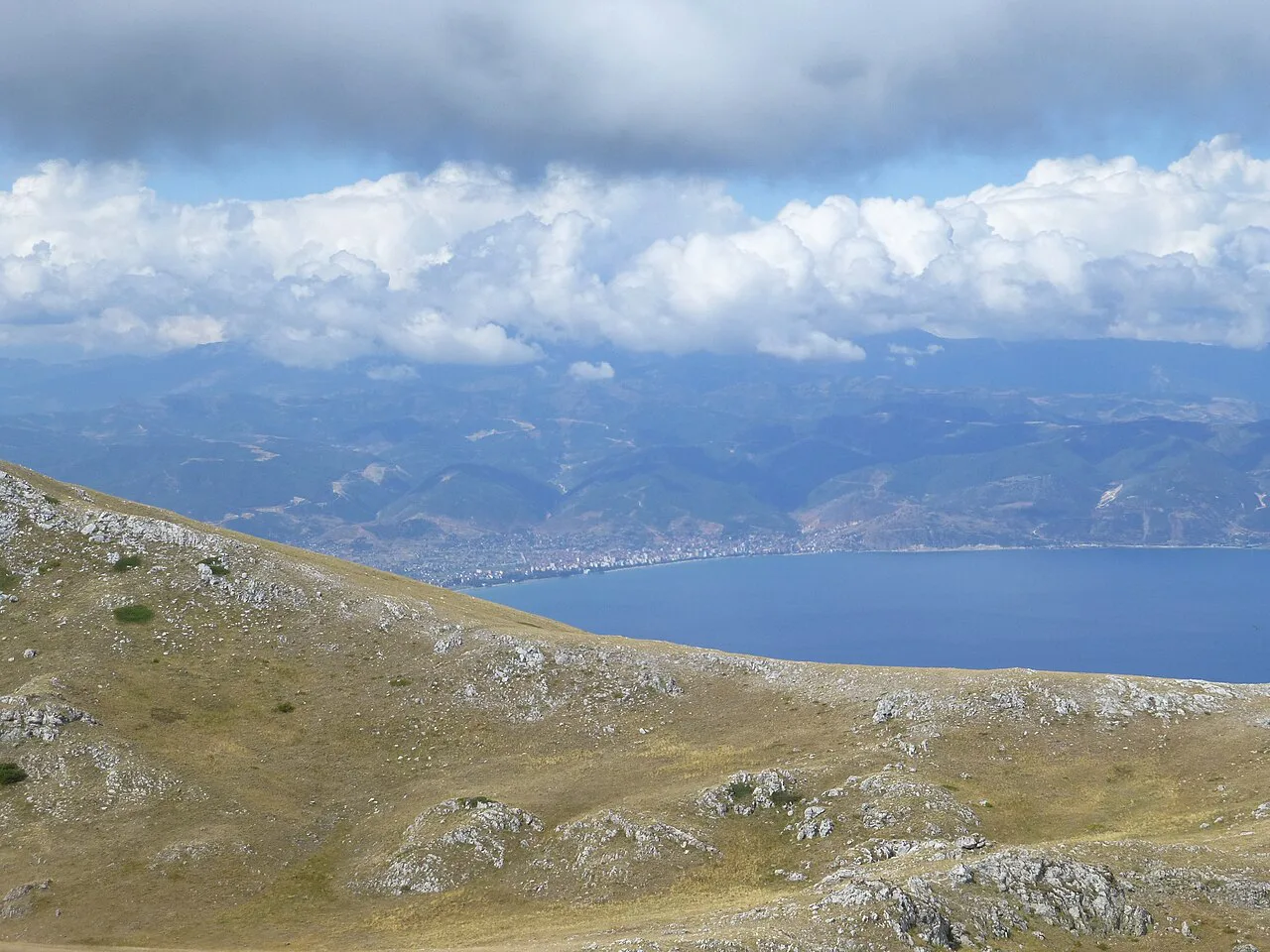
Lake Shkodra (Liqeni i Shkodrës): the largest lake in the Balkans
Shkodra is the largest lake in the Balkans, shared between Albania and Montenegro, and reaches 580 km² in winter. The Albanian shore keeps the city's name and the Montenegrin shore calls it Skadar. Its wetlands support the Dalmatian pelican and around 270 bird species are recorded around the lake, which makes it the best of Albania's lakes for birds and reeds rather than cliff scenery.
What is the biggest lake in Albania? Lake Shkodra is the largest lake in the Balkans, shared with Montenegro and named after the city of Shkodër at its south-eastern end. Its Albanian shore is where you find Shirokë, Zogaj and the view up to Rozafa Castle.
Can you swim in the lakes in Albania? Yes at several. Swimming is described at Shirokë and Zogaj on Lake Shkodra, at Pogradec and Lin on Lake Ohrid, and on the small beaches around Lake Prespa.
Are Albania's lakes natural? Some are, some are not. Lake Shkodra is a karst lake and Lake Ohrid is tectonic in origin, while Lake Koman and Lake Bovilla are reservoirs created by damming rivers for power and drinking water.
The easiest access points are the villages of Shirokë and Zogaj on the southern shore, both short drives from Shkodër and used by locals for weekend swims. Public beaches sit at those villages, and the local fish restaurants face the water towards the Albanian Alps. Further east, swimming is also described at the Shegan Eye spring and at Lake Shkodra Resort.
Rozafa Castle sits on a rocky hill above the lake, and the climb gives the classic view back over the water and the mountains. Combine the castle with a slow lunch at Shirokë rather than trying to see the whole shoreline in a day. Boats run out onto the lake from the town side if you want to see the reed beds close up.
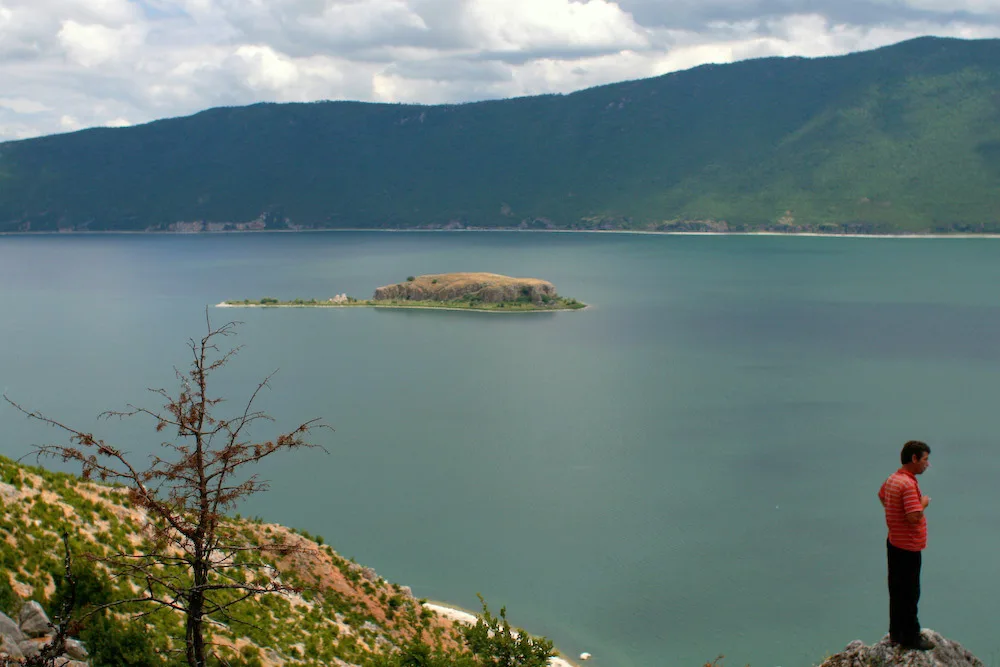
Lake Ohrid: Lin, Pogradec and the UNESCO listing
Ohrid straddles the border with North Macedonia and is UNESCO-listed, with a maximum depth of 288 m and an age the sources place between two and ten million years. It ranks among Europe's oldest and deepest lakes, and the water is among the clearest described in these accounts. On the Albanian side, Pogradec has a long beach tradition and Lin is a small fishing village tucked under a cliff.
Lin is the more rewarding base if you want quiet: swimming, a boat trip and the remains of an early Christian church are all within the village. Pogradec suits travellers who want a town with waterfront cafés and a beach within walking distance of a bed for the night. A lakeside cycle path runs along the shore for anyone travelling with a bike.
Lake Koman (Liqeni i Komanit): the Drin canyon and the ferry
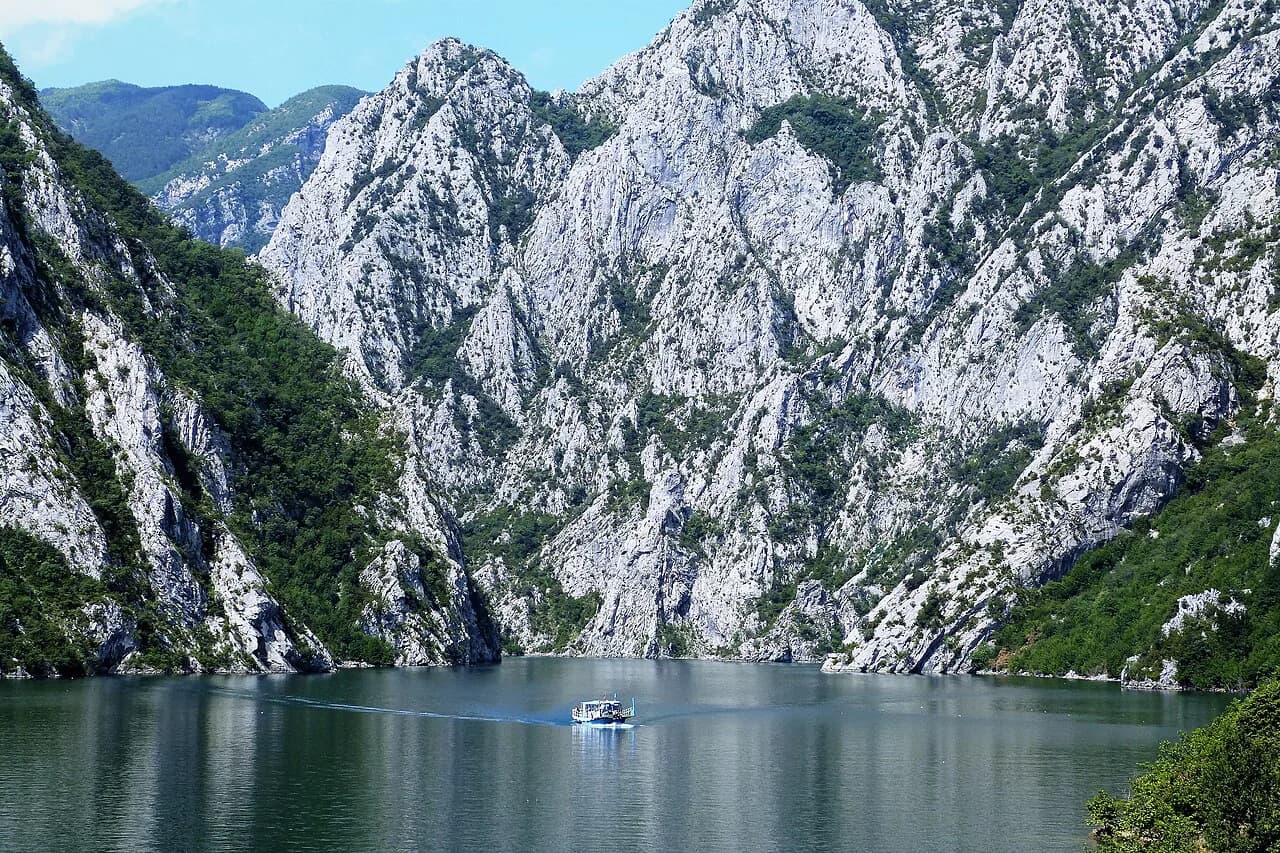
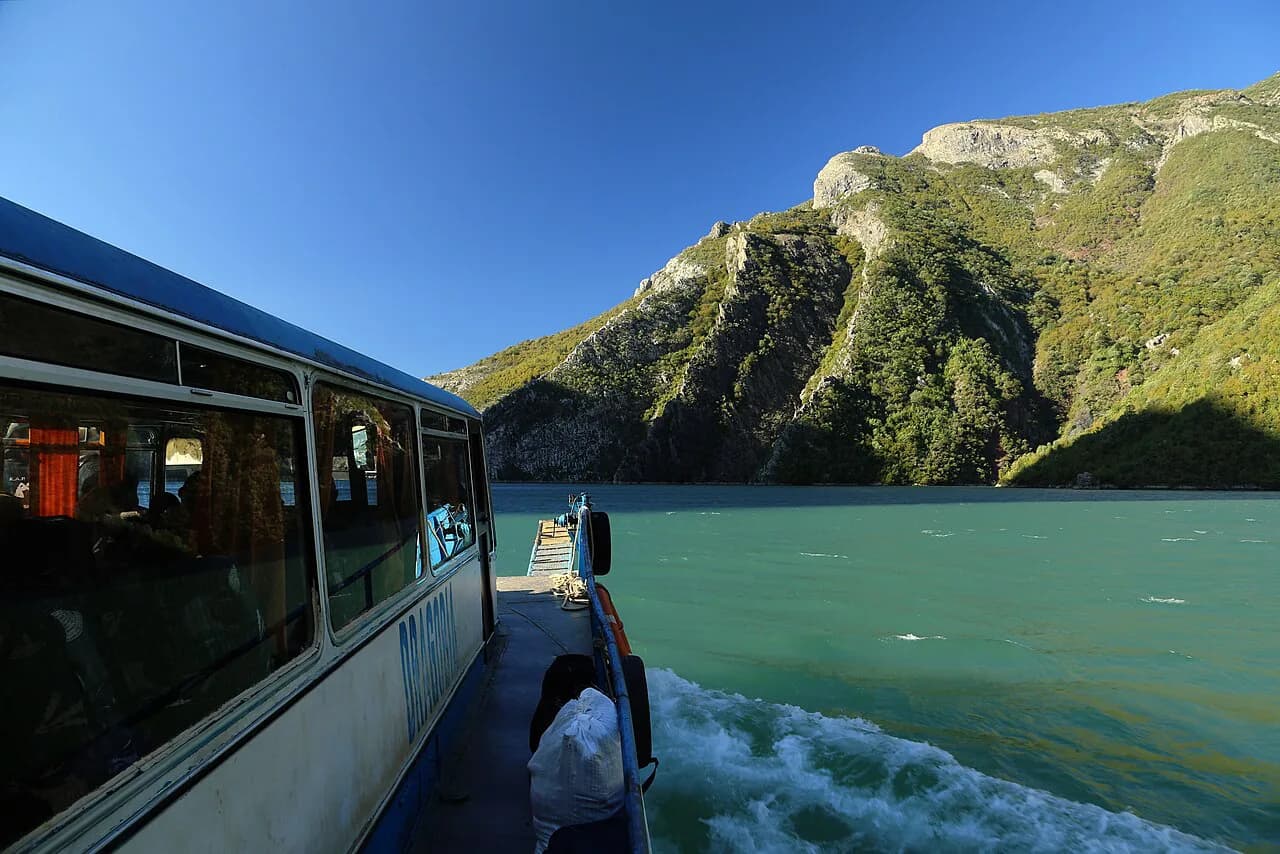
Koman is a 13 km² reservoir created by damming the Drin for hydro-electric power in the 1980s, and its cyan water beneath karst cliffs is why the comparison with Ha Long Bay keeps coming up. The port sits outside the town of Koman, past a tunnel and at the dam, and that is where the ferry and traditional boats load.
The crossing is the point of coming, and a boat trip on to the Shala River adds the most photogenic stretch. Sailing schedules vary by season and operator, so confirm the day and departure point with whoever sells you the ticket; the berth location at the dam is the fixed part. Allow the best part of a day rather than treating the ferry as a quick transfer.
Do not plan on fast driving around the reservoir. The road along the Koman shore is tarmac in name but rough in places and genuinely unsuitable for a road bike, so a mountain bike or a car with clearance is the sensible choice. From Valbona the drive takes about two hours, which makes it a commitment rather than an errand.
Lake Prespa and Maligrad island
Prespa is shared between Albania, Greece and North Macedonia and lies about an hour's drive from Lake Ohrid, which makes the two easy to pair. The shores have small beaches for summer swims and traditional fishing villages. Wildlife is the draw here too, with Dalmatian pelicans among the migratory birds.
The uninhabited island of Maligrad holds a medieval cave church cut into the rock, and boats or kayaks are the way to reach it. On the mainland opposite the island there is a beach and a restored chapel of St Nicholas.
Swimming is possible in Prespa, but Ohrid is the clearer of the two lakes and the better bet for a proper swim. Explore Prespa by boat or kayak and treat the water as scenery rather than a lido. The drive between the two lakes is short enough to combine on one loop from Pogradec.
Lake Bovilla above Tirana
Bovilla is a young reservoir on the Tërkuza river that supplies much of Tirana's drinking water, and it sits inside Dajti Mountain National Park. The pebble shore is just over an hour by car from the capital, and the best-known views are from the heights above the water.
Walking in takes around four hours, so most visitors drive and then climb to the viewpoint on Gamti Mountain. Local companies run guided walks to that ridge if you would rather not navigate the route yourself. The terrain around Bovilla is prone to erosion and landslides, so keep to established paths and avoid the slopes after heavy rain.
Smaller lakes worth knowing: Dumreja, Ulza, Funari and the glacial groups
Dumreja, south of Elbasan, is a hilly pocket of karst lakes, with Seferan the best known of them thanks to its water lilies. Counts vary between accounts, so treat the total as dozens rather than a precise figure. It suits families and anyone wanting quiet water without a long mountain drive.
Ulza is a reservoir on the Mat river, popular with Albanian visitors for fishing and easy relaxation, with the village of Ulëz as a place to stay overnight. The four Funari lakes on the edge of Elbasan were built from 1967 and are a picnic spot rather than a destination in themselves.
The Lura lakes form a group of glacial water high in the mountains, while Valamara holds the glacial lakes of the south on the mountain of the same name above Shënepremte in Gramsh. Buni, on the northern side of Jezerca, sits above 1,794 m and is nicknamed the Blue Eye of the north. All of these need a full day and a vehicle.
Lake Fierza and the Valbona valley
Fierza is another Drin reservoir, formed by the Fierza dam, and it sits against the Accursed Mountains in the north. Valbona Valley National Park opens off its surroundings, with alpine meadows and family-run guesthouses in the villages. Hiking, camping, fishing and kayaking are the reasons people linger.
Treat Fierza as part of a northern loop with Koman rather than a separate expedition. The roads are mountain roads, so distances take longer than the map suggests. If you are building a wider itinerary, the wider picture of Albania's mountains helps you judge which detours are worth it.
Two Blue Eyes: Theth's spring pool and the southern Syri i Kaltër
The Blue Eye in Theth is a spring-fed pool in the Albanian Alps, shaped and coloured like an iris, and it sits about seven kilometres from the village. Water temperatures peak at around 13°C in August, so it is a cold plunge rather than a comfortable swim. The southern Syri i Kaltër near Sarandë is a different place entirely, with a waterfall feeding a natural pool between limestone and moss.
Walkers heading to the Theth pool pass an elongated pool known as Clear Pool about five minutes before the main spring, and a quieter trail runs on the opposite side from the paved path. Sturdy shoes help on the rocky sections. Plan the Theth visit around the walk rather than as a roadside stop.
Swimming: where the water is warm and where it is not
Shkodra, Ohrid and Prespa all have described swimming spots, with Shirokë and Zogaj on Shkodra and the beaches at Pogradec and Lin on Ohrid the easiest to reach. Prespa has miniature beaches on its shores, though Ohrid is clearer for a swim. Summer heat on the lakes is real, so swim early or late rather than at midday.
Mountain water is a different proposition. Theth's Blue Eye stays cold through August, and the high glacial lakes at Lura, Valamara and Buni sit at altitude where the season is short. Take the cold seriously and treat these as dips rather than swims.
Doing the lakes without a car
Koman is the one lake where a boat is the transport as well as the attraction. The ferry and other traditional boats load at the port by the dam, and activity holidays in the north commonly build the crossing into a Theth or Valbona itinerary. Elsewhere, boats and kayaks can be arranged locally on Ohrid, Prespa and Shkodra.
Bovilla, Fierza and the high glacial lakes are awkward without wheels, and guided walks to the Bovilla viewpoint solve the navigation problem rather than the transport one. For something more active on water, Albania kayaking covers the rivers and coasts where operators run trips.
Honest trade-offs: heat, mountain roads and long approaches
The biggest cost of Albania's lakes is time in the vehicle. Koman is about two hours from Valbona, Bovilla is just over an hour from Tirana but four hours on foot, and Prespa is an hour beyond Ohrid. Koman's shore road is rough enough to rule out a road bike. Few of these are places to tick off in an afternoon.
Summer brings heat and crowds to the accessible shores at Shirokë, Pogradec and Lin, while the mountain lakes trade that for short seasons and cold water. Pick one lake per region and give it a day. Two lakes in one day only works when they are close, as with Ohrid and Prespa.
Which lakes to pick with two days and which to leave for longer
With two days based in Shkodër, take Shkodra with Shirokë, Zogaj and Rozafa, and leave Koman for a trip that starts nearer Valbona. With two days in Pogradec, pair Ohrid's Lin and Pogradec shore with a half-day run to Prespa and Maligrad. Bovilla fits a spare morning from Tirana if you have a car.
Leave Fierza, Lura, Valamara, Buni and Dumreja for a longer trip with your own vehicle. They reward people who can stay a night nearby rather than day-trippers. If water is the theme, Albania waterfalls makes a natural companion list for the same regions.
Which lake gets your day?
Choose by base, not by reputation: Shkodra if you are in Shkodër, Ohrid and Prespa if you are in Pogradec, Koman if you are heading to or from Valbona, and Bovilla if you have a car in Tirana. The high glacial lakes need a night nearby and a full day, so save them for a trip with more slack.
Before you set off, check the Koman ferry's departure day and the meeting point for any guided Bovilla walk, since both depend on the season and on the company running them. Everything else on this list can be planned around a map, a car and an early start.
Explore more Albania guides
Frequently Asked Questions
What is the biggest lake in Albania?
Lake Shkodra is the largest lake in the Balkans, shared with Montenegro and named after the city of Shkodër at its south-eastern end. Its Albanian shore is where you find Shirokë, Zogaj and the view up to Rozafa Castle.
Can you swim in the lakes in Albania?
Yes at several. Swimming is described at Shirokë and Zogaj on Lake Shkodra, at Pogradec and Lin on Lake Ohrid, and on the small beaches around Lake Prespa. Mountain pools such as the Blue Eye in Theth stay cold even in August, so treat them as a quick dip.
Are Albania's lakes natural?
Some are, some are not. Lake Shkodra is a karst lake and Lake Ohrid is tectonic in origin, while Lake Koman and Lake Bovilla are reservoirs created by damming rivers for power and drinking water. That difference explains why the reservoirs have such steep, flooded valleys.
Sources
Notes for your Albania trip
Optional updates to our Albania town guides.
You might also like
Continue reading
More guides you'll find useful