Albania Waterfalls: Grunas, Bogovë, Sotira and the Rest
A region-by-region look at Albania's waterfalls, from Grunas in Theth to Bogovë near Berat and Sotira by Gramsh, with walk-in times and what each one is like.
On this page
Albania's waterfalls divide into two trips, not one. The north holds Grunas at Theth, Rrogami at Valbona and Selca on the road towards the Montenegro border, while the south holds Bogovë in Skrapar and Sotira beneath Mount Tomorr, with two easy options out of Tirana at Shëngjergj and Kakunja. This guide groups them by region, gives the walk-in time and height of each, and explains which town each one pairs with.
Almost all of them share the same shape of visit: a drive, then a walk of twenty minutes to just under an hour, then a cold pool at the base of the fall. The water runs fullest in spring and after early autumn rain, so a July or August visit usually means a thinner cascade but a warmer swim. Walk times and heights come from published guides; the pages for Albania national parks and lakes in Albania cover the wider landscapes these falls sit in.
What Albania's waterfalls have in common
Most of the falls are reached on foot rather than by road, and the walks are short enough to fit around a bigger day out. Shëngjergj is a twenty-minute hike, Kakunja about forty-five minutes, Grunas forty-five minutes to an hour, Bogovë twenty minutes in one guide's account and forty in another, and Sotira around forty-five minutes. Plan on proper shoes rather than sandals, because wet rock near the pools is the usual hazard.
Feeding patterns vary, which matters for timing. Some falls are snow-fed and run hard in spring; others rely on rainfall and shrink in high summer. Spring, roughly April to June, and early autumn in September and October bring the fullest flow across the country as a whole. Come in July and you trade a weaker cascade for warmer water in the plunge pool, which is a fair swap on a hot day.
The pools are cold everywhere, and the mountain ones are bitter. At Grunas the water is fed straight from alpine streams, so most people wade rather than swim, and even that is best in July and August. Bring a towel and a dry layer for the walk back, since the shade in these valleys stays cool even on a sunny afternoon.
Grunas Waterfall in Theth: the walk from the village
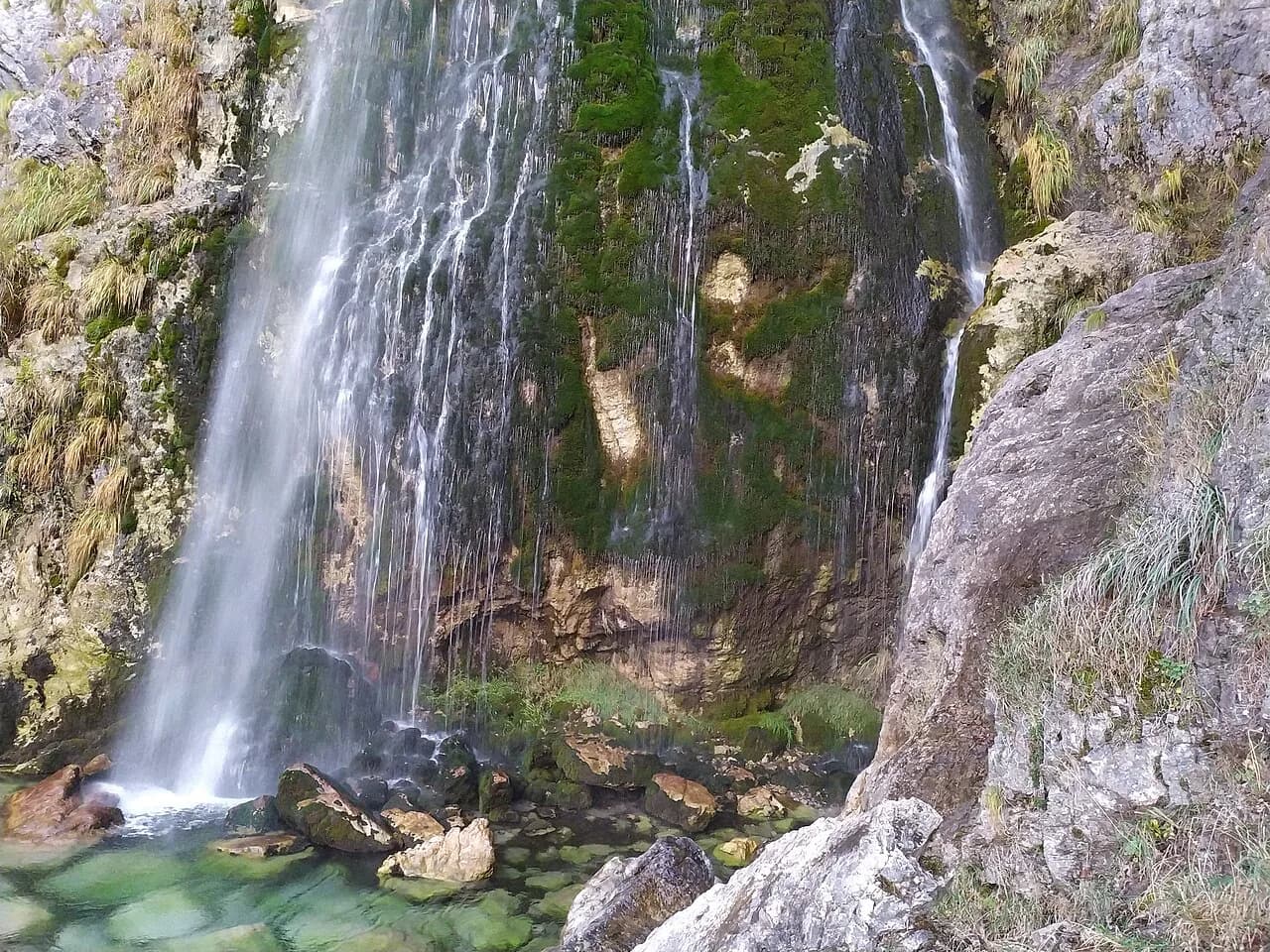
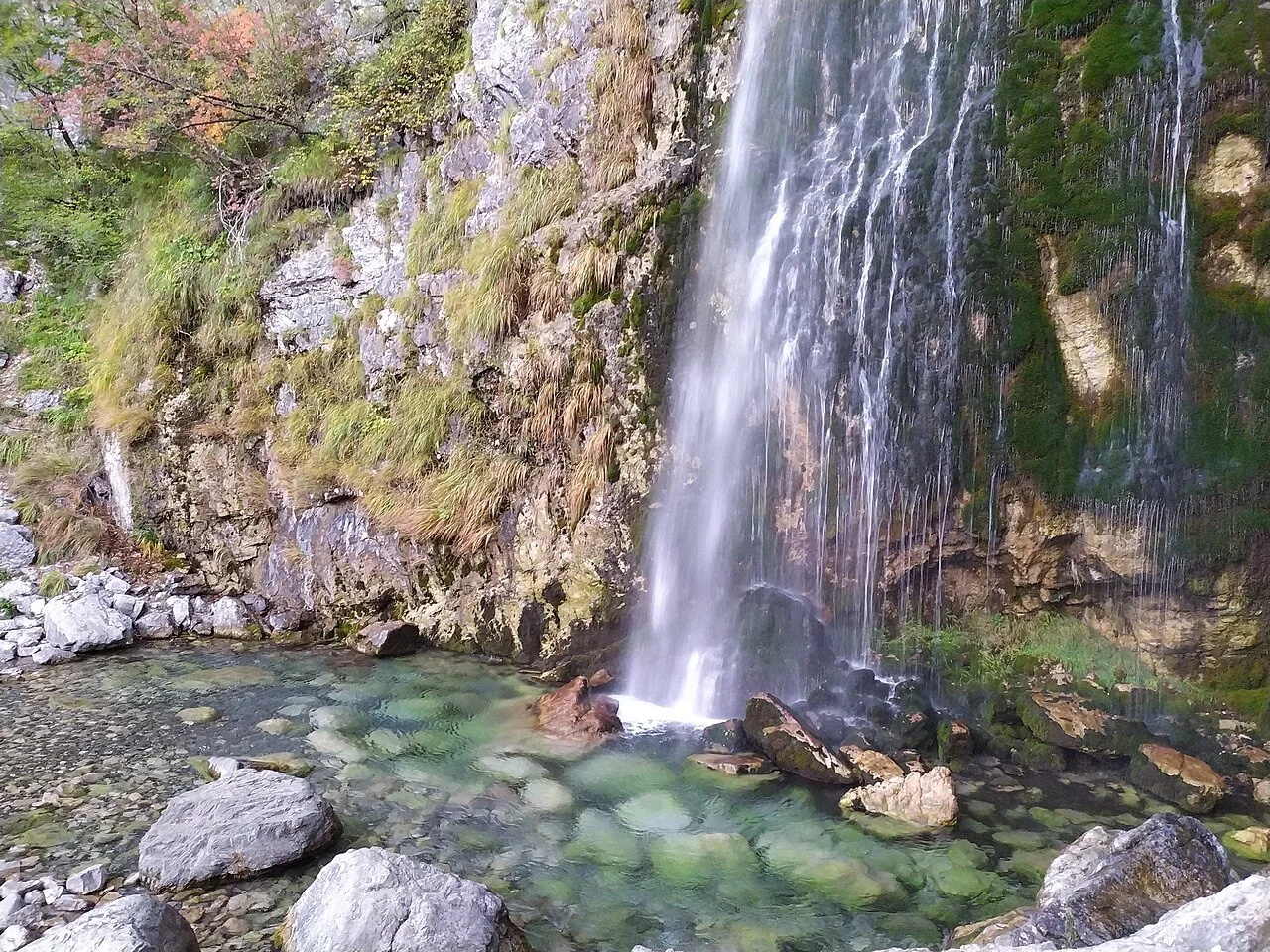
Grunas, or Ujëvara e Grunasit, drops about 30 metres from a cliff just outside Theth village in Theth National Park. The path runs roughly 2.5 kilometres each way from the village centre and takes about 45 minutes to an hour at an easy pace. The terrain is dirt path, small wooden bridges and some rocky ground, with no steep climbs, so families and casual walkers manage it.
The caveat is timing. Snowmelt swells the river into a roar in spring and early summer, and by late summer the flow drops while remaining photogenic. The path also turns slippery after rain, which is the main reason to carry grippy shoes. Because the walk is under an hour, most people fit it into a morning and keep the afternoon free.
Theth sits in the Albanian Alps, which is a separate trip from the southern canyons rather than a stop on the way to Berat. Treat the far north as its own few days and the south as another, and you avoid long mountain drives for the sake of one cascade. For the protected areas around these valleys, see Albania's National Parks.
Bogovë Waterfall in Skrapar: the walk in and the turquoise pool
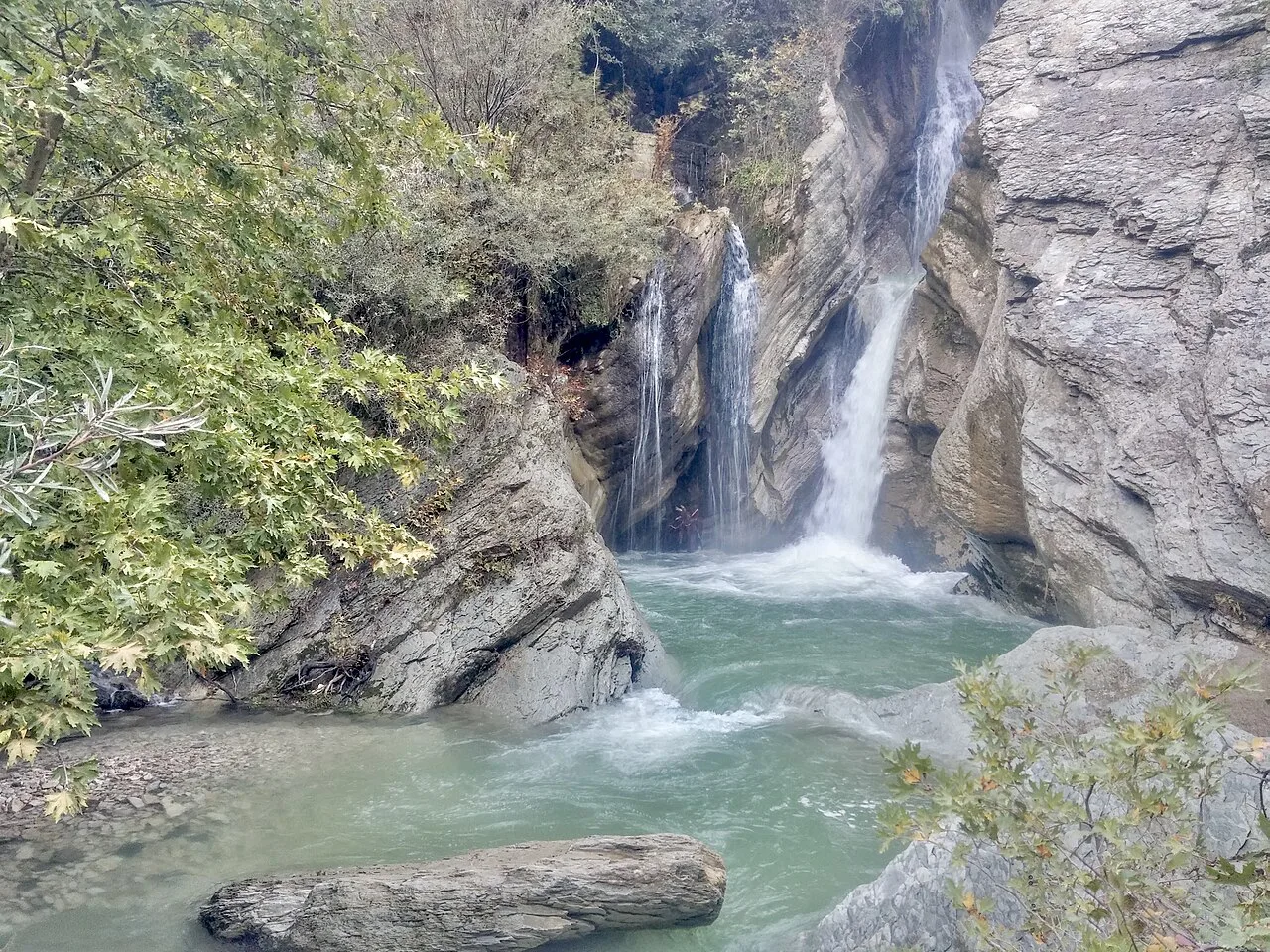
Bogovë is the southern fall that pairs most naturally with Berat. It sits in the Skrapar region, within Berat County, and Çorovodë is the usual gateway for the approach. The cascade drops somewhere between 15 and 20 metres into a turquoise pool, and the walk from the village takes about 20 minutes in one guide's account and closer to 40 in another, so allow an hour for the round trip.
The approach is the part that needs planning. From Tirana the drive runs three to four hours, and the final stretch from Çorovodë can narrow or turn to unpaved road, so a vehicle with decent clearance is the safer choice. Buses run to Çorovodë but at limited frequency, with local taxis or arranged transport for the last leg.
At the base, the pool is cold and the canyon walls close in, which makes it a photogenic stop rather than a long bathing session. Spring delivers the strongest flow; summer brings calmer water for a dip. The walk is short but rough underfoot, so wear sensible footwear.
Sotira Waterfall near Gramsh: the tall cascade under Mount Tomorr
Sotira is the dramatic one. Fed by streams off Mount Tomorr near the village of Gramsh, it falls close to 100 metres over limestone cliffs and is loud enough to hear before you see it. The drive from Tirana runs about two hours, then a hike of roughly 45 minutes through meadows and forest. This is the fall to pick if height and noise matter more to you than a short stroll.
The same Mount Tomorr streams that feed Sotira also shape the wider landscape around Gramsh. Sotira is best treated as its own outing from the Gramsh side, reached after a short drive and a hike of roughly 45 minutes.
Shëngjergj Waterfall: the easiest from Tirana
Shëngjergj, Ujëvara e Shën Gjergjit, sits near the village of the same name about an hour's drive from Tirana, followed by a twenty-minute hike. The fall stands around 30 metres tall, and the trailhead begins by a small restaurant. Shallow pools below the fall make it a gentle stop for a picnic rather than a strenuous outing.
The surrounding area is clean, quiet and not overly crowded, which makes it a sensible half-day when you want out of the capital without a long drive. The walk in is scenic rather than demanding. Combined with the cable car up Mount Dajti, it appears on organised day tours from Tirana that include pickup in the city.
Kakunja (Askolaj) Waterfall in the Baldushk hills
Kakunja is the smallest of the group at about 8 metres, reached from the village of Kakunj in the Baldushk area on the edge of Tirana. The drive takes 45 to 60 minutes and the hike about 45 minutes. What you get for that is a quiet cascade with small pools, and few other visitors.
Choose it over Shëngjergj only if you want the shorter drive and do not mind a smaller fall. The walk is the main event here, through a village that sees little tourist traffic, with intimate places to relax by the pools. Carry water, since facilities are thin on the ground.
Selca Waterfall in the north, on the way to Montenegro
Selca, Ujëvara e Selcës, drops over 30 metres into a turquoise pool, with a 30-minute hike from the road. The drive from Tirana runs around three and a half hours, which places it firmly in a northern trip rather than a day out from the capital. The walk passes meadows and small mountain villages, so it is as much a look at rural life as a visit to a fall.
Selca works best if you are heading north or planning to cross the border into Montenegro. Spring brings the highest water. It is a practical stop to slot into a northern Albania trip rather than a destination in its own right.
Rrogami Waterfall in Valbona: the longest approach
Rrogami, in the Valbona valley, needs the most commitment of the seven. The drive from Tirana runs about five hours and the hike about an hour, with the fall standing over 30 metres. That makes it the one to schedule with an overnight in the valley rather than as a same-day return.
Valbona and Theth together form the core of the northern mountain country, and Grunas at Theth is the shorter walk of the two. If you have one day in the Alps, Grunas asks less of you; if you have two, the Valbona valley rewards the extra drive. The national parks page covers the wider protected areas these falls sit within.
Blue Eye of Theth: a mountain pool rather than a single fall
The Blue Eye of Theth is not a classic cascade. It is a deep Blue pool at the base of a mossy fall, reached by a two-hour hike from the Nderlysaj bridge. The colour is what people come for, and the walk is more demanding than the forty-five minutes to Grunas. Allow a full half-day rather than a quick stop.
Pair it with Grunas if you have a full day in Theth, since the two trails start near the same village. The Blue Eye is the longer walk, so do it first while your legs are fresh, then finish with the gentle forty-five minutes to Grunas. Wildlife along the way, from alpine flowers to birds, is part of the appeal.
Choosing by region
Plan around three bases. From Berat, Bogovë is the southern fall, and Sotira is a feasible day south towards Gramsh. From Shkodër, Grunas at Theth and Rrogami at Valbona are the northern pair, with Selca on the route for a northern trip. From Tirana, Shëngjergj is about an hour's drive and Kakunja 45 to 60 minutes, which makes them the realistic day-trip options.
The trap is trying to combine north and south. The drive from Theth to Skrapar covers most of the country and eats a full day. Pick one half of Albania for each trip, and add a waterfall to the itinerary rather than building the itinerary around it. For stops between them, Lakes in Albania covers the water bodies en route, including Lake Shkodra in the north.
Timing the flow
Flow depends on the season and on how the fall is fed. Snow-fed falls such as Sotira and Grunas run hardest in spring and early summer, when meltwater swells the streams. Rain-fed falls respond to storms, so a wet early autumn can bring them back to life. Across the country, spring from April to June and September to October are the months with the most water.
Summer is not wasted. The water is warmer and the pools are calmer, so if swimming matters more than the roar of the fall, June through September works. Carry a light rain jacket regardless, because these are mountain valleys where the weather turns.
What to wear and what to bring
The essentials are shoes with grip, a dry bag for phones, a towel and a spare layer. Wet limestone and wooden bridges are slippery, and most falls involve at least some rough ground. Insect repellent and sun cream earn their place in summer.
Do not overpack. These are short walks, not expeditions, and the round trip to Grunas or Bogovë fits in a morning. A small rucksack is more comfortable than a large one on narrow paths. Waterproof footwear matters more than a heavy jacket in July.
Swimming in the pools
Swimming works where the pool is broad and calm. Bogovë's turquoise pool suits a dip in summer, and Grunas's pool is possible but icy, with most people wading in briefly. In spring the pools are full and cold, and swimming is not the point.
Treat every plunge pool as cold mountain water, not a lido. Check the depth before you jump, since the pools are rock-lined and uneven. Children should stay in the shallows with an adult nearby.
Guided trips and transport
Guided day trips earn their place for the falls that need a rough final drive and a short walk, such as Bogovë. Operators based around Çorovodë and Bogovë run structured days with transport, a guide and sometimes meals. That removes the guesswork about the last unpaved stretch from Çorovodë.
For Grunas and Theth, guides offer hikes plus optional transport from Shkodër or Tirana, which saves you the long mountain drive. For Shëngjergj and Kakunja, a tour is convenient but not essential; both are easy to reach independently. Organised trips from Tirana combine the Dajti cable car with Shëngjergj, which suits a car-free day.
Where waterfalls fit into a wider itinerary
Use waterfalls as a half-day, not a headline. In the north, a day in Theth covers Grunas and the Blue Eye; in the south, Bogovë fits a Berat-based day and Sotira a Gramsh loop. The Albania national parks page gives the wider context for the protected areas these falls sit within.
If you want wet days beyond waterfalls, the Vjosa and its surrounding wild river park support rafting and kayaking, which pair naturally with a Gramsh or Përmet stay. Caves in Albania offer another rainy-day option in the same regions. Build two or three of these into a week and you get a varied southern loop without long drives.
Which waterfall should you build your day around?
If you have one day from Tirana, pick Shëngjergj for the shortest drive and walk. If you are basing in Berat, Bogovë gives you the biggest reward for the least walking, and Sotira delivers the height. If you are heading to the Alps, Grunas is the sensible one-day choice and Valbona's Rrogami the longer, quieter alternative.
Whichever you choose, check the drive and walk time from the source guide before you set out, and pack for wet rock and cold water. Book any guided trip directly with the guiding company in Çorovodë or Bogovë and confirm what is included, since inclusions vary between companies.
Explore more Albania guides
Sources
Notes for your Albania trip
Optional updates to our Albania town guides.
You might also like
Continue reading
More guides you'll find useful