Krujë Old Town: Bazaar Street, Castle Walls and a Walking Route
A practical walk through Krujë old town: the bazaar street, the castle walls and main sights, how long it takes, and how to arrive from Tirana.
On this page
Krujë old town is compact enough to walk in half a day: one narrow bazaar street, the old walls above it and two museums inside the castle grounds. The historic core sits on a hillside about 20 km northeast of Tirana, with the modern town spread along the main road below. This guide sets out how the parts fit together, the order to walk them and how long each stretch takes.
Plan the day around the climb. You start in the new town, wind up the serpentine road to the old quarter, then walk the bazaar street uphill to the castle gate and its viewpoints. For the wider picture of what a Kruje visit involves, including the town's place in Skanderbeg's story, the Krujë: Castle, Bazaar and What a Visit Takes guide fills in the background this page skips.
How the old town is laid out
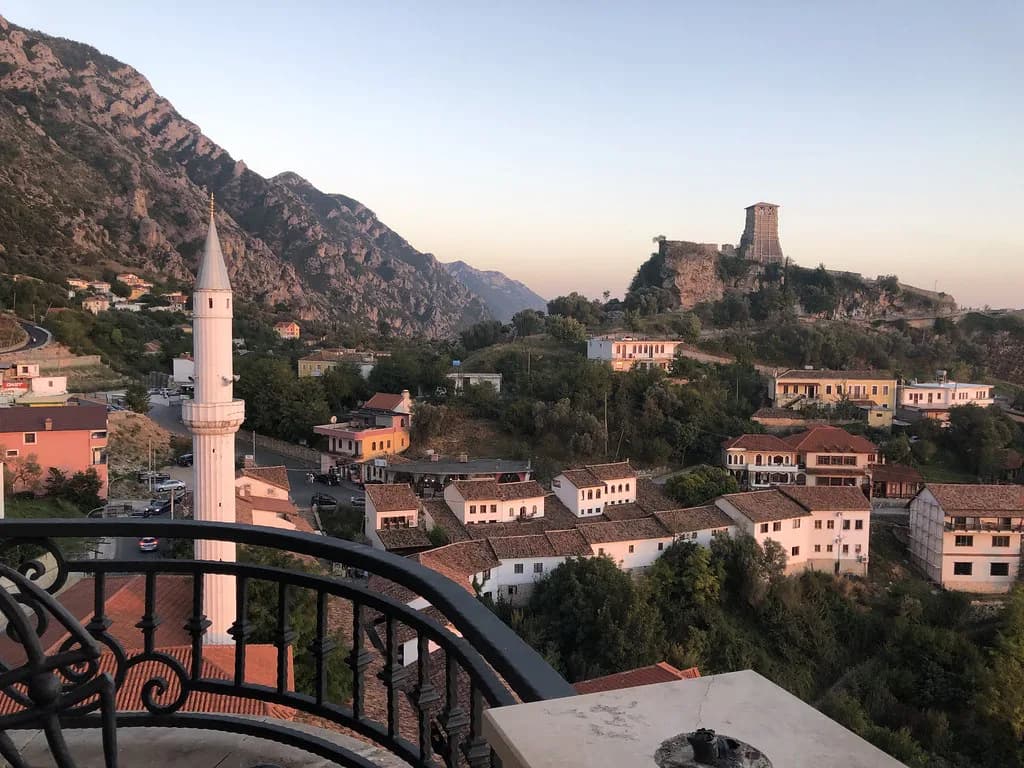
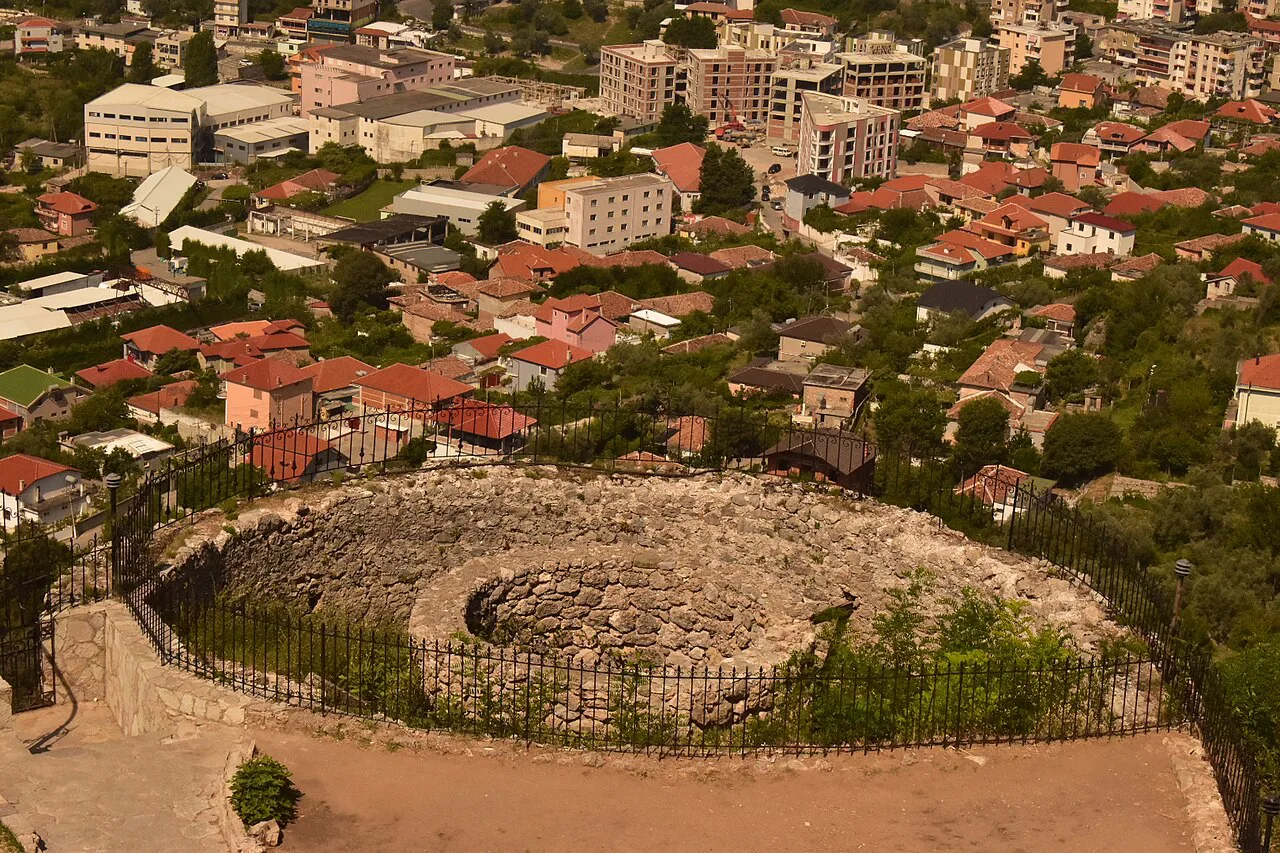
Krujë divides into two levels. The lower new town has the busy main street of cafés and small shops; above it, a road of hairpin bends climbs to the old quarter, where the bazaar and castle sit close together. Drivers should expect animals on the road on the way up and keep attention on the bends.
The old quarter's focal points are concentrated in a small area: the bazaar street, the castle and its museums, all walkable on foot within a few minutes of each other. That is why a short visit works. It is also why the street gets busy in the middle of the day, when day-trippers arrive together.
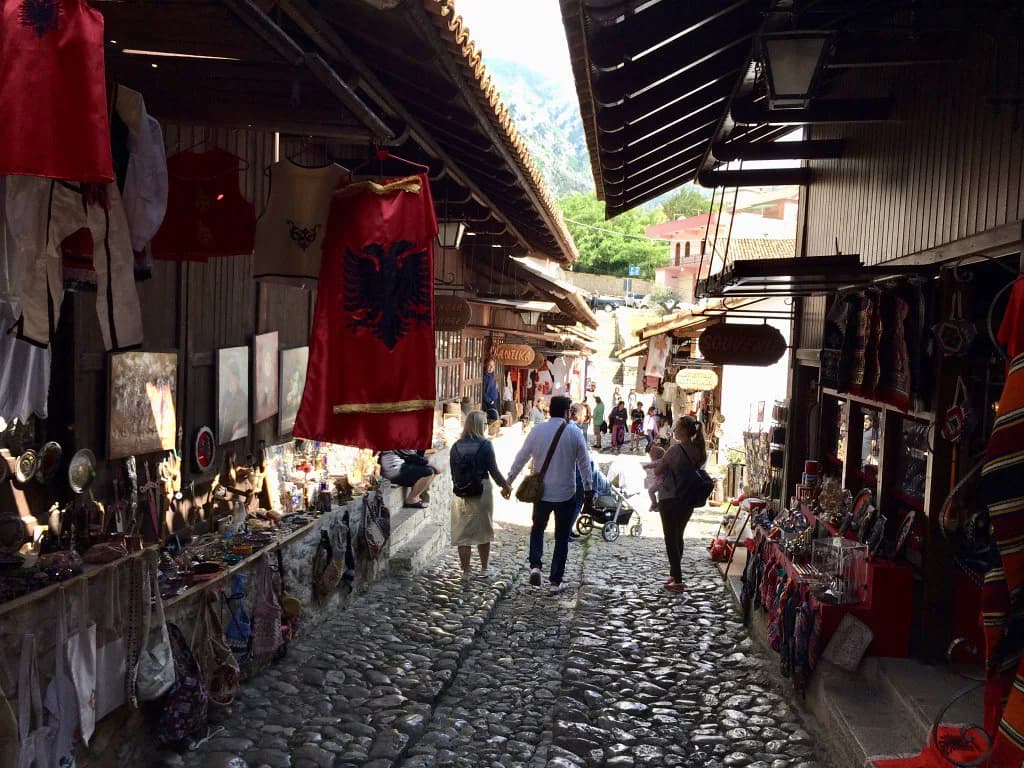
The bazaar street, Pazari i Vjetër, runs from the old quarter up to the castle. Its cobbled surface is narrow and uneven, and the climb is steady rather than steep, but anyone with limited mobility should treat it as a slow walk with stops. A Kruje map helps you see how little distance separates the gate, the shops and the museums.
The bazaar: what is sold and how it leads to the gate
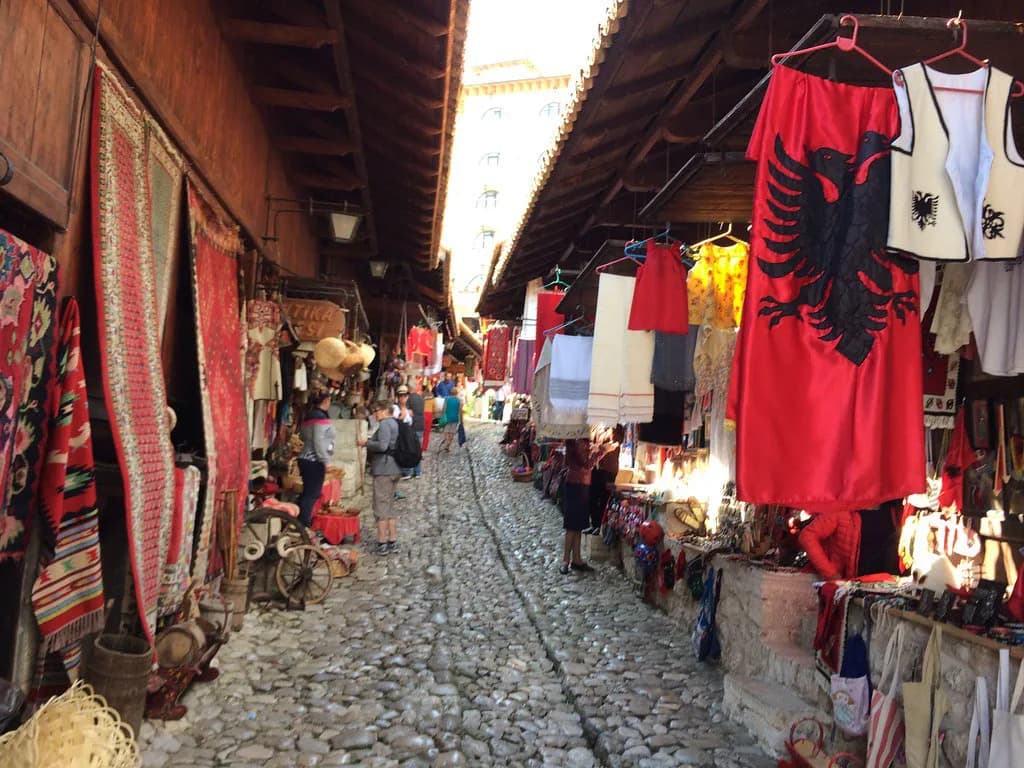
The bazaar is the spine of the old town, and it has been a trading street for centuries. The Visit Albania listing describes its construction as dating back over 400 years, and records that it grew to shape the housing and streets around it, making it the epicentre of Kruja. Today it doubles as a museum piece and a working shopping street; the Kruja Bazaar guide covers the stalls in more detail.
What you will find on the stalls is traditional craft rather than souvenirs alone: hand-woven rugs in strong colours, copper and silver work, carved items and pottery. Finnish visitors' accounts of the old bazaar single out the rugs, antiques, silver and copper pieces and earthenware as the things worth looking at. Bear in mind that anything bulky has to travel home with you.
The street ends at the approach to the castle, so there is no separate walk between shopping and sightseeing. Walk up through the bazaar once without stopping to get your bearings and see the gate, then come back down slowly. The lower stretch, nearest the old quarter entrance, is the place to pause for coffee.
Kruja Castle and its walls
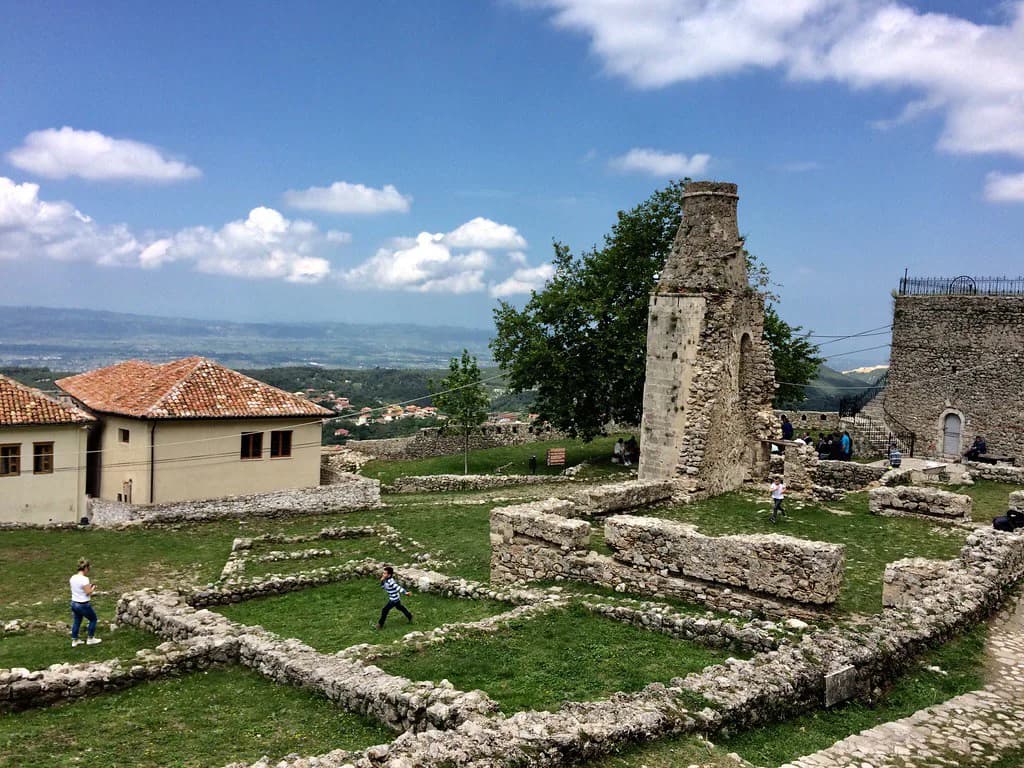
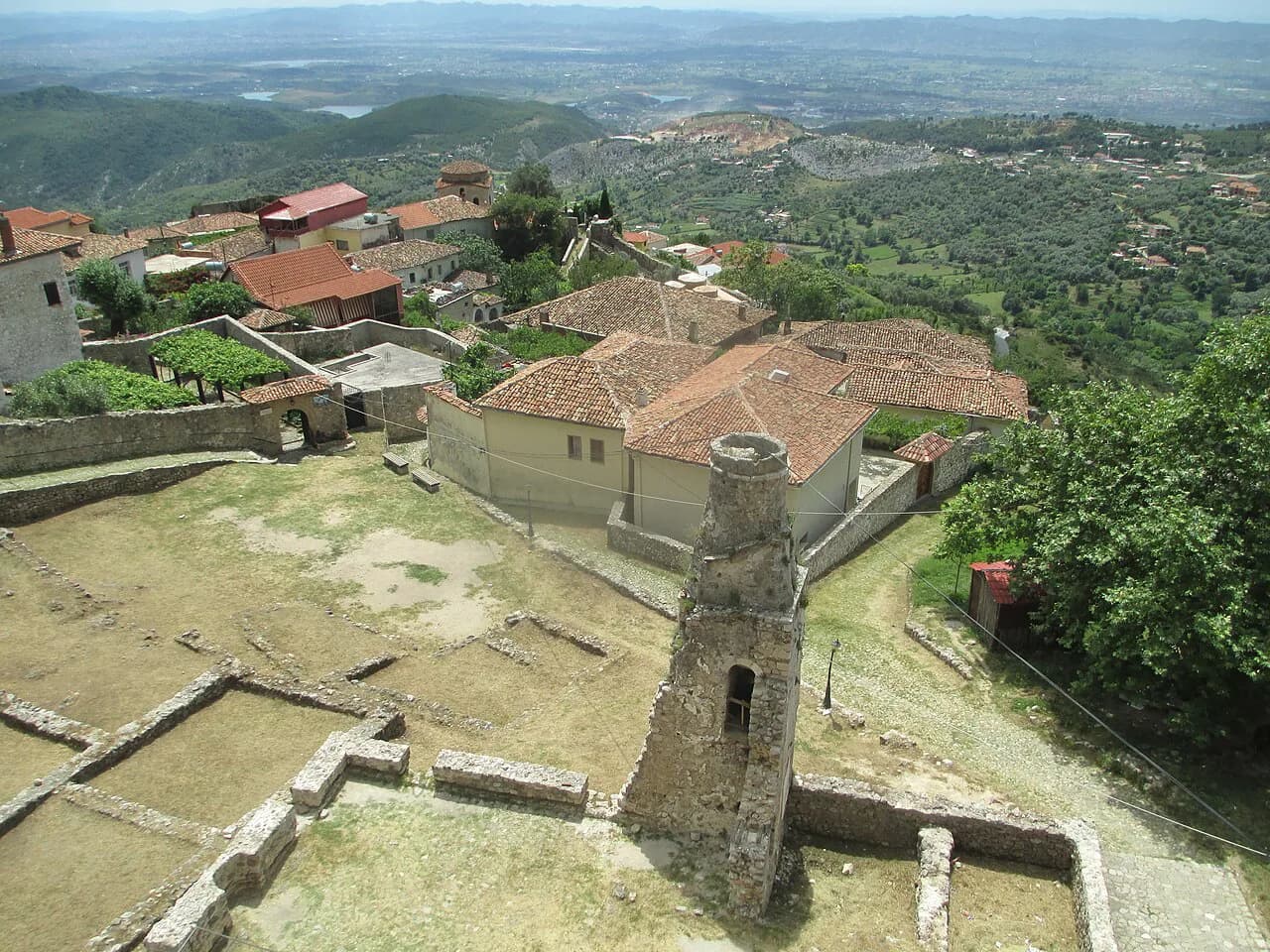
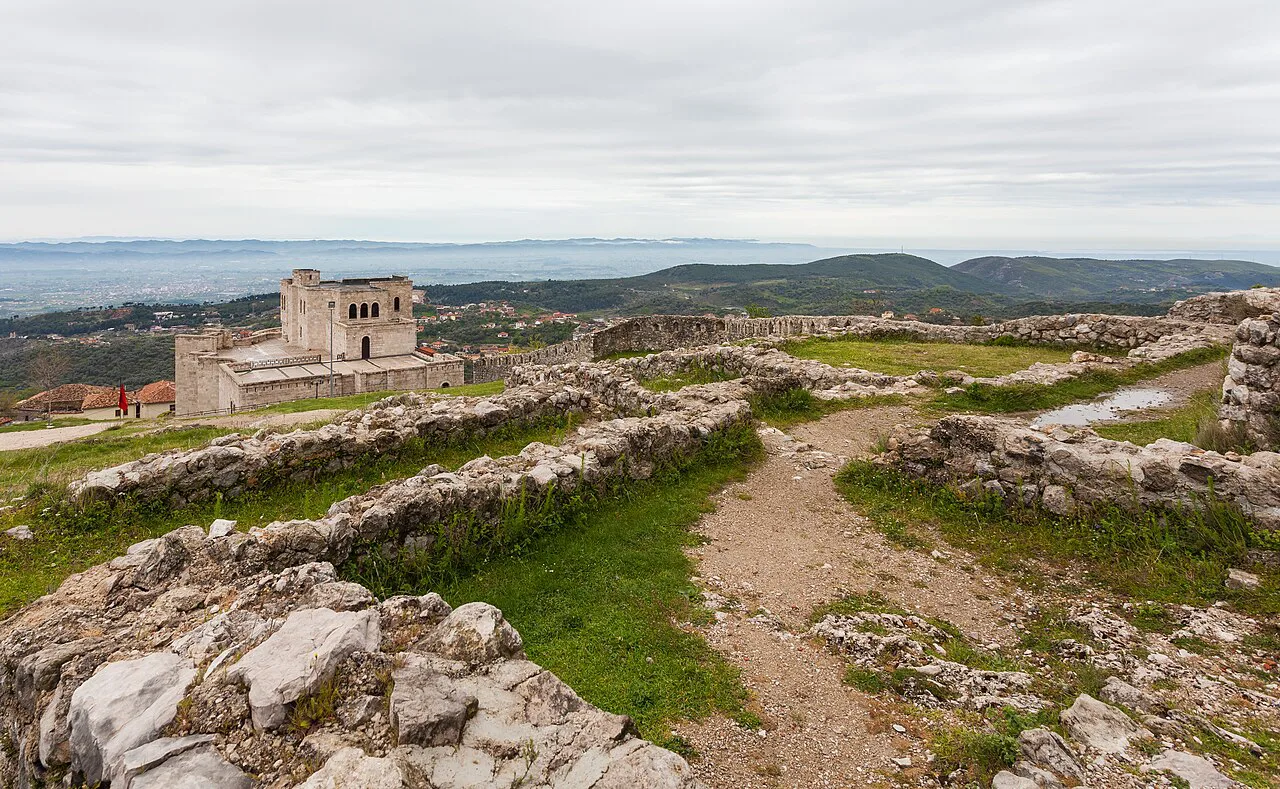
The castle sits at the top of the street, and its yellow sandstone walls are the visual anchor of the whole old town. Entry to the castle grounds is free, so you can wander the walls and terraces for the viewpoints over the town and the countryside without buying anything. The fortress you see is largely reconstructed, with the original walls and the tower damaged by earthquakes surviving in part.
Inside the walls you walk between the museum building, open ground and the parapets, with long views down over the rooftops. Give the grounds 30 to 45 minutes if you are only after the views, more if you are visiting the museum. The paid attractions are inside, so budget separately for those.
The Skanderbeg Museum inside the walls
Krujë is Skanderbeg's town, and the museum inside the castle carries his name. Paintings, armour and objects from his period are displayed to present the resistance against the Ottomans, and the castle itself was the headquarters of Gjergj Kastrioti at the time of the Ottoman threat. Reading the exhibits in order gives the street below its context.
Allow around an hour for the museum if you read the panels. The grounds are free but the museum charges admission; the ticket price and opening hours are posted at the entrance and on the museum's own channels, so confirm them on the day rather than relying on older figures.
The Ethnographic Museum and the rest of the street
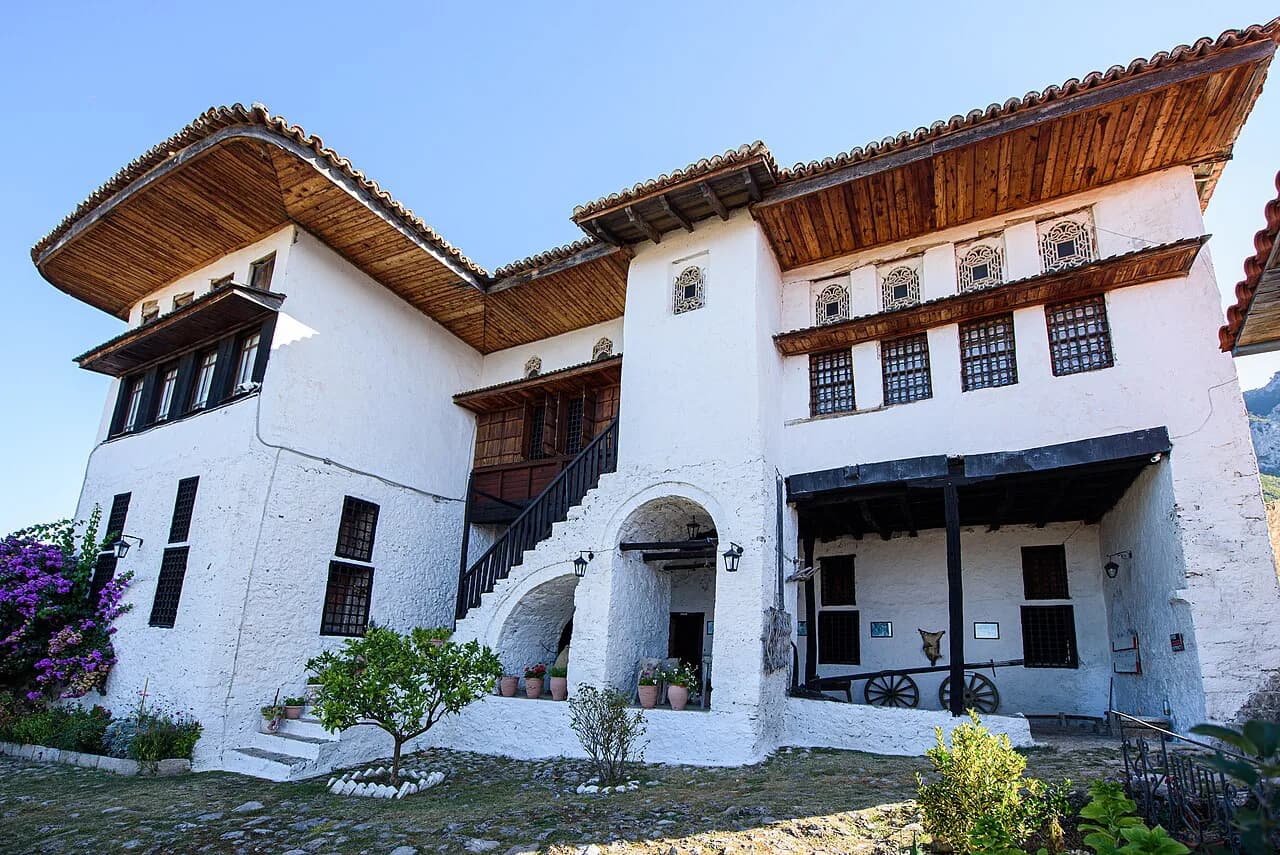
The Ethnographic Museum is the second stop inside the castle complex, and it shows how a household in this region lived, with furnished rooms and domestic objects rather than battle displays. It pairs naturally with the Skanderbeg Museum because the two are steps apart, so you can do both in one visit without walking back down the hill.
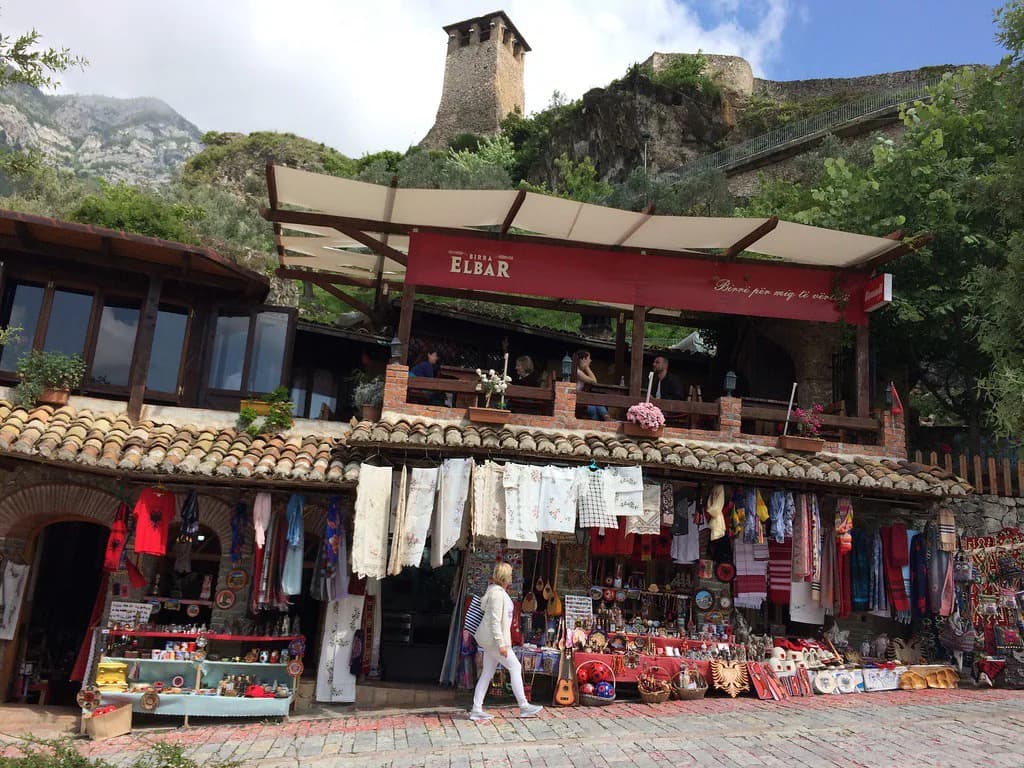
Outside the walls, the street itself is the third sight. Shopfronts, wooden shutters and the odd carved doorway are worth a slow pass with a camera, and the upper end near the gate gives the classic view back down the bazaar. Keep your pace easy on the cobbles, which are polished in places.
A walking route through the old town
Start at the top of the serpentine road in the old quarter and walk up through the bazaar to the castle gate, which takes 10 to 15 minutes at a browsing pace. From the gate, walk the castle grounds and the viewpoints first, then take the Skanderbeg Museum and the Ethnographic Museum in whichever order suits the queues. Finish with a slow descent through the bazaar for shopping and coffee, which brings the whole circuit to roughly three hours.
If you are coming by public transport, the vehicle drops you near the main road rather than in the historic quarter, so add a short walk up to the old town at the start and remember the spot for the return. Build in extra time for that leg, especially in the afternoon when you are tired.
How long the old town needs
Half a day is enough for the bazaar, the castle and both museums at an unhurried pace. A full day makes sense if you add the climb to the Sari Salltik shrine, a couple of kilometres up the mountain slope with about 600 m of ascent, which is more demanding than its moderate grading suggests.
Walkers who do the shrine should start early and treat the descent with care, since the path is rough and the light goes quickly in the afternoon. A taxi back down is a reasonable option if your legs are done, and some restaurants at the top will call one for you. Anyone not climbing can comfortably see the old town and be back in Tirana the same afternoon.
Getting there from Tirana
Buses to Krujë leave from the capital's bus station and run frequently; one account puts the fare at 200 lek and the ride at about 40 minutes, while another describes filling minivans that take roughly an hour and drop passengers on the main road. Either way you arrive in the new town and walk or take a short ride up to the old quarter. Have cash ready for the fare and for parking if you drive.
Driving from Tirana takes about 30 minutes by car, and there is a car park near the castle if you are only staying a few hours. Bring cash for parking. Fares and departure points change, so check the current arrangement at the bus station or with your accommodation before setting out.
Steep, cobbled and uneven ground
The old town is a hillside, not a flat square. The bazaar street is cobbled and slopes throughout, the castle grounds have steps and uneven stone, and the climb to Sari Salltik is a mountain path rather than a stroll. Sturdy shoes with grip matter more here than in Tirana, and a bottle of water is worth carrying even on a short visit.
Visitors with knee or hip trouble should plan the day downhill-first where possible, taking a taxi up to the castle and walking the bazaar down rather than climbing it twice. The trade-off is missing the slow approach on foot, which is half the point of the street.
Crowds, heat and light through the day
Day-trippers from Tirana tend to arrive late morning and leave by mid-afternoon, so the bazaar is busiest in the middle of the day. Coming early gives you the street with the shutters just open and the castle viewpoints to yourself, and it also leaves time for the shrine climb before the heat builds. Afternoons are quieter again once the coaches leave.
The castle and the museum interiors are the places to be during the hottest part of a summer day, since the bazaar has little shade. In winter the stone holds the cold and the wind on the walls is sharper than in town; a jacket makes the viewpoints comfortable.
What to skip if you only have a few hours
With three hours, do the bazaar and the castle grounds and choose one museum. The Skanderbeg Museum is the one that explains the town, so pick it over the Ethnographic Museum if you have to choose. Leave the shrine climb for another visit; the ascent alone eats the time you need for the street.
With two hours, walk straight up to the gate, do a lap of the walls for the view, and come down through the bazaar with one shopping stop. It is a rushed version of a place that rewards a slower pace, but it gives you the old town's shape and its best viewpoint.
Should you add the shrine climb?
Add the Sari Salltik climb only if you have a full day and good shoes, since the ascent is roughly 600 m up a rough mountain path and the old town's main sights fit into half a day without it. If your priority is the bazaar, the castle walls and the Skanderbeg Museum, keep the visit short and the walk downhill.
Either way, start early, carry cash for the bus and parking, and check museum opening times and fares at the entrance before you commit the day to them. The old town is small; the planning is mostly about the climb.
Explore more Kruje guides
Frequently Asked Questions
Do you need tickets for Krujë old town?
The bazaar street and the castle grounds are open without a ticket, so you can walk up, see the walls and take in the viewpoints for nothing. The Skanderbeg Museum and the Ethnographic Museum inside the castle charge admission, with prices displayed at the entrance; check them on arrival rather than relying on older figures.
Is Krujë old town suitable for a half-day trip from Tirana?
Yes. The bazaar, the castle grounds and both museums fit into half a day, and buses and minivans connect the town with Tirana in under an hour in normal conditions. Add the Sari Salltik climb and you need a full day.
How hard is the walk up through the bazaar?
It is a steady uphill walk on cobbles rather than a long climb, taking 10 to 15 minutes at an easy pace from the bottom of the old quarter to the castle gate. Wear shoes with grip, and take a taxi up to the castle if you would rather walk downhill only.
Sources
Notes for your Albania trip
Optional updates to our Albania town guides.
You might also like
Continue reading
More guides you'll find useful