Krujë Map for Visitors: Old Town, Castle and Bazaar Layout
A visitor's map guide to Krujë: how the old town, castle and bazaar fit together, the street names to know, and what lies beyond the centre.
On this page
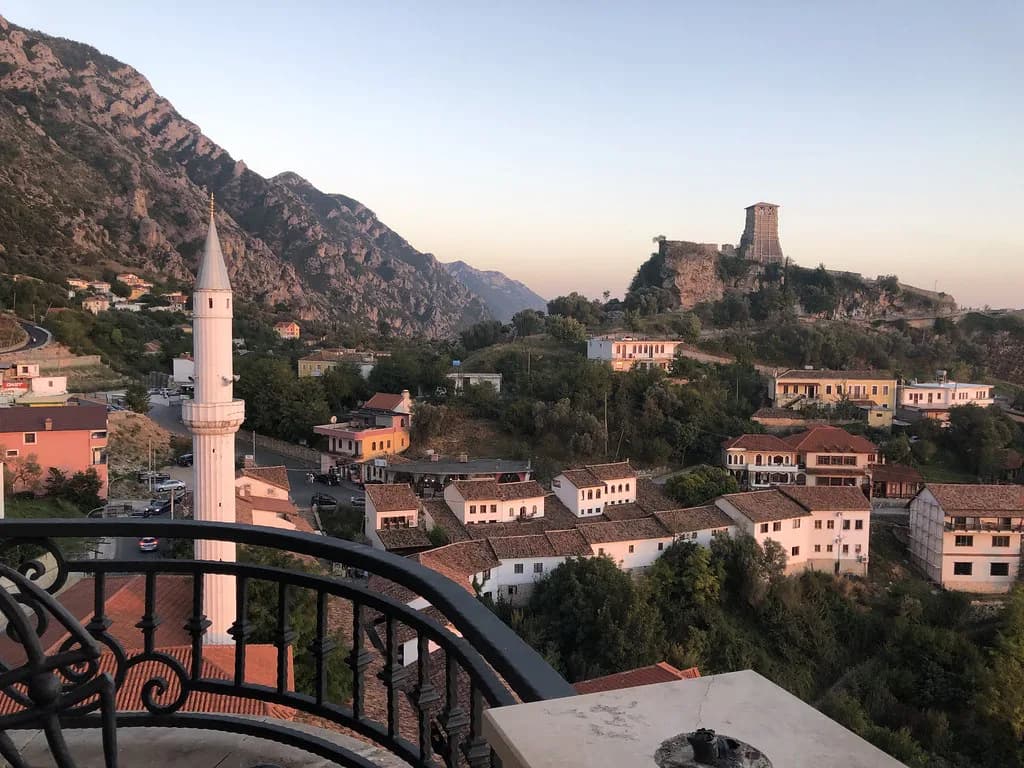
A Krujë map is easy to hold in your head: the historic core sits uphill, the castle crowns the ridge above it, and the everyday town spreads out below. Almost everything a visitor comes for is packed into a handful of streets, so the old section is a short walk rather than a day's circuit. This guide lays out the bazaar street, the castle enclosure, the square and statue, the street names worth knowing, and what lies beyond the centre towards Fushë-Krujë.
The town is the seat of a far larger municipality, so it pays to know which Krujë you are looking at. Kruja Municipality covers six administrative units, including Fushë-Krujë and dozens of villages, while the old town itself is compact and walkable.
What a Krujë map shows you
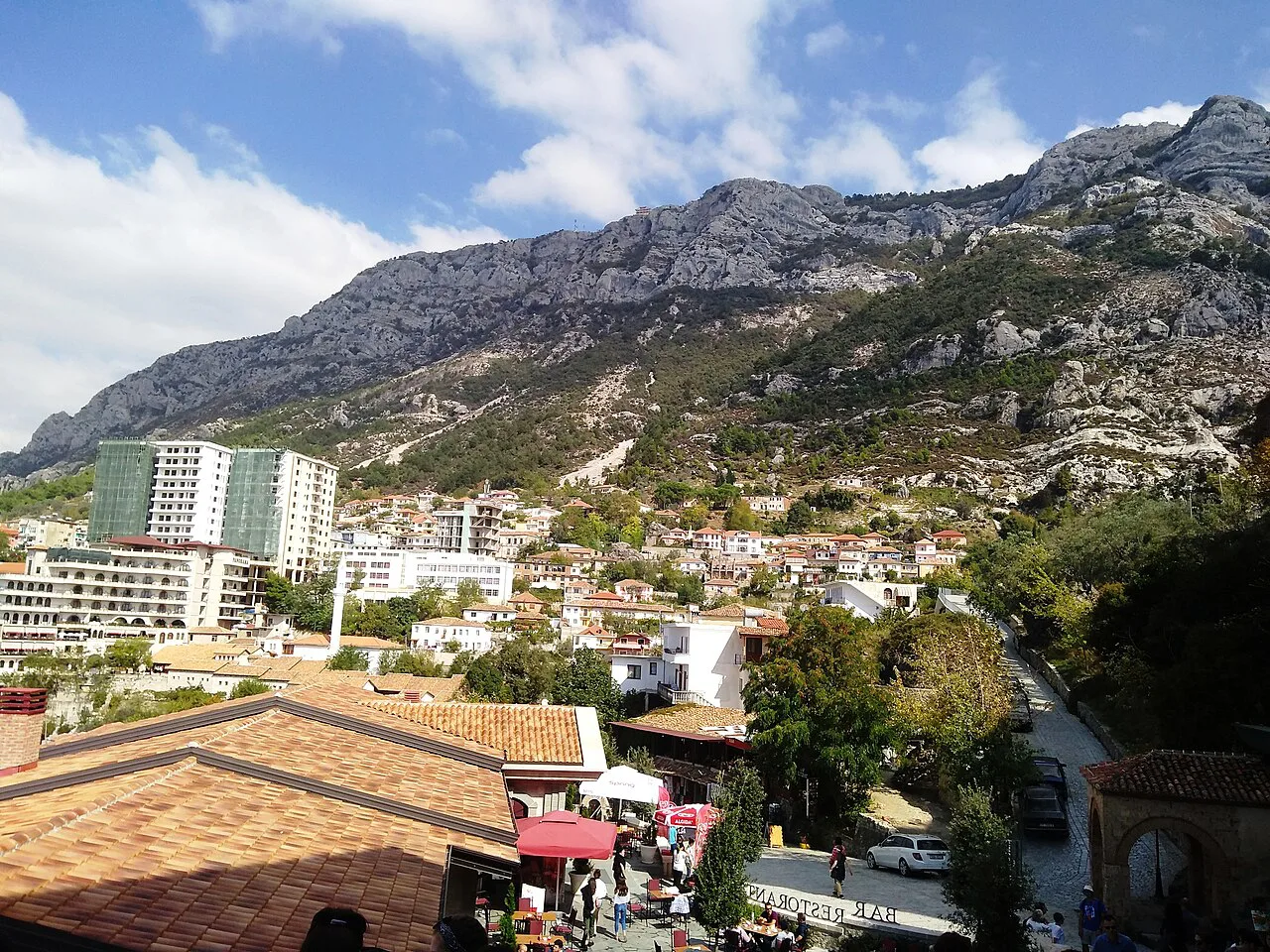
On a map of the town the three main visitor elements sit close together: the old bazaar, the walled castle above it and the modern town around them. The street directory records Krujë at an elevation of 600 metres, which helps explain the gradients you will meet on foot. Plan on the bazaar and castle being one continuous walk rather than two separate trips.
The same map also shows how far the municipality stretches beyond the streets you walk. The governance profile lists six administrative units and 50 villages, and the street directory records just two neighbourhoods, Barkanesh and Picrragë, listed for the town. Anything labelled Fushë-Krujë, Bubq, Nikël, Thumanë or Cudhi is a separate settlement within the wider municipality, not a district of the old town.
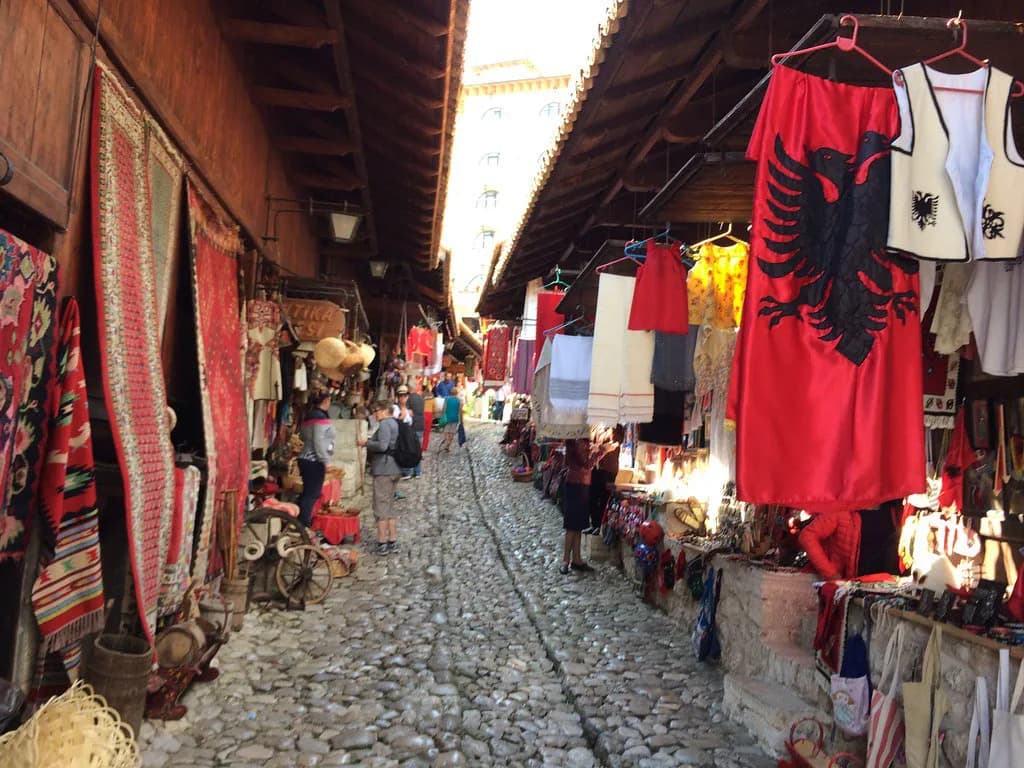
The bazaar street at the heart of the old town
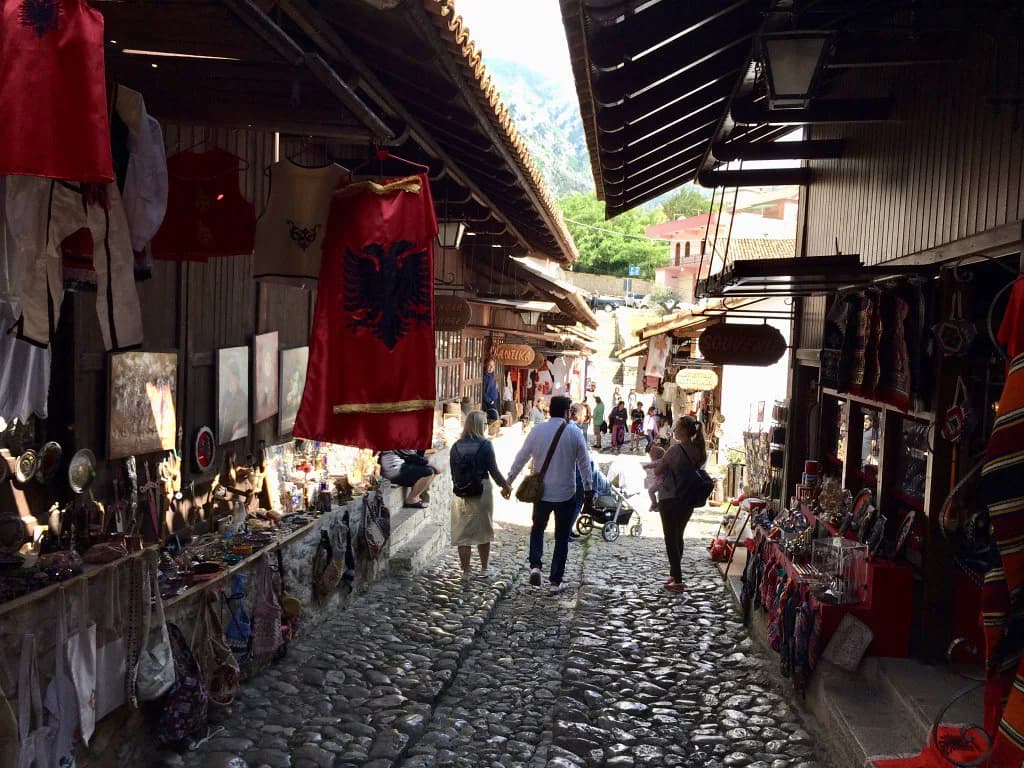
The pedestrian lane the directory lists as Pazari Vjeter, the old bazaar, is the spine of the historic core, and our guide to the Kruja Bazaar sets out its two shop streets. The bazaar was restored in the 1960s, and since the buildings are wooden there is probably little left of the original structures. Set aside a few minutes for the street itself.
Krujë Castle and what sits inside its walls
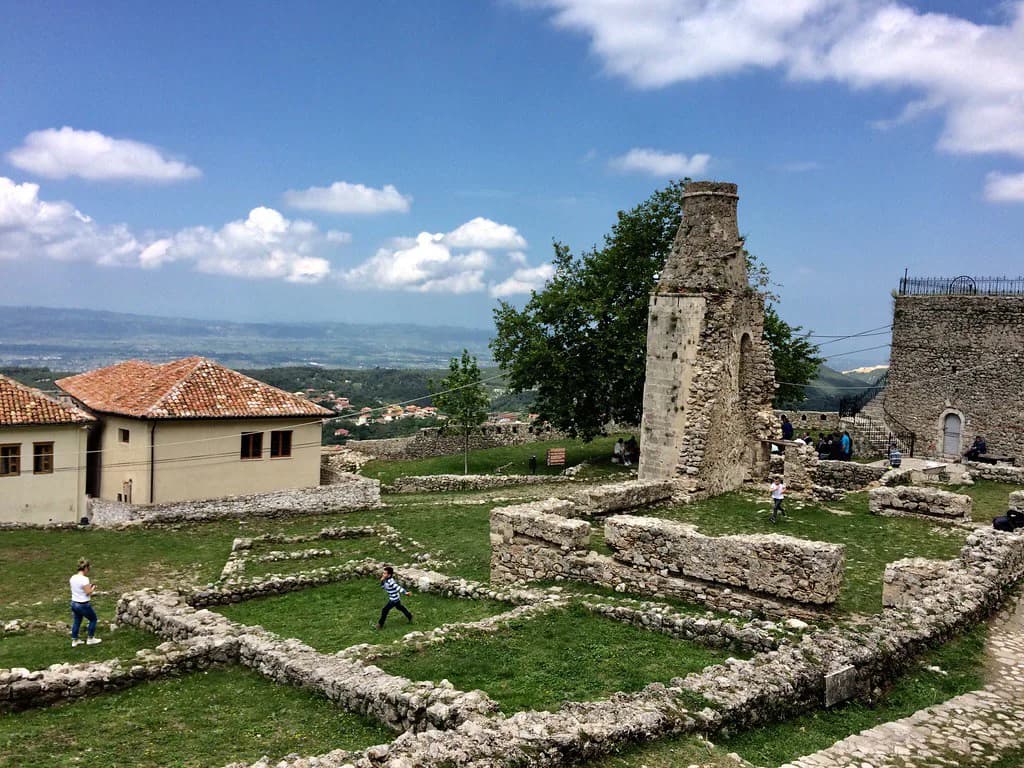
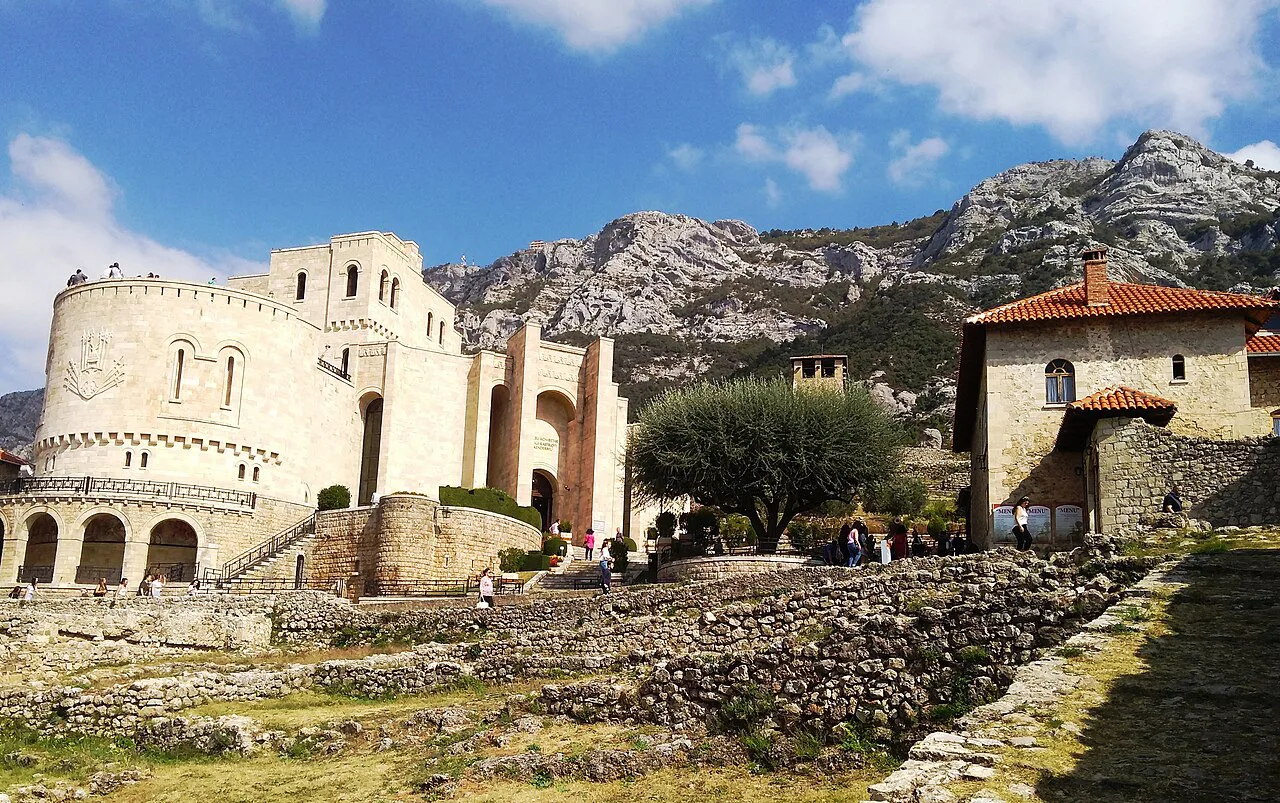
The castle, Kalaja e Krujes, sits close above the bazaar and anchors everything else on the map. A visitor writing after a 2023 trip reported that the grounds were free to enter and always open, so you could walk up, look at the walls and take in the view without buying a ticket. The museum inside is a separate decision and separately charged, so treat the gate and the ticket desk as two different stops.
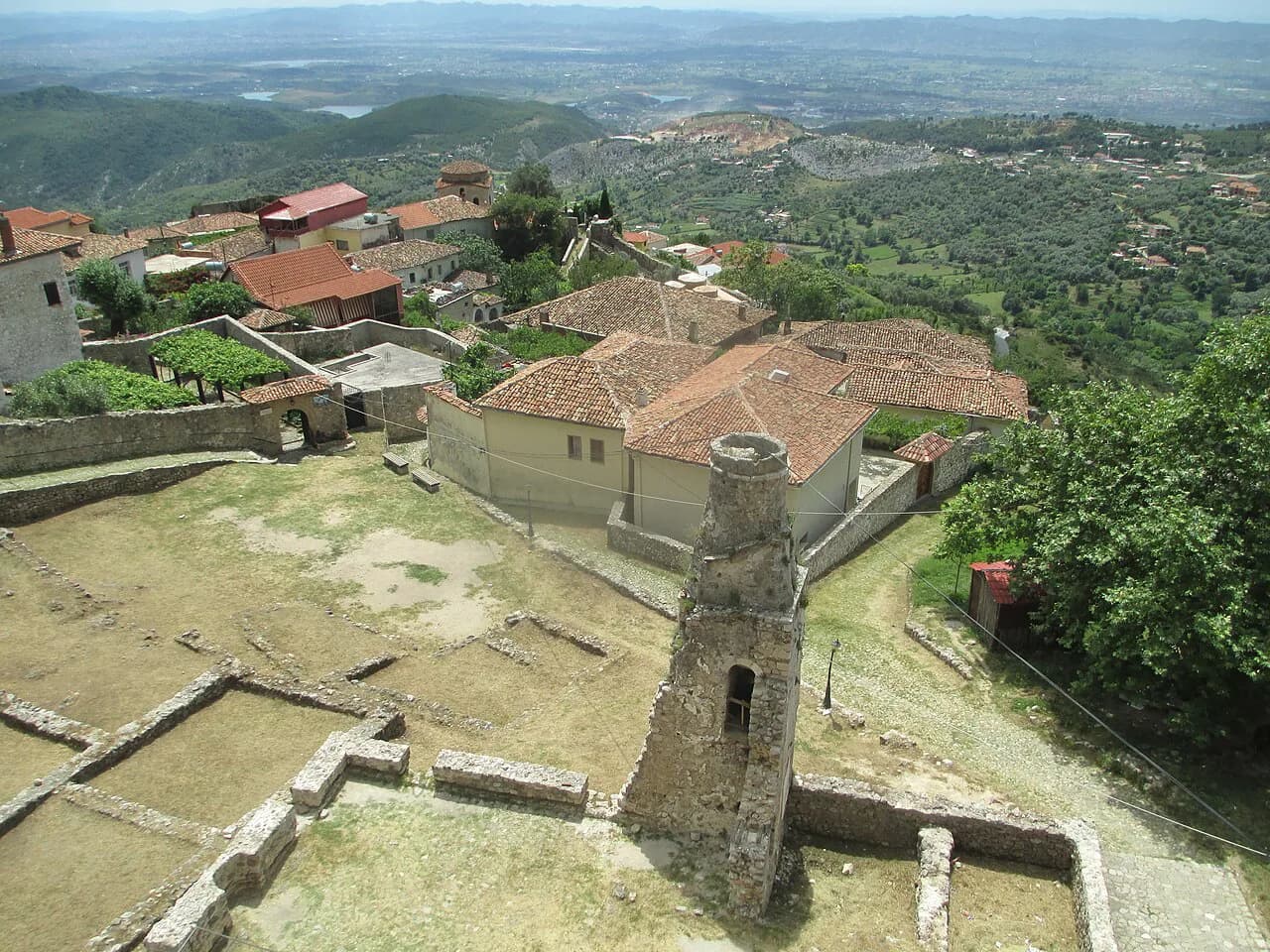
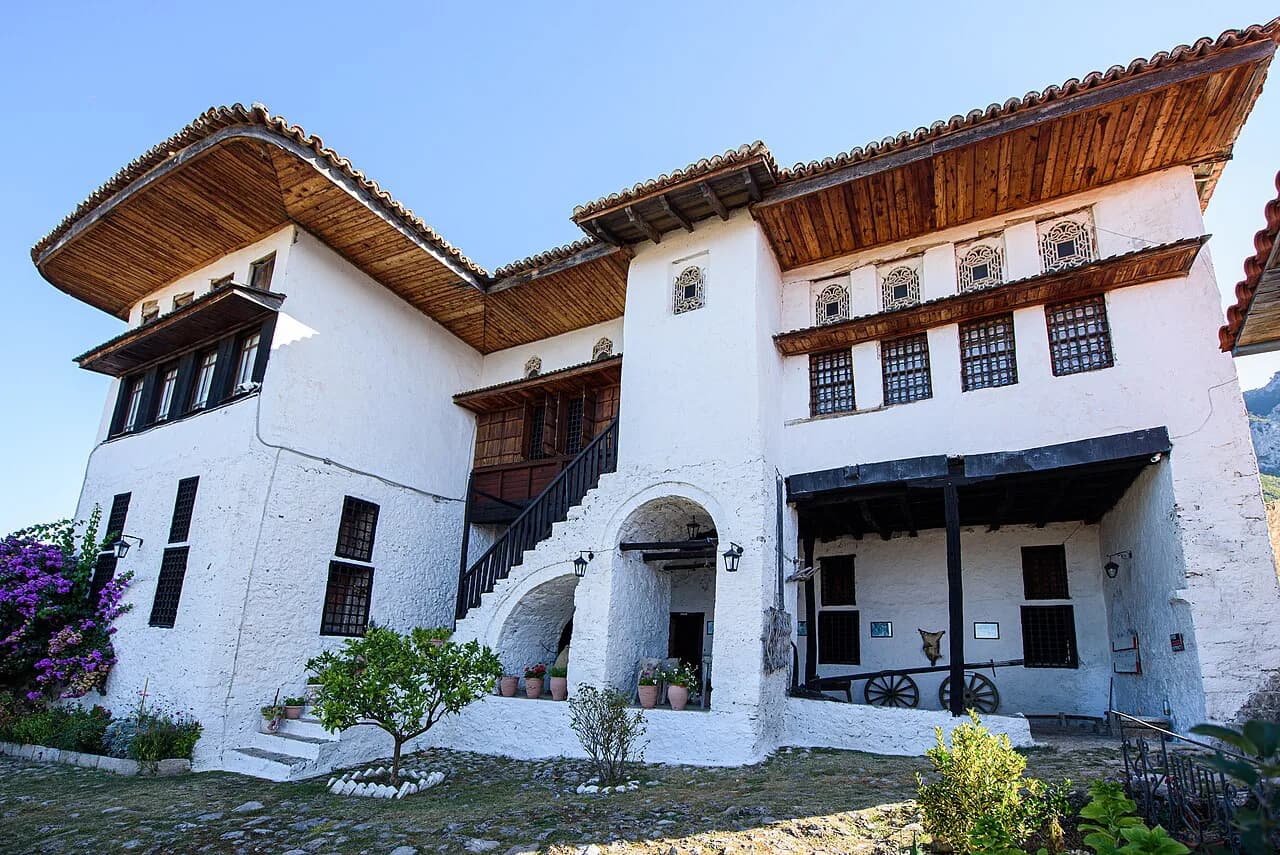
Within the enclosure the maps and guides place the Skanderbeg Museum, the Dollma Tekke and an old mosque and hammam. The same 2023 account describes the castle as derelict, with a November 2019 earthquake badly damaging the clock tower so that it is no longer open to the public, and the Tekke under restoration. Entry to the hammam was not possible. Check what can actually be entered on the day, since not every building in the grounds is open. Our guide to Krujë: Castle, Bazaar and What a Visit Takes goes into the layout in detail.
The museums near the old town
Two museums give the old town its substance: the National Museum Gjergj Kastrioti Skënderbeu inside the castle, and the National Ethnographic Museum, which the maps place in the old bazaar area. The 2023 account records a 500 lek entrance fee at the historical museum, with all information in Albanian and a free guide provided to interpret it. Skip both and the castle and bazaar are a short stop rather than a half day, so decide before you climb which one you want.
Our Skanderbeg Museum in Krujë page and the Ethnographic Museum of Kruja page cover what each collection holds, so you can weigh the fee and the language question before paying. For the lanes around them, see the Kruja Bazaar guide.
The square, the statue and the mosque
The maps mark the Skanderbeg statue, the Bazaar Mosque and the open area around them. This is a useful orientation point on arrival: from here you can pick out the route up to the castle and the way back down to the town. Use the statue as a meeting point if your group splits up in the bazaar.
The Bazaar Mosque is listed alongside the bazaar, so dress modestly and keep any visit brief and quiet out of respect for worshippers. The square also shows you how small the historic area is: everything around it is reachable on foot within minutes.
Street names worth knowing on foot
A few names do most of the navigation work. Rruga Gjergj Kastrioti Skënderbeu is a main street through town, Rruga Kalasë is the service lane up to the castle, Rruga e Malit heads towards the mountain side, Rruga Donika Kastrioti is a primary street, and Topiaj Square is a footway. Rruga Lek Zaharia and Rruga Marlin Barleti appear as other routes if you drift off the main lane.
Krujë also has a pedestrian Abaz Kupi street and a Stonebridge footway, both useful landmarks when giving or following directions. Locals will direct you by the bazaar and the castle rather than by street number, so learn those two anchors first. Our Krujë Old Town page walks the core street by street.
Walking from the bazaar up to the castle
The walk is short but uphill, following the lane from the bazaar to the castle gate. There are no long distances on the map, but the slope and cobbles make sturdy shoes worthwhile, and the climb is enough to notice with bags or in heat. Keep to the paved lane and take your time on the descent.
Use the climb to plan: castle grounds first while you are fresh, then the museum, then the bazaar on the way down. That order saves a second ascent and puts the shopping at the end of the walk.
What lies beyond the centre
Zoom out and the map fills with the rest of the municipality. Fushë-Krujë is one of the six administrative units, and the villages of Barkanesh and Picrragë lie close to the town; further out are Nikël, Thumanë, Bubq and Cudhi. None of these is part of the old town walk, so treat them as separate places on the wider map rather than stops on your circuit.
Beyond the old town, the Sari Salltik Shrine is a separate destination that anyone with transport can plan as its own stop rather than a detour on the bazaar-and-castle walk.
Arriving and getting your bearings
Krujë is most easily reached by road, whether on a day trip or as a stop between Tirana and the north. A travel guide written after a 2023 visit described the drive from Tirana as about an hour and the bus as close to two, so confirm times locally before you set out. Once you arrive, head for the square by the statue rather than trying to drive into the bazaar lanes.
The old-core lanes are narrow and largely pedestrian, so it is easier to park below and walk up. If you are eating in town after the castle, our best restaurants in Kruje page covers the options.
Using an offline map in Krujë
Download an offline map before you leave the main road. The street directory that underpins most digital maps of Krujë is built on OpenStreetMap data, so names such as Pazari Vjeter, Rruga Kalasë and Topiaj Square should match what you see on a phone. Save the castle and the square as pinned points in case signal drops in the lanes.
Two anchors are enough for most visitors: the Skanderbeg statue on the square and the castle gate above the bazaar. Everything else, including the mosque, the tekke and both museums, sits within a few minutes of those two points. If a lane looks unpromising, it probably leads to a private house rather than a sight.
Which part of Krujë do you head for first?
Start at the square by the Skanderbeg statue, walk up through the bazaar, and go straight to the castle grounds while you have the energy. A 2023 visitor reported the castle grounds cost nothing to enter, which makes them the low-risk first stop, while the museum is the choice you make once you have seen the layout. Come down through the bazaar for the shops and the ethnographic collection.
Keep the map simple: square, bazaar, castle. Anything further out, from Fushë-Krujë to the villages beyond, is a separate drive rather than a walk on the same afternoon.
Frequently Asked Questions
Is Krujë Castle free to enter?
A visitor writing after a 2023 trip reported that the castle grounds were free to enter and always open, so you could walk up and look around without a ticket. The museum inside the walls charged 500 lek at that time. The clock tower has been closed to the public since the November 2019 earthquake, the Tekke was under restoration, and the hammam could not be entered, so check what is open on the day.
What is the population of Kruja?
The street directory records a population of 11,721 for Krujë town with a date of 2011, so treat it as a dated census figure rather than a current count. The wider municipality, which includes Fushë-Krujë and dozens of villages, covers a far larger population.
How long does it take to see the old town?
The bazaar street and castle grounds together are a short visit. The 2023 visitor reckoned the bazaar could be seen in 5 to 10 minutes unless you are shopping, and the castle in half an hour without the museum. The walk from the square up to the castle is brief but uphill, so allow extra time for the climb and the cobbles.
Sources
Notes for your Albania trip
Optional updates to our Albania town guides.
You might also like
Continue reading
More guides you'll find useful