Kruja Bazaar: What to See and Shop in Krujë's Old Market
Kruja Bazaar is a 17th-century Ottoman market street of craft shops below Kruja Castle. Here's what's sold and how to fit it into a castle visit.
On this page
Kruja Bazaar needs about an hour, and it works best as the first stop on the walk up to Kruja Castle rather than a separate outing. It is one narrow cobbled street lined with Ottoman-style houses and shops, so you can walk the whole market and still have the castle and its museums in the same morning. This guide covers what the bazaar is, what the shops sell, how to read the crafts and where it sits in town; see Krujë: Castle, Bazaar and What a Visit Takes for the wider plan.
What the Kruja Bazaar is
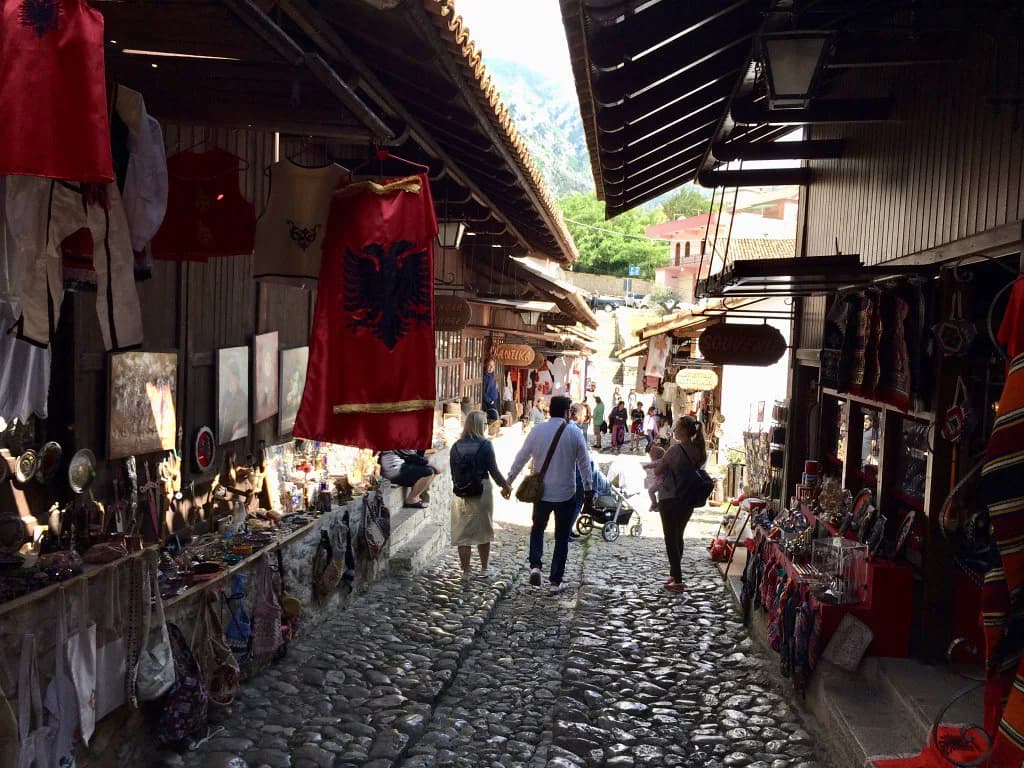
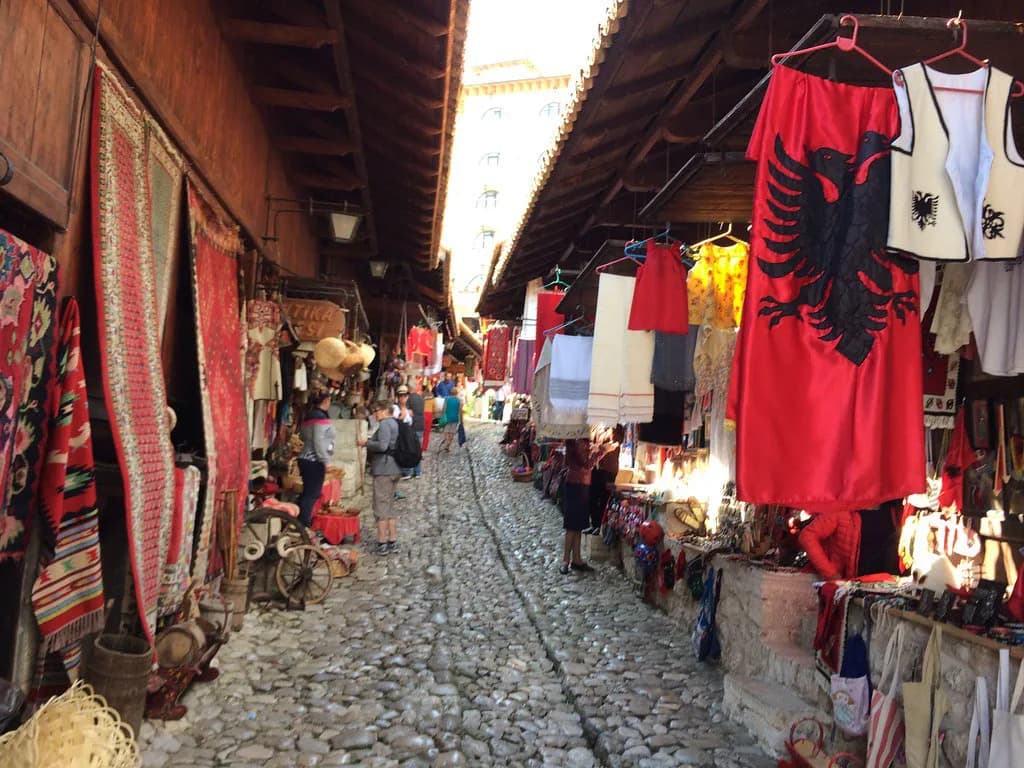
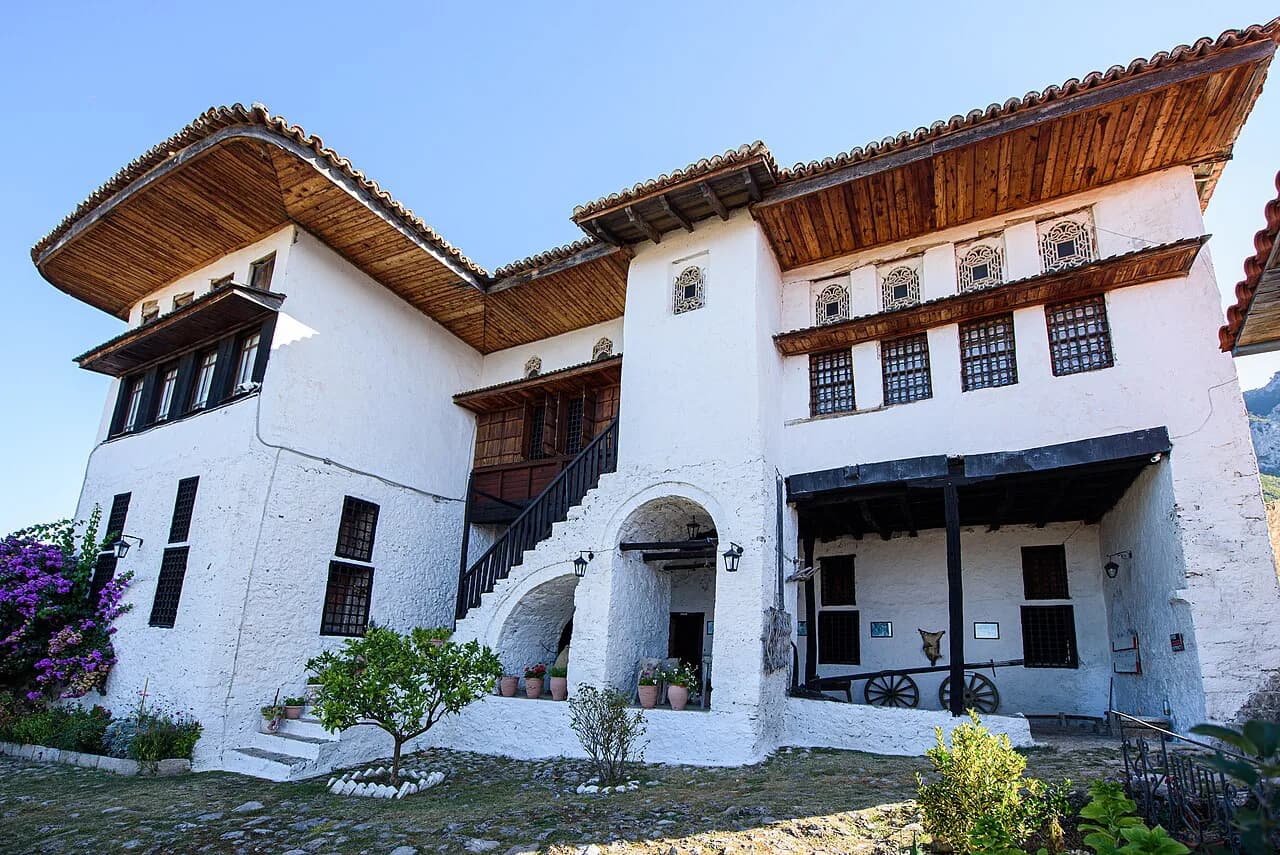
The Old Bazaar of Kruja dates from the 17th century and runs along a narrow cobblestone street, framed by houses and shops in the Ottoman style. It is the town's main handicraft centre, where artisans sell filigree, woodwork, copper, carpets, traditional clothing and historical souvenirs. Treat it as a street to walk slowly rather than a complex of halls: the shops sit shoulder to shoulder along the same lane, and the castle is a very short distance away.
The bazaar sits on Rruga Albanopolis in Krujë, the lane that carries most visitors up towards the castle. Because the market and the castle sit so close together, planners often treat them as one stop. If you want the layout before you arrive, a Krujë map helps you see how the bazaar lane feeds into the castle approach.
The bazaar is the commercial heart of the old town, and the lanes around it are where the Ottoman scale of Krujë comes through most clearly. Walking the old town lanes first gives you a sense of the approach into the market. If you are building a half-day in Krujë, start with the old town lanes and let the bazaar lead you up towards the castle.
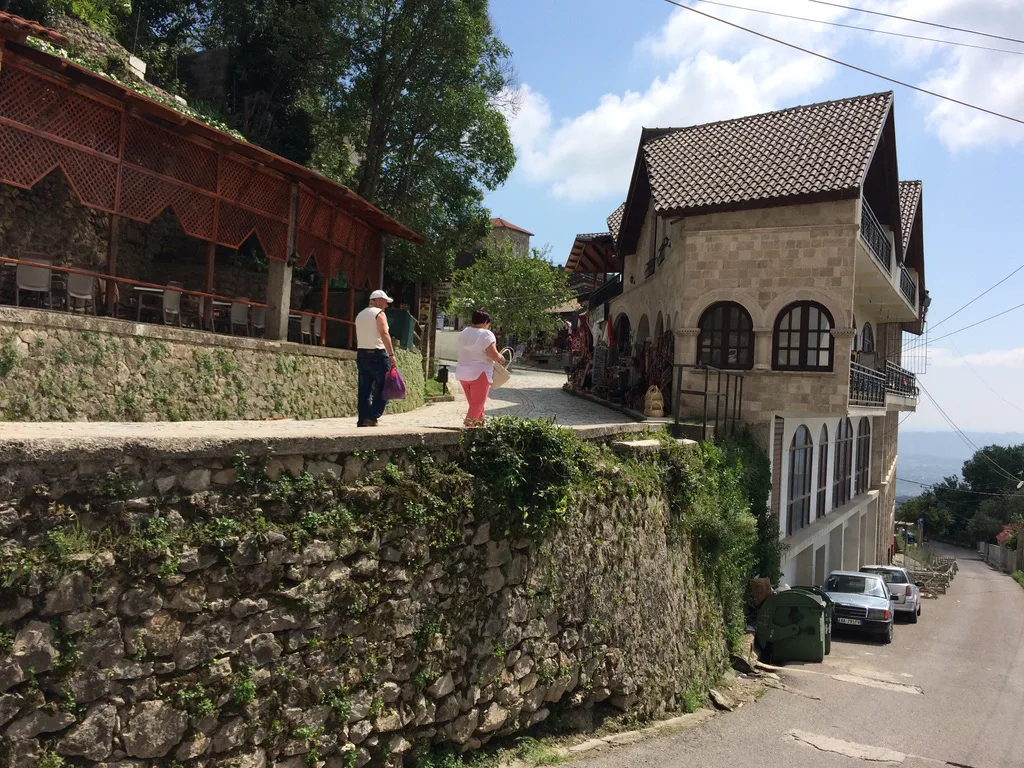
Where the bazaar sits in Krujë
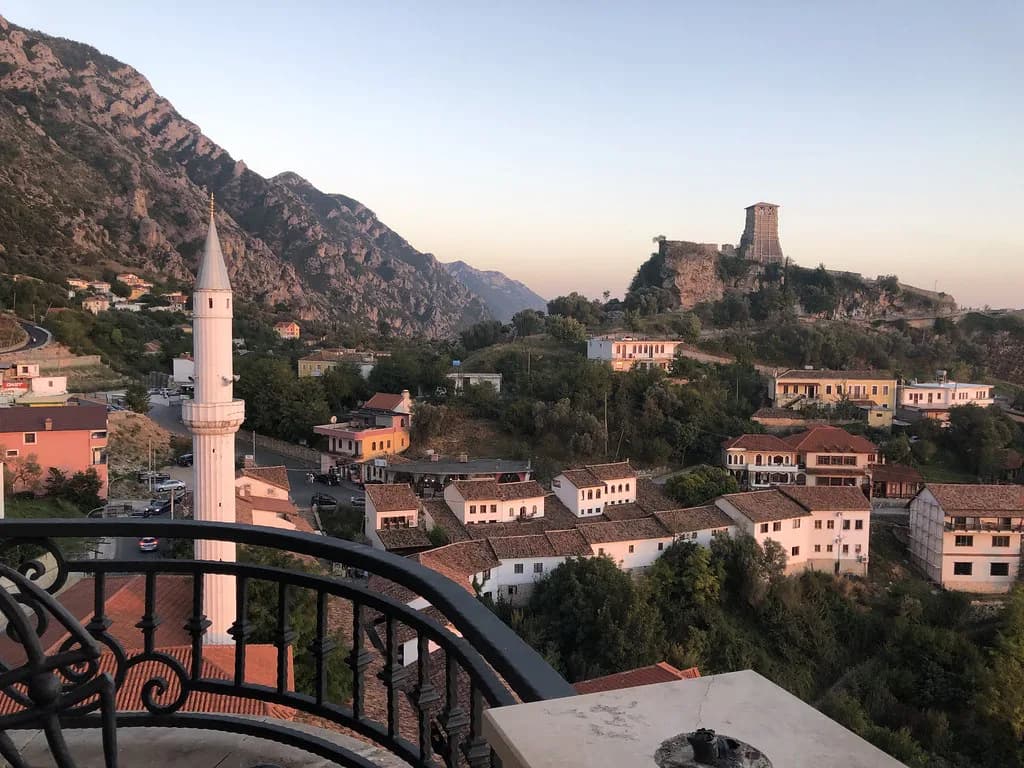
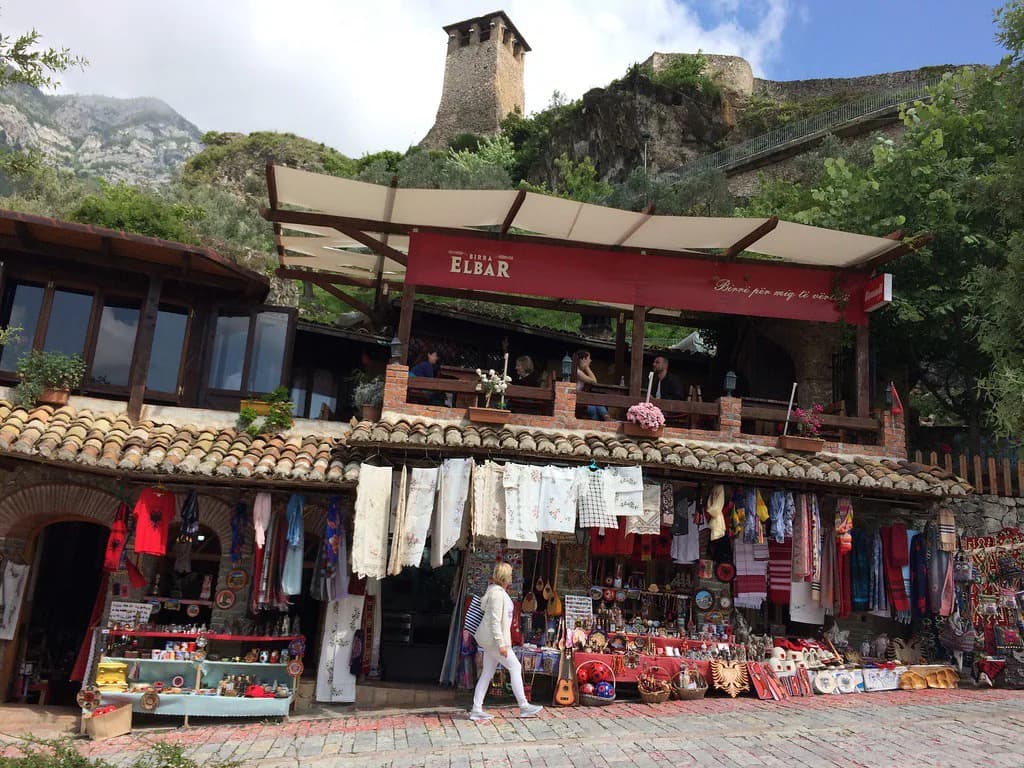
Kruja Bazaar sits directly below Kruja Castle, and the climb between the two is short. The market street is the natural approach to the castle gate, so most visitors walk up through the shops and arrive at the walls without a separate detour. Plan the order around your energy: the lane is cobbled and slopes, so walking up through the bazaar first and visiting the castle afterwards keeps the uphill stretch at the start of the day.
Above the bazaar and the castle, the Sari Salltik shrine sits on the mountain that overlooks the town. It is a separate stop rather than part of the bazaar walk, and you should treat it as a distinct leg of the day. If you plan to combine the market, the castle and the shrine, allow for the extra time and the climb between them.
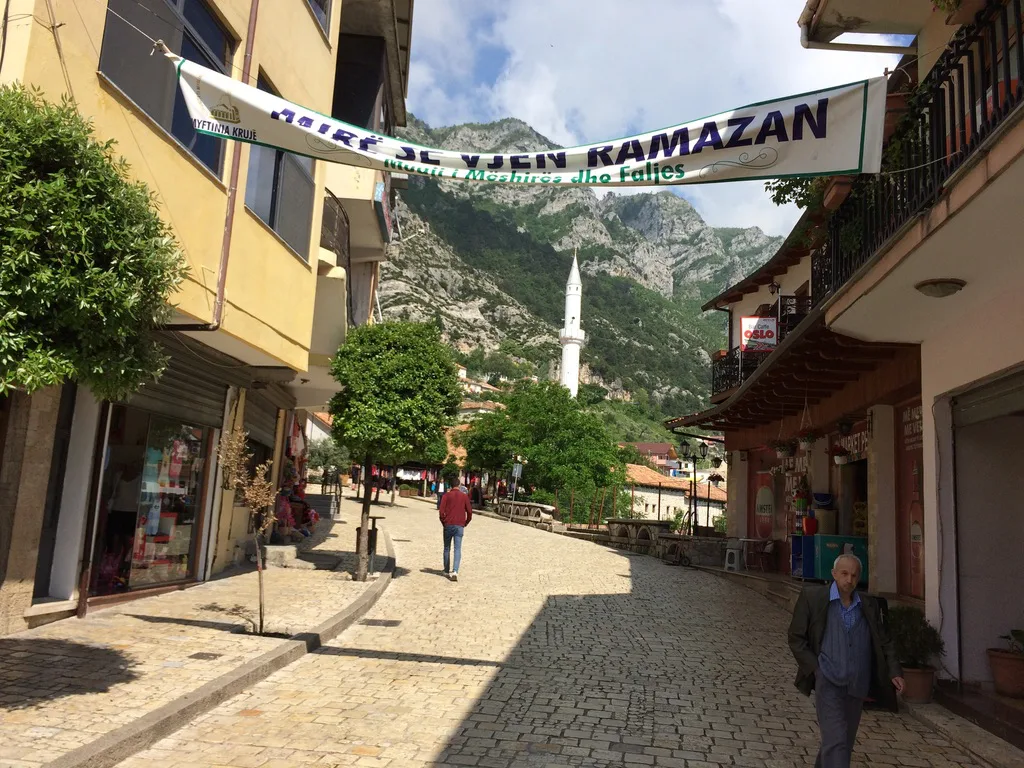
What the shops sell
The stock is traditional rather than generic: filigree silver, carved woodwork, copper, carpets, traditional clothing and historical souvenirs. Filigree and copper are the two crafts to look at closely, because the work is visible in the object and the range between a simple piece and a detailed one is easy to see. Walk the whole lane before buying, since the same categories repeat and comparing two or three shops tells you more than buying at the first door.
Kruja Bazaar appears on tour listings, including a Kruja Castle, Old Bazaar, Sari Salltik Tour, which shows the market is commonly paired with the castle and the shrine in one outing. That pairing is a sensible plan for a short visit, but you can also do the bazaar and castle on your own without booking anything. If you prefer a guide to explain the crafts and the castle, a tour saves you the planning.
Craft shopping: what to look at closely
With filigree, look at the joins and the evenness of the wirework, and ask whether the piece is silver rather than plated; a shop that explains its material plainly is easier to trust. With copper, check the thickness of the metal and how the seams are finished, since thin copper dents easily in a suitcase. Carpet and kilim sellers should let you see the back of the weave, which shows whether the pattern is worked through or printed.
Prices in the bazaar are set by individual shops rather than by any official schedule, so ask in the shop before you commit, in lek or euros as the seller quotes. Organised tours that include the market are advertised on booking platforms, but a package price is not a shop price, so treat any tour figure as a benchmark rather than a guide to what a piece costs.
How long the bazaar needs, and the castle order
Give the bazaar 45 minutes to an hour if you are browsing, and more if you are seriously shopping for filigree or a carpet. The lane is short, but the shops reward a slow walk and the slope means you will not rush it twice. Once you reach the top, the castle and its museums can absorb the rest of the morning.
Walk the bazaar first and the castle second. The market is the approach, the castle is the destination, and doing them in that order avoids walking back down a cobbled slope with purchases in hand. If you arrive by tour, the order is usually set for you, so check the itinerary before you plan your own timing.
Getting to Krujë from Tirana and Durrës
Krujë is close to Tirana, and organised tours from the capital commonly combine the bazaar, the castle and Sari Salltik in one loop. If you drive yourself, the bazaar sits on Rruga Albanopolis in the town centre, with the castle directly above. By public transport, confirm the current departure point and times locally on the day, as schedules change.
From the coast the trip is longer, so plan Krujë as a half-day rather than a quick stop. If you come from Durrës, you can pair the bazaar with the castle and be back the same day if you start early. Check the return transport before you set off, because the last service back is the one detail that shapes the day.
Opening hours and when shops trade
The published hours for Kruja Bazaar are 8:00–19:30, which gives you a wide window for a daytime visit. Those hours come from a booking listing rather than from the shops themselves, so treat them as the market's trading window rather than a promise that every door is open at either end. Arriving mid-morning or mid-afternoon keeps you clear of the edges of the day.
Individual shops keep their own hours within that window. If a particular workshop matters to you, ask at your accommodation in Krujë or Tirana before you travel. The published window is a planning aid, not a guarantee.
Practicalities: cobbles, slopes and carrying purchases
The lane is cobbled and slopes gently uphill towards the castle, so wear shoes with a grip rather than smooth soles. Carry purchases in a rucksack if you plan to continue to the castle, because a bag in one hand on cobbles is awkward on the descent. If you buy something fragile, ask the shop to wrap it for travel before you leave.
Plan to carry what you buy, since a shopping lane has no cloakroom or left-luggage service. For a coffee or a meal after the market, the cafés and restaurants in town are a short walk from the lane. It is worth checking where to eat in Krujë before you arrive if you want a table after the castle.
What else is within the same short walk
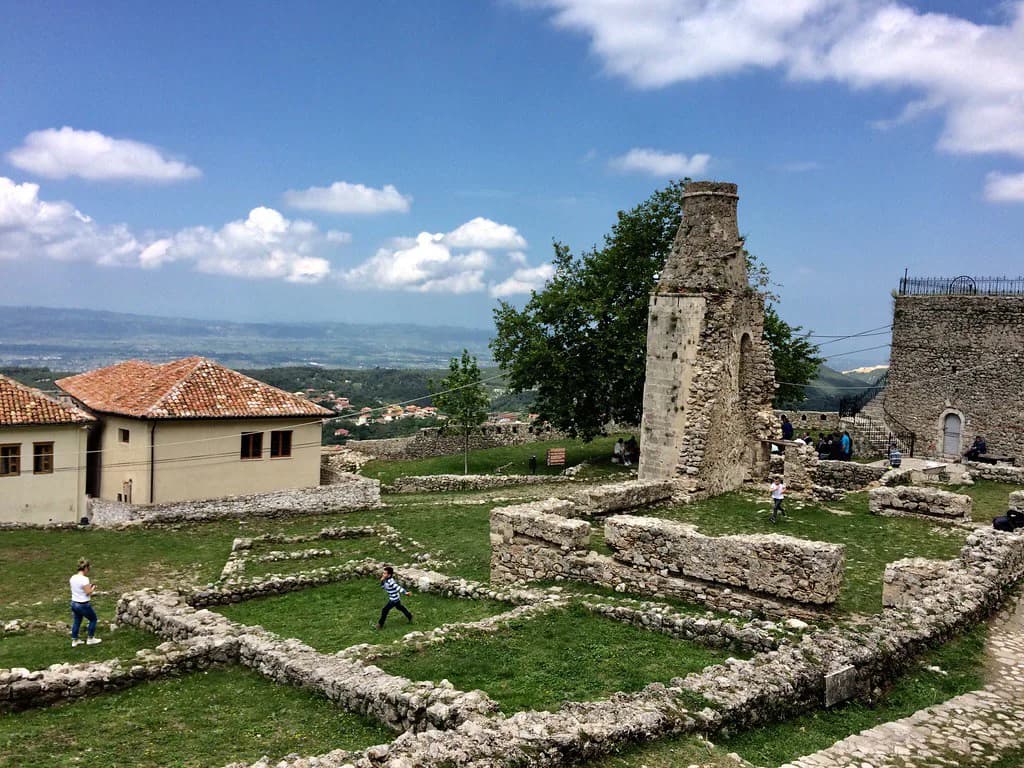
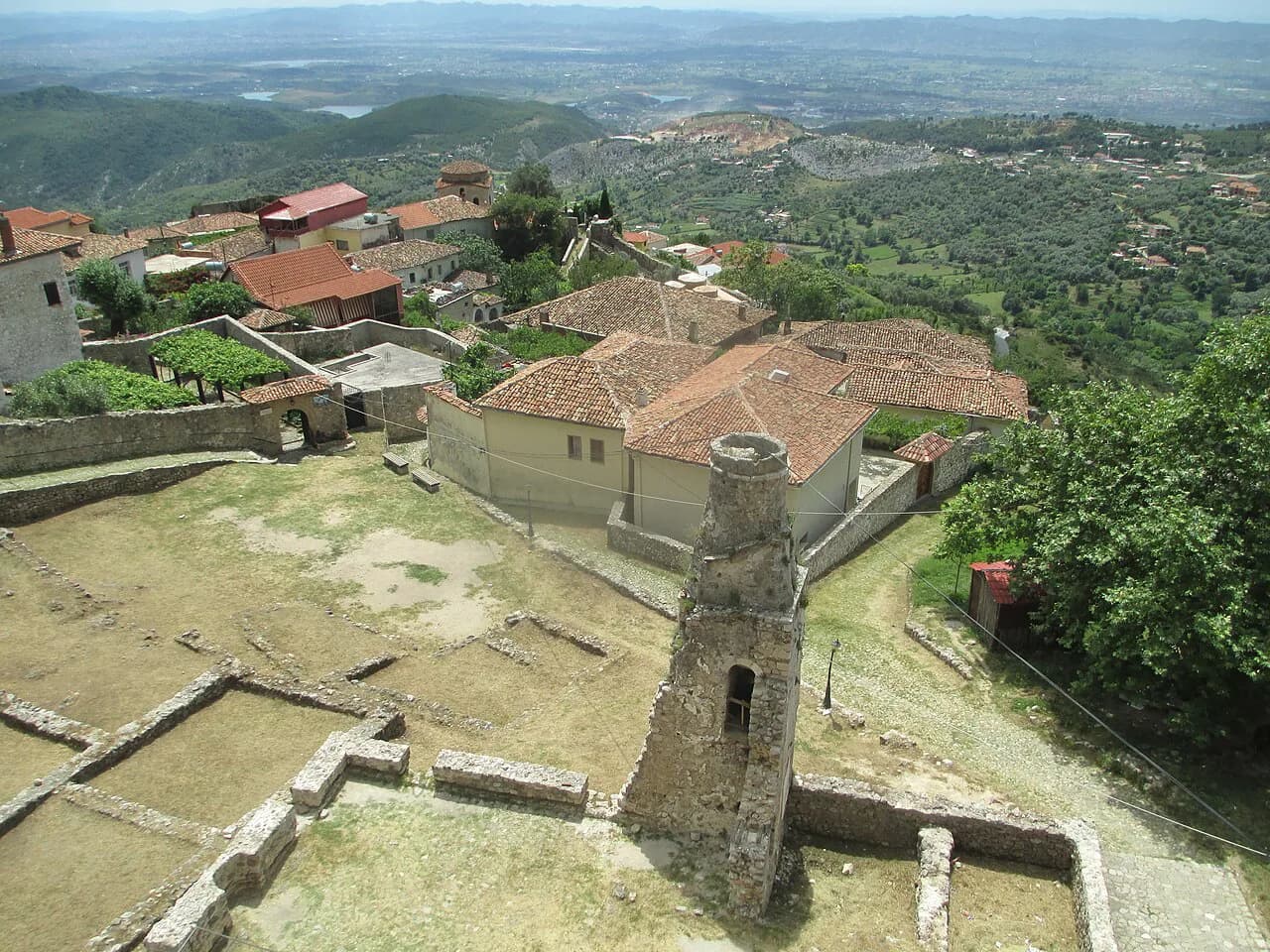
Kruja Castle sits directly above the bazaar, and the Skanderbeg Museum and the Ethnographic Museum of Kruja are the usual next stops on the same walk. Together with the market, that makes a compact half-day in which every stop is close to the last. Allow longer if you want to read museum displays properly rather than walk through them.
The Sari Salltik Shrine above Krujë is the one stop that sits outside the bazaar–castle cluster, up on the mountain above town. If you have a car or a tour, it fits into the same day; on foot it is a separate climb. Decide before you go whether you are doing the market and castle only, or adding the shrine, because that choice sets your timing.
Bazaar first, castle second
Walk the bazaar lane first, buy what you came for, then climb to the castle and its museums. That order keeps the uphill stretch at the start and leaves you free to enjoy the castle without bags. If you are also heading to Sari Salltik, plan it as a separate leg rather than squeezing it into the same hour.
Explore more Kruje guides
Frequently Asked Questions
Is Kruja Bazaar free to walk around?
The bazaar is an open street of shops rather than a ticketed attraction, so you pay for what you buy; there is no published admission charge for walking the lane. Castle and museum tickets are separate, so check those before you go if you plan to visit them.
What is Krujë known for?
Krujë is known for its Ottoman-era bazaar street, a 17th-century market that is the town's main handicraft centre, with Kruja Castle very close by. The market sells filigree, woodwork, copper, carpets and traditional clothing.
What should I shop for in the bazaar?
Look at filigree silver and copper first, then woodwork, carpets and traditional clothing. Compare two or three shops in the same category before buying, and ask about the material and the finish so you know what you are paying for.
Sources
Notes for your Albania trip
Optional updates to our Albania town guides.
You might also like
Continue reading
More guides you'll find useful