Cape of Rodon: Skanderbeg's Castle, St Anthony's Church and How to Get There
A practical guide to the Cape of Rodon in northern Albania: Skanderbeg's ruined castle, St Anthony's Church, the beach, the access road and the ranger fee.
On this page
The Cape of Rodon is a day trip from Durrës, Krujë or Tirana rather than a place to build a stay around. The drive takes approximately one hour from any of the three, the whole route is described as asphalt, and there is no public transport to the cape. This guide covers what stands on the peninsula, how the walk works, the swimming options along the southern shore, and the ranger fee collected on arrival.
Where the Cape of Rodon sits on the Adriatic coast
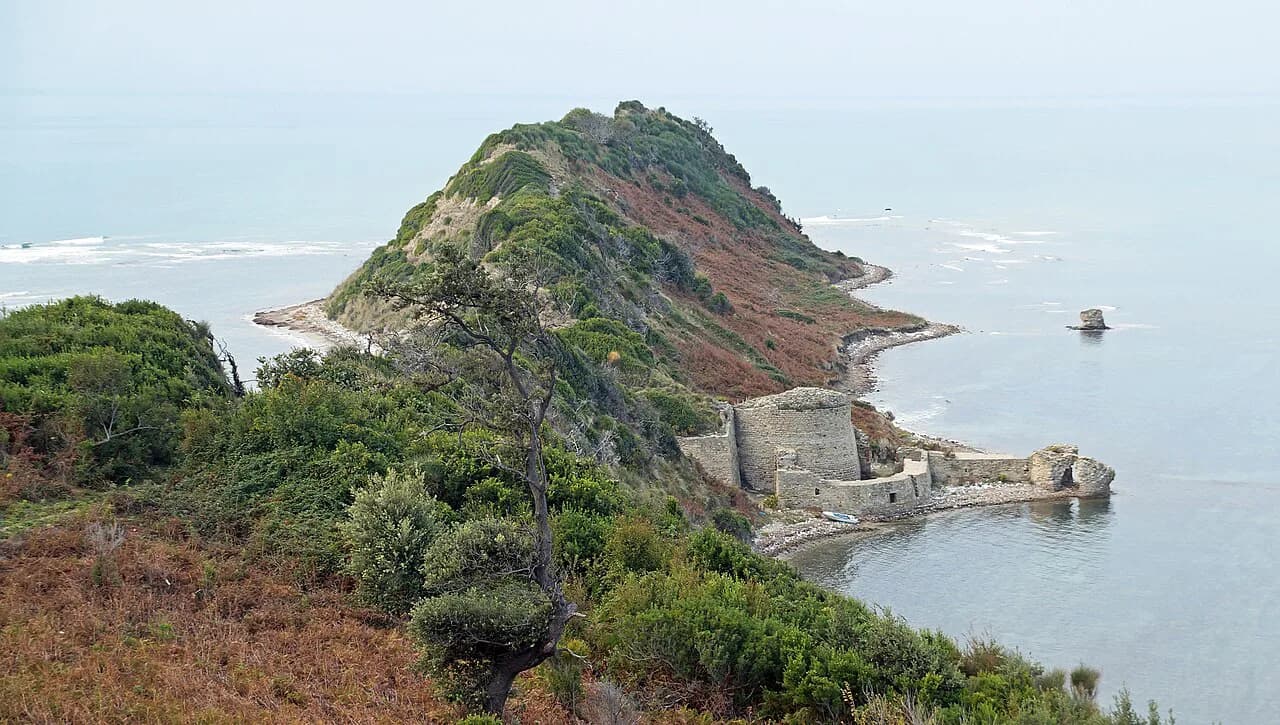
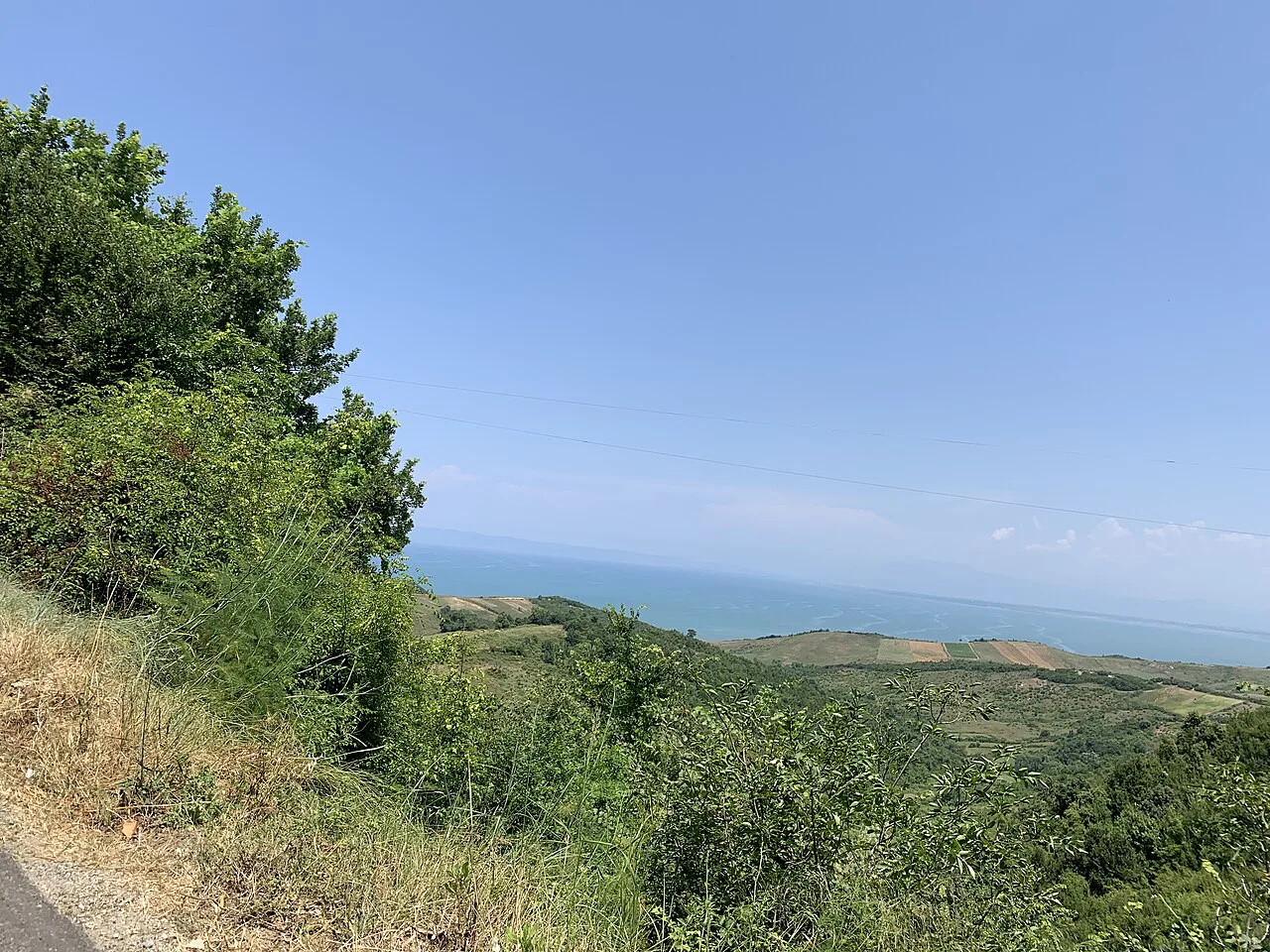
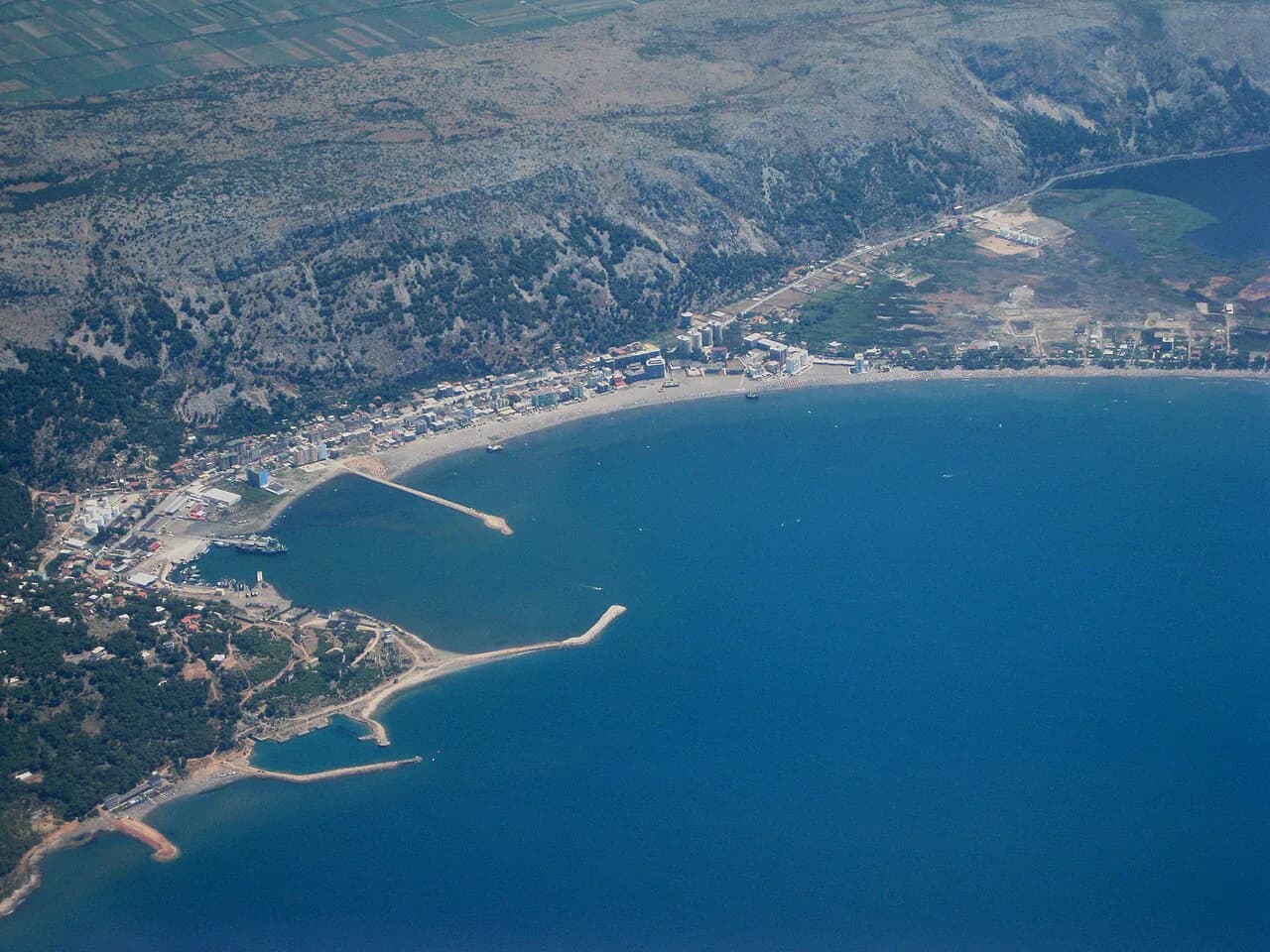
Cape of Rodon, Kepi i Rodonit in Albanian, is a rocky cape on the Adriatic north of Durrës. The peninsula reaches out into the sea and the land behind it runs south toward Durrës through the coastal plain. For a wider look at this stretch of coast and its towns, Visiting Lezhë covers the surrounding area.
The cape works well as a half-day outing from the Durrës and Tirana side because the approach roads are straightforward rather than mountain tracks. The trade-off is that almost everything you see once you arrive is outdoors, spread over a headland, and reached on foot. There are few shops on the site, so bring water and food with you rather than counting on buying anything there.
Getting there: driving times, road surface and no public transport
Plan on roughly an hour behind the wheel from Durrës, Krujë or Tirana. The full stretch to the cape is asphalt, but it is heavily rutted in places where trucks serving the resort construction behind the village of Shetaj have passed through. Drive accordingly, especially in a low car.
Public transport does not serve the cape, so the trip depends on your own car or on a guided day tour. Guided options from Tirana bundle the castle, St Anthony's Church and the coastal views into one outing with transport included, which removes the driving decision entirely.
Near the village of Sukth, the direct route into town crosses a suspension bridge barely wide enough for a single car, with a deck of worn planks that sways as you drive over it. Locals use it routinely, but it is a genuine choice rather than a scenic detour: take it only if you are comfortable with a narrow, moving surface.
The ranger entrance fee
Local rangers charge a small entrance fee at the cape, given in the cape guide as 200 lek per person and 100 lek per car. Treat those as the published rate rather than a guaranteed price, and carry cash in lek so the payment does not hold you up.
Staying overnight in the area costs more than the day-visit fee. If you are combining the cape with the town, Lezhë Castle is the other fortified site within easy reach and makes a natural second stop on the same drive.
Rodoni Castle and the walk from the church
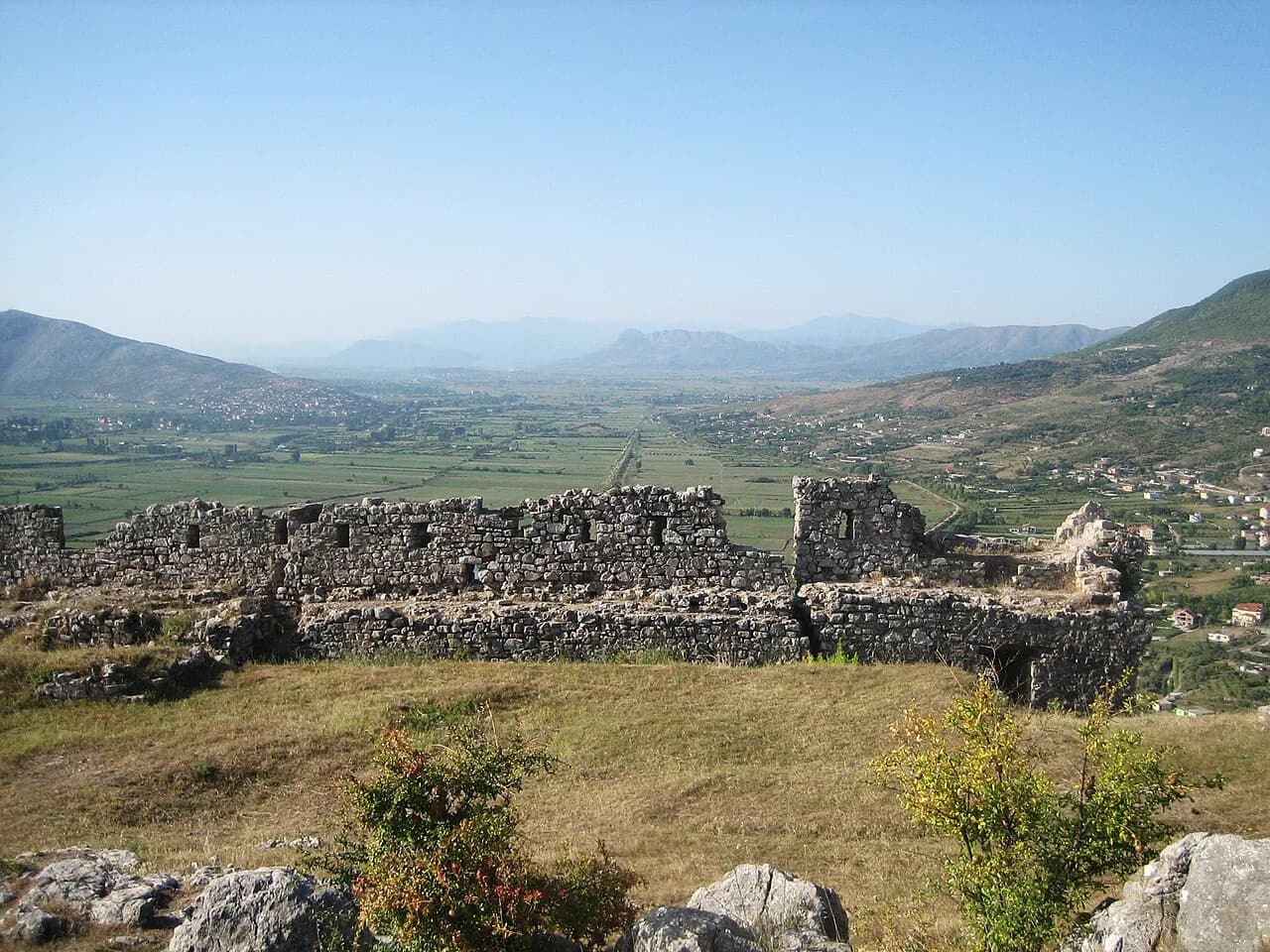
Rodoni Castle is a ruined 15th-century fortress on the cape, built by Gjergj Kastrioti Skënderbeu, and its remains sit directly on the headland. The structure is a ruin rather than a restored monument, so read it as walls and foundations in an exposed position rather than rooms to explore.
You cannot drive right up to the fort: the final 500 metres from the church to the castle are on foot. The path passes a line of underground concrete bunkers from the communist-era fortification of the cape, now slowly being overgrown. Wear shoes with grip, since the surface is rough and the ground uneven.
St Anthony's Church and its fresco
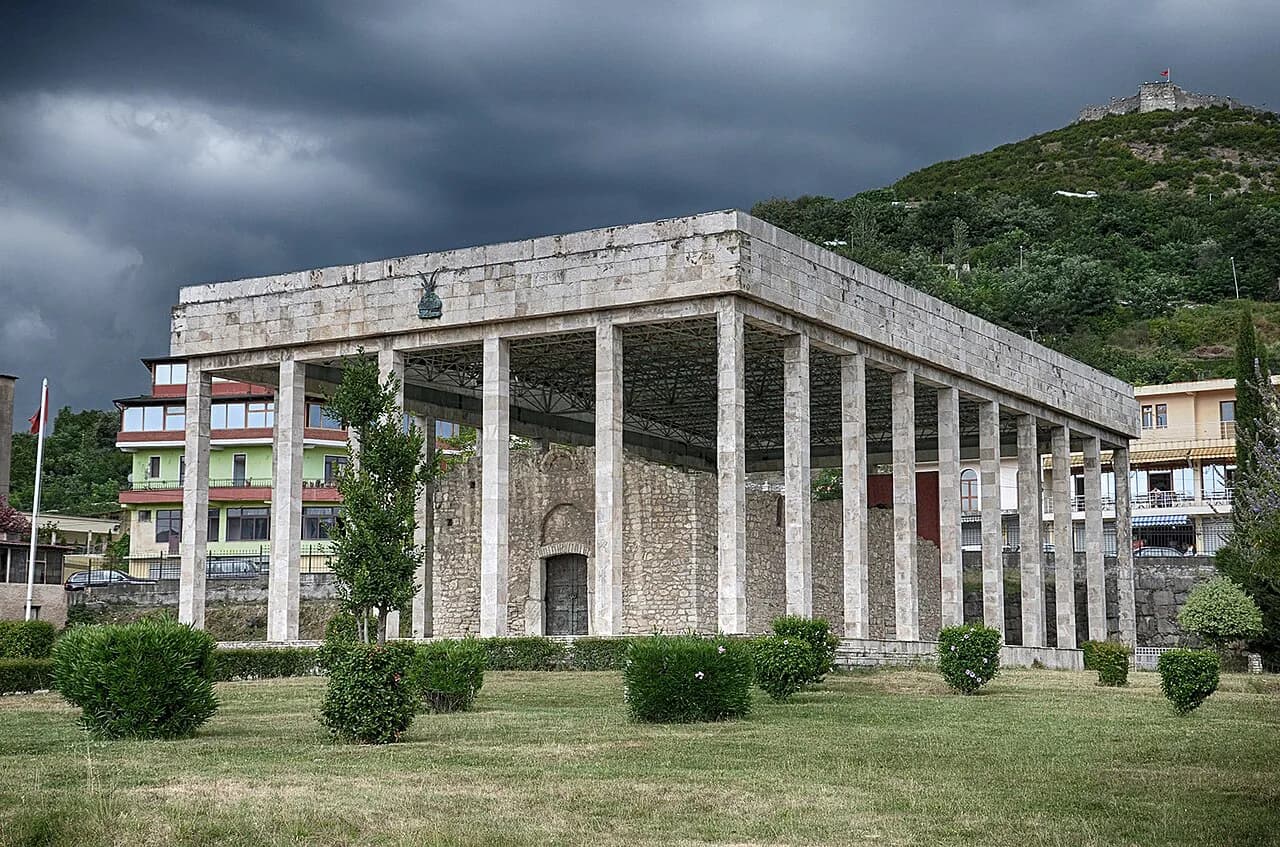
St Anthony's Church stands close to the castle and has been renovated. Inside, a fresco shows a rider on horseback and a double-headed eagle, which the guide identifies as likely the earliest known representation of Albania's current national emblem. Look up rather than around when you step in, because the painting is the reason to linger.
A mineral spring emerges from the ground directly in front of the church. The same spot hosts an annual funfair on 13 June, so if you are travelling in mid-June expect the area around the church to be busier than usual.
The beach at the cape, Iliavik Beach and Lalëz Beach
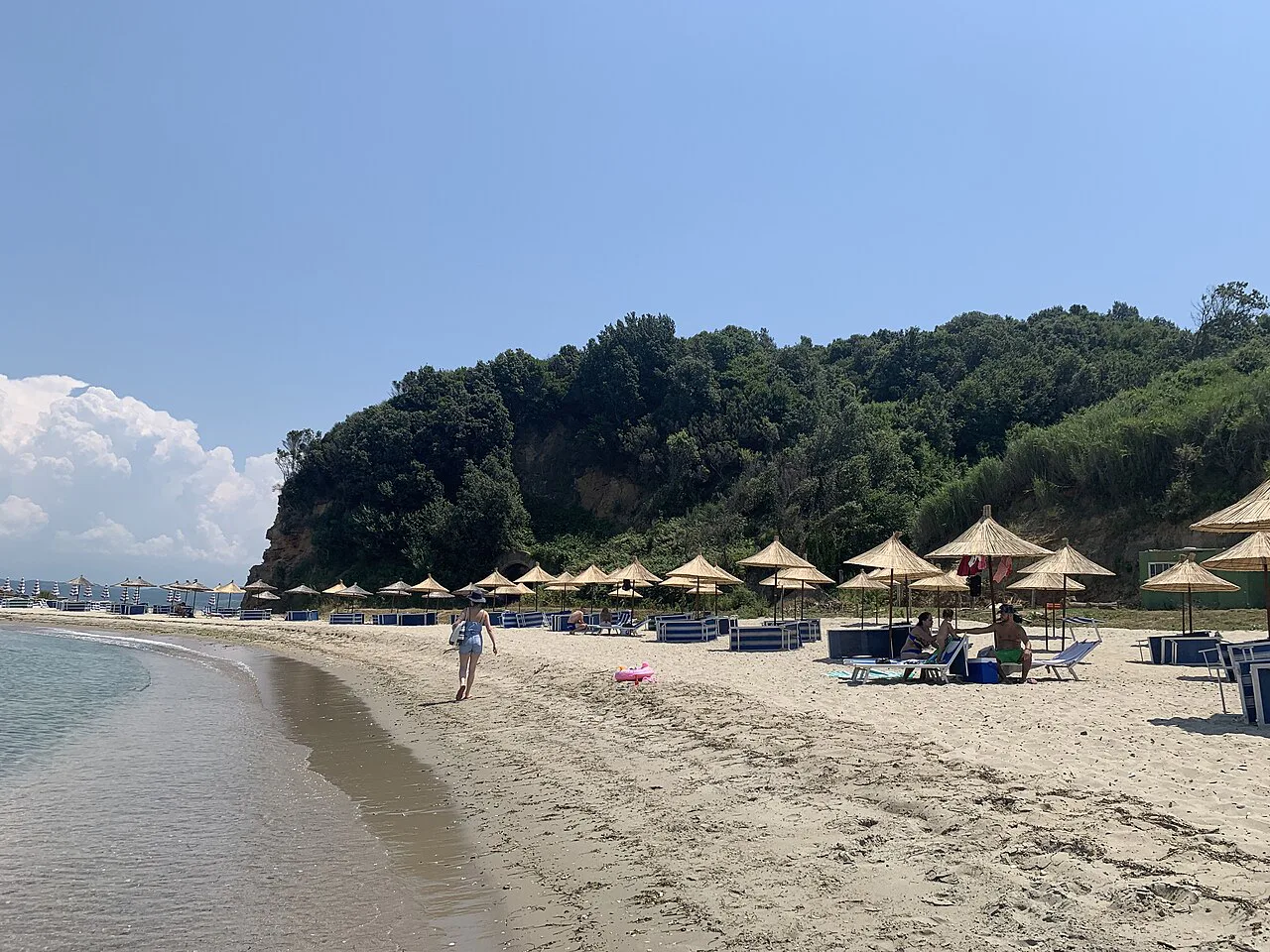
There are three distinct swimming options along this coast, and they behave differently. A few metres from the church there is a beach with umbrellas and, in summer, refreshments, which is the most convenient if you are already at the castle.
Other swimming spots lie along the southern coast of the peninsula, near the Resort Arbeni and at Iliavik Beach. Iliavik is accessible in an ordinary car, which makes it a practical option if you only have one swim in you.
Further south, the coastal plain toward Durrës holds Lalëz Beach, a stretch several kilometres long where a large seaside resort with several hotels has been built. Expect that end of the coast to feel developed rather than wild, and choose it for facilities rather than solitude.
If you are extending the trip north of the cape, Shengjin is the next coastal town up this part of the shoreline and pairs neatly with a Lezhë base.
How long to allow and when in the day to go
Allow about half a day in total: an hour each way in the car, then enough time to walk from the church to the fort, see the fresco and swim. Add longer if you are stopping at Iliavik or Lalëz on the way back.
Early morning and sunset give the best light on the headland, and weekdays are quieter than weekends. There is no gate or ticketed opening time to work around; the real constraint is the weather and the state of the access road, along with the ranger fee on arrival.
What to bring and what to expect on site
Bring sturdy shoes for the 500-metre walk to the castle, cash for the ranger fee, water and snacks given how few shops there are, and sun protection, because the cape is exposed. The cape beach is convenient but can be littered, so if the water matters more than the walk, head for Iliavik instead.
Some of the coastline here carries debris washed in from nearby river estuaries, which detracts from the setting in places. There has also been a renovation around the monastery area that sits uneasily with the old stonework. Expect a wild headland with a ruined fort, a renovated church and a working beach rather than a fully curated historic site.
Should you drive to the cape or join a tour?
Drive yourself if you want to combine the castle with a swim at Iliavik and a stop at Lezhë on the way home, and you are happy with a rutted final stretch and a 500-metre walk. Join a guided day trip from Tirana if you would rather not manage the road, the parking and the ranger fee yourself.
Either way, keep the visit to half a day, carry cash and water, and treat the castle, the church and the beach as three separate stops rather than one continuous sight. For the town that anchors this stretch of coast, Visiting Lezhë sets out what to see and how long it needs.
Explore more Lezhe guides
Sources
Notes for your Albania trip
Optional updates to our Albania town guides.
You might also like
Continue reading
More guides you'll find useful