Lezhë Castle: What to See and How Long You Need
Lezhë Castle stands on a 172 m hill above the town, with Skanderbeg's grave below and wide views. Here is what to see on the hilltop ruins.
On this page
Lezhë Castle is a ruined medieval fortress on a hill above the town. The visit works best as a two-part outing: the walls, towers and views on the hill, then the grave of Skanderbeg down in the centre. This guide covers what stands on the hill, how to reach it and what to pair with it nearby.
Where Lezhë Castle is and how it sits above the town
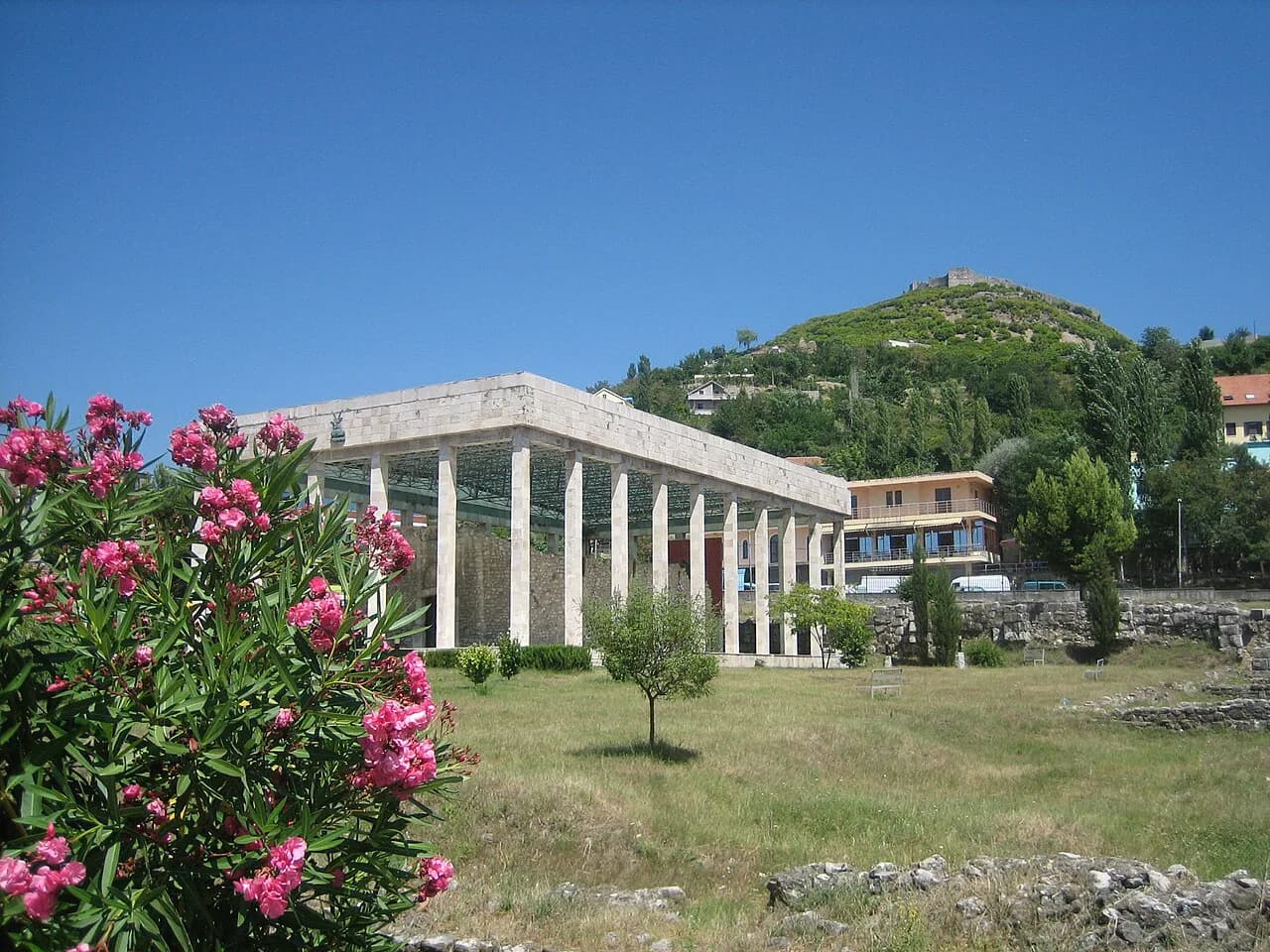
The castle occupies a hill directly above Lezhë, and the encyclopaedia entry gives the hill's height as 172 m. That figure describes the hill itself rather than the walking route, so treat it as a sense of scale and not as a measured climb. From the town the fortress is the obvious landmark on the skyline, and travellers approaching on the main road see the ruins on the ridge before they reach the centre.
Lezhë sits in northwestern Albania, close to the Adriatic coast, which shapes how visitors build a day around the castle. The town is the base, the hill is the first stop and the coast lies within easy reach afterwards. If you are still deciding how to structure your time in the town itself, Visiting Lezhë sets out the wider options.
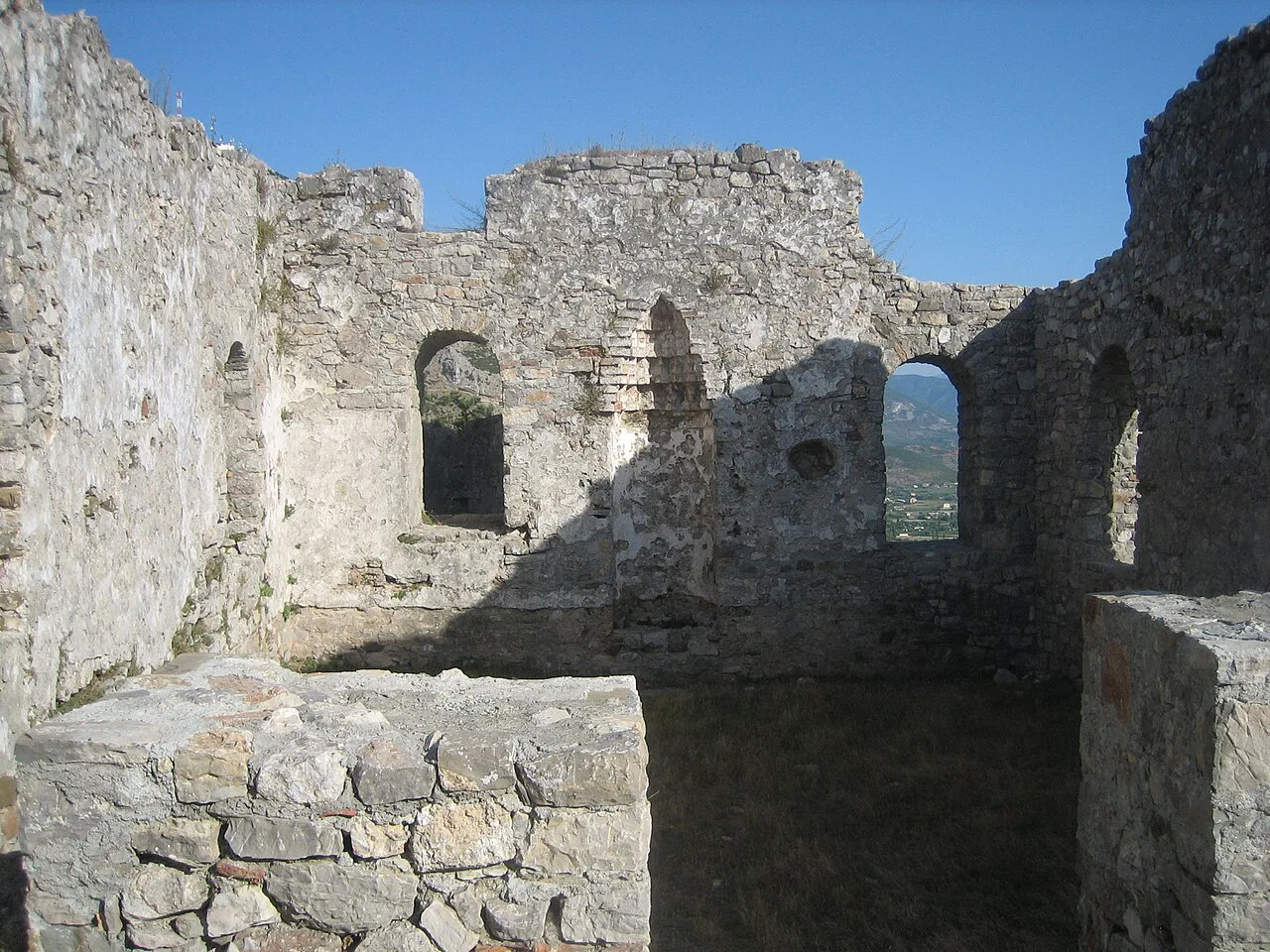
What stands on the hill today: walls, towers and ruins
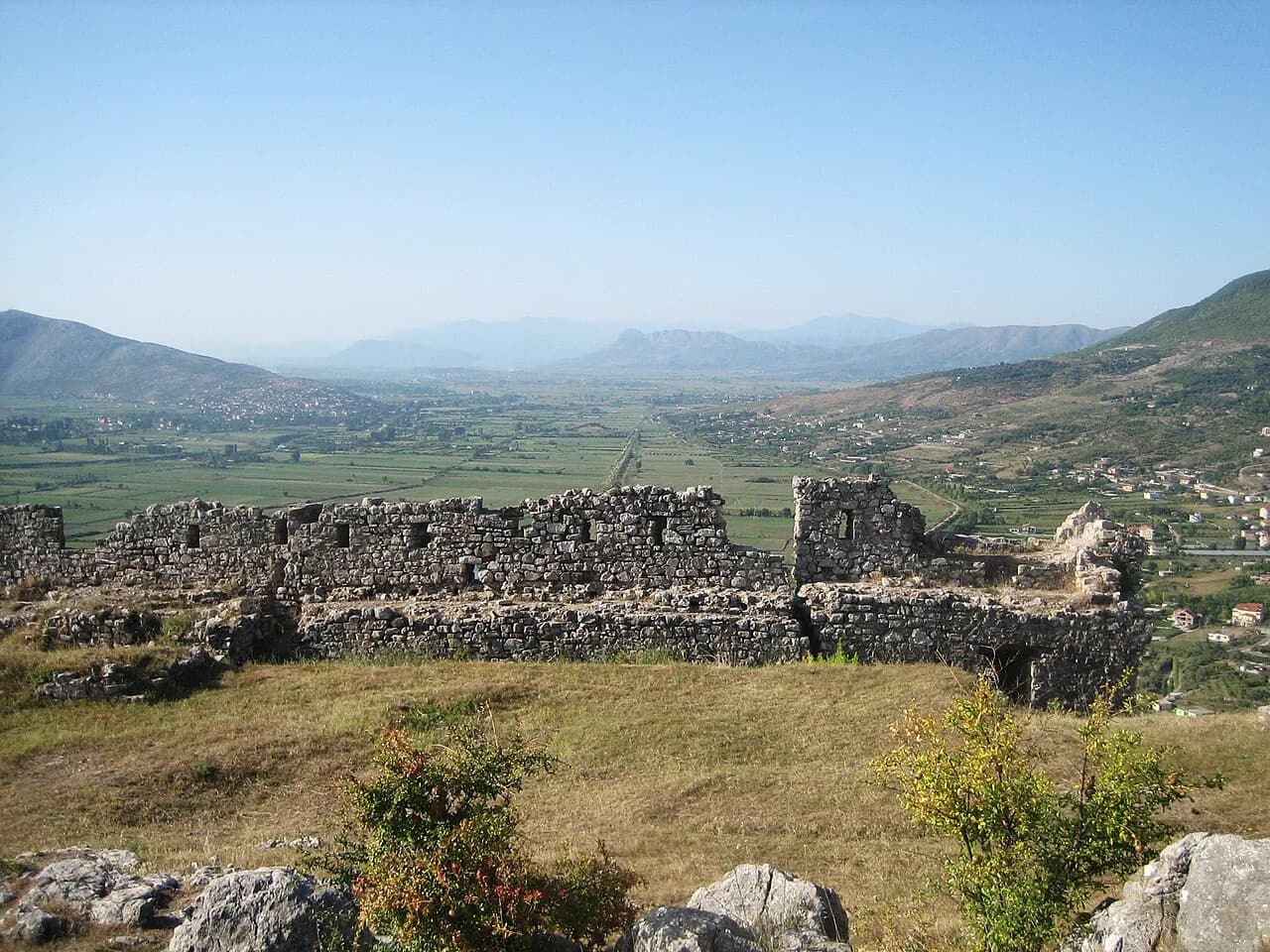
What you see now is a lively ruin rather than a restored monument: stone walls, fragments of towers and open ground where animals graze. A visitor's account describes relaxed goats and sheep among the ruins and a persimmon tree on the hill. Expect uneven surfaces and worn masonry underfoot rather than roped-off exhibition rooms.
The fortress was a strategic stronghold across several centuries, held in turn by the Venetians and the Ottomans, and its surviving walls reflect those phases. A visitor's account traces occupation of the hill back to an Illyrian settlement. Read the standing remains as layers rather than a single building campaign.
The castle has a clear association with Skanderbeg, Albania's national hero, because the League of Lezhë assembly was held close by. Walk the circuit of the walls first and read up on the history afterwards, since the bare ruins give little context on their own.
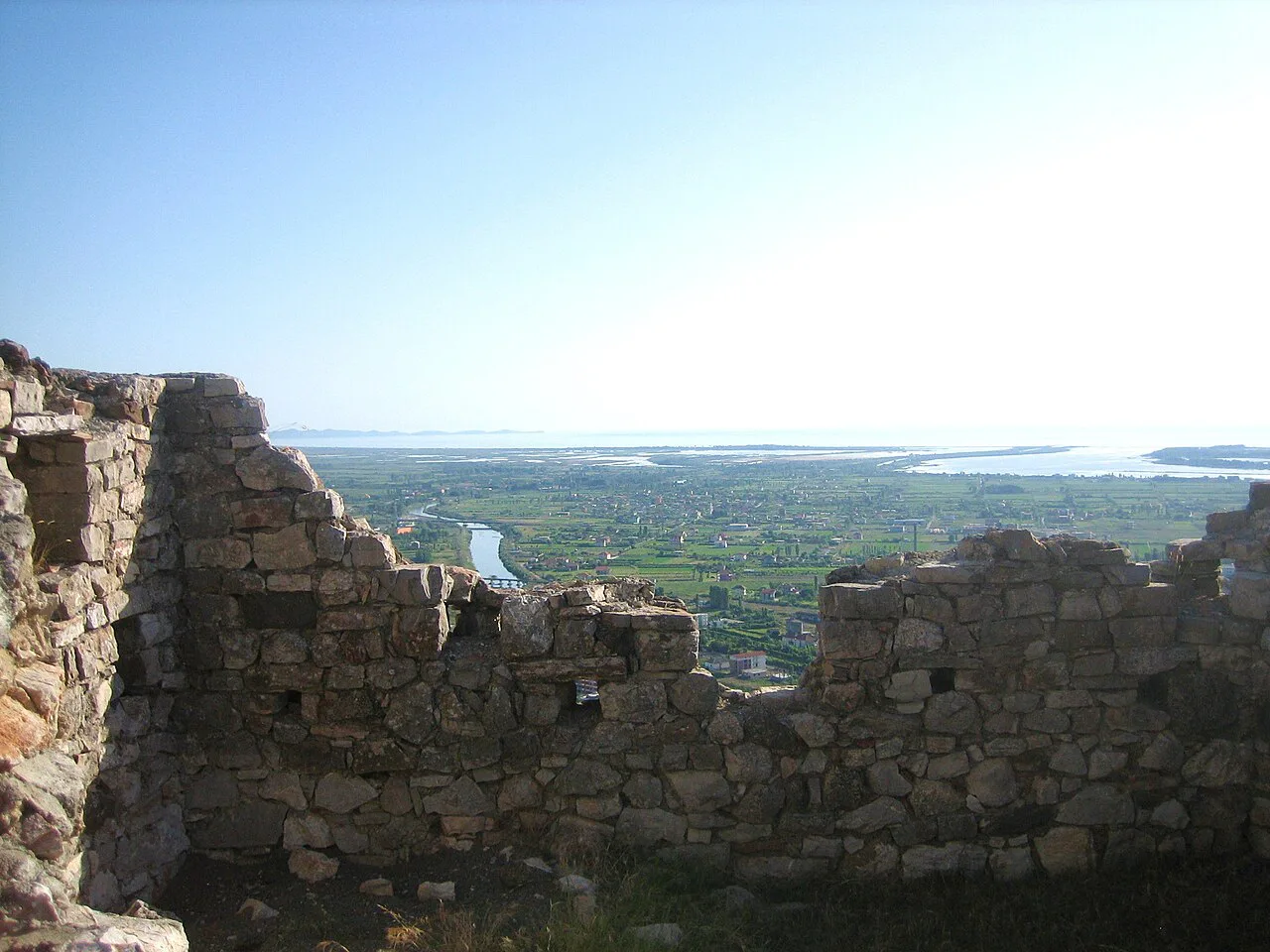
The hilltop views over Lezhë, its valleys and the coast
The outlook is the reason many people make the climb: the hill gives a wide prospect over the town of Lezhë and the valleys and hills around it. On a clear day the Adriatic coastline is visible from the heights as well. Bring water and go early in summer, when the exposed ground heats up through the middle of the day, and keep hold of loose items on windy days.
Skanderbeg, the League of Lezhë and the former Selimie Mosque
The League of Lezhë was formed in 1444 by Skanderbeg to unite Albanian princes against the Ottoman Empire, and the town's identity is bound up with that alliance. The history is not confined to the castle hill: the town holds medieval churches, Ottoman mosques and Venetian structures that show how cultures layered over one another.
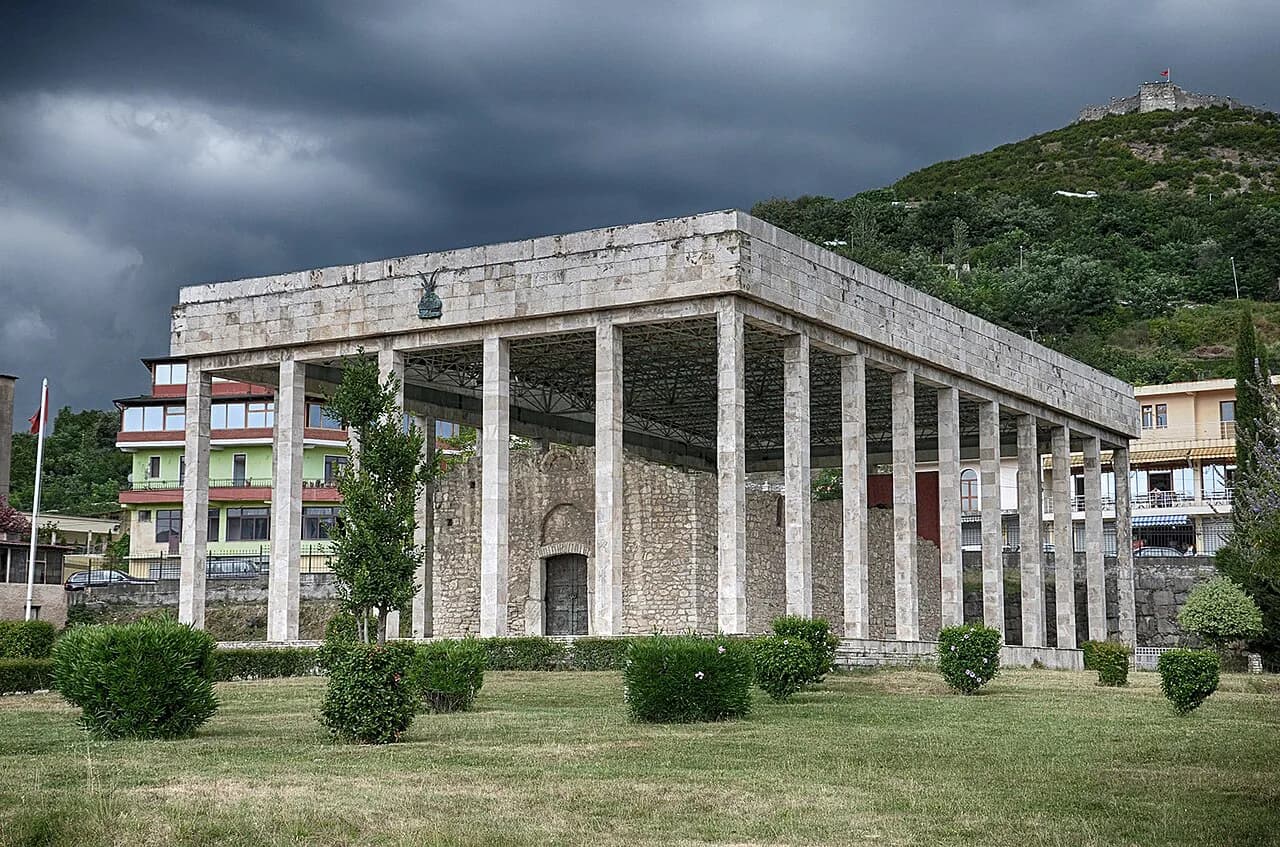
Below the castle, the structure that was formerly the Selimie Mosque is part of the historic fabric of the town. The encyclopaedia entry identifies it by that former name, so look for the building rather than a working mosque sign. It makes a sensible stopping point on the walk between the centre and the foot of the castle path.
Skanderbeg's grave in the town centre and how to pair it with the castle
Skanderbeg's grave sits in the heart of Lezhë and commemorates the national hero, with solemn architecture that draws visitors interested in the country's heritage. It is the natural second half of a castle visit: see the hill first, then come down and finish in the centre. The Skanderbeg Memorial in Lezhë explains what you are looking at and how the site fits the town's story.
Getting up to the castle: drive or walk
Travellers driving the main route past Lezhë can see the ruins clearly from the highway below. Driving removes most of the effort of the climb, but it also removes the approach on foot through the town. Walking up gives you the town-to-hill transition and costs nothing beyond time and energy.
Whichever you choose, budget for the climb as part of the visit rather than an afterthought: the fortress is above the town, and the ground around the walls is uneven. Sturdy shoes help on the worn stone, and a light layer is useful on the exposed hilltop even when the town below feels warm.
How long the castle needs
The ruins reward slow walking more than a quick circuit, because the interesting details are in the masonry and the lay of the land rather than in displays. Build in time for the ascent, for wandering among the walls and towers, and for the descent, rather than treating the castle as a quick stop.
Nearby: Shëngjin, the Patok lagoon and Cape Rodon
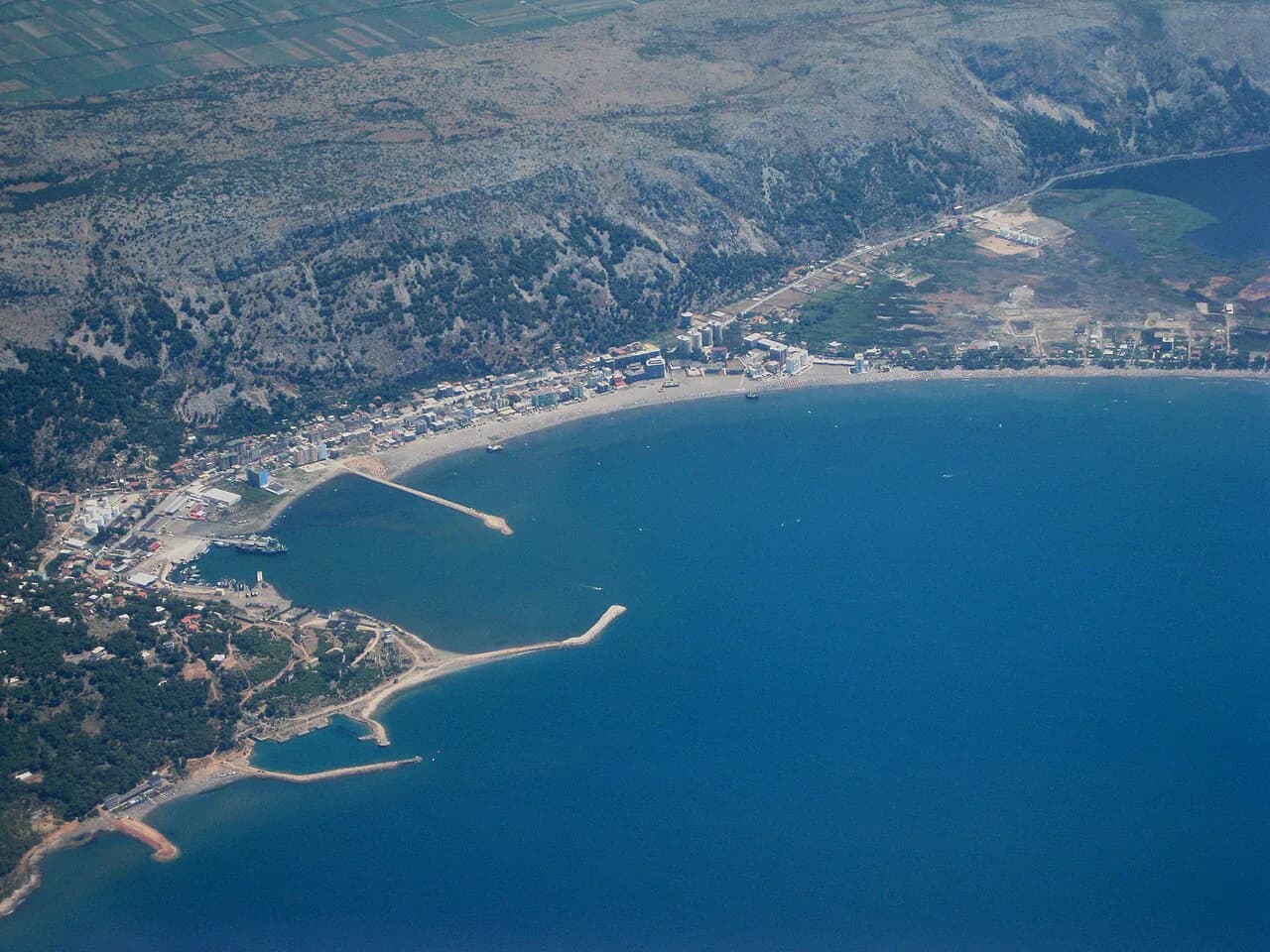
Shëngjin is the closest coastal add-on, a sandy beach with calm water and beachfront cafés that is easy to reach from Lezhë town for a day trip after the castle. In summer it fills with water sports and boat hire. If you would rather stay on the history side of the day, the fortress and the grave in the centre already make a full half-day; Shengjin, Albania has more on the beach itself.
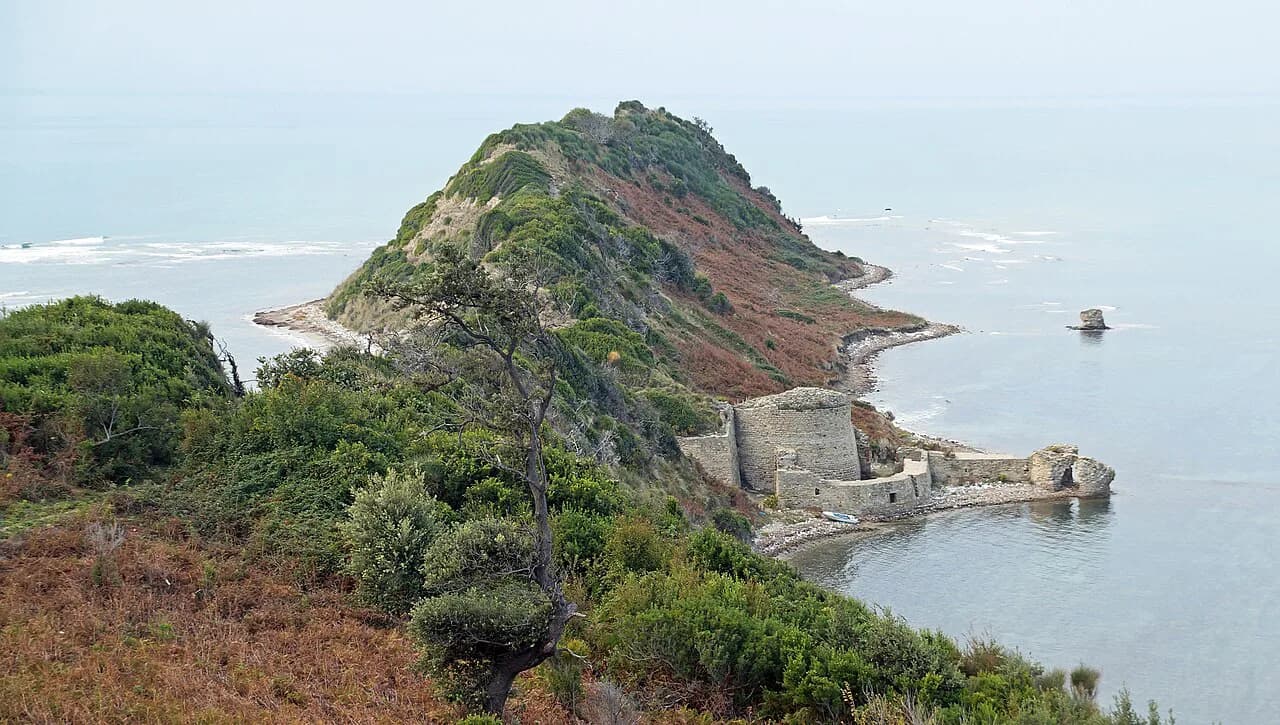
The Lagoon of Patok is a protected wetland with walking trails and birdlife, including flamingos, herons and migratory species. Further out, the Rrjolli Valley and the cape of Rodon give open landscapes for photography and longer walks.
Is the castle the right half-day for you?
Treat Lezhë Castle as a half-day built around a climb: the hilltop ruins and their views first, then Skanderbeg's grave and the old Selimie Mosque structure in the centre. Add Shëngjin if you want sea afterwards, or the Patok lagoon if birds and wetlands appeal more than sand. Check ticket prices, opening times and access before you go.
Sources
Notes for your Albania trip
Optional updates to our Albania town guides.
You might also like
Continue reading
More guides you'll find useful