Krujë Castle: What to See, How Long It Takes and Getting There
Plan a visit to Krujë Castle: the Skanderbeg Museum, the Ethnographic Museum and the bazaar below, plus buses from Tirana and how long the climb takes.
On this page
Krujë Castle gives most visitors two to three hours, and the reason to go is the Skanderbeg Museum rather than a castle experience in the Welsh or English sense: little of the fortress survives beyond a watchtower, the main gate, and stretches of wall and towers. The castle is freely accessible as a site, and there is a fee to enter the museums inside the castle. This guide covers what is actually inside the walls, how the Ottoman bazaar below fits into the same climb, how long the visit takes, and how to get to Krujë from Tirana by bus or car.
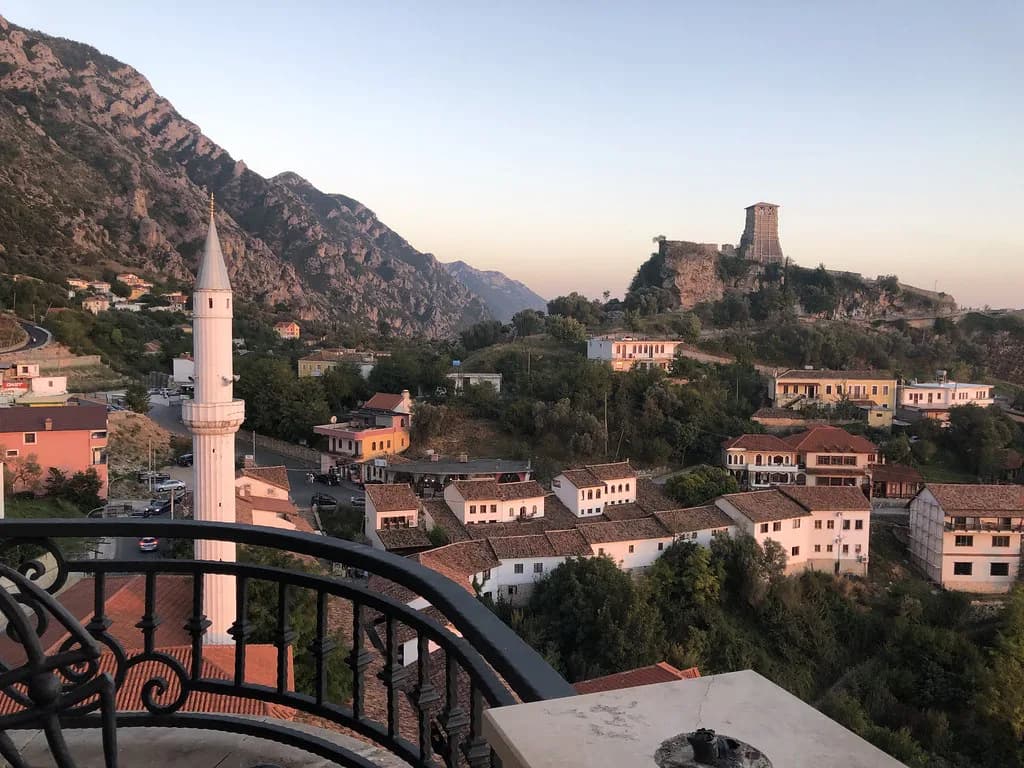
Where Krujë Castle sits above the town
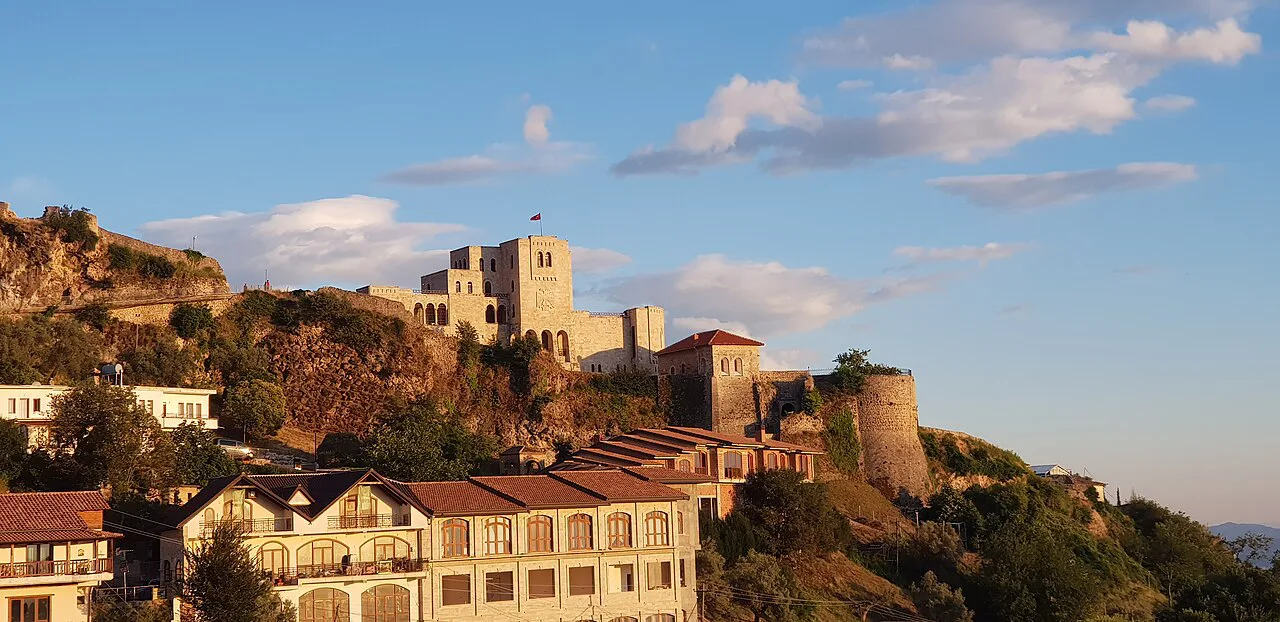
The castle occupies a sloping plateau around 600 metres up the flank of Mount Krujë, addressed at Rruga Kala, and it was built by the Byzantine Empire in roughly the 5th or 6th century. Ottoman forces took it around 1395, and the 15th century brought repeated sieges, which is why the site matters to Albanian history rather than to castle architecture. The surviving structure is modest: a ruined watchtower on the north side of the plateau, the main gate in the west wall, and parts of walls and towers on the south.
From the ramparts you look over the town below, the surrounding valleys and mountains, and on a clear day the Adriatic Sea. That view is the main reward for the climb, so plan the visit for daylight rather than late afternoon. The castle is the anchor of the Kruje old town, and the bazaar, museums and castle all sit within a small area you cover on foot.
What survives inside the walls
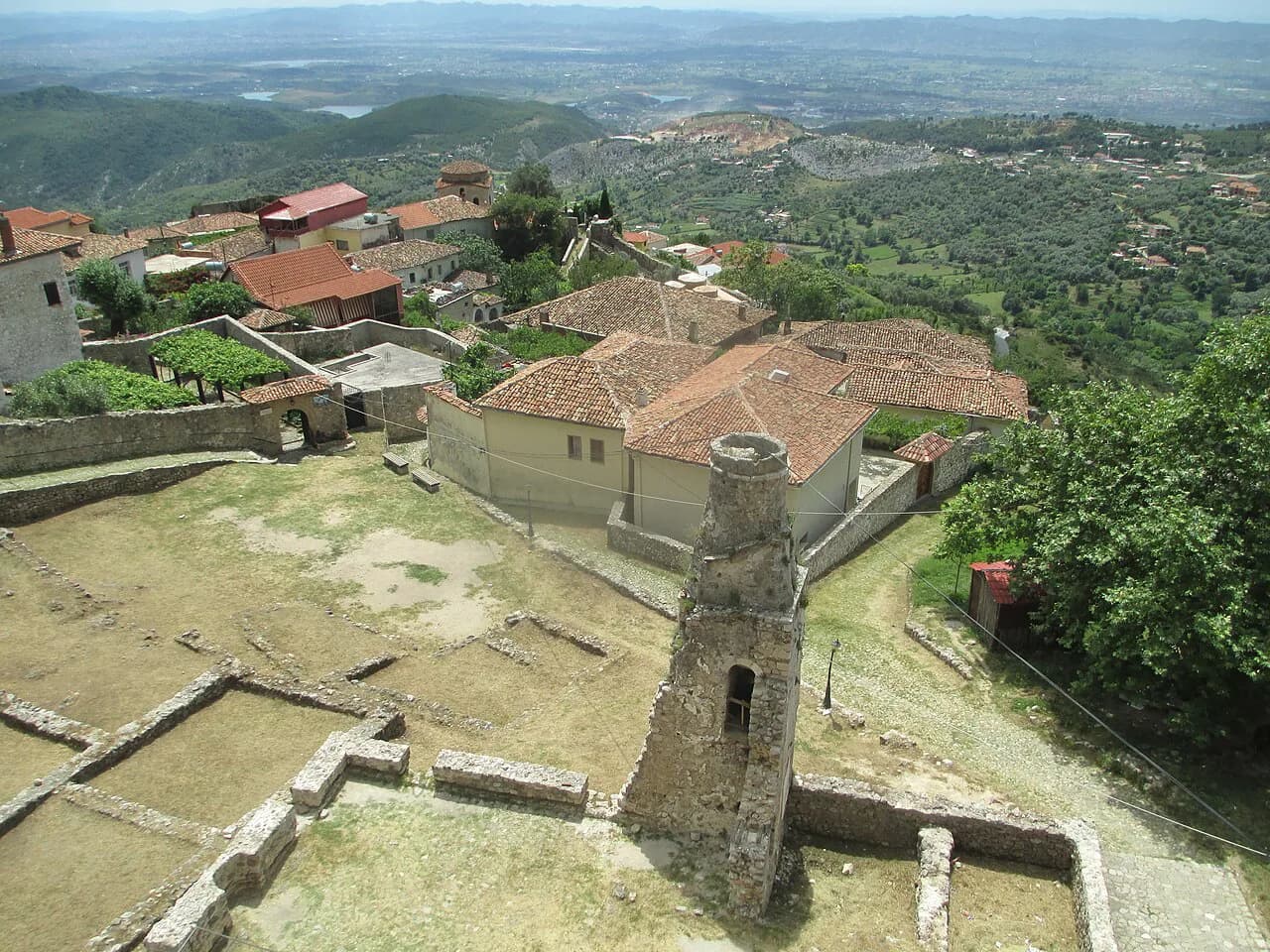
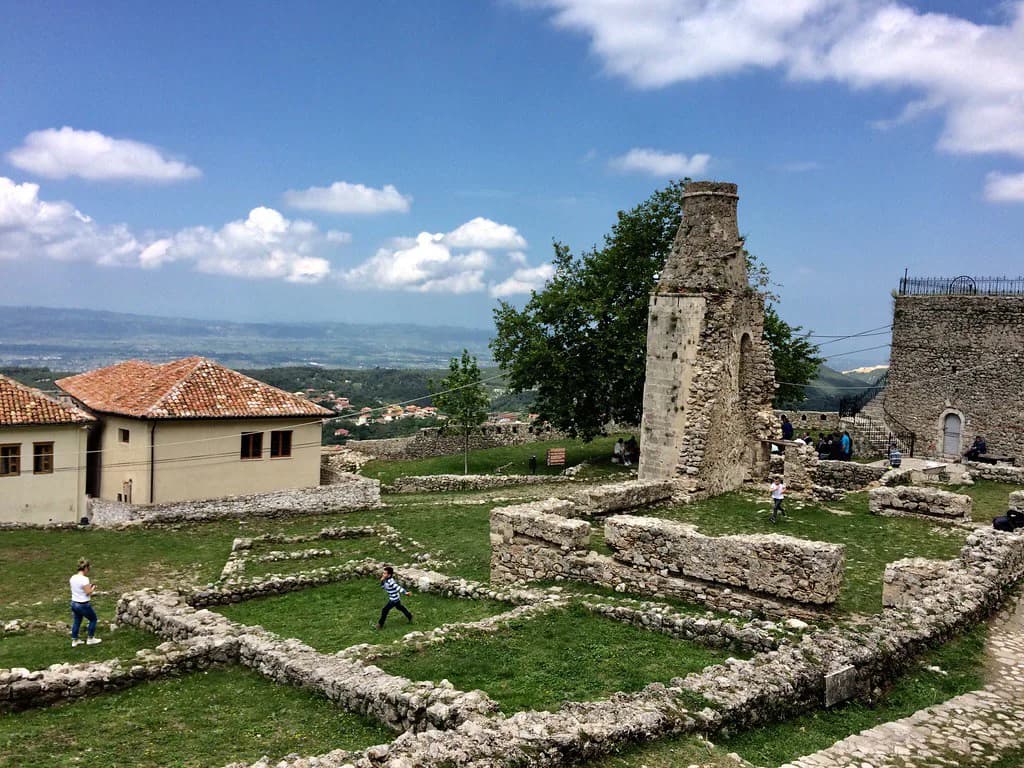
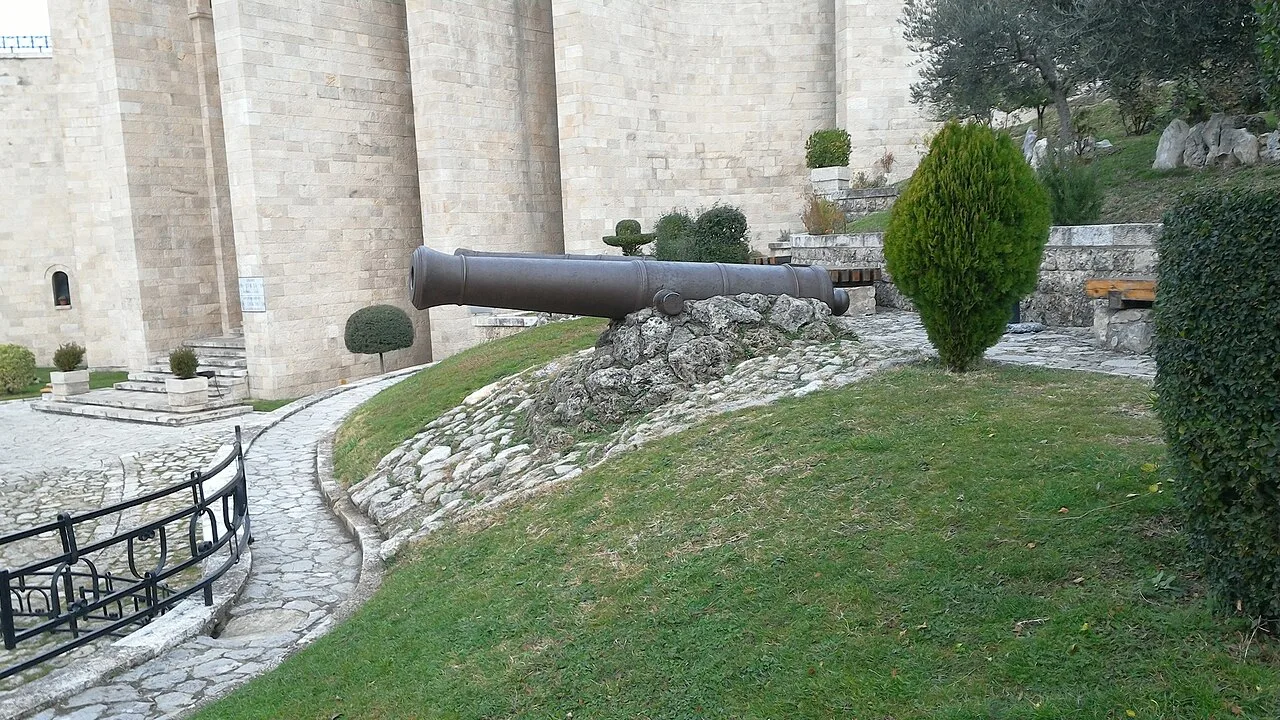
Walk through the west gate and you are on a wide, cobbled, open plateau rather than inside a roofed stronghold. The north watchtower stands ruined, the south side keeps sections of wall and towers, and the precinct holds a couple of restaurants and homestays alongside the museums. The large building beside the main gate, built in the early 1980s to house the Gjergj Kastrioti Skanderbeg National Museum, is modern construction with a historical look, not a medieval hall.
Within the same enclosure stand the remaining minaret and lower walls of the Sultan Mehmed Fatih mosque, built before 1481, and the remains of the Dollma Tekke, a Bektashi place of worship reduced during the Communist dictatorship. The mosque and the tekke are fragments rather than intact buildings, so read them as layers of the site's Ottoman and religious history. Dress here is ordinary town dress; the ruins are not working places of worship.
The Skanderbeg Museum and the Ethnographic Museum
The Skanderbeg Museum is why most people come. It covers Gjergj Kastrioti Skënderbeu, the Albanian lord who seized the castle in 1443 after deserting the Ottoman army at the Battle of Niš, held it through Ottoman sieges in 1450, 1466 and 1467, and became the national hero of Albanian resistance. The castle appears on the reverse of the 5000 lekë banknote, which is a neat way to place how much the site carries in Albanian identity. Allow 45 minutes to an hour for the museum if you read the displays, and start your visit with the Skanderbeg Museum to make sense of the ruins outside.
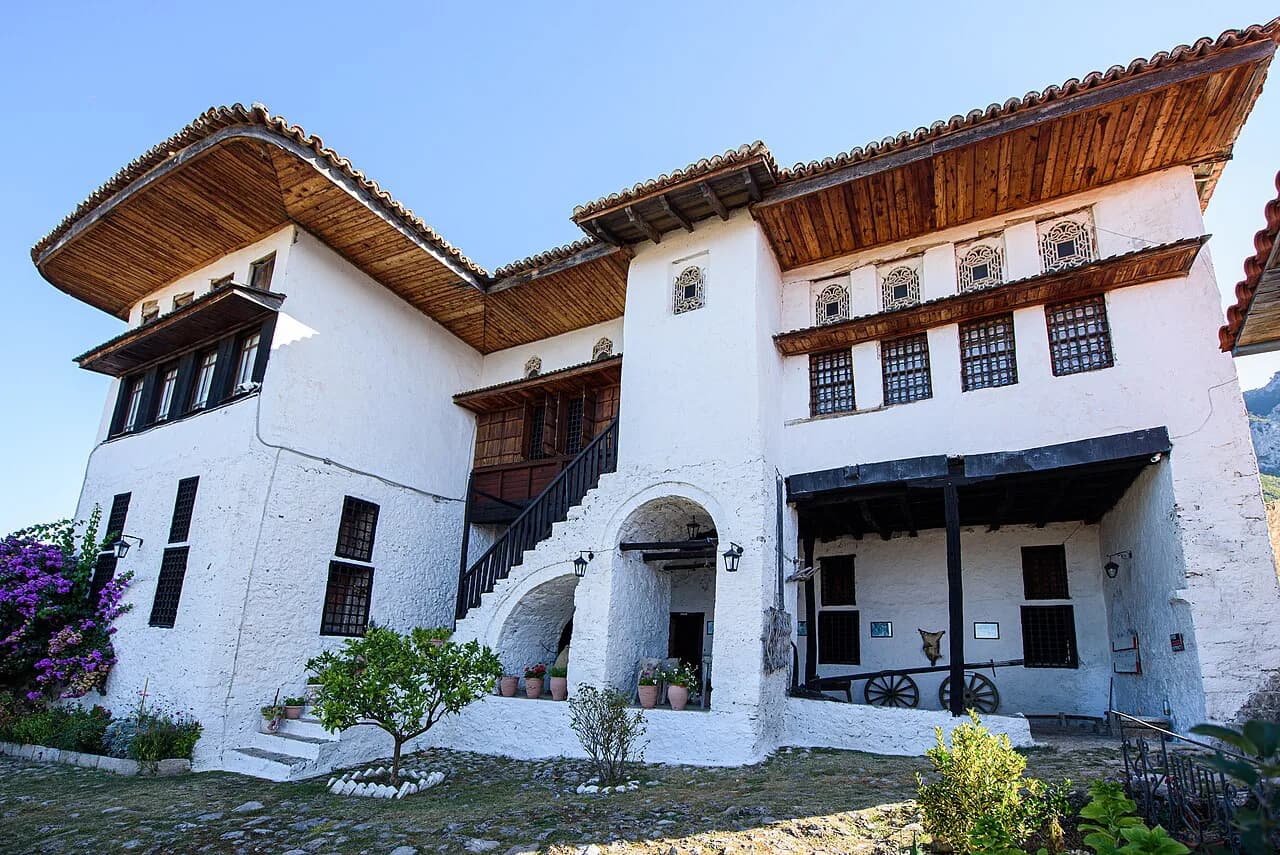
The Ethnographic Museum, in the same castle complex, collects objects tied to the history of Albanian daily life rather than to battles. It works well as the second half of a visit: the Skanderbeg Museum explains the 15th-century struggle, and this one shows how people in the region lived and worked. Kruja Bazaar below the walls is the third piece of the same outing, and the castle grounds themselves are generally free to walk through.
The old bazaar below the castle
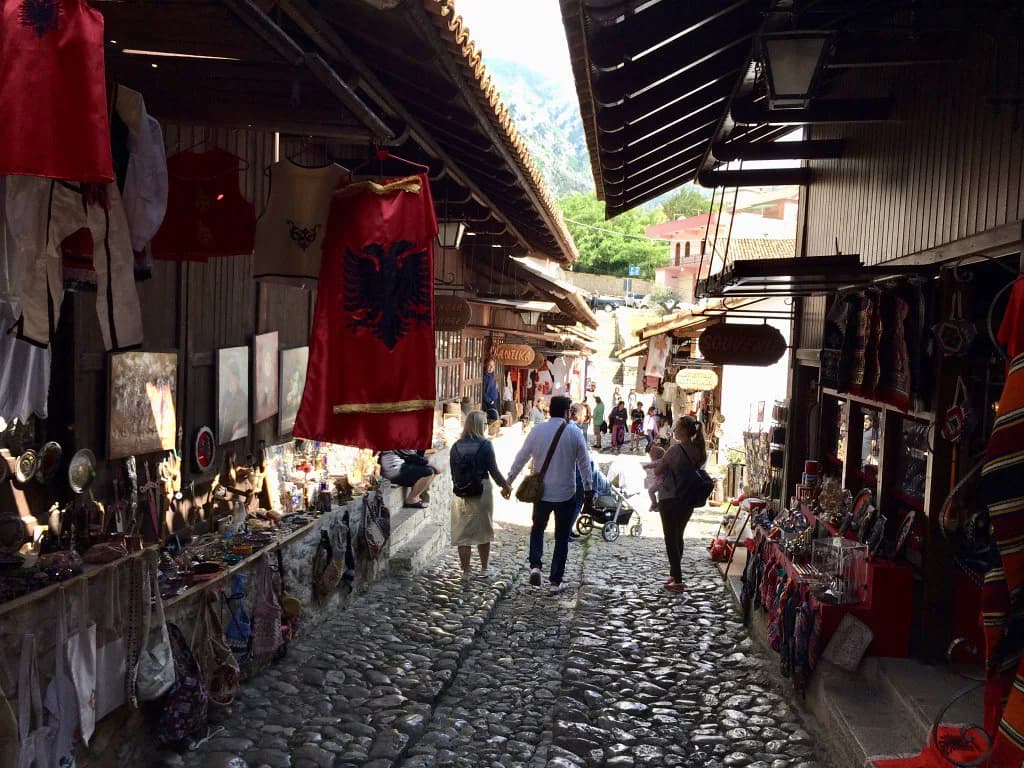
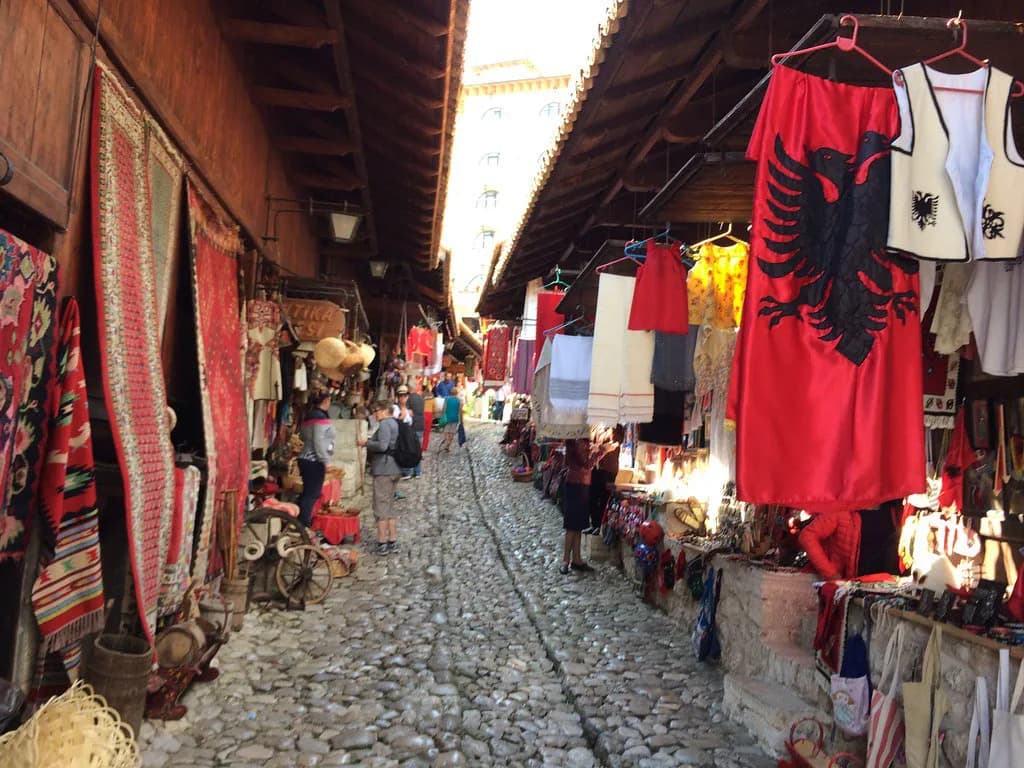
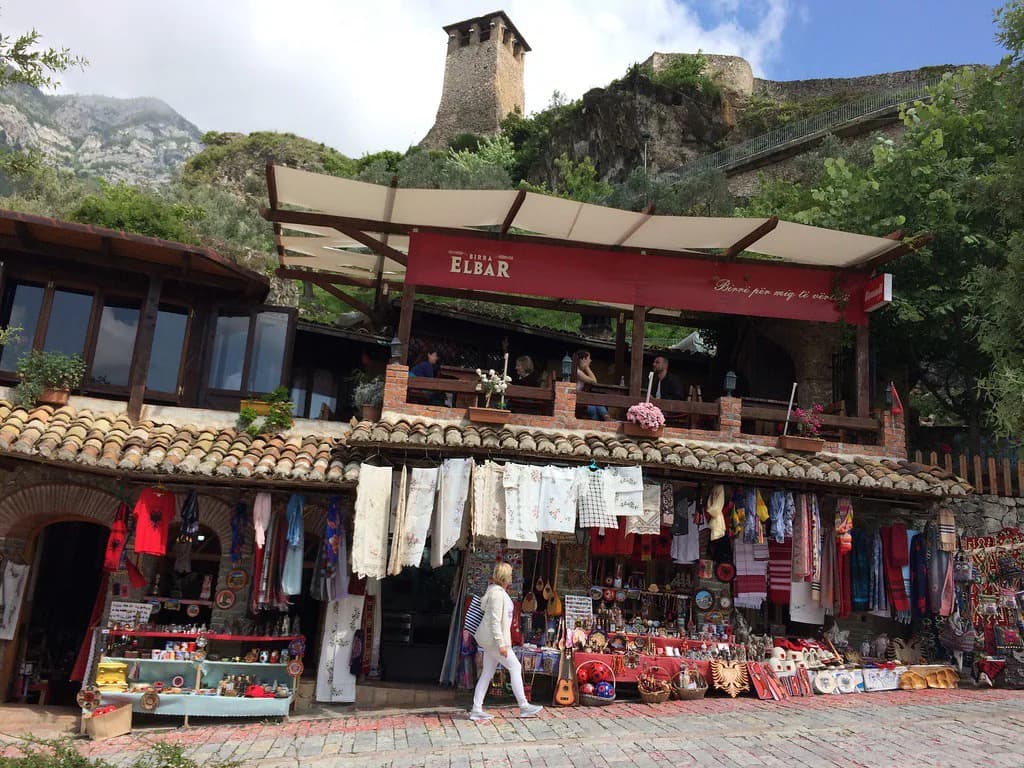
The Ottoman bazaar sits at the foot of the castle hill, and it is the natural first or last stop on the same walk. The lanes sell traditional Albanian crafts, souvenirs and local products, and the bazaar is described as charming rather than as a shopping destination in its own right. Give it 20 to 30 minutes unless you are genuinely browsing; the climb to the gate starts from around here.
The order that works best is bazaar first, castle second, so the shops are open and fresh when you pass through and the uphill stretch comes while you still have energy. Coming down afterwards, the same cobbles are slippery when wet, which matters more than the gradient on the way up.
How long Krujë needs
One day is enough to know the historic part of Krujë well, and the castle, museums and bazaar are concentrated enough to cover on foot. For the castle alone, budget two to three hours including the climb, and add eating time if you want lunch in town. Krujë is small, with essentially one historic street, and the town rewards a slower pace rather than a checklist.
The climb is the part people underestimate. From the bazaar, the approach runs uphill on cobblestone paths, so wear shoes with grip and a firm sole rather than sandals or smooth trainers, and carry water in summer. If anyone in your group struggles with steep, uneven ground, they can wait in the bazaar and still see a good deal of the town.
Getting to Krujë from Tirana
Krujë sits about 20 km northeast of Tirana and roughly 12 miles north of the capital in the other measure used for the town. Buses and taxis run from Tirana, and the bus to Krujë leaves from the station serving the north on Dritan Hoxha Street. Confirm the departure point and times at the station on the day, since timetables change.
The bus takes around 40 minutes and one traveler paid 200 lek for the fare, which is a useful benchmark rather than a published price; check the current fare when you buy the ticket. Driving gives you around 30 minutes from Tirana and the freedom to combine Krujë with somewhere else, at the cost of navigating the town and parking. If you are going by bus, the trade-off is a fixed return time and a walk up from where you are dropped.
Parking near the castle
If you drive, there is a parking lot near Krujë Castle, which is the convenient place to leave the car if you are visiting for a few hours. Bring cash for parking, since card payment is not something you should count on. Parking charges change, so treat any figure you are given locally as the one that applies that day.
Tickets and opening hours
Exploring the outer walls and grounds is generally free, and there is an entrance fee for the museums inside the castle. The museum ticket price and opening hours are best checked in person: ask at the Skanderbeg Museum's ticket desk, or through your accommodation, before you set out.
Krujë Castle is freely accessible as a site, which is why so many visitors wander the plateau without paying anything. Pay only when you want the museums, and decide that on the spot once you see what is open. If the Skanderbeg Museum is your main reason for coming, ask about its hours first and plan the bazaar around that.
Is Krujë Castle worth visiting?
Yes, for anyone interested in Skanderbeg and Albanian national history, and for anyone who wants a half-day out of Tirana with a wide view. The castle fabric is thin, so visitors expecting a complete fortress with towers to climb will be disappointed; the museums, the bazaar and the outlook carry the visit instead. Skip it if you have only one free day in Albania and would rather spend it in Berat or Gjirokastër, where the old towns are larger and the walking is more varied.
Two nearby stops can fill out the same day: the Sari Salltik shrine on the mountain above town, and a meal in Krujë before the bus back. Taken together, Krujë: Castle, Bazaar and What a Visit Takes works as a half-day from Tirana rather than a base, because the historic core is compact and the accommodation is concentrated around it.
Book the bus or the car?
Take the bus from Dritan Hoxha Street if you want the simplest half-day from Tirana and do not mind a fixed return; drive if you want to pair the castle with the Sari Salltik shrine or another stop on the same loop. Either way, arrive in the morning, walk the bazaar first and the castle second, and treat the museums as the part worth paying for. Confirm the museum's opening hours and ticket price before you set out, and wear shoes that cope with cobbles.
Explore more Kruje guides
Frequently Asked Questions
Can you visit Krujë Castle without paying?
The castle itself is freely accessible, and exploring the outer walls and grounds is generally free. There is an entrance fee for the museums inside the castle, including the Skanderbeg Museum and the Ethnographic Museum; check at the gate which buildings are open on the day you visit.
How long does the climb to Krujë Castle take?
The approach is uphill on cobblestones from the bazaar, and most visitors spend two to three hours on the castle, museums and climb combined. Allow more time in heat or if you stop frequently.
Are the Skanderbeg Museum and Ethnographic Museum in the same place?
Both sit within the castle complex on the plateau, along with the remains of the Sultan Mehmed Fatih mosque and the Dollma Tekke. You can move between them on foot inside the walls.
Sources
Notes for your Albania trip
Optional updates to our Albania town guides.
You might also like
Continue reading
More guides you'll find useful