
Skanderbeg Square, Tirana: A Visitor's Guide to Sheshi Skënderbej

Allow 45 minutes to an hour at Skanderbeg Square, and rather more if you plan to go inside the museums and mosques that ring it. The square is an open public space with no admission charge and is the natural place to begin a day in Tirana, because the city's main sights sit on or just off its edge. See our Tirana Attractions: 11 Visitor Guides for the surrounding sights, and this guide for where the square sits, how to reach it on foot, how the paved surface is arranged, and what surrounds it.
There is no ticket and no queue: you walk straight onto the square from the surrounding streets. Treat it as the city's orientation point rather than a single sight, then decide which of the buildings around it you want to enter and which you are happy to see from outside.
What Skanderbeg Square is and where it sits in central Tirana
Skanderbeg Square, Sheshi Skënderbej in Albanian, is the main plaza in the centre of Tirana and is named after the national hero Gjergj Kastrioti Skënderbeu. The Skanderbeg Monument stands at its middle, and the square covers roughly 40,000 square metres. It works as the geographic and ceremonial core of the capital rather than a walled-off attraction.
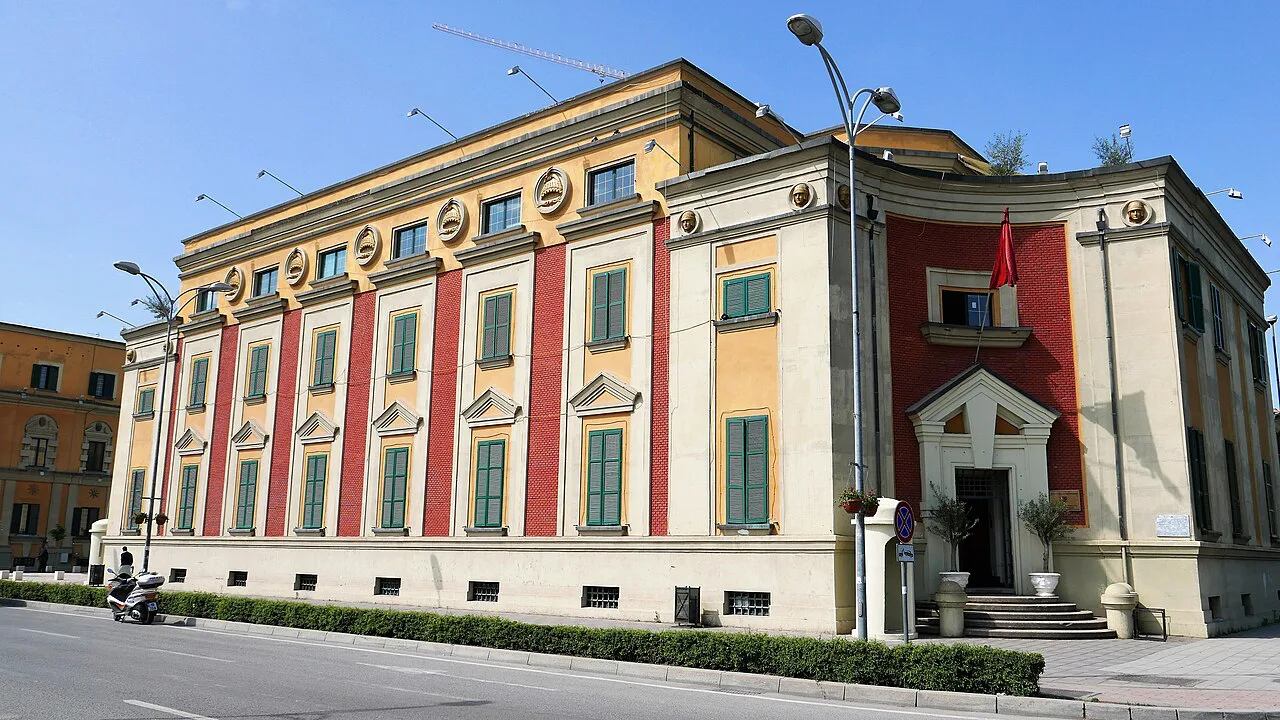
The buildings around the plaza include the Tirana International Hotel, the Palace of Culture and the National Opera, the National Library, the National Bank, Et'hem Bey Mosque, the Clock Tower, City Hall, several government ministries and the National Historical Museum. Read that list as a map of the square's edges: each landmark gives you a side to head for.
The city plan behind this layout began with Armando Brasini's design of 1925, was continued by Florestano Di Fausto in a Neo-Renaissance style, and was updated in 1939 by Gherardo Bosio after the Italian invasion. You do not need the chronology to find your way, but it explains why monumental frontages line one side and the older mosque and clock tower sit close together on another.

How to get there and how the square is laid out
The square is pedestrianised and sits in the middle of central Tirana, so most visitors arrive on foot from nearby streets or by taxi and city bus to the surrounding blocks. Use the Skanderbeg Monument as your landmark for meeting anyone: it is visible across the open paving and gives you a fixed point on a large space.
Around the central paving runs a green belt of 12 gardens, each tied to one or more of the institutions lining the square. The design was revised in 2016 with a wide group of collaborators, and this planted edge acts as an antechamber between the busy city streets and the open centre.
Practically, walk the perimeter first if you want the buildings in order, then cut across the middle to the monument. The edge gardens give you shade and benches, while the centre is fully exposed, so in high summer it is worth crossing the open stone early or late in the day.

The stone-paved Pyramid and the fountains at its centre
The surface is not flat: it is a shallow Pyramid, about 177 m by 157 m, with its highest point in the middle at roughly 1.80 m, so you walk gently uphill to the centre rather than circling a level plaza. From the tip you stand level with the surrounding buildings rather than looking up at them.
The paving uses stone from across Albania; the official tourism page describes almost 28,000 square metres of tiles from the places where Albanians live, while the architects' account puts the count at 129,600 tiles of varied Albanian stone. The effect is a multi-coloured mosaic that shows up most clearly when water is running over it.
More than 100 fresh-water fountains sit within the paving and keep the place cooler in hot summer weather. The square reopened on 10 June 2017 after a major restoration, and that date marks the form visitors see today rather than a museum-style attraction with opening hours.
The Skanderbeg Monument and what it commemorates
The equestrian monument honours the 15th-century nobleman who led resistance against the Ottomans and has been treated for more than half a century as the very centre of Tirana. The sculpture is by Odhise Paskali, stands 11 metres tall and was inaugurated in 1968 on the 500th anniversary of Skanderbeg's death.
The statue replaced an earlier monument to Stalin at the centre of the square, and its installation marked the reclaimed national identity of the space. For a visitor it is the obvious meeting point and the best place to photograph the square with the mosque and clock tower behind you.
Landmarks around the edge: Et'hem Bey Mosque, the Clock Tower and the National Historical Museum
Et'hem Bey Mosque stands at the edge of the square, an Ottoman-era building whose interior carries intricate frescoes and whose history reaches back to the early 19th century. It is an active place of worship as well as a landmark, so treat a visit as you would any working mosque and dress accordingly.
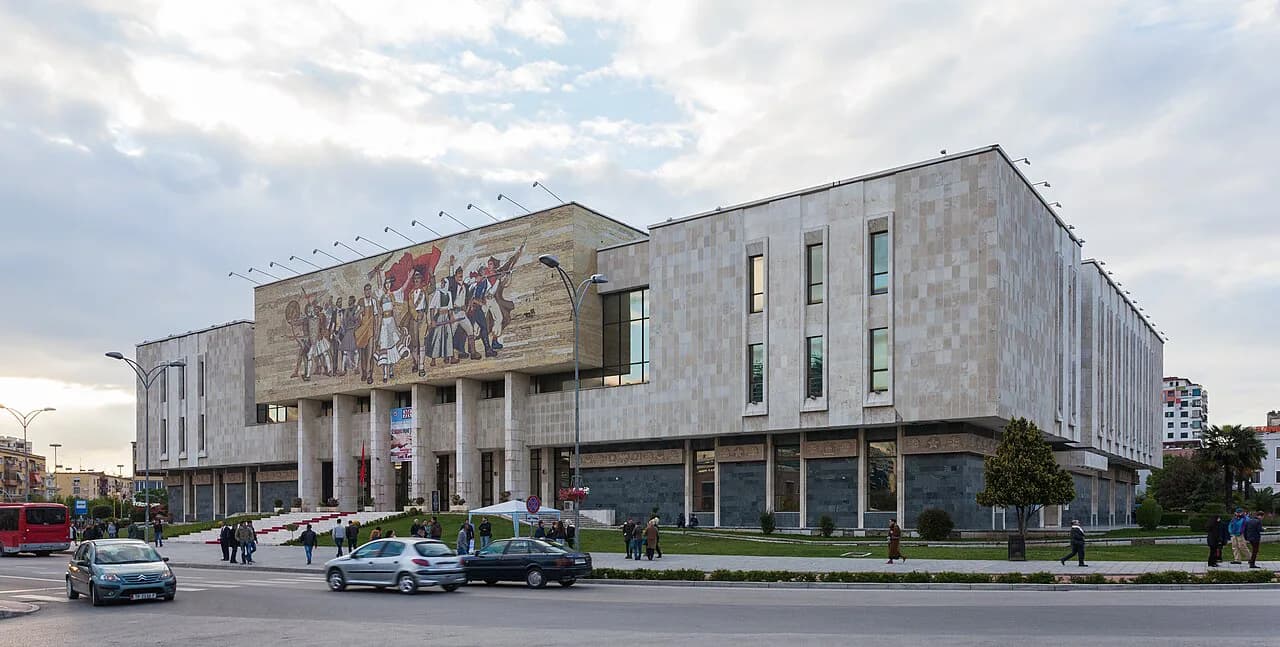
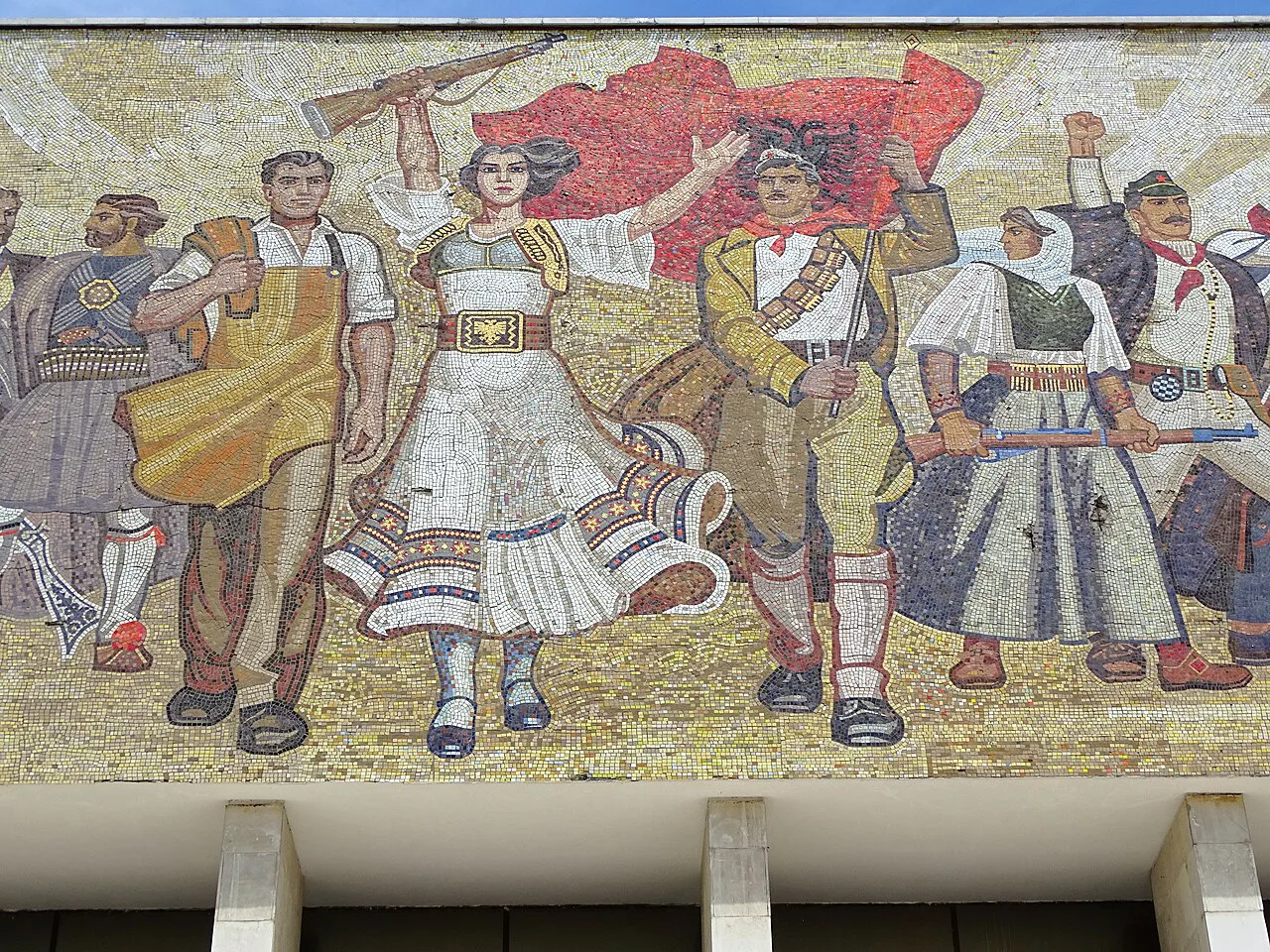
Beside it, the Clock Tower gives you a vertical marker on the skyline; it was the tallest building in the city until 1971. The square fronts the National Historical Museum, whose mosaic façade is one of the most photographed surfaces in Tirana.
Check the mosque and museum opening times and any entry charge at the door or on their own published pages before you set out, since these change with the season and with religious use. A sensible plan is to see the mosque and tower from the square first, then commit an hour or more to the museum if the weather turns.
The Palace of Culture, the National Library and the government buildings
The Palace of Culture houses the National Opera and Ballet, and the National Library and Bank of Albania sit among the same ring of buildings, with most of the government ministries lined up behind the monument. You will mostly see these from outside, which is reason enough to walk the full perimeter rather than stopping at the first photogenic corner.
The ensemble is a compressed lesson in how the square has been used politically: communist-era monumentality on one side, older Ottoman buildings on the other, and a modern pedestrian surface tying them together. Walk it once in each direction and the layout makes sense quickly.
How long to allow and the best way to walk it
Give the square itself 45 minutes to an hour: enough to climb the shallow Pyramid, read the monument, and walk the garden edge. Add an hour for Et'hem Bey Mosque and the Clock Tower area, and a further hour or two for the National Historical Museum if you want more than a quick pass.
Start at the monument, walk the Pyramid to its high point, then work clockwise past the mosque and clock tower towards the museum and the Palace of Culture. This order keeps the older buildings together and leaves the long institutional frontages for the end, when you can leave by whichever street suits your next stop.
The square is fully pedestrian and free to enter, and the paving is smooth, so it suits most visitors including those with pushchairs or limited mobility. The main trade-off is heat and exposure in summer: the centre has no shade, and the fountains are the only relief, so plan your crossing accordingly.
What is nearby once you leave the square
The Pyramid of Tirana, built as a museum to Enver Hoxha and now the TUMO Center Tirana for creative technology, is a short walk south of the square. It is a different kind of visit: an interior you book or join rather than a public space you wander.
West of the square, the pedestrian streets around Tirana castle hold cafés and shops, and the colourful Blloku district lies within walking distance for a longer stroll. The House of Leaves museum, which documents surveillance under the communist regime, is another short walk away in the same central area.
For something further afield, Bunk'Art 1 sits on the edge of the city towards Mount Dajti, and Bunk'Art 2 occupies a former Ministry of Internal Affairs building in the centre. Both need their own time slot, so do not try to fold either into the same hour as the square.
If you are planning a broader day, the square is a natural first stop before the city's other sights; our round-up of things to do in Tirana sets the rest in order. Mother Teresa Square, south along the main boulevard, makes a sensible second anchor for an afternoon walk.
Is Skanderbeg Square worth an hour?
Yes, and it is the most efficient hour you will spend in Tirana: no ticket, no queue and every major central sight within sight of the paving. Walk the Pyramid to its high point, look at the monument, and use the surrounding buildings to decide where to go next.
Before you go, check the opening times and any entry fees for Et'hem Bey Mosque and the National Historical Museum, since the square itself has no opening hours to plan around. Then build the rest of your day outwards from the edge of the plaza.
Explore more Tirana guides
Frequently Asked Questions
Do you need tickets for Skanderbeg Square?
No. The square is an open public plaza with no admission charge, and you can walk onto it from the surrounding streets at any time. The buildings around its edge, such as the National Historical Museum and Et'hem Bey Mosque, set their own arrangements, so check those separately.
How long does it take to see Skanderbeg Square?
Most visitors need 45 minutes to an hour to cross the shallow stone Pyramid, read the Skanderbeg Monument and walk the garden edge. Add extra time for any museum or mosque you want to enter, and allow longer in high summer because the open centre has little shade.
Who was Skanderbeg and why does the square carry his name?
Gjergj Kastrioti Skënderbeu was a 15th-century nobleman remembered for resisting the Ottomans, and the equestrian monument by Odhise Paskali commemorates him at the centre of the plaza. The sculpture was inaugurated in 1968, five centuries after his death.
Why is Skanderbeg so famous?
He is honoured in Albania as the national hero who led resistance against the Ottoman Empire in the 15th century, which is why the country's main square and its central monument both bear his name. The square has served as Tirana's ceremonial and civic centre for more than half a century.