
Et'hem Bey Mosque: A Visitor's Guide to Tirana's Skanderbeg Square Mosque

Et'hem Bey Mosque (Xhamia e Et'hem Beut) takes about fifteen to twenty minutes and belongs to a walk around Skanderbeg Square rather than a trip of its own. It stands in the very heart of Tirana on the edge of the square, and the painted interior is the reason to step inside. This guide covers where it sits, how to reach it on foot, what to look for in the frescoes, the etiquette of entering a working mosque and what else is within a few minutes' walk.
What Et'hem Bey Mosque is and where it stands
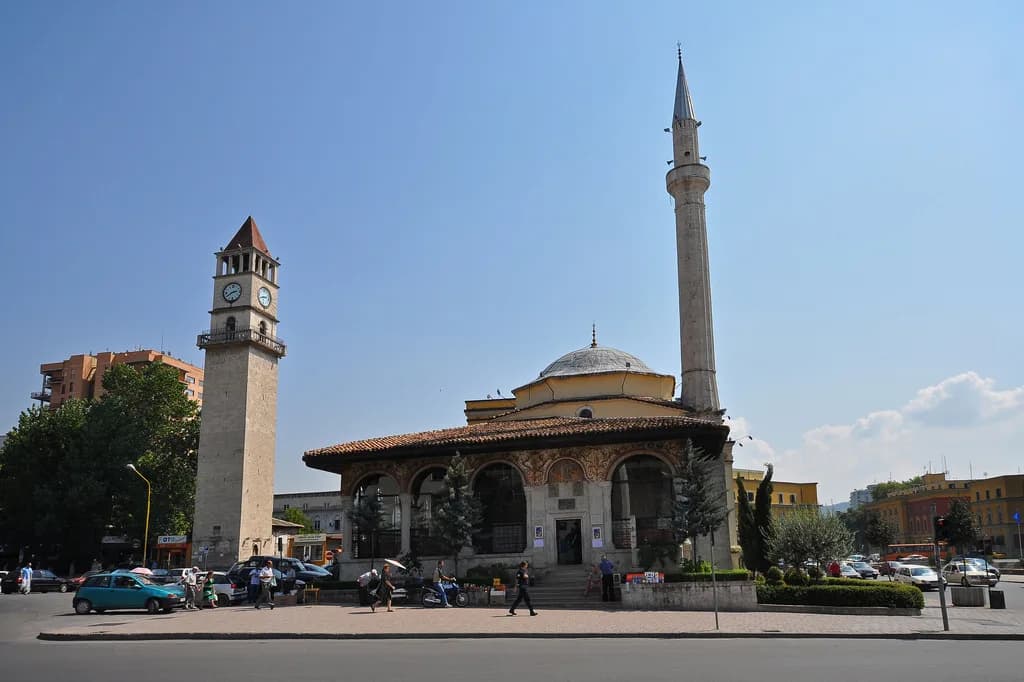
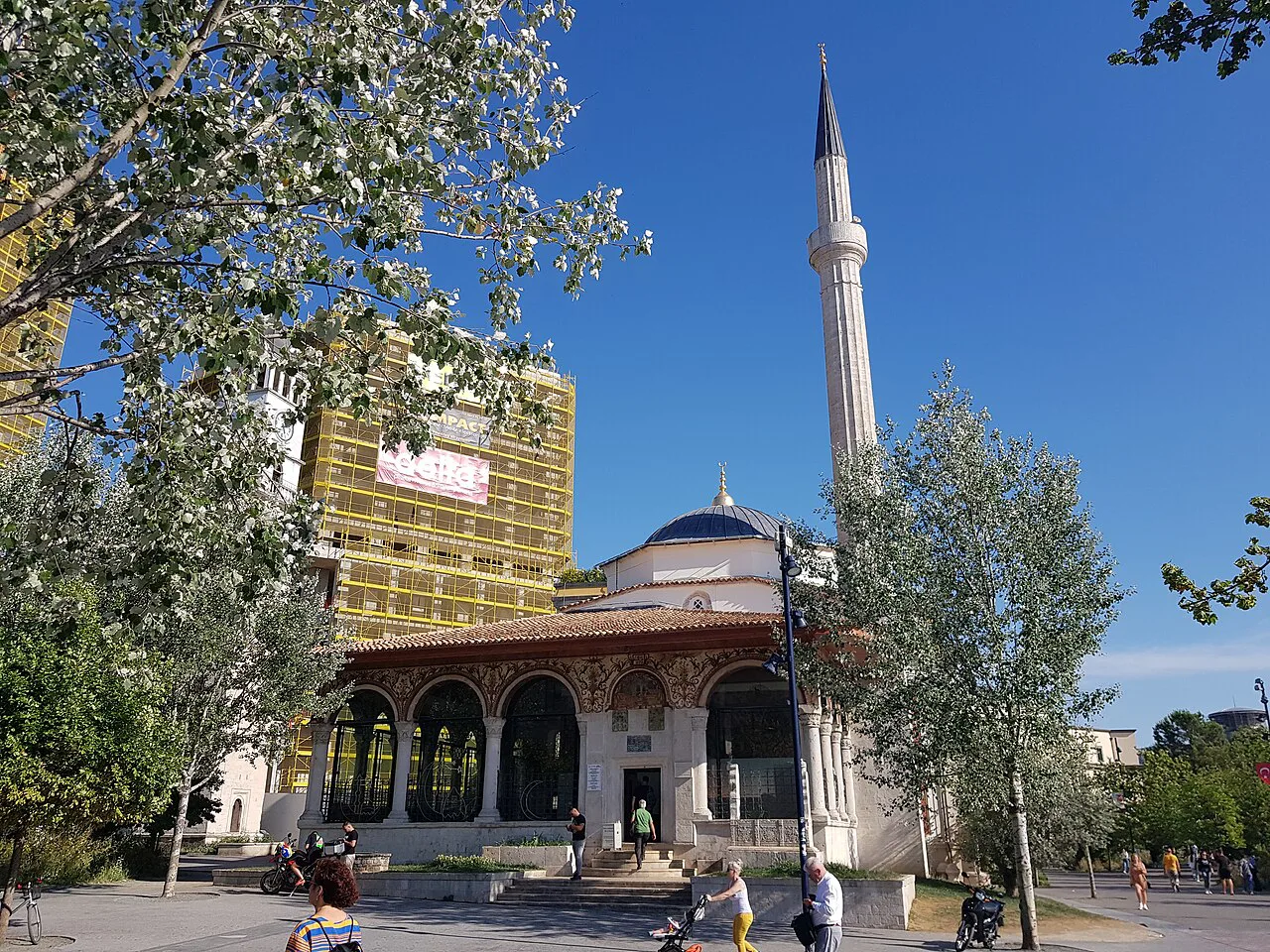
Et'hem Bey Mosque is an Ottoman mosque founded at the end of the 18th century by Mulla Bey and finished by his son Haxhi Et'hem Bey in the first quarter of the 19th century. It sits in the centre of Tirana beside Sheshi Skënderbej, so you can reach it without transport if you are staying anywhere central. Treat it as one element of the square rather than a separate excursion.
The building is a working mosque, not a museum with a turnstile, so the visit is a brief look at the prayer hall and its decoration. It has been restored in recent years, and the official tourism page records the work as starting in 2019 and finishing in April 2021. That restoration is history rather than a reason to expect scaffolding; the painted surfaces you see are the restored ones.

How to reach it on foot
The mosque is on Skanderbeg Square and appears in descriptions of the square's edges, so the practical approach is to walk to the square and look for it there. Most of central Tirana lies within a comfortable walk of Sheshi Skënderbej, and arriving on foot avoids the question of parking around a pedestrian square.
If you are planning the rest of the day around the centre, the wider set of city sights is mapped out in our guide to Tirana Attractions, which helps you group the mosque with nearby stops instead of doubling back across town.

The setting on Skanderbeg Square
The mosque sits among the landmarks around Skanderbeg Square: the Clock Tower, the National Museum and the National Theatre of Opera and Ballet are all part of the same cluster. That means you can see the exteriors of several landmarks in one circuit of the square without planning separate journeys. The Clock Tower stands beside the mosque, so the two are usually seen together.
The National History Museum faces the square and makes a sensible pairing if you want one indoor stop after the mosque; our page on the National History Museum, Tirana sets out what it holds. For the square itself, including how it is laid out and what happens on it, see the dedicated Skanderbeg Square, Tirana guide.
The frescoes inside: trees, waterfalls and bridges
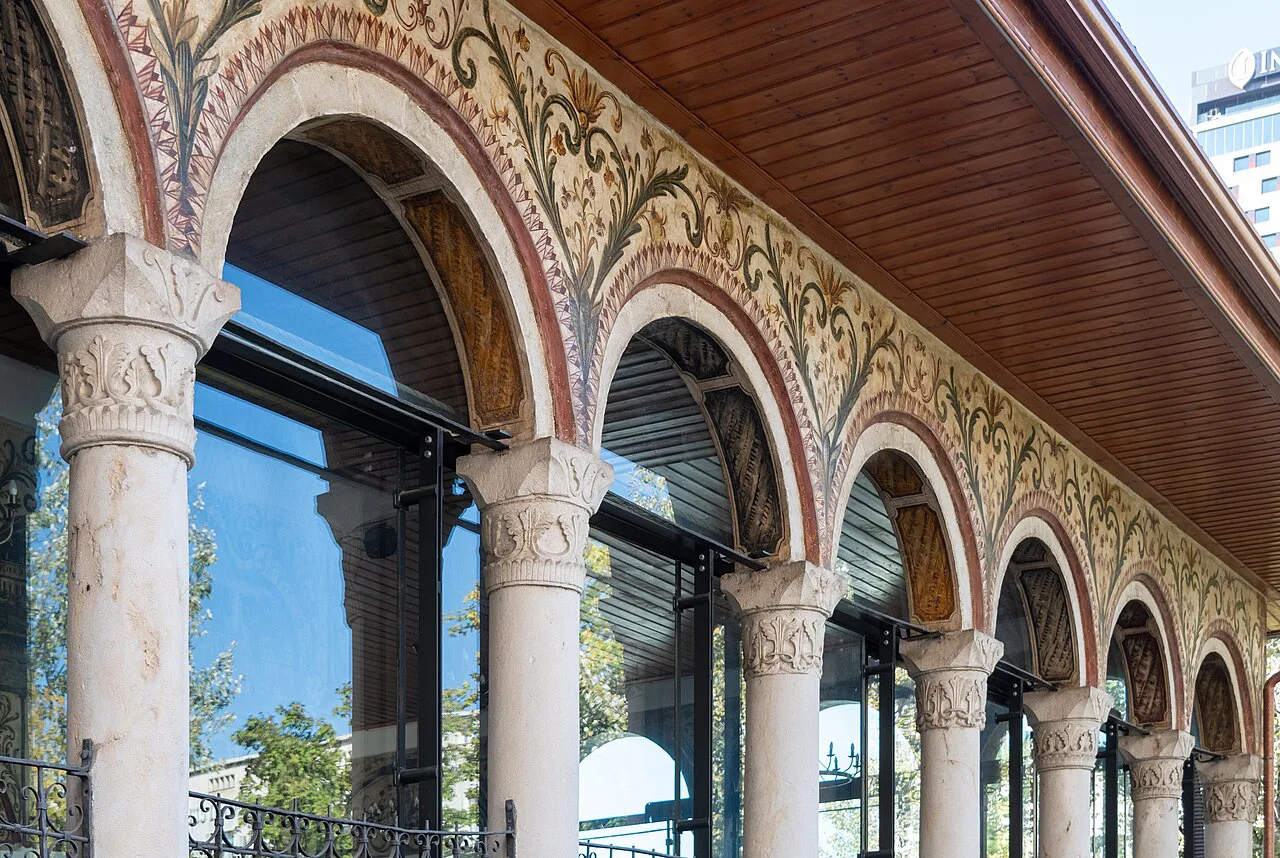
Inside, the wall and ceiling paintings show trees, waterfalls and bridges, and these still-life subjects are rare in Islamic art. That is the detail worth looking up for: most visitors notice colour and pattern first, but the motifs are landscapes and structures rather than the floral and geometric work you might expect.
Reviewers single out the same feature, describing frescoes with forests and waterfalls as uncommon motifs in Islamic architecture. The interior is small enough that a slow turn around the prayer hall covers the main painted panels; there is no long sequence of rooms to work through.
What to look at in the paintings
Read the decoration as a whole: wall and ceiling paintings in oriental traditions, with the landscape panels as the distinctive element. Look at the ceiling first for the overall scheme, then pick out individual panels at eye level. Bringing the two together takes a few minutes rather than a guided hour.
If painted interiors are your reason for stopping, the city has more of the same period and genre to compare; the Tirana Attractions: 11 Visitor Guides collection lists the sights that fit alongside this one.
Survival and the 1991 gathering
The mosque was one of the few spared in the period when churches, mosques, tekkes, monasteries and other religious institutions were closed, demolished or converted into warehouses, gymnasiums and workshops by the end of 1967. Separately, on 18 January 1991, 10,000 people entered the mosque carrying flags despite opposition from the communist authorities, at the onset of the fall of communism in Albania. Those two facts are the whole of the political story worth carrying into the visit.
A nearby counterpart in the same period is covered factually at Bunk'Art 2, Tirana, housed in a former Ministry of Internal Affairs shelter, if you want more of the communist era in one day.
How long you need
Allow fifteen to twenty minutes inside and a further twenty to thirty on the square, which covers the exterior, the Clock Tower and a look at the museum facade. The visit works best slotted into a walk through the centre rather than scheduled as a standalone outing.
For a fuller half-day in the centre, our things to do in Tirana page groups the square with other stops within walking distance.
Opening hours and entry
Published opening hours and prayer-time restrictions are not set out in the source material for this guide, so check current visiting arrangements with the mosque or the city tourism office before you set out. That includes any entry requirements, which can change.
Because it is a working mosque with regular prayers, keep any visit short and be prepared to wait or come back if worshippers are arriving.
Dress and etiquette inside
This is a place of worship rather than a museum, so dress modestly, cover shoulders and knees, and remove your shoes at the entrance. Keep your voice low, avoid walking in front of anyone praying, and ask before photographing people.
Nearby on and around the square
After the mosque, the Tirana castle quarter and its surrounding streets are a short walk away, and the Kalaja e Tiranës page explains what remains of it. The Namazgah Mosque, Tirana is the city's newer large mosque, a different building entirely and worth seeing for contrast if you have time.
Further out, Mother Teresa Square, Tirana holds several institutions and is walkable from the centre, while the Bunk'Art 1, Tirana site is a separate stop if you want more of the communist era. The Pyramid of Tirana is also close enough to add to the same walk.
Should you add the mosque to your square walk?
Yes, if you are already on Skanderbeg Square: fifteen to twenty minutes, modest dress and a willingness to check access before you go get you the painted interior without adding much to your day. Skip it only if you are short of time and have not yet seen the square at all, in which case walk the square first and decide from there.
Explore more Tirana guides
Frequently Asked Questions
Do you need tickets for Et'hem Bey Mosque?
It is a working mosque rather than a ticketed museum. Access can change, so check current visiting arrangements with the mosque or the city tourism office.
Can non-Muslims go inside Et'hem Bey Mosque?
Visitors are commonly received outside prayer times, though arrangements can change; confirm before you go. Dress modestly, remove your shoes, keep quiet and ask before taking photographs of anyone praying.
How do you pronounce Et'hem Bey?
The Albanian name on signs is Xhamia e Et'hem Beut. For pronunciation, follow local usage or ask a local when you arrive.