
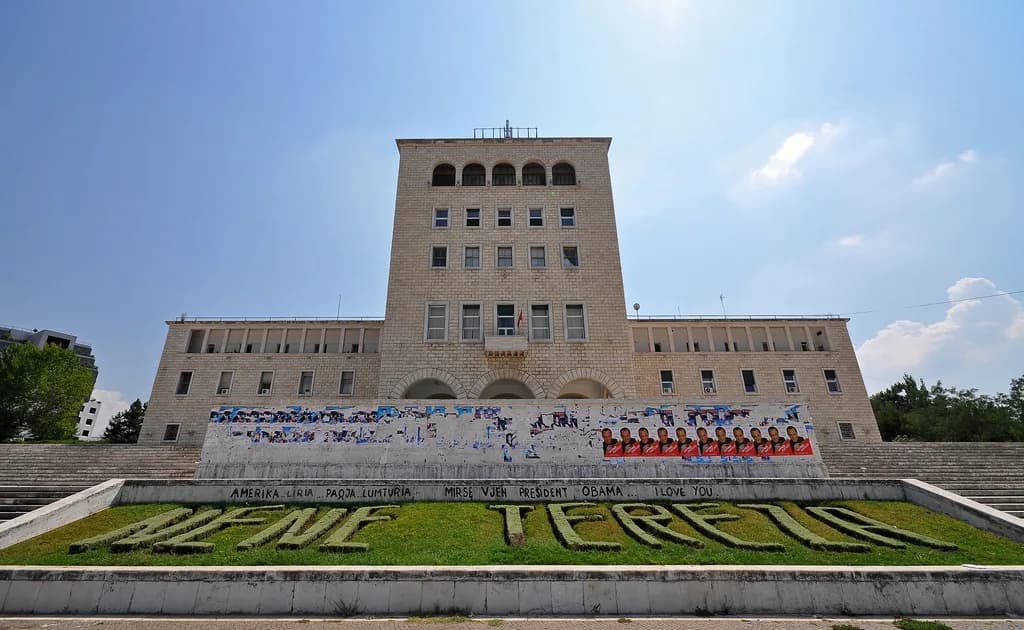
Mother Teresa Square (Sheshi Nënë Tereza), Tirana

Mother Teresa Square, Sheshi Nënë Tereza in Albanian, is an open public space in central Tirana and needs about 20 to 30 minutes of your time. It is worth treating as the end point of a walk along its long tree-lined avenue rather than a ticketed sight, because the approach is as much a part of the visit as the square itself. This guide covers where the square sits, how to walk to it, what surrounds it, how long to allow and which nearby sights fit the same afternoon.
What Mother Teresa Square is and where it sits in Tirana
The square is one of Tirana's main public spaces and functions as an open, green place where people stroll and relax. It carries cultural weight as well as civic use, and monuments, cafés and cultural spaces sit around its edges, which is why it reads as a point of reference in the capital rather than a patch of paving to cross.
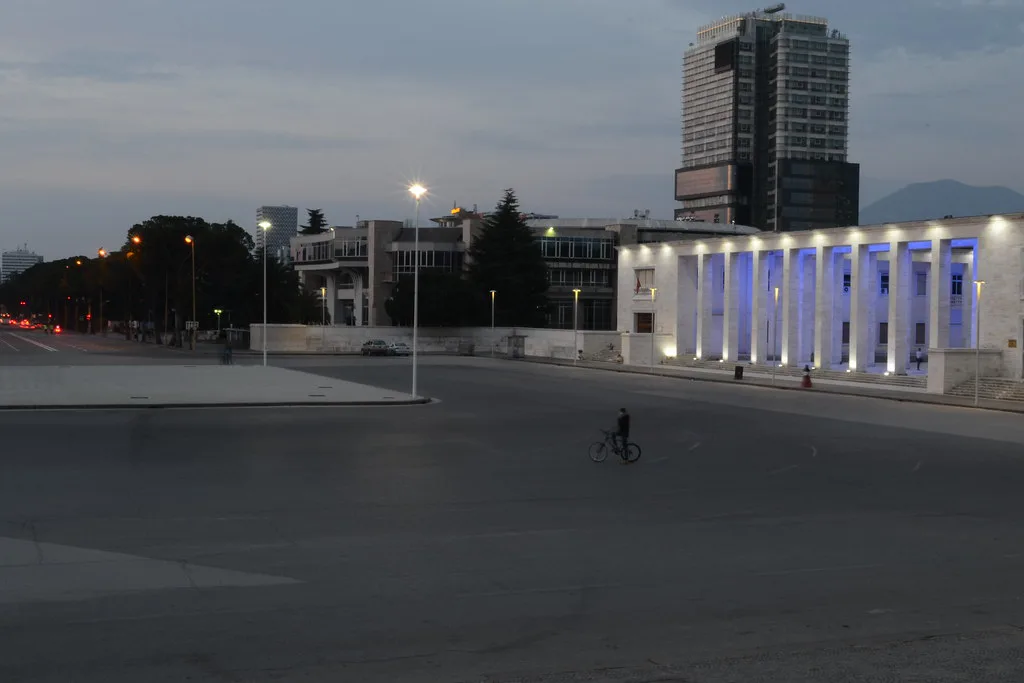
It lies at the end of a long tree-lined avenue in rationalist style, where the avenue widens into the square in front of the surrounding buildings. That layout matters for planning: you arrive along the avenue and the square opens out at its head, so walking the length of the avenue is the natural first view.
Do not confuse it with the Mother Teresa Square in Prishtina, Kosovo, which is a different place with its own statue and events. If a search result points you to a wide promenade, a Newborn sculpture or an evening korzo, you are looking at the Kosovo square, not this one.

How to get there: walking from the city centre
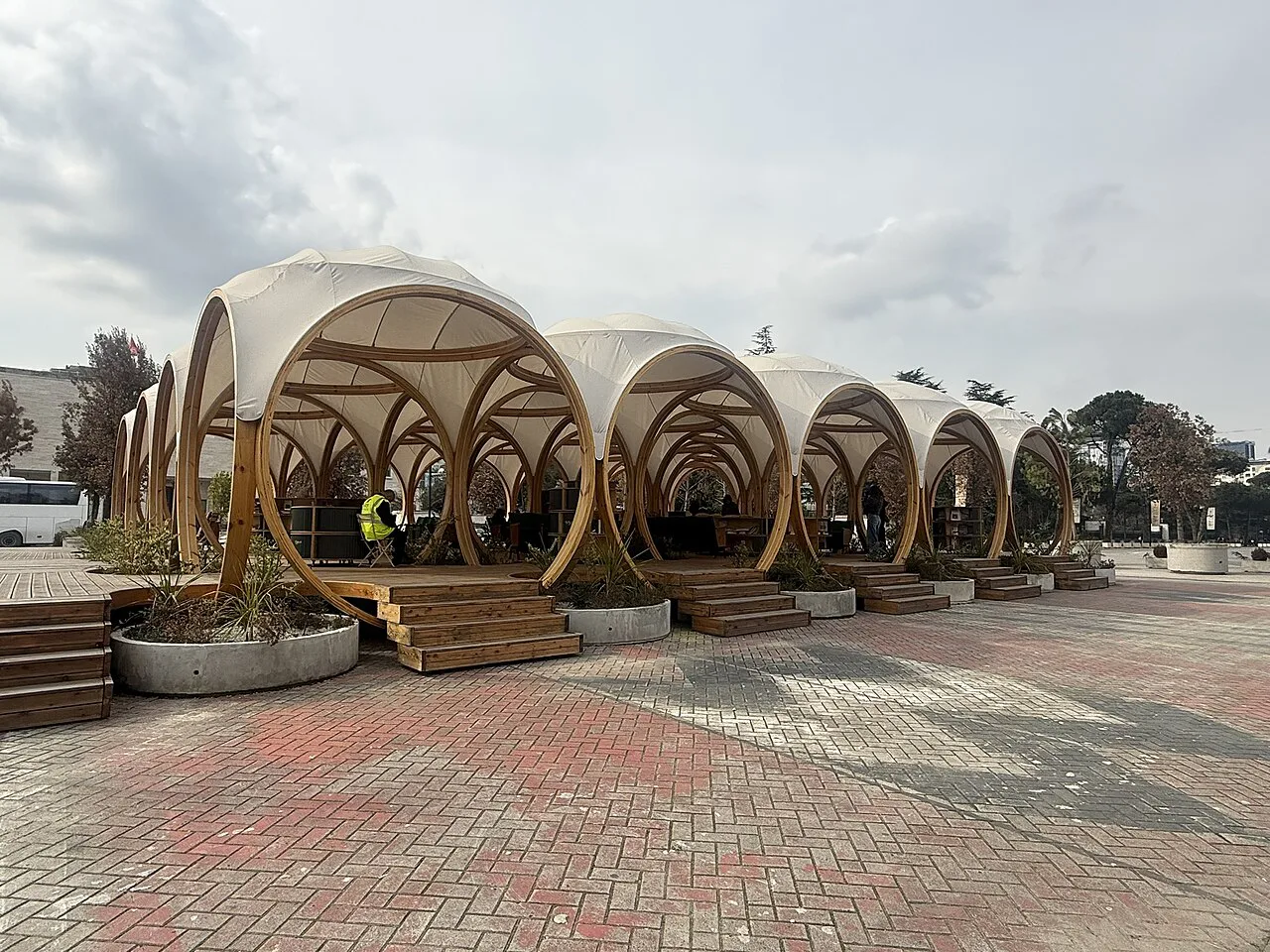
The square is a walk, not a journey. Come on foot from the centre and let the avenue deliver you to the square rather than aiming for a single address; taxis and buses will drop you on the surrounding streets, but the approach on foot is what makes sense of the layout.
Wear shoes you can walk in and carry water in summer, since the avenue is long and the square itself is mostly open ground. The official tourism listing describes the square as an open, green public space, and events can occupy it, so check that listing before you set out if you want to confirm access on the day.
The layout: the avenue, the widened square and the buildings around it
Read the square from the avenue end first. The rationalist geometry makes a straight line of the approach, then a widening where the square sits in front of the buildings that frame it, so a slow walk up the avenue and a turn at the head gives you the whole composition in one go.
The square was built in 1939 and is often used for major cultural and artistic events, which explains why it is laid out as an open, flexible space rather than a garden. In 2026 a tender was reported for renovation, putting new functions mostly underground, including parking, and limiting new volumes above the surface so the square keeps its relationship with the historic buildings around it; that is a procurement process, not a statement that the square is closed, but it means ground conditions can change.
What you'll see around the square
The square holds open space and greenery, and around it you find monuments, cafés and cultural spaces. Treat those as the actual content of the visit: read the monuments, sit for a coffee and look back down the avenue rather than hunting for an attraction inside the square itself.
The square is named after Mother Teresa, the Albanian-Indian Roman Catholic nun, which is the one biographical fact the name itself depends on. Beyond that, keep the visit about the place and the city around it rather than expecting a museum or exhibition on site.
How long to allow and when to walk through
Allow 20 to 30 minutes for the square and the avenue together, or longer if you take a coffee at one of the surrounding cafés. Because it is a thoroughfare and an event space rather than a sight with rooms to work through, plan it as a pause on a walk rather than a destination to build a half-day around.
Early morning and late afternoon suit the walk best, when the avenue is easier to cross and the open square is not at its hottest. If an event is using the square, the space may be partly occupied, so build in the flexibility to pass through rather than linger.
Nearby sights within a short walk
The square sits comfortably in a walking loop with other central sights, and the Tirana Attractions guides map out each of them with its own practical detail. Plan two or three on the same stretch rather than zig-zagging across the city.
Skanderbeg Square is the obvious companion: a large central space to cross on the way in or out. The Pyramid of Tirana is another short walk away if you want a second architectural stop on the same outing.
For a different sort of stop, Bunk'Art 2 adds a sober, indoor hour to a day of walking.
Who the square is named after
The name honours Mother Teresa, the Albanian-Indian Roman Catholic nun, and the square is dedicated to her. That dedication is the reason the square carries her name rather than a local politician or date, and it is the only biographical thread the visit needs.
Practical points: access, events and checking current details
The square is open ground, so there is no ticket booth or dress code to plan around. Events and cultural programming do take place there, and the renovation project reported in 2026 means the ground conditions can change while works are under way, so check the official listing for access on the day.
If you need to know whether the square is fully accessible on a given date, check the official tourism listing before you set out. It is the practical source for the square's current state, and it saves a wasted walk across town.
Fold the square into your central Tirana walk
Mother Teresa Square earns its place in a Tirana afternoon as the head of its avenue, not as a destination in its own right. Walk the avenue, read the monuments, take a coffee and carry on to Skanderbeg Square or the Pyramid of Tirana to fill out the loop.
Keep the Prishtina namesake in mind when you search, and treat any works on the ground as a reason to check the official listing rather than to cancel the walk. The square is central, open and quick, which is exactly why it works as a link between bigger stops.
Explore more Tirana guides
Frequently Asked Questions
Why is the square named after Mother Teresa?
It is dedicated to Mother Teresa, the Albanian-Indian Roman Catholic nun. You do not need a guide to explain it on site; the name and the square's civic role are the whole connection to plan around.