
Namazgah Mosque (Great Mosque of Tirana): A Visitor's Guide
The Namazgah Mosque is worth a 30- to 45-minute stop on a walk through central Tirana, not a half-day. It stands beside the Albanian parliament, roughly five minutes on foot from Skanderbeg Square, and visitors are welcome outside the five daily prayers and the Friday midday prayer.
Officially Xhamia e Namazgjasë, and widely called the Great Mosque of Tirana, it was inaugurated on 10 October 2024 after a decade of construction. This guide covers its position near the Lana river, the walking approach, the four minarets and central dome, the ground-floor cultural spaces, dress and photography, and the cathedrals and other sights within a few minutes of the door.
What the Namazgah Mosque is and where it stands
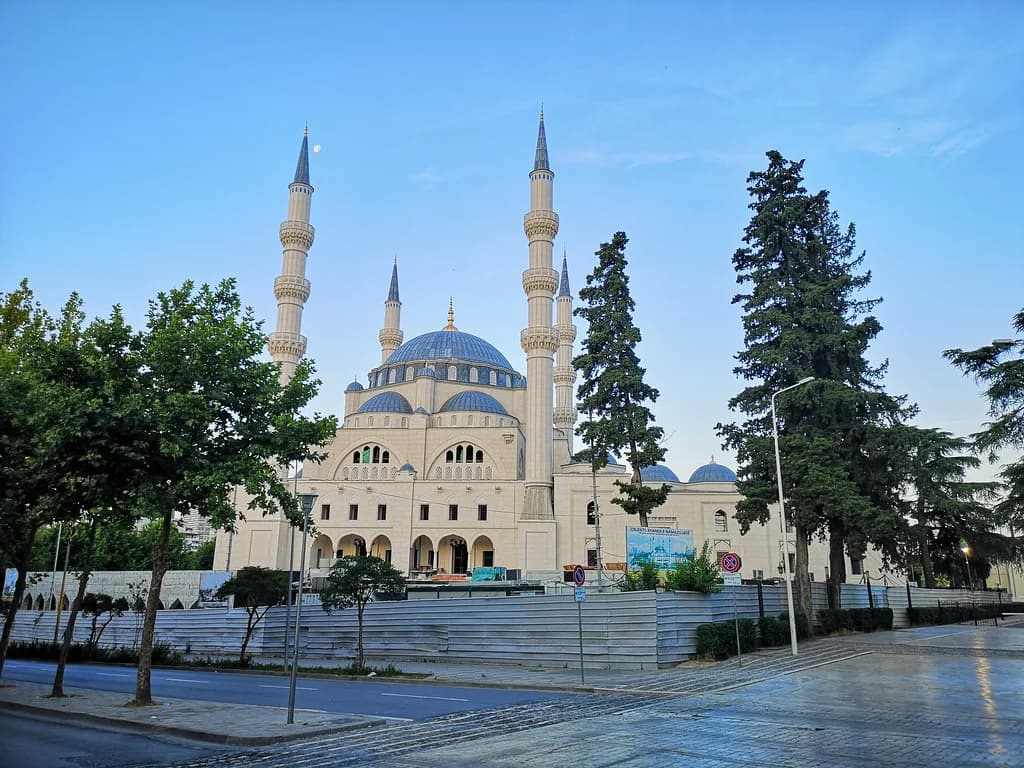
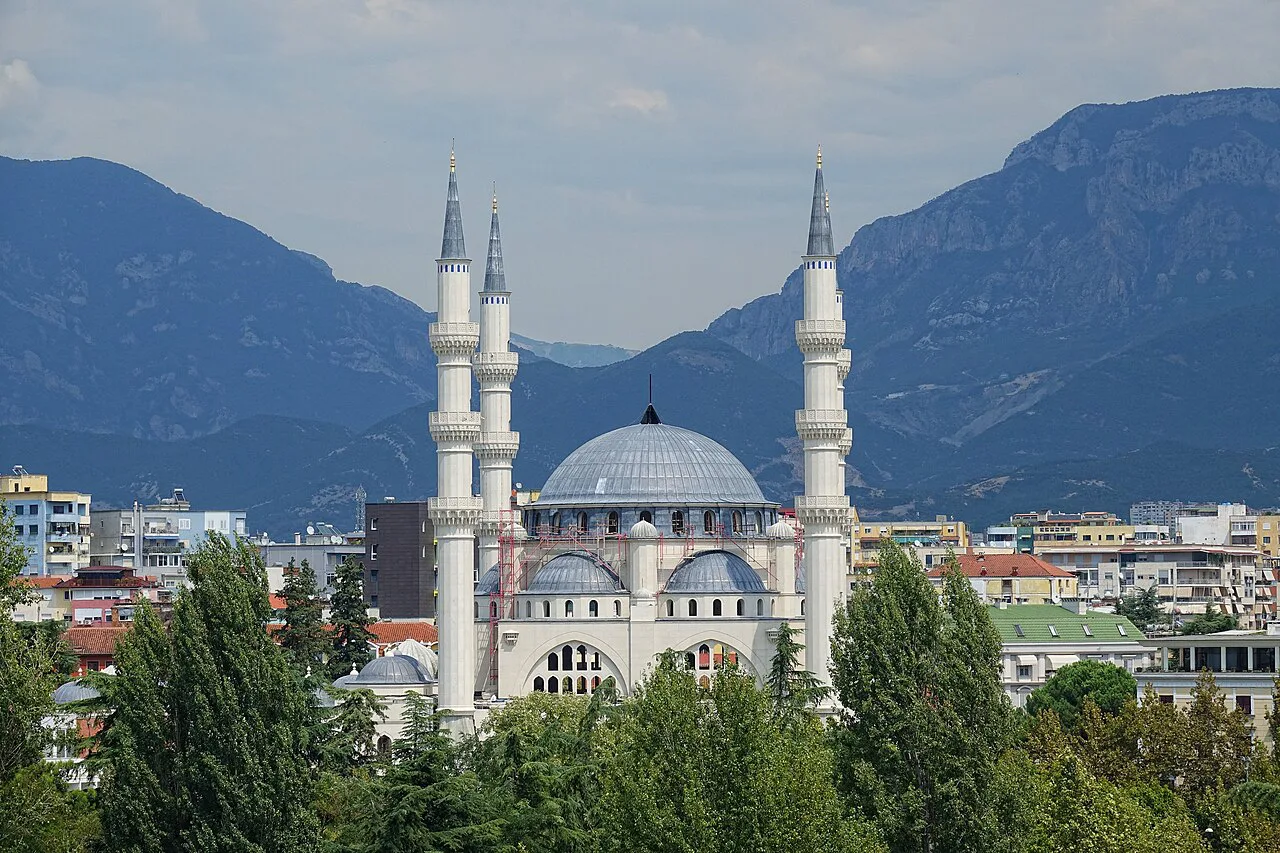
The mosque occupies a 10,000-square-metre plot next to Albania's parliament building, between the Lana river and the city's main square. Its design follows classical Ottoman models, with four minarets of 50 metres and a central dome 30 metres high, and the sources that describe it call it the largest mosque in the Balkans.
It is deliberately placed in a religious cluster: the Catholic and Orthodox cathedrals stand close by, forming what is often described as a triangle of coexistence, and the complex itself includes a museum on that theme. Allow time for that setting rather than treating the mosque as an isolated monument, and treat it first as a working place of worship.
For orientation across the wider city, the Tirana Attractions: 11 Visitor Guides covers the castle quarter, the museums and the main square in separate pages, so you can slot the mosque into a route without doubling back.

How to get there on foot from Skanderbeg Square and the city centre
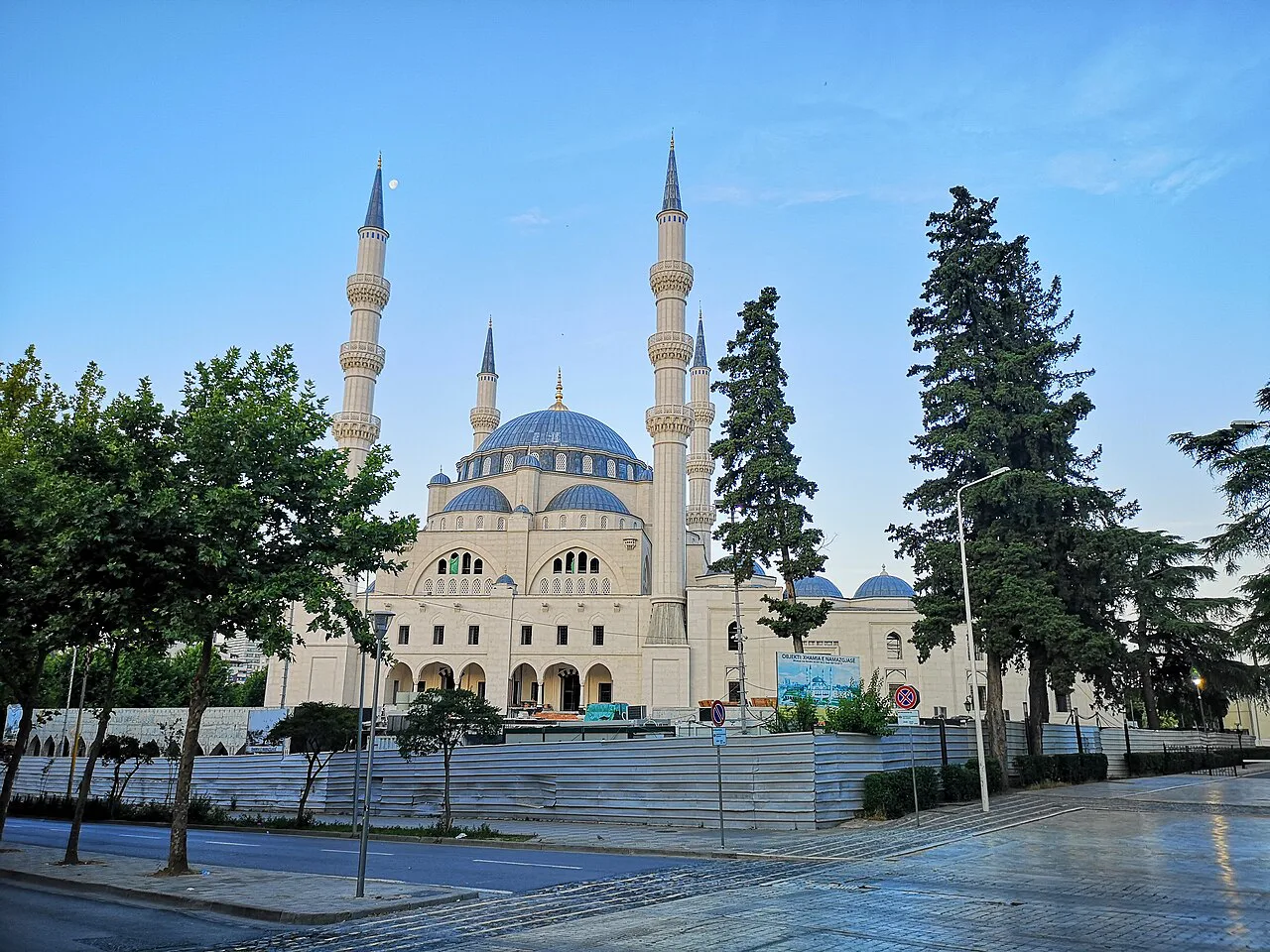
Walk from Skanderbeg Square towards the parliament along George W. Bush Street; the mosque is about five minutes away and easy to spot by its minarets. The 1992 foundation stone was laid near Namazgah Square beside the parliament, and any central address near the parliament or the Lana riverbank puts you within a short stroll.
The approach is flat and pavement-level, which makes it one of the easier central sights to reach on foot. If you are starting further out, aim for the square first rather than asking a driver for the mosque by name, since the Albanian form Xhamia e Namazgjasë is the version most locals use.
What to see: the four minarets, the central dome and the prayer hall
Look up before you go in: the four slender minarets rise 50 metres and the dome reaches 30 metres, and the exterior is clad in pale stone that reads brightly against the sky. Inside, the prayer hall is expansive and airy, with capacity for around 8,000 worshippers indoors and a further 2,000 in the courtyard, about 10,000 in total.
The building's design is credited to the Turkish architect Muharrem Hilmi Şenalp and his firm Hassa Architecture, and it blends Ottoman forms with modern engineering. For visitors the practical result is a single large hall with clear sightlines, so ten minutes of quiet looking covers the main interior.
The cultural centre, library and Museum of Coexistence on the ground floor
The ground floor holds more than prayer space: a cultural centre, a library, classrooms and a conference hall sit within the complex. A museum in the basement documents the history of different religions living alongside one another in Albania.
Treat these as part of the building rather than separate ticketed sights; whether the museum and library are open on the day you visit depends on the community running the mosque, so ask at the entrance. The gardens and courtyards around the building are open to the public and connect to the park along the Lana.
How long to allow and when to visit around prayer times
Budget 30 to 45 minutes: long enough for the courtyard, the prayer hall and a look at the ground-floor spaces, short enough to pair with the cathedrals and the river walk in the same morning. The mosque is generally open through the day, but visits are best timed outside the five daily prayers, whose clock times shift with the sun.
Friday midday prayer is the busiest slot of the week, when the hall is reserved for worshippers, so plan around it rather than turning up mid-service. Because the exact times move daily, check a current prayer timetable for Tirana on the morning of your visit and work backwards from it.
Dress and etiquette: shoes, headscarves, quiet and photography
Shoes come off before the carpeted prayer area, and cubbies at the entrance are provided for them. Men should wear trousers rather than shorts and cover the shoulders; women should cover their hair with a headscarf and wear a long skirt or loose trousers that cover the legs. Scarves are often available at the entrance, but bringing your own removes the guesswork.
Keep voices low and avoid walking directly in front of anyone who is praying. Photographs are usually fine, but skip pictures of people mid-prayer and watch for posted signs on flash.
Is there an entry fee and who can visit
Non-Muslim visitors are welcome provided they respect those who are there to pray, and there is no entry charge, with donations welcomed but not required. That makes it an unusual stop in a city where museums generally carry a ticket.
The mosque serves as the central mosque for Tirana's Muslim community, a role previously filled by the much smaller Et'hem Bey mosque in the old centre, so expect a working religious atmosphere rather than a visitor attraction. If you want to compare the two, the Et'hem Bey Mosque, Tirana sits inside the old bazaar-and-castle quarter and is a natural next stop.
What is nearby: the cathedrals, Parliament and the Lana riverside
Step out and you are within a few minutes of the Catholic Cathedral and the Orthodox Cathedral, the pair that complete the site's religious triangle. The parliament building and the Lana river park are equally close, and the riverside path makes a level, shaded link back towards the centre.
For a fuller day, head north-west to the Pyramid of Tirana, the remodelled landmark near the centre, or walk into the old quarter for the Tirana castle and its surrounding pedestrian lanes.
Museum-goers can add the House of Leaves, which charts the surveillance apparatus of the communist period, or Bunk'Art 2, housed in a former civil-defence shelter. Both are central and combine well with the mosque on a single walking loop.
Reading the building as a piece of the city
The Namazgah Mosque is a modern statement building with an Ottoman vocabulary, funded largely by Turkey's religious affairs presidency, Diyanet, and opened in 2024. The reporting at its opening put the construction cost at 30 million euros, a figure that belongs to that moment rather than to any current budget.
Its scale explains why it reads differently from the older mosques in the bazaar quarter: this is a complex built for crowds, with the library and cultural rooms doing weekday work alongside prayer. The national tourism agency's entry describes the mosque as an example of Islamic architecture in Albania with distinctive domes, minarets and detailed decoration, and calls it one of the most famous and historic mosques in Tirana.

Is the mosque worth a detour on your Tirana walk?
Yes, if you are already near the parliament or the Lana river, because it costs nothing and a respectful 30-minute look fits between the cathedrals and the old centre. Build the stop around a prayer timetable rather than a fixed opening hour, and dress as you would for any active mosque.
If your time in the city is short, pair it with the square and the old quarter rather than crossing town for it alone; the things to do in Tirana page sets out the central cluster you can walk in one go.
Explore more Tirana guides
Frequently Asked Questions
Can non-Muslims visit the Namazgah Mosque?
Yes. Visitors of any background are welcome as long as they respect worshippers, remove their shoes at the prayer hall, dress modestly and keep quiet. Time your visit outside the five daily prayers, and especially outside Friday midday prayer, when the hall is given over to worship.
Do I need to book to visit the Great Mosque of Tirana?
No booking is needed. The mosque is open through the day for visitors and worshippers, with the practical limitation being prayer times rather than a ticket slot. Confirm the day's prayer times locally before you set out.
How long does a visit to the Namazgah Mosque take?
Allow roughly 30 to 45 minutes for the courtyard, the prayer hall and the ground-floor cultural spaces. It is a short central stop rather than a half-day, and it combines easily with the Catholic and Orthodox cathedrals and the Lana riverbank.