
Pyramid of Tirana: What to See and How Long to Allow
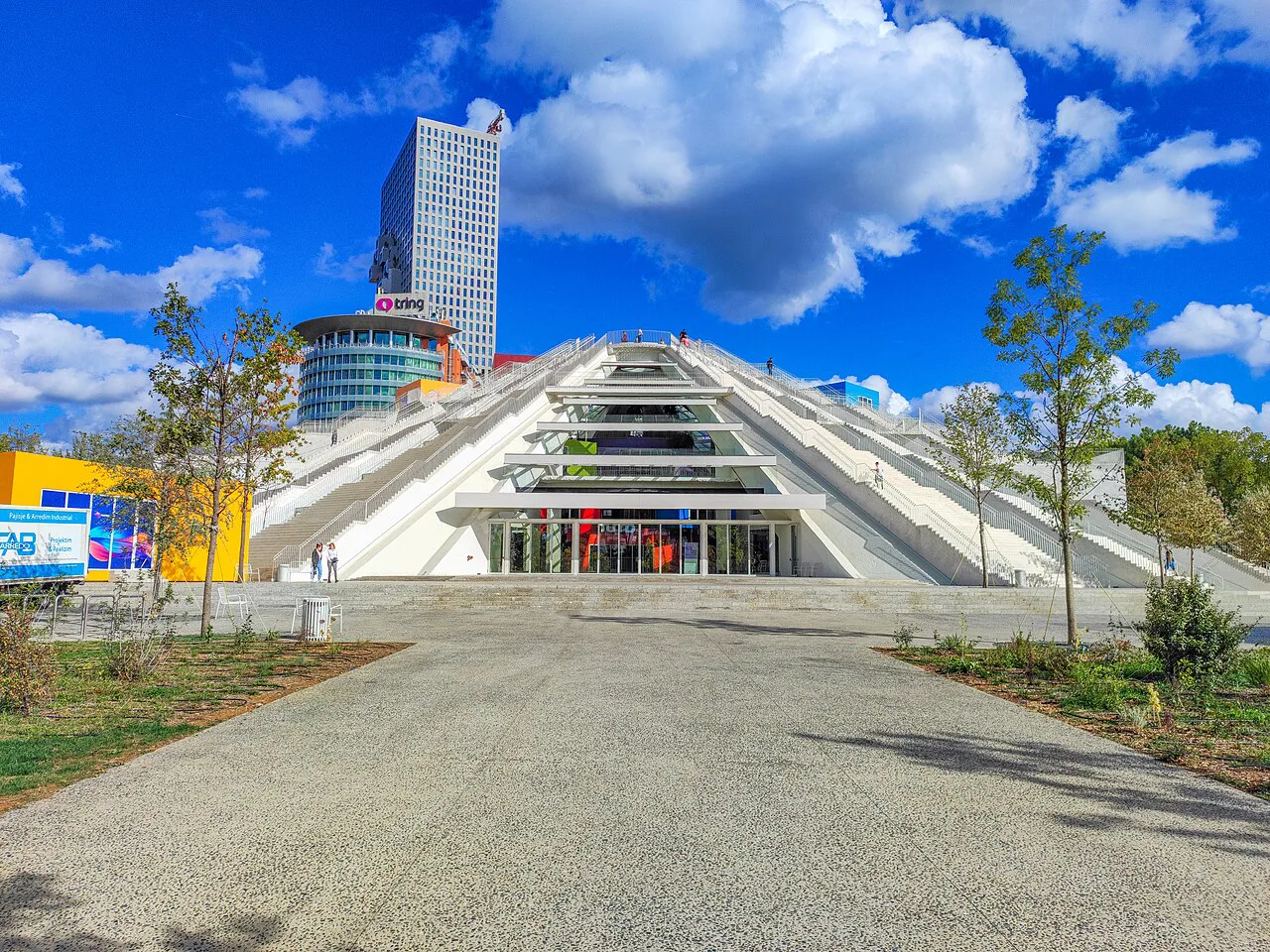
The Pyramid of Tirana is an open concrete structure set in a new park, with steps added to its sloping façades so you can walk up to the top, and a lift on the western side for anyone who cannot manage the climb. Around it and inside it sit a scatter of colourful boxes housing cafés, studios, workshops and classrooms. This guide covers what the building is now, where it sits in the city, how the climb works and how long to give it.
It is not a ticketed museum with rooms to file through, so the visit is shorter and more open-ended than the old name suggests. Read it as a piece of public architecture you climb, look out from and have a coffee beside, not as an exhibition with an exit.
What the Pyramid of Tirana is now
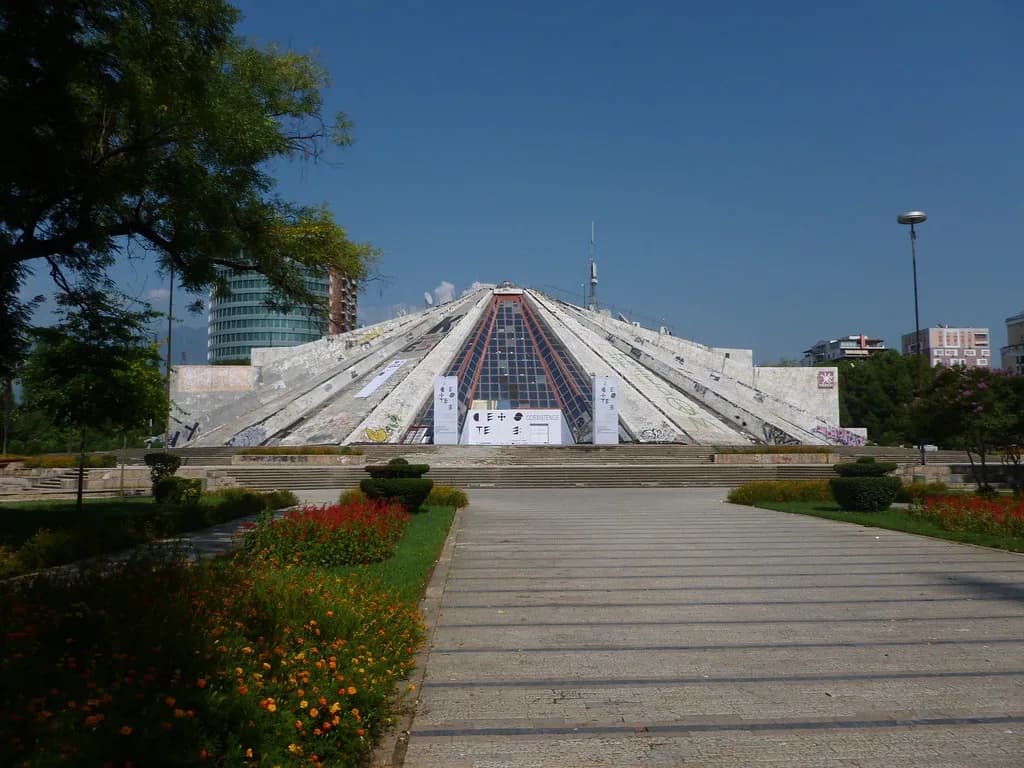
The Pyramid, or Piramida e Tiranës, was transformed by MVRDV for the Albanian-American Development Foundation and the Municipality of Tirana between 2018 and 2023. The concrete shell was kept and reused rather than demolished, and it now stands as an open sculpture in a new park. The design team deliberately stripped out symbols glorifying the dictatorship while keeping some original details so the building's past stays visible.
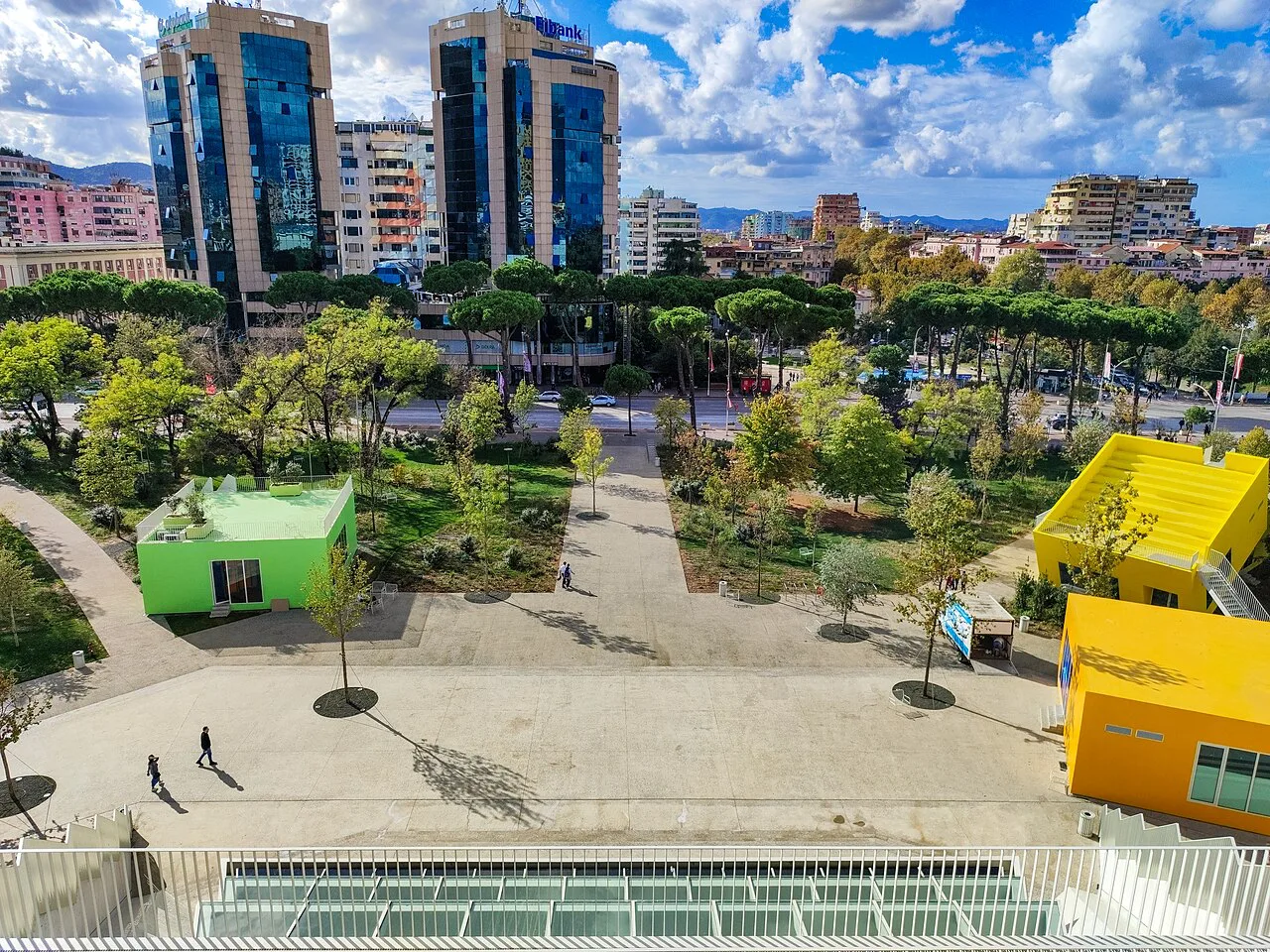
The additions are the coloured boxes, scattered in and around the structure and on its roof, which give the park a festival-like feel. Roughly half of them house TUMO Tirana, a non-profit after-school programme teaching 12- to 18-year-olds software, robotics, animation, music and film at no charge. The other half are public-facing spaces rented to cafés, restaurants, start-up offices, labs, incubators and studios.
That split matters for expectations: you are walking through a working building, not a sealed attraction. Some boxes are offices or classrooms, some are venues, and the leasing side of the project continues. Expect parts of the site to feel in use rather than staged for visitors.

Where it is in Tirana and how to reach it
The Pyramid stands in the heart of the capital, a short walk from the central cluster of sights around Skanderbeg Square, which makes it easy to fold into a morning in the centre. The streets between the two are flat and quick to cover on foot.
If you are building a half-day, pair the Pyramid with the bazaar streets and the mosques and clock tower around the square. Tirana Attractions: 11 Visitor Guides maps the rest of the centre, and the wider things to do in Tirana list covers what lies beyond walking range.

Walking up: steps, the lift and the slide
Steps now rise up the sloping façades, allowing people of all ages to climb to the top of the building. On the western side, a lift takes anyone who cannot manage the steps up to the same level. The climb is the point of the visit, so give it time rather than treating it as a photo stop.
Only one beam keeps a sloped section where people can still slide to the bottom, echoing how Tirana's youth used to clamber over the structure before the renovation. Do not expect a slide on every side. Walk the perimeter first to work out which faces have steps and where the lift entrance sits.
The building was first opened as a museum in 1988, dedicated to the communist dictator Enver Hoxha, and after the fall of the regime it served variously as a radio station, a nightclub, a conference venue, a broadcast centre and, during the 1999 Kosovo War, a base for NATO. Those uses left a patchwork of alterations, which the recent work cleared.
What's inside and around the boxes
The boxes hold cafés, restaurants, studios, workshops, start-up offices, incubators and event spaces, with the TUMO classrooms alongside them. Their contents change as tenants come and go, so treat any particular café or studio as a bonus rather than a fixed stop.
Because the majority of the structure is open to its surroundings for most of the year, only the boxes housing the education programme are climate-controlled. On a hot afternoon that makes the open terraces and steps warm work, and in winter the exterior walkways stay exposed. Dress and time your visit accordingly.
How long to allow
Budget 30 to 45 minutes for the structure itself: the circuit of the steps, the top, and a look at the boxes. Add time if you stop for a coffee in the park or sit on the upper level. It is a compact site, and the honest trade-off is that there is more architecture than exhibition here.
Because the structure is completely open as a ruin in the park, you can walk in freely rather than through a ticket queue; the Piramida site, however, focuses on leasing space to tenants rather than on visitor services. If you need to reach someone in advance, use the Piramida and MVRDV pages. Beyond that, the site needs no forward planning.
Nearby sights to pair with the Pyramid
The Museum of Secret Surveillance, known as the House of Leaves, sits in the same central area and deals with the surveillance apparatus of the communist period. It makes a considered pairing with the Pyramid if you want the era's history told properly rather than only as architecture.
Bunk'Art 2 occupies the tunnels beneath the Ministry of Internal Affairs, and the National History Museum and Et'hem Bey Mosque are both close to Skanderbeg Square. Together with the Pyramid these fill a solid half-day on foot. The Namazgah mosque and Mother Teresa square sit a little further out if you have more time.
If you want the hilltop view instead, Bunk'Art 1 and the cable car up Mount Dajti make a separate trip on another day. Keep the Pyramid for the centre, where you can walk between sights rather than driving.
Is the Pyramid worth the climb?
Yes, if you are already in central Tirana. It costs you half an hour, it is open as a park structure rather than ticketed, and the climb to the top gives you a different angle on the city. Go for the building and its history, not for a museum display.
Slot it into a walk that takes in Skanderbeg Square, one of the communist-era museums and a coffee in the park. Skip the detour only if you are pressed for a single morning and have not yet seen the bazaar streets around the Tirana castle.
Explore more Tirana guides
Frequently Asked Questions
Can you walk up the Pyramid of Tirana?
Yes. Steps have been added up the building's sloping façades so people can walk up to the top, and on the western side a lift gives access to the top for anyone who cannot use the steps. One beam also keeps a sloped section that people can slide down.