
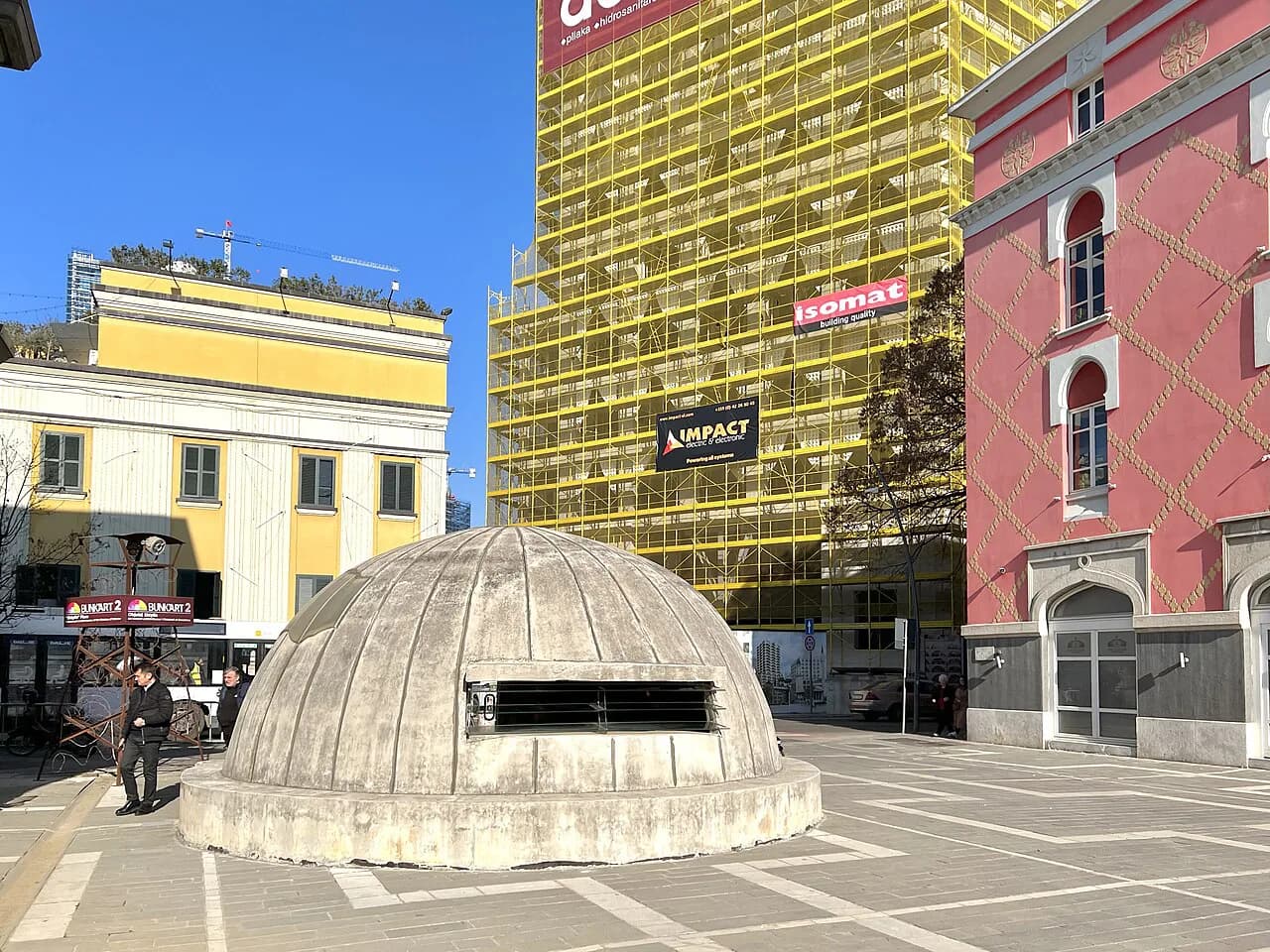
Bunk'Art 2: Tirana's Secret-Police Bunker Museum

Bunk'Art 2 is a museum and historical installation in the centre of Tirana, built inside an anti-nuclear bunker constructed for the Ministry of Internal Affairs during the communist dictatorship. Its exhibitions concentrate on surveillance, the Sigurimi secret police and the state control apparatus rather than on the regime as a whole. This guide covers the two exhibition routes, the practical side of getting there on foot and how long to set aside.
Expect underground corridors and rooms filled with documents, authentic objects, State Security equipment and multimedia installations, including audiovisual testimonies. Much of the material is text-heavy, so the pace you choose matters more than the size of the bunker.
Where Bunk'Art 2 is in Tirana
The museum sits right in the centre of Tirana, so it slots into a walking day rather than requiring a trip out of town. The official tourism listing places it in the city centre and describes it as an underground installation reached through corridors and rooms. If you are already touring central sights, treat it as a single stop among them rather than a separate excursion. For the practical details, see the Tirana guide.
On foot, the museum pairs naturally with Skanderbeg Square, the Clock Tower and the Et'hem Bey mosque, all part of the same central cluster. Allow a short walk between them rather than a taxi ride. For a wider set of options in the same area, see these Tirana Attractions: 11 Visitor Guides.
Bunk'Art 1 is a different proposition: it lies on the outskirts at the foot of the Dajti mountain range and holds over 100 rooms across five floors. If you only have time for one bunker museum, Bunk'Art 2 saves the journey; if you want the scale and the Cold War shelter engineering, plan a separate half-day for Bunk'Art 1.
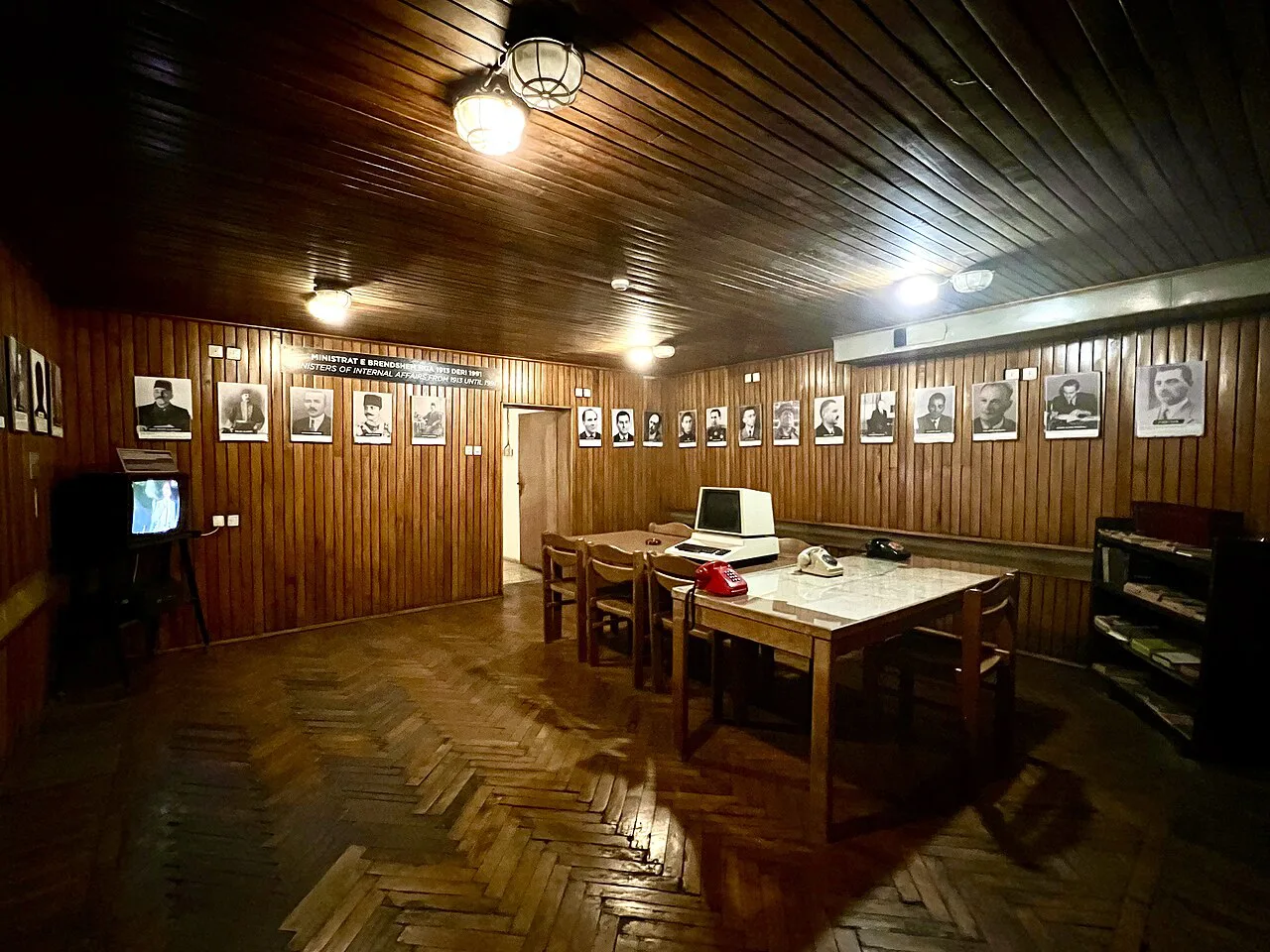

The bunker itself
The rooms were built for the Ministry of Internal Affairs during the dictatorship and later turned into a museum; one ticketing listing gives the opening year as 2016, though Bunk'Art's own pages do not state it. The structure is underground, with corridors and chambers that once served the ministry's security functions. That setting is part of the visit: you are walking through the spaces the apparatus used, not a purpose-built gallery.
The museum is organised into two distinct exhibitions, one historical and one museum-focused, and the site sets them out separately. Reading the labels at the entrance helps you decide which order suits you; the history route gives the chronological frame, while the museum route walks you through specific rooms of control.
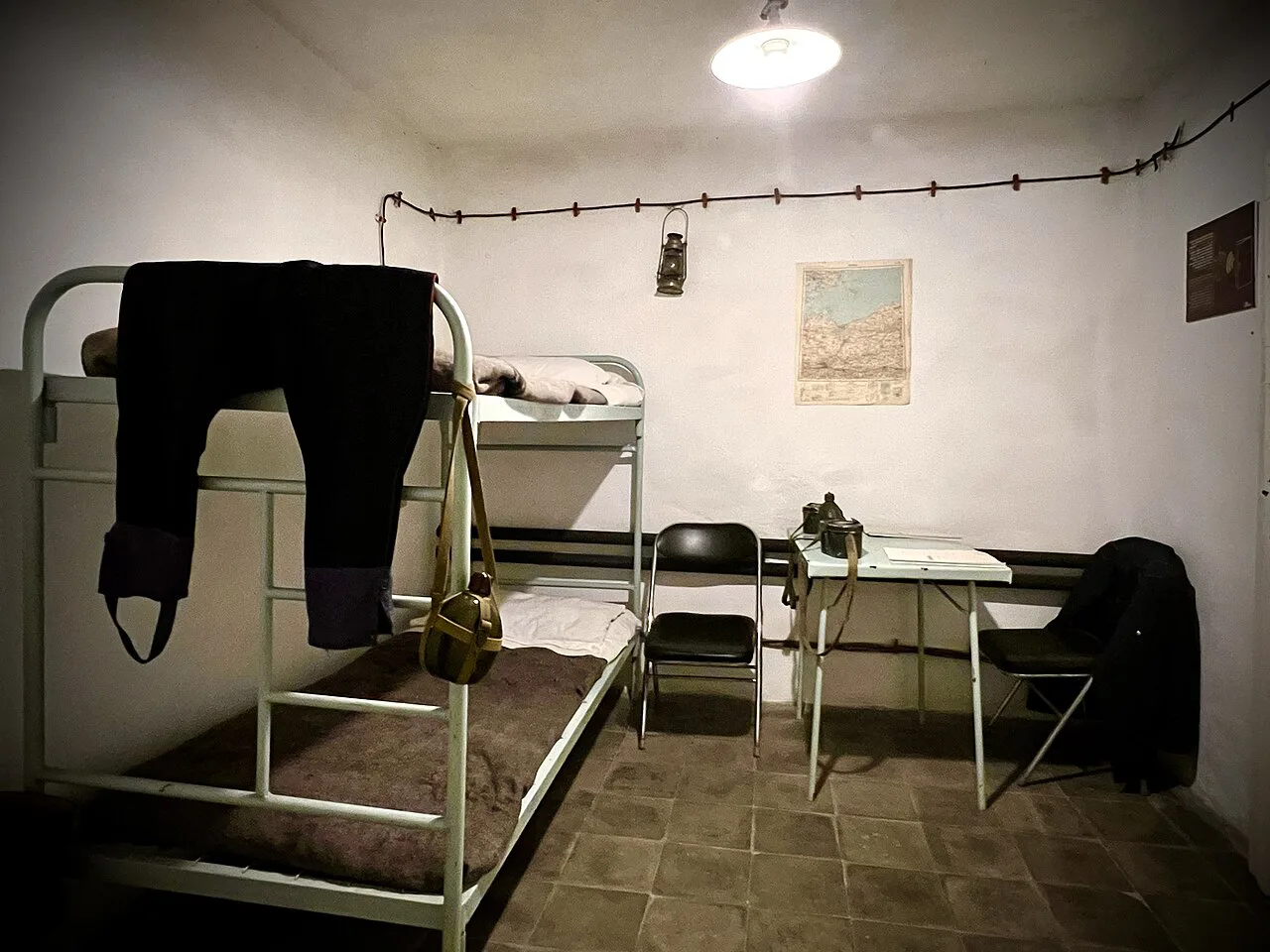

The historical exhibition
The historical route runs in three parts: the gendarmerie (Xhandarmëria) from independence to the Second World War, the forces of order under fascist and Nazi occupation, and the police and Sigurimi during the dictatorship. The sequence matters because it shows how policing structures carried through from one regime to the next. Read the panels in order and the later rooms make more sense.
The dictatorship section is the part most visitors come for, since it deals with the Sigurimi and the internal security apparatus that monitored the population. The exhibition also addresses the persecution of political opponents, the system of internment and prisons, the monitoring of civil society and the workings of internal security structures. These are handled as documentary history, with photographs, documents and testimony rather than spectacle.
The museum exhibition
The second route narrows to investigative technique, with sections on pursuit and interception, the anteroom and office of the Minister of the Interior, and the interrogation room. Walking from a ministerial office into an interrogation room makes the hierarchy of the system physical rather than abstract. These rooms are the most affecting part of the visit and deserve unhurried attention.
A section of the museum covers espionage, police forces and investigations, with audiovisual installations carrying testimonies about suffering and persecution under the dictatorship. The recordings do a lot of the emotional work that text alone cannot. If you are visiting with someone who finds testimonies difficult, the historical route is the easier starting point.
How much time to give it
Give the exhibition the time your reading pace needs rather than planning around a fixed figure. The displays are dense with text, and the narrow corridors can slow the flow when other visitors are ahead of you. The rooms reward unhurried attention more than a quick circuit.
Build in a pause partway through, because the underground setting and the subject matter are tiring in combination. Pacing yourself on the historical route leaves you fresher for the museum route's interrogation room and testimonies. It is not a place to rush on the way to somewhere else.
Tickets, hours and guided tours
Private guided tours are offered in Albanian, English and Italian for individuals and groups, and bookings are made by contacting the museum directly by email. A guide reshapes the visit: the testimony and documentary material is put in context and the two exhibitions connect. If you are travelling as a family or a small group, it is worth arranging before you arrive.
Ticket prices and opening hours change, so check the official Bunk'Art site before you go. It also hosts a virtual tour, which is useful for judging whether the dense text suits your group. The official tourism listing gives the same central location and the same description of the collection, but no admission details.
Nearby in central Tirana
Skanderbeg Square is the obvious next stop, with the Clock Tower and the Et'hem Bey mosque on its edge. The Pyramid of Tirana and the National History Museum sit within easy walking distance, as does the Tirana castle quarter. Stringing three or four together makes a coherent half-day in the centre.
If the secret-police material leaves you wanting more on the same period, the House of Leaves museum covers the Sigurimi's surveillance history in a different setting. Visiting both on the same day is possible but heavy. Most people do better to split them across two afternoons.
The New Bazaar, the Tirana castle quarter (Kalaja e Tiranës) and Mother Teresa Square fill out the rest of a central walk. For the fuller picture, browse things to do in Tirana before you fix your route.
Which bunker museum should you pick?
Choose Bunk'Art 2 if your priority is the Sigurimi and the machinery of internal control, and if you want a museum you can reach on foot from Skanderbeg Square. Choose Bunk'Art 1 if you want the scale of a Cold War shelter with more than 100 rooms. Few visitors do both on one trip, and the central museum is the easier introduction.
Book a private guided tour if you want the documentary material explained, check the official site for current hours and prices, and leave enough time afterwards to walk into the square rather than straight back to your room.
Explore more Tirana guides
Frequently Asked Questions
What is the difference between Bunk'Art 1 and Bunk'Art 2?
Bunk'Art 2 is in the centre of Tirana and concentrates on the Ministry of Internal Affairs, the Sigurimi and the state control apparatus. Bunk'Art 1 sits on the outskirts at the foot of the Dajti mountain range and holds over 100 rooms across five floors, with a wider Cold War history exhibition. Pick the central museum for the secret-police story and the out-of-town one for scale.
How much time should I allow at Bunk'Art 2?
How long you need depends on your reading pace. The displays are dense with text and the corridors are narrow, so slower readers or busy periods add time. Pacing the historical route first leaves you fresher for the museum route.
Can I book a guided tour of Bunk'Art 2?
Yes. The museum offers private guided tours in Albanian, English and Italian for individuals and groups, arranged by email in advance. A guide helps connect the historical route with the rooms of the ministry and the interrogation section.